Overview
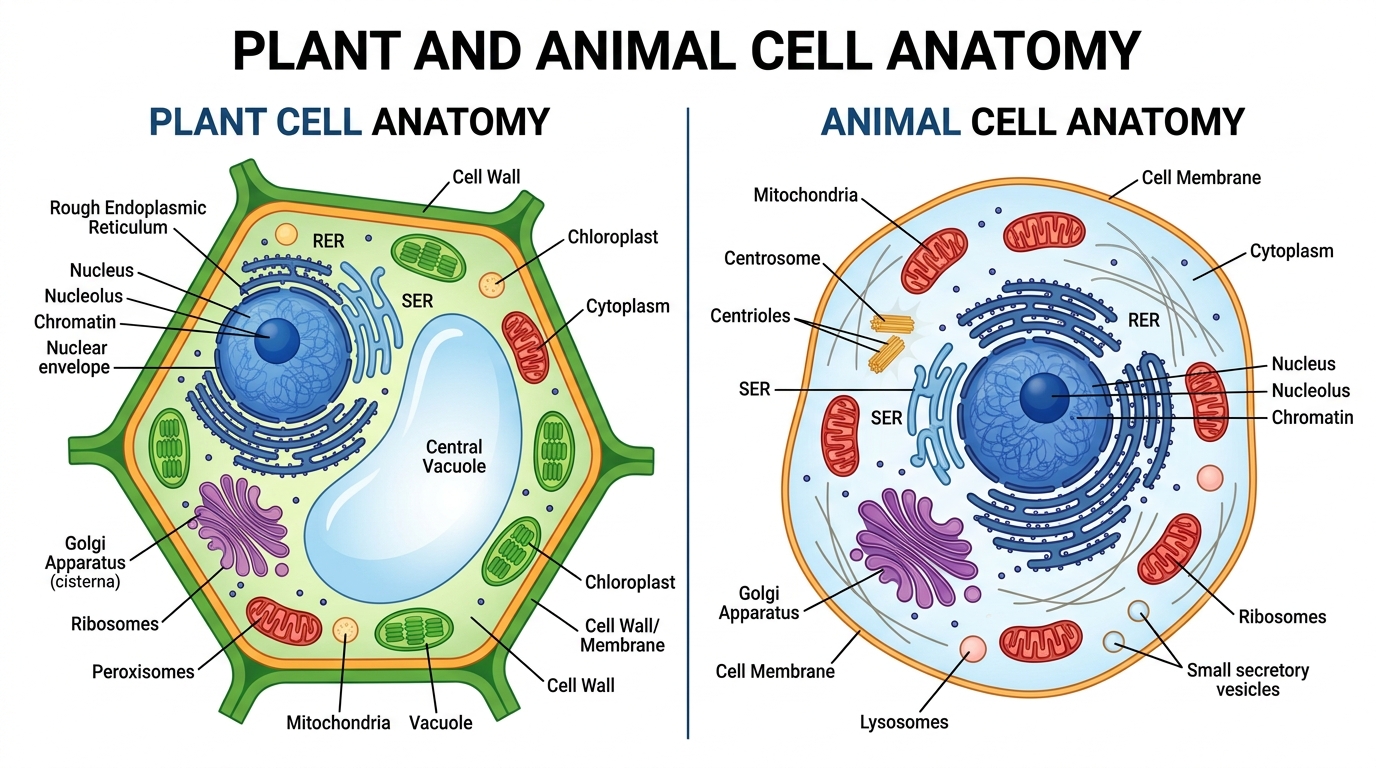
This chapter introduces the concept of living organisms and their surroundings. It explains how to distinguish living things from non-living things by observing basic characteristics such as movement, growth, respiration, nutrition, sensitivity, excretion and reproduction. The chapter shows that every organism has basic needs (food, water, air, shelter) and lives in a habitat suited to those needs; it also introduces the idea of adaptations that help organisms survive in particular surroundings. Students learn simple ways organisms are classified into plants and animals, how they interact with each other and depend on their environment (including the roles of producers, consumers and decomposers), and how changes in surroundings affect living beings. The chapter is important for building observation skills, understanding biodiversity and responsibility for conservation. Practical activities and examples help students identify living vs non-living things, name common habitats, and describe how organisms are adapted to their surroundings.
Learning Objectives
- Define 'living organism' and list five characteristics that distinguish living from non-living things.
- Explain the basic life processes (nutrition, respiration, growth, movement, reproduction, excretion, and sensitivity) with suitable examples.
- Identify differences between plants and animals on the basis of mode of nutrition, movement and growth.
- Classify organisms according to their habitats (aquatic, terrestrial, arboreal, and aerial) and by feeding habits (herbivore, carnivore, omnivore, decomposer).
- Describe structural and behavioral adaptations of selected plants and animals to their surroundings with examples.
- Explain how changes in the environment (seasonal, climatic or human-induced) affect the survival and distribution of organisms.
- Apply simple observation and recording techniques to document local plants and animals and describe their habitats and life activities.
- Investigate responses of organisms to stimuli through simple classroom experiments or field observations (e.g., phototropism, movement of earthworms).
Topics in this chapter
11 topics · tap a topic title to jump straight to it.
Living and Non-living Things
Living and Non-living Things
Key Point: Photosynthesis (general chemical equation): 6CO2 + 6H2O + light energy → C6H12O6 + 6O2
What are living and non-living things?
Living things are organisms that show the characteristics of life: they are made of cells, take food, respire to release energy, grow, move (or show movement of parts), reproduce, respond to stimuli, and remove waste (excretion). Non-living things do not show these life processes on their own.
Key life processes (short):
- Nutrition: obtaining and using food (plants make food by photosynthesis; animals eat food).
- Respiration: releasing energy from food (chemical reactions inside cells).
- Growth: increase in size or number of cells over time.
- Movement: whole-body movement (animals) or movement of parts (plants bending towards light).
- Reproduction: producing new organisms of the same kind.
- Sensitivity/Response: reacting to changes in the environment (e.g., plants bending toward light; animals fleeing danger).
- Excretion: removal of metabolic wastes (e.g., sweat, urine, leaf fall).
Differences (summary):
- Living things have cellular organization; non-living do not.
- Living things perform life processes; non-living objects do not perform them by themselves.
- Living things can grow and reproduce (or have the potential to); non-living things cannot.
Special/important cases:
- Dead things: were once living but no longer show life processes (e.g., a dried leaf, dead animal). Dead things are not the same as never-living things.
- Dormant forms: seeds, spores, or some organisms can be dormant (appear inactive) but are still alive because they can resume life processes under favorable conditions.
- Borderline cases: viruses are debated—outside a host they are inert like non-living things but inside a host they replicate, so they sit on the boundary between living and non-living.
How to test if something is living (simple checks): look for growth, reproduction, response to stimuli, movement of parts, and metabolic activity (e.g., does it need food/produce waste?).
Why this matters: Understanding living vs non-living helps classify objects in nature, care for living organisms (plants, pets), and solve everyday problems (e.g., preserving food, identifying hazards).
- Living — Mango tree: makes food by photosynthesis, grows, produces flowers and fruits (reproduction), responds to seasons.
- Living — Dog: eats, breathes, moves, grows, reproduces, responds to sound and touch.
- Living — Human: shows all life processes — digestion, respiration, growth, reproduction, sensing environment, excretion.
- Living — Bacteria (microscopic): single-celled organisms that feed, respire, grow, and reproduce.
- Dormant but living — Seeds: appear inactive but germinate and grow when conditions are right.
- Dead (formerly living) — Wooden chair made from a tree: tree wood was once living but the chair no longer shows life processes.
- \[Photosynthesis (general chemical equation): 6CO2 + 6H2O + light energy → C6H12O6 + 6O2\]
- \[Aerobic respiration (general chemical equation): C6H12O6 + 6O2 → 6CO2 + 6H2O + energy (ATP)\]
- \[Average growth rate (simple): growth rate = (final size − initial size) / time interval (e.g.\]\[cm per week)\]
Characteristics of Living Organisms
Characteristics of Living Organisms
Key Point: Photosynthesis (general): 6 CO2 + 6 H2O + light energy → C6H12O6 + 6 O2
What are living organisms? Living organisms are plants, animals, fungi, bacteria and other forms of life that show certain basic life processes. These processes distinguish living things from non-living things.
- Cellular organization: Every living organism is made of one or more cells. Unicellular organisms (like Amoeba) are single-celled; multicellular organisms (like humans and trees) have many cells organised into tissues and organs.
- Nutrition: Living things take food to get energy and materials for growth and repair. Plants are mostly autotrophs (make food by photosynthesis); animals are heterotrophs (eat plants or other animals).
- Respiration: Organisms obtain energy from the breakdown of food. Aerobic respiration uses oxygen and releases carbon dioxide and energy; some organisms use anaerobic respiration (no oxygen).
- Growth: Living organisms grow — their size, mass or number of cells increases with time. Growth can be measured (for example, increase in height of a plant or weight of an animal).
- Movement: Many living things move at least some part of their body. Animals move from place to place; plants show movement too (e.g., leaves or stems bending toward light, roots growing into soil). Movement can be external (walking, swimming) or internal (transport of nutrients and fluids).
- Sensitivity / Response to stimuli: Living organisms respond to changes in their environment. For example, pupils of eyes contract in bright light, plants bend toward light (phototropism), and animals withdraw from pain.
- Excretion: Removal of waste products produced during metabolism (e.g., carbon dioxide, urine) is necessary to maintain internal balance. Plants and animals have different excretory structures.
- Reproduction: Living organisms produce new individuals of the same kind. Reproduction may be sexual (two parents, variation) or asexual (one parent, identical offspring) — e.g., binary fission in bacteria, seeds in flowering plants, eggs in animals.
- Adaptation: Organisms have features that help them survive in their environment — camels store fat in humps and have long eyelashes for desert life; cactus stores water and has spines to reduce water loss.
Simple ways to test if something is living (useful for class activities): check for at least one internal process such as growth, reproduction, nutrition, respiration, movement, response to stimuli or excretion. Note: some living things (like dry seeds or dormant bacteria) may appear inactive but are still living.
Exceptions & notes: Viruses are not placed among living organisms in this class because they cannot carry out life processes by themselves outside a host cell. Also, a dead organism may still show movement (e.g., a thrown dead fish) but it no longer carries out life processes.
Key classroom connections: Use local examples (houseplant growth, breathing exercises, yeast dough rising) to demonstrate these characteristics. Simple experiments: germinate seeds to show growth and nutrition; yeast in sugar solution to show respiration (CO2 bubbles).
- Bean seed germination: shows nutrition from food stored in seed, growth into a seedling, and response to light and gravity.
- Human breathing: demonstrates respiration (taking in oxygen, releasing carbon dioxide), movement (walking), growth (child to adult), excretion (urine), and reproduction (having children).
- Amoeba: unicellular organism that shows movement, nutrition (engulfs food), respiration, growth and asexual reproduction (binary fission).
- Sunflower: performs photosynthesis (autotrophic nutrition), grows taller with time, responds to light (bends toward sunlight), and reproduces by producing seeds.
- Yeast in dough: shows respiration (fermentation) producing carbon dioxide bubbles; reproduces by budding (asexual reproduction).
- Camel: adapted to desert with water-storing and reduced water loss (adaptation), shows movement, nutrition and reproduction.
- \[Photosynthesis (general): 6 CO2 + 6 H2O + light energy → C6H12O6 + 6 O2\]
- \[Aerobic respiration (general): C6H12O6 + 6 O2 → 6 CO2 + 6 H2O + energy (ATP)\]
- \[Simple growth rate (average): growth rate = (final size − initial size) / time period\]
Surroundings and Habitat
Surroundings and Habitat
Key Point: Population density = Number of individuals / Area (or Volume) — use when comparing how crowded organisms are in habitats.
Definition: The surroundings of a living organism include everything that affects its life — both living (plants, animals, microbes) and non-living (light, water, soil, temperature). A habitat is the natural place where an organism lives and obtains food, shelter and mates.
Components of surroundings
- Abiotic factors (non-living): sunlight, water, air, soil, temperature, minerals, humidity, wind.
- Biotic factors (living): plants, animals, microbes, dead organic matter and the interactions among them (predation, competition, symbiosis).
Features of a habitat
- Provides food, shelter and mates.
- Has specific abiotic conditions (e.g., temperature, moisture) that suit particular organisms.
- Can change with seasons or human activity, causing organisms to adapt, move, or die out.
Types of habitats (brief)
- Terrestrial — forests, deserts, grasslands.
- Aquatic — freshwater (ponds, rivers, lakes) and marine (seas, oceans).
- Arboreal — lives in trees (many birds, monkeys).
- Underground — burrows and soil (earthworms, moles).
Adaptations to habitat
Organisms show structural, behavioral and physiological adaptations that help them survive in their habitat.
- Structural: thick fur in polar animals, long roots in desert plants.
- Behavioral: migration of birds, nocturnal activity of desert animals.
- Physiological: ability to conserve water (cacti), antifreeze proteins in some cold-water fish.
Interdependence and food chains
Organisms are interdependent: plants (producers) make food from sunlight; herbivores (primary consumers) eat plants; carnivores (secondary/tertiary consumers) eat other animals; decomposers (bacteria, fungi) break down dead matter and return nutrients to the soil. Example simple food chain: grass → grasshopper → frog → snake.
Changes in surroundings
Seasonal changes, natural disasters and human activities (deforestation, pollution, urbanisation) alter habitats. Organisms respond by adapting, migrating, reducing numbers, or becoming extinct. Conservation (protected areas, sustainable use, pollution control) helps protect habitats.
Classroom activity ideas
- Observe a microhabitat (under a rock, leaf litter, pond edge) and list biotic & abiotic factors.
- Draw a food chain from observed organisms and identify producer, consumer, decomposer.
- Frog in a pond: needs water for skin respiration and breeding; aquatic plants provide food and shelter.
- Cactus in the desert: fleshy stem stores water, spines reduce water loss and protect from herbivores.
- Polar bear in the Arctic: thick fur and fat for insulation; hunts seals on sea ice.
- Earthworm in soil: burrowing improves aeration; feeds on decaying organic matter and helps make fertile soil.
- Monkeys in a rainforest: arboreal habitat with abundant trees for food, shelter and movement.
- Fish in a river: gills extract dissolved oxygen; streamlined body helps swim against current.
- \[Population density = Number of individuals / Area (or Volume) — use when comparing how crowded organisms are in habitats.\]
- \[Rate of population change ≈ (Births + Immigration) − (Deaths + Emigration) — a simple bookkeeping relation.\]
- \[Percentage change = (Change / Original value) × 100% — useful to show increase or decrease in population or area of habitat.\]
- \[Energy transfer rule (ecological approximation): Energy passed to next trophic level ≈ 10% of energy of previous level (‘10% rule’ for food chains).\]
Types of Habitats
Types of Habitats
Key Point: Population density = Number of individuals of a species / Area (for land) or Volume (for water).
What is a habitat?
A habitat is the place where a living organism (plant, animal, fungus or microbe) lives and obtains food, water, shelter and space to survive and reproduce. A habitat provides the specific physical and biological conditions that a species needs.
Factors that define a habitat
- Availability of water
- Temperature and climate
- Type of soil or water (salinity, pH)
- Light and oxygen availability
- Shelter and space
- Food supply and presence of other organisms
Main types of habitats
1. Terrestrial habitats
These are land habitats. Common subtypes:
- Forest: Many trees, layered vegetation and rich biodiversity (e.g., tigers, monkeys, ferns).
- Grassland: Large open areas with grasses (e.g., deer, bison, grasses).
- Desert: Very low rainfall, sparse vegetation (e.g., camels, cacti, lizards).
- Mountain: High altitude, low temperature, steep slopes (e.g., mountain goats, alpine plants).
2. Aquatic habitats
Habitats in water. Two major types:
- Freshwater: Ponds, lakes, rivers, streams. (e.g., frogs, freshwater fish, water plants like lotus).
- Marine (saltwater): Oceans and seas, including tidal zones and coral reefs. (e.g., fish, corals, whales).
3. Arboreal and Aerial habitats
Arboreal: Lives in trees (e.g., squirrels, many birds, tree frogs). Aerial: Organisms that spend most of their life in flight (e.g., many birds, some insects like swifts and butterflies).
4. Subterranean and Microhabitats
Subterranean: below ground (e.g., earthworms, mole). Microhabitats: very small specialized places such as under a rock, inside a rotting log, the bark of a tree or a puddle—each supports specific life.
5. Transitional habitats
Areas where two habitats meet, for example estuaries (where river meets sea), mangroves, and wetlands. These are rich in biodiversity and often highly productive.
Adaptations to habitats (brief)
- Desert: Water storage, nocturnal behaviour, reduced leaves (plants) — e.g., camel has humps; cactus stores water.
- Aquatic: Gills, streamlined bodies, fins (fish); buoyant seeds or floating leaves (water plants).
- Forest/Arboreal: Strong limbs, grasping feet, camouflage (many birds and monkeys).
- Polar: Thick blubber or fur, white coloration for camouflage (polar bear, penguin).
Importance of habitats
- Support biodiversity and ecological balance.
- Provide ecosystem services (clean water, air, pollination, food).
- Need protection — habitat loss leads to species decline and extinction.
Note for students: When you observe organisms, ask: Where do they get water? Where are they sheltering? How is their body suited to that place? That helps identify the habitat and adaptations.
- Camel — Desert: stores fat in humps, long eyelashes to keep out sand.
- Cactus — Desert plant: thick stem stores water; spines reduce water loss.
- Fish (e.g., Rohu) — Freshwater: gills to extract oxygen from water; fins for swimming.
- Coral and reef fish — Marine: corals build reef structures; many fish have bright colours for communication.
- Frog — Pond and nearby land: juvenile (tadpole) lives in water; adult lives both in water and on land (amphibian).
- Eagle — Aerial/Forest/Mountain: sharp talons, excellent eyesight for hunting from the air.
- \[Population density = Number of individuals of a species / Area (for land) or Volume (for water).\]
- \[Percentage area of a habitat = (Area of that habitat / Total area) × 100\]
- \[Species richness = Total number of different species in a habitat (simple count used in basic studies).\]
Adaptations to Surroundings
Adaptations to Surroundings
Key Point: There are no specific mathematical formulas in this chapter, but a useful conceptual relation is the surface-area-to-volume (SA/V) ratio which affects heat loss and water loss: SA ∝ length^2, Volume ∝ length^3, so SA/V decreases as size increases. Small animals have higher SA/V and lose heat faster; this explains why many small desert animals are nocturnal or have behaviours to reduce water loss.
What are adaptations? Adaptations are special features — structural, behavioural or physiological — that help organisms survive and reproduce in their surroundings. Adaptations develop over many generations by natural selection and allow plants and animals to get food, protect themselves, keep their body temperature, and save water.
Types of adaptations
- Structural (Morphological) adaptations: Physical features of body or parts. Examples: thick fur, long beaks, webbed feet, deep roots, waxy leaves.
- Behavioural adaptations: Actions or habits that help survival. Examples: migration, hibernation, nocturnal activity, hunting in groups.
- Physiological (Functional) adaptations: Internal body processes that increase survival. Examples: production of venom, concentration of urine to save water, producing sweat or fat for insulation.
Adaptations in different habitats
- Desert (xeric) adaptations: Plants: reduced or no leaves, thick stems for water storage (cactus), waxy surface. Animals: camels store fat in humps, have long eyelashes and nostrils that close; many are nocturnal to avoid daytime heat.
- Aquatic (hydrophyte) adaptations: Plants: large flat leaves, aerenchyma (air spaces) to float (water lily). Animals: fish have gills and streamlined bodies; ducks have webbed feet for swimming.
- Cold region adaptations: Animals: thick fur or blubber (polar bear, penguin) to retain heat; white fur or feathers for camouflage in snow.
- Forest/jungle adaptations: Many animals are arboreal (live in trees) with grasping limbs; leaves may be large and drip-shaped to shed water (drip tips).
Mimicry and camouflage
Camouflage helps organisms blend with surroundings (stick insects, leaf insects, snow hare). Mimicry is when one species looks like another (some harmless butterflies look like toxic ones to avoid predators).
Short-term adjustments vs inherited adaptations
Acclimatisation (short-term) is when an organism temporarily adjusts to a change (e.g., humans sweating in heat). Adaptation (long-term) is an inherited trait shaped over many generations (e.g., camels evolved humps).
How adaptations help
- Save water (waxy cuticle, reduced leaves, concentrated urine)
- Obtain food (specialised beaks, carnivorous plant traps)
- Avoid predators (camouflage, living in groups, toxic chemicals)
- Regulate body temperature (fat, fur, behavioural changes like basking)
Summary: Adaptations are specific features or behaviours that increase the chances of survival in particular surroundings. Observing habitats and comparing plant and animal features shows clear links between form, function and environment.
- Camel: humps store fat (energy), long eyelashes and closing nostrils protect from sand, thick foot pads prevent sinking in sand — desert adaptations.
- Cactus: fleshy stems store water, spines reduce water loss and protect from herbivores, reduced leaves — xerophyte plant adaptations.
- Polar bear: thick blubber and dense fur for insulation, white fur for camouflage on snow — cold-region adaptations.
- Water lily: large flat leaves with stomata on upper surface and air spaces to float — aquatic plant adaptation.
- Frog: moist skin for cutaneous respiration and webbed feet for swimming; many are nocturnal to avoid daytime predators and dehydration.
- Hummingbird and deep flowers: very long, thin beaks to reach nectar — co-adaptation for pollination.
- \[There are no specific mathematical formulas in this chapter\]\[but a useful conceptual relation is the surface-area-to-volume (SA/V) ratio which affects heat loss and water loss: SA ∝ length^2\]\[Volume ∝ length^3\]\[so SA/V decreases as size increases\]\[Small animals have higher SA/V and lose heat faster\]\[this explains why many small desert animals are nocturnal or have behaviours to reduce water loss.\]
- \[Qualitative relation for transpiration: Rate of water loss increases with exposed leaf surface area\]\[temperature and wind (no precise CBSE formula at this level).\]
- \[Conceptual rule: Structure → Function. (E.g.\]\[thin flat leaves → larger surface area for photosynthesis\]\[thick stem → water storage.)\]
Food and Shelter Relationships
Food and Shelter Relationships
Key Point: Photosynthesis: 6CO2 + 6H2O + light energy → C6H12O6 + 6O2 (plants make food using carbon dioxide, water and sunlight).
What it means
Food and shelter relationships describe how living organisms depend on other organisms and their surroundings to obtain food and a place to live (shelter). These relationships show interdependence: organisms need food for energy and shelter for protection, breeding and caring for young.
Key components
- Producers – Green plants that make their own food by photosynthesis and form the base of food chains.
- Consumers – Animals that eat plants or other animals. They are classified as herbivores (plant-eaters), carnivores (meat-eaters) and omnivores (eat both).
- Decomposers – Microorganisms (bacteria, fungi) that break down dead plants and animals to release nutrients back into the soil.
- Habitat and shelter – The place where an organism lives (habitat) and the specific structure it uses for safety or raising young (shelter), for example nests, burrows, stems, tree holes, caves, or human houses.
How food and shelter relationships work
1. Food chains and food webs show who eats whom. Energy flows from producers to consumers and then to decomposers.
2. Shelter provides protection from predators, harsh weather, and a safe site for raising offspring. Often the same plant or place can provide both food and shelter (e.g., a fruit tree gives fruits and nesting sites).
Adaptations
Organisms develop structural and behavioral features to get food and build shelter: beaks for different diets (e.g., nectar-feeding birds), camouflaged fur for hiding, burrowing behaviour for protection, or building nests/hives. These adaptations help them survive in their habitat.
Interdependence and balance
Removal or change of food sources or shelters (for example, cutting trees) affects many organisms: animals may move, reduce in number, or die out. Decomposers recycle nutrients so plants can grow again, keeping the cycle going.
- Grass (producer) → Grasshopper (herbivore) → Frog (carnivore) → Snake (carnivore) — a simple food chain.
- Bees use flowers for food (nectar) and the hollow stem or hive for shelter; plants benefit by being pollinated.
- Squirrels eat seeds and fruits from trees and use tree holes or branches as shelter and to raise their young.
- Fungi and bacteria decompose fallen leaves and dead animals, returning nutrients to soil for plants to use.
- Polar bears rely on sea-ice for shelter and as a platform to catch seals; loss of ice reduces both their hunting ground and shelter.
- \[Photosynthesis: 6CO2 + 6H2O + light energy → C6H12O6 + 6O2 (plants make food using carbon dioxide\]\[water and sunlight).\]
- \[Food chain notation: Producer → Primary consumer → Secondary consumer → Tertiary consumer.\]
- \[Energy transfer rule (ecological 10% rule): Energy at trophic level n+1 ≈ 10% × Energy at trophic level n (only about 10% of energy is passed to the next level).\]
- \[Decomposition (conceptual): Organic matter + decomposers → Nutrients (in soil) + CO2 + water.\]
Interdependence and Simple Food Chains
Interdependence and Simple Food Chains
Key Point: Energy transfer between trophic levels (approximate 10% rule): E_n ≈ 0.1 × E_{n−1} (energy available at trophic level n is about 10% of the previous level)
Interdependence
All living organisms depend on other organisms and on the non-living environment for food, shelter and other needs. Plants, animals and microorganisms interact in many ways — by eating (feeding), by providing shelter, and by affecting the environment. These interactions form an ecological network in which every organism has a role.
Producers, Consumers and Decomposers
- Producers (autotrophs) are organisms that make their own food using sunlight (photosynthesis). Example: green plants, algae.
- Consumers (heterotrophs) obtain food by eating other organisms. They are of three main types: herbivores (eat plants), carnivores (eat animals), and omnivores (eat both).
- Decomposers (saprophytes) break down dead plants and animals and return nutrients to the soil. Example: bacteria, fungi.
Simple Food Chain
A food chain is a straight-line sequence that shows who eats whom. It starts with a producer and ends with a top consumer (or decomposer). Arrows (→) show the direction of energy flow: what is eaten becomes energy for the next organism. Example format: Plant → Herbivore → Carnivore → Decomposer.
Food Web
In nature, many food chains are connected. This network is called a food web. Food webs show that organisms may have multiple food sources and are connected to many other organisms — this increases stability of the ecosystem.
Energy Flow and Balance
Energy for almost all ecosystems starts from the Sun, captured by producers. Energy flows one-way through the system (Sun → producers → consumers → decomposers) and decreases at each step because organisms use energy for life processes. Decomposers recycle nutrients back into the environment so producers can use them again.
Importance
Interdependence keeps ecosystems balanced: if one species is removed or its population changes greatly, many other species are affected. Humans can disturb these relationships by overhunting, pollution, and destroying habitats.
How to make a simple food chain
- Identify a producer (usually a green plant).
- Find a herbivore that eats that plant.
- Find a carnivore that eats that herbivore.
- Show the flow with arrows: Producer → Herbivore → Carnivore → (Decomposer).
- Grass → Grasshopper → Frog → Snake → Hawk (grassland food chain)
- Phytoplankton → Zooplankton → Small Fish → Big Fish → Seagull (pond/sea food chain)
- Tree (leaves) → Caterpillar → Bird → Hawk
- Fruit tree → Squirrel → Snake → Owl
- Dead leaves → Earthworms → Birds (role of decomposers in nutrient recycling)
- \[Energy transfer between trophic levels (approximate 10% rule): E_n ≈ 0.1 × E_{n−1} (energy available at trophic level n is about 10% of the previous level)\]
- \[Simple chain notation (shows energy flow): Producer → Primary consumer → Secondary consumer → Tertiary consumer\]
- \[Total trophic levels = number of steps from producer to top consumer (including producer as level 1)\]
Population and Community (Basic)
Population and Community (Basic)
Key Point: Population density = Number of individuals (N) / Area (A) — e.g., individuals per square metre (N/A).
Population: A population is a group of individuals of the same species living in a particular area at the same time. Example: all mango trees in a school garden, all sparrows in a courtyard.
Community: A community consists of all the different populations of plants, animals and microorganisms living and interacting in a particular area. Example: the plants, insects, birds and microbes in a pond form a pond community.
Key features of a population (simple):
- Size (N) — number of individuals.
- Density — how many individuals per unit area or volume.
- Distribution — how individuals are spaced (clumped, uniform, random).
- Age structure — proportion of young and old; affects growth.
Factors that change population size: births (increase), deaths (decrease), immigration (individuals coming in), emigration (individuals leaving). Environmental limits such as food, space, predators and disease also affect population.
Interactions in a community (basic types):
- Competition — individuals or species compete for the same resource (e.g., light, water).
- Predation — one organism (predator) eats another (prey).
- Mutualism — both species benefit (e.g., bees and flowering plants).
- Commensalism — one benefits, the other is neither harmed nor helped (e.g., small plants growing on tree bark).
Habitat and niche (simple): A habitat is the place where an organism lives (a pond, a tree). A niche is the role or job of the organism in the community (what it eats, where it lives, how it behaves).
Carrying capacity (K): The maximum population size that the environment can support for a species given available resources.
These ideas help us understand how living things are distributed, how populations change, and how different species depend on one another in nature.
- Population: All pigeons living in a town square form a population.
- Population: A school of fish (same species) in a pond is a population.
- Community: The plants, insects, frogs, fish and bacteria in a pond together form a pond community.
- Community: A meadow community includes grasses, wildflowers, bees, rabbits, foxes and soil microbes interacting together.
- Interaction example: Bees pollinating flowers (mutualism); a lion hunting a zebra (predation); two trees crowding each other for light (competition).
- \[Population density = Number of individuals (N) / Area (A) — e.g.\]\[individuals per square metre (N/A).\]
- \[Change in population over a time period = (Births + Immigration) − (Deaths + Emigration).\]
- \[Simple growth rate (%) ≈ (Change in population / Initial population) × 100 over the time period.\]
- \[Crude birth rate (per 1000 per year) = (Number of births in a year / Total population) × 1000.\]
- \[Crude death rate (per 1000 per year) = (Number of deaths in a year / Total population) × 1000.\]
Microorganisms and Their Surroundings
Microorganisms and Their Surroundings
Key Point: N = N0 × 2^n — for organisms that reproduce by binary fission (N0 = initial number, n = number of generations).
What are microorganisms?
Microorganisms (microbes) are tiny living organisms that cannot be seen with the naked eye. They include bacteria, fungi (moulds and yeasts), protozoa, algae and viruses. They are everywhere — in soil, water, air, on plants, animals and in our bodies.
Types (short):
- Bacteria: single-celled, some cause disease, many are useful (e.g., nitrogen-fixers, probiotics).
- Fungi: moulds and yeasts. Moulds cause bread rot; yeasts are used in baking and fermentation.
- Protozoa: single-celled animals found in water and soil.
- Algae: simple photosynthetic organisms in water.
- Viruses: much smaller than cells; cause many diseases and need a host to reproduce.
Where do they live?
Microorganisms live in a wide range of surroundings: warm or cold, damp or dry, acidic or basic places — but each species has preferred conditions. They are found in pond water, soil, decaying material, on our skin and inside our stomachs.
Conditions affecting growth (factors that help or limit microbes):
- Moisture: Most microbes grow well in moist conditions.
- Food: Organic matter (sugars, proteins, fats) supports growth.
- Temperature: Each species has an optimum temperature; many harmful bacteria grow well at body temperature (~37°C), while others prefer cold or hot conditions.
- Oxygen: Some need oxygen (aerobic), some cannot tolerate it (anaerobic).
- pH, light, and salt concentration: Also control where microbes survive.
Roles of microorganisms:
- Useful roles: decomposition (recycling nutrients), food production (yogurt, cheese, bread), fermentation (alcohol), nitrogen fixation in soil, sewage treatment, medicines (antibiotics).
- Harmful roles: spoilage of food, diseases in plants, animals and humans, production of toxins.
How their surroundings influence them: Changes in temperature, moisture, availability of food and oxygen determine whether microbes multiply, remain inactive or die. For example, moist warm food left at room temperature allows bacteria to multiply rapidly and spoil the food.
Control and safety measures:
- Cleaning, washing hands and utensils, boiling or heating food (pasteurization), refrigeration, drying, salting, pickling and using preservatives reduce or stop microbial growth.
- Sterilization and use of disinfectants kill microbes on surfaces and instruments.
- Antibiotics treat bacterial infections (used under medical guidance).
Simple classroom experiment idea (safety note: adult supervision): Place pieces of bread in two clear, labelled jars — one kept dry and sealed, the other slightly moist and sealed. Keep both in a warm place and observe for mould growth over several days. You will see that the moist bread develops mould faster. Always dispose of mouldy samples carefully.
Summary: Microorganisms are tiny but essential components of ecosystems. Their surroundings — moisture, food, temperature, oxygen and other factors — determine whether they thrive or perish. They can be both helpful and harmful; understanding their needs helps us use them productively and control their dangers.
- Bread mould (Rhizopus) grows on stale bread in moist conditions — an example of fungi spoilage.
- Yeast (Saccharomyces) ferments sugar in dough to produce carbon dioxide, making bread rise — beneficial use.
- Lactic acid bacteria in curd (yogurt) convert milk sugars into lactic acid, preserving milk and adding flavour.
- Nitrogen-fixing bacteria (Rhizobium) live in root nodules of legumes and help convert atmospheric nitrogen into a form plants can use — important ecological role.
- Milk left at room temperature turns sour because bacteria (lactic acid bacteria) grow and produce acid — example of microbial activity affected by surroundings.
- \[N = N0 × 2^n — for organisms that reproduce by binary fission (N0 = initial number\]\[n = number of generations).\]
- \[n = t / G — number of generations n equals total time t divided by generation time G (time for one doubling).\]
- \[Doubling (exponential) model: N = N0 × e^(r t) — where r is the growth rate and t is time (useful for continuous growth approximation).\]
Environmental Changes and Effects on Living Organisms
Environmental Changes and Effects on Living Organisms
Key Point: Photosynthesis (basic chemical equation): 6CO2 + 6H2O -> C6H12O6 + 6O2
What are environmental changes? Environmental changes are alterations in the surroundings in which organisms live. These changes can be natural (seasonal changes, volcanic eruptions, floods) or caused by humans (deforestation, pollution, urbanization, climate change).
Key factors (abiotic and biotic):
- Abiotic: temperature, light, water, soil, air, humidity, pollutants.
- Biotic: availability of food, predators, competitors, diseases.
How changes affect living organisms
- Behavioral responses (short-term): Movement to a new place (migration), becoming inactive (hibernation), or changing feeding time. Example: Birds migrate to warmer regions in winter.
- Physiological responses (short- to medium-term): Changes inside the body — for example, producing antifreeze-like substances, shedding leaves to reduce water loss, or adjusting metabolic rate.
- Structural or evolutionary adaptations (long-term): Over many generations species may evolve traits suitable for new conditions (thicker fur in colder climates, deeper roots in dry areas).
- Population effects: If conditions become unfavorable, birth rates drop and death rates rise — populations may decrease, become locally extinct, or sometimes increase if a change favors a species.
- Community and ecosystem effects: Food chains/webs can be disrupted (if one species declines many others are affected), leading to reduced biodiversity and altered ecosystem functioning.
Human-caused changes and their impacts
- Pollution (air, water, soil): can poison organisms, cause diseases, or lead to reduced reproduction (e.g., fish kills from chemical spills).
- Deforestation and habitat destruction: loss of homes for wildlife, soil erosion, fewer plants to make oxygen and hold soil.
- Climate change (global warming): altered rainfall and temperature patterns, coral bleaching, shifts in breeding and flowering times.
Examples of organism responses: Migration (birds and whales), hibernation (bears, some frogs), dormancy/seed resting (many plants), behavioral change (urban animals becoming nocturnal), adaptation (camouflage, changed leaf structure).
How we can reduce harmful effects
- Planting trees and restoring habitats.
- Reducing pollution by proper waste management and cleaner fuels.
- Creating protected areas and wildlife corridors.
- Using water and other resources sustainably.
- Bird migration: Many birds fly to warmer regions in winter to find food and suitable temperatures.
- Hibernation: Bears lower body activity and sleep through winter when food is scarce and temperatures are low.
- Deciduous trees shedding leaves in dry or cold seasons to reduce water loss and survive unfavorable conditions.
- Coral bleaching: Rising sea temperatures cause corals to expel symbiotic algae and turn white, often leading to coral death.
- Fish kills after a chemical spill or when oxygen levels in water fall (eutrophication) due to excess nutrients.
- Deforestation: Removal of forests destroys habitats and causes soil erosion, reducing biodiversity in the area.
- \[Photosynthesis (basic chemical equation): 6CO2 + 6H2O -> C6H12O6 + 6O2\]
- \[Simple population change: ΔN = (Births − Deaths) + (Immigration − Emigration)\]
- \[Percentage change (useful to show population or pollution change): % change = ((Final − Initial) / Initial) × 100\]
- \[Concentration of pollutant (simple): concentration = mass of pollutant / volume of water (e.g.\]\[mg/L).\]
- \[Parts per million (ppm) definition: 1 ppm = 1 unit of substance per 1,000,000 units of mixture (often used for air or water pollutant levels).\]
Conservation and Care for Surroundings
Conservation and Care for Surroundings
Key Point: Water saved (litres) = Flow rate (litres per minute) × Time saved (minutes). Example: A tap leaking 0.5 L/min fixed for 24 hours saves 0.5 × 60 × 24 = 720 L/day.
What it means
Conservation and care for surroundings means protecting, maintaining and improving the natural and built environment around us — air, water, soil, plants, animals and public spaces — so that resources remain available and the environment is healthy for present and future generations.
Why it is important
- Maintains balance of ecosystems and protects biodiversity.
- Prevents pollution and health problems (cleaner air and water).
- Preserves resources (water, soil, forests) for future use.
- Improves quality of life and aesthetics of neighborhoods.
Main threats to surroundings
- Pollution: air, water, soil and noise.
- Deforestation and loss of green cover.
- Improper disposal of solid waste (littering, plastics).
- Overuse and wastage of water and energy.
Key principles and practical measures
- Reduce, Reuse, Recycle (3 R's): Buy less, reuse items (glass jars, cloth bags), segregate and send waste for recycling.
- Segregation of waste: Separate biodegradable (kitchen waste, leaves) and non-biodegradable (plastic, glass, metal) at source. Biodegradable goes to composting; non-biodegradable to recyclers.
- Composting: Convert kitchen and garden waste into compost (organic manure) to enrich soil instead of sending it to landfill.
- Saving water: Fix leaks, use buckets for bathing, reuse greywater for plants, practise rainwater harvesting.
- Saving energy: Switch off lights and fans when not needed, use energy-efficient bulbs, prefer natural light and ventilation, use public transport or cycle.
- Planting and protecting trees: Trees provide oxygen, shade, reduce soil erosion and support wildlife.
- Preventing pollution: Avoid burning waste, discourage single‑use plastics, properly dispose of hazardous waste (batteries, bulbs).
- Community action and awareness: Cleanliness drives, school projects, enforcing local rules, and educating neighbours.
Role of students and households
- Keep surroundings and school clean; use dustbins and do not litter.
- Start or join a gardening or composting project.
- Save water and electricity at home and encourage family members to do the same.
- Participate in tree plantation and awareness programs.
Biodegradable vs Non-biodegradable
Biodegradable materials (food waste, paper, leaves) break down naturally by decomposers (bacteria, fungi, worms). Non-biodegradable materials (plastic, glass, synthetic fabric) do not break down easily and accumulate, causing pollution.
Consequences of neglect
If we do not care for our surroundings we face polluted water and air, more disease, loss of plants and animals, scarcity of clean water and degraded soil.
Simple action plan
- Segregate waste at home (wet / dry / hazardous).
- Compost wet waste at home or community compost pit.
- Use a cloth bag instead of plastic; carry a water bottle.
- Report illegal dumping and join local clean-up drives.
Learning this topic helps students become responsible citizens who can protect the environment through small daily actions.
- Household rainwater harvesting: Direct roof water into a tank or recharge pit to save water for gardening and reduce run-off.
- Composting kitchen waste: Collect vegetable peels and garden leaves in a compost pit to produce nutrient-rich manure for plants.
- Segregating waste at source: Use separate bins for wet (biodegradable) and dry (recyclable/non-recyclable) waste; send dry recyclable waste to the recycling centre.
- School cleanliness drive: Students organize periodic 'Swachhata' drives to pick up litter, plant saplings, and put up signs encouraging not to litter.
- Replacing incandescent bulbs with LED bulbs: Reduces electricity consumption and saves cost, lowering energy demand and pollution from power plants.
- Using public transport, carpooling or cycling to reduce air pollution and fuel consumption compared to everyone using private cars.
- \[Water saved (litres) = Flow rate (litres per minute) × Time saved (minutes)\]\[Example: A tap leaking 0.5 L/min fixed for 24 hours saves 0.5 × 60 × 24 = 720 L/day.\]
- \[Energy consumed (kWh) = Power (kW) × Time (hours)\]\[Example: A 0.06 kW (60 W) bulb for 5 hours uses 0.06 × 5 = 0.3 kWh.\]
- \[Cost saved (currency) = Energy consumed (kWh) × Electricity rate (currency per kWh).\]
- \[Percentage reduction (%) = [(Old value − New value) / Old value] × 100\]\[Use to calculate reduction in water/energy use after conservation measures.\]
Key Concepts
- Living organism
- A being that shows life processes such as nutrition, respiration, growth, movement, reproduction, sensitivity and excretion.
- Non-living thing
- An object that does not show any life processes and cannot grow or reproduce on its own.
- Habitat
- The natural place where an organism lives and obtains its food, shelter and other needs.
- Environment
- All the surroundings of an organism, including living (biotic) and non-living (abiotic) factors.
- Adaptation
- A feature or behavior that helps an organism survive and reproduce in its habitat.
- Nutrition
- The process by which organisms obtain and use food for energy, growth and repair.
- Respiration
- The process of breaking down food to release energy, often involving breathing.
- Movement
- A change in position or place of a whole organism or its parts.
- Growth
- An irreversible increase in size and complexity of an organism due to cell division and development.
- Reproduction
- The process by which organisms produce new individuals of the same kind.
- Sensitivity (Response to stimuli)
- The ability of organisms to detect changes in their surroundings and respond to them.
- Excretion
- The removal of metabolic waste products from the body of an organism.
- Producer
- An organism, usually a green plant, that makes its own food using sunlight through photosynthesis.
- Consumer
- An organism that obtains energy by eating other organisms because it cannot make its own food.
- Decomposer
- Organisms that break down dead plants and animals and recycle nutrients back into the soil.
- Population
- All the individuals of the same species living in a particular area at the same time.
- Community
- All the different populations of plants, animals and microorganisms living and interacting in an area.
- Ecosystem
- A functional unit where living organisms interact with each other and with the non-living components of their environment.
- Microhabitat
- A small, specific area within a habitat that provides suitable conditions for particular organisms.
- Biodiversity
- The variety of different kinds of living organisms found in an area.
Practice Questions
-
Which of the following is NOT a characteristic of living organisms? / निम्नलिखित में से कौन सा जीवित जीवों की विशेषता नहीं है? (a) Growth / वृद्धि (b) Reproduction / जनन (c) Rusting / जंग लगना (d) Respiration / श्वसन
Show answer
(c) Rusting / जंग लगना — Rusting is a chemical reaction that happens in non-living metals; it is not a life process. Living organisms show growth, reproduction and respiration. / जंग लगना एक रासायनिक अभिक्रिया है जो निर्जीव धातुओं में होती है; यह जीवन प्रक्रिया नहीं है।
-
Which one of the following is the correct definition of a habitat? / निम्नलिखित में से कौन सा आवास की सही परिभाषा है? (a) The diet of an organism / किसी जीव का आहार (b) The natural place where an organism lives and gets food, water and shelter / वह प्राकृतिक स्थान जहाँ कोई जीव रहता है और भोजन, जल और आश्रय प्राप्त करता है (c) The body covering of an animal / किसी जानवर का शरीर आवरण (d) The number of organisms in an area / किसी क्षेत्र में जीवों की संख्या
Show answer
(b) The natural place where an organism lives and gets food, water and shelter / वह प्राकृतिक स्थान जहाँ कोई जीव रहता है — A habitat provides the specific conditions (food, water, shelter, mates) an organism needs to survive. / आवास जीव को जीवित रहने के लिए आवश्यक विशिष्ट परिस्थितियाँ प्रदान करता है।
-
A cactus stores water in its thick stem and has spines instead of leaves. These features are examples of: / कैक्टस अपने मोटे तने में जल संग्रहीत करता है और पत्तियों की जगह कांटे होते हैं। ये लक्षण किसके उदाहरण हैं? (a) Reproduction / जनन (b) Adaptations / अनुकूलन (c) Excretion / उत्सर्जन (d) Sensitivity / संवेदनशीलता
Show answer
(b) Adaptations / अनुकूलन — Structural features that help an organism survive in its habitat are called adaptations. Cactus spines reduce water loss and protect the plant in the desert. / वे संरचनात्मक लक्षण जो जीव को अपने आवास में जीवित रहने में मदद करते हैं, अनुकूलन कहलाते हैं।
-
Fill in the blank: Green plants that make their own food by photosynthesis are called ______. / रिक्त स्थान भरें: हरे पौधे जो प्रकाश संश्लेषण द्वारा अपना भोजन स्वयं बनाते हैं, ______ कहलाते हैं।
Show answer
Producers (उत्पादक) — Plants capture sunlight and convert carbon dioxide and water into food. They form the base of every food chain. / पौधे सूर्य के प्रकाश को ग्रहण करके कार्बन डाइऑक्साइड और जल से भोजन बनाते हैं।
-
Fill in the blank: The removal of waste products from the body of a living organism is called ______. / रिक्त स्थान भरें: जीवित जीव के शरीर से अपशिष्ट उत्पादों को बाहर निकालने की प्रक्रिया ______ कहलाती है।
Show answer
Excretion (उत्सर्जन) — Excretion removes harmful metabolic waste products such as carbon dioxide and urea so the body can function properly. / उत्सर्जन हानिकारक उपापचयी अपशिष्ट उत्पादों जैसे कार्बन डाइऑक्साइड और यूरिया को शरीर से बाहर निकालता है।
-
True or False: A dead organism is the same as a non-living object because neither shows any life processes. / सत्य या असत्य: एक मृत जीव और एक निर्जीव वस्तु एक समान हैं क्योंकि दोनों में कोई जीवन प्रक्रिया नहीं होती।
Show answer
False / असत्य — A dead organism was once living and is made of cells; a non-living thing (like a stone) was never alive. They are different categories. / एक मृत जीव पहले जीवित था और कोशिकाओं से बना है; एक निर्जीव वस्तु (जैसे पत्थर) कभी जीवित नहीं थी। वे अलग-अलग वर्ग हैं।
-
Name two organisms that are adapted for living in a desert and mention one adaptation each. / दो जीवों के नाम बताइए जो मरुस्थल में रहने के लिए अनुकूलित हैं और प्रत्येक का एक अनुकूलन बताइए।
Show answer
Camel: stores fat in its hump to use as energy and water in dry conditions. Cactus: its thick stem stores water and its leaves are modified into spines to reduce water loss. / ऊँट: सूखी परिस्थितियों में ऊर्जा और जल के लिए अपने कूबड़ में वसा संग्रहीत करता है। कैक्टस: इसका मोटा तना जल संग्रहीत करता है और पत्तियाँ पानी की हानि कम करने के लिए कांटों में बदल जाती हैं।
-
What are decomposers and why are they important in an ecosystem? Give one example. / अपघटक क्या होते हैं और वे पारिस्थितिक तंत्र में क्यों महत्वपूर्ण हैं? एक उदाहरण दीजिए।
Show answer
Decomposers are organisms (bacteria and fungi) that break down dead plants and animals into simpler substances, returning nutrients to the soil so producers can use them again. Example: Bacteria. / अपघटक वे जीव (बैक्टीरिया और कवक) हैं जो मृत पौधों और जानवरों को सरल पदार्थों में तोड़ते हैं और पोषक तत्वों को मिट्टी में वापस करते हैं। उदाहरण: बैक्टीरिया।
Related Laws & Principles
Explore allFoundational laws & principles behind this chapter. Each one opens a full page — what it says, why it matters, five practice questions and the mistakes to avoid.