Overview
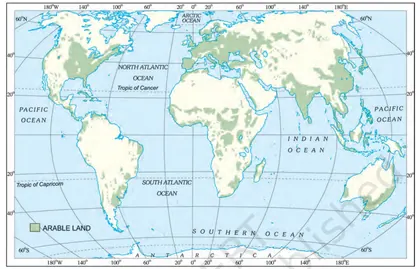
Introduction: This chapter explains agriculture as a primary economic activity that sustains millions and shapes India’s land use, rural life and economy. It introduces basic concepts — types of farming, cropping patterns, factors affecting agriculture and the relationship between agriculture and environment. Importance: Agriculture provides food, raw materials and employment; it influences settlement patterns, trade and industry. Understanding agricultural practices, problems and improvements helps students appreciate resource use, sustainability and rural development. Key themes: factors of agricultural production (climate, soil, water, technology), types of farming (subsistence, commercial, plantation, mixed, pastoral, intensive/extensive, shifting cultivation), cropping seasons (Kharif, Rabi, Zaid), major crops of India (cereals, pulses, oilseeds, cash crops), regional cropping patterns and major cropping regions, methods to increase production (irrigation, high-yielding varieties, fertilizers, mechanization), land use and land reforms, problems of Indian agriculture, government initiatives (Green Revolution, MSP, cooperatives), environmental concerns and sustainable…
Learning Objectives
- Define agriculture and list its main components (crop production, animal husbandry, forestry and fisheries).
- Explain the difference between subsistence and commercial farming and give two examples of each.
- Describe Kharif, Rabi and Zaid crops and classify common Indian crops under each season.
- Identify the major food and cash crops of India (rice, wheat, sugarcane, cotton, jute, tea) and locate their main growing regions on an outline map.
- Compare and contrast intensive and extensive farming with reference to land use, labour and yield.
- Explain various methods of irrigation (canals, wells, tube wells, drip and sprinkler) and evaluate their suitability for different regions.
- Illustrate the role of modern agricultural practices (high-yielding varieties, chemical fertilizers, pesticides, mechanization) in the Green Revolution.
- Apply knowledge of crop rotation and mixed cropping to suggest sustainable practices for a small farm.
Topics in this chapter
15 topics · tap a topic title to jump straight to it.
Meaning and Importance of Agriculture
Meaning: Agriculture is the practice of cultivating soil, growing crops and raising animals to produce food, fibre, fuel and other products. It also includes related activities such as horticulture, animal husbandry, fisheries and forestry. Agriculture provides the basic raw materials needed by many industries and sustains rural livelihoods.
Scope: Crop production (cereals, pulses, oilseeds), horticulture (fruits, vegetables), plantation crops (tea, coffee, sugarcane), animal husbandry (milk, meat, eggs), fisheries, forestry and agro-processing.
Types: Subsistence agriculture (family consumption) and commercial agriculture (produce for market); intensive (high input on small land) and extensive (low input on large land); plantation agriculture (large estates growing one crop).
Importance:
- Food security: Provides staples and diverse foods necessary for the population.
- Employment: Employs a large portion of the rural workforce and reduces poverty.
- Raw materials for industry: Supplies cotton, jute, sugarcane, oilseeds, etc., to agro-based industries.
- Foreign exchange: Exports of tea, spices, cotton and other crops earn foreign currency.
- Rural income & livelihoods: Main source of income for rural families; supports allied services (transport, trade, storage).
- Support for other sectors: Provides demand for manufacturing and services and raw inputs for industries.
- Environmental benefits: When managed sustainably, agriculture conserves soil, supports biodiversity and helps regulate the water cycle.
- Social & cultural role: Agriculture shapes rural societies, festivals, diets and traditional knowledge.
Challenges to realise its importance: Small and fragmented holdings, dependence on monsoon rains, soil degradation, need for improved irrigation, seeds, technology and market access. Addressing these challenges increases productivity, incomes and national development.
- Green Revolution in India (1960s–1970s): Introduction of high-yielding varieties, irrigation and fertilisers dramatically increased wheat and rice production, improving food security.
- Punjab and Haryana: Intensive wheat–rice cropping with irrigation has made these states major food-producing regions.
- Assam and Darjeeling: Large-scale tea plantations supplying domestic consumption and exports (foreign exchange earnings).
- Kerala spice cultivation and coastal fisheries: Support local employment and are important sources of export revenue.
- Smallholder mixed farms: A family grows vegetables, cereals and keeps dairy animals to meet household needs and sell surplus locally.
- Uttar Pradesh and Maharashtra: Large sugarcane belts supplying sugar factories and supporting agro-industries.
- Yield per hectare = Total production (kg or tonnes) ÷ Area cultivated (hectares)
- Cropping intensity (%) = (Gross cropped area ÷ Net sown area) × 100
- Percentage contribution of agriculture to GDP (%) = (Agricultural GDP ÷ Total GDP) × 100
- Per capita availability = Total production ÷ Population
- Growth rate of production (%) = ((Productioncurrent year − Productionprevious year) ÷ Productionprevious year) × 100
Types of Farming
Overview
Farming is the cultivation of crops and rearing of animals for food, fibre and other products. Types of farming are classified according to the purpose (subsistence or commercial), level of technology and intensity, climatic conditions and scale. Understanding these types helps explain regional agricultural patterns and the choice of crops or animals.
Major types of farming
1. Subsistence Farming
- Primitive subsistence farming – Low inputs, simple tools, mainly for family consumption. Two common forms:
- Shifting cultivation (jhum): Farmers clear forest, cultivate for a few years, then move to a new plot when soil fertility falls. Common in parts of North-East India, Amazon, and Central Africa.
- Nomadic herding: Pastoral communities move with their animals in search of pasture and water. Seen in Rajasthan, Ladakh, Mongolia, Sahel region.
- Characteristics: Small-scale, labour-intensive, low yields, local consumption.
2. Intensive Subsistence Farming
- High labour and capital per unit area to obtain maximum yield from small land holdings.
- Two subtypes:
- Intensive subsistence with paddy: Wet rice farming using bunds, puddling and continuous human labour. Typical in Indo-Gangetic plains, eastern India, Bangladesh, China and SE Asia.
- Intensive subsistence without paddy: Grown where irrigation or rainfall is less favourable; crops include wheat, barley, pulses, oilseeds, vegetables. Common in parts of north-west India.
- Characteristics: Small holdings, high cropping intensity, high yields per hectare relative to primitive farming.
3. Commercial Farming
- Farming primarily for sale in the market. Uses modern technology, mechanisation and chemical inputs.
- Important types of commercial farming:
- Plantation farming: Large estates growing single cash crops (tea, coffee, rubber, sugarcane, coconut) for export/market. Examples: tea in Assam and Darjeeling, coffee in Karnataka, rubber in Kerala).
- Mixed farming: Combination of crops and livestock on the same farm (e.g., cereals + dairy). Common in Punjab/Haryana and many European farms.
- Dairy farming: Specialised rearing of cattle/buffaloes for milk production. Important around urban markets, e.g., Punjab, Gujarat; Netherlands is a leading example worldwide.
- Commercial grain farming (extensive): Large mechanised farms growing wheat, maize, barley — e.g., North American prairies, Russian steppe, parts of north-west India.
- Market gardening / horticulture: Intensive production of fruits, vegetables and flowers near urban markets (peri-urban areas around cities).
- Characteristics: Large scale, capital intensive, specialised, higher productivity and market orientation.
Advantages & disadvantages (summary)
- Subsistence farming: + Food security for families, low capital needed; − Low productivity, environmental degradation (in shifting cultivation) and vulnerability to climate.
- Intensive subsistence: + High production per unit area, supports dense populations; − Labour pressures, soil exhaustion if not managed.
- Commercial farming: + Economic returns, employment, export earnings; − Risk of monoculture, dependence on inputs, environmental concerns.
Factors determining type of farming
- Climate (rainfall, temperature)
- Soil type and fertility
- Topography and availability of water/irrigation
- Population density and landholding size
- Technology, capital and market access
- Tradition and local demand
Conclusion
Types of farming reflect the interaction of natural conditions, socio-economic factors and technology. In India both subsistence and commercial systems coexist — small farmers often practise intensive subsistence while large estates and agribusinesses run commercial farms.
- Shifting cultivation (jhum) — Nagaland, Mizoram and parts of Arunachal Pradesh in India; also Amazon basin and parts of Africa.
- Nomadic herding — Bakarwal, Gujjars in India; Bedouins in the Middle East; pastoralists in Mongolia.
- Intensive subsistence with paddy — Indo-Gangetic plains, West Bengal, Bihar; irrigated rice fields of Bangladesh and Vietnam (e.g., Mekong Delta).
- Intensive subsistence without paddy — Wheat and pulse cultivation in parts of Haryana, Punjab (smallholders).
- Plantation farming — Tea estates in Assam and Darjeeling; coffee plantations in Coorg (Karnataka); rubber plantations in Kerala; sugarcane estates in Maharashtra and Karnataka.
- Mixed farming — Typical farms in Punjab/Haryana combining cereal crops with dairy or poultry.
- Net Sown Area (NSA) = Area sown with crops (ha). (Used as a base value; usually given by statistical data.)
- Gross Cropped Area (GCA) = Sum of area under crops (ha) including multiple cropping = NSA + area sown more than once.
- Cropping Intensity (%) = (GCA / NSA) × 100. (Indicates intensity of cultivation.)
- Crop Yield (kg/ha) = Total production of a crop (kg) / Area harvested (ha).
- Productivity per worker = Total agricultural production / Number of agricultural workers.
- Irrigation Percentage (%) = (Irrigated area / NSA) × 100.
Cropping Seasons and Cropping Patterns
Definition: Cropping seasons are specific periods of the year when crops are sown and harvested. Cropping patterns describe the spatial and temporal arrangement of crops grown on the land — what crops are grown, when, and how (single crop, mixed, intercropping, multiple cropping).
Main Cropping Seasons in India:
- Kharif: Monsoon season crops sown with the onset of southwest monsoon (June–July) and harvested in Sept–Oct/Nov. Key crops: paddy (rice), maize, bajra, jowar, cotton, soyabean, sugarcane (planting), pulses (moong).
- Rabi: Winter season crops sown after monsoon (Oct–Dec) and harvested in spring (Mar–Apr). Key crops: wheat, barley, mustard, gram, peas.
- Zaid: Short summer season between Rabi and Kharif (Apr–Jun). Key crops: vegetables, watermelon, muskmelon, cucurbits, some fodder crops.
Factors Determining Cropping Seasons and Patterns:
- Climate: Rainfall pattern (monsoon timing and amount) and temperature control which season a crop suits.
- Irrigation availability: Irrigated areas can grow water-demanding or off-season crops (allowing multiple cropping).
- Soil type and fertility: Determines suitability for paddy, pulses, oilseeds, cotton, etc.
- Relief/topography: Plains favour intensive agriculture; hills favour terrace/plantation cropping.
- Market, transport and policies: Demand, MSP, and procurement systems influence what farmers grow.
- Traditional practices and technology: Crop rotation, use of high-yielding varieties and fertilizers change patterns (e.g., Green Revolution).
Types of Cropping Patterns and Practices:
- Monoculture/Single cropping: One crop on a field per year.
- Multiple cropping: Growing two or more crops on the same field in a year (double/triple cropping). More common where irrigation exists.
- Mixed cropping: Two or more crops grown together without distinct row arrangement (e.g., millet + pulses).
- Intercropping: Two or more crops grown in definite row proportion (e.g., maize + legumes) to increase yield and reduce pests.
- Crop rotation: Sequential cropping of different crops on the same land in different seasons/years to maintain soil fertility (e.g., rice → legume).
- Plantation and permanent cropping: Long-duration crops like tea, coffee, rubber, coconut grown in specific regions.
- Shifting cultivation (Jhum): Practised in some hill areas where land is cleared, used for a few years, then left fallow.
Regional Cropping Patterns (examples):
- North-West (Punjab, Haryana): Intensive wheat–rice cropping (double cropping) due to canal and tube-well irrigation.
- Eastern India (Bengal, Odisha, Bihar): Rice-dominant (Kharif) with pulses/oilseeds in Rabi where rainfall allows.
- Deccan Plateau (Maharashtra, Karnataka): Millets, cotton, sugarcane in irrigated pockets; cotton–soyabean rotations in some districts.
- Coastal and South (Kerala, Tamil Nadu): Plantation crops (coconut, rubber), mixed cropping with spices and bananas.
Importance and Effects: Cropping patterns determine food security, income, soil health and water use. Intensive rice–wheat systems boosted production but increased groundwater depletion and soil nutrient imbalance in some regions. Diversified and sustainable patterns (crop rotation, intercropping) help maintain soil fertility and reduce pest risk.
Key Terms to Remember: Net sown area: land sown at least once in a year. Gross cropped area: total area sown counted with multiple cropping (if a field is cropped twice it is counted twice). Cropping intensity measures how intensively land is used.
- Punjab: Rice in Kharif and Wheat in Rabi — the classic rice–wheat double cropping system supported by irrigation (Green Revolution).
- Maharashtra: Cotton and Soyabean in rainfed areas; sugarcane in irrigated tracts (Vidarbha and western Maharashtra).
- Kerala: Mixed cropping — coconut trees with intercropped banana, pepper and tapioca (diversified smallholder farming).
- Rajasthan: Bajra (Kharif) and Mustard (Rabi) — drought-tolerant crops adapted to low rainfall.
- Bihar and Eastern UP: Rice in Kharif; pulses and wheat in Rabi where irrigation is available.
- Cropping intensity (%) = (Gross cropped area / Net sown area) × 100
- Gross cropped area = Sum of areas of all crops grown (count fields multiple times if cropped more than once)
- Percentage area under a crop (%) = (Area sown under that crop / Net sown area) × 100
- Yield per hectare = Total production of crop / Area harvested
Major Crops and Their Distribution
Introduction: Agriculture in India grows a wide variety of crops because of its varied climate, soils and terrain. Major crops include cereals (rice, wheat, millets), pulses, oilseeds, commercial crops (sugarcane, cotton, jute), and plantation crops (tea, coffee, rubber, coconut). Understanding their distribution helps explain regional economies and food security.
Seasonal classification:
- Kharif (monsoon crops): Sown with the onset of monsoon (June–July), harvested in autumn (examples: rice, maize, cotton, sugarcane in some areas, jute).
- Rabi (winter crops): Sown in winter (Oct–Dec), harvested in spring (examples: wheat, gram, mustard).
- Zaid (summer crops): Grown between rabi and kharif (examples: vegetables, some melon crops, summer sugarcane plantings).
Major crops and their climatic/soil needs:
- Rice: Requires high temperature, heavy rainfall or assured irrigation, found mainly in Eastern and Southern plains (West Bengal, Uttar Pradesh, Andhra Pradesh, Punjab, Tamil Nadu, Odisha, Bihar).
- Wheat: Grown in cool, temperate winters with irrigation—mainly in the Indo-Gangetic Plains (Punjab, Haryana, Uttar Pradesh, Bihar, parts of Madhya Pradesh).
- Millets (Jowar/sorghum, Bajra, Ragi): Tolerant of dry conditions and poor soils—common in semi-arid and plateau regions (Maharashtra, Karnataka, Rajasthan, parts of Andhra Pradesh).
- Pulses: Many types across India; grown both in dry and irrigated areas. Major producers include Madhya Pradesh, Maharashtra, Rajasthan, Uttar Pradesh.
- Oilseeds (Groundnut, Mustard, Soybean): Groundnut in Gujarat, Andhra, Tamil Nadu; Mustard in Rajasthan, Haryana, Madhya Pradesh; Soybean in Madhya Pradesh and Maharashtra.
- Sugarcane: Requires high temperature and abundant water—grown in Uttar Pradesh, Maharashtra, Karnataka, Tamil Nadu.
- Cotton: Needs warm climate and black soils—major in Gujarat, Maharashtra, Telangana, Andhra Pradesh, parts of Punjab and Haryana.
- Jute: Requires high humidity and alluvial soil—mainly in West Bengal and Assam.
- Tea: Grown in high rainfall and hilly regions—Assam, West Bengal (Darjeeling), Kerala, Tamil Nadu.
- Coffee: Plantation crop for highland tropical regions—mainly in Karnataka (Coorg), Kerala, Tamil Nadu.
- Rubber and Coconut: Tropical, high-rainfall coastal and southern regions—Kerala, parts of Karnataka, Tamil Nadu, Andaman & Nicobar (coconut along coastlines).
Factors affecting distribution: Climate (temperature, rainfall), soil type, irrigation facilities, relief (plains vs hills), technology (Green Revolution), market access, and government policies. Example: Punjab and Haryana developed high wheat yields after irrigation and improved seeds.
Regional patterns (brief):
- Northern Plains: Wheat, rice, sugarcane, maize—intensive agriculture with irrigation.
- Eastern India & Coastal Plains: Rice, jute, pulses, oilseeds, coconut.
- Peninsular Plateau & Deccan: Millets, cotton, pulses, oilseeds; coffee and spices in hill areas.
- Northeast: Rice, tea, jute, horticulture.
- Western arid regions: Millets, pulses, groundnut; irrigated pockets grow sugarcane and cotton.
Importance & contemporary notes: Crop diversity supports food security, livelihoods and exports (tea, coffee, cotton). Sustainable practices (crop rotation, efficient irrigation, organic matter addition) and climate adaptation are increasingly important as weather patterns change.
- Green Revolution: Punjab and Haryana adopted high-yielding wheat varieties and irrigation, making them India's breadbasket for wheat.
- Tea plantations in Assam and Darjeeling produce aromatic black tea for domestic consumption and export.
- Coffee in Coorg (Karnataka) and Wayanad (Kerala) grows on hilly, well-drained land with seasonal rainfall.
- Groundnut belts: Gujarat and Andhra Pradesh are major groundnut producers because of suitable soil and semi-arid climate with monsoon rains.
- Sugarcane in Uttar Pradesh and Maharashtra uses irrigated fertile plains and supports sugar mills and ethanol production.
- Crop yield (q/ha) = Total production (quintals or tonnes) / Area harvested (hectares)
- Percentage share of a crop = (Production of that crop / Total production of all crops) × 100
- Cropping intensity (%) = (Gross cropped area / Net sown area) × 100
- Irrigation percentage (%) = (Irrigated area / Total cultivated area) × 100
- Net sown area (ha) = Total area sown at least once in the year
Factors Affecting Agriculture
Agriculture depends on many interacting factors. These can be grouped into physical (natural) factors and human (economic, social, political) factors. Understanding them helps explain why different crops are grown where they are and why productivity varies.
1. Physical factors
- Climate: Temperature, rainfall, humidity and length of growing season determine what crops will thrive. Example: Rice requires high temperature and heavy rainfall; wheat needs cool winters.
- Soil: Soil type (alluvial, black, red, laterite), texture (sand, silt, clay), depth, drainage and fertility affect root growth and nutrient availability. Alluvial soils in river plains support intensive cropping.
- Relief and Topography: Flat plains are best for mechanised farming and irrigation; slopes limit machinery and favour terracing (e.g., hill rice terraces). Elevation affects temperature and crop choice.
- Water availability: Presence of rivers, groundwater and irrigation systems is critical. Irrigated areas produce crops more reliably and allow multiple crops per year.
- Biological factors: Seeds/varieties, presence of pests and diseases, pollinators, and livestock all affect output.
2. Human factors
- Technology and inputs: Use of high-yielding varieties (HYVs), fertilizers, pesticides, machinery and improved irrigation raises productivity (example: Green Revolution).
- Capital and credit: Farmers need money to buy inputs and equipment; access to credit or subsidies influences investment decisions.
- Labour: Availability and cost of labour determine choice between labour-intensive and mechanised agriculture.
- Land tenure and farm size: Secure land rights and larger, consolidated farms encourage investment; fragmented holdings may reduce efficiency.
- Infrastructure and markets: Roads, storage, cold chains, local markets and transport determine how easily produce reaches consumers, affecting crop choices and prices.
- Government policies: Price supports, minimum support prices, input subsidies, irrigation projects and extension services shape agricultural practices.
- Social and cultural factors: Dietary preferences, traditional practices, and labour customs influence cropping patterns (e.g., millets in dry regions due to tradition and drought tolerance).
Interactions and outcomes
These factors interact. Good soils and water plus modern inputs and infrastructure produce high yields (e.g., Punjab wheat). Poor rainfall, thin soils and weak markets limit output and push farmers to drought-tolerant crops (e.g., millets in parts of Rajasthan). Policies like subsidised electricity for pumps or guaranteed prices can dramatically change cropping patterns.
Key idea: No single factor alone determines agriculture; crop success is the result of combined physical suitability and human investment, technology and institutions.
- Green Revolution in Punjab: abundant irrigation, high-yielding wheat seeds, fertilisers and mechanisation dramatically raised wheat production in the 1960s–80s.
- Rice in West Bengal delta and coastal Andhra Pradesh: flat alluvial soils, high rainfall and river irrigation favour paddy cultivation and multiple crops per year.
- Tea in Assam and Darjeeling: high rainfall, acidic well-drained soils and hilly terrain make these regions ideal for tea plantations.
- Millets in Rajasthan and parts of central India: low rainfall and poor soils favour drought-tolerant millets rather than water-intensive rice.
- Terraced rice cultivation in Himachal Pradesh and northeastern states: steep slopes and hilly terrain are farmed by terracing to conserve soil and water.
- Drought impacts in Marathwada (Maharashtra): erratic monsoon and low irrigation coverage have led to crop failures and farmer distress in drought years.
- Crop yield (productivity) = Total production / Area cultivated (e.g., tonnes per hectare)
- Cropping intensity (%) = (Gross cropped area / Net sown area) × 100
- Percentage of irrigated land (%) = (Irrigated area / Net sown area) × 100
- Fertiliser consumption per hectare = Total fertiliser used / Area cultivated
- Land under a crop (%) = (Area under that crop / Total cultivated area) × 100
Soil and Cropping
What is soil? Soil is the loose top layer of the Earth's crust made up of mineral particles, organic matter, water and air. It forms by weathering of rocks and decomposition of plants and animals. Soil is the medium for plant growth and supports agriculture.
Components and properties of soil
- Mineral particles: sand (large), silt (medium), clay (fine) — texture affects water retention and aeration.
- Organic matter (humus): improves fertility and structure.
- Air and water: occupy pore spaces — important for root respiration and nutrient transport.
- pH, soil depth, colour and fertility: determine suitability for different crops.
Major types of soil in India & their features
- Alluvial soil: Found in Indo-Gangetic plains and coastal plains. Deep, fertile, suitable for rice, wheat, sugarcane, jute, pulses.
- Black (Regur) soil: Deccan plateau. Rich in moisture-retaining clay, good for cotton, sugarcane, millets.
- Red soil: Peninsular plateau, parts of Tamil Nadu, Karnataka. Rich in iron, low in nitrogen — coarse soils grow groundnut, millet, cotton with proper manuring.
- Laterite soil: Humid tropics, Western Ghats, parts of Kerala. Leached soils used for tea, coffee, cashew, and plantation crops when fertilized.
- Desert soil: Rajasthan. Sandy, low organic matter, grow millets, pulses where rain or irrigation permits.
- Mountain soil: Himalayan and northeastern hills. Thin, fertile in valleys — horticulture (apples, tea, spices).
Soil management and conservation
- Prevent erosion: terracing, contour ploughing, shelter belts (trees/hedges).
- Maintain fertility: crop rotation, mixed cropping, green manuring, application of fertilizers and organic manure.
- Improve structure and moisture: mulching, adding organic matter, proper irrigation methods (drip, sprinkler).
Cropping and cropping patterns
- Cropping means growing crops on the soil. A cropping pattern is the spatial distribution and sequence of crops grown on farmland over time.
- Seasonal classification in India:
- Kharif (monsoon) crops: sown with onset of monsoon (June–July), harvested in Sept–Oct. Examples: rice, maize, cotton, sugarcane.
- Rabi (winter) crops: sown after monsoon (Oct–Dec), harvested in spring (Mar–Apr). Examples: wheat, gram, mustard.
- Zaid (summer) crops: short-season crops grown between Rabi and Kharif (Apr–Jun). Examples: vegetables, fodder, watermelon.
- Types of cropping systems:
- Mono-cropping: same crop year after year on the same land.
- Cropping sequences: growing different crops in succession (crop rotation).
- Mixed cropping: two or more crops grown on the same field simultaneously.
- Multiple cropping: more than one crop grown in a year on the same land (double/triple cropping).
Factors affecting cropping pattern: climate (rainfall, temperature), type and depth of soil, irrigation facilities, relief (topography), market demand, transportation, government policies and traditional practices.
Why soil and cropping matter: Different soils support different crops. Good soil management increases productivity, ensures sustainable agriculture and reduces land degradation. Cropping choices determine food security, farmers' income and regional agricultural specialization.
- Punjab and Haryana (Alluvial soil + extensive irrigation): High yields of wheat and rice; example of intensive double cropping and Green Revolution techniques (chemical fertilizers, high-yielding varieties).
- Maharashtra and Madhya Pradesh (Black soil): Major cotton belt; black soil's moisture retention is ideal for rainfed cotton cultivation.
- Kerala and Western Ghats (Laterite soil + high rainfall): Tea and coffee plantations on terraced slopes; use of contour planting to reduce erosion.
- Rajasthan (Desert and arid soils): Bajra and berseem in rainfed/irrigated pockets; use of drought-resistant millet crops.
- Himachal Pradesh (Mountain soils): Terraced fields for apple orchards and rice; horticulture dominates where flat land is limited.
- Yield per hectare = Total production of crop (kg or tonnes) / Area harvested (hectares). Example: If production = 20,000 kg and area = 5 ha, yield = 4000 kg/ha.
- Cropping intensity (%) = (Gross cropped area / Net sown area) × 100. Gross cropped area counts all cropped areas including multiple crops on same land. Example: If net sown area = 100 ha and gross cropped area = 150 ha, cropping intensity = 150%.
- Percentage area under a crop = (Area under that crop / Total cultivated area) × 100. Useful to show cropping pattern shares.
- Gross cropped area = Sum of areas under all crops (including multiple crops on the same land during a year).
- Net sown area = Area sown with crops at least once in the agricultural year (each physical hectare counted once).
Agricultural Practices and Inputs
Overview
Agricultural practices and inputs are the methods and resources farmers use to grow crops and rear animals. They determine productivity, sustainability and livelihoods. Important elements include types of farming, crop-growing methods, and the inputs required (seeds, water, labour, nutrients and tools).
Major inputs
- Seeds and planting material: Improved/high-yielding, hybrid and certified seeds give better germination and yields.
- Water/Irrigation: Sources include canals, wells/tube wells, tanks, and rainfall. Modern systems: drip and sprinkler irrigation for water use efficiency.
- Soil nutrients: Chemical fertilizers (N, P, K), organic manure, compost and biofertilizers to maintain fertility.
- Agrochemicals: Pesticides, insecticides and herbicides to control pests and weeds (used carefully to avoid harm).
- Farm power and implements: Animal labour, tractors, ploughs, seed drills, harvesters and threshers.
- Human labour and management: Skilled decisions on sowing time, spacing, irrigation schedule and post-harvest handling.
Common agricultural practices
- Tilling/Ploughing: Preparing land to create a seedbed and control weeds.
- Sowing/Transplanting: Direct sowing of seeds or raising seedlings in nurseries and transplanting (e.g., paddy).
- Weeding and interculture: Removing weeds manually or mechanically and loosening soil.
- Irrigation scheduling: Supplying water at critical crop stages; drip irrigation for orchards, sprinkler for vegetables.
- Plant protection: Integrated Pest Management (IPM), biological control and safe pesticide use.
- Harvesting and post-harvest handling: Proper harvesting, threshing, drying and storage to reduce losses.
- Crop rotation and cropping patterns: Rotating cereals with legumes to restore soil fertility; multi-cropping to increase productivity.
Types of cropping patterns
- Mono-cropping: Same crop each season/year (common in plantation crops).
- Multiple cropping: More than one crop grown on the same field in a year (e.g., rabi + kharif).
- Intercropping/mixed cropping: Two or more crops grown simultaneously on the same field (e.g., maize + legumes).
- Crop rotation: Sequence of different crops on the same land over seasons to manage soil fertility and pests.
Modern and sustainable approaches
- High-yielding varieties (HYV) & hybrids: Increase productivity but need more water/fertilizers.
- Precision farming: Use of sensors, GPS and data to manage inputs efficiently.
- Organic farming: Uses organic manures, biofertilizers and avoids synthetic pesticides.
- Conservation agriculture: Minimum tillage, residue retention and crop rotations to conserve soil and water.
- Integrated farming systems: Combine crops, livestock and aquaculture to diversify income and recycle nutrients.
Problems and considerations
- Overuse of chemical fertilizers and pesticides damages soil and environment.
- Inequitable access to irrigation, quality seeds and credit limits productivity in many regions.
- Soil erosion, salinisation and depletion of groundwater from unsustainable practices.
- Post-harvest losses due to poor storage and transport.
Understanding agricultural practices and inputs helps plan better farming systems that increase yield, conserve resources and ensure food security.
- Punjab — Intensive wheat–rice double cropping using tube wells, tractors, HYV seeds and chemical fertilizers (Green Revolution example).
- Kerala — Plantation agriculture: tea, coffee and rubber grown as perennial crops with shade and irrigation; emphasis on labour-intensive practices.
- Rajasthan (dryland areas) — Dry farming of millets (bajra, jowar) using rainwater harvesting, drought-resistant varieties and moisture-conserving practices.
- North-East India (shifting cultivation/jhum) — Slash-and-burn practice where fields are cultivated for a few years then left fallow; being replaced by settled agriculture for sustainability.
- Horticulture with drip irrigation — Apple orchards in Himachal Pradesh and drip-irrigated mango farms increase water-use efficiency and fruit quality.
- Crop yield (kg/ha) = Total production (kg) / Area harvested (ha)
- Cropping intensity (%) = (Gross Cropped Area / Net Sown Area) × 100
- Percentage of irrigated area (%) = (Area irrigated / Net Sown Area) × 100
- Fertilizer use per hectare (kg/ha) = Total fertilizer applied (kg) / Net Sown Area (ha)
- Net Sown Area (NSA) + Fallow land + Other agricultural land = Total agricultural land (use for land accounting)
Irrigation
What is Irrigation?
Irrigation is the artificial application of water to the land or soil to assist in the growing of crops when rainfall is insufficient or irregular. It makes agriculture less dependent on the monsoon and increases crop yields and cropped area.
Why is Irrigation Needed?
- To supplement inadequate or uneven rainfall.
- To allow multiple cropping (growing more than one crop a year).
- To grow crops in arid and semi-arid regions.
- To increase agricultural productivity and food security.
Sources of Irrigation
- Surface water: Rivers and canals (canal irrigation), tanks, reservoirs created by dams.
- Groundwater: Wells and tube wells tapping underground water.
- Rainwater harvesting: Collecting and storing runoff in ponds/tanks for later use.
Types / Methods of Irrigation
- Traditional methods: Flooding/Surface irrigation (field is inundated), Basin, Furrow, and Border irrigation.
- Well and Tank irrigation: Common in peninsular India (tanks in Tamil Nadu, wells in many regions).
- Canal irrigation: Water diverted from rivers through canals to fields (important in Indo-Gangetic plains).
- Modern methods: Sprinkler irrigation (simulates rainfall) and Drip irrigation (saves water by delivering it near plant roots).
Advantages of Good Irrigation
- Increased and stable crop yields.
- Enables multiple cropping and diversification to high-value crops.
- Supports rural employment and economies dependent on agriculture.
Problems and Challenges
- Waterlogging: Continuous irrigation without proper drainage can raise the water table, reducing aeration of roots and harming crops.
- Soil salinity: Evaporation of irrigated water can concentrate salts in the root zone, making land unproductive.
- Groundwater depletion: Excessive pumping from tube wells lowers the water table (seen in parts of Punjab, Haryana, Rajasthan).
- Unequal distribution: Some regions receive more irrigation (e.g., Punjab, Haryana) while others remain rainfed.
Sustainable Irrigation Practices
- Use of micro-irrigation (drip and sprinkler) to increase water-use efficiency.
- Improved drainage to prevent waterlogging and reclaim salinised soils.
- Rainwater harvesting and watershed management for groundwater recharge.
- Crop planning and scheduling irrigation based on crop water needs and local climate.
Important Terms
- Gross Cropped Area (GCA): Total area sown including area sown more than once in the year.
- Net Sown Area (NSA): Actual physical area sown with crops.
- Irrigated Area: Area provided with irrigation at least once in a year.
Role in India
Irrigation transformed agriculture in India by enabling the Green Revolution in the 1960s and 1970s. Major irrigation projects (dams and canal systems) and widespread use of tube wells increased foodgrain production, especially in states such as Punjab, Haryana, Uttar Pradesh and parts of Andhra Pradesh and Tamil Nadu. However, the unequal spread and environmental impacts require better water management today.
- Punjab and Haryana: Extensive use of tube wells and canal irrigation enabling double cropping (wheat and rice), but causing groundwater decline.
- Indira Gandhi Canal (Rajasthan): Brings canal water to the arid Thar desert, enabling farming in previously dry areas.
- Tanks in South India (Tamil Nadu, Andhra Pradesh): Traditional water storage systems used for paddy cultivation and recharge of groundwater.
- Kallanai (Grand Anicut) on the Cauvery in Tamil Nadu: One of the oldest irrigation dams (built by Chola rulers) still used to divert water to agricultural lands.
- Drip irrigation for sugarcane and orchards in Maharashtra and micro-sprinklers for vegetable cultivation in Haryana—examples of modern water-saving techniques.
- Irrigation Intensity (%) = (Gross Irrigated Area / Net Sown Area) × 100 — shows how intensively irrigation is used relative to available sown land.
- Percentage of Irrigated Area = (Irrigated Area / Net Sown Area) × 100 — proportion of sown land that receives irrigation.
- Water Use Efficiency (%) = (Water Beneficially Used / Water Withdrawn) × 100 — measures how efficiently withdrawn water is used for crops.
Green Revolution and Agricultural Modernisation
What was the Green Revolution?
The Green Revolution is the name given to the set of agricultural changes introduced in the 1960s–70s that raised food-grain production sharply using modern technology. It began with the introduction of high-yielding varieties (HYVs) of seeds (especially wheat and rice), together with greater use of irrigation, chemical fertilisers, pesticides, and mechanisation. In India the movement started in states such as Punjab, Haryana and western Uttar Pradesh and helped India move from food shortages to self-sufficiency in food grains by the 1970s.
Main components
- High-yielding varieties (HYVs) of seeds — genetically improved, responsive to fertilisers and water.
- Irrigation expansion — tube wells, canals and better water management.
- Chemical inputs — fertilisers and pesticides for higher productivity.
- Mechanisation — tractors, threshers and harvesters to speed operations.
- Credit, extension services and procurement — loans, price support and advice to farmers.
Achievements
- Large increases in food-grain production (especially wheat and rice) and yields per hectare.
- Food security for a rapidly growing population; lower dependence on imports.
- Rural prosperity in many areas; rise in agricultural incomes and agro-industries.
Problems and limitations
- Regional imbalance: benefits concentrated in irrigated and fertile states (Punjab, Haryana, western UP) while many areas remained marginal and rainfed.
- Environmental damage: depletion of groundwater, soil degradation, salinisation and pesticide residues.
- Loss of crop diversity and increased vulnerability to pests/diseases.
- Higher input costs and indebtedness risk for small farmers; not all farmers benefited equally.
Agricultural modernisation (beyond the Green Revolution)
Modernisation continues as a broader process: better seeds (including hybrid and biotech varieties), precision farming, micro-irrigation (drip and sprinkler), mechanisation of more operations, improved storage and market linkages, use of satellite/GIS for planning, integrated pest management (IPM), soil-health practices, and farm-level diversification (horticulture, dairying, fisheries).
Towards sustainability
Because of the environmental and social costs of an input-heavy model, modern policy emphasis includes water-saving technologies (drip, SRI for rice), organic farming, crop rotation, integrated nutrient management, and government support for smallholders to access credit, insurance and markets.
Key classroom takeaway
The Green Revolution made India self-sufficient in food grains and increased productivity, but it also created new challenges. Agricultural modernisation today seeks to combine higher production with sustainability and equitable benefits for all farmers.
- Punjab and Haryana (India): Early and large adoption of HYV wheat, intensive irrigation and fertiliser use produced dramatic increases in wheat output from the late 1960s onward.
- IR8 rice (the 'miracle rice'): Developed in the Philippines and widely adopted, IR8 increased rice yields and was a cornerstone example of HYV seed impact.
- SRI (System of Rice Intensification): A modern technique adopted in parts of India that raises rice yields while using less water and fewer seeds.
- Sikkim (India) declaring a shift to organic farming: an example of moving from chemical-intensive methods to sustainable alternatives at a state level.
- Yield (kg/ha) = Total production (kg) / Area cultivated (ha)
- Percentage change (%) = ((New value - Old value) / Old value) × 100
- Per capita foodgrain availability (kg per person) = Total foodgrain production (kg) / Population (persons)
Land Use, Land Reforms and Farm Size
Land use means how the total geographical area of a country is used for different purposes such as cultivation, forests, pastures, settlements and land not available for cultivation. Understanding land use helps plan agriculture, forestry, water management and urbanisation.
Major land use categories (short definitions):
- Net Sown Area (NSA): Land sown with crops during the year (each piece counted once even if sown more than once is excluded).
- Gross Cropped Area (GCA): Total area sown including areas sown more than once. GCA >= NSA.
- Forest Area: Land under natural or planted forests.
- Land Not Available for Cultivation: Settlements, roads, railways, hills, rivers, rocky areas.
- Wasteland and Cultivable Waste: Land that can be reclaimed for cultivation with effort.
- Permanent Pastures and Grazing Land: For livestock grazing.
Land Reforms are legal and administrative measures to change land ownership and improve the economic position of tillers. They were introduced after Independence to remove feudal exploitation and increase equity and productivity.
Important land reform measures:
- Abolition of intermediaries (e.g., zamindars): Transfered ownership or rights from landlords to actual tillers.
- Tenancy reforms: Secure tenancy rights, fix fair rents and protect sharecroppers.
- Land ceiling and redistribution: Limit on maximum land per family; surplus land distributed to landless/poor.
- Consolidation of holdings: Reorganising fragmented strips into compact plots so cultivation is easier.
- Cooperative farming and land pooling: Farmers pool land, labour and capital to cultivate jointly.
Why land reforms are needed: to reduce inequality, reduce exploitation of tenants, increase productivity, promote investment in land improvements and irrigation, and support rural development.
Farm Size: Operational holdings are classified by size. Typical class limits used in school texts are:
- Marginal: < 1 hectare
- Small: 1–2 hectares
- Semi-medium: 2–4 hectares
- Medium: 4–10 hectares
- Large: > 10 hectares
Problems of small and fragmented holdings:
- Low economies of scale—higher cost per unit area for inputs and machinery.
- Difficulty in mechanisation and irrigation.
- Greater vulnerability to poverty and low investment capacity.
- Fragmentation arises from inheritance laws and subdivision over generations.
Benefits of consolidation and larger/organized farming: easier use of tractors and machines, better access to credit and inputs, improved irrigation and storage, higher productivity and profitability.
How land use, land reforms and farm size are connected: land reforms that redistribute land and secure tenancy can increase farmers’ incentive to invest and improve productivity. Consolidation of fragmented holdings raises farm efficiency. The pattern of land use (how much area is under cultivation, forest or wasteland) affects how much land is available for distribution and agricultural expansion.
What students should remember: Know the main land use categories, the key land reform measures and why they were introduced, the definitions of farm-size classes, and the advantages/disadvantages of small versus consolidated holdings.
- Operation Barga (West Bengal): A program in the 1970s that recorded sharecroppers’ rights and gave them security, improving incentive and productivity.
- Green Revolution areas (Punjab, Haryana): Consolidated and larger holdings made mechanisation and high-yielding seed use easier, leading to higher production.
- Hilly states (Himachal Pradesh, Uttarakhand): Fragmented terraced farms are common because of inheritance and slope, limiting farm size and mechanisation.
- Land ceiling and redistribution: Several states passed laws to limit land holdings and distribute surplus to landless farmers—aimed at reducing inequality.
- Gross Cropped Area (GCA) = Sum of areas sown in all crops including areas sown more than once in a year
- Cropping Intensity (%) = (Gross Cropped Area / Net Sown Area) × 100
- Percent of a category of land = (Area of that category / Total Geographical Area) × 100
- Average Farm Size = Total Operated Area / Number of Operational Holdings
Allied Agricultural Activities
What are Allied Agricultural Activities?
Allied agricultural activities are occupations and enterprises linked to farming that support farmers' incomes and use farm resources. They include animal husbandry, dairy farming, poultry, fisheries, sericulture (silk production), bee-keeping (apiculture), agro-forestry, plantation crops and small-scale agro-based industries. These activities complement crop production, provide employment, and make rural income more stable.
Major types and short explanations
- Animal husbandry: Rearing animals (cattle, buffalo, sheep, goats) for milk, meat, wool and draught power. It uses crop residues as fodder and produces manure for fields.
- Dairy farming: Production and marketing of milk and milk products. It provides regular cash income and encourages cooperatives.
- Poultry: Rearing chickens and other birds for eggs and meat. It gives quick returns and suits small farms.
- Fisheries: Inland (ponds, rivers) and marine (sea) fishing and aquaculture (fish farming). It adds to protein supply and earns export income (e.g., shrimp farming).
- Sericulture: Rearing of silkworms to produce silk (mulberry, muga, eri). It is labour intensive and often done by smallholders.
- Apiculture (bee-keeping): Rearing bees for honey, beeswax and pollination services. It improves crop yields and provides extra income.
- Agro-forestry and plantations: Combining trees with crops/livestock (e.g., fruit orchards, timber, rubber, tea). This conserves soil and diversifies income.
Why are allied activities important?
- Provide regular and diversified income — reduces dependence on seasonal crop harvests.
- Create employment — especially for landless labourers and small farmers.
- Improve resource use — crop residues become animal fodder; animal manure improves soil fertility.
- Reduce risk — if crop fails, allied activities cushion income loss.
- Supply food and raw materials — milk, eggs, fish, silk, honey, timber and fibre.
Typical workflow and interactions
- Crop fields produce straw and by-products → used as animal feed.
- Animals produce manure → returned to fields as fertilizer.
- Bees improve fruit set and crop yields through pollination.
- Fisheries and aquaculture use suitable land/water resources and can be integrated with agriculture (e.g., paddy-fish systems).
Role in rural development
Allied activities are often promoted by government schemes, cooperatives and NGOs. They raise living standards in villages by creating value-added products (cheese, yogurt, processed fish, silk garments) and linking farmers to markets.
- Amul dairy cooperative (Gujarat): a major example of organised dairy farming that provides regular income to milk producers and sells milk products nationwide.
- Shrimp farming (Andhra Pradesh, Tamil Nadu): aquaculture of shrimp for export, increasing foreign exchange earnings.
- Carp culture in ponds (West Bengal, Uttar Pradesh): inland fish farming supplying local markets and protein.
- Sericulture in Karnataka and Assam: mulberry silk (Karnataka) and muga/eri silk (Assam) produced by small farmers and artisans.
- Poultry farms in Haryana and Andhra Pradesh: commercial egg and broiler production providing quick returns.
- Bee-keeping in Himachal Pradesh and Uttarakhand: honey production and improved pollination for fruit crops.
- Crop yield = Total crop production (kg or tonnes) / Area cultivated (hectares).
- Milk yield per animal = Total milk produced (litres) / Number of milch animals.
- Fish yield = Total fish produced (kg) / Water area or pond area (hectares).
- Feed Conversion Ratio (FCR) = Quantity of feed given (kg) / Weight gain (kg) — used in poultry and aquaculture to measure efficiency (lower is better).
- Farm profit (simple) = Total revenue from crops + allied activities − Total costs (input, labour, feed, etc.).
Marketing, Storage and Transportation
What is agricultural marketing? Agricultural marketing is the process of moving farm products from the farm to the consumer. It includes activities like harvesting, grading, packaging, storing, transporting, processing and selling. Good marketing ensures farmers get fair prices and consumers get quality food.
Why marketing, storage and transportation are important
- Reduce post-harvest losses so more food reaches the market.
- Help get products to consumers at the right time and place.
- Increase farmers' income by improving access to markets and better prices.
- Maintain quality and safety of perishable goods (fruits, vegetables, milk, fish).
Key stages in agricultural marketing
- Pre-harvest planning: choosing crops, seed, and estimating demand.
- Harvesting and on-farm handling: careful picking, cleaning, grading.
- Packing and processing: suitable packaging, value addition (e.g., dried fruit, pulses).
- Storage: protecting produce until sale or processing.
- Transport and distribution: moving goods to markets, wholesalers, retailers.
- Sale: market types include local markets (mandis), direct sales, cooperatives, processors, and online platforms (e.g., e-NAM).
Marketing channels (common examples)
- Farmer → Consumer (direct sale, farm gate or local market)
- Farmer → Retailer → Consumer
- Farmer → Wholesaler → Retailer → Consumer
- Farmer → Processor → Retailer → Consumer (for processed goods)
- Farmer Producer Organisations (FPOs) or cooperatives often help bypass middlemen and obtain better prices.
Storage
Storage keeps produce safe until it can be sold or processed. It is crucial because supply and demand vary by season.
- Types of storage:
- Traditional: earthen pots, granaries, thatched storage (used for grains and pulses).
- Improved dry storage: metal silos, godowns with pest control (for cereals).
- Cold storage: refrigerated rooms for potatoes, fruits, vegetables, dairy and meat.
- Controlled atmosphere storage: adjusts oxygen/CO2 for long-term fruit storage.
- Common storage problems: moisture, pests, rodents, fungal growth, and temperature fluctuations leading to spoilage and weight loss.
- Ways to reduce losses: proper drying, hermetic/airtight bags, pesticides where safe, good ventilation, clean storage structures, temperature control (cold chains for perishables).
Transportation
Transport moves farm produce from fields or storage to markets, processing units, or export points. Efficient transport reduces time, cost and spoilage.
- Modes of transport: road (trucks/tempo), rail, waterways, air (for high-value perishables), pipelines (for milk or edible oils in some cases).
- Cold chain: an uninterrupted refrigerated transport and storage system for perishable goods (cold rooms, refrigerated trucks, packhouses, chilling centers).
- Last-mile logistics: moving goods from local hubs to shops or consumers—often the most challenging and expensive part.
Role of government and institutions
- Minimum Support Price (MSP) and procurement (e.g., Food Corporation of India) stabilise prices for some crops.
- Market yards (mandis), quality testing, warehouses and cold storages are supported to reduce losses and ensure fair trade.
- Digital platforms (e-NAM) and market information systems give price and demand information to farmers.
Example: Mangoes
Mangoes are harvested ripe or semi-ripe. To sell in distant cities or abroad, they are graded, packed, shipped in cold stores or refrigerated containers. Poor packaging or transport increases bruising and loss; a good cold chain preserves quality and price.
Simple measures farmers can adopt
- Grade produce by size/quality before sale.
- Use moisture-free, clean storage structures or hermetic bags for grains.
- Use cooperative collection centres to reduce transport cost and get bulk prices.
- Access market price information and consider selling during periods of higher demand.
In summary: Marketing, storage and transportation are linked activities that determine how much of farm produce reaches consumers, in what quality, and at what price. Improving these reduces losses, raises incomes and ensures food security.
- Potatoes: Stored in cold storerooms to avoid sprouting and sell during off-season when prices are higher.
- Milk: Collected at village chilling centres and transported in insulated tankers to dairies to prevent spoilage.
- Tomatoes: Farmers join a cooperative to aggregate produce, load it in refrigerated trucks to a distant city market, reducing transport loss and increasing price.
- Grains (wheat/rice): Stored in government warehouses (FCI) after procurement at MSP to build buffer stocks for food security.
- Mango exports: Graded, packaged in crates, stored briefly in cold rooms and shipped in refrigerated containers to prevent spoilage during long transit.
- Fish: Brought on ice or in insulated boxes to maintain freshness from landing centre to urban markets or processors.
- Loss percentage = (Quantity lost / Total quantity harvested or stored) × 100
- Profit = Revenue − Total cost (Revenue = Price × Quantity sold)
- Profit margin (%) = (Profit / Cost) × 100
- Transport cost per ton-km = Total transport cost / (Tons transported × Distance in km)
- Price change (%) = ((New price − Old price) / Old price) × 100
Problems of Indian Agriculture
Introduction: Indian agriculture feeds over a billion people and provides livelihood to a large part of the population, but it faces many structural, social and environmental problems that reduce productivity, incomes and sustainability.
Major problems:
- Dependence on monsoon: A large share of cropped area still depends on rainfall. Poor or untimely monsoons cause droughts or crop failures, while heavy rains cause floods and damage.
- Small and fragmented landholdings: Average farm size is small and often fragmented into several plots. Small size reduces economies of scale, mechanisation and investment capacity.
- Low and uneven irrigation coverage: Much cultivation is rainfed. Lack of assured irrigation lowers yields and makes farmers vulnerable to weather.
- Low productivity and traditional practices: Use of outdated tools, low mechanisation, poor seed quality and inadequate extension services keep yields below potential.
- Poor soil health and land degradation: Soil erosion, salinity, waterlogging and nutrient depletion from overuse/underuse of inputs reduce long-term fertility.
- Groundwater depletion: Excessive tube-well use for irrigation in intensively cultivated regions (for example parts of northwestern India) has rapidly lowered groundwater levels.
- Inadequate credit and indebtedness: Many farmers lack access to formal credit and rely on expensive informal loans, increasing indebtedness and distress.
- Poor storage, transport and post-harvest losses: Lack of warehouses, cold chains and processing leads to large losses—especially in fruits, vegetables and perishables.
- Market problems and price instability: Weak market access, high role of middlemen, lack of price information and volatility in prices hurt farmers’ incomes.
- Low investment in infrastructure and technology: Poor rural roads, electricity, storage, processing and limited adoption of modern practices reduce competitiveness.
- Crop pattern and lack of diversification: Overemphasis on a few cereal crops in some regions leads to missed opportunities for higher-value crops and sustainable rotations.
- Environmental and climate risks: Climate change increases frequency of extreme events (droughts, floods, heatwaves) and shifts pest/disease patterns.
Consequences: Reduced farmer incomes, rural poverty, migration to cities, food insecurity in some regions, environmental damage and unsustainable use of natural resources.
Short notes on solutions (schools-level view): Improving irrigation and water management, consolidating and leasing land, better access to credit and insurance, investment in storage and markets, adoption of improved seeds and mechanisation, soil conservation, crop diversification and stronger extension services.
Conclusion: Solving these problems needs combined action by farmers, communities and government policies that promote sustainable, productive and market-oriented agriculture.
- Green Revolution in Punjab and Haryana raised wheat and rice yields through improved seeds, irrigation and fertiliser but also contributed to groundwater depletion and soil problems in some areas.
- Frequent droughts in Marathwada (Maharashtra) and parts of Karnataka have caused crop failures, loss of income and migration of labour to cities.
- Groundwater levels have fallen sharply in parts of Punjab and Haryana because of intensive tube-well irrigation for paddy cultivation.
- High post-harvest losses for fruits and vegetables (estimates often around 30–40%) due to lack of cold storage and poor transport infrastructure.
- Price crashes and volatility for perishable crops like onions have caused severe income instability for farmers in producing regions.
- Crop yield = Total production / Area harvested (for example, yield in kg per hectare = production in kg ÷ area in hectares)
- Cropping intensity (%) = (Gross cropped area / Net sown area) × 100
- Irrigation percentage (%) = (Irrigated area / Net sown area) × 100
- Per capita cultivated land = Net sown area / Rural population (useful to show land pressure)
- Gross cropped area = Sum of areas sown with each crop (includes multiple cropping on same land)
Measures to Improve Agriculture
What it means
Measures to improve agriculture are actions, technologies and policies that raise agricultural productivity, ensure sustainable use of land and water, stabilize farmer incomes and improve rural livelihoods.
Main objectives: increase yield and production, reduce post-harvest losses, conserve natural resources (soil and water), provide credit/market support and make farming economically viable.
Key groups of measures
- Improved inputs & technology: use of high-yielding and disease-resistant seeds, certified seed varieties, balanced fertilizers, integrated pest management (IPM), micro-nutrients and quality planting material. Example: adoption of HYV seeds in the Green Revolution.
- Irrigation & water management: expand reliable irrigation (canals, tube wells), promote micro-irrigation (drip and sprinkler) to save water, adopt water harvesting and watershed management, and schedule irrigation using soil moisture and weather data.
- Mechanization & farm tools: tractors, power tillers, transplanters, threshers, small machinery for sowing and harvesting to save time and labour and improve timeliness of operations.
- Soil conservation & fertility management: contour bunding, terracing, green manuring, crop residue management, organic matter addition, lime application where needed, and soil testing to apply the right amount of fertilizers.
- Crop management & diversification: crop rotation, mixed/intercropping, relay cropping, timely sowing/harvesting, diversification into horticulture, floriculture, pulses and oilseeds to reduce risk and increase incomes.
- Post-harvest handling & storage: improved storage (silos, warehouses, cold chains), grading, primary processing and packaging to reduce losses and improve market value.
- Market, credit & insurance support: access to institutional credit (e.g., Kisan Credit Card), crop and weather insurance (e.g., PMFBY in India), minimum support prices, market linkages, farmer-producer organisations and cooperatives (e.g., Amul model for dairying).
- Extension services & research: agricultural extension, Krishi Vigyan Kendras (KVKs), farmer training, mobile advisories, demonstrations, and research by agricultural universities for location-specific solutions.
- Sustainable & conservation practices: integrated nutrient management, integrated pest management, agroforestry, organic farming, precision farming (using sensors, GPS, drones) and climate-smart agriculture to adapt to changing climate.
- Policy & infrastructure: land reforms, rural roads, market yards, cold chains, processing units, electricity for irrigation, subsidies targeted for small farmers and investment in rural research and development.
How these measures help
- Raise productivity (production per hectare) and total production.
- Reduce post-harvest and storage losses, increasing marketable surplus.
- Conserve soil and water, improving long-term sustainability.
- Stabilize farmer income through better markets, insurance and value addition.
Implementation tips for students/farmers: start with soil testing, choose appropriate varieties, adopt simple water-saving methods (mulching, drip for high-value crops), join farmer groups/cooperatives for input purchase and marketing, and use extension services for technical guidance.
- Green Revolution (1960s–70s, India): adoption of high-yielding wheat and rice varieties, fertilizers and irrigation increased foodgrain production in Punjab, Haryana and western Uttar Pradesh.
- Drip irrigation in Maharashtra and Gujarat: micro‑irrigation systems for bananas, grapes and sugarcane reduced water use and increased yields and farmer incomes.
- Ralegaon Siddhi (Maharashtra): watershed management and soil-water conservation restored groundwater and transformed agriculture in the village.
- Amul cooperative (Gujarat): milk collection, processing and marketing improved rural incomes and created a successful farmer-owned value chain.
- System of Rice Intensification (SRI): changed planting and water management practices in parts of Tamil Nadu, Andhra Pradesh and West Bengal to increase rice yields and reduce water use.
- Yield (kg/ha) = Total production (kg) / Area harvested (ha)
- Productivity (per crop season) = Production / Area cultivated
- Percentage change in yield (%) = [(New yield − Old yield) / Old yield] × 100
- Net Sown Area (NSA) — basic land measure used in planning
- Gross Cropped Area (GCA) = Net Sown Area + Area sown more than once (ha)
- Cropping Intensity (%) = (GCA / Net Sown Area) × 100
Map Skills and Case Studies
What are map skills? Map skills are the techniques used to read, interpret and draw maps so we can locate places, understand physical features and analyse spatial patterns. In the context of agriculture these skills help to identify cropping patterns, soil types, irrigation coverage, elevation and climate influences that determine what and how crops are grown.
Key map-reading elements
- Scale — shows the relation between map distance and ground distance (e.g. 1:50,000).
- Legend (Symbols) — explains signs for rivers, canals, crops, roads, settlements, irrigation wells, etc.
- Direction — compass rose or north arrow to orient the map.
- Grid references / Latitude & Longitude — to locate specific points or farms precisely.
- Relief & Contours — elevation info for slope, terracing, and erosion risk.
- Thematic maps — choropleth (shaded), dot-density, isoline (rainfall), land-use and soil maps used to show agricultural information.
Applying map skills to agricultural case studies
- Select the study area and the theme (e.g. wheat production, irrigation coverage, soil fertility).
- Collect spatial data: topographic maps, soil maps, rainfall/temperature data, land-use maps, satellite images and local surveys.
- Create thematic maps showing distribution (e.g. crop area by district), point maps (wells, boreholes), and overlays (soil + rainfall + slope) to identify suitable zones.
- Analyse relationships: compare rainfall maps with cropping maps to see climate suitability; overlay irrigation networks to explain high-yield pockets.
- Draw conclusions and recommendations: identify areas for crop diversification, irrigation expansion, soil conservation, or suitable agro-tech interventions.
Interpretation tips
- Always check scale before measuring distances or areas.
- Use contour spacing to judge slope steepness (closer contours = steeper slopes).
- Combine physical and human data — markets, roads and storage influence what farmers grow as much as soil and climate.
- Use simple statistics (percentages, rates) together with maps to summarise findings.
Structure of a good case study (short)
- Title and study area, objectives (what you want to find out).
- Data sources and methods (maps used, field visits, interviews).
- Maps and graphs (thematic maps + charts).
- Analysis (why patterns exist — physical and human factors).
- Conclusions and practical recommendations.
- Wheat belt of Punjab: Map agricultural districts showing irrigated areas (canal + tube wells), soil types and yield variations to explain how irrigation and the Green Revolution increased productivity.
- Tea plantations of Assam and Darjeeling: Use elevation, rainfall and soil maps to show why tea is grown on slopes and in high-rainfall zones.
- Terraced farming in Himachal Pradesh: Topographic maps and contour profiles to show how slopes are converted into terraces and how contour farming reduces erosion.
- Irrigation command of Bhakra–Nangal: Map the canal network and irrigated command area to link irrigation infrastructure with crop intensification.
- Watershed-based agriculture (Ralegan Siddhi style): Combine land-use and watershed maps to show water harvesting, recharge zones and improved cropping patterns.
- Mapping cropping pattern shifts: Compare maps of crop area (e.g. rice to soybean) over two decades to illustrate market and technology-driven changes.
- Representative Fraction (RF): RF = 1 / scale_denominator (e.g. 1:50,000 means RF = 1/50,000).
- Ground distance (same units): Ground distance = Map distance × scale_denominator. Example: map distance = 2 cm, scale 1:50,000 → ground = 2 × 50,000 cm = 100,000 cm = 1 km.
- Ground distance in km (map cm to km): km = map_cm × scale_denominator / 100,000.
- Area on ground from map area (map area in cm²): Ground area (km²) = map_area_cm² × scale_denominator² / 10^10. (Convert km² to hectares: ×100.)
- Gradient (slope) = vertical_rise / horizontal_run. Slope percent = (rise / run) × 100%.
- Crop yield per hectare: Yield (q/ha) = Total production (quintals) / Area (ha).
Key Concepts
- Agriculture
- The cultivation of crops and rearing of animals for food, fibre and other products used by humans.
- Crop
- A plant grown and harvested for food, fodder or sale.
- Food crop
- Crops grown primarily for human or animal consumption.
- Cash crop
- A crop grown mainly for sale in the market rather than for subsistence.
- Subsistence farming
- Farming where produce is mostly consumed by the farmer's household with little surplus for sale.
- Commercial farming
- Large-scale farming aimed at producing crops for sale and profit, often using modern inputs and machinery.
- Plantation agriculture
- Large estates that grow a single cash crop using hired labour and capital-intensive methods.
- Mixed farming
- A farming system that combines crop cultivation with livestock rearing on the same farm.
- Intensive farming
- High-input, high-output farming practiced on small landholdings, using fertilizers, irrigation and labour.
- Extensive farming
- Low-input farming carried out on large areas, producing lower yields per hectare.
- Shifting cultivation (Jhum)
- A system where forest is cleared and cultivated for a few years and then left fallow to regain fertility.
- Nomadic herding (Pastoralism)
- Keeping and moving livestock seasonally to find pasture and water.
- Terrace farming
- Creating stepped fields on slopes to reduce soil erosion and conserve water for cultivation.
- Irrigation
- Artificial supply of water to crops through canals, wells, tube wells or sprinklers.
- Soil erosion
- The removal of topsoil by wind, water or human activity, reducing soil fertility.
- Fallow
- Land left uncultivated for one or more seasons to restore fertility.
- Crop rotation
- The practice of growing different crops in succession on the same land to maintain soil fertility and reduce pests.
- Green Revolution
- A period from the 1960s when high-yielding varieties, chemical fertilizers and irrigation significantly increased food grain production.
- Organic farming
- Farming without synthetic fertilizers and pesticides, relying on natural inputs and ecological methods.
- Mechanization
- Use of machines and tools in farming to increase efficiency and reduce manual labour.
End-of-Chapter Trial Paper & Test Questions
Topic-wise questions to test your understanding of every concept in this chapter.
-
Which cropping season in India includes rice, maize, cotton, and sugarcane, sown with the onset of the southwest monsoon in June–July? (a) Rabi (b) Kharif (c) Zaid (d) Plantation भारत में कौन सी फसल ऋतु में धान, मक्का, कपास और गन्ना शामिल हैं, जो जून-जुलाई में दक्षिण-पश्चिम मानसून के आगमन के साथ बोई जाती है? (a) रबी (b) खरीफ (c) जायद (d) वृक्षारोपण
Show answer
(b) Kharif / खरीफ — Kharif crops are sown at the start of the monsoon (June–July) and harvested in September–October; rice, maize, cotton and sugarcane are classic examples. / खरीफ फसलें मानसून की शुरुआत (जून-जुलाई) में बोई जाती हैं और सितंबर-अक्टूबर में काटी जाती हैं; धान, मक्का, कपास और गन्ना इसके प्रमुख उदाहरण हैं।
-
Which of the following best describes the Green Revolution in India? (a) Introduction of new varieties of tea and coffee for export (b) Large-scale planting of forests to increase green cover (c) Use of high-yielding varieties, irrigation, fertilisers and mechanisation to increase foodgrain production (d) A government scheme to distribute free seeds to all farmers भारत में हरित क्रांति का सबसे अच्छा वर्णन कौन करता है? (a) निर्यात के लिए चाय और कॉफी की नई किस्मों का परिचय (b) हरित आवरण बढ़ाने के लिए बड़े पैमाने पर वनरोपण (c) खाद्यान्न उत्पादन बढ़ाने के लिए उच्च उपज वाली किस्मों, सिंचाई, उर्वरकों और यंत्रीकरण का उपयोग (d) सभी किसानों को मुफ्त बीज वितरण की सरकारी योजना
Show answer
(c) Use of high-yielding varieties, irrigation, fertilisers and mechanisation to increase foodgrain production / उच्च उपज वाली किस्मों, सिंचाई, उर्वरकों और यंत्रीकरण का उपयोग खाद्यान्न उत्पादन बढ़ाने के लिए — The Green Revolution (1960s–70s) transformed wheat and rice output in Punjab, Haryana and western UP using these inputs, making India self-sufficient. / हरित क्रांति (1960-70) ने इन्हीं साधनों का उपयोग करके पंजाब, हरियाणा और पश्चिमी उत्तर प्रदेश में गेहूँ और चावल के उत्पादन को बदल दिया।
-
Cotton is mainly grown on which type of soil in India? (a) Alluvial soil (b) Red soil (c) Black (Regur) soil (d) Desert soil भारत में कपास मुख्यतः किस प्रकार की मिट्टी पर उगाई जाती है? (a) जलोढ़ मिट्टी (b) लाल मिट्टी (c) काली (रेगुर) मिट्टी (d) रेतीली मिट्टी
Show answer
(c) Black (Regur) soil / काली (रेगुर) मिट्टी — Black soil retains moisture well and is rich in nutrients needed by cotton; it is found on the Deccan plateau in Maharashtra, Gujarat and Karnataka. / काली मिट्टी नमी बनाए रखती है और कपास के लिए जरूरी पोषक तत्वों से भरपूर होती है; यह महाराष्ट्र, गुजरात और कर्नाटक के दक्कन पठार पर पाई जाती है।
-
Cropping intensity (%) = __________ ÷ Net Sown Area × 100. फसल गहनता (%) = __________ ÷ शुद्ध बोया गया क्षेत्र × 100।
Show answer
Gross Cropped Area / सकल फसली क्षेत्र — Gross Cropped Area counts fields multiple times when more than one crop is grown in a year; dividing by Net Sown Area and multiplying by 100 gives cropping intensity as a percentage. / सकल फसली क्षेत्र में उन खेतों को बार-बार गिना जाता है जहाँ एक वर्ष में एक से अधिक फसलें उगाई जाती हैं।
-
Drip irrigation delivers water directly to the roots of plants, reducing wastage. / ड्रिप सिंचाई पानी को सीधे पौधों की जड़ों तक पहुँचाती है, जिससे बर्बादी कम होती है। True or False? / सच या झूठ?
Show answer
True / सच — Drip irrigation is a modern method that releases water slowly near the root zone, improving water-use efficiency and reducing evaporation and runoff compared to flood irrigation. / ड्रिप सिंचाई एक आधुनिक विधि है जो जड़ क्षेत्र के पास धीरे-धीरे पानी छोड़ती है, जिससे पानी का कुशल उपयोग होता है।
-
Name any two Kharif crops and any two Rabi crops grown in India. / भारत में उगाई जाने वाली कोई दो खरीफ फसलें और कोई दो रबी फसलें बताइए।
Show answer
Kharif: rice (paddy) and cotton / खरीफ: धान और कपास; Rabi: wheat and mustard / रबी: गेहूँ और सरसों. Kharif crops depend on monsoon rains; Rabi crops need cool winters and are often irrigated. / खरीफ फसलें मानसून वर्षा पर निर्भर होती हैं; रबी फसलों को ठंडी सर्दियाँ चाहिए और प्रायः सिंचाई की जरूरत होती है।
-
What is plantation farming? Give one example from India. / वृक्षारोपण कृषि क्या है? भारत से एक उदाहरण दीजिए।
Show answer
Plantation farming is large-scale commercial cultivation of a single crop (like tea, coffee, rubber or sugarcane) on a large estate for export or the market. / वृक्षारोपण कृषि में एक ही फसल (जैसे चाय, कॉफी, रबर या गन्ना) को बड़े फार्म पर बड़े पैमाने पर उगाया जाता है। Example: Tea plantations in Assam and Darjeeling. / उदाहरण: असम और दार्जिलिंग में चाय के बागान।
-
Why does Punjab have a high cropping intensity despite having limited net sown area? / पंजाब में शुद्ध बोए गए सीमित क्षेत्र के बावजूद फसल गहनता अधिक क्यों है?
Show answer
Punjab has a high cropping intensity because of extensive canal and tube-well irrigation that allows double-cropping (wheat in Rabi + rice in Kharif) on the same land every year. / पंजाब में व्यापक नहर और ट्यूबवेल सिंचाई होती है जो प्रत्येक वर्ष उसी भूमि पर दोहरी फसल (रबी में गेहूँ + खरीफ में धान) की अनुमति देती है। This raises cropping intensity well above 100%, meaning each hectare is cropped more than once a year. / इससे फसल गहनता 100% से ऊपर हो जाती है।
Related Laws & Principles
Explore allFoundational laws & principles behind this chapter. Each one opens a full page — what it says, why it matters, five practice questions and the mistakes to avoid.