Overview
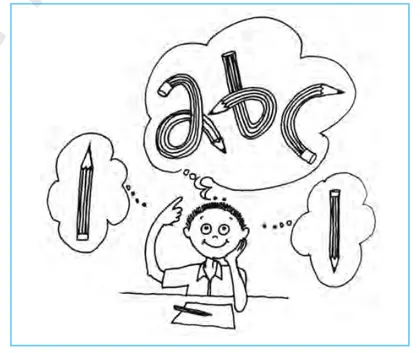
Class 11 Psychology — NCERT Chapter: Human Memory Introduction: This chapter introduces memory as a basic cognitive function that allows encoding, storing and retrieving past experiences and knowledge. It explains memory not as a single faculty but as a set of processes and systems that work together to preserve information across short and long intervals. Importance: Understanding human memory is central to learning, everyday functioning, education, eyewitness testimony, and clinical practice. The chapter links theoretical models and experimental findings to practical strategies for improving memory and to real-world issues such as forgetting and memory distortions. Key themes: The chapter covers major models (multi‑store/Atkinson‑Shiffrin, Baddeley & Hitch’s working memory), stages of memory (encoding, storage, retrieval), types of memory (sensory, short‑term/working, long‑term; explicit/implicit), measures of retention (recall, recognition, relearning), phenomena (serial position effect, primacy/recency), causes of forgetting (decay, interference, retrieval failure), reconstructive nature of memory (Bartlett), and biological underpinnings (role of hippocampus, consolidation).…
Learning Objectives
- Define memory and state its basic functions of encoding, storage and retrieval.
- Differentiate between sensory memory, short-term memory (working memory) and long-term memory with examples.
- Explain the multi-store model of memory (Atkinson & Shiffrin) and the role of each store.
- Describe the processes of encoding, storage and retrieval and factors that influence each process.
- Compare recall and recognition as methods of memory retrieval and illustrate with classroom examples.
- Identify and explain types of long-term memory: episodic, semantic and procedural.
- Analyse factors affecting memory performance and accuracy, including attention, emotion, context and interference.
- Apply mnemonic techniques and rehearsal strategies to improve retention of learned material.
Topics in this chapter
11 topics · tap a topic title to jump straight to it.
Nature and Definition of Memory
Definition: Memory is the mental process by which information is encoded (taken in), stored (kept) and retrieved (brought back) when needed. In CBSE psychology terms, memory can be seen both as a process (what the mind does) and as a system/capacity (the store of retained information).
Nature (core features):
- Multi-stage process: encoding → storage → retrieval. Each stage is necessary for successful remembering.
- Distinct stores: sensory memory (very brief, modality-specific), short-term/working memory (limited capacity and duration), and long-term memory (large capacity, long duration).
- Coding: information is coded visually, acoustically and semantically; short-term memory relies more on acoustic coding, long-term on semantic coding.
- Capacity and duration: sensory memory is milliseconds to a few seconds; STM ~15–30 seconds without rehearsal and capacity about 7±2 items (Miller); LTM can last from hours to decades with very large capacity.
- Reconstructive and associative: memory is not a literal playback. It reconstructs past events using stored pieces and associations, which makes memory flexible but also prone to errors and distortion.
- Dynamic and adaptive: memory is shaped by attention, rehearsal, emotion, motivation and context; it helps prediction and future behavior.
Major models (brief):
- Atkinson–Shiffrin (Multi-store) model: sensory store → short-term store → long-term store (transfer aided by attention and rehearsal).
- Baddeley & Hitch (Working Memory): central executive controlling phonological loop, visuo-spatial sketchpad and episodic buffer.
Biological basis (short): hippocampus and medial temporal lobe play key roles in consolidation (transfer to stable long-term memory); synaptic changes (long-term potentiation) underlie storage.
Factors affecting memory: attention, depth of processing (shallow vs deep), rehearsal (maintenance and elaborative), organization and meaningfulness, emotional arousal, context/state dependency, interference (proactive/retroactive), and sleep/consolidation.
Implications for learning: use spaced (distributed) practice, active retrieval (self-testing), elaboration and organization, and minimize interference to improve retention.
- Remembering a mobile number briefly by repeating it (maintenance rehearsal) until you dial — shows STM function and rehearsal.
- Recalling facts for an exam after studying them several times over days — demonstrates transfer to LTM via spaced rehearsal.
- Seeing a smell that instantly brings back a childhood scene — example of cue-dependent retrieval and strong emotional/associative links.
- Witnesses giving different accounts of the same event — illustrates reconstructive memory and susceptibility to suggestion.
- Typing on a keyboard or riding a bicycle without consciously thinking — procedural (implicit) memory at work.
- Forgetting lecture details the next day because you didn’t attend carefully and got distracted — shows importance of attention/encoding.
- \[Retention (exponential forgetting model\]\[Ebbinghaus-type): R(t) = e^{−t/τ} (R = proportion retained at time t\]\[τ = time constant for a particular memory).\]
- Percent retention: %Retention = (Amount recalled / Amount learned) × 100
- Savings (relearning measure): Savings% = ((Reps_initial − Reps_relearning) / Reps_initial) × 100
- STM capacity (rule of thumb, Miller): Capacity ≈ 7 ± 2 items (not a strict mathematical law but a practical estimate)
Processes / Stages of Memory
Overview
Memory operates through three basic processes (also called stages): Encoding (acquisition), Storage (maintenance) and Retrieval (access). These processes are often explained by stage models (Atkinson–Shiffrin) that divide memory into sensory register, short-term/working memory, and long-term memory, and by the Levels of Processing view that emphasises depth of encoding.
1. Encoding (Acquisition)
- Definition: Transforming sensory input into a form that can be stored. Encoding determines how well information enters memory.
- Types of encoding: Visual (image/form), Acoustic (sound), Semantic (meaning). Semantic usually produces the strongest long-term memory.
- Processes that help encoding: attention, elaboration (linking new to existing knowledge), imagery, organization (chunking), and depth of processing (shallow to deep).
2. Storage (Retention)
- Definition: Keeping encoded information over time.
- Memory stores (stage model):
- Sensory memory – very brief (milliseconds to ~2 sec), large capacity; modality-specific (iconic, echoic).
- Short-term memory (STM) / Working memory – limited duration (about 15–30 sec without rehearsal) and limited capacity (roughly 7 ± 2 items; chunking increases effective capacity). Working memory includes active manipulation (Baddeley’s model: phonological loop, visuospatial sketchpad, central executive, episodic buffer).
- Long-term memory (LTM) – potentially unlimited capacity and long duration; stores declarative (explicit: episodic, semantic) and non-declarative (implicit: procedural, priming, conditioning) memories.
- Mechanisms: rehearsal (maintenance and elaborative), consolidation (stabilisation of memory traces; hippocampus-dependent), and neurobiological processes (synaptic changes, systems consolidation, sleep-dependent consolidation).
3. Retrieval (Access)
- Definition: Bringing stored information into conscious awareness.
- Types: Recall (free, cued), Recognition, and Relearning (savings).
- Factors affecting retrieval: retrieval cues, context-dependent and state-dependent memory, interference (proactive/retroactive), retrieval failure vs. forgetting, tip-of-the-tongue states.
Processes interacting in real situations
Attention selects information for encoding; rehearsal and elaboration move information from STM to LTM; cues and context support retrieval. Interference and decay are common causes of failure at different stages.
Important concepts & implications
- Serial position effect: Primacy (better recall for early items due to LTM encoding) and Recency (better recall for last items due to STM).
- Depth of processing: Deeper (semantic) processing → stronger storage and better retrieval.
- Interference: Proactive (old → new impaired) and Retroactive (new → old impaired).
- Consolidation & sleep: Sleep enhances consolidation from hippocampus-dependent to more distributed cortical storage.
- Encoding: While learning vocabulary, you create vivid mental images and link each word to its meaning—this semantic elaboration improves later recall.
- Sensory memory: You briefly see the trail of a sparkler in the dark; that visual image lasts only for a fraction of a second in iconic memory.
- Short-term/Working memory: You hold a new phone number in mind by silently repeating it (maintenance rehearsal) until you dial.
- Long-term memory: You can describe your childhood home (episodic memory) and know the meaning of common words (semantic memory).
- Retrieval cue & context-dependent memory: You remember a conversation better when you return to the same room or environment where it happened (Godden & Baddeley scuba-diver study).
- Interference: Learning a new email password makes you temporarily forget the old one (retroactive interference).
- Miller's capacity (informal): STM capacity ≈ 7 ± 2 items (use chunking to increase effective capacity).
- \[Ebbinghaus forgetting curve (exponential model): R(t) = e^{−t/τ}\]\[where R(t) is retention at time t and τ (tau) is a time-constant representing memory stability (model approximation).\]
- Ebbinghaus savings (relearning) measure: Savings (%) = ((T_original − T_relearn) / T_original) × 100, where T is time or trials needed to learn.
Major Theoretical Models of Memory
Overview: Memory is usually described in terms of three basic processes — encoding, storage and retrieval. Psychologists have proposed several major theoretical models that explain how information is processed, stored and retrieved. The most widely taught models in Class 11 psychology are:
- Multi‑Store (Atkinson–Shiffrin) Model
- Levels of Processing (Craik & Lockhart)
- Working Memory Model (Baddeley & Hitch)
- Tulving’s Model of Memory (types of long‑term memory)
- Connectionist / Parallel Distributed Processing (PDP) view (briefly)
1. Multi‑Store (Atkinson–Shiffrin) Model
This is a structural model proposing three distinct stores:
- Sensory Memory: very brief, modality specific (iconic for vision ≈ 0.5 s; echoic for hearing ≈ 2–4 s). Large capacity but extremely short duration.
- Short‑Term Memory (STM): holds information briefly (≈ 15–30 s without rehearsal), limited capacity (about 7 ± 2 items). Rehearsal keeps info in STM and promotes transfer to long‑term memory.
- Long‑Term Memory (LTM): theoretically large or unlimited capacity and long duration (can be permanent). Information reaches LTM via rehearsal/encoding.
Strengths: clear stages that match everyday experience; inspired lots of research. Criticisms: too linear and passive, over‑emphasises rehearsal as the only route to LTM and treats LTM as unitary.
2. Levels of Processing (Craik & Lockhart)
This is a processing model rather than a structural one. It proposes that memory retention depends on the depth of processing:
- Shallow processing: physical or sensory features (e.g., letter shapes) — poor retention.
- Intermediate processing: acoustic or phonemic characteristics — better retention than shallow.
- Deep processing: semantic analysis and meaningful connections — best retention.
Key implication: meaningful, elaborative encoding leads to better recall than mere repetition. Criticisms: difficulty defining and measuring "depth" precisely; does not specify stages or capacity.
3. Working Memory Model (Baddeley & Hitch)
Extends and refines STM by describing active processing components:
- Central Executive: a control system that allocates attention and coordinates subsystems.
- Phonological Loop: handles verbal and auditory information (phonological store + articulatory rehearsal). Limited to about 2 seconds of spoken material.
- Visuo‑Spatial Sketchpad: stores visual and spatial information.
- Episodic Buffer (added later): integrates information from subsystems and links working memory with LTM.
Strengths: explains dual‑task performance and different types of short‑term processing. Criticisms: central executive poorly specified; some functions may be distributed.
4. Tulving’s Model: Types of Long‑Term Memory
Tulving distinguished different systems within LTM:
- Procedural memory (implicit): skills and habits (e.g., riding a bicycle).
- Declarative memory (explicit): conscious facts and events — subdivided into
- Semantic memory: general knowledge, facts, word meanings.
- Episodic memory: personal episodes and events tied to time and place.
Also important: encoding specificity principle — retrieval is most effective when cues present at encoding are available at retrieval (includes context‑dependent and state‑dependent memory).
5. Connectionist / Parallel Distributed Processing (PDP) Models
These models conceive memory as patterns of activation across networks of simple units (nodes). Learning occurs by changing connection weights. Memory is distributed (not stored in single nodes) and is robust to partial damage (graceful degradation). Useful for explaining generalisation and pattern completion (e.g., recognizing a face from partial cues).
Putting models together — practical view: The multi‑store and working memory models explain where information is held and processed; levels of processing explains how quality of encoding affects retention; Tulving clarifies what kinds of information are stored in LTM; and connectionist models explain learning as changes in network weights and how distributed representations operate.
Educational implications: Use deep, elaborative, meaningful encoding (link to prior knowledge), provide retrieval practice, vary contexts, teach chunking and use multimodal presentation to engage phonological loop and visuo‑spatial sketchpad.
- Multi‑Store: Glancing at a phone number on a sign (sensory memory), rehearsing it aloud until you dial (STM), and saving it in contacts so you can use it months later (LTM).
- Levels of Processing: You remember the meaning of a historical event better if you discuss its causes and consequences (deep processing) rather than just memorizing the date (shallow processing).
- Working Memory: Solving a mental math problem uses central executive to coordinate the phonological loop (keeping intermediate numbers) and visuo‑spatial sketchpad (visualising placements).
- Tulving: Remembering your last birthday party (episodic), knowing that Paris is the capital of France (semantic), and tying shoelaces without thinking (procedural).
- Connectionist: Recognising a friend from a few features — the network completes the pattern even from partial input (pattern completion).
- Miller's guideline for STM capacity: approximately 7 ± 2 items (chunking increases effective capacity).
- \[Ebbinghaus forgetting (exponential decay) model: R(t) = e^{-λt} (R is retention\]\[t is time, λ is decay rate) — retention falls rapidly then levels off.\]
- Savings in relearning (Ebbinghaus): Savings (%) = [(Original repetitions − Relearning repetitions) / Original repetitions] × 100
Types and Systems of Memory
Overview
Memory is the cognitive system that encodes, stores and retrieves information. Psychologists classify memory by duration, capacity and function. Major types are sensory memory, short‑term/working memory and long‑term memory. Several models explain how these systems interact (multi‑store model, working memory model, levels of processing).
1. Types of memory by duration and capacity
- Sensory memory: Very brief storage of sensory input. High capacity but extremely short duration (iconic visual memory ~250–500 ms; echoic auditory memory ~2–4 s; haptic/tactile ~<1 s). It holds raw perceptual information until attention selects items for further processing.
- Short‑term memory (STM): Temporary storage for information currently in awareness. Duration without rehearsal ≈ 15–30 seconds. Classic capacity ~7 ± 2 items (Miller). Information can be maintained by rehearsal or encoded into long‑term storage.
- Working memory (WM): A processing system that manipulates information (not just holds it). Baddeley’s model includes:
- Central executive (attention, control)
- Phonological loop (verbal/auditory info)
- Visuospatial sketchpad (visual/spatial info)
- Episodic buffer (integrates multimodal information with LTM)
- Long‑term memory (LTM): Relatively permanent storage, large capacity, duration from minutes to a lifetime. Subdivisions:
- Explicit (declarative): conscious recall. Includes episodic memory (personal events) and semantic memory (facts, concepts).
- Implicit (nondeclarative): unconscious. Includes procedural memory (skills), priming, and classical conditioning.
2. Systems and models
- Atkinson‑Shiffrin multi‑store model: Information flows from sensory memory → STM (short‑term store) → LTM, with attention and rehearsal as key processes for transfer.
- Baddeley’s working memory model: Explains active manipulation of information for reasoning and complex tasks (see components above).
- Levels of processing framework (Craik & Lockhart): Memory strength depends on depth of processing (shallow perceptual → deep semantic processing produces better retention).
- Encoding specificity & transfer‑appropriate processing: Retrieval is more successful when encoding and retrieval conditions match (same cues, context, or type of processing).
3. Key processes
- Encoding: Transforming input into a representational form (visual, acoustic, semantic).
- Storage/consolidation: Keeping encoded information over time; consolidation stabilizes memories (sleep and rehearsal help).
- Retrieval: Accessing stored information; aided by cues and organization.
4. Typical empirical effects
- Serial position effect: Primacy (better recall of early items due to LTM encoding) and recency (better recall of recent items still in STM).
- Forgetting: Memory decreases over time if not rehearsed or consolidated; often modeled as exponential decay.
5. Practical implications
- Use deep, semantic processing and organization (elaboration, imagery) for better long‑term retention.
- Use chunking to increase effective STM capacity (group digits into meaningful units).
- Space study sessions (spacing effect) and allow sleep after learning for consolidation.
- Sensory memory (iconic): You glance at a clock and the visual image lingers for a fraction of a second so you can read the time.
- Sensory memory (echoic): A friend says something while you’re distracted; you can still repeat the last few words because of echoic memory.
- Short‑term memory: Holding a phone number in mind for 20 seconds to dial it.
- Chunking in STM: Remembering a 10‑digit phone number as 3 chunks (area code), 3, and 4 digits.
- Working memory: Solving 23 × 17 mentally requires holding partial results while manipulating numbers (central executive + phonological loop/visuospatial sketchpad).
- Episodic LTM: Recalling your last birthday party (who was there, events).
- Miller’s STM capacity (heuristic): capacity ≈ 7 ± 2 units (items).
- \[Ebbinghaus forgetting (exponential decay model): R(t) = e^{−λt}\]\[where R(t) is retention at time t and λ is a decay rate constant (empirical\]\[shape may vary with rehearsal/consolidation).\]
- \[Alternate retention formulation: R(t) = e^{−t/S} where S is a stability parameter (larger S → slower forgetting).\]
- Serial position (qualitative, not numeric): Probability of recall = f(position) showing high recall for early (primacy) and late (recency) positions; can be plotted as a U‑shaped curve.
Measures and Assessment of Memory
Overview
Measures and assessment of memory are the techniques psychologists use to determine what has been learned, how strongly it is retained, and how easily it can be recovered. The three classic behavioural measures are recall, recognition and relearning (savings). Each measure taps a different stage or mechanism of retrieval and has different strengths and limitations.
1. Recall
Recall requires active retrieval of stored information without (or with minimal) external cues. Types of recall:
- Free recall — reproduce items in any order (e.g., remember as many words from a list as you can).
- Cued recall — given a prompt or cue to aid retrieval (e.g., given the first letter, category, or pair-word cue).
- Serial (order) recall — recall items in the original order (e.g., remember a phone number exactly).
Scoring is usually number (or percent) of items correctly recalled. Recall is sensitive to depth of processing, organization, and retrieval cues.
2. Recognition
Recognition requires identifying previously encountered material among options (e.g., multiple-choice tests, face recognition). Performance is measured as correct hits (correct identifications) and false alarms (incorrect identifications). Recognition is generally easier than recall because retrieval cues are provided.
3. Relearning (Savings)
Relearning measures how much faster material is learned the second time. Ebbinghaus introduced this method: if it took T1 trials to learn initially and T2 trials to reach the same mastery on relearning, the difference indicates retained memory (savings). Relearning is sensitive to residual memory that may not be revealed by recall or recognition.
Other assessment methods
- Standardized tests: digit span, paired-associate learning, story recall (used in clinical and educational settings).
- Behavioural measures: response latency (reaction time) in retrieving answers, error patterns.
- Self-report / questionnaires: autobiographical memory inventories (subjective but useful for some research).
- Experimental manipulations: controlled lab tasks to study encoding/retrieval factors (e.g., effects of context, spacing, interference).
Interpretation & limitations
- Different measures tap different aspects: recognition may show memory when recall fails; savings can reveal latent memory traces.
- Performance is influenced by encoding quality, retrieval cues, interference, retention interval, and test format.
- In real-life assessment, combine methods (e.g., recall + recognition + reaction time) for a fuller picture.
Key points for students
- Remember the definitions and differences between free/cued/serial recall, recognition, and relearning.
- Know how to compute basic retention and savings percentages and read simple memory graphs (forgetting curve, serial position curve).
- Free recall: A teacher asks students to write down all the countries they can remember that they studied last week. If a student remembers 12 out of 20, percent recall = (12/20) × 100 = 60%.
- Cued recall: Given the cue 'Capitals that start with B', a student retrieves 'Beijing' and 'Bangkok'. Cues narrow search and improve retrieval compared with free recall.
- Recognition: On a multiple-choice history test, the student recognizes the correct answer among four choices. If the student answers 16 out of 20 items correctly, recognition accuracy = 80%.
- Relearning (savings): A learner originally needed 10 trials to memorize a list (T1 = 10). After a month, relearning to the same criterion took 6 trials (T2 = 6). Savings = ((10 − 6)/10) × 100 = 40% — indicating 40% of the original learning was retained.
- Percent recall/recognition = (Number of items correctly recalled or recognized / Number of items presented) × 100
- Retention index (relative retention) = (Items remembered after delay / Items remembered immediately after learning) × 100
- Savings (%) (Ebbinghaus) = ((T1 − T2) / T1) × 100 , where T1 = trials (or time) to learn originally, T2 = trials (or time) to relearn to the same criterion
- Simple forgetting model (common approximation) : R(t) = e^(−k t) (R = retention at time t; k = constant) — used to describe exponential decay of retention over time
Forgetting
Definition: Forgetting is the loss or inability to retrieve previously encoded information from memory. It is a normal psychological process that affects learning, recall, and performance.
Major forms and causes of forgetting
- Trace decay theory: Memory traces (engram) fade with time if they are not rehearsed. Decay is usually fastest soon after learning.
- Interference: Other information disrupts memory. Two main types:
- Proactive interference – old memories interfere with new learning (old password keeps coming to mind).
- Retroactive interference – new information interferes with remembering old information (new address makes you forget old address).
- Retrieval failure / cue-dependent forgetting: Memory is present but cannot be accessed because retrieval cues (context, smell, mood) are missing or different from encoding conditions.
- Motivated forgetting (repression): Unpleasant or anxiety-producing memories are pushed out of conscious awareness (Freudian concept; controversial and partially supported).
- Consolidation failure: If information is not consolidated into long-term memory (e.g., due to brain injury, sleep deprivation), it is forgotten.
- Encoding failure: Information was never properly encoded into memory (e.g., not paying attention), so it cannot be retrieved later.
Theoretical highlights
- Ebbinghaus and the Forgetting Curve: Hermann Ebbinghaus studied forgetting using nonsense syllables. He found that forgetting is rapid soon after learning and then levels off — often modeled as an exponential decline in retention over time.
- Levels-of-processing and meaningfulness: Deeper, meaningful processing produces more durable memories and less forgetting than shallow processing.
- Context- and state-dependent memory: Matching the conditions (context, mood, physiological state) at retrieval to those at encoding improves recall and reduces apparent forgetting.
Practical implications and prevention
- Use spaced practice (distributed rehearsal) rather than massed practice to reduce forgetting.
- Create strong, distinct cues (mnemonics, imagery, elaboration) to aid retrieval.
- Reduce interference by studying related topics at different times, and vary contexts to build flexible retrieval cues.
- Sleep and rest promote consolidation and reduce forgetting.
Summary: Forgetting arises from decay, interference, retrieval failure, poor encoding, lack of consolidation, or motivated processes. It is often reduced by meaningful encoding, rehearsal spaced over time, and use of effective retrieval cues.
- Names: You meet someone at a party and forget their name soon after because you didn’t encode it (encoding failure) or you lack the retrieval cue (cue-dependent forgetting).
- Phone number: You memorize a temporary number but forget it a few days later because the memory trace decayed without rehearsal (trace decay).
- Language interference: After learning Spanish, you have trouble recalling newly learned French words because prior Spanish vocabulary interferes (proactive interference).
- New address: You learn a new phone number and start forgetting your old number because the new information displaces the old (retroactive interference).
- Tip-of-the-tongue: You are sure you know a word but cannot retrieve it now; with proper cues or time the word returns (retrieval failure).
- Relearning skill (savings): You take time to relearn cycling or piano after years; relearning is faster than initial learning, showing some memory remained (savings).
- \[Ebbinghaus forgetting curve (exponential model): R = e^{-t/S} (R = retention proportion\]\[t = time since learning\]\[S = constant related to memory strength).\]
- \[Alternative exponential form: R = e^{-k t} (k = decay constant specific to the material and conditions).\]
- Percent forgetting: %Forgotten = ((Initial amount learned − Amount retained) / Initial amount learned) × 100.
- Savings (relearning) measure: Savings (%) = ((T − T') / T) × 100 where T = trials (or time) required for original learning, T' = trials required to relearn to the same criterion.
Factors Affecting Memory
Definition: Factors affecting memory are the internal and external conditions that influence how well information is encoded, stored and retrieved. These determine whether an experience becomes a lasting memory or is forgotten.
Major categories:
- Attention and Encoding: Memory begins with attention. Focused attention increases the quality of encoding; divided attention or distraction produces poor encoding and weak recall.
- Level of Processing / Meaningfulness: Deeper, semantic processing (making sense, connecting to existing knowledge) yields better retention than shallow processing (e.g., rote repetition or focusing on surface features).
- Rehearsal and Practice: Repetition (maintenance rehearsal) helps short-term retention; elaborative rehearsal (linking new material to known information) promotes long-term memory.
- Organization & Distinctiveness: Well-organized material (grouping, chunking) and distinctive or unusual items are recalled better than disorganized or similar items.
- Motivation and Interest: Higher motivation/interest improves attention and encoding, increasing likelihood of retention.
- Emotional Arousal: Moderate emotional arousal enhances consolidation (amygdala-hippocampus interaction). Extremely high stress or trauma can impair memory, or conversely produce very vivid memories (flashbulb memories).
- Context- and State-dependent Factors: Retrieval is aided when the learning context or internal state (mood, intoxication, physiological state) at recall matches that at encoding.
- Interference: Similar information learned before (proactive interference) or after (retroactive interference) can block retrieval. Interference is a major cause of forgetting.
- Time / Decay: With no rehearsal or retrieval, memory traces weaken over time — described by forgetting curves.
- Sleep and Consolidation: Sleep (especially slow-wave and REM cycles) helps consolidate memories; sleep deprivation impairs retention.
- Biological and Developmental Factors: Age, brain health (neurotransmitters, hippocampal function), nutrition, and injury affect memory capacity and consolidation.
- Anxiety, Fatigue, and Health: High anxiety, fatigue, illness, or drugs can reduce attention and impair retrieval.
How these factors interact (applied implications): Use focused study sessions (avoid multitasking), space practice over time (spacing effect), use elaboration and organization (mnemonics, chunking), test yourself (retrieval practice), study in varied contexts or match encoding and retrieval contexts, and prioritize sleep and stress management to improve retention.
Textbook links: Ebbinghaus described how retention declines with time (the forgetting curve) and showed benefits of spaced repetition. The serial-position effect (primacy & recency) demonstrates how rehearsal and short-term availability influence recall.
- Attention: A student who studies for an exam while checking phone notifications learns less because divided attention reduces encoding.
- Level of processing: Memorising a list by relating each item to a personal experience (deep processing) yields better recall than repeating the words aloud (shallow processing).
- Rehearsal/Spacing: Revising Biology topics every few days (spaced practice) leads to better long-term retention than cramming the night before.
- Context-dependent memory: A witness who learned facts at the crime scene may recall details better when returned to the same location.
- State-dependent memory: If someone learns vocabulary while caffeinated, they may recall it slightly better again when caffeinated.
- Interference: Learning a new phone number can cause forgetting of the old number (retroactive interference); the old number can make learning the new one harder (proactive interference).
- \[Ebbinghaus forgetting curve (exponential decay model): R(t) = e^{-k t}\]\[where R(t) is retention proportion at time t and k is a decay constant (larger k = faster forgetting).\]
- Savings (relearning measure): Savings (%) = ((T_original − T_relearning) / T_original) × 100, where T are times or trials required to learn material initially and to relearn it to the same criterion.
- Digit-span rule of thumb (capacity estimate): Short-term memory span ≈ 7 ± 2 items (Miller's finding — a practical heuristic rather than a strict mathematical formula).
Improving Memory: Strategies and Techniques
Overview
Memory can be improved by changing how we encode, store and retrieve information. Effective strategies increase meaningful encoding, reduce forgetting, and strengthen retrieval routes. These techniques are grounded in cognitive principles such as attention, elaboration, spacing, and retrieval practice.
Key Strategies
- Attention and Focus: Successful encoding requires focused attention. Reduce distractions, set a clear goal for study, and use active reading (underline, ask questions).
- Deep (Elaborative) Processing: Relate new material to what you already know (examples, analogies, explanations). Elaborative rehearsal produces stronger memory than rote repetition.
- Organization and Chunking: Group related items into meaningful units (e.g., phone numbers as chunks). Organizing material into hierarchies, outlines or mind maps aids recall.
- Mental Imagery and Dual Coding: Combine verbal material with vivid images. Dual coding (words + pictures) creates two memory traces and improves recall.
- Mnemonics: Use acronyms, acrostics, peg systems or the method of loci to create memorable retrieval cues.
- Spaced Practice (Distributed Practice): Spread study sessions over time instead of massed cramming. Spacing strengthens long-term retention.
- Testing Effect / Retrieval Practice: Actively test yourself rather than only rereading. Retrieval practice enhances memory and identifies gaps.
- Interleaving: Mix related topics or problem types within a study session to improve discrimination and flexible retrieval.
- Encoding Specificity and Context Dependence: Match study and test contexts (physical setting, cues) when possible. State-dependent memory means similar internal states help retrieval.
- Sleep, Nutrition, and Exercise: Sleep consolidates memories; good nutrition and aerobic exercise support cognitive function.
How These Work (Mechanisms)
- Stronger Encoding: Elaboration and imagery create richer, more distinctive memory traces so retrieval cues match better.
- Reduced Interference: Organization and spaced practice reduce confusion between similar memories.
- Consolidation: Sleep and distributed practice allow neural consolidation processes to stabilize memories.
- Reinforcement of Retrieval Pathways: Retrieval practice strengthens the cue-to-memory link making recall easier later.
Practical Steps to Improve Memory
- Preview material to set a framework, then read actively (ask and answer questions).
- Use elaboration: summarize in your own words, teach someone else, or create examples.
- Create visual aids: concept maps, charts, and simple diagrams (dual coding).
- Schedule short, spaced study sessions (e.g., 30–60 minutes across several days) and include self-tests.
- Use mnemonic devices for lists or ordered material (e.g., ROY G. BIV for colors).
- Review mistakes from tests—use them as retrieval practice and elaboration points.
- Prioritize sleep and include short exercise breaks to boost consolidation and attention.
- Studying for exams: Instead of cramming chapters the night before, a student studies 30 minutes each day for two weeks (spaced practice), creates a mind map of each chapter (organization), and self-quizzes at the end of each session (retrieval practice).
- Remembering a shopping list: Use chunking to group items (produce: apples, bananas; dairy: milk, cheese), and form a vivid image of carrying the grouped bundles into the store (imagery + chunking).
- Learning a speech: Use the method of loci—associate each main point with a familiar place in your house, mentally ‘walk’ through it during recall (mnemonic + imagery).
- Mastering maths procedures: Interleave problem types (algebra, geometry) rather than practicing only one type for an hour—this improves flexible application and long-term retention.
- Studying languages: Use spaced repetition flashcards (e.g., apps that schedule reviews based on performance) plus sentence-level practice to embed vocabulary in context (encoding specificity).
- Preparing for a presentation: Teach the material to a peer (elaborative rehearsal) and simulate the presentation environment (context matching) to reduce anxiety-related retrieval failure.
- \[Ebbinghaus forgetting curve (exponential approximation): R(t) = e^{−t/S} — R(t) = retained proportion at time t\]\[S = memory strength parameter. (Shows rapid initial forgetting then slower decline.)\]
- Savings on relearning: Savings (%) = [(original repetitions − repetitions at relearning) / original repetitions] × 100 — measures retained learning even when recall fails.
- \[Power law of practice: T(N) = a × N^{−b} — T(N) is time or errors on trial N\]\[a and b are constants\]\[performance improves as a negative power of practice trials.\]
- Logarithmic learning (alternative form): Performance ≈ A − B × log(N) — shows diminishing returns: each additional study trial produces smaller gains.
Biological Basis and Cognitive Neuroscience of Memory
Overview
Memory arises from biological processes in the brain that encode, store and retrieve information. Cognitive neuroscience combines psychology and brain science to explain which neural circuits and mechanisms underlie different kinds of memory (episodic, semantic, procedural, working memory, etc.).
Neural substrate of memory
- Neurons and synapses: Information is stored by changes in the strength and efficiency of synaptic connections. Synaptic plasticity (changes in synaptic weight) is the cellular basis of learning and memory.
- Neurotransmitters: Glutamate (excitatory) and acetylcholine are especially important for memory formation; dopamine modulates reward-based learning.
- Key brain structures:
- Hippocampus: Critical for forming new episodic (autobiographical) and some spatial memories; involved in consolidation from short-term to long-term.
- Medial temporal lobe: Includes hippocampus and surrounding cortex; essential for declarative memory.
- Prefrontal cortex (PFC): Central to working memory, strategic encoding, retrieval and executive control.
- Amygdala: Modulates emotional memory, enhances consolidation for emotionally arousing events.
- Cerebellum and basal ganglia: Important for procedural and motor skills (implicit memory).
Cellular and molecular mechanisms
- Hebbian plasticity: "Cells that fire together wire together" — coincident pre- and postsynaptic activity strengthens synapses.
- Long-term potentiation (LTP): A long-lasting increase in synaptic strength following high-frequency stimulation; involves NMDA receptor activation, Ca2+ influx and downstream kinases (e.g., CAMKII) that increase AMPA receptor insertion.
- Long-term depression (LTD): Activity patterns that weaken synapses, important for forgetting and refining networks.
- Consolidation: Two forms — synaptic consolidation (minutes–hours, local synaptic changes) and systems consolidation (days–years, redistribution of memory traces from hippocampus to cortex). Sleep (slow-wave and REM) supports consolidation.
Memory systems and their neural correlates
- Declarative (explicit) memory: Episodic and semantic; depends on hippocampus and medial temporal lobe; retrieval involves hippocampal-cortical interaction.
- Nondeclarative (implicit) memory: Procedural skills (cerebellum, basal ganglia), priming (neocortex), classical conditioning (cerebellum/amygdala depending on type).
- Working memory: Short-term maintenance and manipulation of information; PFC interacts with parietal cortex and sensory areas; includes phonological loop and visuospatial sketchpad (Baddeley).
Cognitive neuroscience methods
- Lesion studies and patient cases (e.g., patient H.M. showed hippocampus is necessary for new episodic memory).
- Single-unit recordings, EEG/ERP (timing of processes), fMRI and PET (localization and networks), TMS (causal interference).
Processes: encoding, storage, retrieval
- Encoding: Attention and deeper (semantic) processing produce stronger neural traces; PFC helps organize encoding strategies.
- Storage/consolidation: Initially hippocampus-dependent; over time cortical networks take over for remote memories.
- Retrieval: Cue-dependent reactivation of cortical patterns; PFC guides search and selection; retrieval can reconsolidate memories (modify them).
Clinical and real-life relevance
Damage to hippocampus produces anterograde amnesia (unable to form new episodic memories). Neurodegenerative diseases (Alzheimer's) show early hippocampal atrophy and progressive memory loss. Understanding LTP/LTD informs interventions to enhance learning or treat memory disorders.
Summary
Memory emerges from dynamic interactions among neurons, synapses and brain systems. Cognitive neuroscience links memory types and processes to specific neural circuits and mechanisms (synaptic plasticity, hippocampal consolidation, PFC-based working memory), using behavioral and brain-imaging methods to explain how memories form, persist and change.
- Remembering a shopping list by repeating items aloud uses the phonological loop (working memory) and rehearsal to encode into long-term memory.
- Learning to ride a bicycle: after practice, the skill becomes procedural and is supported by the cerebellum and basal ganglia rather than the hippocampus.
- A traumatic car accident remembered vividly later: the amygdala modulates hippocampal consolidation so emotionally charged events are better retained.
- Patient H.M. underwent medial temporal lobe surgery and could not form new episodic memories, showing the hippocampus is necessary for new declarative memory formation.
- Forgetting names shortly after meeting someone — encoding failure or weak synaptic consolidation due to divided attention at the time of encoding.
- Spaced practice (studying with intervals) produces stronger and longer-lasting memories than cramming, consistent with consolidation and the power law of practice.
- \[Ebbinghaus forgetting curve (exponential form): R(t) = e^{-t/S} — R(t) is retention at time t\]\[S is a time constant related to memory strength.\]
- \[Power law of practice: T(N) = a * N^{-b} — Time (T) to perform a task decreases as practice trials (N) increase\]\[a and b are constants.\]
- Hebbian learning (simplified): Δw = η * x_pre * x_post — Change in synaptic weight Δw is proportional to learning rate η and the product of pre- and postsynaptic activities.
- \[Spike-timing dependent plasticity (qualitative form): Δw ∝ e^{-Δt/τ} with sign depending on order of spikes — if presynaptic spike precedes postsynaptic\]\[potentiation occurs\]\[reverse order can produce depression.\]
Memory Disorders, Applications and Ethical Issues
Overview: Memory is a set of processes that encode, store and retrieve information. When these processes fail or become altered, we refer to memory disorders. Understanding disorders helps develop practical applications (education, therapy, rehabilitation) but also raises ethical issues (privacy, enhancement, legal use of memory evidence).
Memory Disorders — types and causes
- Amnesia: loss of memory caused by brain injury, disease or psychological trauma.
- Anterograde amnesia: inability to form new long-term memories after onset (classic case: patient H.M.).
- Retrograde amnesia: loss of memories formed before onset (often graded, older memories preserved better).
- Dementia (e.g., Alzheimer’s disease): progressive decline in memory and other cognitive functions due to neurodegeneration. Pathology includes amyloid plaques and neurofibrillary tangles in the brain; symptoms: forgetfulness, disorientation, impaired daily functioning.
- Transient global amnesia: temporary sudden episode of memory loss, often resolving within hours.
- Source amnesia: remembering facts but not where or how they were learned (can fuel false memories).
- Pseudodementia/Functional memory problems: memory complaints with largely psychological origin (depression, stress); treatable with psychotherapy.
Mechanisms and neural bases (brief): The hippocampus and medial temporal lobes are crucial for converting short-term/working memory into long-term declarative memories. Prefrontal cortex is important for working memory and retrieval strategies. Damage or degeneration in these areas produces specific patterns of impairment.
Applications of memory research
- Education: using spaced repetition, retrieval practice (testing effect), mnemonics and deeper levels of processing to enhance retention.
- Clinical rehabilitation: cognitive training, errorless learning, cueing strategies and assistive devices (reminder apps) for patients with memory impairment.
- Legal/forensic: understanding limits of eyewitness testimony (memory is reconstructive), improving police interview techniques (cognitive interview) to reduce suggestion and false memories.
- Technology: memory aids (smartphone reminders), spaced-repetition software (Anki), brain-stimulation research (tDCS) and neuroimaging for diagnosis and monitoring.
- Mental health: reconsolidation-based therapies (e.g., exposure plus pharmacological modulation) to weaken traumatic memories in PTSD.
Ethical issues
- Memory enhancement vs. fairness: use of drugs (nootropics), brain stimulation or training to boost memory raises concerns about unequal access, pressure to perform and long-term safety.
- Memory dampening / altering: pharmacological interventions (e.g., propranolol) used during reconsolidation to reduce emotional intensity of traumatic memories pose questions about identity, authenticity and consent.
- False memories and suggestion: therapeutic or investigative methods can create false memories; professionals must avoid suggestive techniques to prevent harm (e.g., wrongful accusations).
- Privacy and neural data: as neuroimaging and 'brain-reading' advance, concerns arise about cognitive privacy, consent to probe memories, and legal uses of neural evidence.
- Informed consent and vulnerable populations: memory-impaired individuals may lack capacity to consent; extra safeguards are needed in research and treatment.
Prevention and best-practice recommendations: use evidence-based teaching (spacing, retrieval practice), train police/caregivers in non-leading interviewing, ensure informed consent in interventions, regulate cognitive enhancement, and provide support and rehabilitation for patients and families.
Key takeaways: Memory disorders vary in cause and pattern; memory is malleable and useful techniques can improve retention, but interventions—especially ones that alter or probe memories—carry ethical responsibilities to protect individuals' rights and well‑being.
- Anterograde amnesia — Patient H.M. (Henry Molaison) could not form new episodic memories after bilateral medial temporal lobe surgery; he could learn new motor skills but not recall learning them.
- Alzheimer’s disease — an elderly person gradually forgets recent conversations and appointments, gets lost on familiar routes, and later loses memory for people’s names and everyday tasks.
- Eyewitness error — a witness to a robbery picks the wrong suspect after a suggestive police lineup; later conviction is overturned when DNA evidence proves innocence.
- Clinical application — a student uses spaced repetition (Anki) and retrieval practice (self-testing) to remember biology terms much more effectively than by rereading notes.
- Ethical dilemma — use of propranolol during therapy to reduce the emotional impact of a traumatic memory: helps a veteran but raises questions about altering personal identity associated with memories.
- \[Ebbinghaus forgetting curve (exponential model\]\[simplified): R(t) = e^{-t/S}\]\[where R(t) is retention at time t\]\[and S is a constant related to memory strength (larger S = slower forgetting).\]
- Savings score (Ebbinghaus method): Savings (%) = ((Time_initial_learning - Time_relearning) / Time_initial_learning) × 100. Higher savings → stronger memory trace.
- Retention percentage: Retention (%) = (Number of items recalled ÷ Number of items presented) × 100.
- Average short-term memory span (Miller’s rule): roughly 7 ± 2 items (useful as a heuristic for chunking strategies).
Classic Studies and Empirical Evidence
Overview: The study of human memory in Class 11 emphasises classical experiments and empirical findings that reveal how memory is encoded, stored and retrieved. These studies provide models (multi-store, working memory), quantitative laws (forgetting curve, memory span), and explanations (schema, reconstructive memory) used to understand everyday memory.
Major classic studies and their findings:
1. Hermann Ebbinghaus (Forgetting Curve, Savings)
Ebbinghaus studied memory using nonsense syllables and measured how much he forgot over time. He found rapid forgetting soon after learning that slows down later. He also introduced the concept of "savings" — reduced time needed to relearn material — showing that forgotten material is not entirely lost.
Implication: Retention declines exponentially with time; spaced repetition reduces forgetting.
2. Atkinson & Shiffrin (Multi-store Model)
Proposed three distinct memory stores: sensory register, short-term store (STS), and long-term store (LTS). Information must be attended and rehearsed to move from STS to LTS; otherwise it is lost.
Implication: Emphasises rehearsal, attention and distinct memory stores with different capacities and durations.
3. Peterson & Peterson (Duration of Short-term Memory)
Used trigrams and prevented rehearsal by asking subjects to count backwards. They showed that without rehearsal, short-term memory retention drops sharply within 15–30 seconds.
Implication: Short-term memory has a brief duration unless actively rehearsed.
4. George Miller (Capacity of Short-term Memory)
Miller proposed the magic number 7 ± 2 — that typical STM span is about 5–9 items. He also introduced chunking: grouping elements into meaningful units to increase effective capacity.
Implication: Organising material into chunks improves recall.
5. Baddeley & Hitch / Baddeley (Working Memory)
Extended the STM concept to a multi-component working memory: phonological loop (verbal), visuospatial sketchpad (visual), central executive (control), and later episodic buffer. Tasks can be explained by interaction among these components.
Implication: Short-term processing and manipulation of information depend on component-specific systems, not a single buffer.
6. Frederic Bartlett (Schema & Reconstructive Memory)
Bartlett showed that memory is reconstructive: when recalling stories from another culture, people changed details to fit their own cultural expectations and schemas.
Implication: Memory is influenced by prior knowledge and expectations; recall is not a literal replay but reconstruction.
7. Endel Tulving (Episodic & Semantic Memory)
Distinguished episodic memory (personal events with context/time) from semantic memory (general facts). Showed different retrieval cues and vulnerabilities for each type.
8. Elizabeth Loftus (Eyewitness Testimony & Misinformation)
Demonstrated that post-event information and leading questions can distort memories (misinformation effect), reducing the accuracy of eyewitness recall.
9. Harry Bahrick (Long-term Retention)
Studied very long-term retention (years to decades) and found that after an initial drop, memory for well-learned material (e.g., school Spanish vocabulary) can remain stable for decades, especially if periodically reviewed.
Common empirical patterns:
- Forgetting curve: steep early decline, then slower loss.
- Serial position effect: better recall for items at beginning (primacy: LTM via rehearsal) and end (recency: STM) of a list.
- Chunking and rehearsal improve memory span and transfer to LTM.
- Memory is reconstructive: schemas and post-event information influence recall.
Educational implications: Use spaced practice, active rehearsal, meaningful organisation (chunking), varied retrieval practice and beware of leading questions when collecting eyewitness reports.
- Studying for an exam: reviewing material multiple times with gaps (spaced repetition) reduces forgetting — Ebbinghaus and Bahrick evidence.
- Remembering a phone number: you chunk digits (e.g., 3-3-4) to fit Miller's 7±2 limit.
- Trying to memorise a trigram while counting backwards: recall drops within 10–30 seconds, illustrating Peterson & Peterson’s findings on STM duration.
- Witness testimony changed by a suggestive question ("How fast was the car going when it smashed into the other?") — demonstrates Loftus’s misinformation effect.
- Recalling the first and last items from a shopping list more easily than the middle ones — serial position effect (primacy and recency).
- A student remembers the gist but not exact wording of a history story and fills gaps using prior knowledge — Bartlett’s reconstructive memory and schema influence.
- \[Ebbinghaus-type forgetting (exponential approximation): R(t) = R0 * e^{−t/τ} (R(t)=retention at time t\]\[R0=initial retention, τ=time constant).\]
- Savings (relearning measure): Savings (%) = ((T_original − T_relearn) / T_original) × 100, where T is time or trials needed to learn.
- Serial position (qualitative): Probability of recall ≈ f(position) showing U-shaped curve (high at early and late positions, lower in middle).
Key Concepts
- Memory
- The mental process of encoding, storing and retrieving information over time.
- Encoding
- The process of transforming sensory input into a form that can be stored in memory.
- Storage
- The retention of encoded information over time within the memory system.
- Retrieval
- The process of accessing and bringing stored information into conscious awareness.
- Sensory Memory
- A very brief retention of sensory impressions (visual, auditory) that lasts milliseconds to a few seconds.
- Short-term Memory (STM)
- A limited-capacity system that holds information temporarily (about 15–30 seconds) unless rehearsed.
- Long-term Memory (LTM)
- A durable and potentially unlimited store of information that can last from minutes to a lifetime.
- Working Memory
- An active system for temporarily storing and manipulating information needed for complex tasks like reasoning and comprehension.
- Consolidation
- The process by which recently encoded memories are stabilized and integrated into long-term memory.
- Rehearsal
- The conscious repetition of information to keep it in short-term memory or to encode it into long-term memory.
- Maintenance Rehearsal
- Simple, rote repetition of information to maintain it in short-term memory without adding meaning.
- Elaborative Rehearsal
- Rehearsal that links new information with existing knowledge, enhancing understanding and long-term retention.
- Chunking
- Organizing items into meaningful groups or patterns to increase the effective capacity of short-term memory.
- Forgetting
- The inability to retrieve or use information that was previously available in memory.
- Decay Theory
- The idea that memory traces fade over time if they are not reactivated or used.
- Interference
- When other information blocks or distorts retrieval of target information; includes proactive (old hurts new) and retroactive (new hurts old) interference.
- Retrieval Failure
- Failure to find a stored memory even though it exists, often due to lack of appropriate cues or context.
- Retrieval Cue
- A stimulus (internal or external) that helps trigger the recall of stored information.
- Declarative Memory
- Memory for facts and events that can be consciously recalled; includes semantic (facts) and episodic (personal events) memory.
- Procedural Memory
- Implicit memory for skills and actions that are performed automatically without conscious recall.
End-of-Chapter Trial Paper & Test Questions
Topic-wise questions to test your understanding of every concept in this chapter.
-
Name and define the three basic processes of memory. / स्मृति की तीन मूल प्रक्रियाओं के नाम बताइए और उन्हें परिभाषित कीजिए।
Show answer
The three processes are encoding (transforming sensory input into a storable form), storage (retaining the encoded information over time), and retrieval (bringing stored information back into awareness when needed). / तीन प्रक्रियाएँ हैं कूटसंकेतन (संवेदी इनपुट को संग्रहणीय रूप में रूपांतरित करना), संग्रहण (कूटित जानकारी को समय के साथ बनाए रखना), और पुनर्प्राप्ति (आवश्यकता पड़ने पर संग्रहीत जानकारी को पुनः जागरूकता में लाना)।
-
State the three stores of the Atkinson–Shiffrin model and the typical capacity and duration of short-term memory. / एटकिंसन–शिफ्रिन मॉडल के तीन भंडारों के नाम बताइए तथा अल्पकालिक स्मृति की विशिष्ट क्षमता और अवधि बताइए।
Show answer
The three stores are sensory memory, short-term memory (STM) and long-term memory. STM holds about 7 ± 2 items (Miller) for roughly 15–30 seconds without rehearsal. / तीन भंडार हैं संवेदी स्मृति, अल्पकालिक स्मृति (STM) और दीर्घकालिक स्मृति। STM लगभग 7 ± 2 वस्तुएँ (मिलर) बिना दोहराव के लगभग 15–30 सेकंड तक रखती है।
-
Explain the components of Baddeley and Hitch's working memory model. / बैडले और हिच के कार्यशील स्मृति मॉडल के घटकों को समझाइए।
Show answer
It includes the central executive (controls attention and coordinates the subsystems), the phonological loop (handles verbal/auditory information), the visuo-spatial sketchpad (handles visual and spatial information), and the episodic buffer (integrates information across subsystems and links to long-term memory). / इसमें केंद्रीय कार्यकारी (ध्यान को नियंत्रित करता है और उपप्रणालियों का समन्वय करता है), ध्वन्यात्मक लूप (मौखिक/श्रवण जानकारी संभालता है), दृश्य-स्थानिक स्केचपैड (दृश्य और स्थानिक जानकारी संभालता है), और प्रासंगिक बफर (उपप्रणालियों में जानकारी को एकीकृत करता है और दीर्घकालिक स्मृति से जोड़ता है) शामिल हैं।
-
Differentiate between episodic, semantic and procedural long-term memory with an example each. / प्रासंगिक, अर्थपरक और प्रक्रियात्मक दीर्घकालिक स्मृति में एक-एक उदाहरण सहित अंतर कीजिए।
Show answer
Episodic memory stores personal events (recalling your last birthday party), semantic memory stores general facts and meanings (knowing Paris is the capital of France), and procedural memory stores skills and habits (riding a bicycle without thinking). / प्रासंगिक स्मृति व्यक्तिगत घटनाओं को संग्रहीत करती है (अपने पिछले जन्मदिन की पार्टी याद करना), अर्थपरक स्मृति सामान्य तथ्यों और अर्थों को संग्रहीत करती है (यह जानना कि पेरिस फ्रांस की राजधानी है), और प्रक्रियात्मक स्मृति कौशल और आदतों को संग्रहीत करती है (बिना सोचे साइकिल चलाना)।
-
Explain the serial position effect and its two components. / क्रमिक स्थिति प्रभाव और इसके दो घटकों को समझाइए।
Show answer
The serial position effect is the tendency to recall items at the beginning and end of a list better than middle items, producing a U-shaped recall curve. Its components are the primacy effect (better recall of early items due to more rehearsal into LTM) and the recency effect (better recall of last items still held in STM). / क्रमिक स्थिति प्रभाव सूची के आरंभ और अंत की वस्तुओं को बीच की वस्तुओं की तुलना में बेहतर याद रखने की प्रवृत्ति है, जो U-आकार की पुनर्स्मरण रेखा उत्पन्न करती है। इसके घटक हैं प्राथमिकता प्रभाव (अधिक दोहराव से LTM में जाने के कारण आरंभिक वस्तुओं का बेहतर पुनर्स्मरण) और नवीनता प्रभाव (STM में अब भी रखी अंतिम वस्तुओं का बेहतर पुनर्स्मरण)।
-
Distinguish between proactive and retroactive interference with an example each. / पुरोगामी और पश्चगामी व्यतिकरण में एक-एक उदाहरण सहित अंतर कीजिए।
Show answer
Proactive interference is when old memories disrupt new learning (an old password keeps coming to mind instead of the new one). Retroactive interference is when new information disrupts old memories (learning a new address makes you forget the old one). / पुरोगामी व्यतिकरण तब होता है जब पुरानी स्मृतियाँ नए अधिगम में बाधा डालती हैं (नए पासवर्ड के बजाय पुराना पासवर्ड बार-बार याद आता है)। पश्चगामी व्यतिकरण तब होता है जब नई जानकारी पुरानी स्मृतियों में बाधा डालती है (नया पता सीखने से पुराना पता भूल जाते हैं)।
-
It originally took 10 trials to learn a list, and only 6 trials to relearn it after a month. Calculate the savings percentage and state what it shows. / एक सूची सीखने में मूलतः 10 प्रयास लगे, और एक माह बाद इसे पुनः सीखने में केवल 6 प्रयास लगे। बचत प्रतिशत ज्ञात कीजिए और बताइए यह क्या दर्शाता है।
Show answer
Savings % = ((T1 − T2) / T1) × 100 = ((10 − 6) / 10) × 100 = 40%. This shows that 40% of the original learning was retained, revealing latent memory not shown by recall or recognition. / बचत % = ((T1 − T2) / T1) × 100 = ((10 − 6) / 10) × 100 = 40%। यह दर्शाता है कि मूल अधिगम का 40% बना रहा, जो पुनर्स्मरण या पहचान से न दिखने वाली अव्यक्त स्मृति को प्रकट करता है।
-
How does the case of patient H.M. demonstrate the role of the hippocampus in memory? / रोगी H.M. का मामला स्मृति में हिप्पोकैम्पस की भूमिका को कैसे प्रदर्शित करता है?
Show answer
After medial temporal lobe surgery removing the hippocampus, patient H.M. developed anterograde amnesia—he could not form new long-term episodic memories—showing that the hippocampus is essential for consolidating new declarative memories. / मध्यवर्ती टेम्पोरल लोब की शल्यक्रिया से हिप्पोकैम्पस हटाने के बाद, रोगी H.M. को अग्रगामी स्मृतिलोप हो गया—वह नई दीर्घकालिक प्रासंगिक स्मृतियाँ नहीं बना सका—जो दर्शाता है कि हिप्पोकैम्पस नई घोषणात्मक स्मृतियों के सुदृढ़ीकरण के लिए आवश्यक है।
Related Laws & Principles
Explore allFoundational laws & principles behind this chapter. Each one opens a full page — what it says, why it matters, five practice questions and the mistakes to avoid.