Overview
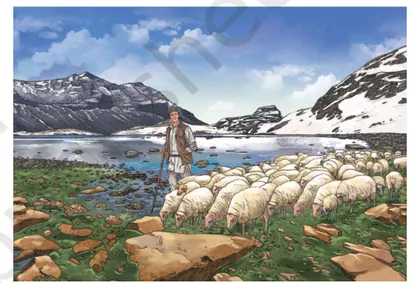
This chapter introduces Natural Resources — the air, water, soil, minerals, forests and wildlife that sustain life on Earth. It explains why these resources are important, how they are distributed, and how they are interlinked (atmosphere, hydrosphere, lithosphere, biosphere). Key themes include types of resources (renewable vs non‑renewable; biotic vs abiotic), human impacts (over‑exploitation, pollution, habitat loss), and practical conservation measures (water harvesting, afforestation, sustainable use, recycling). Students will learn causes and consequences of resource depletion, methods to conserve and manage resources sustainably, and the role of individuals and communities in protecting natural wealth for future generations.
Learning Objectives
- Define natural resources and classify them as renewable and non‑renewable with examples
- Explain the composition of air and its importance for respiration, photosynthesis and climate
- Draw and explain the water cycle and its significance in maintaining water resources
- Describe the formation, layers and importance of soil and factors affecting soil fertility
- Explain the processes of weathering and erosion and differentiate between them
- Identify major causes and effects of soil degradation, deforestation and desertification
- Illustrate the role of forests and wildlife in maintaining ecological balance and supporting livelihoods
- Compare renewable and non‑renewable energy resources, listing advantages and limitations of each
Topics in this chapter
8 topics · tap a topic title to jump straight to it.
Introduction to Natural Resources
What are natural resources? Natural resources are materials and components (air, water, soil, minerals, forests, sunlight, wildlife, etc.) that occur in nature and are used by humans for survival and economic activity. They form the basis of life and all human activities.
Classification
- Based on origin: Biotic (living or once-living: forests, animals, fossil fuels) and Abiotic (non-living: water, air, minerals, sunlight).
- Based on renewability:
- Renewable — resources that can be replenished naturally within human time scales (e.g., solar energy, wind, biomass, surface water under sustainable use).
- Non-renewable — resources that form very slowly or not at all on human time scales (e.g., coal, petroleum, natural gas, many minerals).
Why they are important
Natural resources provide food, clean water, air, raw materials for industry, energy, and ecosystem services such as climate regulation, soil formation, and pollination.
Key issues and threats
- Overuse and depletion: extraction faster than replenishment leads to resource depletion (e.g., groundwater pumping causing falling water tables).
- Pollution: contamination of air, water and soil reduces resource quality (e.g., industrial effluents, plastic pollution).
- Habitat loss and biodiversity decline: deforestation and land-use change destroy ecosystems.
- Inequitable distribution: unequal access causes social and economic problems.
Conservation and sustainable use
Conservation aims to use resources so they are available for future generations. Key approaches: sustainable harvesting (not exceeding replenishment), afforestation and reforestation, rainwater harvesting, pollution control, recycling, efficient technologies, and legal/regulatory frameworks.
Link to human population and development
Resource pressure rises with population and consumption per person. Managing both population growth and per-capita consumption is critical to sustainability.
Takeaway: Natural resources are limited and interdependent. Understanding their types, rates of renewal, and threats helps plan their wise use and conservation for long-term sustainability.
- Air — renewable on human timescales; polluted by industrial emissions leading to smog and respiratory problems.
- Surface water (rivers, lakes) — renewable if replenished by rainfall; can be polluted by sewage and industrial discharge.
- Groundwater — renewable but slow to recharge; over-extraction causes falling water tables and land subsidence (e.g., parts of northwestern India).
- Forests — biotic and renewable if managed; deforestation for agriculture and timber reduces biodiversity and increases soil erosion.
- Fossil fuels (coal, petroleum, natural gas) — non-renewable; used for energy but cause greenhouse gas emissions and will deplete with continued use.
- Soil — formed slowly; unsustainable farming (overgrazing, deforestation) leads to soil erosion and loss of fertility.
- Per-capita availability = Total resource quantity / Population
- Resource depletion rate ≈ Extraction rate − Replenishment rate (positive → net depletion)
- Population growth (continuous) P(t) = P0 × e^(r t), where P0 = initial population, r = growth rate, t = time
- Doubling time ≈ ln(2) / r (for exponential growth; r in same time units as t)
- Sustainable yield ≤ Natural replenishment rate (for renewable resources)
Air
What is air? Air is the mixture of gases that surrounds the Earth and is essential for life. It is invisible, tasteless and odourless (when pure), and extends up to several hundred kilometres above the Earth as the atmosphere.
Composition
- Permanent gases (approx. by volume): Nitrogen ~78%, Oxygen ~21%, Argon ~0.93%, Carbon dioxide ~0.04% (variable), and traces of neon, helium, methane, krypton).
- Variable components: Water vapour (0–4% by volume depending on temperature and location), dust particles, pollen, smoke and other pollutants.
Properties of air
- Air has mass and density: a column of air has weight that produces atmospheric pressure.
- Air exerts pressure in all directions (atmospheric pressure ≈ 101.3 kPa at sea level).
- Air expands on heating and contracts on cooling (thermal expansion), and it diffuses (mixes) readily.
- Air supports combustion by supplying oxygen and participates in many chemical cycles (e.g., nitrogen cycle, carbon cycle).
Role of air in nature and daily life
- Respiration: Animals and humans breathe oxygen; plants use CO2 for photosynthesis and release oxygen.
- Photosynthesis: Plants convert CO2 and water to glucose and O2 using sunlight.
- Weather and climate: Air movement (wind), water vapour, and pressure differences determine weather systems and rainfall.
- Protection: The ozone layer (part of the atmosphere) absorbs harmful ultraviolet (UV) radiation.
- Transport and technology: Air is used in pneumatic systems, flight (lift), balloons, and engines.
- Pollution: Harmful gases and particulate matter in air cause health problems and ecological damage; controlling emissions and planting trees help reduce pollution.
Common demonstrations and phenomena
- Diffusion: Smell of perfume spreading across a room.
- Air pressure effects: A collapsing can after heating and rapid cooling; wind produced by pressure differences.
- Buoyancy: Hot-air balloons rise as heated air inside is less dense than outside air.
- Cloud formation: Cooling of moist air causes condensation of water vapour forming clouds and rain.
Air pollution & mitigation
- Major pollutants: Particulate matter (PM2.5/PM10), CO, SO₂, NOₓ, hydrocarbons, and excess CO₂.
- Effects: Respiratory diseases, acid rain, global warming and ozone depletion.
- Prevention: Use clean energy, reduce vehicle emissions, regulate industries, afforestation, and use public transport.
- Breathing: Humans inhale oxygen from air and exhale carbon dioxide.
- Hot-air balloon: Air inside is heated so its density decreases and the balloon rises.
- Aerosol spray: Liquid droplets disperse through air by diffusion and air currents.
- Car tyre pump: Air gets compressed in a pump and exerts pressure on the tyre.
- Cloud formation: Warm moist air rises, cools and condenses into clouds and rain.
- Fire: Combustion needs oxygen from air; blowing on embers increases burning by supplying oxygen and removing CO2 and heat.
- Pressure = Force / Area (p = F / A)
- Density = Mass / Volume (ρ = m / V)
- Ideal gas law: pV = nRT (p = pressure, V = volume, n = moles, R = gas constant, T = temperature in K)
- Boyle's law (at constant T): p1V1 = p2V2
- Charles' law (at constant p): V1 / T1 = V2 / T2 (T in Kelvin)
- Dalton's law of partial pressures: p_total = p1 + p2 + ... (sum of partial pressures of component gases)
Water
Water
Definition: Water is a chemical substance with formula H2O. It is a colourless, odourless, tasteless liquid at room temperature and is vital for all known forms of life.
Physical and chemical properties
- Compound: H2O (two hydrogen atoms covalently bonded to one oxygen atom).
- States: Exists naturally in three states – solid (ice), liquid (water), gas (water vapour).
- Density: Maximum density about 1 g/cm3 (1000 kg/m3) at 4°C.
- High specific heat: 4.18 J/g°C (4184 J/kg°C), so it moderates climate and stores heat.
- High latent heats: fusion ~334 kJ/kg, vaporisation ~2256 kJ/kg.
- Universal solvent: dissolves many ionic and polar substances, important for biological and geological processes.
Occurrence and distribution
Over 97% of Earths water is in the oceans (saline). Of the remaining freshwater (~3%): most is locked in glaciers and ice caps; a smaller fraction is groundwater; only a tiny fraction is available as surface water in rivers and lakes for direct human use.
Water cycle (hydrologic cycle)
The continuous movement of water on, above and below the surface of the Earth. Main processes:
- Evaporation: liquid water becomes vapour from oceans, lakes, soil.
- Transpiration: water vapour released by plants.
- Condensation: vapour forms clouds.
- Precipitation: rain, snow, hail returns water to Earth.
- Infiltration and percolation: water moves into soil and recharges groundwater (aquifers).
- Runoff: water flows over land into rivers, lakes and oceans.
Groundwater and water table
Groundwater occupies pores and fractures in soil and rock. The water table is the upper surface of saturated zone. Wells tap groundwater; overuse can lower the water table and cause problems like drying of wells and land subsidence.
Uses of water
- Domestic: drinking, cooking, cleaning.
- Agriculture: irrigation (largest use worldwide).
- Industry: cooling, processing, manufacturing.
- Ecological: habitat for aquatic life, maintaining wetlands.
- Energy: hydropower generation.
Water quality and purification
Potable water must be free from harmful microbes and within acceptable physical and chemical limits (pH, turbidity, dissolved salts). Common purification steps include sedimentation, filtration, and disinfection (e.g., chlorination). Boiling and household filtration are simple methods to make water safe.
Water scarcity and conservation
Freshwater is limited and unevenly distributed. Causes of scarcity include overuse, pollution, population growth and climate change. Conservation measures: rainwater harvesting, watershed management, efficient irrigation (drip), recycling and reuse, fixing leaks, and public awareness.
Importance in everyday life and environment
Water supports life processes (metabolism, transport of nutrients), shapes landscapes via erosion and deposition, and influences weather and climate. Protecting water resources ensures health, food security and sustainable development.
- Rainwater harvesting on a rooftop: collecting and storing rainwater for gardening or domestic use, reducing dependence on municipal supply.
- Irrigation methods: drip irrigation uses less water than flood irrigation, increasing water use efficiency in agriculture.
- Water purification at home: boiling or using a household filter followed by chlorination to make pond or well water safe to drink.
- Groundwater overuse: excessive pumping in a farming area lowers the water table, causing nearby wells to dry up.
- Hydropower: dams store water and release it through turbines to generate electricity, an application of potential energy of water.
- Density: density (rho) = mass / volume (rho = m / V). Example units: kg/m3. For water near 4°C, rho ≈ 1000 kg/m3.
- Mass-volume relation: mass = density × volume (m = rho × V). Useful to convert between litres and kilograms (1 L water ≈ 1 kg).
- Hydrostatic pressure: p = rho × g × h (pressure due to a column of water), where g ≈ 9.8 m/s2 and h is height of water column in metres.
- Specific heat (heat required to raise temperature): Q = m × c × ΔT, where c for water ≈ 4184 J/kg°C.
- Latent heat (phase change): Q = m × L, where L is latent heat of fusion (~334 kJ/kg) or vaporisation (~2256 kJ/kg) for water.
Soil
What is soil?
Soil is the uppermost layer of the Earth’s crust that supports plant life. It is a mixture of mineral particles, organic matter (humus), water, and air. Soil forms over long periods by the weathering of rocks and the action of climate, organisms and time.
How soil is formed (soil formation)
- Parent rock (source material) breaks down by physical, chemical and biological weathering.
- Climate (rain, temperature) affects the rate of weathering and organic decay.
- Organisms (plants, microbes, earthworms) add organic matter and mix the material.
- Topography (slope, drainage) influences erosion and accumulation.
- Time: longer periods lead to deeper, more developed soils.
Soil profile and horizons
- O horizon: organic litter (leaves, plant debris).
- A horizon (topsoil): dark, rich in humus and nutrients; most biological activity.
- B horizon (subsoil): accumulation of leached minerals (clays, iron).
- C horizon: partially weathered parent rock.
- R horizon: unweathered bedrock.
Components and properties of soil
- Mineral particles: sand (coarse), silt (medium), clay (fine) — determine texture.
- Organic matter (humus): improves fertility, water retention and structure.
- Soil air and water: important for root respiration and nutrient transport.
- pH: acidity or alkalinity affects nutrient availability (pH ~6–7.5 is ideal for most crops).
- Soil structure and colour: indicate aeration, drainage and organic content.
Types of soil (common in India) and typical crops
- Alluvial soil: found in plains and river valleys — fertile; crops: rice, wheat, sugarcane.
- Black (Regur) soil: retains moisture, rich in clay — cotton, millets.
- Red soil: well-drained but low in humus — pulses, millets.
- Laterite soil: poor and acidic, formed in high rainfall areas — plantation crops (tea, coffee after improvement).
- Arid (Desert) soil: saline, low organic matter — sparse vegetation; needs irrigation and reclamation.
Importance of soil
- Supports agriculture and food production.
- Habitat for many organisms (microbes, insects, earthworms).
- Stores water and filters pollutants.
- Provides raw materials (clay for pottery, sand for construction).
Soil erosion and conservation
- Erosion types: water erosion (rills, gullies), wind erosion (dust storms), and human-induced degradation (deforestation, overgrazing, unsuitable tillage).
- Conservation methods: contour ploughing, terracing, afforestation, strip cropping, cover crops, crop rotation, mulching, check dams, windbreaks and adding organic manure.
Practical tips (classroom & everyday)
- Test soil texture by the ‘ribbon test’ (sand gritty, clay forms long ribbon, silt feels smooth).
- Use compost or farmyard manure to improve soil fertility and structure.
- Avoid over-irrigation to prevent salinization and waterlogging.
Summary: Soil is a dynamic natural resource formed by rock weathering and biological activity; its texture, structure, moisture, and fertility determine its suitability for plants. Protecting soil from erosion and maintaining its organic content are crucial for sustaining agriculture and ecosystems.
- Farmers add compost or cow dung (organic manure) to topsoil to improve crop yield and soil structure.
- Terrace farming in hilly regions (e.g., Himachal Pradesh) prevents soil erosion and conserves water.
- Alluvial soil in the Indo-Gangetic plain supports intensive cultivation of rice and wheat.
- Black soil in the Deccan plateau retains moisture and is ideal for cotton cultivation.
- Wind erosion in Rajasthan’s desert areas removes the topsoil; planting windbreaks (trees) reduces this effect.
- Bulk density (BD) = mass of oven-dry soil (g) / total volume of soil sample (cm³). Typical units: g/cm³.
- Porosity (%) = (1 - BD / PD) × 100, where PD (particle density) ≈ 2.65 g/cm³ for mineral soils. Porosity indicates void space for air and water.
- Soil moisture content (%) = (mass of wet soil - mass of oven-dry soil) / mass of oven-dry soil × 100.
- pH = -log10[H+], gives acidity/alkalinity of soil (pH ~6–7.5 is suitable for most crops).
- Infiltration rate = volume of water infiltrated / (area × time). Units: mm/hr or cm/hr.
Natural Vegetation and Wildlife
Introduction
Natural vegetation means the plant cover that grows naturally in an area without human intervention. Wildlife refers to all wild animals, birds, insects and other organisms living in natural habitats. Both are integral parts of natural resources and are interdependent: vegetation provides food and shelter for wildlife, and animals help in pollination, seed dispersal and nutrient cycling.
Factors Affecting Distribution
- Climate (temperature and rainfall) — most important factor; determines type and density of vegetation.
- Soil — texture, depth and fertility influence plant growth.
- Altitude — temperature and oxygen change with height; vegetation changes from tropical at low levels to alpine at high levels.
- Topography and drainage — slope and water availability affect vegetation.
- Human activities — deforestation, agriculture, urbanisation modify natural vegetation and wildlife habitats.
Major Types of Natural Vegetation (with characteristics)
- Tropical Evergreen Forests: Found in areas with heavy rainfall (>200 cm) and high temperature throughout the year. Trees are tall, dense, with broad leaves and no definite season for leaf shedding. Examples of plants: rubber, cinchona, ebony, rosewood. Typical animals: elephants, monkeys, tiger, hornbills.
- Tropical Deciduous (Monsoon) Forests: Found where rainfall is moderate (70–200 cm) and there is a distinct dry season. Trees shed leaves in dry season. Subtypes: moist deciduous (sal, teak) and dry deciduous (teak, acacia). Animal life: deer, bison (gaur), tigers, various birds.
- Thorny and Scrub Vegetation: Occurs in regions with low and erratic rainfall (deserts and semi-arid). Plants are short, thorny and have small or no leaves to reduce water loss (cactus, acacia/khejri, ber). Animals adapted to aridity: camel, desert fox, lizards.
- Montane (Himalayan/Temperate) Vegetation: Vegetation changes with altitude. At lower montane: broad-leaved forests; higher up: coniferous forests (pine, deodar, fir); near snowline: alpine meadows and dwarf shrubs (rhododendron). Fauna: snow leopard, Himalayan tahr, musk deer.
- Mangrove Vegetation: Found in tidal zones of river mouths and deltas (e.g., Sundarbans). Plants (mangroves) can tolerate saline water and have aerial roots (Rhizophora, Avicennia, Sundari). Animals include estuarine crocodiles, mudskippers, many fish and bird species.
- Grasslands: Dominated by grasses rather than trees. Occur in areas with moderate rainfall and periodic fires or grazing. Examples: savannas, temperate grasslands and alpine meadows. Typical animals: herbivores like deer, bison, antelope and predators like lions or wolves (region dependent).
Wildlife: Adaptations, Importance and Threats
- Adaptations: Structural (thick fur, long roots), physiological (water conservation), behavioural (migration, hibernation) help organisms survive in specific vegetation zones.
- Importance: biodiversity maintains ecosystem services — pollination, nutrient cycling, soil formation, climate regulation and providing food, medicines and raw materials.
- Major threats: habitat loss (deforestation, land conversion), poaching, pollution, invasive species, climate change and fragmentation of habitats.
Conservation and Protection
Conservation is done by two main approaches: in-situ (protecting species in their natural habitats — national parks, wildlife sanctuaries, biosphere reserves) and ex-situ (zoos, botanical gardens, seed banks). Important measures in India: Wildlife Protection Act (1972), Project Tiger, Project Elephant, protected areas like the Sundarbans (mangrove), Jim Corbett National Park, Kanha, Kaziranga (one-horned rhinoceros).
Interdependence and Examples of Ecological Relationships
- Food chains and food webs show energy flow: plant (producer) → herbivore (primary consumer) → carnivore (secondary consumer) → top predator.
- Seed dispersal by birds and mammals maintains forest regeneration; pollination by insects and birds is essential for reproduction of many plants.
Summary (Key points)
- Natural vegetation types are primarily determined by climate and soil.
- Each vegetation type supports characteristic wildlife adapted to local conditions.
- Human actions greatly modify vegetation and threaten wildlife; conservation is essential.
Note for students: When studying examples, relate each plant and animal to the climate/soil/altitude of its habitat to understand adaptation and distribution.
- Tropical evergreen forests (Western Ghats, Andaman): rubber, ebony; animals — elephants, hornbills.
- Tropical deciduous forests (Central India): teak, sal; animals — tiger, gaur (Indian bison), chital (spotted deer).
- Thorny and scrub (Thar Desert): cactus, khejri (Prosopis cineraria); animals — camel, desert fox, spiny lizards.
- Montane vegetation (Himalayas): pine, deodar, rhododendron; animals — snow leopard, Himalayan musk deer, yak (higher altitudes).
- Mangroves (Sundarbans): Sundari (Heritiera fomes), Avicennia; animals — Bengal tiger (mangrove-adapted), estuarine crocodile, various fish and birds.
- Grasslands (Indo-Gangetic plains, Tibetan plateau meadows): tall and short grasses; animals — Indian rhinoceros (in tall grass swamps like Kaziranga), various grazing herbivores and their predators.
- Net Primary Productivity (NPP) = Gross Primary Productivity (GPP) − Respiration by producers (R)
- Population density = Number of individuals of a species / Area occupied (e.g., animals per km²)
- Percentage forest cover = (Forest area ÷ Total land area) × 100
Minerals and Energy Resources
Introduction
Minerals are naturally occurring, homogeneous substances with a definite chemical composition and crystalline structure. Energy resources are sources from which we obtain energy to do work — they can be stored (fossil fuels) or continuously replenished (renewables).
Types of Minerals
- Metallic minerals: Contain metals — e.g., iron ore (Fe), copper (Cu), bauxite (Al). Used in construction, transport, electrical wiring.
- Non-metallic minerals: Do not yield metals — e.g., limestone, mica, kaolin, gypsum. Used in cement, ceramics, electrical insulation.
Occurrence and Formation
Minerals form through igneous, sedimentary and metamorphic processes. Fossil fuels (coal, petroleum, natural gas) form from buried plant and animal remains undergoing heat and pressure over millions of years.
Extraction and Processing
- Mining methods: Open-cast (surface) mining for shallow deposits; underground mining for deep deposits.
- Ore dressing (beneficiation): Concentration methods like gravity separation and froth flotation remove gangue from ore.
- Pyrometallurgy and hydrometallurgy: Roasting, smelting and electrolytic refining yield pure metals from concentrated ores.
Energy Resources: Classification
- Non-renewable (exhaustible): Coal, petroleum (crude oil), natural gas, nuclear fuels (uranium). These form slowly and can be depleted.
- Renewable (inexhaustible or replenishable): Solar, wind, hydro (water), biomass, geothermal, tidal.
Uses and Importance
Minerals provide raw materials for industries (iron for steel, bauxite for aluminium). Energy resources power homes, industries and transport: coal and gas for electricity, petrol and diesel for vehicles, solar panels and wind turbines for renewable electricity.
Environmental Impacts
- Mining: land disturbance, soil erosion, habitat loss, acid mine drainage and water pollution.
- Fossil fuels: air pollution, greenhouse gas (CO2) emissions causing climate change.
- Hydro and large projects: displacement of people, ecological changes; renewable systems have smaller but present impacts (land use, material use).
Conservation and Sustainable Use
- Reduce, reuse and recycle minerals (e.g., recycling metals and glass).
- Improve energy efficiency (LEDs, efficient motors), develop public transport and energy-saving appliances.
- Shift to renewables (solar rooftops, wind farms) and enforce responsible mining regulations and reclamation.
Key Concepts to Remember
- Ore: Rock containing minerals of economic value.
- Gangue: Waste material in an ore.
- Reserve life (useful for planning): how long a resource will last at current rates.
CBSE tip: Understand examples of minerals and fuels, differences between renewable and non-renewable, simple processing steps (concentration, smelting, refining), and environmental effects with conservation methods.
- Iron ore (hematite) mined in Odisha/Chhattisgarh is processed to make steel used in construction and transport.
- Coal from Jharkhand and West Bengal is burned in thermal power plants to generate electricity.
- Crude oil (e.g., Mumbai High) is refined into petrol, diesel and LPG used in vehicles and cooking.
- Copper is used in electrical wiring because of its high electrical conductivity.
- Rooftop solar panels convert sunlight into electricity for homes and schools.
- Wind turbines in coastal and plateau regions generate renewable electricity without CO2 emissions during operation.
- Energy (E) = Power (P) × Time (t). Units: joule (J) = watt (W) × second (s). Example: E (kWh) = P (kW) × t (h).
- Efficiency (%) = (Useful energy output / Total energy input) × 100.
- Calorific value (approximate concept) = Heat released per unit mass of fuel (J/kg or kJ/kg).
- Ore grade (%) = (Mass of desired mineral in ore / Mass of ore) × 100.
- Reserve life (years) = Known reserves (units of mass or volume) / Annual consumption (same units per year).
Problems Associated with Resource Use
Overview: Problems associated with resource use arise when natural resources are consumed faster than they can be replenished or are used in ways that degrade the environment. These problems include depletion of non‑renewable resources, over‑exploitation of renewable resources, pollution, habitat loss and reduced biodiversity, soil degradation and water scarcity. They threaten human well‑being and the environment.
- Over‑exploitation and depletion: Excessive use of minerals, fossil fuels, forests and fisheries reduces available stocks. Non‑renewable resources (coal, petroleum, minerals) get exhausted; renewable resources (forests, fish) collapse when use exceeds regeneration.
- Pollution: Use of resources often generates pollutants — air (SOx, NOx, particulate matter), water (industrial effluents, sewage, agricultural runoff), and soil (pesticide residues, heavy metals). Pollution degrades ecosystems and human health.
- Deforestation and habitat loss: Clearing forests for agriculture, timber and urbanization destroys habitats, causes biodiversity loss, increases soil erosion and changes local climate and water cycles.
- Soil degradation and erosion: Unsustainable agriculture, deforestation and overgrazing reduce soil fertility and increase erosion. Topsoil loss reduces agricultural productivity.
- Groundwater depletion and water scarcity: Excessive groundwater extraction for irrigation and industry lowers water tables, causing wells to dry, land subsidence, and salinization in coastal areas.
- Waste generation and disposal problems: Growing consumption creates large volumes of solid and hazardous waste (including e‑waste and radioactive waste) that are difficult to manage safely.
- Climate change: Burning fossil fuels and deforestation increase greenhouse gas concentrations, leading to global warming and associated impacts (sea level rise, extreme weather, changing rainfall patterns).
- Social and economic consequences: Resource depletion and pollution cause health problems, reduce livelihoods (e.g., fishing collapse), create conflicts over resources and can force migration.
Causes: population growth, rising per‑capita consumption, wasteful technologies, inefficient resource use, market failures (externalities), and lack of regulations or enforcement.
Simple mitigation approaches: reduce (use less), reuse, recycle; adopt renewable energy; sustainable agriculture and fisheries (regulate harvests, quotas); afforestation and watershed management; rainwater harvesting and groundwater recharge; pollution control technologies and strict regulation; public awareness and changing consumption patterns.
- The Aral Sea (Central Asia): extensive irrigation diverted river inflow and the sea largely dried up, destroying fisheries and causing salinization and health problems.
- Groundwater depletion in northwestern India (Punjab, Haryana): heavy irrigation has lowered water tables, forcing deeper wells and increased energy use.
- Deforestation in the Amazon: clearing for agriculture and cattle ranching reduces biodiversity, alters rainfall patterns and releases carbon dioxide.
- Air pollution in Delhi: vehicle emissions, industry and biomass burning cause frequent smog and health crises.
- Collapse of the Atlantic cod fishery (Canada): overfishing in the 20th century led to stock collapse and long‑term loss of the fishery.
- Electronic waste in informal recycling hubs: toxic metals and persistent chemicals pollute soils and water and harm workers' health.
- Per capita resource use = Total resource consumption / Population
- Rate of change (average) = (Final value − Initial value) / Time interval
- Doubling time (approx) = 70 / (annual % growth rate) — useful for population or consumption growth estimates
- Pollutant load = Concentration × Flow (e.g., mg/L × L/s = mg/s) — useful for estimating mass of pollutant entering a system
- Sustainable yield (conceptual) = Natural regeneration rate — harvest rate (to be non‑negative for sustainability)
Conservation and Sustainable Management
What it means: Conservation and sustainable management aim to use natural resources so that they meet present needs without compromising availability for future generations. Conservation reduces waste and damage; sustainable management balances use and natural regeneration.
Why it is needed: Overuse, pollution and habitat destruction cause depletion of forests, water, soil and wildlife, leading to loss of biodiversity, reduced agricultural productivity and water scarcity.
Important principles:
- Use resources at or below their regeneration rate (sustainable yield).
- Follow the 3R approach: Reduce, Reuse, Recycle.
- Prevent pollution at source and restore degraded ecosystems.
- Integrate community participation, scientific management and policy support.
Methods and practices (by resource):
- Forests & wildlife: Afforestation and reforestation; protected areas (national parks, wildlife sanctuaries); wildlife corridors; community forest management; laws against poaching; sustainable harvesting of forest produce.
- Water: Rainwater harvesting; watershed management; check dams and percolation tanks to recharge groundwater; efficient irrigation (drip, sprinkler); fixing leaks and reducing wastage; recycling and treating wastewater.
- Soil: Contour ploughing, terracing, strip cropping, cover crops, mulching, preventing overgrazing and deforestation to reduce erosion and maintain fertility.
- Agriculture: Crop rotation, organic fertilisers, integrated pest management (IPM), reduced chemical use, agroforestry and sustainable yield planning.
- Energy & materials: Use of renewable energy (solar, wind, biomass), energy-efficient appliances, extended producer responsibility, recycling of metals, paper, plastics and circular economy measures.
Role of stakeholders: Individuals conserve water, segregate waste, plant trees; communities manage common lands and adopt local conservation practices; governments create policies, protected area networks, incentives (subsidies for drip irrigation, renewable energy) and enforcement.
Outcomes of sustainable management: Stable or recovering forest and wildlife populations, reliable water supply, less soil erosion, sustained agricultural output and healthier ecosystems that support human well‑being.
- Chipko movement — villagers hugged trees to prevent felling; a classic community-driven forest conservation example.
- Project Tiger — government initiative in India to protect tigers by creating and managing reserves.
- Ralegan Siddhi (Maharashtra) — watershed management and soil-water conservation transformed local agriculture and groundwater levels.
- Rainwater harvesting programs in urban and rural India — rooftop harvesting and recharge pits reduce dependence on external supplies and raise groundwater.
- Drip irrigation adoption in water-scarce areas — reduces water use in agriculture and increases water-use efficiency.
- Sustainable condition: Consumption rate ≤ Regeneration rate (no single numeric formula; principle for renewable resources).
- Water balance (simplified): ΔS = Inflow − Outflow (change in storage equals inflow minus outflow).
- Runoff volume (approx.): Runoff ≈ Rainfall (m) × Area (m²) × Runoff coefficient (dimensionless, 0–1). Useful for sizing rainwater-harvesting structures.
- Recycling efficiency (%) = (Recovered amount / Total waste generated) × 100.
- Energy efficiency (%) = (Useful energy output / Energy input) × 100.
Key Concepts
- Natural Resource
- Materials or substances provided by nature that are useful to humans.
- Renewable Resource
- A resource that can be replenished naturally within a human lifetime or through sustainable use.
- Non-renewable Resource
- A resource that cannot be replenished on a human timescale once consumed.
- Biotic Resource
- Natural resources obtained from living organisms or organic materials.
- Abiotic Resource
- Non-living natural resources derived from the physical environment.
- Ecosystem
- A community of living organisms interacting with each other and with their physical environment.
- Biosphere
- The global zone of life, comprising all ecosystems on Earth where living organisms exist.
- Atmosphere
- The layer of gases surrounding the Earth that supports life and regulates climate.
- Hydrosphere
- All water on Earth in liquid, solid, and gaseous forms, including oceans, rivers, glaciers, and groundwater.
- Lithosphere
- The rigid outer layer of the Earth composed of the crust and the uppermost mantle, including rocks and soil.
- Biodiversity
- The variety of living organisms of all kinds in a particular habitat or across the planet.
- Conservation
- Careful management and protection of natural resources to prevent depletion and maintain ecological balance.
- Sustainable Development
- Development that meets present needs without compromising the ability of future generations to meet their needs.
- Deforestation
- Large-scale removal of trees and clearing of forests, often causing habitat loss and environmental damage.
- Soil Erosion
- The removal of topsoil by wind, water, or human activity, leading to reduced soil fertility.
- Water Cycle
- The continuous movement of water between the Earth's surface and the atmosphere through evaporation, condensation, precipitation, and collection.
- Groundwater
- Water stored beneath the Earth's surface in soil pores and rock fractures, available for wells and springs.
- Aquifer
- A permeable layer of rock or sediment that stores and transmits groundwater.
- Fossil Fuels
- Energy-rich deposits formed from the remains of ancient plants and animals over millions of years.
- Pollution
- Introduction of harmful substances or forms of energy into the environment that cause adverse effects.
End-of-Chapter Trial Paper & Test Questions
Topic-wise questions to test your understanding of every concept in this chapter.
-
Which of the following is a non-renewable natural resource? / निम्नलिखित में से कौन-सा एक अनवीकरणीय प्राकृतिक संसाधन है? (a) Solar energy / सौर ऊर्जा (b) Wind energy / पवन ऊर्जा (c) Coal / कोयला (d) Biomass / बायोमास
Show answer
(c) Coal / (c) कोयला — Coal is a fossil fuel formed over millions of years and cannot be replenished on a human timescale, so it is non-renewable. Solar, wind and biomass are renewable resources. / कोयला एक जीवाश्म ईंधन है जो लाखों वर्षों में बना है और मानव समय-सीमा पर पुनः भरा नहीं जा सकता, इसलिए यह अनवीकरणीय है। सौर, पवन और बायोमास नवीकरणीय संसाधन हैं।
-
The topmost fertile layer of soil, rich in humus and microorganisms, is called the ____. / ह्यूमस और सूक्ष्मजीवों से भरपूर मिट्टी की सबसे ऊपरी उपजाऊ परत को ____ कहते हैं। (a) B horizon (b) A horizon (topsoil) (c) C horizon (d) R horizon
Show answer
(b) A horizon (topsoil) / (b) A क्षितिज (शीर्षमिट्टी) — The A horizon is the topsoil, dark in colour, richest in humus, nutrients and biological activity. It is most important for plant growth. / A क्षितिज शीर्षमिट्टी है — गहरे रंग की, ह्यूमस, पोषक तत्त्वों और जैविक गतिविधि से सबसे समृद्ध। यह पौधों की वृद्धि के लिए सबसे महत्त्वपूर्ण है।
-
The continuous movement of water through evaporation, condensation, precipitation and runoff is called the ____. / वाष्पीकरण, संघनन, वर्षण और अपवाह के माध्यम से जल की निरंतर गति को ____ कहते हैं।
Show answer
Water cycle (hydrological cycle) / जल चक्र (जलविज्ञान चक्र) — In this cycle, water evaporates from oceans and lakes, forms clouds by condensation, falls as precipitation and returns via runoff and groundwater to oceans. It maintains Earth's freshwater supply. / इस चक्र में जल महासागरों और झीलों से वाष्पित होता है, संघनन से बादल बनाता है, वर्षण के रूप में गिरता है और अपवाह तथा भूजल के माध्यम से महासागरों में लौटता है। यह पृथ्वी की मीठे पानी की आपूर्ति बनाए रखता है।
-
True or False: Deforestation increases the rate of soil erosion. / सत्य या असत्य: वनोन्मूलन से मिट्टी के कटाव की दर बढ़ती है।
Show answer
True / सत्य — Tree roots hold soil in place and tree canopies reduce the impact of rain. When forests are cleared, soil is exposed to rain and wind, accelerating erosion and loss of topsoil. / पेड़ की जड़ें मिट्टी को जगह पर थामती हैं और पेड़ों की छतरी वर्षा के प्रभाव को कम करती है। वन हटाने पर मिट्टी वर्षा और हवा के सामने उजागर हो जाती है, जिससे कटाव और शीर्षमिट्टी की हानि तेज़ हो जाती है।
-
Distinguish between renewable and non-renewable resources. Give two examples of each. / नवीकरणीय और अनवीकरणीय संसाधनों में अंतर बताइए। प्रत्येक के दो उदाहरण दीजिए।
Show answer
Renewable resources can be replenished naturally within a human lifetime (e.g., solar energy, wind energy). Non-renewable resources take millions of years to form and cannot be replaced once consumed (e.g., coal, petroleum). / नवीकरणीय संसाधन मानव जीवन काल में प्राकृतिक रूप से पुनः भरे जा सकते हैं (जैसे सौर ऊर्जा, पवन ऊर्जा)। अनवीकरणीय संसाधन बनने में लाखों वर्ष लगते हैं और उपभोग के बाद प्रतिस्थापित नहीं हो सकते (जैसे कोयला, पेट्रोलियम)।
-
Composition of dry air by volume: nitrogen is approximately ____%, oxygen is approximately ____%. / शुष्क वायु की आयतन संरचना: नाइट्रोजन लगभग ____% और ऑक्सीजन लगभग ____% है।
Show answer
78%; 21% / 78%; 21% — Nitrogen (~78%) is the most abundant gas in air and maintains atmospheric balance; oxygen (~21%) is essential for respiration and combustion; argon (~0.93%) and CO₂ (~0.04%) make up most of the rest. / नाइट्रोजन (~78%) वायु में सबसे प्रचुर गैस है और वायुमंडलीय संतुलन बनाए रखती है; ऑक्सीजन (~21%) श्वसन और दहन के लिए आवश्यक है; शेष में मुख्यतः आर्गन (~0.93%) और CO₂ (~0.04%) हैं।
-
What are two methods of soil conservation that can prevent soil erosion on hill slopes? / पहाड़ी ढलानों पर मिट्टी के कटाव को रोकने के लिए मिट्टी संरक्षण के दो तरीके क्या हैं?
Show answer
(1) Terrace farming: creating step-like flat fields on hill slopes reduces the speed of runoff, prevents soil being washed away and conserves water. (2) Contour ploughing: ploughing along the contours (horizontal lines of equal height) rather than up and down the slope reduces water flow speed and retains soil. / (1) सीढ़ीदार (टेरेस) खेती: पहाड़ी ढलानों पर सीढ़ीनुमा समतल खेत बनाने से अपवाह की गति कम होती है, मिट्टी बह नहीं पाती और जल संरक्षण होता है। (2) समोच्च जुताई: ढाल के आर-पार के बजाय समोच्च रेखाओं (समान ऊँचाई की क्षैतिज रेखाओं) के अनुसार जोतने से जल-प्रवाह की गति कम होती है और मिट्टी बनी रहती है।
-
Why is biodiversity important for ecosystem stability? Explain with reference to food chains. / खाद्य श्रृंखला के संदर्भ में समझाइए कि पारिस्थितिक तंत्र की स्थिरता के लिए जैव विविधता क्यों महत्त्वपूर्ण है?
Show answer
Biodiversity means a variety of species living in an ecosystem. In food chains, each organism plays a role (producer, consumer, decomposer). Greater biodiversity creates complex food webs with many alternative links, so if one species declines, the ecosystem can function through other species. Low biodiversity makes ecosystems fragile — loss of one key species can collapse the chain. / जैव विविधता का अर्थ है पारिस्थितिक तंत्र में विभिन्न प्रजातियों की उपस्थिति। खाद्य श्रृंखला में प्रत्येक जीव एक भूमिका निभाता है (उत्पादक, उपभोक्ता, अपघटक)। अधिक जैव विविधता जटिल खाद्य जाल बनाती है जिसमें वैकल्पिक कड़ियाँ होती हैं — एक प्रजाति घटने पर दूसरी से काम चलता है। कम जैव विविधता वाले पारिस्थितिक तंत्र नाज़ुक होते हैं — एक प्रमुख प्रजाति के नष्ट होने से पूरी श्रृंखला टूट सकती है।
Related Laws & Principles
Explore allFoundational laws & principles behind this chapter. Each one opens a full page — what it says, why it matters, five practice questions and the mistakes to avoid.