Overview
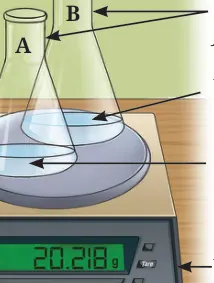
This chapter introduces the basic building blocks of matter — atoms and molecules — and explains how they combine to form elements and compounds. Starting from historical laws of chemical combination (law of conservation of mass and law of constant proportions), it presents Dalton's atomic theory and its modern modifications. The chapter defines atoms, molecules, elements, compounds, and formula units; explains valency and how to write chemical formulae; and introduces the concepts of atomic mass and molecular (relative) mass with simple calculations. The importance of the chapter lies in laying the conceptual foundation for chemical reactions and stoichiometry: understanding atoms and molecules helps explain why mass is conserved in reactions, why compounds have definite composition, and how to predict formulas of compounds. Students will learn to distinguish atoms from molecules, write and interpret chemical formulas, compute relative atomic and molecular masses, apply Dalton’s ideas while recognizing their limitations (isotopes and subatomic particles), and solve basic numerical problems related to formula mass.
Learning Objectives
- Define atom, molecule, element and compound and give one example of each
- Explain Dalton's atomic theory and state its main postulates and limitations
- State and illustrate the law of conservation of mass and the law of definite proportions
- Explain the law of multiple proportions and apply it to simple cases (e.g., CO and CO2)
- Describe the basic properties, relative charges and approximate masses of electrons, protons and neutrons
- Define the atomic mass unit (u) and calculate relative atomic mass from given atomic masses
- Calculate relative molecular (formula) mass for molecules and ionic formula units from chemical formulas
- Determine valency of elements from electronic structure and from common ions
Topics in this chapter
12 topics · tap a topic title to jump straight to it.
Laws of Chemical Combination
Introduction: The laws of chemical combination describe how elements combine to form compounds. They are empirical rules based on experiments and are essential for writing and balancing chemical equations.
1. Law of Conservation of Mass (Lavoisier): "Mass is neither created nor destroyed in a chemical reaction." The total mass of reactants equals the total mass of products. This explains why chemical equations must be balanced.
Example (molecular equation): 2H2 + O2 → 2H2O. If 4 g of H2 react with 32 g of O2, the total reactant mass = 36 g and mass of 2 moles of H2O = 36 g.
2. Law of Definite Proportions / Constant Composition (Proust): A given chemical compound always contains its constituent elements in fixed definite proportions by mass, independent of source or preparation method.
Example: Water (H2O) always contains hydrogen and oxygen in mass ratio H : O = 2 : 16 = 1 : 8. That is, 1 g of H combines with 8 g of O in water. Percent composition formula: % of element = (mass of element in formula / molar mass of compound) × 100. For H2O: %H = 2/18 × 100 = 11.11%, %O = 16/18 × 100 = 88.89%.
3. Law of Multiple Proportions (Dalton): When two elements form more than one compound, the different masses of one element that combine with a fixed mass of the other are in ratios of small whole numbers.
Example: Carbon and oxygen form CO and CO2. For a fixed 1 g of C, oxygen combined in CO = 16/12 ≈ 1.333 g; in CO2 = 32/12 ≈ 2.667 g. The ratio 1.333 : 2.667 = 1 : 2, a small whole-number ratio (1:2).
Notes and limits: These laws apply to stoichiometric compounds. Some solid compounds (non-stoichiometric or variable composition compounds, often metal oxides) show small deviations from definite proportions due to crystal defects or variable oxidation states.
Importance: These laws provide the foundation for writing balanced chemical equations, finding empirical formulas, computing percent composition, and understanding stoichiometry.
- Balanced reaction showing conservation of mass: CH4 + 2O2 → CO2 + 2H2O. Total mass of reactants (16 + 64 = 80 g) = total mass of products (44 + 36 = 80 g).
- Definite proportion (water): H2O has H : O mass ratio = 2 : 16 = 1 : 8. So 2 g H always combines with 16 g O to give 18 g water.
- Multiple proportions (carbon oxides): For 12 g C, CO contains 16 g O and CO2 contains 32 g O. For a fixed 1 g C the O masses are 1.333 g and 2.667 g, ratio 1 : 2.
- Law of conservation: mass(reactants) = mass(products)
- Percent composition: %element = (mass of element in 1 mole of compound / molar mass of compound) × 100
- Mass ratio in definite proportion (two elements A and B): mass(A) : mass(B) is constant for a given compound
- Law of multiple proportions (two compounds of elements A and B): (mass of B combining with fixed mass of A in compound1) : (mass of B combining with same fixed mass of A in compound2) = small whole-number ratio
Dalton's Atomic Theory
Dalton's Atomic Theory
Introduction: John Dalton (early 19th century) proposed a simple atomic theory to explain chemical reactions and laws of chemical combination. It laid the foundation for modern chemistry and explained empirical laws such as the law of conservation of mass, law of definite proportions and law of multiple proportions.
Dalton’s Postulates:
- All matter is made of extremely small particles called atoms, which are indivisible and indestructible (Dalton’s indivisible particles model).
- All atoms of a given element are identical in mass and properties.
- Atoms of different elements differ in mass and properties.
- Compounds are formed when atoms of different elements combine in simple whole-number ratios.
- Chemical reactions involve rearrangement of atoms; atoms are neither created nor destroyed (explains conservation of mass).
How Dalton’s Theory Explains Key Laws:
- Law of Conservation of Mass: Atoms are neither created nor destroyed during chemical reactions, so total mass remains constant.
- Law of Definite Proportions: A given compound always contains the same elements in the same fixed mass ratio because it is made of a fixed type and number of atoms.
- Law of Multiple Proportions: When two elements form more than one compound, the masses of one element that combine with a fixed mass of the other are in ratios of small whole numbers (because different whole-number combinations of atoms form different compounds).
Experimental Evidence (basic): Dalton used quantitative chemical data (mass relationships in reactions and compounds) to support his ideas. For example, analysis of compounds like water and carbon dioxide showed fixed mass ratios of elements.
Limitations (and later modifications):
- Atoms are not indivisible: they are made of subatomic particles (electrons, protons, neutrons).
- Atoms of the same element can have different masses (isotopes), so Dalton’s statement that all atoms of an element are identical in mass is not always correct.
- Atoms can be transformed in nuclear reactions (contradicting absolute indivisibility in extreme cases).
Modern View: Dalton’s picture was replaced by atomic models that include subatomic structure and quantum behavior, but his key concepts—matter made of atoms, fixed ratios in compounds, and conservation in chemical reactions—remain foundational.
Summary: Dalton’s atomic theory provided a clear, testable framework for chemistry: atoms are the basic units of matter, different elements have different atoms, and chemical changes are rearrangements of these atoms.
- Water (H2O) always contains hydrogen and oxygen in a fixed mass ratio: H : O = (2 × 1) : 16 = 2 : 16 = 1 : 8 (law of definite proportions).
- Carbon monoxide (CO) and carbon dioxide (CO2): For a fixed mass of carbon, the masses of oxygen combining are in a simple whole-number ratio (8 : 16 = 1 : 2) — illustration of the law of multiple proportions.
- Sealed chemical reaction in a closed container: total mass of reactants equals total mass of products (law of conservation of mass) because atoms are merely rearranged.
- Law of Conservation of Mass: mass(reactants) = mass(products)
- Law of Definite Proportions (conceptual): For compound AB, mass of A / mass of B = constant
- Law of Multiple Proportions (conceptual): If element A combines with element B to form two compounds, then masses of B that combine with a fixed mass of A are in a ratio of small whole numbers (e.g., 8 : 16 = 1 : 2).
- Percentage composition: % of element = (mass of element in compound / mass of compound) × 100
- Formula mass (molecular mass) of a compound = sum of atomic masses of constituent atoms (e.g., M(H2O) = 2×1 + 16 = 18 u)
Limitations of Dalton's Theory and Modern View
Dalton's Atomic Theory (brief)
John Dalton (early 1800s) proposed that matter is made of tiny indivisible particles called atoms. His main points: atoms are indivisible and indestructible, all atoms of an element are identical in mass and properties, atoms of different elements differ in mass and properties, compounds are formed by combination of atoms in fixed whole‑number ratios, and chemical reactions rearrange atoms.
Limitations of Dalton's Theory
- Atoms are divisible: Dalton said atoms are indivisible. Discovery of electrons (Thomson), protons and neutrons, and later quarks, showed atoms have internal structure.
- Atoms of an element are not identical: Dalton assumed identical mass/properties for all atoms of an element. Isotopes (same Z, different neutrons) have different masses (e.g., H: protium, deuterium, tritium) though chemical properties are nearly same.
- Atoms of different elements can have nearly same mass: Different elements can have atoms with similar masses (isobars), contradicting the simple mass distinction Dalton suggested.
- Atoms can be created/destroyed in nuclear reactions: Dalton held atoms indestructible. Nuclear reactions convert mass to energy (E = mc^2) or change one element to another (radioactivity, fission, fusion).
- Some elements exist as molecules: Dalton often pictured elements as single atoms; many elements are diatomic or polyatomic in nature (O2, N2, P4, S8). Thus elemental form is not always single atoms.
- Ions and charges: Dalton assumed atoms are neutral indivisible particles. Atoms can lose or gain electrons to form ions (Na+ , Cl−), so chemical behavior depends on electrons.
- Atomic mass is not always an integer for naturally occurring samples: Natural atomic mass is an average of isotopic masses weighted by abundance, so it may be non‑integral (e.g., Cl ≈ 35.45 u), unlike Dalton's expectation of fixed integer masses.
Modern View (how Dalton's ideas were revised)
- Atoms have structure: Atoms consist of a tiny dense nucleus (protons and neutrons) and electrons arranged in shells around the nucleus. Most of the atom's mass is in the nucleus; most of its volume is electron cloud.
- Isotopes: Atoms of the same element have same number of protons (atomic number Z) but can have different numbers of neutrons, giving different mass numbers (A). Chemical properties are governed mainly by electrons; nuclear properties differ.
- Ions and electron arrangement: Atoms can gain/lose electrons to form ions; chemical bonding (ionic, covalent, metallic) arises from electron transfer/sharing. Electronic configuration explains periodic chemical behavior.
- Molecules and stoichiometry: Compounds are made of atoms combined in definite whole‑number ratios (molecules or extended ionic lattices). Laws like definite and multiple proportions are explained by discrete numbers of atoms in molecules.
- Mass–energy relation and nuclear changes: In chemical reactions mass is conserved to very high accuracy, but in nuclear reactions mass can change and convert to energy (E = mc^2).
Summary: Dalton's atomic theory was a crucial step in chemistry but needed revision. Modern atomic theory keeps the idea of atoms as basic units but adds internal structure (protons, neutrons, electrons), isotopes, ions, and quantum ideas about electrons, explaining exceptions Dalton could not.
- Isotopes of hydrogen: protium (1H, no neutron), deuterium (2H, one neutron), tritium (3H, two neutrons) — show Dalton's ‘identical atoms’ idea is not correct.
- Oxygen exists as O2 (dioxygen) in air and as O3 (ozone); Dalton’s idea that elements always exist as single atoms is incomplete.
- Sodium chloride (NaCl): sodium loses an electron to form Na+ and chlorine gains one to form Cl− (ions), showing atoms are not always neutral indivisible particles.
- Radioactive decay (e.g., 14C → 14N + β): nuclear transmutation shows atoms can change into atoms of other elements, contrary to Dalton’s indestructibility claim.
- Chlorine’s atomic mass ≈ 35.45 u because it is a natural mixture of isotopes 35Cl and 37Cl; average mass is not an integer as Dalton assumed.
- Law of definite proportions: A compound always contains the same elements in the same mass ratio (no change in formula). (Conceptual rather than algebraic formula.)
- Law of multiple proportions (concept): If two elements form more than one compound, masses of one element that combine with a fixed mass of the other are in ratios of small whole numbers.
- Average atomic mass: M_avg = Σ (fractional abundance_i × isotopic mass_i). Example: M(Cl) = 0.7577×35 + 0.2423×37 ≈ 35.45 u
- Unified atomic mass unit: 1 u = 1/12 mass of 12C ≈ 1.6605 × 10^-27 kg
- Mass–energy equivalence (nuclear processes): E = mc^2 (shows mass can convert to energy in nuclear reactions).
Atom: Definition and Symbolic Representation
Definition: An atom is the smallest particle of an element that can exist independently and retain the chemical properties of that element. Atoms are composed of a tiny central nucleus (containing protons and neutrons) surrounded by electrons in discrete energy levels or shells.
Basic structure:
- Protons (p+): positively charged particles in the nucleus. The number of protons = atomic number (Z).
- Neutrons (n0): neutral particles in the nucleus. Protons + neutrons = mass number (A).
- Electrons (e–): negatively charged particles in shells around the nucleus. In a neutral atom, number of electrons = number of protons (Z).
Symbolic representation: An atom is commonly represented as AZX or XZA, where X is the chemical symbol of the element, Z is the atomic number (number of protons), and A is the mass number (protons + neutrons).
Example: 126C or 126C means carbon with A = 12 and Z = 6. It has 6 protons and (12 − 6) = 6 neutrons. In a neutral atom it also has 6 electrons.
Isotopes: Atoms of the same element (same Z) with different mass numbers (different number of neutrons) are called isotopes. Example: 3517Cl and 3717Cl are isotopes of chlorine.
Ions (brief): If an atom gains or loses electrons it becomes an ion. A cation (e.g., Na+) has fewer electrons than protons; an anion (e.g., Cl−) has more electrons than protons. The symbolic notation sometimes shows charge as superscript, e.g., Na+.
Important notes for Class 9 level: Use the symbolic notation to find protons, neutrons and electrons quickly: protons = Z, neutrons = A − Z, electrons = Z for neutral atoms (or Z ± charge for ions).
- Carbon-12: ^12_6 C — 6 protons, 6 neutrons, 6 electrons (neutral atom).
- Chlorine isotopes: ^35_17 Cl and ^37_17 Cl — both have 17 protons but 18 or 20 neutrons respectively.
- Sodium atom: ^23_11 Na — 11 protons, 12 neutrons, 11 electrons (neutral).
- Hydrogen isotopes: protium ^1_1 H (0 neutrons), deuterium ^2_1 H (1 neutron), tritium ^3_1 H (2 neutrons).
- Ion example: Na+ (from ^23_11 Na) has 11 protons and 10 electrons — net +1 charge.
- Mass number: A = number of protons (Z) + number of neutrons (N) → A = Z + N
- Number of neutrons: N = A − Z
- For a neutral atom: number of electrons = Z (atomic number)
- Atomic mass unit: 1 u = 1/12 × mass of one atom of carbon-12
Molecule: Definition and Types
Definition: A molecule is the smallest particle of a substance that can exist independently and retain the chemical properties of that substance. It is formed when two or more atoms are chemically bonded together. Molecules may contain atoms of the same element or of different elements.
How molecules form (brief): Atoms form molecules by sharing (covalent bonding) or transferring electrons (ionic bonding leads to formula units; for simple molecular substances we focus on covalent bonding). The bonded group of atoms behaves as a single neutral entity — a molecule.
Classification of molecules:
- Based on composition:
- Homoatomic (elementary) molecules: made of atoms of the same element. Examples: O2, N2, S8, P4.
- Heteroatomic (compound) molecules: made of atoms of different elements. Examples: H2O, CO2, NH3, CH4.
- Based on atomicity (number of atoms in a molecule):
- Monoatomic: single-atom species treated as molecules for noble gases (He, Ne, Ar).
- Diatomic: two atoms (either same or different). Common element diatomics: H2, N2, O2, Cl2; also CO is a heterodiatomic example.
- Triatomic: three atoms, e.g., H2O, CO2, O3 (ozone).
- Polyatomic: more than three atoms, e.g., CH4 (4), NH3 (4 atoms total), S8 (8), C6H12O6 (glucose).
Key points to remember:
- Atomicity is the number of atoms present in one molecule of an element or compound.
- Elementary molecules contain only one type of atom; compound molecules contain more than one type.
- Noble gases are monoatomic gases (exist as single atoms) and are often referred to as monoatomic molecules in simple discussions.
Example calculations (conceptual): To find the relative molecular mass (Mr) of a molecule, add the relative atomic masses of atoms present. For H2O: Mr = 2(1) + 16 = 18. For CO2: Mr = 12 + 2(16) = 44.
Relation to amount of substance: 1 mole of any substance contains Avogadro's number (NA = 6.022 × 10^23) of molecules. This links molecular mass (in g mol^-1) to mass of a sample.
Simple conceptual diagrams that help: ball-and-stick models for shape, structural formulae (H-O-H for water), and classification tree diagrams showing the split into homoatomic/heteroatomic and by atomicity.
- Diatomic elementary molecules in air: N2 and O2 (both homoatomic, diatomic).
- Water (H2O) is a heteroatomic triatomic molecule (two H atoms + one O atom).
- Ozone (O3) is a homoatomic triatomic molecule formed from oxygen atoms.
- Methane (CH4) is a heteroatomic polyatomic molecule (one C + four H).
- Sulfur in its common molecular form is S8 (a homoatomic polyatomic molecule).
- Helium (He) exists as monoatomic particles (noble gas) — treated as single-atom molecules for counting purposes.
- Relative molecular mass (Mr) = sum of relative atomic masses of all atoms in the molecule. Example: Mr(H2O) = 2×1 + 16 = 18.
- Number of moles (n) = mass (m, in g) / molar mass (M, in g mol^-1).
- Number of molecules = n × NA, where NA = 6.022 × 10^23 mol^-1.
- Mass of given number of molecules = (number of molecules / NA) × M_r (in g).
Atomic Mass (Relative Atomic Mass)
What is Atomic Mass (Relative Atomic Mass)?
Atomic mass (more precisely, relative atomic mass) of an element is the average mass of the atoms of the element compared with 1/12th of the mass of an atom of carbon-12. It is a dimensionless number often expressed in unified atomic mass units (u), where 1 u = 1/12 mass of a carbon-12 atom.
Definition of 1 u: 1 u (also written as 1 amu) = mass of one-twelfth of a carbon-12 atom ≈ 1.660539 × 10⁻²⁷ kg.
Why 'relative' and why an average? Most elements exist as a mixture of isotopes (atoms with the same atomic number but different mass numbers). The atomic mass shown in the periodic table is the weighted average of the masses of all naturally occurring isotopes of that element, weighted by their relative abundances. Because it is an average compared to the carbon-12 standard, it is called the relative atomic mass.
How to calculate relative atomic mass
- List isotopes with their masses (in u) and their percentage (or fractional) abundances.
- Multiply each isotope mass by its fractional abundance.
- Sum the results to get the weighted average (the relative atomic mass).
Simple worked example (Chlorine): Chlorine has two common isotopes: 35Cl (mass ≈ 35 u) and 37Cl (mass ≈ 37 u). If their abundances are 75% and 25% respectively, the relative atomic mass is
Atomic mass = 35 × 0.75 + 37 × 0.25 = 26.25 + 9.25 = 35.5 u
This is why the atomic mass of chlorine in the periodic table is about 35.5 u, even though no single chlorine atom has mass 35.5 u.
Relation with mass number and particles: For a given isotope, mass number A = number of protons (Z) + number of neutrons (N). The mass of an isotope in u is roughly equal to its mass number (because protons and neutrons each have mass ≈ 1 u), but small differences arise due to nuclear binding energy and the mass of electrons.
Practical importance: Relative atomic mass is used to find molar mass (g per mole) in chemistry calculations: the relative atomic mass in u is numerically equal to the mass of one mole of that element in grams (approx). For example, chlorine's relative atomic mass ≈ 35.5 u → 1 mole of Cl atoms ≈ 35.5 g.
- Chlorine: Two main isotopes 35Cl (≈75%) and 37Cl (≈25%) → weighted average atomic mass ≈ 35.5 u. Calculation: 35×0.75 + 37×0.25 = 35.5 u.
- Hydrogen: Mostly 1H (protium, mass ≈ 1 u) with tiny amounts of 2H (deuterium, mass ≈ 2 u) and 3H (tritium, mass ≈ 3 u). The weighted average gives hydrogen’s relative atomic mass ≈ 1.008 u.
- Carbon standard: By definition, 12C isotope has mass exactly 12 u, and the atomic mass unit (1 u) is defined as 1/12 of the mass of 12C.
- Sodium chloride (table salt): The chlorine in NaCl has an average atomic mass ≈ 35.5 u; sodium has atomic mass ≈ 23 u, so the molar mass of NaCl ≈ 23 + 35.5 = 58.5 g/mol.
- 1 u = (1/12) × mass of a 12C atom ≈ 1.660539 × 10^-27 kg
- Relative atomic mass (Ar) = Σ (isotopic mass × fractional abundance)
- If abundances given in percent: Ar = Σ (isotopic mass × percentage abundance) / 100
- Mass number A = Z + N (where Z = protons, N = neutrons)
- Molar mass (g/mol) ≈ numerical value of relative atomic mass (in u) for an element
Molecular Mass (Relative Molecular Mass) and Formula Mass
Molecular Mass (Relative Molecular Mass) and Formula Mass
Relative atomic mass (Ar) of an element is the average mass of its atoms compared to 1/12th of the mass of a carbon-12 atom. It is a relative, unitless number (e.g., Ar(H) ≈ 1, Ar(O) ≈ 16).
Relative molecular mass (Mr) is the sum of the relative atomic masses of all atoms present in a molecule. It is used for covalent molecules (like H2O, CO2). Mr is also called molecular mass or molecular weight (dimensionless, but often given in atomic mass units (u) or daltons, where 1 u ≈ 1 Da).
Formula mass is the sum of the relative atomic masses of the atoms in the simplest formula (formula unit) of an ionic compound (like NaCl, CaCl2). For ionic substances we do not have discrete molecules, so we use the formula unit mass (also reported as a dimensionless number or in u).
How to calculate
- Write the chemical formula and identify each element and its count (subscript).
- Look up Ar of each element from the periodic table.
- Multiply Ar by the number of atoms of that element and add all contributions: Mr or formula mass = Σ(Ar × number of atoms).
Important notes
- Mr and formula mass are relative and usually written without units. When needed, you can express them as atomic mass units (u) or convert to kilograms using 1 u = 1.66053906660×10⁻²⁷ kg.
- Molar mass (g mol−1) is the mass in grams of one mole of that substance and numerically equals Mr (e.g., Mr(H2O)=18 → molar mass = 18 g mol−1).
- Use Mr for molecules (covalent). Use formula mass for ionic compounds (formula units).
Worked example (stepwise)
Calculate Mr of water (H2O):
- Ar(H) = 1, Ar(O) = 16
- Number of H atoms = 2, number of O atoms = 1
- Mr(H2O) = 2×Ar(H) + 1×Ar(O) = 2×1 + 16 = 18
Calculate formula mass of sodium chloride (NaCl):
- Ar(Na) = 23, Ar(Cl) = 35.5
- Formula mass = 23 + 35.5 = 58.5
Connections to real life
- Pharmacy and medicine: doses and drug formulation use molar masses to calculate how much substance to give (later taught when mole concept is introduced).
- Cooking and nutrition labeling: molecular/formula masses underlie how chemists convert between numbers of particles and masses.
- Materials and industry: knowing formula mass helps compute quantities for reactions in manufacturing and lab work.
Summary sentence: Molecular (relative molecular) mass = sum of atomic masses in a molecule; formula mass = sum of atomic masses in the simplest formula (used for ionic compounds). Both are calculated by adding Ar × atom count for every element in the formula.
- H2O: Mr = 2×Ar(H) + 1×Ar(O) = 2×1 + 16 = 18 (dimensionless; often written as 18 u or 18 Da).
- O2 (oxygen gas): Mr = 2×Ar(O) = 2×16 = 32.
- CO2: Mr = Ar(C) + 2×Ar(O) = 12 + 2×16 = 44.
- C6H12O6 (glucose): Mr = 6×12 + 12×1 + 6×16 = 72 + 12 + 96 = 180.
- NaCl (ionic): formula mass = Ar(Na) + Ar(Cl) = 23 + 35.5 = 58.5.
- CaCl2 (ionic): formula mass = Ar(Ca) + 2×Ar(Cl) = 40 + 2×35.5 = 111.
- Relative molecular mass: Mr = Σ(Ar × number of atoms of each element) (no units).
- Formula mass (ionic solids): M = Σ(Ar × number of atoms in the formula unit).
- Percentage by mass of element X in compound = (Ar(X) × number of X atoms / Mr) × 100%.
- Conversion to kilograms: mass (kg) = Mr × 1 u in kg ≈ Mr × 1.66053906660×10^-27 kg.
- Molar mass (useful later): molar mass (g mol^-1) ≈ Mr (numerically equal).
Valency and Combining Capacity
Definition: Valency (or combining capacity) of an element is the number of hydrogen atoms (or monovalent atoms/groups) that one atom of the element can combine with or displace. It equals the number of electrons an atom loses, gains or shares to achieve a stable (often noble gas) electronic configuration.
Why it matters: Valency explains how atoms form molecules and determines the simplest formula of compounds (e.g., H2O, CO2, NaCl).
Determining valency (simple rules):
- Find the number of valence electrons from electronic configuration (for main-group elements).
- For metals (typically groups 1–3): valency ≈ group number (they lose electrons). Example: Na (1 valence e–) → valency 1; Mg (2 valence e–) → valency 2.
- For nonmetals (typically groups 4–7): valency ≈ 8 − group number (they gain electrons to complete octet). Example: O (6 valence e–) → 8−6 = 2 → valency 2; Cl (7 valence e–) → 8−7 = 1 → valency 1.
- Elements with 4 valence electrons (like C, Si) commonly show valency 4 (they share electrons).
Electronic-configuration method (quick): Valency = number of electrons lost or gained to reach nearest noble gas. Examples: C (2,4) → needs 4 to complete octet → valency 4; P (2,8,5) → gains 3 → valency 3 (common), or can show valency 5 in some compounds.
Writing formulas using valency (criss-cross rule for ionic compounds): If A has valency m and B has valency n, formula is A_nB_m. Practically, write charges and cross the magnitudes: Al3+ and O2− → Al2O3.
Examples of common valencies: H = 1, O = 2, N = 3 (commonly), C = 4, Na = 1, Mg = 2, Cl = 1, Al = 3.
Difference from oxidation state (brief): Valency is a combining capacity concept (usually a positive integer); oxidation state can be positive, negative or fractional and depends on electron bookkeeping in a compound.
Key points students should remember:
- Valency is determined by how many electrons are gained, lost or shared to obtain a stable electronic configuration.
- Use group number for quick estimation: metals → group number; nonmetals → 8 − group number (main-group elements).
- Criss-cross magnitudes to write ionic formulas: A^m+ and B^n− → A_nB_m.
- Some elements show variable valency (transition elements or some p-block elements like P, S).
Worked examples inside explanation:
- Carbon (Z = 6): config 2,4 → needs 4 electrons → valency = 4 → methane CH4.
- Oxygen (Z = 8): config 2,6 → 8−6 = 2 → valency = 2 → water H2O.
- Sodium (Z = 11): config 2,8,1 → loses 1 → valency = 1 → sodium chloride NaCl.
- Water (H2O): O has valency 2 and each H has valency 1 → H2O.
- Sodium chloride (NaCl): Na (valency 1) + Cl (valency 1) → NaCl.
- Magnesium chloride (MgCl2): Mg (valency 2) + Cl (valency 1) → MgCl2.
- Carbon dioxide (CO2): C (valency 4) shares electrons with two O (valency 2 each) → CO2.
- Aluminium oxide (Al2O3): Al (valency 3) + O (valency 2) → Al2O3 after criss-cross.
- Methane (CH4): C (valency 4) combines with 4 H (valency 1 each).
- Valency = number of electrons lost or gained to reach nearest noble gas configuration.
- For main-group elements: metals → valency ≈ group number; nonmetals → valency ≈ 8 − group number.
- Ionic compound rule: If A has valency m and B has valency n, formula → A_nB_m (criss-cross method).
- Examples: Mg2+ and Cl− → MgCl2; Al3+ and O2− → Al2O3.
Writing Chemical Formulae
What is a chemical formula? A chemical formula shows the kind and number of atoms of each element in a compound (e.g., H2O, NaCl). It is the simplest whole-number ratio of atoms (empirical formula) or the actual number in a molecule (molecular formula).
Key idea — Valency (combining capacity): Valency is the number of electrons an atom gains, loses or shares to attain a stable electronic configuration (usually an octet). For main-group elements you can use simple rules: group 1 → valency 1, group 2 → valency 2, group 13 → valency 3, group 14 → valency 4, group 15 → valency 3, group 16 → valency 2, group 17 → valency 1. Hydrogen has valency 1.
Steps to write the chemical formula (ionic compounds):
- Write symbols of the combining elements (or ions) and find their valencies (or charges).
- Use the criss-cross rule: write each element’s valency as the subscript of the other element.
- Reduce subscripts to the simplest whole-number ratio.
- If a polyatomic ion is used more than once, enclose it in parentheses and put the subscript outside.
Example of criss-cross: Aluminium (valency 3) + Oxygen (valency 2) → Al3 and O2 → criss-cross → Al2O3 (reduce if needed).
Polyatomic ions: Some groups of atoms carry a charge and act as a single unit (e.g., NO3− nitrate, SO4 2− sulfate, NH4+ ammonium). Use their charges as valencies and apply the criss-cross rule. When more than one polyatomic ion appears, use parentheses, e.g., (NH4)2SO4.
Covalent (molecular) compounds: Non-metals share electrons. Use prefixes to show numbers of atoms (mono-, di-, tri-, tetra-, etc.) in names, and write the formula with the correct subscripts: carbon dioxide → CO2; dinitrogen tetroxide → N2O4 (empirical formula NO2).
Variable valency (transition metals): Some elements have more than one valency (e.g., Fe2+, Fe3+). Indicate valency in names with Roman numerals: FeCl2 = iron(II) chloride, FeCl3 = iron(III) chloride.
Empirical vs molecular formula: Empirical formula is the simplest ratio (e.g., CH2O for glucose), whereas molecular formula gives the actual number of atoms in a molecule (C6H12O6 for glucose).
Tips and checks:
- Always ensure total positive charge = total negative charge for ionic compounds.
- Simplify subscripts to lowest terms (MgCl2 stays MgCl2; not Mg2Cl4).
- Remember to use parentheses for more than one polyatomic ion: Ca(NO3)2.
- NaCl — sodium (1) and chlorine (1) → NaCl (common salt used in cooking).
- H2O — hydrogen (valency 1) and oxygen (valency 2) → H2O (water, universal solvent).
- MgCl2 — magnesium (valency 2) and chlorine (valency 1) → MgCl2 (used in medicine and de-icing).
- Al2O3 — aluminium (3) and oxygen (2) → Al2O3 (alumina, used in ceramics and as abrasive).
- CO2 — covalent compound: carbon + oxygen (carbon dioxide, exhaled gas and greenhouse gas).
- (NH4)2SO4 — ammonium ion (NH4+, valency 1) and sulfate (SO4 2−) → (NH4)2SO4 (fertilizer).
- Valency (main-group non-metals) ≈ 8 − group number (electrons needed to complete octet).
- Valency (metals) ≈ group number (electrons they tend to lose).
- Criss-cross rule: A^m + B^n → A_n B_m (write valency of A as subscript of B and vice versa, then simplify).
- Charge balance condition (ionic compounds): Σ(positive charges) = Σ(negative charges).
- Empirical formula: simplest whole-number ratio of atoms (e.g., empirical formula of benzene = CH).
- Molecular formula = (empirical formula) × n, where n is a whole number determined from molar mass.
Representation of Chemical Reactions in Terms of Atoms and Molecules
What it means
A chemical reaction is a process in which atoms are rearranged to form new substances (molecules or compounds). Representing reactions in terms of atoms and molecules explains how reactant molecules collide, bonds break, and new bonds form to produce product molecules while the total number of each type of atom remains the same.
Chemical equations and symbols
Chemical equations use chemical formulas to show reactants and products, and coefficients to show the number of molecules (or moles). Subscripts in formulas show the number of atoms in a molecule. Example: H2O is one molecule of water containing 2 hydrogen atoms and 1 oxygen atom.
Balancing equations: conservation of atoms
Balancing a chemical equation means adjusting coefficients so that the number of atoms of each element is equal on both sides. This expresses the Law of Conservation of Mass at the particle level: atoms are neither created nor destroyed, only rearranged.
How to check balancing using atoms
- Write the unbalanced equation using formulas for all reactants and products.
- Count the number of atoms of each element on reactant and product sides.
- Change coefficients (not subscripts) to make the atom counts equal for every element.
- Re-check counts and reduce coefficients to smallest whole numbers if possible.
Example shown by atoms
Unbalanced: H2 + O2 -> H2O
Count atoms: Reactants: H = 2, O = 2  | Products: H = 2, O = 1
Balance by adding coefficient 2 before H2O:
2 H2 + O2 -> 2 H2O
Now: Reactants: H = 4, O = 2  | Products: H = 4, O = 2 (balanced)
State symbols and molecule-level view
You may also add (g), (l), (s), (aq) to indicate gaseous, liquid, solid, or aqueous states. At the molecule level, drawings (colored circles for different atoms) show how reactant molecules collide and rearrange to form product molecules but the count of each colored circle stays constant.
Why this is important
Representation in terms of atoms and molecules helps us: write correct balanced equations, predict amounts of products (stoichiometry), explain conservation of mass, and visualize reactions at the microscopic level.
- Formation of water: 2 H2 (g) + O2 (g) -> 2 H2O (l). Atoms: Reactants H = 4, O = 2; Products H = 4, O = 2.
- Decomposition of water (electrolysis): 2 H2O (l) -> 2 H2 (g) + O2 (g). Atoms conserved: H = 4, O = 2.
- Combustion of methane: CH4 + 2 O2 -> CO2 + 2 H2O. Atoms: C:1=1, H:4=4, O:4=4 (balanced).
- Rusting of iron (simplified): 4 Fe + 3 O2 -> 2 Fe2O3. Atoms: Fe:4=4, O:6=6.
- Formation of ammonia (Haber process): N2 + 3 H2 -> 2 NH3. Atoms: N:2=2, H:6=6.
- Balanced chemical equation: coefficients × formulas (e.g., 2 H2 + O2 -> 2 H2O).
- Conservation of atoms: For each element E, number of E atoms in reactants = number of E atoms in products.
- Number of particles from moles: N = n × N_A (where N_A = 6.022 × 10^23 mol^-1).
- Mass from moles: m = n × M (M = molar mass in g/mol). Useful when converting mass ↔ moles ↔ molecules.
- Mole ratio: coefficients in a balanced equation give the ratio of moles of reactants and products (e.g., 1 CH4 : 2 O2 : 1 CO2 : 2 H2O).
Atomicity of Elements and Molecules in Nature
What is atomicity? Atomicity of a substance is the number of atoms present in one molecule of that substance. For an element in its molecular form, atomicity tells how many atoms of that element are bonded together to make one particle (molecule or formula unit).
Atomicity of elements in nature
- Monoatomic (atomicity = 1): Single atoms exist independently. Example: noble gases — He, Ne, Ar, Kr, Xe (inert gases are monoatomic in nature).
- Diatomic (atomicity = 2): Two atoms of the same element form a molecule. Common diatomic elements: H2, N2, O2, F2, Cl2, Br2, I2. Many atmospheric and reactive gases are diatomic.
- Triatomic (atomicity = 3): Example: O3 (ozone) — three oxygen atoms bonded; important in the stratosphere.
- Polyatomic (atomicity > 3): Some elements form molecules containing more than three atoms. Typical examples: P4 (white phosphorus), S8 (sulfur), and many molecular allotropes and clusters.
Atomicity of compounds
For a chemical compound, atomicity is the total number of atoms in one molecule of the compound. Examples: H2O has atomicity 3 (2 H + 1 O); CO2 has atomicity 3 (1 C + 2 O); NH3 has atomicity 4.
Why atomicity matters
- Atomicity helps determine the molecular formula and calculate molecular mass (molar mass).
- Physical properties (e.g., boiling point, molecular interactions) depend on whether particles are monoatomic, diatomic or polyatomic.
- In stoichiometry and mole calculations, atomicity tells how many atoms are present per molecule and is used when counting atoms in reactions.
Common confusions
- Atomicity is not the same as valency. Atomicity counts atoms in a molecule; valency describes bonding capacity.
- Some elements exist as different allotropes with different atomicities (e.g., sulfur S8 vs polymeric sulfur).
- Oxygen in air: O2 is diatomic (atomicity = 2); it is used by living organisms for respiration.
- Noble gases: Helium (He) in balloons and neon (Ne) in neon signs are monoatomic (atomicity = 1).
- Ozone in the upper atmosphere: O3 is triatomic (atomicity = 3) and protects Earth from UV radiation.
- Sulfur in matches and lab samples: commonly exists as S8 (atomicity = 8), a polyatomic molecule.
- Water (compound): H2O has atomicity = 3 (two hydrogen atoms + one oxygen atom).
- Carbon dioxide (compound): CO2 has atomicity = 3 (one carbon + two oxygen atoms), produced in respiration and combustion.
- Atomicity (A) = number of atoms in one molecule (element or compound)
- Molecular mass (M) = sum of atomic masses of all atoms in the molecule; e.g., M(H2O) = 2×1 + 16 = 18 u
- Mass of one molecule = (molar mass in g mol⁻¹) / (Avogadro's number, NA = 6.022×10^23)
- Number of atoms in 1 mole of substance = atomicity × NA
- Example calculation: Number of oxygen atoms in 2 mol of O2 = 2 mol × (2 atoms per molecule) × NA = 4 NA atoms
Numerical Problems and Exercises
Overview: This topic trains you to apply the mole concept and atomic/molecular masses to convert between mass, moles and number of particles (atoms, molecules, ions). Most problems require three steps: (1) find moles from mass, (2) use Avogadro's number to get number of particles, (3) adjust for atoms per molecule if needed.
Key ideas & method:
- Avogadro's number (NA) = 6.022 × 10²³ particles per mole. One mole of any substance contains NA particles.
- Molar mass (M) in g mol−1 is numerically equal to the relative atomic/molecular mass. Example: M(H) = 1 g mol−1, M(H2O) = 18 g mol−1.
- Basic conversions:
- moles (n) = mass (m, in g) / molar mass (M, in g mol−1)
- number of particles = n × NA
- number of atoms in a sample = (number of molecules) × (atoms per molecule)
- Mass of one atom or molecule: mass of one particle = (molar mass in g mol−1) / NA (in g). Convert to kg by dividing by 1000.
Typical problem-solving steps:
- Write the chemical formula and calculate its molar mass M (g mol−1).
- Compute moles: n = m / M.
- Compute particles: particles = n × NA. If you need atoms, multiply molecules by atoms per molecule.
- If asked mass of a single particle: mass_per_particle = M / NA (in g) → convert units if required.
Real-life examples:
- Counting molecules in a glass of water: a 250 mL glass (~250 g water) contains ~250/18 ≈ 13.9 mol → ≈ 8.37 × 1024 water molecules and ≈ 2.51 × 1025 atoms (since each water molecule has 3 atoms).
- Air in a small balloon: you can calculate the number of oxygen or nitrogen molecules in the balloon using its mass/volume, molar volume (or ideal gas law), and NA.
- Why 1 g of hydrogen contains enormously many atoms: 1 g H = 1 mol → 6.022 × 10²³ atoms, showing how small atoms are.
Common pitfalls:
- Confusing molecules and atoms (e.g., O2 molecule has 2 atoms).
- For ionic solids (NaCl) treat formula unit as the particle (1 formula unit contains 2 ions: Na+ and Cl−). If asked atoms, multiply accordingly.
- Keep units consistent (grams for mass when using M in g mol−1).
Worked mini-examples (in words):
- How many molecules are in 18 g of water? M(H2O)=18 g mol−1. n=18/18=1 mol → molecules = 1 × NA = 6.022 × 10²³.
- How many atoms are in 2 g of H2? M(H2)=2 g mol−1. n=2/2=1 mol → molecules = NA, atoms = 2 × NA = 1.2044 × 1024.
Use the formulas given below to solve standard numerical exercises and show each step clearly: list known, formula, substitution, calculation, final answer with units.
- Example 1 — Number of molecules: How many molecules are there in 36 g of CO2? M(CO2)=12 + 2×16 = 44 g mol−1. n = 36/44 = 0.8182 mol. Molecules = n×NA = 0.8182×6.022×10^23 ≈ 4.93×10^23 molecules.
- Example 2 — Number of atoms in a sample: How many atoms are present in 9 g of water? M(H2O)=18 g mol−1. n = 9/18 = 0.5 mol (molecules). Molecules = 0.5×NA = 3.011×10^23. Atoms = molecules × 3 = 9.033×10^23 atoms.
- Example 3 — Mass of one atom: Mass of one oxygen atom = (16 g mol−1) / NA = 16/6.022×10^23 g ≈ 2.656×10^−23 g = 2.656×10^−26 kg.
- Example 4 — Moles from particles: How many moles are 1.2044×10^24 molecules of H2? Moles = particles / NA = 1.2044×10^24 / 6.022×10^23 = 2 mol. (Since each mol of H2 contains NA molecules.)
- Example 5 — Atoms in a formula unit: Find the number of atoms in 58.5 g of NaCl. M(NaCl)=23 + 35.5 = 58.5 g mol−1. n = 58.5/58.5 = 1 mol of NaCl (formula units). Each formula unit contains 2 atoms (Na + Cl) → atoms = 2 × NA = 1.2044×10^24 atoms.
- Avogadro's number: N_A = 6.022 × 10^23 particles mol^−1
- Moles: n = mass (m, in g) / molar mass (M, in g mol^−1)
- Particles (molecules or formula units): N = n × N_A
- Atoms in a sample = (number of molecules or formula units) × (atoms per molecule or per formula unit)
- Mass of one particle = M / N_A (in g). Convert to kg by dividing by 1000.
Key Concepts
- Atom
- Smallest indivisible particle of an element that can take part in a chemical reaction.
- Molecule
- A particle formed when two or more atoms bond chemically and behave as a single unit.
- Element
- A substance made of only one kind of atoms and cannot be broken down by chemical means.
- Compound
- A substance formed by chemical combination of two or more elements in fixed proportion.
- Atomicity
- Number of atoms present in one molecule of an element.
- Valency
- Combining capacity of an atom expressed as the number of hydrogen atoms it can combine with or replace.
- Atomic number (Z)
- Number of protons present in the nucleus of an atom; it defines the element.
- Mass number (A)
- Total number of protons and neutrons in an atom's nucleus.
- Proton
- Positively charged subatomic particle found in the nucleus; charge +1e.
- Electron
- Negatively charged subatomic particle that orbits the nucleus; charge −1e.
- Neutron
- Neutral subatomic particle in the nucleus with no electric charge, contributing to mass.
- Isotopes
- Atoms of the same element having equal atomic number but different mass numbers (different neutrons).
- Isobars
- Atoms of different elements having the same mass number but different atomic numbers.
- Chemical formula
- A symbolic representation showing types and numbers of atoms in a molecule or compound.
- Formula unit
- The simplest whole-number ratio of ions in an ionic compound used as its formula representation.
- Covalent bond
- Chemical bond formed by sharing of electron pairs between atoms.
- Ionic bond
- Electrostatic attraction between oppositely charged ions formed by transfer of electrons.
- Relative atomic mass (Ar)
- Average mass of atoms of an element relative to 1/12th the mass of a carbon-12 atom.
- Relative molecular mass (Mr)
- Sum of relative atomic masses of atoms in a molecule (dimensionless).
- Law of conservation of mass
- In a closed system, mass is neither created nor destroyed during a chemical reaction; total mass of reactants equals total mass of products.
End-of-Chapter Trial Paper & Test Questions
Topic-wise questions to test your understanding of every concept in this chapter.
-
According to the Law of Conservation of Mass, what is the total mass of products in a chemical reaction compared to the total mass of reactants? / द्रव्यमान संरक्षण के नियम के अनुसार, एक रासायनिक अभिक्रिया में उत्पादों का कुल द्रव्यमान अभिकारकों के कुल द्रव्यमान की तुलना में कैसा होता है? (a) Greater / अधिक (b) Lesser / कम (c) Equal / समान (d) Depends on the reaction / अभिक्रिया पर निर्भर
Show answer
(c) Mass is neither created nor destroyed in a chemical reaction; total mass of reactants equals total mass of products (Law of Conservation of Mass). / रासायनिक अभिक्रिया में द्रव्यमान न बनता है न नष्ट होता है; अभिकारकों का कुल द्रव्यमान = उत्पादों का कुल द्रव्यमान।
-
Calculate the relative molecular mass of CO₂ (atomic masses: C = 12, O = 16). / CO₂ का आपेक्षिक आणविक द्रव्यमान ज्ञात कीजिए (परमाणु द्रव्यमान: C = 12, O = 16).
Show answer
Mr(CO₂) = 12 + 2 × 16 = 12 + 32 = 44 — The relative molecular mass is the sum of atomic masses of all atoms in one molecule. / आपेक्षिक आणविक द्रव्यमान = एक अणु के सभी परमाणुओं के परमाणु द्रव्यमानों का योग।
-
Dalton proposed that atoms of the same element are identical in all respects. This postulate was later found to be incorrect because of the existence of ________. / डाल्टन ने कहा कि एक ही तत्व के परमाणु सभी प्रकार से समान होते हैं। बाद में यह ________ के अस्तित्व के कारण गलत पाया गया।
Show answer
Isotopes / समस्थानिक — Isotopes are atoms of the same element with the same atomic number but different mass numbers (different number of neutrons). / समस्थानिक एक ही तत्व के परमाणु हैं जिनका परमाणु क्रमांक समान लेकिन द्रव्यमान संख्या भिन्न होती है।
-
The valency of aluminium is 3 and that of oxygen is 2. Using the criss-cross rule, the formula of aluminium oxide is: / एल्युमिनियम की संयोजकता 3 और ऑक्सीजन की 2 है। क्रिस-क्रॉस नियम से एल्युमिनियम ऑक्साइड का सूत्र है: (a) AlO (b) Al₂O₃ (c) Al₃O₂ (d) AlO₃
Show answer
(b) Al₂O₃ — Cross the valencies: Al gets subscript 2 (from O's valency) and O gets subscript 3 (from Al's valency), giving Al₂O₃. / संयोजकताओं को क्रॉस करें: Al को अंक 2 और O को अंक 3 मिलता है, जिससे Al₂O₃ बनता है।
-
1 atomic mass unit (u) is defined as ________ of the mass of a carbon-12 atom. / 1 परमाणु द्रव्यमान इकाई (u) को कार्बन-12 परमाणु के द्रव्यमान के ________ के रूप में परिभाषित किया जाता है।
Show answer
One-twelfth (1/12) / एक-बारहवाँ (1/12) — This standard gives carbon-12 a mass of exactly 12 u and allows comparison of atomic masses. / यह मानक कार्बन-12 को ठीक 12 u द्रव्यमान देता है।
-
Atoms of different elements combine to form molecules of compounds. True or False? / विभिन्न तत्वों के परमाणु मिलकर यौगिकों के अणु बनाते हैं। सत्य है या असत्य?
Show answer
True / सत्य — For example, water (H₂O) is formed from hydrogen and oxygen atoms. However, molecules of elements (like O₂) contain atoms of the same element. / उदाहरण: पानी (H₂O) हाइड्रोजन और ऑक्सीजन परमाणुओं से बनता है।
-
How many molecules are present in 18 g of water? (Molar mass of H₂O = 18 g/mol, Avogadro's number = 6.022 × 10²³) / 18 g पानी में कितने अणु होते हैं? (H₂O का मोलर द्रव्यमान = 18 g/mol, आवोगाद्रो संख्या = 6.022 × 10²³)
Show answer
n = 18/18 = 1 mol; Molecules = 1 × 6.022 × 10²³ = 6.022 × 10²³ molecules. / n = 18/18 = 1 मोल; अणु = 1 × 6.022 × 10²³ = 6.022 × 10²³ अणु। — One mole of any substance contains Avogadro's number of particles. / किसी भी पदार्थ के एक मोल में आवोगाद्रो संख्या के कण होते हैं।
-
Which law states that when two elements form more than one compound, the masses of one element combining with a fixed mass of the other are in the ratio of small whole numbers? / कौन-सा नियम कहता है कि जब दो तत्व एक से अधिक यौगिक बनाते हैं, तो एक निश्चित द्रव्यमान के साथ संयोजित दूसरे तत्व के द्रव्यमान लघु पूर्ण संख्याओं के अनुपात में होते हैं? (a) Law of Conservation of Mass / द्रव्यमान संरक्षण का नियम (b) Law of Constant Proportions / स्थिर अनुपात का नियम (c) Law of Multiple Proportions / गुणित अनुपात का नियम (d) Avogadro's Law / आवोगाद्रो का नियम
Show answer
(c) Law of Multiple Proportions — For example, in CO and CO₂, the oxygen combining with 12 g of carbon is 16 g and 32 g respectively, a ratio of 1:2. / गुणित अनुपात का नियम — उदाहरण: CO और CO₂ में 12 g कार्बन के साथ ऑक्सीजन 16 g और 32 g है, अनुपात 1:2।
Related Laws & Principles
Explore allFoundational laws & principles behind this chapter. Each one opens a full page — what it says, why it matters, five practice questions and the mistakes to avoid.