Overview
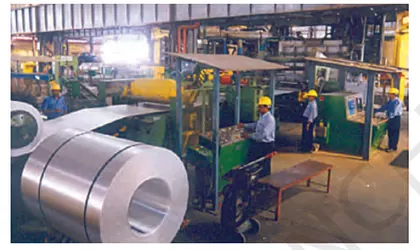
This chapter introduces manufacturing industries in India and explains their role in economic development. It defines different types of industries (based on raw material, size, ownership and location), and discusses factors that determine industrial location such as raw materials, water, power, transport, market, labour and capital. The chapter surveys the spatial distribution of major industrial regions and key industries in India, describes the significance of small-scale and cottage industries, and examines issues such as industrial pollution, regional disparities and unemployment. It also outlines government policies and initiatives (public sector, liberalisation, incentives, MSME support, SEZs) aimed at promoting balanced and sustainable industrial growth. Through maps, case studies and data, students learn how industries transform resources into goods, create employment, contribute to GDP and exports, and what measures are needed for environmentally and socially responsible industrialisation.
Learning Objectives
- Define manufacturing industry and related terms such as heavy, light, agro-based and mineral-based industries.
- Describe the classification of manufacturing industries based on raw material, size, ownership and technology.
- Explain the factors that influence the location of industries (raw material, power, water, market, labour, transport, capital, government policy).
- Identify major industrial centres in India (iron and steel, cotton textiles, automobiles, chemicals) and the resources that support them.
- Locate major manufacturing regions and selected industrial towns on an outline map of India.
- Compare large-scale and small-scale industries in terms of capital, employment, production methods and examples.
- Analyze the contributions of manufacturing industries to economic development (employment generation, GDP, exports, linkages).
- Discuss the environmental and social impacts of industrialisation, including pollution, urbanisation and displacement.
Topics in this chapter
18 topics · tap a topic title to jump straight to it.
Introduction and Importance of Manufacturing
What is Manufacturing? Manufacturing is the process of converting raw materials and components into finished goods through the use of tools, machines, and human labour. It covers a wide range of activities from small household workshops to large factories producing cars, textiles, electronics, steel and food products.
Basic process: Inputs (raw materials, labour, capital, power, technology) → Processing (production operations) → Outputs (finished goods, by-products).
Types of manufacturing units: small-scale and household industries, medium and large-scale factories, organized (registered) and unorganized (unregistered) sectors, public and private sector enterprises.
Factors affecting location of manufacturing
- Availability of raw materials (e.g., iron ore near steel plants)
- Proximity to markets (to reduce transport costs)
- Availability and cost of labour
- Power and infrastructure (roads, ports, energy)
- Capital and financial services
- Government policy, incentives and environmental regulations
Why manufacturing is important
- Employment generation: Manufacturing employs a large number of people directly and indirectly (supply chains, services).
- Contribution to national income (GDP): Value added by manufacturing raises incomes and tax revenue.
- Exports and foreign exchange: Manufactured goods expand export earnings (textiles, automobiles, machinery, electronics).
- Industrialisation and development: Manufacturing stimulates the growth of infrastructure, services and urban centres.
- Backward and forward linkages: Manufacturing creates demand for raw materials (agriculture, mining) and for services (transport, finance), fostering other sectors.
- Technological progress and skill development: Factories adopt new technologies, raise productivity and develop technical skills.
- Higher living standards: Mass production lowers costs and raises availability of goods, improving consumption possibilities.
Role in the Indian context: Manufacturing is a policy priority (for example 'Make in India') because it can absorb semi-skilled labour from agriculture, increase export competitiveness and reduce dependence on imports. Key Indian manufacturing hubs include textiles in Surat and Tirupur, automobiles around Chennai and Pune, steel in Jamshedpur and Bokaro, and small-scale units across clusters (leather in Kanpur, hosiery in Ludhiana).
Summary: Manufacturing transforms raw inputs into valuable outputs, creates jobs, increases GDP and exports, and drives wider economic development through linkages and technology. Balanced growth of manufacturing with attention to skills, environment and infrastructure is essential for sustained development.
- Textile and garment manufacturing in Tirupur and Surat – raw cotton/yarn converted into fabric and finished garments for domestic use and export.
- Automobile manufacturing in Chennai and Pune – assembly of components into cars and commercial vehicles; large backward linkages with component makers.
- Steel production in Jamshedpur (Tata Steel) – iron ore and coal converted to steel used by construction, machinery and transport sectors.
- Electronics manufacturing clusters in Bengaluru and Sriperumbudur – production of electronic components and consumer electronics.
- Small-scale shoe manufacturing in Agra and Meerut – labour-intensive units supplying local and national markets.
- Food processing units converting raw agricultural produce (fruits, milk) into packaged food, jams, cheese and other value-added items.
- Value of output = Price × Quantity (useful to calculate total production value)
- Contribution to GDP (%) = (Manufacturing value added / Total GDP) × 100
- Growth rate (%) = ((Current period value − Previous period value) / Previous period value) × 100
- Labour productivity = Total output / Number of workers (measures output per worker)
- Capacity utilization (%) = (Actual output / Installed capacity) × 100
- Employment intensity = Number of workers employed / Total output (shows labour intensity)
Classification of Industries
What are industries? Industries are economic units engaged in transforming raw materials into finished goods or semi-finished goods. Manufacturing industries form the part of secondary activities that produce tangible goods.
Why classify industries? Classification helps to understand differences in location, scale, inputs, ownership, technology and their role in the economy. It is useful for planning, policy-making and studying regional development.
Major bases of classification
- 1. By source of raw material
- Agro-based: use agricultural inputs (e.g., sugar, cotton textiles).
- Mineral-based: depend on minerals (e.g., iron & steel, cement).
- Forest-based and marine-based: e.g., paper from wood, fish processing. - 2. By ownership
- Private sector: owned and managed by individuals or firms (e.g., private textile mills).
- Public sector: owned by government (e.g., some heavy engineering firms, defence factories).
- Joint sector: co-owned by government and private enterprise.
- Cooperative: owned and run by producers or consumers jointly (e.g., Amul dairy cooperative). - 3. By size (scale of operation)
- Cottage and household industries: small, home-based, family labour, low capital (e.g., handicrafts, handloom).
- Small-scale industries: registered small units with limited capital and workforce (e.g., small engineering units, auto-ancillaries).
- Large-scale industries: capital intensive, large workforce and big plants (e.g., steel plants, automobile factories). - 4. By nature of production
- Basic/producer goods industries: produce inputs for other industries (e.g., steel, cement, chemicals).
- Consumer goods industries: manufacture goods for final consumption (e.g., clothing, soap, processed foods). - 5. By use of capital and labour
- Capital-intensive industries: require large capital investments and machinery (e.g., oil refineries, automobile manufacturing).
- Labour-intensive industries: require more human labour per unit output (e.g., textiles, apparel, footwear). - 6. By process and technology/location constraints
- Footloose industries: location independent (e.g., electronic assembly).
- Raw-material-oriented industries: locate near raw material source (e.g., jute mills near jute-growing areas).
- Market-oriented/perishable-products industries: locate near markets (e.g., dairy, fruit processing).
Key points to remember: A single industry can fit into several categories (e.g., a textile mill can be agro-based, labour-intensive and large-scale). Policies for development differ by classification—for example, support for cottage industries focuses on skill and market access, while public investment often targets heavy capital-intensive industries.
- Agro-based: Sugar mills in Uttar Pradesh and Maharashtra; Cotton textile mills in Ahmedabad (Gujarat).
- Mineral-based: Tata Steel, Jamshedpur (iron & steel); Cement plants in Chhattisgarh/Odisha.
- Cottage industry: Carpet weaving in Bhadohi (Uttar Pradesh); Handloom sarees in Varanasi and Kanchipuram.
- Small-scale industry: Auto-ancillary units around Chennai and Gurgaon.
- Large-scale industry: Automobile manufacturing plants in Chennai (e.g., Hyundai) and Pune (e.g., Tata, Mahindra).
- Public sector: Bharat Heavy Electricals Limited (BHEL) — government enterprise in heavy engineering.
- Value Added = Gross Value of Output − Value of Intermediate Consumption (shows contribution of industry to production)
- Labour Productivity = Total Output / Number of Workers (measures average output per worker)
- Capacity Utilisation (%) = (Actual Output / Installed Capacity) × 100 (shows how fully a plant is used)
- Unit Cost = Total Cost of Production / Total Units Produced (useful for pricing and competitiveness)
- Contribution to GDP (%) = (Industry Value Added / National GDP) × 100
Factors Affecting Location of Industries
Introduction
The location of an industry is decided by a combination of physical, economic and social factors that reduce cost or increase profits. Industries locate where inputs (raw materials, labour, capital, power, transport, market and government facilities) and conditions (land, climate, infrastructure, urban services) best suit their needs.
Major factors affecting location
- Availability of raw materials
Industries that use bulky, heavy or perishable raw materials tend to locate close to the source to reduce transport costs and losses. Example: Sugar mills near sugarcane fields; cement plants near limestone deposits. - Power supply
Industries that consume large amounts of electricity (aluminium smelting, electrochemical industries) choose locations with cheap and reliable power. Example: Aluminium plants near hydroelectric stations or cheap thermal power. - Water supply
Water-intensive industries (paper, textile, chemical) locate where there is abundant, reliable water supply. - Transport facilities
Good road, rail, sea or air links lower the cost of moving raw materials and finished goods. Port cities and industrial corridors attract export-oriented and heavy industries. Example: Mumbai and Chennai as historical textile and engineering hubs because of ports and rail links. - Labour
Availability of skilled and unskilled labour, labour costs, and labour laws influence location. Labour-intensive industries (garments, footwear) often locate in regions with large labour pools and lower wages. Example: Tiruppur and Surat for textiles and garments. - Market
If finished goods are bulky, fragile or costly to transport, firms locate near markets to reduce distribution costs and meet demand quickly. Example: Bread/bakery, milk processing units in/near cities; consumer goods firms near big urban markets. - Capital and finance
Industries requiring large capital locate near financial centres or industrial towns where credit and investment services are available. Historical example: Early cotton mills in Mumbai because of access to capital and shipping facilities. - Government policy and incentives
Policies, tax concessions, special economic zones (SEZs), industrial estates, and subsidies can attract industries to particular states or regions. - Land and site conditions
Availability of flat land, inexpensive land, and suitable sites (industrial estates, pollution-free zones) matter—especially for large factories and heavy industries. - Climate and topography
Some industries avoid extreme climates (e.g., electronic assembly prefers dry, controlled climates) or need specific terrains (hydroelectric plants require hilly regions and rivers). - Agglomeration and ancillary services
Existing clusters of related industries attract new firms because they can access suppliers, skilled labour, specialist services and knowledge spillovers (e.g., automobile hubs around Pune, Chennai; IT cluster in Bengaluru).
Types of orientation
Based on relative weights of raw materials and finished product:
- Raw-material oriented (weight-losing) — located near resources when raw materials are heavier/bulkier than final product (e.g., sugar mills, timber-based paper mills).
- Market oriented (weight-gaining) — located near consumers when the finished good is heavier or perishable (e.g., bakery, soft drinks, ice cream).
Economic theory (brief)
The classical location problem (Alfred Weber) seeks a site that minimises total cost: transport costs of inputs and outputs, plus labour and other production costs. Real-world location decisions balance these costs with non‑cost factors (infrastructure, policy, agglomeration).
Summary
An industry’s location is chosen to minimise total cost and maximise benefits by considering raw materials, power, water, transport, labour, market, capital, government policy, land, climate and agglomeration advantages. Different industries prioritise different factors depending on their raw material needs, cost structure and product markets.
- Tata Steel, Jamshedpur — located near iron ore and coal belts (raw material orientation) to reduce transport cost.
- Sugar mills in Uttar Pradesh and Maharashtra — situated close to sugarcane fields because cane is bulky and perishable.
- Cement plants in Himachal Pradesh and Rajasthan/Gujarat — close to limestone mines to minimise heavy raw material transport.
- Automobile hubs around Pune and Chennai — good transport links, skilled labour, supplier networks and port access for exports.
- IT industry in Bengaluru — availability of skilled workforce, research institutions, pleasant climate and IT parks (agglomeration benefits).
- Aluminium plants (e.g., NALCO in Angul, Odisha) — located near bauxite deposits and reliable power sources as aluminium smelting is energy-intensive.
- Material Index (MI) = (Total weight of raw materials required per unit of output) / (Weight of finished product). If MI > 1 → raw-material oriented; MI < 1 → market oriented.
- Total cost (conceptual) = Σ(transport_costs_of_inputs) + transport_cost_of_output + labour_cost + energy_cost + other_production_costs. (Used to compare alternative sites.)
- Two-point linear location (simple model): For a factory to be placed on a line between raw material (R) and market (M) separated by distance D, the cost-minimising distance x from R when transporting weights w_R (raw) and w_M (finished goods) at same rate is x = (w_M / (w_R + w_M)) * D. (Illustrative simplification.)
Raw Material Based vs Market Oriented Industries
Definitions
Raw material based industries are located close to the source of raw materials because their production depends on bulky, perishable or seasonal inputs or those that lose weight in processing. Locating near raw materials reduces transport cost and spoilage.
Market oriented industries are located close to large consumer markets because their finished products are bulky, heavy, perishable, require rapid distribution, or because customer proximity gives competitive advantage (e.g., consumer goods, automobiles).
Key factors that determine location
- Transport costs: If raw materials are heavier/bulkier than the finished product (weight-losing), industries locate near the raw material source. If the finished product is heavier/bulkier (weight-gaining), they locate near the market.
- Perishability and seasonality: Perishable raw inputs (sugarcane, milk, fruits) require mills/factories close to supply.
- Availability of raw materials: Minerals, timber, jute, sugarcane — industries using these often cluster near sources.
- Market size and demand: Large urban markets attract consumer-goods production and assembly industries (garments, automobiles, electronics).
- Transport infrastructure: Good roads, ports and railways can alter location decisions (e.g., export-oriented factories near ports).
- Labour, land and capital: Cheap skilled labour or cheaper land may favour certain locations.
- Agglomeration economies: Clustering of related firms and suppliers may draw industries to particular regions.
Weight-losing versus weight-gaining (simple conceptual rule)
- Weight-losing industry: input weight > output weight → locate near raw material (examples: sugar from cane, tobacco processing, timber to wood products).
- Weight-gaining industry: output weight > input weight → locate near market (examples: soft drink bottling, cement blending, automobile assembly).
Examples that illustrate the difference
Raw-material based: sugar mills near cane fields; jute mills around Bengal where jute is grown; paper mills near forest/wood or waste paper sources; aluminium plants near bauxite deposits and power supply.
Market-oriented: cement plants near cities and construction sites (to reduce cost of transporting bulky cement), automobile assembly plants near big markets or skilled workforces, bakeries and milk-processing units in/near cities for quick delivery.
Summary principle
Choose the location that minimises total cost while meeting production and marketing needs — balancing transport of inputs and outputs, labour, power, land and market access.
- Sugar mill near sugarcane fields (e.g., sugar factories in Uttar Pradesh and Maharashtra) — raw-material based (perishable and bulky cane).
- Jute mills in West Bengal near jute farms — raw-material based.
- Paper mills near forests or cheap waste paper sources — raw-material based.
- Cement plants located near large cities or construction sites — market oriented (heavy finished product).
- Soft-drink bottling plants close to urban markets — market oriented (weight-gaining and perishable distribution needs).
- Automobile assembly plants near large consumer markets and skilled labour (e.g., Chennai, Pune) — market oriented.
- Weight change rule: if Σ(weight of inputs) > weight of finished product → weight-losing industry (prefer near raw materials). If Σ(weight of inputs) < weight of finished product → weight-gaining industry (prefer near market).
- Transport cost (simple proportional model): Transport cost ≈ k × weight × distance (k = rate per unit weight per unit distance).
- Total location cost (conceptual): TC = C_raw + C_transport_inputs + C_transport_outputs + C_labor + C_power + C_land + C_other. Choose location to minimise TC.
Cotton Textile Industry (Case Study)
Introduction
The cotton textile industry processes raw cotton into yarn, cloth and finished garments. It is one of India’s oldest and most important industries, providing large-scale employment, earning export revenue and linking agriculture with manufacturing.
Types of Units
- Handloom: Small-scale, household-based weaving using manual looms; important for traditional fabrics and local employment.
- Powerloom: Mechanised looms in small and medium factories; major producer of mass-market fabrics.
- Textile Mills: Large-scale factories integrating spinning, weaving/knitting and sometimes processing and finishing.
- Knitwear/Garment Units: Use cotton yarn/fabric to make garments — can be clustered (e.g., Tiruppur).
Production Process (Simplified)
- Ginning and pressing (separate seeds from fibre)
- Spinning (cotton fibre to yarn)
- Weaving/Knitting (yarn into cloth)
- Processing/Finishing (bleaching, dyeing, printing)
- Cutting, stitching and garmenting
- Marketing and exports
Factors Influencing Location
- Raw material: Proximity to cotton-growing areas reduces cost (e.g., Gujarat, Maharashtra, Punjab, Haryana).
- Availability of labour: Cheap skilled/unskilled labour attracts both labour-intensive handloom and powerloom units.
- Capital and technology: Mills require more capital; availability of finance and technology upgradation influences location.
- Transport and market: Good road/rail ports help export-oriented clusters (e.g., Mumbai, Chennai, Kandla/Gujarat).
- Ancillary services: Presence of ginning, pressing, dyeing units and engineering support encourages clustering.
Major Regions & Why
- Gujarat (Ahmedabad, Surat): Historically strong cotton mills, large powerloom clusters, proximity to cotton and ports.
- Maharashtra (Mumbai, Bhiwandi): Early mills in Mumbai; Bhiwandi is a major powerloom/processing cluster.
- Tamil Nadu (Coimbatore, Tiruppur): Strong spinning and knitwear/garment clusters; access to skilled labour and exporters.
- Punjab/Haryana (Ludhiana): Hosiery, knitting and garment production; near cotton-producing areas and good transport.
Problems Faced
- Competition from synthetic fibers and cheap imports.
- Outdated machinery in many small units; low productivity.
- Seasonal employment in handloom; low wages and poor working conditions in some clusters.
- Environmental issues: heavy water use and effluent discharge from processing units.
- Fluctuating raw cotton prices affecting profitability.
Government Support & Measures
Policies usually focus on technology upgradation, credit support for small units, skill development, marketing assistance (domestic and export), and environmental regulation/effluent treatment support. These measures aim to improve competitiveness and protect traditional handloom weavers.
Economic and Social Importance
- Major employer across rural and urban areas (spinning, weaving, processing, garmenting).
- Linkage with agriculture (cotton growers) and other industries (chemicals for dyes, engineering for mill machinery).
- Important source of export earnings and foreign exchange.
Conclusion
The cotton textile industry illustrates how natural resources (cotton), labour, capital and technology combine to shape industrial location and development. Modernisation, sustainable practices and skill development are key to its future growth.
- Ahmedabad (Gujarat): Historically called 'Manchester of India' for its cotton mills and integrated textile industry.
- Surat (Gujarat): Large powerloom and processing cluster producing sarees, dress material and bulk fabrics for export.
- Tiruppur (Tamil Nadu): Knitwear and garment cluster focused on cotton T-shirts and exports; shows how specialisation drives growth.
- Coimbatore (Tamil Nadu): Strong spinning and textile engineering base with many mills and ancillary units.
- Ludhiana (Punjab): Hosiery and knitwear hub that uses cotton yarn for domestic and export markets.
- Bhiwandi (Maharashtra): Large powerloom and dyeing/processing cluster supplying fabrics to domestic markets.
- Productivity = Total output (units of cloth or yarn) / Total input (number of workers or machine hours)
- Cost per unit = Total production cost / Total quantity produced
- Capacity Utilisation (%) = (Actual output / Installed capacity) × 100
- Growth Rate (%) = ((Value in current year - Value in previous year) / Value in previous year) × 100
- Labour Intensity = Number of workers / Quantity of output (higher value → more labour intensive)
Jute Industry (Case Study)
Overview: Jute is a long, soft, shiny bast fibre produced mainly in the Ganges delta. The jute industry includes cultivation, primary processing of raw jute (retting, stripping) and manufacturing of yarn, hessian, sacking, carpets, geo-textiles and diversified products. Historically important in eastern India (especially West Bengal) and Bangladesh, it is a labour‑intensive, low‑technology, agro‑based industry.
Location and Reasons: Major production areas need alluvial soil, high humidity, and warm, wet climate. In India the main producing regions are West Bengal, Bihar and Assam; Bangladesh is the world’s largest producer and exporter. Mills are located close to raw material and river/port transport (e.g., along the Hooghly river and in Kolkata/Howrah region).
Stages of Production:
- Cultivation and harvesting of jute plants (45–120 days depending on variety)
- Retting: soaking the stems in water so fibers separate from stem
- Stripping and washing: extracting the fibre and washing/cleaning
- Drying and grading: drying fibres in sun and grading by quality
- Spinning: converting fibres into yarn
- Weaving/processing: making hessian, sacking, carpets, geo-textiles, composite materials and diversified items
- Finishing and marketing: dyeing, coating, packaging and selling domestically or for export
Economic and Social Features: The jute industry is labour-intensive and provides seasonal rural employment (farmers and landless labour for cultivation; workers in mill towns for processing). It was a cornerstone of the regional economy but experienced decline since mid‑20th century due to factors such as partition (raw material and mill separation), competition from synthetic substitutes, lower cost competition (notably from Bangladesh), obsolete machinery and lack of diversification. Policy support and the rising global demand for eco-friendly packaging have led to partial revival and efforts at modernization and product diversification.
Products and Diversification: Traditional products: sacking, bags for agricultural produce, hessian cloth, carpet backing. Newer/ diversified products: jute geo-textiles for erosion control and road reinforcement, jute-cotton blended bags and fabrics, jute polymer composites used in interior panels, handicrafts and home textiles.
Issues and Remedies:
- Issues: seasonality, low mechanization, price fluctuations, environmental concerns in retting water use, competition from synthetics.
- Remedies: modernization of mills, value addition, better retting technology (microbial retting), product diversification, policies promoting jute packaging, export promotion and skill development for workers.
Importance: Environmentally friendly (biodegradable, renewable), source of rural employment, strategic for packaging of foodgrains and other commodities in regions where jute is grown.
- Bangladesh as the largest producer-exporter: Bangladesh produces most of the world’s raw jute and supplies fibres and jute goods to global markets (bags, hessian).
- West Bengal in India: concentration of jute mills near Kolkata/Howrah and cultivation in the adjoining districts provide both raw material and employment — many rural households grow jute and work seasonally in retting and fibre preparation.
- Use of jute geo-textiles: Jute mats used for slope stabilization and erosion control in roads and riverbanks — a low-cost eco-friendly alternative to synthetic materials.
- Packaging shift: Governments and businesses encouraging jute or jute-blend bags for foodgrain and retail (eco-bags) as a substitute for plastic bags, increasing demand for jute products.
- Diversified industrial use: Jute fibres blended in composite panels for car interiors and furniture to reduce weight and use renewable materials.
- Yield per hectare = Total raw jute produced (kg) ÷ Area under jute cultivation (hectares)
- Labour productivity = Total output (tonnes of finished jute goods or bales) ÷ Number of workers (in a period)
- Value addition (%) = (Value of finished product − Value of raw jute input) ÷ Value of raw jute input × 100
- Export share (%) = (Value/quantity of jute exports ÷ Total jute production or total jute industry output) × 100
- Profit = Total revenue from sales − Total cost (raw material + wages + fuel + maintenance + other overheads)
Iron and Steel Industry (Case Study)
Overview
The iron and steel industry converts iron ore, coal (coke) and limestone into pig iron and then steel. Steel is a basic metal used by almost all other industries (construction, transport, engineering, appliances), so it is called a backbone industry. The case study examines raw materials, production processes, location factors, major centres, economic importance and environmental issues.
Historical background (brief)
- Early organised Indian steel: Tata Iron & Steel Company (TISCO/Tata Steel), set up in Jamshedpur (1907).
- Post-independence expansion: Public sector major plants under SAIL (Bhilai, Bokaro, Durgapur, Rourkela) and later RINL (Visakhapatnam).
- Liberalisation and private-sector growth since the 1990s (Tata, JSW, Essar, JSPL), plus many mini and electric-arc-furnace (EAF) units.
Raw materials and inputs
- Iron ore: haematite and magnetite; quality and proximity important.
- Coking coal / coke: fuel and reducing agent in blast furnaces.
- Limestone: flux to remove impurities.
- Scrap steel: important input to electric arc furnaces and for recycling.
- Other inputs: power, water, refractory materials, labour and capital.
Principal production routes (modern)
- Integrated route (blast furnace-basic oxygen furnace, BF-BOF): iron ore + coke + limestone → pig iron in blast furnace → crude steel in BOF → casting → rolling. Used by large, integrated plants.
- Electric arc furnace (EAF) / induction furnace route: mainly melts scrap and/or direct reduced iron; used by mini steel plants and flexible producers.
Location factors
- Proximity to raw materials: iron ore and coal fields reduce transport costs (e.g., Jamshedpur near Singhbhum iron ore; Bokaro/Bhilai near coalfields).
- Transport connectivity: rail, roads, rivers or ports for import/export (Visakhapatnam, Hazira).
- Availability of power and water.
- Skilled and unskilled labour availability, capital and industrial policy incentives.
- Market proximity for heavy finished products reduces distribution cost (e.g., plants near big construction/automobile clusters).
Major steel centres (India — examples)
- Jamshedpur (Tata Steel) — early integrated plant near iron ore and coal sources.
- Bhilai, Bokaro, Durgapur, Rourkela — SAIL plants set up in the public sector post-independence.
- Visakhapatnam (RINL), Hazira (private plants), and many mini plants in Chhattisgarh, Odisha, and Karnataka (Salem, Bhadravathi).
Economic importance
- Input for construction, railways, automobiles, machinery and defence.
- Generates employment directly (plants, mines) and indirectly (transport, fabrication, ancillaries).
- Foreign exchange earner through exports; also requires imports of coking coal/quality ores at times.
Environmental issues and mitigation
- Air pollution (particulate matter, SOx, NOx), water pollution from effluents, solid wastes (slag).
- Mitigation: pollution-control equipment (bag houses, scrubbers), recycling slag (cement/road-making), afforestation, wastewater treatment, energy-efficiency measures, increased scrap use (EAF).
Case study conclusions (what students should note)
- Location of steel plants is determined by raw materials, power, transport and markets — no single factor alone.
- Large integrated plants use BF-BOF and are capital- and resource-intensive; mini/EAF plants are more flexible and often near markets.
- Steel industry has played a key role in India’s industrialisation; modernisation and environmental management are current priorities.
- Tata Steel, Jamshedpur — early integrated plant set up close to iron ore and coal sources.
- SAIL plants: Bhilai (Chhattisgarh), Bokaro (Jharkhand), Rourkela (Odisha), Durgapur (West Bengal) — public-sector backbone units established after independence.
- Rashtriya Ispat Nigam Limited (RINL), Visakhapatnam — integrated coastal plant using port for imports/exports.
- JSW Steel and Essar Steel — private-sector modern plants with captive mines and port access (Hazira, Vijayanagar).
- Mini steel plants / EAF units in Chhattisgarh, Odisha, and Karnataka — use scrap or DRI (direct reduced iron) and serve local markets.
- Growth rate (%) = ((New production − Old production) / Old production) × 100
- Productivity (steel per worker) = Total steel produced (tonnes) / Number of workers
- Typical input ratios (approximate averages used for planning): iron ore required per tonne of crude steel ≈ 1.4 – 1.7 tonnes; coke required ≈ 0.6 – 0.8 tonnes; limestone ≈ 0.2 – 0.3 tonnes (values vary by process and plant efficiency).
- Scrap share (%) = (Quantity of scrap used / Total steel input by weight) × 100
- Conversion (integrated route) schematic (not a numeric formula): Iron ore + Coke + Limestone → Blast Furnace (Pig Iron) → Basic Oxygen Furnace (Crude Steel) → Casting & Rolling (Finished steel)
Automobile and Engineering Industries
Overview
Automobile and engineering industries form a core part of the manufacturing sector. The automobile industry produces vehicles (cars, two‑wheelers, commercial vehicles) and related components. The engineering industry covers a broader range of metal‑based manufacturing including heavy engineering (machines, boilers, engines), light engineering (components, tools) and capital goods that supply other industries.
Significance
- Major employer: provides direct and indirect jobs across skill levels.
- Backward and forward linkages: generates demand for steel, rubber, glass, electronics, and for services such as logistics and sales networks.
- Foreign exchange and technology transfer: exports vehicles and components and often attracts foreign investment/technical collaboration.
Types and Structure
- Original Equipment Manufacturers (OEMs): companies that design and assemble vehicles (e.g., car makers).
- Auto component industry: manufacturers of parts — engines, transmissions, tyres, batteries, electronic modules.
- Engineering industry: capital goods, heavy machinery, machine tools, structural steel items and industrial equipment.
Location Factors
Major factors that determine where plants are set up:
- Proximity to markets: reduces distribution cost for finished vehicles.
- Availability of raw materials: steel, aluminium, rubber, plastics and electronics.
- Skilled and semi‑skilled labour: technicians, engineers, assemblers.
- Transport and logistics: good road/rail access and port facilities for imports/exports.
- Power and utilities: reliable electricity and water supply.
- Technology and capital: access to modern machinery, R&D and finance.
- Government policy and incentives: special economic zones, tax breaks, FDI rules.
Production Process (Typical Automobile)
- Design & R&D → Tooling & Component Sourcing → Stamping/Casting/Forging → Machining → Sub‑assembly (engines, gearboxes) → Final assembly → Painting → Testing → Distribution.
Economic Effects
The industry has strong multiplier effects — generating demand for parts, services and retail. Growth stimulates employment in ancillaries, transport, sales and after‑sales services.
Challenges & Opportunities
- Challenges: global competition, cyclical demand, supply chain disruptions, environmental regulations and capital intensity.
- Opportunities: electric vehicles (EVs), localisation of components, Make in India initiatives, export markets and digital manufacturing (Industry 4.0).
Environmental & Social Issues
Automotive and engineering plants consume energy, emit pollutants and create industrial waste. Key responses include cleaner fuels/EVs, emission controls, energy efficiency, waste recycling and better labour safety standards.
Summary
Automobile and engineering industries are capital‑intensive, technology‑driven sectors with extensive linkages. Their strategic importance lies in employment generation, contribution to GDP, exports and the push they provide to related industries.
- Maruti Suzuki (automobile OEM) — large passenger car manufacturer with major plants in Gurgaon and Manesar, and a vast dealer and service network across India.
- Tata Motors (automobile & commercial vehicles) — produces cars, trucks and buses; strong backward linkages with steel and engineering suppliers in Jamshedpur and Pune.
- Bajaj Auto (two‑wheelers and three‑wheelers) — example of export‑oriented, component‑intensive production and strong global market presence.
- Bharat Heavy Electricals Limited (BHEL) — heavy engineering firm manufacturing large machines, turbines and industrial equipment used across power and infrastructure sectors.
- Automobile clusters: Chennai (TN), Pune (MH), Sanand (GJ), Hosur (TN) and Gurgaon/Manesar (Haryana) — locations with multiple OEMs and component suppliers forming industrial ecosystems.
- Labour productivity = Total output (units or value) / Number of workers. (Shows output per worker.)
- Value added = Gross output (sales) − Intermediate consumption (cost of purchased inputs). (Measures contribution of the industry to GDP.)
- Contribution to GDP (%) = (Industry GDP / National GDP) × 100.
- CAGR (growth over n years) = [(Ending value / Beginning value)^(1/n) − 1] × 100. (Useful to show growth in production, sales or exports.)
Petrochemical, Chemical and Fertilizer Industries
Overview
Petrochemical, chemical and fertilizer industries are important sub-sectors of the manufacturing industry. They convert raw materials such as crude oil, natural gas, minerals and industrial by-products into chemicals, plastics, synthetic fibres, and fertilizers that are essential for agriculture, other industries and everyday life.
Petrochemical Industries
Petrochemicals are chemicals derived from petroleum (crude oil) and natural gas. The main feedstocks are light hydrocarbons (ethane, propane, naphtha) produced in oil refineries and gas processing plants. Through processes such as cracking and reforming these feedstocks are converted into basic building blocks — chiefly ethylene, propylene, butadiene, benzene, toluene and xylene — which are then polymerised or further processed to produce plastics (polyethylene, polypropylene), synthetic rubber, solvents and fibres.
- Key inputs: crude oil, natural gas, naphtha.
- Main processes: distillation (refining), cracking (steam/catalytic), catalytic reforming, polymerisation.
- Products: polymers (PE, PP, PVC), synthetic fibres, industrial chemicals, solvents.
Chemical Industries
Chemical industries include a wide range of firms producing basic chemicals (acids, alkalis, inorganic salts), speciality chemicals (dyes, pigments, agrochemicals), and consumer chemicals (detergents, soaps). They often use petrochemical feedstocks, minerals (limestone, phosphates), salts and chlorine as raw materials.
- Types: basic/inorganic, organic, speciality and consumer chemicals.
- Importance: raw materials for textiles, pharmaceuticals, paper, plastics, agriculture.
Fertilizer Industries
Fertilizer industries produce plant nutrients—mainly nitrogen (N), phosphorus (P) and potassium (K)—in forms suitable for agricultural use. Nitrogen fertilizers are mostly made from ammonia (produced from natural gas or other hydrogen sources). Phosphatic fertilizers are produced from rock phosphate processed to phosphoric acid. Potassic fertilizers come from mined potash.
- Major types: Nitrogenous (urea, ammonium sulfate), Phosphatic (SSP, DAP), Potassic (MOP), and complex/NPK blends.
- Major processes: Haber–Bosch synthesis for ammonia; urea synthesis from ammonia and carbon dioxide; production of phosphoric acid from rock phosphate followed by neutralisation with ammonia to make DAP.
Location and Regional Clustering
Factors that determine location of these industries include availability of raw materials (oil/gas fields, phosphate rock), proximity to ports for export/import, large markets, energy and water supply, infrastructure, skilled labour and environmental regulations. As a result, clusters form near refinery complexes, coal/gas fields or port areas (for example, large petrochemical complexes in Gujarat and Maharashtra).
Economic and Environmental Aspects
These industries are capital- and energy-intensive and contribute significantly to employment, exports and value addition. Environmental concerns are major: air and water pollution, greenhouse gas emissions (especially from ammonia/urea plants), hazardous waste and risks of industrial accidents. Modern plants use pollution control, effluent treatment, and energy efficiency measures.
Role in Development
They supply essential inputs to agriculture (fertilisers), construction, packaging, textiles, pharmaceuticals and automobiles, thus acting as backbone industries that support broad industrial growth.
Quick summary
Petrochemical: raw petroleum/gas → cracking → basic chemicals → polymers and intermediates. Chemical: wide range of reactions/products used across sectors. Fertilizer: ammonia (N) + processed phosphates and potash → fertilisers that raise agricultural productivity.
- Petrochemical: Reliance Industries’ petrochemical complexes (Jamnagar and Dahej) produce polymers and intermediates.
- Refining/petrochem: Indian Oil Corporation and Bharat Petroleum refineries supplying naphtha for petrochemical units.
- Chemical: Tata Chemicals (soda ash, industrial chemicals) and SRF (speciality chemicals, technical textiles).
- Fertilizer: IFFCO (urea plants and complexes), National Fertilizers Limited (urea and other N-fertilisers), Coromandel International and Rashtriya Chemicals & Fertilisers (RCF).
- Agricultural example: Urea and DAP application increases crop yields — e.g., wheat and rice production depend heavily on nitrogen and phosphorus fertilisers.
- Haber process (ammonia synthesis): N2 + 3H2 → 2NH3
- Urea synthesis (simplified): 2NH3 + CO2 → NH2CONH2 (urea) + H2O
- DAP (diammonium phosphate) formation (neutralisation): H3PO4 + 2NH3 → (NH4)2HPO4
- Steam cracking of ethane (example): C2H6 → C2H4 + H2 (ethylene production)
- General productivity: Labour productivity = Output (value or volume) / Number of workers
- Growth rate (%) = ((Current period value − Previous period value) / Previous period value) × 100
Small-Scale and Cottage Industries
Overview
Small-scale and cottage industries are an important part of the manufacturing sector in India. They use relatively small amounts of capital and technology, employ local labour, often work with local raw materials, and serve local as well as national markets. These industries help generate employment, reduce regional disparities and preserve traditional skills.
Definitions
- Cottage industries: Household-based production units where family members typically do the work with simple tools. Production is on a small scale, often traditional, and mostly labour-intensive (e.g., handloom weaving, pottery, basketry).
- Small-scale industries (SSIs): Independently owned units with limited capital and a small workforce. They may be factory-based or workshop-based, use some power-driven machinery and produce items ranging from consumer goods to parts for larger industries. (In current policy these fall under the broader MSME — Micro, Small & Medium Enterprises — classification.)
Key characteristics
- Small capital investment and limited scale of operations.
- Labour-intensive; often use family labour or local skilled workers.
- Flexible and adaptable to local raw materials and markets.
- Lower entry barriers — suitable for rural and semi-urban areas.
Differences (summary)
- Location: Cottage industries are home-based; small-scale units may be in workshops/factories.
- Scale & technology: Cottage uses simple tools and traditional methods; small-scale may use power-driven machines and semi-modern methods.
- Labour: Cottage mostly family labour; small-scale employs hired workers.
- Market reach: Cottage often local or niche; small-scale can serve wider domestic and export markets.
Importance
- Employment generation: absorb large numbers of semi-skilled and unskilled workers.
- Regional balance: encourage industry in rural and backward regions.
- Use of local resources and traditional skills — preserve cultural heritage.
- Export potential: handicrafts, textiles, leather goods and sports goods are important export items from smaller units.
- Supply to large industries: small suppliers and ancillary units form critical parts of the supply chain.
Problems and challenges
- Limited access to credit and modern technology.
- Poor infrastructure (power, transport, warehousing).
- Competition from large firms and cheap imports (mass-produced goods).
- Marketing limitations and lack of access to new markets.
- Skilled labour shortage and obsolescence of traditional skills in some areas.
Government support and measures
- MSME classification and simplified registration (e.g., Udyam registration) to ease access to benefits.
- Credit facilities and priority lending by banks; credit guarantee schemes for small enterprises.
- Cluster development programmes to provide common infrastructure, skill training and marketing support.
- Marketing assistance, trade fairs, e-marketplaces and procurement preference for local/small producers.
- Technology upgradation support, training & skill development programmes.
Role in sustainable development
Because they are labour-intensive, use local inputs and often involve low-energy production methods, cottage and many small-scale industries can promote inclusive and sustainable local development when supported with adequate policies and market access.
How students should analyse a case
- Identify whether the unit is cottage or small-scale (location, tools, labour).
- List inputs (raw material, labour, capital) and outputs (products, markets).
- Note advantages and constraints faced by the unit and suggest realistic measures (credit, training, marketing) to improve viability.
Conclusion
Small-scale and cottage industries form the backbone of local manufacturing in India. With the right mix of finance, technology, infrastructure and marketing support, they contribute significantly to employment, exports and the preservation of traditional crafts.
- Handloom weaving (cottage) — family-run weaving of sarees and fabrics in homes
- Pottery and terracotta (cottage) — village potters making household items and artefacts
- Bamboo and basketry (cottage) — locally made baskets, mats and utensils
- Handicrafts and art (cottage/small-scale) — block printing, embroidery, jewellery making
- Leather goods (small-scale) — small units making shoes, bags and belts
- Sports goods (small-scale) — clusters producing cricket and hockey equipment (e.g., Jalandhar region)
- Labour productivity = Total output / Number of workers
- Capacity utilization (%) = (Actual output / Installed capacity) × 100
- Value added by firm = Gross output − Intermediate inputs (raw material cost)
- Contribution to GDP (%) = (Value added by the sector / GDP) × 100
- Per unit cost = Total cost (fixed + variable) / Number of units produced
Industrial Regions of India
Definition: Industrial regions are areas with a high concentration of manufacturing units and related economic activities, shaped by availability of raw materials, power, labour, markets and transport. In India they form belts or clusters where industries of similar or complementary kinds are located.
Why industrial regions form:
- Availability of raw materials (example: iron ore and coal for steel plants).
- Proximity to markets and ports (reduces transport cost).
- Access to reliable power and water supply.
- Skilled or cheap labour and entrepreneurial tradition.
- Transport and communication networks (roads, rail, ports, airports).
- Government policies, incentives, industrial estates and special economic zones.
Types of industrial regions: clusters around mineral resources (steel/coal belts), port-based petrochemical and export processing zones, urban/metro industrial belts (electronics, automobiles, services), and specialized clusters (textiles, diamond cutting).
Major industrial regions and their characteristics (selected examples):
- Damodar–Chota Nagpur belt (Jharkhand–West Bengal): Heavy industries—steel (Jamshedpur, Bokaro), coal, heavy engineering; located close to raw materials and rail links.
- Hugli (Kolkata) – Haldia region (West Bengal): Petrochemicals, jute, engineering, port-based industries (Haldia port) and refinery-linked units.
- Mumbai–Pune–Thane (Maharashtra): Diversified industries—textiles, petrochemicals, automobiles, engineering, finance and services; strong port/market and skilled labour.
- Ahmedabad–Vadodara–Surat (Gujarat): Textiles, chemicals, diamond cutting (Surat), petrochemicals, and a strong small- and medium-enterprise base; excellent port and trade links.
- Chennai–Bengaluru–Coimbatore (South India): Automobiles and auto components (Chennai, Bengaluru), textiles and engineering (Coimbatore), information technology (Bengaluru).
- Kanpur–Lucknow belt (Uttar Pradesh): Leather, textiles, engineering goods and small industries; historically important manufacturing centres.
- Bhilai–Rourkela (Chhattisgarh–Odisha): Steel plants and associated heavy industry developed around integrated steel works and nearby mineral resources.
Role of government and modern developments: Industrial corridors (e.g., Delhi–Mumbai Industrial Corridor), Special Economic Zones (SEZs), Make in India and ease-of-doing-business reforms encourage new industrial clusters and modernization of older ones.
Significance: Industrial regions drive employment, urbanisation, infrastructure build-up and regional development. They also cause regional imbalances that need policy attention (skill training, infrastructure in lagging regions).
Key points to remember:
- Location of industries is determined by multiple factors; no single factor explains every region.
- Indian industrial regions are a mix of old heavy-industry belts (mineral based) and newer diversified/technology clusters (urban-based).
- Government policy can significantly change the pattern of industrial concentration over time.
- Jamshedpur (Tata Steel) — steel manufacturing located near iron ore and coal supplies.
- Bokaro and Durgapur — heavy engineering and integrated steel plants in the Damodar valley.
- Haldia — port-based petrochemical and refinery-linked industries.
- Mumbai–Pune area — automobiles (Pune) and petrochemicals/finance (Mumbai).
- Surat — diamond cutting and polishing; textile manufacturing.
- Chennai — automobile manufacturing and auto components; Chennai port supports exports.
- Percentage share of a region in national output = (Region output / National output) × 100
- Industrial growth rate (year-on-year) = ((Output in current year − Output in previous year) / Output in previous year) × 100
- Compound Annual Growth Rate (CAGR) = ((Ending value / Beginning value)^(1 / number of years) − 1) × 100
- Locational Quotient (LQ) for industry concentration = (Ei / E)region / (Ei / E)national, where Ei = employment in industry i, E = total employment. LQ > 1 indicates regional specialization.
- Employment elasticity = (% change in industrial employment) / (% change in industrial output) — shows how employment responds to output growth.
Problems of Industrial Development
Overview
Industrial development means growth of manufacturing activities that generate goods, employment and income. However, industrialisation in many regions faces multiple problems that slow growth, create regional imbalances and cause social and environmental costs.
Major problems
- Regional imbalances: Industries tend to concentrate where infrastructure, markets and skilled labour already exist (e.g., large cities, port towns). This creates prosperous industrial belts and large areas with little industrial investment.
- Inadequate infrastructure: Poor transport links, irregular power supply, insufficient water and weak communications raise production costs and deter new investment.
- Shortage of capital: Small and medium entrepreneurs often lack access to credit at reasonable rates. This constrains expansion and modernization of plants.
- Shortage of skilled labour and labour problems: Rapid industrial growth requires trained workers; absence of vocational training leads to low productivity. Labour unrest, rigid laws and low labour flexibility can disrupt production.
- Raw material and input constraints: Dependence on imported inputs, seasonal availability of agricultural raw materials and poor supply chains cause production stoppages and cost volatility.
- Outdated technology and low productivity: Use of obsolete machines and processes reduces product quality and increases costs, making firms uncompetitive nationally and internationally.
- Small-scale and fragmented units: Many industries are unorganised, with small units lacking economies of scale, quality control and marketing reach.
- Market limitations: Limited domestic demand, poor market access, absence of branding and weak export orientation constrain sales and growth.
- Environmental degradation: Industrial pollution (air, water, soil) and poor waste management create health hazards and attract regulatory penalties or closure orders.
- Policy and regulatory hurdles: Complex approvals, unpredictable policy changes, corruption and long litigation periods increase the cost and risk of doing business.
- Competition from multinational corporations (MNCs): MNCs may outcompete local firms on technology, finance and marketing, causing local closure if firms cannot upgrade.
Consequences
These problems reduce investment, slow job creation, keep productivity low, increase regional inequality and sometimes cause social unrest and environmental damage.
Short note on solutions (brief)
Addressing these problems requires coordinated policy: better infrastructure, easier credit and incentives for capital investment, vocational training, technology upgradation, cluster development for SMEs, environmental regulation with support for cleaner technology, and simpler business procedures.
How this links to the chapter
Understanding these problems helps explain why industrial location, size and growth patterns vary across regions and why government intervention (policies, industrial estates, special economic zones, subsidies) is often needed.
- Mumbai textile mills: Many old mills closed due to outdated machinery, high land costs and labour issues, shifting textile production to other states or to small-scale units.
- Tiruppur (Tamil Nadu): Rapid growth of knitwear units produced employment but also severe water pollution due to untreated effluents, prompting environmental regulation and treatment plants.
- Kanpur leather tanneries: Faced with pollution-related closure threats and the need for environmental compliance; many small tanneries could not afford modern treatment units.
- Decline of manufacturing in some coal-dependent towns: Poor infrastructure and environmental regulations have forced closures or reduced output in older mining-industrial centres.
- Small-scale engineering units in clusters (e.g., Ludhiana bicycle/hosiery units): Benefit from agglomeration but suffer when credit access and modernisation lag behind demand for quality.
- Textile industry competition from imports: Domestic producers losing market share when unable to upgrade technology and branding to compete with cheaper or branded imports.
- Industrial growth rate (%) = [(Industrial output in current year − Industrial output in previous year) / Industrial output in previous year] × 100
- Labour productivity = Total industrial output (value) / Number of workers
- Capacity utilisation (%) = (Actual output / Installed (maximum) capacity) × 100
- Contribution to GDP (%) = (Value added by manufacturing / Total GDP) × 100
- Compound annual growth rate (CAGR) for output = [(Ending value / Beginning value)^(1/number of years) − 1] × 100
Government Policies and Role of the State
What the topic covers
This topic explains why the state intervenes in manufacturing, what policy tools it uses, and how those policies shape industrial growth, location, structure and employment.
Why the state intervenes
- Correct market failures: Provide public goods (roads, ports, power) and address externalities (pollution control, R&D).
- Promote equitable development: Reduce regional imbalances and support backward regions and small producers.
- Ensure employment: Create jobs directly (public sector) and indirectly (industrial policy, incentives).
- Protect strategic interests: Ensure national security in key industries and maintain essential supplies.
Major policy instruments and state roles
- Industrial policy & regulation: Licensing (historically), sectoral policies (e.g., National Manufacturing Policy), and rules on FDI and privatization/disinvestment.
- Fiscal measures: Taxes, tariffs, import duties, tax holidays, capital subsidies and incentives to attract investment.
- Monetary & credit support: Priority-sector lending, subsidized credit, credit-guarantee schemes and interest-rate policies.
- Infrastructure provision: Building roads, ports, power plants, industrial parks, Special Economic Zones (SEZs) and common facilities in clusters.
- Land & regulatory facilitation: Land acquisition policies, single-window clearance, simplified approvals to reduce transaction costs.
- Support to MSMEs & clusters: Training, common effluent treatment, testing labs, and cluster development programs to increase competitiveness.
- Export promotion & trade policy: Export incentives, SEZs, subsidies and tariffs to protect nascent domestic industries (import substitution) or promote exports.
- Labour & social regulations: Labour laws, social security, skill development programs and training to improve workforce quality.
- Environmental regulation & compliance: Pollution control norms, mandatory treatment plants, and environmental clearances to sustain clean production.
- Technology & R&D support: Grants, public research institutions, and incentives for private R&D and adoption of new technologies.
- Direct production (Public Sector Units): The state may directly produce in strategic or capital-intensive sectors (e.g., power equipment, defense, heavy engineering).
Expected outcomes of these policies
- Higher industrial growth and contribution to GDP
- Increased employment and improved regional balance
- Better infrastructure and greater private investment
- Improved technology adoption and competitiveness
- Environmental and social safeguards when enforced
Limits and trade-offs
Excessive protection or poorly targeted subsidies can cause inefficiency, fiscal burden and rent-seeking. Poorly designed land acquisition or environmental policies can cause social conflict. Hence policy design and implementation matter.
- Special Economic Zones (SEZs) such as Kandla and Noida: Government-created zones providing infrastructure and tax incentives to boost exports and manufacturing investment.
- Production Linked Incentive (PLI) schemes: Recent Indian schemes for electronics, pharmaceuticals and solar cells that provide incentives tied to production to attract investment and boost domestic manufacturing.
- Tirupur textile cluster: Local government support for a common effluent treatment plant (CETP) to control pollution while protecting jobs and exports in the knitwear cluster.
- Gujarat’s industrial policy and the Sanand Tata plant: State incentives, land facilitation and infrastructure encouraged Tata Motors to set up large manufacturing investment in Gujarat.
- MSME support and credit guarantee schemes (e.g., CGTMSE/MUDRA): Government-backed credit and scheme support to small manufacturers who otherwise lack collateral.
- Public sector manufacturers such as BHEL and Coal India: The state directly manufactures or supplies in strategic, capital-intensive sectors to ensure reliability and capacity.
- Contribution of manufacturing to GDP (%) = (Manufacturing GVA / Total GDP) × 100
- Growth rate of manufacturing output (%) = ((Output in current year - Output in previous year) / Output in previous year) × 100
- \[Index of Industrial Production (IIP) growth (%) = ((IIP_t - IIP_{t-1}) / IIP_{t-1}) × 100\]
- Labour productivity (per worker) = Total manufacturing output (value) / Number of workers
- Employment elasticity = (% change in manufacturing employment) / (% change in manufacturing output)
Impact of Globalisation and Liberalisation
Definitions & context: Liberalisation refers to removal of government controls on the economy (reduction of tariffs, deregulation, easier licensing) while globalisation is the increasing integration of national economies through trade, foreign direct investment (FDI), technology transfer and global supply chains. In India these processes accelerated after the 1991 reforms and have strongly influenced manufacturing industries.
How manufacturing changed — overview: Opening markets and easing restrictions changed the structure, scale and competition of manufacturing. Firms faced global competition but also gained new opportunities for export, investment and technology. Effects can be grouped into positive (opportunities) and negative (challenges).
- Positive impacts
- Higher output and export opportunities: Access to global markets increased demand for competitive manufactured goods, boosting production in sectors like automobiles, electronics and pharmaceuticals.
- FDI and technology transfer: Foreign companies brought capital, modern production technologies and management practices that improved productivity and product quality.
- Economies of scale and specialization: Firms expanded production, invested in capital-intensive processes and specialised in niche products for global markets.
- Development of clusters and SEZs: Export-oriented zones and industrial clusters (auto clusters, electronics parks) improved infrastructure and lowered transaction costs.
- Employment in organised sectors and skill development: New factories, MNCs and exporters created jobs requiring new skills, giving scope for vocational training.
- Negative impacts / challenges
- Competition and closure of small firms: Small-scale and traditional producers often could not compete with cheaper imports or large, efficient firms, causing closures and job losses.
- Capital-intensive bias: Many modernised plants are more capital- than labour-intensive, limiting mass employment growth in some sub-sectors.
- Regional imbalance: Investment concentrated near ports, urban centres and existing industrial belts, widening regional disparities.
- Informalisation & precarious work: Some manufacturing employment shifted to flexible, informal or contract arrangements with lower job security and benefits.
- Environmental pressures: Rapid industrial growth without adequate regulation led to pollution, resource depletion and local environmental damage in some areas.
- Vulnerability to global shocks: Dependence on global supply chains can transmit international crises (demand collapse, input shortages) to domestic industry (e.g., 2008 financial crisis, COVID-19 disruptions).
Net effect and policy responses: The impact is mixed—globalisation has enabled significant growth, technology upgradation and exports in manufacturing, but also created adjustment costs for uncompetitive firms and workers. Governments respond by promoting skill development, supporting MSMEs, improving infrastructure and export incentives, regulating environmental impact and designing social safety nets to manage transition.
Classroom takeaway: Understand specific channels (trade, FDI, technology, competition) through which globalisation and liberalisation affect output, employment, structure and regional distribution of manufacturing. Recognise both opportunities (growth, exports, modernisation) and challenges (job loss in traditional sectors, regional imbalances, environmental concerns).
- India's 1991 economic reforms: removal of licensing and reduction of tariffs opened up markets, leading to higher FDI and expansion in sectors such as automobiles, pharmaceuticals and IT-related manufacturing.
- Automobile sector: Joint ventures and global linkages (e.g., Maruti-Suzuki partnership and later greater foreign investment) helped adopt modern manufacturing methods, scale production and expand exports.
- Electronics & mobile manufacturing: Global firms (Samsung, Foxconn contract suppliers) set up plants in India, creating assembly jobs, transferring technology and plugging India into global supply chains.
- Textiles & handloom: Traditional weavers faced competition from cheaper power-loom production and imported textiles, causing loss of employment and decline in some artisan communities.
- Special Economic Zones (SEZs) and export parks: Concentrated infrastructure and tax incentives enabled export-oriented manufacturing clusters (e.g., electronics parks, apparel hubs).
- Global shocks example: COVID-19 supply-chain disruptions showed how dependence on imports (components) affected domestic manufacturing output and led firms to rethink supply-chain diversification.
- Trade openness (%) = (Exports + Imports) / GDP × 100
- \[FDI growth rate (%) = [(FDI_t − FDI_{t−1}) / FDI_{t−1}] × 100\]
- Productivity (labour) = Manufacturing output / Number of workers
- Employment elasticity = % change in employment / % change in manufacturing output
- AAGR (Average Annual Growth Rate) = [(Ending value / Beginning value)^(1 / n) − 1] × 100, where n = number of years
- Export intensity of manufacturing (%) = (Manufacturing exports / Total manufacturing output) × 100
Environment, Pollution and Control Measures
Overview
Manufacturing industries are key to economic development but produce wastes and emissions that harm air, water, soil and human health. "Environment, Pollution and Control Measures" studies sources of industrial pollution, its effects, and practical ways to prevent or reduce damage while allowing sustainable production.
Types and Sources of Industrial Pollution
- Air pollution: stack emissions (SO2, NOx, CO, particulate matter) from thermal power plants, factories, furnaces; fugitive dust from mining, cement and brick kilns; vehicle emissions linked to industrial transport.
- Water pollution: untreated effluents, dyes, heavy metals and chemicals discharged into rivers and lakes (textile, tannery and electroplating industries).
- Soil pollution: hazardous solid wastes, fly ash, and chemical spills that reduce soil fertility and contaminate groundwater.
- Noise pollution: heavy machinery, compressors and transportation leading to community noise and health issues.
Effects of Industrial Pollution
- Health: respiratory and cardiovascular diseases, skin problems and poisoning from heavy metals.
- Environment: acid rain (from SO2/NOx), eutrophication of water bodies, loss of biodiversity, degraded agricultural land.
- Economic & cultural: damage to monuments (e.g., discoloration from particulate/acid deposition), fisheries collapse, increased healthcare costs.
Control Measures
- Technological measures
- Air: electrostatic precipitators (ESP), bag filters, cyclones, flue-gas desulfurization (FGD), scrubbers, catalytic converters.
- Water: Effluent Treatment Plants (ETP) at unit level; Common Effluent Treatment Plants (CETP) for industrial clusters; biological treatment (activated sludge), chemical coagulation and sedimentation, membrane filtration.
- Solid waste: proper collection, hazardous waste treatment, secured landfills, fly ash stabilization, incineration where appropriate, safe disposal of toxic sludge.
- Noise: equipment enclosures, silencers, acoustic barriers, proper maintenance and zoning of heavy industries away from residential areas.
- Managerial & operational measures
- Cleaner production and process modification to reduce waste generation (process optimization, substitution of raw materials).
- Waste minimization, reuse and recycling in the plant (zero-liquid-discharge where feasible).
- Green belt development—planting trees around factories to trap dust and reduce noise.
- Policy, legal and institutional measures
- Regulations and standards for emission and effluent levels (e.g., national ambient air quality standards).
- Pollution Control Boards (Central and State in India) monitor and enforce rules; environmental impact assessments (EIA) for new projects.
- Incentives for cleaner technologies, fines for non-compliance and public disclosure of pollution data.
- Community participation & awareness: public monitoring, right-to-information, local initiatives for river clean-up and monitoring industrial compliance.
Principles of Sustainable Industrial Development
Adopt the waste hierarchy: reduce → reuse → recycle. Emphasize energy efficiency, renewable energy use, and life-cycle thinking so future generations get economic benefits without environmental degradation.
Role of Individuals
Consumers can encourage cleaner manufacture by preferring environmentally certified products, reducing demand for high-polluting goods, and supporting recycling programs.
Note for students: Link this topic with geography (location of industries), economics (industrial growth vs environment) and civics (laws and governance). Understand cause–effect and practical solutions rather than memorize only terms.
- Bhopal gas tragedy (1984) — industrial chemical leak causing large-scale loss of life and long-term environmental contamination; shows the need for safety, monitoring and emergency preparedness.
- Tiruppur textile industry — dye effluents contaminating river stretches and groundwater; led to stricter effluent treatment and Common Effluent Treatment Plants (CETP) in the cluster.
- Singrauli and other thermal-power/industrial belts — high air pollution (SO2, fly ash) affecting local health and agriculture.
- Kanpur tanneries and leather-processing units — discharge of chromium-laden effluents into rivers, demonstrating hazardous-waste management challenges.
- Successful pollution control example: CETPs in some industrial estates (e.g., Ankleshwar) that treat effluents from many small units before discharge, reducing local river pollution.
- Concentration (mass/volume): C = mass of pollutant (mg) / volume of air or water (m3 or L) — e.g., mg/m3 for air, mg/L for water.
- Daily emission/effluent load: Load = Concentration (mg/L) × Discharge volume (L/day). Units: mg/day or kg/day (divide mg/day by 1,000,000 for tonnes).
- Convert ppm (gas) to mg/m3: mg/m3 = ppm × (molecular mass) / 24.45 (at 25°C and 1 atm). Example: for SO2 (molar mass ≈ 64 g/mol): mg/m3 ≈ ppm × 64 / 24.45.
- Basic AQI sub-index (linear interpolation used in many systems): I = (Ihi - Ilo)/(BPhi - BPlow) × (Cp - BPlow) + Ilo, where Cp is pollutant concentration, BPhi/BPlow are breakpoint concentrations just above and below Cp, and Ihi/Ilo are the corresponding AQI breakpoints.
Role of Transport, Infrastructure and Energy
Overview
Transport, infrastructure and energy are basic inputs that determine where industries locate, how cheaply they produce goods, and how competitive they are. Together they reduce transaction costs, connect raw materials to factories and factories to markets, and support growth, specialization and regional development.
Role of Transport
- Function: moves raw materials to factories and finished goods to markets; links labour, suppliers and consumers.
- Types: road (flexible, local), rail (economical for bulk and long distance), waterways (very cheap for heavy/bulky goods), air (fast, costly, high-value items), pipelines (liquids and gases).
- Effect on industrial location: industries that lose weight in processing (weight-losing or bulk-reducing) tend to locate near raw-material sources (e.g., metal smelting near ore fields). Weight-gaining or market-oriented industries locate near markets to avoid high transport cost of bulky finished goods (e.g., soft-drink bottling plants near cities).
- Reliability and speed: frequent, reliable transport reduces inventories and distribution costs (just-in-time production depends on good transport).
Role of Infrastructure
- Definition: supports services and facilities — roads, ports, rail terminals, electricity grids, communication networks, banking, warehouses, industrial estates, and skill/education institutions.
- Functions: lowers transaction costs, provides storage and processing (warehouses, cold chains), reduces production delays, facilitates exports (ports, customs), and attracts investment (industrial parks with plug-and-play facilities).
- Ancillary services: finance, insurance, quality testing labs, technology centres and vocational training raise productivity and competitiveness.
Role of Energy
- Importance: industries need reliable, affordable energy (electricity, coal, natural gas, petroleum, and increasing renewable sources). Energy availability affects choice of processes (energy intensive industries like aluminium, steel, cement concentrate where energy is cheap and reliable).
- Cost & reliability: interruptions increase production losses; higher tariffs raise unit costs and affect profitability.
- Transition & sustainability: shifts toward cleaner energy (solar, wind, biomass) and energy-efficiency measures influence future location and operations.
Combined impact
Good transport, strong infrastructure and reliable energy together reduce overall costs, improve market access and encourage industrial clustering. Governments often invest in corridors, ports, and special economic zones to create integrated infrastructure packages that attract industries.
Constraints and policy issues
Poor transport, inadequate infrastructure or unreliable energy increases production costs and discourages investment. Environmental impacts (pollution, land use) and social aspects (displacement, jobs) must be managed through regulation and sustainable planning.
- Jamshedpur (Tata Steel) — located near raw material (coal/iron) and connected by rail and road; reliable local power and port access for exports.
- Tiruppur (textiles) — cluster near cotton-growing regions with developed road links, export infrastructure and power supply for dyeing and processing.
- Pune/Chennai (automobile hubs) — benefited from road/port links, skilled labour, power reliability and allied suppliers forming industrial clusters.
- Ports and bulk industries — cement and fertilizer plants sited near ports or raw-material sources to minimize transport costs of bulky inputs/outputs.
- Special Economic Zones (SEZs) and industrial estates — provide ready infrastructure (roads, power, water, telecom) attracting export-oriented firms.
- Total unit cost = Production cost + Transport cost + Energy cost + Infrastructure/administrative cost
- Transport cost (approx.) = rate_per_tonne_km × weight (tonnes) × distance (km)
- Location decision rule (qualitative): If transport cost saved by locating near raw material > additional cost of shipping finished product to market, locate near raw material (weight-losing); otherwise locate near market (weight-gaining).
- Break-even (simple two-market): Let C = production cost, t1 & t2 = transport cost per unit distance to market1 and market2, d1 & d2 = distances. Markets equally served where C + t1·d1 = C + t2·d2 (solve for d1 or d2).
Industrial Workforce and Working Conditions
What is the industrial workforce? The industrial workforce consists of people employed in manufacturing and related activities in factories, workshops and informal units. It includes skilled and unskilled workers, permanent and temporary workers, contract labour, and home-based workers.
Types of workforce
- Organised sector: Workers with regular employment, fixed wages, social security and legal protection (e.g., large factories).
- Unorganised (informal) sector: Daily-wage, contract or home-based workers without regular benefits (e.g., small workshops, construction sites, home-based garment units).
- By skill: Skilled, semi-skilled and unskilled workers.
Working conditions — key aspects
- Wages and income security: Regularity, adequacy, minimum wages and timely payment.
- Working hours and leave: Daily/weekly working hours, overtime rules, and entitlement to holidays and paid leave.
- Health and safety: Workplace safety, protective equipment, ventilation, exposure to hazardous materials, accident prevention and medical care.
- Employment security: Permanent vs contract employment, risk of layoffs and lack of benefits.
- Social protection: Access to provident fund, maternity benefits, insurance and other statutory protections.
- Child labour and forced labour: Legal prohibitions, prevalence in some informal activities and need for enforcement.
Why poor working conditions persist
- High informalisation: Many units operate outside regulation, reducing worker protections.
- Cost pressures and competition: Firms cut labour costs to remain competitive.
- Weak enforcement of labour laws: Limited inspections and implementation.
- Migrant labour and insecurity: Migrant workers accept worse conditions due to lack of alternatives.
Consequences of bad working conditions include reduced productivity, health hazards, frequent accidents, absenteeism, labour unrest and social inequality.
Improvements and solutions
- Stronger implementation of labour laws and inspections (Factories Act, Minimum Wages, etc.).
- Unionisation and collective bargaining to improve wages and safety.
- Corporate social responsibility, buyer-driven standards (e.g., garment supply chains) and certifications for safe workplaces.
- Skill development, regularisation of informal workers and access to social security schemes.
- Technology and automation where appropriate to reduce dangerous tasks, paired with retraining to avoid job losses.
Summary — Industrial workforce and working conditions determine not only worker welfare but also productivity and social stability. Improving legal protection, enforcement, social security and working environments helps build sustainable industries and human development.
- Tirupur textile units: large use of contract and seasonal workers in garment manufacturing; initiatives by buyers and NGOs to improve workplace safety.
- Tea plantations in Assam and West Bengal: plantation workers face long hours, low wages and dependency on estate-provided housing and facilities.
- Construction sites in cities (e.g., Delhi, Mumbai): largely informal migrant labourers doing risky physical work with limited safety gear or social security.
- Small-scale carpet and embroidery units (home-based work in Bhadohi): family members, including minors in some cases, working long hours for low piece-rates.
- Large organised firms (e.g., steel or automobile plants): typically provide regular wages, safety training and statutory benefits under organised sector rules.
- Labour productivity = Total output (units) / Number of workers (or worker-hours). Example: output per worker per day.
- Labour cost per unit = Total labour cost / Total output. Shows how wages affect unit cost.
- Average wage per day = Total wages paid in period / Total person-days worked in period.
- Absenteeism rate (%) = (Total days absent by workforce / Total possible working days) × 100.
- Employment growth rate (%) = ((Employment_end − Employment_start) / Employment_start) × 100.
Indicators and Measurement of Industrial Development
What this topic means
Indicators and measurement of industrial development are the tools and statistics used to judge how much industries have grown, how they contribute to the economy, and what their social impact is (employment, regional balance, technology). Accurate measurement helps policymakers plan, compare regions and sectors, and design interventions.
- Main indicators
- Industrial growth rate — measures the annual percentage change in industrial output (often using an index such as the Index of Industrial Production, IIP). It shows whether industry output is rising or falling.
- Contribution to national income / GDP (GVA) — the share of manufacturing or industry in Gross Domestic Product or Gross Value Added (GVA). A higher share indicates stronger industrialization.
- Index of Industrial Production (IIP) — a weighted index that tracks short-term changes in the volume of production of a basket of industrial products (e.g., mining, manufacturing, electricity).
- Employment generation — number of people employed in organized and unorganized manufacturing; shows the social impact of industrial growth.
- Labour productivity — output per worker or output per hour; higher productivity indicates more efficient use of labour and capital.
- Per capita income — national income divided by population; rising per capita income often accompanies industrial development.
- Exports and import-substitution — share of manufactured goods in exports and reduction of imports due to domestic production.
- Capacity utilization — actual output as a share of installed capacity; indicates under- or over-utilization of resources.
- Technological level and capital investment — adoption of modern technology, research & development, and capital formation in industries.
- Regional distribution and industrial concentration — how industries are spread across states/regions and whether production is concentrated in a few centers.
- How these indicators are measured
- Index method (IIP) — government agencies fix a base year and a fixed basket of items with assigned weights; production in the current period is compared with the base to form an index.
- National accounts — GVA/GDP estimates prepared by statistical offices using output, income and expenditure approaches; the share of manufacturing is computed from sectoral GVA.
- Surveys and administrative data — Annual Survey of Industries (ASI), factory registers, enterprise surveys, employment surveys and customs data for exports/imports.
- Productivity measures — divide total industrial output (or value added) by number of workers or hours worked to compute labour productivity.
- Capacity utilization — compare actual output with estimated installed or potential capacity (often reported in industrial surveys or RBI/industry reports).
- Why multiple indicators matter
No single number gives a full picture. For example, output may rise but employment may fall (automation), or output growth may be concentrated in a few regions. Policymakers therefore use a set of indicators—growth, employment, productivity, and distribution—to assess balanced industrial development. - Data sources (India)
- Ministry of Statistics & Programme Implementation (MOSPI) — IIP, National Accounts.
- Annual Survey of Industries (ASI) — detailed factory-level data for organized manufacturing.
- Reserve Bank of India (RBI) and Directorate General of Commercial Intelligence & Statistics (DGCIS) — trade and capacity reports.
- Limitations
- Unorganised sector is hard to measure fully, so official numbers may understate total industrial activity and employment.
- Quality and value changes (e.g., technological improvements) are not always captured by volume indices.
- Regional disparities and environmental/social costs require complementary indicators (e.g., pollution indices, quality-of-life measures).
Summary
Indicators such as IIP, industrial growth rate, share in GDP, employment, productivity and exports together provide a rounded picture of industrial development. Careful measurement and interpretation guide policy decisions on investment, skill development, and regional planning.
- COVID-19 (2020): IIP declined sharply in the lockdown months, clearly showing a fall in industrial output. Subsequent recovery in IIP reflected reopening and stimulus measures.
- Automobile sector (e.g., Maruti Suzuki): contributes significantly to manufacturing GVA and employment; changes in auto output affect steel, rubber and ancillary industries.
- Textile exports from Tirupur and Surat: regional centres where growth in production led to export earnings and local employment increases.
- Electronics manufacturing (e.g., plants in Noida and Chennai): policies like 'Make in India' and PLI schemes aimed to increase the share of electronics in manufacturing GDP and exports.
- Tata Steel in Jamshedpur: illustrates high-capital, heavy industry with large value added, employment, and regional economic impact.
- Industrial growth rate (%) = ((Index or output in current year – Index or output in previous year) / Index or output in previous year) × 100
- IIP (weighted index) = [Σ (weight_i × production_index_i)] / Σ weights — where production_index_i = (current production_i / base year production_i) × 100
- Share of manufacturing in GDP (%) = (GVA_manufacturing / GDP) × 100
- Labour productivity = Total industrial output (or value added) / Number of workers
- Per capita income = National income (or GNP/GDP) / Total population
- Capacity utilization (%) = (Actual output / Installed capacity) × 100
Key Concepts
- Industry
- An economic activity that transforms raw materials into goods or services for use or sale.
- Manufacturing (Manufacturing Industry)
- A branch of industry that produces finished goods by processing raw materials using machines and labour.
- Agro-based Industry
- Industries that use agricultural products as their raw materials.
- Mineral-based Industry
- Industries that depend on minerals or ores as raw materials.
- Forest-based Industry
- Industries that use forest products like timber, bamboo or resins as inputs.
- Animal-based Industry
- Industries that use animal products such as hides, wool, milk or bones as raw materials.
- Cottage and Household Industries
- Small-scale, traditional manufacturing units operated at home with family labour and simple tools.
- Small-scale Industry
- Manufacturing units with limited investment and workforce, often producing specialised or local goods.
- Large-scale Industry
- Industries with heavy investment, large workforce and advanced machinery producing goods on a large scale.
- Organised Sector
- Enterprises registered with the government that follow labour laws, pay taxes and provide regulated working conditions.
- Unorganised Sector
- Small, unregistered units that often have informal employment, limited regulation and no social security benefits.
- Public Sector Industry
- Industries owned and managed by the government to provide goods/services and strategic support to the economy.
- Private Sector Industry
- Industries owned and run by individuals or private firms aiming for profit.
- Co-operative Sector Industry
- Industries owned and managed jointly by members who share profits and decision-making, often to support small producers.
- Ancillary Industry
- Units that produce parts, components or services required by larger industries (parent units).
- Footloose Industry
- Industries that are not tied to specific raw materials or location factors and can be set up anywhere.
- Bulk-reducing Industry
- Industries where the final product weighs less or is smaller in volume than the raw material, so production is located near the source.
- Labour-intensive Industry
- Industries that require large amounts of human labour relative to capital investment.
- Capital-intensive Industry
- Industries that require heavy investment in machinery and equipment compared to labour.
- Industrial Pollution
- Harmful by-products (air, water, soil, noise) released by industrial processes that damage the environment and health.
End-of-Chapter Trial Paper & Test Questions
Topic-wise questions to test your understanding of every concept in this chapter.
-
Define manufacturing and state two reasons why it is important for economic development. / विनिर्माण की परिभाषा दीजिए और आर्थिक विकास के लिए इसके महत्वपूर्ण होने के दो कारण बताइए।
Show answer
Manufacturing is the process of converting raw materials into finished goods using tools, machines and labour; it is important because it generates large-scale employment and increases national income, exports and technological progress. / विनिर्माण उपकरणों, मशीनों और श्रम का उपयोग करके कच्चे माल को तैयार माल में बदलने की प्रक्रिया है; यह महत्वपूर्ण है क्योंकि यह बड़े पैमाने पर रोजगार उत्पन्न करता है और राष्ट्रीय आय, निर्यात व तकनीकी प्रगति बढ़ाता है।
-
Distinguish between raw-material-based (weight-losing) and market-oriented (weight-gaining) industries with one example each. / कच्चे माल आधारित (भार-ह्रासी) और बाजार-उन्मुख (भार-वर्धी) उद्योगों में एक-एक उदाहरण सहित अंतर कीजिए।
Show answer
Weight-losing industries locate near raw materials because inputs are heavier than the product (e.g., sugar mills near cane fields), while weight-gaining industries locate near markets because the finished good is bulkier (e.g., soft-drink bottling near cities). / भार-ह्रासी उद्योग कच्चे माल के पास स्थित होते हैं क्योंकि निविष्टियाँ उत्पाद से भारी होती हैं (जैसे गन्ने के खेतों के पास चीनी मिलें), जबकि भार-वर्धी उद्योग बाजार के पास स्थित होते हैं क्योंकि तैयार माल अधिक भारी होता है (जैसे शहरों के पास शीतल पेय बॉटलिंग)।
-
Why is the iron and steel industry called a 'basic' or 'backbone' industry? / लौह एवं इस्पात उद्योग को 'आधारभूत' या 'रीढ़' उद्योग क्यों कहा जाता है?
Show answer
Steel is used by almost all other industries such as construction, transport, machinery and defence, so it provides the foundation on which other industrial activities depend. / इस्पात का उपयोग लगभग सभी अन्य उद्योगों जैसे निर्माण, परिवहन, मशीनरी और रक्षा में होता है, इसलिए यह वह आधार प्रदान करता है जिस पर अन्य औद्योगिक गतिविधियाँ निर्भर करती हैं।
-
Why was Tata Steel located at Jamshedpur? Explain in terms of location factors. / टाटा स्टील को जमशेदपुर में क्यों स्थापित किया गया? स्थान-निर्धारक कारकों के संदर्भ में समझाइए।
Show answer
Jamshedpur was chosen because it lies close to iron ore and coal belts (raw-material orientation), reducing transport costs, and had access to water, power and rail connectivity. / जमशेदपुर को इसलिए चुना गया क्योंकि यह लौह अयस्क और कोयला क्षेत्रों के निकट है (कच्चे माल उन्मुखता), जिससे परिवहन लागत घटती है, और इसे जल, बिजली व रेल संपर्क उपलब्ध था।
-
A factory has a fixed cost of Rs 2,00,000, produces 10,000 units, with variable cost Rs 15 per unit. Calculate the unit cost per copy. / एक कारखाने की स्थिर लागत 2,00,000 रुपये है, यह 10,000 इकाइयाँ बनाता है, और प्रति इकाई परिवर्तनीय लागत 15 रुपये है। प्रति इकाई लागत ज्ञात कीजिए।
Show answer
Unit cost = (Fixed cost / units) + variable cost = (2,00,000 / 10,000) + 15 = 20 + 15 = Rs 35 per unit. / प्रति इकाई लागत = (स्थिर लागत / इकाइयाँ) + परिवर्तनीय लागत = (2,00,000 / 10,000) + 15 = 20 + 15 = 35 रुपये प्रति इकाई।
-
Why is Ahmedabad historically called the 'Manchester of India'? / अहमदाबाद को ऐतिहासिक रूप से 'भारत का मैनचेस्टर' क्यों कहा जाता है?
Show answer
Ahmedabad earned this name because of its concentration of cotton textile mills and an integrated textile industry, supported by nearby cotton, capital and good transport. / अहमदाबाद को यह नाम कपास वस्त्र मिलों की सघनता और एकीकृत वस्त्र उद्योग के कारण मिला, जिसे निकटवर्ती कपास, पूँजी और अच्छे परिवहन का समर्थन प्राप्त था।
-
State two advantages of small-scale and cottage industries for the Indian economy. / भारतीय अर्थव्यवस्था के लिए लघु एवं कुटीर उद्योगों के दो लाभ बताइए।
Show answer
They generate large-scale employment for semi-skilled and unskilled labour and promote balanced regional development by using local resources and traditional skills in rural and backward areas. / वे अर्ध-कुशल और अकुशल श्रमिकों के लिए बड़े पैमाने पर रोजगार उत्पन्न करते हैं और ग्रामीण व पिछड़े क्षेत्रों में स्थानीय संसाधनों व पारंपरिक कौशल का उपयोग करके संतुलित क्षेत्रीय विकास को बढ़ावा देते हैं।
-
Discuss two major environmental problems caused by industrialisation and suggest one mitigation measure. / औद्योगीकरण से उत्पन्न दो प्रमुख पर्यावरणीय समस्याओं की चर्चा कीजिए और एक उपशमन उपाय सुझाइए।
Show answer
Industries cause air pollution (particulate matter, SOx, NOx) and water pollution from effluents and solid waste like slag; mitigation includes installing pollution-control equipment such as scrubbers and treating wastewater before discharge. / उद्योग वायु प्रदूषण (कण पदार्थ, SOx, NOx) और प्रवाह व स्लैग जैसे ठोस कचरे से जल प्रदूषण उत्पन्न करते हैं; उपशमन में स्क्रबर जैसे प्रदूषण-नियंत्रण उपकरण लगाना और निस्सरण से पहले अपशिष्ट जल का उपचार करना शामिल है।
Related Laws & Principles
Explore allFoundational laws & principles behind this chapter. Each one opens a full page — what it says, why it matters, five practice questions and the mistakes to avoid.