Overview
This chapter explores how living organisms move water, nutrients, gases and wastes within their bodies — comparing transport in animals and in plants. In animals it covers circulatory systems (open vs closed), the human circulatory system (heart, blood vessels, blood), and how these components work together to deliver oxygen and nutrients, remove wastes, and maintain body temperature and immunity. In plants it explains water and mineral uptake by roots, upward movement through xylem (root pressure, capillarity, transpiration pull), and translocation of organic food in phloem. The chapter emphasises key processes (diffusion, osmosis, active transport), structural adaptations (blood vessels, stomata, xylem/phloem cells), and simple experiments that demonstrate transport (e.g., coloured water movement, potometer). Understanding these mechanisms is important for explaining growth, nutrition, respiration, plant wilting, and many health-related topics in humans. By the end of the chapter students will be able to name and describe transport tissues and organs, explain how and why transport occurs, perform/interpret basic demonstrations, and relate transport processes to everyday life…
Learning Objectives
- Define key terms: transpiration, translocation, xylem, phloem, lymph, and circulation
- Describe the structure and functions of xylem and phloem in plants
- Explain the ascent of sap in plants using root pressure, capillary action and transpiration pull
- Differentiate between open and closed circulatory systems and between single and double circulation
- Label a diagram of the human heart and trace the flow of oxygenated and deoxygenated blood through its chambers and major vessels
- Explain the composition of blood and state the functions of red blood cells, white blood cells, platelets and plasma
- Describe the structure and functioning of stomata and guard cells and their role in transpiration and gas exchange
- Explain a simple experiment to demonstrate transpiration, record observations and interpret the results
Topics in this chapter
21 topics · tap a topic title to jump straight to it.
Need for Transport
What is meant by transport? Transport means movement of substances (oxygen, nutrients, water, minerals, hormones, salts and wastes) within an organism from one part to another so that every cell gets what it needs and waste products are removed.
Why organisms need transport
- Supply of raw materials: Cells need oxygen and nutrients (glucose, amino acids, ions) to make energy and build cell parts.
- Removal of wastes: Carbon dioxide and other metabolic wastes must be removed to avoid poisoning cells.
- Distribution of water and minerals: Plants need continuous supply of water and dissolved minerals from roots to leaves.
- Communication and control: Hormones and chemical signals must be moved to coordinate body functions.
- Temperature and internal environment: Transport helps distribute heat and maintain internal conditions (homeostasis).
Why diffusion alone is not enough for large organisms
Small or single-celled organisms are thin and small so substances can reach every part of the cell by diffusion. Diffusion is slow over long distances, so as size increases diffusion becomes inadequate. Two important ideas explain this:
- Surface area to volume ratio (SA:V): As an organism gets larger, its volume increases faster than its surface area. A smaller SA:V means less area per unit volume for exchange with the environment, so internal transport systems are required.
- Diffusion distance and time: Time taken by diffusion increases rapidly with distance. For larger distances diffusion becomes too slow to meet the needs of cells deep inside the body.
How larger organisms solve the problem
- Animals have specialised transport systems: blood, blood vessels and heart (circulatory system) to carry oxygen, nutrients and wastes rapidly to and from cells.
- Plants have vascular tissues: xylem (moves water and dissolved minerals up from roots) and phloem (moves food/sugars from leaves to other parts). Mechanisms include transpiration pull, root pressure and active loading of sugars into phloem.
Summary The need for transport arises because every living cell needs constant supplies and a way to get rid of wastes. Simple diffusion works for small cells but larger, multicellular organisms must have specialised transport systems (circulatory system in animals; xylem and phloem in plants) because of limits imposed by surface area to volume ratio and slow diffusion over long distances.
- Human breathing and blood circulation: lungs take in O2; blood carries oxygen to muscles and removes CO2; during exercise blood flow increases.
- Plant transpiration: water absorbed by roots moves up xylem to leaves and evaporates; this pull helps suck more water from the soil.
- Sugar transport in plants: leaves make glucose by photosynthesis; phloem carries sugars to roots, fruits and growing shoots.
- Single-celled amoeba: gases and nutrients move in and out of the cell by diffusion because the cell is small.
- Worms and insects: earthworms have blood vessels to transport nutrients and gases; insects use tracheal tubes for gas exchange but still have circulation for nutrients.
- Removing wastes: kidneys in humans filter blood to remove nitrogenous wastes which are transported away by urine.
- Surface area of a sphere: SA = 4πr² (useful as a simple model for small organisms or cells)
- Volume of a sphere: V = 4/3πr³
- Surface area to volume ratio for a sphere: SA:V = 3/r (shows SA:V decreases as size (r) increases)
- Diffusion time relation (qualitative): diffusion time ∝ distance². This means if distance doubles, diffusion time increases about four times.
- Fick's first law (simple form): Rate of diffusion ∝ concentration gradient (rate ∝ dC/dx). A larger concentration difference speeds up diffusion.
Transport in Unicellular Organisms
Overview
Unicellular organisms (e.g., amoeba, paramecium, euglena, bacteria, yeast) consist of a single cell that must obtain food and oxygen and remove wastes directly across its cell membrane. They do not have specialized transport systems (like blood vessels); instead, all transport occurs across the cell surface and within the cell.
Main modes of transport
- Diffusion: Passive movement of molecules (such as oxygen and carbon dioxide) from a region of higher concentration to a region of lower concentration across the cell membrane. Works well because the cell is small.
- Osmosis: Diffusion of water across a selectively permeable membrane from a region of higher water concentration to lower water concentration. Important for maintaining cell volume and shape.
- Active transport: Movement of ions and molecules against their concentration gradient using energy (ATP) via membrane proteins. Helps take up nutrients present in low concentration.
- Endocytosis and exocytosis: Large particles or liquid droplets are taken in by the cell (phagocytosis/pinocytosis) forming food vacuoles; undigested wastes are expelled by exocytosis.
- Contractile vacuole: In many freshwater protozoa (e.g., amoeba, paramecium) a contractile vacuole collects excess water entering by osmosis and periodically expels it to prevent bursting (osmoregulation).
- Intracellular transport: Movement of materials inside the cell is achieved by cytoplasmic streaming and by transport vesicles (after endocytosis) so nutrients reach all parts of the cell.
Why small size matters
Unicellular organisms are small so they have a large surface area to volume (SA:V) ratio. A large SA:V ratio allows faster exchange of materials per unit volume, which is why diffusion and osmosis alone are sufficient for many unicellular life-forms.
Examples of processes in specific organisms
- Amoeba: Engulfs food by phagocytosis (forms food vacuoles), uses contractile vacuole to remove excess water; gases and small solutes diffuse across membrane.
- Paramecium: Uses cilia to create water currents that bring food into the oral groove; forms food vacuoles; contractile vacuoles expel excess water.
- Euglena: Uses cell membrane for nutrient uptake; contains chloroplasts for photosynthesis (when light is available) and can absorb food from the environment.
- Bacteria/Yeast: Transport occurs through membrane proteins (diffusion, facilitated diffusion, active transport); nutrients enter and wastes leave across the membrane.
Key points to remember
- Unicellular organisms rely mainly on diffusion, osmosis and membrane transport proteins for exchange of materials.
- Contractile vacuoles and endo/exocytosis help handle excess water and large food particles.
- Large surface area to volume ratio is essential for efficient transport.
- Amoeba: takes in food by phagocytosis (pseudopodia form a food vacuole), digests it inside the vacuole; contractile vacuole expels excess water.
- Paramecium: cilia sweep food into the oral groove, food vacuoles form for digestion; contractile vacuoles remove excess water.
- Euglena: performs photosynthesis when light is available and absorbs nutrients across its membrane when not photosynthesizing.
- Yeast (unicellular fungus): takes sugars from its environment through transport proteins for fermentation.
- Bacteria: small size and membrane transport proteins enable uptake of nutrients and removal of wastes; some use active transport to concentrate nutrients.
- Surface area of sphere: SA = 4πr^2
- Volume of sphere: V = (4/3)πr^3
- Surface area of cube: SA = 6a^2 (where a is side length)
- Volume of cube: V = a^3
- Surface area to volume ratio (sphere): SA:V = 3/r (shows that as radius r decreases, SA:V increases)
- Simple diffusion relation (qualitative): Rate of diffusion ∝ (surface area × concentration difference) / membrane thickness
Transport in Multicellular Animals
Why transport is needed
In multicellular animals, cells are deep inside the body and far from the external environment. Simple diffusion is too slow or insufficient to supply oxygen, nutrients and to remove wastes for all cells. Therefore animals have special transport systems (fluids, tubes and pumps) to carry substances quickly to and from cells.
Basic components of a transport system
- Transport medium: a fluid that carries substances (blood or hemolymph).
- Pumping organ: a heart or hearts that move the fluid.
- Vessels or channels: tubes (blood vessels, sinuses) that direct flow.
Types of circulatory systems
- Open circulatory system: The blood (hemolymph) is not completely enclosed in vessels; it bathes organs directly in body cavities (examples: most arthropods — insects, crustaceans). Advantage: energy efficient for small or low-activity animals. Disadvantage: slower transport and less control over flow.
- Closed circulatory system: Blood stays inside vessels and is pumped by a heart through arteries, capillaries and veins (examples: annelids like earthworms, all vertebrates including fish, amphibians, reptiles, birds, mammals). Advantage: faster transport, higher blood pressure, better control of distribution.
Circulation patterns in animals
- Single circulation: Found in fishes. Blood passes through the heart once per circuit (heart → gills → body → heart).
- Double circulation: Found in amphibians, reptiles (partial separation), birds and mammals (complete separation). Blood passes through the heart twice per circuit: one loop to the lungs (pulmonary) and one loop to the body (systemic). This maintains higher pressure in the body circuit.
Human circulatory system (overview)
- Heart: A muscular pump with four chambers — two atria (upper) and two ventricles (lower). Valves prevent backflow.
- Blood vessels:
- Arteries: carry blood away from the heart (thick muscular walls, high pressure).
- Capillaries: microscopic vessels where exchange of gases, nutrients and wastes happens (thin walls, one cell thick).
- Veins: carry blood toward the heart (thinner walls, valves to prevent backflow).
- Blood: A fluid connective tissue made of plasma (liquid part), red blood cells (carry oxygen using haemoglobin), white blood cells (immunity) and platelets (clotting).
How transport works in humans
Deoxygenated blood from the body enters the right atrium → right ventricle → pumped to lungs (pulmonary circulation) → blood gets oxygenated in lung capillaries → returns to left atrium → left ventricle → pumped strongly to entire body (systemic circulation). Capillaries at tissues allow exchange: oxygen and nutrients leave blood, carbon dioxide and wastes enter blood.
Other transport aspects
- Lymphatic system: collects excess tissue fluid (lymph) and returns it to blood; also has immune functions.
- Regulation: Heart rate and blood vessel diameter change to meet demands (e.g., exercise increases heart rate and blood flow to muscles).
Common health notes
Good circulation is essential. Problems include anemia (low RBCs or haemoglobin), infections, blocked vessels, high blood pressure (hypertension) and clotting disorders.
Summary
- Transport systems solve the limits of diffusion in large animals.
- Systems vary: open vs closed; single vs double circulation.
- In humans, a four-chambered heart and closed double circulation ensure efficient oxygen and nutrient delivery.
- Insects (open circulatory system): hemolymph bathes internal organs directly; e.g., a grasshopper's body cavity fills with hemolymph that distributes nutrients.
- Earthworm (closed circulatory system): blood remains in vessels and is moved by muscular blood vessels acting like hearts.
- Fish (single circulation): heart → gills (oxygenation) → body → heart. Example: a goldfish's blood passes once through the heart per circuit.
- Human (double circulation): right side of heart pumps to lungs (pulmonary), left side pumps to body (systemic). Example: during running, heart rate rises and blood flow to muscles increases.
- Pressure = Force / Area (useful when discussing blood pressure units: mmHg measures pressure exerted by blood on vessel walls).
- Cardiac Output (CO) = Stroke Volume (SV) × Heart Rate (HR). Example: if SV = 70 mL and HR = 70 beats/min, CO ≈ 4900 mL/min (≈ 4.9 L/min).
- Flow (average) = Volume transported / Time (useful to compare resting vs exercise blood flow).
Circulatory System in Humans (Overview)
What is the circulatory system? The circulatory system (also called the cardiovascular system) is the body system that moves blood, nutrients, gases and wastes to and from the cells. Its main parts are the heart, blood and blood vessels.
Main components and their roles
- Heart: A muscular pump located in the chest. It has four chambers — two atria (upper) and two ventricles (lower) — and valves that ensure one-way flow of blood.
- Blood: A fluid tissue made of plasma (liquid), red blood cells (carry oxygen), white blood cells (fight infection), and platelets (help blood clot).
- Blood vessels: Tubes that carry blood. Arteries carry blood away from the heart (usually oxygenated), veins carry blood toward the heart (usually deoxygenated), and capillaries are tiny vessels where exchange of gases, nutrients and wastes occurs.
How blood flows (basic sequence)
Double circulation: blood goes from the heart to the lungs (pulmonary circulation) to get oxygen, returns to the heart, and then is pumped to the rest of the body (systemic circulation). A simplified flow:
Body tissues (deoxygenated blood) → right atrium → right ventricle → pulmonary artery → lungs (oxygenated) → pulmonary vein → left atrium → left ventricle → aorta → body tissues.
Key features to remember
- Four-chambered heart keeps oxygenated and deoxygenated blood mostly separate — efficient for warm-blooded animals like humans.
- Valves (tricuspid, pulmonary, mitral/bicuspid, aortic) prevent backflow of blood.
- Capillaries are the sites of exchange: oxygen and nutrients leave blood and carbon dioxide and wastes enter it.
- Blood composition by volume: plasma ~55%, red blood cells ~45%, white blood cells & platelets <1% (buffy coat).
Functions of the circulatory system
- Transport of oxygen, carbon dioxide, nutrients and wastes.
- Distribution of hormones and heat — helps regulate body temperature and internal environment.
- Protection: clotting prevents excessive blood loss; white blood cells fight infection.
Simple measurements students can relate to
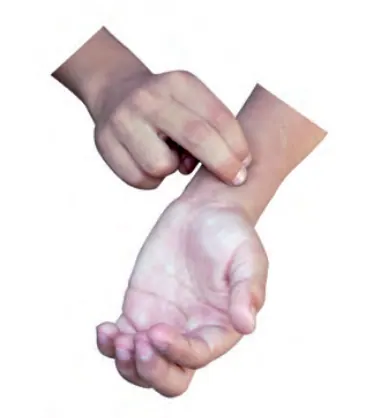
- Pulse/heart rate: count beats at wrist (radial artery) or neck (carotid) for 60 seconds to get beats per minute (bpm). Resting heart rate for children may be higher than adults but typical adult resting is 60–100 bpm.
- Blood pressure: a measure of force of blood on vessel walls (recorded as systolic/diastolic in mmHg). Normal adult resting is around 120/80 mmHg (values vary by age).
Health and lifestyle links (real-life relevance): exercise strengthens the heart and improves circulation; poor diet, smoking or inactivity can cause blockages (heart disease) or high blood pressure. Anemia (low red cells/hemoglobin) reduces oxygen transport and causes tiredness.
- Checking your pulse after climbing stairs: count beats at your wrist for 15 seconds and multiply by 4 to estimate bpm — heart rate rises with exercise.
- A cut that stops bleeding when a scab forms: platelets and clotting factors in blood form a clot to prevent blood loss.
- Blood transfusion after injury: donated blood replaces lost red cells so oxygen delivery to tissues is restored.
- Feeling dizzy when standing up quickly: temporary drop in blood pressure or slow circulatory response reduces oxygen to the brain.
- Heart rate (bpm) = number of heart beats / time (in minutes). Example: 30 beats in 30 s → heart rate = 30 × 2 = 60 bpm.
- Cardiac output (L/min) = Stroke volume (L/beat) × Heart rate (beats/min). Example: 0.07 L/beat × 70 bpm ≈ 4.9 L/min.
- Blood pressure (simplified relation) ≈ Cardiac output × Total peripheral resistance (CO × TPR). (Used to explain why increased resistance or output raises BP.)
Blood — Composition
What is blood?
Blood is a fluid connective tissue that circulates through the heart and blood vessels. It transports oxygen, nutrients, hormones and waste products, helps fight infections and controls body temperature.
Main components of blood
- Plasma (about 55% of blood volume)
- Liquid part of blood, pale yellow in colour.
- About 90–92% water; the rest is dissolved substances: plasma proteins (albumin, globulins, fibrinogen), electrolytes (Na+, K+, Cl–), nutrients (glucose, amino acids, lipids), gases (dissolved CO2), hormones and metabolic wastes (urea).
- Functions: transports cells, dissolved materials, maintains blood pressure and pH, and helps in clotting (fibrinogen).
- Formed elements (cells and cell fragments, about 45% of blood volume)
- Red blood cells (RBCs / erythrocytes)
- About 45% of blood (this percentage is called the hematocrit).
- Biconcave discs without nucleus (in mammals) to increase surface area for gas exchange.
- Contain hemoglobin — an iron-containing protein that binds oxygen in lungs and releases it in tissues.
- Typical lifespan ≈ 120 days; removed by liver and spleen.
- Function: transport O2 from lungs to tissues and CO2 from tissues to lungs (partly).
- White blood cells (WBCs / leukocytes)
- Make up <1% of blood by volume (in the buffy coat).
- Several types: neutrophils, lymphocytes, monocytes, eosinophils and basophils.
- Function: defend the body against infection, produce antibodies, remove dead cells.
- Platelets (thrombocytes)
- Cell fragments that help blood clotting.
- Also part of the buffy coat (<1% by volume).
- Red blood cells (RBCs / erythrocytes)
Typical values and simple facts
- Blood is roughly 55% plasma and 45% formed elements (approximate; varies with age, sex, hydration).
- Hematocrit = percentage of blood made up of RBCs.
- Normal platelet count: ~150,000–450,000 per microlitre. Normal WBC count: ~4,000–11,000 per microlitre. Normal RBC count: ~4–6 million per microlitre (varies by sex and age).
How composition changes in everyday situations
- Dehydration: plasma volume decreases → blood becomes more concentrated (higher hematocrit).
- Infection: WBC count increases (body fights pathogens).
- Injury: platelets and plasma proteins (fibrinogen) act to form clots and stop bleeding.
Summary
Blood consists of plasma (liquid) and formed elements (RBCs, WBCs, platelets). Each component has a clear role: plasma transports, RBCs carry oxygen, WBCs defend, and platelets clot.
- Blood donation: Donated blood is mostly plasma and red cells. A typical donation (~450 mL) contains plasma (clear liquid) and red cells used to treat anemia or blood loss.
- Bruise and clotting: When you cut your finger, platelets gather at the wound and plasma proteins form a fibrin clot to stop bleeding.
- Cold causing high WBC count: If you have an infection (cold or sore throat), a blood test often shows increased WBCs as your body fights microbes.
- Dehydration after exercise: After heavy sweating without drinking, plasma volume falls and the blood becomes thicker (higher hematocrit), which can make the heart work harder.
- Hematocrit (Hct, %) = (Volume of RBCs / Total blood volume) × 100
- Composition approximation: Plasma ≈ 55% ; RBCs ≈ 45% ; WBCs + Platelets < 1%
- Oxygen carrying capacity (useful approximate physiological relation): 1 g hemoglobin ≈ 1.34 mL O2 (so total O2 carried ≈ Hb (g) × 1.34 × SaO2). (This is for advanced context — not required for Class 7 calculations.)
Blood — Functions
What is blood? Blood is a red fluid that circulates in the heart and blood vessels. It is a connective tissue made of plasma (liquid) and formed elements (red blood cells, white blood cells, and platelets).
Major components (by volume)
- Plasma: ~55% — straw-coloured liquid (water, proteins like albumin and fibrinogen, nutrients, wastes, hormones, gases).
- Red blood cells (RBCs or erythrocytes): ~45% — contain haemoglobin; carry oxygen.
- White blood cells (WBCs or leucocytes) and platelets: <1% — WBCs fight infection; platelets help clotting.
Main functions of blood
- Transport
- Oxygen: RBCs carry O2 from lungs to all body cells (haemoglobin binds oxygen).
- Carbon dioxide: Carried from cells to lungs for removal (dissolved, as bicarbonate, or bound to haemoglobin).
- Nutrients: Glucose, amino acids, vitamins from intestine to cells.
- Excretory wastes: Urea and other wastes to kidneys for removal.
- Hormones: Chemical messengers transported from glands to target organs.
- Regulation
- Body temperature: Distributes heat produced by cells. Vasodilation (more blood to skin) cools the body; vasoconstriction conserves heat.
- Water balance and ion balance: Plasma helps maintain osmotic balance and electrolyte levels.
- pH buffering: Plasma proteins and bicarbonate system help keep blood pH near 7.4.
- Protection
- Clotting: Platelets and plasma proteins (fibrinogen → fibrin) prevent excessive blood loss when vessels are damaged.
- Immune defence: WBCs (phagocytes, lymphocytes) destroy pathogens and produce antibodies.
How these functions work together — simple examples
- During exercise: Muscles need more O2 and nutrients. Heart rate and blood flow increase; blood carries extra oxygen and removes CO2 and heat.
- When you get a cut: Platelets form a plug and clotting factors make fibrin threads to seal the wound and stop bleeding. WBCs prevent infection.
- In infection: WBC numbers rise and antibodies produced to neutralize pathogens; fever may occur as part of a regulated immune response.
Key points to remember
- Blood transports, regulates and protects the body — making life processes possible.
- Different components have specific roles: plasma for transport and medium, RBCs for oxygen delivery, WBCs for defence, platelets for clotting.
- Healthy blood composition and flow are essential for all organs to function properly.
- Running: Increased heart rate increases blood flow, delivering more oxygen to leg muscles and removing more carbon dioxide and heat.
- Cut on the finger: Platelets and clotting proteins form a clot to stop bleeding; also prevents microbes entering the body.
- Fever and cold: WBCs increase activity to fight infection; blood vessels change diameter to regulate body temperature (feel warm or shivering).
- After a meal: Blood from the intestine carries glucose and nutrients to the liver and other tissues for storage or use.
- Hematocrit (%) = (Volume of RBCs / Total blood volume) × 100
- Cardiac output (CO) = Stroke volume (SV) × Heart rate (HR) — measures volume of blood pumped by the heart per minute
- Simple transport relation (conceptual): Flow ∝ Pressure difference / Resistance (used to understand that higher heart pressure or lower resistance increases blood flow)
- Approximate O2 capacity (advanced note): O2 carried ≈ Hb (g/dL) × 1.34 ml O2/g Hb × SaO2 (fraction) — shows haemoglobin’s role in oxygen transport
Heart — Structure
What is the heart?
The heart is a muscular organ that pumps blood throughout the body. It lies in the chest cavity slightly to the left of the midline and is about the size of a closed fist. The heart works like a double pump to maintain circulation.
Layers and coverings
- Pericardium: a protective sac that surrounds the heart and contains fluid to reduce friction.
- Myocardium: thick cardiac muscle layer that does the pumping.
- Endocardium: inner lining that comes in contact with blood.
Chambers of the heart
The human heart has four chambers:
- Right atrium: receives deoxygenated blood from the body via superior and inferior vena cava.
- Right ventricle: pumps deoxygenated blood to the lungs through the pulmonary artery.
- Left atrium: receives oxygenated blood from the lungs via pulmonary veins.
- Left ventricle: pumps oxygenated blood to the whole body through the aorta; its wall is the thickest because it needs to generate high pressure.
Valves and septum
- Valves: prevent backflow of blood and ensure one-way flow.
- Atrioventricular (AV) valves: tricuspid (between right atrium and right ventricle) and bicuspid/mitral (between left atrium and left ventricle).
- Semilunar valves: pulmonary (between right ventricle and pulmonary artery) and aortic (between left ventricle and aorta).
- Septum: muscular wall that separates right and left sides of the heart so oxygen-rich and oxygen-poor blood do not mix.
Blood flow through the heart (step-by-step)
- Body (deoxygenated blood) → superior/inferior vena cava → right atrium.
- Right atrium → tricuspid valve → right ventricle.
- Right ventricle → pulmonary valve → pulmonary artery → lungs (blood gets oxygen).
- Lungs → pulmonary veins → left atrium.
- Left atrium → mitral valve → left ventricle.
- Left ventricle → aortic valve → aorta → body (oxygen delivered to tissues).
Cardiac cycle and sounds
The cardiac cycle has two main phases: diastole (relaxation and filling) and systole (contraction and pumping). The normal heart makes two sounds: "lub" (closure of AV valves) and "dub" (closure of semilunar valves).
Coronary circulation
The heart itself is supplied with blood by coronary arteries that branch from the aorta. These vessels supply oxygen and nutrients to the heart muscle.
Key functional points
- Left ventricle pumps to the whole body and has the thickest muscular wall.
- Right ventricle pumps to the lungs only (shorter distance, lower pressure).
- Valves ensure unidirectional blood flow and prevent mixing of oxygenated and deoxygenated blood.
- Heartbeat is controlled by electrical signals from the sinoatrial (SA) node (natural pacemaker).
Simple analogy
Think of the heart as a two-stage water pump: the right side pumps water to the filter (lungs) and the left side pumps cleaned water to the whole house (body).
- Pump analogy: A bicycle pump pushes air in one direction because of valves — similarly, heart valves prevent blood from flowing backward.
- Athlete's heart: Regular exercise increases stroke volume (volume pumped per beat), so athletes often have a lower resting heart rate but a similar or greater cardiac output.
- Comparison with amphibians: A frog's heart has three chambers (two atria and one ventricle), so oxygenated and deoxygenated blood mix partially, whereas a human heart has four chambers to keep the two blood types separate.
- Heart rate (HR) = number of beats per minute (bpm). Example: HR = 72 bpm.
- Stroke volume (SV) = volume of blood pumped by one ventricle in one contraction (usually in mL). Example: SV ≈ 70 mL in an average adult at rest.
- Cardiac output (CO) = HR × SV. Units: mL/min or L/min. Example: CO = 72 bpm × 70 mL = 5040 mL/min ≈ 5.04 L/min.
Heart — Working and Cardiac Cycle
What is the heart?
The heart is a muscular organ that pumps blood throughout the body. It is roughly the size of your fist and lies slightly left of the centre of the chest. Structurally the heart has four chambers: two upper chambers called atria (right atrium and left atrium) and two lower chambers called ventricles (right and left ventricles). Valves between chambers ensure one-way flow of blood.
Pathway of blood (double circulation)
Blood follows two circuits:
- Pulmonary circulation: Right atrium → Right ventricle → Pulmonary artery → Lungs (blood gets oxygenated) → Pulmonary veins → Left atrium.
- Systemic circulation: Left atrium → Left ventricle → Aorta → Body tissues (oxygen delivered) → Venae cavae → Right atrium.
The left ventricle has thicker muscle because it must pump blood to the whole body, while the right ventricle pumps only to the lungs.
Valves and their role
Valves prevent backflow: the atrio-ventricular (AV) valves — tricuspid (right) and bicuspid/mitral (left) — sit between atria and ventricles. The semilunar valves — pulmonary and aortic — sit at the exits of the ventricles.
How the heart works (sequence)
The cardiac cycle is the sequence of events in one heartbeat. It has two main phases: systole (contraction) and diastole (relaxation).
- Atrial systole: Atria contract, pushing blood into the relaxed ventricles through open AV valves.
- Ventricular systole: Ventricles contract. AV valves close (this makes the first heart sound "lub"). Pressure rises; when ventricular pressure exceeds pressure in the arteries, semilunar valves open and blood is ejected into the pulmonary artery and aorta. When ventricles finish contracting and arterial pressure becomes higher than ventricular pressure, semilunar valves close (the second sound "dub").
- Diastole (complete relaxation): Both atria and ventricles relax. Blood returns to the heart filling the atria and partially the ventricles; the AV valves open and the cycle repeats.
Timing
At rest, one cardiac cycle lasts about 0.8 seconds for a heart rate of ~75 beats per minute (bpm). The exact timing of atrial systole, ventricular systole and diastole varies with heart rate.
Control of heartbeat
Heartbeats are initiated by the sinoatrial (SA) node (natural pacemaker) in the right atrium. The impulse spreads across atria causing atrial contraction, then to the atrioventricular (AV) node and along conduction fibres to ventricles causing ventricular contraction. The autonomic nervous system (sympathetic and parasympathetic nerves) and hormones (e.g., adrenaline) modify heart rate and strength of contraction.
Sounds and clinical signs
Heart sounds "lub-dub" correspond to valve closures (AV valves then semilunar valves). The pulse felt at wrist/neck is a pressure wave generated by ventricular contraction and corresponds to heart rate.
Why this matters
Efficient cardiac cycles ensure continuous supply of oxygen and nutrients and removal of waste. Changes in rate/strength happen during exercise, rest, emotions, or disease.
- After running for a minute, your heart rate increases — cardiac cycles occur more frequently so more blood (and oxygen) reaches muscles.
- Athletes often have lower resting heart rates (e.g., 40–60 bpm) because their hearts pump more blood per beat (higher stroke volume), so fewer cycles are needed to maintain circulation.
- Taking your pulse at the wrist: count beats for 15 seconds and multiply by 4 to get beats per minute (heart rate).
- In CPR, chest compressions manually produce cardiac cycles (artificial pumping) to maintain blood flow until normal heartbeat resumes.
- Heart rate (HR) = number of beats per minute (bpm). Example: count 15 s beats × 4 = bpm.
- Period of one cardiac cycle (T) = 60 / HR (seconds per beat). Example: HR = 75 bpm → T = 60/75 = 0.8 s.
- Cardiac output (CO) = Stroke volume (SV) × Heart rate (HR). Units: mL/min or L/min. Example: SV ≈ 70 mL/beat, HR = 72 bpm → CO = 70 × 72 = 5040 mL/min ≈ 5.04 L/min.
Blood Vessels
What are blood vessels?
Blood vessels are tubular structures that carry blood throughout the body. They form a closed network of tubes through which the heart pumps blood to supply oxygen and nutrients to cells and remove wastes.
Types of blood vessels
- Arteries: Carry blood away from the heart. Walls are thick, elastic and muscular to withstand high pressure. They have a relatively small lumen and no valves. Most carry oxygenated blood, except the pulmonary artery which carries deoxygenated blood to the lungs.
- Veins: Carry blood toward the heart. Walls are thinner and less elastic, lumen is wider. Many veins (especially in limbs) have valves to prevent backflow. Most carry deoxygenated blood, except the pulmonary vein which carries oxygenated blood from the lungs.
- Capillaries: Extremely thin walled (one cell thick) and very narrow. They connect arterioles and venules and form dense networks in tissues. Their thin walls allow exchange of gases, nutrients and wastes between blood and body cells.
Structure and function summary
- Artery walls: outer connective tissue, middle thick muscle and elastic layer, inner endothelium. Function: carry blood at high pressure and maintain pulse.
- Vein walls: thinner muscle layer, larger lumen, valves in many veins. Function: return blood to heart at lower pressure; valves help against gravity.
- Capillary walls: single layer of endothelial cells. Function: exchange of oxygen, carbon dioxide, glucose, salts and waste products by diffusion and filtration.
How they work together
Blood is pumped from the heart into arteries, then into smaller arterioles, then into capillary networks where exchange occurs, then into venules and veins to return to the heart. Blood pressure falls as blood moves from arteries to veins. The total cross-sectional area of all capillaries is very large, which slows blood flow and maximizes exchange.
Important notes and exceptions
Most arteries carry oxygen-rich blood and most veins carry oxygen-poor blood, but exceptions are the pulmonary artery and pulmonary vein. Valves are normally found in veins and in the heart, not in arteries.
Common disorders related to blood vessels
Varicose veins (dilated, twisted veins due to valve failure), atherosclerosis (narrowing of arteries by fatty deposits), hypertension (high blood pressure) and thrombosis (blood clots) are conditions that affect blood vessels and circulation.
- If you prick your finger, bright red spurting blood indicates an artery, while steady dark red blood usually comes from a vein.
- Feeling the pulse at the wrist or neck is sensing arteries (radial or carotid artery) as they expand and recoil with each heartbeat.
- A capillary blood sample for a glucose test is obtained by a finger-prick; this is capillary blood used for measuring blood sugar.
- Varicose veins seen in people who stand for long periods show how vein valves can fail and allow blood to pool.
- During a blood donation a needle is inserted into a vein because veins are close to the skin and have a wide lumen for steady flow.
- Pressure = Force / Area
- Flow rate Q = Volume / Time
- Continuity relation: Q = A × v (so v = Q / A). This explains why blood velocity is low in capillaries because total cross-sectional area A is very large.
- Ohm-like relation for flow: Q = ΔP / R, where ΔP is pressure difference and R is resistance.
- Poiseuille's law (advanced): Q = (π ΔP r^4) / (8 η L). This shows flow is extremely sensitive to vessel radius r (small change in r gives large change in Q).
Lymph and Lymphatic System
What is lymph?
Lymph is a clear to pale yellow fluid that circulates through the lymphatic system. It is formed from the fluid that leaks out of blood capillaries into the spaces between cells (interstitial fluid). When some of this interstitial fluid enters lymphatic vessels, it is called lymph.
How is lymph formed?
- Blood plasma leaks out of the thin walls of capillaries into the surrounding tissue because of blood pressure. Most of this fluid returns to blood capillaries, but a portion remains as interstitial fluid.
- Some interstitial fluid enters blind-ended lymphatic capillaries; once inside these vessels it is called lymph.
Composition of lymph
- Mostly water
- Small amounts of dissolved salts and proteins (fewer proteins than blood plasma)
- White blood cells (mainly lymphocytes)
- Fats absorbed from the small intestine (in the form of chyle) after a fatty meal
Structure of the lymphatic system
- Lymphatic capillaries — tiny, blind-ended vessels that collect interstitial fluid.
- Larger lymphatic vessels — have valves to prevent backflow and move lymph toward the chest.
- Lymph nodes — small, bean-shaped structures located along lymphatic vessels that filter lymph and are centres for immune cells.
- Other lymphoid organs — tonsils, spleen, thymus and Peyer's patches in the intestine play roles in immunity and blood filtration.
- Major drainage — lymph ultimately drains into large veins (subclavian veins) near the heart and rejoins the blood circulation.
How lymph flows
- There is no central pump. Lymph moves slowly due to: contraction of nearby skeletal muscles, breathing movements (pressure changes in the chest), and valves in lymphatic vessels that prevent backflow.
- Physical activity increases lymph flow; immobility can slow it and lead to swelling.
Functions of lymph and the lymphatic system
- Returns excess tissue fluid and leaked plasma proteins back to the blood, helping maintain fluid balance.
- Transports absorbed fats from the small intestine (via lacteals) to the bloodstream.
- Defence against infections: lymph carries pathogens to lymph nodes where immune cells (lymphocytes, macrophages) trap and destroy them.
- Filters and removes cellular debris and foreign particles.
Clinical and everyday relevance
- Swollen, tender lymph nodes (e.g., in the neck) are a common sign of infection — nodes enlarge as immune cells multiply.
- Edema (swelling) can occur if lymphatic drainage is blocked (for example, after surgery, injury, or in diseases such as elephantiasis).
- Tonsillitis is inflammation of lymphoid tissue (tonsils) in the throat; they trap pathogens entering via mouth or nose.
Summary (flow diagram to include in visuals)
Blood plasma → some becomes interstitial fluid → part re-enters blood capillaries, rest enters lymphatic capillaries → lymphatic vessels → lymph nodes (filtering) → larger lymphatic ducts → subclavian veins → returns to blood.
- Swollen lymph nodes in the neck during a sore throat — lymph nodes trap pathogens and produce more immune cells, causing enlargement.
- Edema in a leg after prolonged immobility — reduced muscle contractions lower lymph flow, leading to fluid accumulation.
- Chyle appearing as milky lymph after a fatty meal — fats absorbed by intestinal lacteals enter lymph and give it a milky appearance.
- Elephantiasis (filariasis) — parasitic worms block lymphatic vessels, causing severe swelling of limbs due to impaired lymph drainage.
- Tonsils catching bacteria and viruses from inhaled air — causing sore throat and difficulty swallowing when inflamed.
- Approximate relation (simple balance): Lymph formed ≈ Plasma filtered out of capillaries − Plasma reabsorbed into capillaries
- Starling’s concept (advanced/simple form): Net filtration ∝ (capillary hydrostatic pressure + interstitial oncotic pressure) − (interstitial hydrostatic pressure + capillary oncotic pressure)
- Qualitative relation: Lymph flow ∝ Muscle activity × (presence of valves to prevent backflow) — meaning increased movement raises lymph flow
Transport in Plants — Overview
Why transport is needed: Plants need a continuous supply of water, mineral salts and dissolved gases to every cell for photosynthesis, growth and metabolism. They also need to move the sugars produced in leaves to growing parts and storage organs. Because many plants are large and multicellular, diffusion alone is not sufficient; specialised transport tissues and mechanisms are required.
Main transport tissues:
- Xylem: Carries water and dissolved mineral salts from roots to stems and leaves. Made of vessels, tracheids and xylem fibres. Transport is generally unidirectional (root → shoot).
- Phloem: Transports organic nutrients (mainly sucrose) from leaves (sources) to roots, fruits and growing tissues (sinks). Made of sieve tube elements and companion cells. Transport (translocation) can be bidirectional depending on source–sink relations.
How roots absorb water and minerals: Root hair cells increase surface area and absorb water by osmosis (movement of water from higher to lower water potential) and take up mineral ions by active transport (using energy). Water moves across cortex by cell-to-cell, vacuolar or apoplast pathways and reaches the xylem.
Ascent of sap (water movement up the plant): The main driver is transpiration pull, explained by the cohesion–tension theory. Water evaporating from leaf air spaces (transpiration) creates negative pressure (tension) in the leaf xylem. Cohesion between water molecules and adhesion to xylem walls transmits this tension down to the roots, pulling a continuous column of water upward. Other supporting forces include capillarity (in narrow vessels) and root pressure (minor, pushes water up slightly).
Transpiration: Loss of water vapour from aerial parts, mainly through stomata (stomatal transpiration), and to a lesser extent through cuticle (cuticular) and lenticels (lenticel transpiration). Transpiration is important because it helps cool the plant, creates transpiration pull for water transport and enables mineral uptake, but excessive loss can cause wilting.
Transport of food (translocation): Sugars produced in leaves are loaded into phloem sieve tubes at source regions. According to the pressure-flow (mass flow) hypothesis, accumulation of solutes at the source lowers the osmotic potential, drawing water into phloem from xylem and creating high turgor pressure. At sink regions (growing organs or storage tissues) solutes are removed, water leaves phloem, lowering pressure there. The resulting pressure gradient drives bulk flow of sap from source to sink.
Factors affecting transport: Transpiration and water transport are influenced by light (opens stomata), temperature (increases evaporation), humidity (inverse effect), wind (increases evaporation), soil water availability (limits uptake), and stomatal behaviour (open/closed). Phloem transport depends on photosynthesis rate (sugar production) and sink strength (demand).
Summary: Transport in plants relies on specialised tissues (xylem and phloem) and physical mechanisms (osmosis, transpiration pull, cohesion–tension, pressure-flow). These systems keep water, minerals and food moving to support life processes throughout the plant.
- Celery stalk placed in coloured water shows upward movement of water through xylem — colour appears in veins and leaf tips (demonstrates xylem transport and transpiration pull).
- Wilting of plants on a hot, dry day: high transpiration rate > water uptake causing loss of turgor — stomatal closure helps reduce further water loss.
- Sugar movement to tubers: after photosynthesis, sucrose is translocated from leaves to potato tubers (storage sink) via phloem.
- Using a potometer to measure water uptake of a cut shoot — shows how transpiration rate changes with light, humidity and wind.
- Salt-affected soils reduce water uptake by roots (lower water potential in soil) causing reduced growth — real-life agricultural problem.
- Transpiration rate (simple experimental) = Volume of water lost (or mass loss) / Time (e.g., mL hr⁻¹ or g hr⁻¹).
- Percent water loss = (Mass lost / Initial mass) × 100.
- Qualitative diffusion relation (Fick's idea simplified): Rate of diffusion ∝ Concentration difference / Distance (Rate ∝ ΔC / Δx).
- Osmosis direction principle: Water moves from region of higher water potential to region of lower water potential (no numeric formula required at Class 7 level).
- Pressure-flow (conceptual): Flow in phloem driven by pressure difference: Flow ∝ (P_source − P_sink) / Resistance (conceptual form only).
Xylem — Structure and Function
What is xylem? Xylem is the vascular tissue in plants that conducts water and dissolved minerals from roots to stems and leaves and provides mechanical support. It is one of the two types of vascular tissues; the other is phloem.
Where is xylem found? Xylem is present in roots, stems and leaves as part of vascular bundles. In stems it lies toward the inner side of the bundle.
Structure (cell types and features)
- Xylem vessels (vessel elements): Long, tubular cells joined end to end with perforated end walls to form continuous tubes. Walls are thickened with lignin in patterns such as annular, spiral, or pitted. Found mainly in angiosperms. Cells are dead at maturity and lack protoplasm.
- Tracheids: Long, tapered cells with thick lignified walls and pits for lateral water movement. Present in all vascular plants and are the main water-conducting cells in gymnosperms.
- Xylem parenchyma: Living cells that store food and help in lateral transport of water and minerals.
- Xylem fibers: Thick-walled cells that provide mechanical strength.
Key structural features that help function
- Lignified walls prevent collapse under tension and give strength.
- Continuous tubular arrangement of vessels/tracheids allows efficient long-distance water flow.
- Pits permit water movement between adjacent elements.
- Most conducting elements are dead, providing hollow conduits with low resistance.
How xylem transports water and minerals
- Absorption at roots: Root hairs absorb water and minerals from soil. Water enters root xylem via apoplast and symplast pathways.
- Ascent of sap: Water moves upward through xylem vessels and tracheids. Main driving forces are:
- Transpiration pull (cohesion-tension mechanism): Water evaporating from leaf stomata creates a negative pressure (tension) in leaf air spaces. Cohesion between water molecules and adhesion to cell walls transmits this pull down the continuous water column in xylem, pulling water up from roots.
- Root pressure: Osmotic uptake of water into root xylem can push water upward a short distance, usually at night or when transpiration is low.
- Capillary action: Adhesion and small diameter of xylem elements help draw water up small distances, but this is a minor effect in tall plants.
Other functions of xylem
- Mechanical support because of lignified walls and fibers.
- Storage of water and food in xylem parenchyma.
Direction of flow Water and dissolved minerals move mostly unidirectionally from roots to leaves. Organic food is transported in phloem in both directions.
Simple experimental evidence If a cut stem is placed in colored water, colored solution appears in petals and leaves, showing that vessels conduct water. Removing bark (phloem) kills the upper part because sugars cannot move downward, but xylem continues to supply water temporarily.
- Colored water experiment: Place a cut flower in colored water and watch the petals change color as xylem vessels carry the dye to the flower.
- Tall trees (e.g., mango, eucalyptus) transport water to large heights using xylem and the transpiration pull mechanism.
- Wilting of plants on hot sunny days occurs when transpiration exceeds water uptake by xylem.
- Girdling (removal of bark) kills leaves above the ring because phloem is removed, while xylem still supplies water briefly; shows functional difference between xylem and phloem.
- Transpiration rate (simple) = mass of water lost / time. Example units: grams per hour (g h−1).
- Transpiration per unit leaf area = (mass of water lost) / (time × leaf area). Useful to compare leaves of different sizes.
- Percent loss of water in a transpiration experiment (%) = (mass lost / initial mass) × 100
Phloem — Structure and Function
What is phloem?
Phloem is the living vascular tissue in plants that transports organic nutrients (mainly sugars produced by photosynthesis) from leaves (sources) to other parts of the plant (sinks) such as roots, growing shoots, flowers and storage organs. This downward and upward transport of food is called translocation.
Structure of phloem
Phloem is a complex tissue made of several types of cells arranged together. Main components:
- Sieve tube elements (sieve tubes) — elongated living cells joined end to end. Their end walls have perforations called sieve plates that allow flow of phloem sap. Sieve tube cells have very little cytoplasm and, at maturity, often lack a nucleus.
- Companion cells — closely associated with sieve tubes via many plasmodesmata. They have a dense cytoplasm and a nucleus and help load and unload sugars into sieve tubes and maintain the metabolism of sieve-tube elements.
- Phloem parenchyma — cells that store food and help lateral transport.
- Phloem fibres (sclerenchyma) — provide mechanical support and protection.
In cross sections of stems and leaves, phloem is found in vascular bundles along with xylem. In stems phloem is usually located toward the outer side of the xylem.
How phloem works — Pressure-flow (Münch) hypothesis, simple steps
- Sugar loading: At the source (leaf), sucrose is actively transported into companion cells and then into sieve tubes. This raises the solute concentration inside sieve tubes at the source.
- Water influx and pressure build-up: Water moves into sieve tubes from adjacent xylem by osmosis, increasing hydrostatic pressure at the source.
- Bulk flow: The pressure difference between source (high pressure) and sink (low pressure) pushes phloem sap through sieve tubes toward sinks.
- Sugar unloading: At the sink, sugars are actively or passively removed from the sieve tubes into sink cells (roots, fruits, growing tips). Water then returns to xylem or is used by sink tissues, lowering pressure at the sink.
Key features of phloem transport
- Transport is typically from source to sink and can be upward or downward depending on where sugars are needed.
- Phloem transport is a living process and often requires metabolic energy (ATP) for loading and unloading of sugars.
- Phloem sap contains sugars (mainly sucrose), amino acids, hormones, and sometimes viruses and other organic molecules.
Importance
Phloem supplies energy and carbon skeletons to non-photosynthetic parts, supports growth of buds and roots, helps fill fruits and storage organs (e.g., tubers), and distributes signalling molecules (hormones) throughout the plant.
Comparison with xylem (brief)
Xylem transports water and minerals from roots to shoots (mostly passive, upward), is made of dead cells (tracheids, vessels). Phloem transports food (organic solutes) in living cells and transport can be in either direction depending on source and sink.
- During summer, leaves (sources) load sucrose into phloem which transports it to developing fruits—this helps fruits grow and sweeten (e.g., tomato, mango).
- In autumn, sugars produced in leaves are transported to roots and storage organs like potato tubers where they are converted to starch for winter storage.
- Aphids tap into phloem sap to feed; the sap is rich in sugars and flows under pressure so aphids obtain a steady food source.
- Sugarcane stores sucrose in its stem; phloem moves sucrose from photosynthetic leaves to the stem for storage.
- When a young seedling grows, sugars from cotyledons and leaves are moved via phloem to the root tips and shoot tips to support growth.
- Osmotic (turgor) pressure (van 't Hoff equation): π = i C R T (π = osmotic pressure, i = van 't Hoff factor (≈1 for sucrose), C = molar concentration (mol·L⁻¹), R = gas constant, T = absolute temperature in K).
- Simplified relation for bulk flow (analogy to Ohm's law): Flow (Q) = ΔP / R (ΔP = pressure difference between source and sink; R = hydraulic resistance of the sieve tube).
Ascent of Sap
What is ascent of sap?
Ascent of sap means the upward movement of water and dissolved minerals (sap) from the roots to all parts of a plant, especially the stem and leaves, through the xylem vessels.
Why it is important
Plants need continuous supply of water for photosynthesis, transport of minerals, cell turgor and cooling. Water moves from soil → roots → stem → leaves where it is used or lost by transpiration.
How it happens — main mechanisms
- Transpiration pull (Cohesion–Tension theory): Evaporation of water from leaf surfaces (transpiration) creates a negative pressure (tension) in the leaf xylem. Because water molecules are cohesive (stick to each other) and adhesive (stick to xylem walls), they form an unbroken column that is pulled up from roots to leaves. This is the primary mechanism that explains how water can rise to great heights in tall trees.
- Root pressure: When root cells actively take up minerals from soil, water follows by osmosis into the xylem, generating a small positive pressure that can push sap upward a short distance. Root pressure is stronger at night or when transpiration is low. It can cause guttation (droplets on leaf edges).
- Capillarity: Narrow xylem vessels cause capillary rise due to adhesion between water and vessel walls and surface tension. Capillary action alone can lift water only a few centimetres and cannot explain ascent in tall plants, but it helps near the base.
Supporting features of xylem
Xylem vessels are long, narrow tubes with lignified walls that prevent collapse under tension. Their continuity, narrow diameter and smooth walls favour formation of continuous water columns and efficient upward flow.
Evidence for transpiration pull
Cut a stem and you may see continuous sap flow out under some conditions; experiments (potometer, colored-water uptake in celery) show water loss from leaves correlates with water uptake at the stem base. Guttation demonstrates root pressure at low transpiration.
Factors affecting rate of ascent
Light (increases transpiration), temperature (increases), wind (increases), humidity (high humidity decreases transpiration), soil water availability (limits supply), leaf area, and stomatal opening.
Simple measurement idea
Transpiration rate can be measured by mass loss of a potted plant or by water uptake in a potometer; water uptake roughly equals transpiration when growth and storage are small.
- Tall trees (e.g., eucalyptus, redwood) transport water to heights of tens of metres mainly by transpiration pull (cohesion–tension).
- Guttation seen on grass or strawberry leaves early in the morning is caused by root pressure pushing water out of hydathodes.
- Celery or white carnation in colored water shows colored sap rising through xylem—easy classroom demonstration of ascent of sap.
- After cutting a leafy shoot, water often oozes from the cut stem — evidence of root pressure and sap movement.
- Transpiration rate (simple experimental): Rate = Δmass / Δtime (e.g., grams per hour) or Rate = volume / time (ml per hour).
- Capillary rise (idealized): h = (2·γ·cosθ) / (ρ·g·r) where h = height of rise, γ = surface tension of liquid, θ = contact angle, ρ = density of liquid, g = acceleration due to gravity, r = radius of capillary. (Explains why narrower vessels give higher capillary rise but cannot account for very tall trees.)
Transpiration
Definition: Transpiration is the loss of water vapour from the aerial parts of plants, mainly through tiny pores called stomata on the leaves. It is a continuous process that helps pull water and dissolved minerals from the roots to the leaves.
Where it occurs:
- Stomatal transpiration (major): through stomata on leaves.
- Cuticular transpiration: through the waxy cuticle (minor).
- Lenticular transpiration: through lenticels on stems (very small).
How it happens (simple mechanism):
- Roots absorb water from soil by osmosis into root hairs and xylem vessels.
- Water moves upward in xylem due to transpiration pull (cohesion and adhesion of water molecules).
- In the leaf, water evaporates from the moist cell walls of mesophyll into the air spaces.
- Water vapour diffuses out through open stomata into the atmosphere.
Importance of transpiration:
- Creates a transpiration pull that helps transport water and minerals from roots to leaves.
- Helps cool leaves and whole plant (like sweating in animals).
- Mantains cell turgor and drives nutrient flow required for growth.
Factors affecting transpiration: light (opens stomata), temperature (increases evaporation), humidity (high humidity reduces transpiration), wind (removes humid layer, increases transpiration), soil water availability, leaf area and stomatal number/opening.
Distinction: Transpiration is loss of water vapour; do not confuse with guttation, which is liquid water exuded from leaf edges under special conditions.
Simple classroom demonstration: Cover one leaf side with petroleum jelly (vaseline) or nail polish to block stomata and compare water loss with an uncovered leaf; or use a potometer to measure water uptake as an estimate of transpiration.
- On a hot sunny day many plants appear to 'sweat' and the leaves feel cooler — this cooling is due to transpiration.
- A wilted potted plant in the afternoon often recovers after watering because soil water restores turgor lost via transpiration.
- Greenhouses use transpiration of many plants to increase humidity; gardeners notice increased humidity around dense plantings.
- If you cover the underside of a leaf with wax or vaseline and leave the plant in sun, that leaf loses less water than an uncovered leaf (practical experiment).
- Transpiration rate (mass/time): Rate = Δm / Δt, where Δm is mass of water lost (g) and Δt is time (h or min).
- Transpiration rate per leaf area: Rate_area = Δm / (Δt × A), where A is leaf area (cm² or m²).
- Percentage of absorbed water lost by transpiration: % = (water transpired / water absorbed) × 100.
Factors Affecting Transpiration
Transpiration is the loss of water vapour from plant parts, mainly leaves. Most transpiration occurs through stomata (tiny pores) and to a lesser extent through the cuticle and lenticels. The rate of transpiration depends on several environmental and plant factors that affect evaporation and stomatal opening.
Main factors and how they affect transpiration
- Light: Light makes stomata open (guard cells become turgid). More light → more stomata open → higher transpiration. Transpiration is low at night because stomata close.
- Temperature: Higher temperature increases the kinetic energy of water molecules and reduces relative humidity near the leaf, so transpiration increases with temperature (up to a limit).
- Humidity (moisture in air): When air humidity is high, the water vapour concentration difference between leaf interior and air is small, so transpiration decreases. Low humidity increases transpiration.
- Wind / air movement: Air movement removes the moist layer around the leaf (boundary layer). Faster wind → faster removal → increased transpiration (until stomatal control or water supply limits it).
- Soil water availability: If soil is dry, plant water potential falls, guard cells lose turgor, stomata close and transpiration decreases. Adequate soil water allows sustained transpiration.
- Leaf surface area and structure: Larger leaf area → larger surface for evaporation → greater transpiration. Thick cuticles, waxy surfaces, hairs, or reduced leaf area (adaptations in xerophytes) reduce transpiration.
- Number and behaviour of stomata: More stomata per unit area or wider stomatal opening increases transpiration. Different species have different stomatal densities and behaviours.
- Time of day / season: Transpiration generally peaks during the day (midday) when light and temperature are high and falls at night. Seasonal changes (dry season vs rainy season) also affect rates.
Mechanism (brief): Water moves from soil → roots → xylem → leaves due to a continuous column of water and transpiration pull. Evaporation from mesophyll cells creates negative pressure that pulls water upward. Factors above change how fast water evaporates from the leaf surface or how open stomata are.
Simple classroom methods to observe effects: Use potted plants or cut shoots with a potometer to compare mass loss or water uptake under different light, temperature, humidity, or wind conditions.
- Houseplant wilts on a hot sunny day (high light + high temperature) because transpiration rate increases and water loss exceeds uptake.
- Using a fan near indoor plants increases leaf water loss (wind removes boundary layer) causing faster drying of soil.
- Cactus and succulents have thick cuticles and small leaves (adaptations) so they show very low transpiration compared to leafy plants.
- After watering a potted plant, transpiration increases because soil water availability lets stomata remain open; if soil dries out, stomata close and transpiration falls.
- Basic rate (mass basis): Transpiration rate = Δm / Δt (where Δm = mass of water lost, Δt = time interval)
- Rate per unit leaf area: Transpiration rate = Δm / (Δt × A) (A = leaf area, so result is mass loss per unit area per unit time)
- Relative/percent water loss: % loss = (mass lost / initial mass) × 100
- Note: In real plant physiology, transpiration also depends on vapour pressure deficit (VPD). Qualitatively, rate ∝ vapour pressure deficit ≈ (saturated vapour pressure at leaf temp − actual vapour pressure of air).
Translocation in Phloem
What is translocation? Translocation is the movement of organic solutes (mainly sugars like sucrose), amino acids and other nutrients through the phloem from regions of production or storage (called sources) to regions of use or storage (called sinks).
Phloem structure (brief): Phloem is made of sieve tube elements (long cells joined end-to-end with sieve plates) and companion cells. Sieve tubes transport the sap; companion cells help load and unload sugars and maintain the sieve tubes.
How translocation happens — Pressure‑flow (Mass flow) hypothesis (simple steps):
- At the source (e.g., photosynthesizing leaf), sugars are actively loaded into phloem sieve tubes. This raises the solute concentration inside the sieve tubes near the source.
- Water moves osmotically from surrounding xylem into the phloem because of higher solute concentration, increasing the hydrostatic (turgor) pressure in the phloem at the source.
- At the sink (e.g., growing root, fruit or storage organ), sugars are unloaded from the phloem into sink cells for respiration or storage. Solute concentration in the phloem near the sink becomes lower.
- Water leaves the phloem (often back to xylem) where solute concentration is lower, lowering the pressure at the sink.
- The resulting pressure difference (high at source, low at sink) drives bulk flow of phloem sap from source to sink through the sieve tubes.
Key points:
- Movement in phloem is generally from source to sink and can be upward, downward or lateral depending on plant needs.
- Translocation is an active process because sugars are actively loaded and unloaded (requires energy).
- The flow is continuous and can change with plant activity (e.g., growth, fruiting, season).
Evidence and experiments: Girdling (removing a ring of bark including phloem) causes sugars to accumulate above the girdle and stops sugar reaching the roots. Radioactive carbon experiments (using 14C-labelled CO2) show movement of labelled sugars from leaves to sinks, supporting the pressure‑flow idea.
Factors affecting translocation: rate of photosynthesis (sugar production), temperature (affects respiration and membrane transport), water availability (affects osmotic water flow), activity of companion cells (energy for loading/unloading), and developmental stage (growing fruits are strong sinks).
Importance: Supplies energy and building blocks to growing parts, stores food in roots/bulbs/seeds, and helps in healing and storage functions of plants.
Comparison with xylem transport: Xylem moves water and minerals mainly upward by transpiration pull and root pressure (passive). Phloem moves organic solutes in any direction between sources and sinks and requires metabolic energy for loading/unloading.
- Leaves (source) export sucrose to growing roots, shoots and fruits (sinks). Example: sugar produced in leaves moves to developing fruits so they grow and sweeten.
- Sugarcane: sugars transported and stored in the stem; harvesting the stem yields sucrose-rich juice.
- Girdling fruit trees: if a ring of bark (phloem) is removed, sugars accumulate above the cut and root growth is reduced — gardeners sometimes use controlled girdling to increase fruit size temporarily.
- Developing seeds and tubers (e.g., potato) act as strong sinks; sugars move from leaves to these storage organs and are converted to starch.
- Conceptual relation from pressure‑flow: Flow rate (Q) ∝ Pressure difference (ΔP) / Resistance (R). In simple form: Q = ΔP / R (analogy to fluid flow equations).
- Osmotic pressure (ideal, for explanation only): Π = C·R·T, where Π = osmotic pressure, C = molar concentration of solute, R = gas constant, T = temperature (in Kelvin). This explains why water moves into phloem when solute concentration rises.
- Concentration gradient drives diffusion during loading/unloading qualitatively: net movement direction follows higher → lower concentration (no detailed numeric formula required at Class 7 level).
Diffusion and Osmosis
Diffusion is the movement of particles (atoms, ions or molecules) from a region of higher concentration to a region of lower concentration until they are evenly spread (equilibrium). It is a passive process (requires no energy) and happens because particles move randomly. Common classroom demonstrations: a drop of ink or potassium permanganate in water, or perfume spreading in a room.
Key points about diffusion:
- Direction: from high concentration to low concentration.
- Stops when concentrations become equal (equilibrium).
- Occurs in gases, liquids and (slowly) in solids.
- Affected by temperature (higher temperature → faster diffusion), concentration difference (larger difference → faster), and distance/path length (shorter distance → faster).
Osmosis is a special type of diffusion of water (solvent) through a semipermeable membrane from a region of lower solute concentration (more water) to a region of higher solute concentration (less water). The membrane allows water to pass but not the solute particles. Osmosis is also passive and continues until the concentration difference is balanced or pressure (osmotic pressure) stops net flow.
Key points about osmosis:
- Requires a semipermeable membrane.
- Water moves toward the side with higher solute concentration.
- Causes swelling (turgidity) of plant cells in dilute solutions and shrinkage (plasmolysis) in concentrated solutions.
- Important in living systems: plant root water uptake, water balance in animal cells, absorption of water by root hairs, and movement of water in and out of cells.
Differences (short): Diffusion applies to any substance moving down its concentration gradient; osmosis is specifically the movement of water across a semipermeable membrane.
- Diffusion: Smell of perfume spreading across a room; ink drop spreading in a glass of water; oxygen moving from air into blood in the lungs.
- Osmosis: Raisin or grape swelling when placed in water; plant cells becoming turgid when placed in fresh water and plasmolysed in salty water; roots absorbing water from soil into root hairs through semipermeable cell membranes.
- Demonstration: Put a soaked potato cylinder in sugar solution — it will shrink (water moved out). Put it in pure water — it will swell (water moved in).
- Biological: Red blood cells placed in distilled water swell and may burst (hemolysis) due to osmosis; in a saline solution they shrink (crenation).
- Qualitative relation (diffusion rate): rate ∝ concentration difference (ΔC). Larger ΔC → faster net diffusion.
- Distance effect (qualitative): rate ∝ 1 / distance (shorter distance → faster equilibrium).
- Fick's first law (advanced): J = -D (dC/dx), where J is diffusion flux, D is diffusion coefficient, and dC/dx is concentration gradient.
- Osmotic pressure (advanced): π = i M R T (van 't Hoff equation) — π is osmotic pressure, i is ionization factor, M is molar concentration, R is gas constant, T is temperature in K.
Experiments and Practical Observations
Overview: "Experiments and Practical Observations" in the chapter Transportation in Animals and Plants deals with simple hands‑on activities that show how water, minerals and food are moved in plants and how blood and other fluids are transported in animals. These experiments help observe transpiration, absorption by roots, movement through xylem and phloem, and circulation-related changes (for example, pulse rate).
Key practicals and what they show:
- Coloured water and cut stem (celery/white carnation) experiment: Place a fresh celery stalk or white carnation in water coloured with food dye. Observation: After a few hours to a day, coloured streaks appear in the stem and coloured spots in the petals/leaves. Interpretation: Water moves upward through xylem vessels, visually proving xylem transport (transpiration stream).
- Transpiration demonstration with a plastic bag: Cover a leafy twig with a transparent plastic bag and seal it at the stem. Leave for a few hours in sunlight. Observation: Water droplets collect inside the bag. Interpretation: Water lost by leaves (transpiration) evaporates and condenses on the bag surface; stomata are the main exit points for water vapour.
- Wilting and recovery (transpiration vs water supply): Keep one potted plant without water and another well-watered under the same conditions. Optionally, keep a wilted plant in shade or water it. Observation: The unstressed plant wilts; watering and providing cooler/shaded conditions restores turgor. Interpretation: Loss of turgor due to reduced water in cells causes wilting; transpiration and water uptake balance determines plant water status.
- Stomata observation: Peel the lower epidermis of a leaf (e.g., Tradescantia) or use a clear nail-polish peel and view under a microscope. Observation: Kidney-shaped guard cells surrounding pores (stomata). Interpretation: Stomata open and close to regulate gas exchange and transpiration.
- Transpiration rate experiments (simple mass method): Take similar potted plants or leafy shoots, subject each to different conditions (light vs dark, wind vs still, humid vs dry). Measure mass loss of pot+plant or water loss from cut shoot at fixed intervals. Observation: Higher water loss in light, wind, and dry air; lower in humid or dark conditions. Interpretation: Transpiration increases with light, temperature and wind, decreases with humidity and darkness.
- Capillary action demo: Dip one end of a narrow glass tube or a strip of blotting paper into water containing dye. Observation: Water rises up the tube or along the paper against gravity. Interpretation: Adhesion and cohesion (capillary forces) help water rise in narrow xylem vessels.
- Root hair absorption (simple observation): Germinate seeds on moist filter paper and observe root hairs under a microscope. Observation: Fine root hairs increase surface area. Interpretation: Root hairs increase water and mineral absorption from soil.
- Pulse and exercise experiment (transport in animals): Measure your resting pulse (beats per minute) by feeling the radial pulse for 15 seconds and multiplying by 4. Then do light exercise (e.g., climb stairs for 2 minutes) and measure again. Observation: Pulse rate increases after exercise and gradually returns to resting rate. Interpretation: Muscles need more oxygen and nutrients during activity; heart pumps faster to transport these through blood.
How to record and interpret results: For quantitative experiments, record initial and final values (mass of plant/pot, volume of water, pulse counts) at set time intervals. Plot data (time on x-axis, water loss or pulse on y-axis) to compare treatments. Always include a control (for example, a plant in shade) and repeat trials for reliability.
Safety & tips: Use fresh cuttings for dye experiments; avoid damaging stem ends excessively. When observing stomata, handle glass slides and microscopes carefully. For pulse experiments, ensure mild exercise only and stop if you feel unwell.
- Placing a plastic bag over a branch of a mango tree on a sunny day collects water droplets — shows transpiration from leaves.
- Keeping a potted bean plant in the sun and another in shade; the sun-exposed plant loses more water and may wilt faster — shows effect of light on transpiration.
- Putting celery stalks in red-coloured water; after a day the leaf veins turn red — shows xylem transport.
- Measuring pulse before and after running: resting ~70 beats/min, immediately after running ~120–140 beats/min — shows increased circulation during exercise.
- Using a narrow glass capillary tube in water to see water rise — models how water moves up xylem by capillary action.
- Transpiration rate = (Loss of water mass or volume) / (Time interval). Example units: grams per hour (g/h) or millilitres per hour (mL/h).
- Heart rate (beats per minute) = (Number of beats counted × 60) / Time counted in seconds. Example: if 15 s count is 20 beats → (20 × 60)/15 = 80 bpm.
- Percentage change = ((Final value − Initial value) / Initial value) × 100%. Useful for comparing treatments.
Adaptations Related to Transport
Overview
Transport in living organisms means movement of water, minerals and food in plants and movement of gases, nutrients and wastes in animals. Different organisms have special structural and functional adaptations that make transport efficient according to their size, habitat and activity level.
Adaptations in Plants
- Root hairs: Long, thin extensions of root epidermal cells that increase surface area for water and mineral absorption from soil.
- Xylem vessels: Dead, tubular cells joined end-to-end forming continuous channels to carry water and dissolved minerals from roots to leaves. Their thick lignified walls provide strength (help in tall plants).
- Phloem (sieve tubes and companion cells): Living cells that transport sugars from leaves to growing parts and storage organs (translocation). Companion cells help load and unload sugars.
- Transpiration and cohesion-tension: Evaporation of water from leaf stomata (transpiration) creates a negative pressure that pulls water up the xylem. Cohesion (water molecules stick together) and adhesion (stick to xylem walls) help maintain a continuous water column.
- Leaf adaptations: Xerophytes (cactus) have thick cuticle, reduced leaves (spines), sunken stomata and many stomatal hairs to reduce water loss. Hydrophytes (water lilies) have large air spaces and flat leaves to float and exchange gases easily.
- Vascular bundle arrangement: In stems and roots, arrangement and number of vascular bundles give mechanical support and efficient transport.
Adaptations in Animals
- Simple organisms (amoeba, hydra): Very small or thin bodies so gases and food can move by diffusion across the body surface—no specialized transport system needed.
- Insects: Tracheal system—network of air-filled tubes (tracheae) that deliver oxygen directly to tissues; spiracles regulate airflow and reduce water loss.
- Earthworms: Closed circulatory system with blood confined to vessels (dorsal and ventral vessels) and heart-like muscular segments (aortic arches) to pump blood; blood contains respiratory pigments for oxygen transport.
- Fish: Gills with thin lamellae and large surface area perform gas exchange in water; counter-current flow of water and blood increases oxygen uptake.
- Amphibians: Use skin, lungs and mouth lining for gas exchange; partially divided heart supports mixed circulation.
- Birds and mammals: Double circulatory system (separate pulmonary and systemic circuits) and four-chambered heart ensure efficient oxygen delivery to meet high metabolic demands; lungs have adaptations (alveoli in mammals, air sacs and parabronchi in birds) for high gas exchange efficiency.
- Blood vessels and valves: Arteries have thick muscular walls for high pressure, veins have valves to prevent backflow and thin walls, capillaries are thin-walled for exchange between blood and tissues.
Why these adaptations matter
Small organisms rely on diffusion because it is efficient only over short distances. Larger or more active organisms need specialised pumps (hearts), vessels and respiratory structures to move materials fast enough to meet cellular needs.
- Root hairs increasing absorption in a bean seedling placed in soil.
- Transpiration pull causing water to rise in a tall banyan or eucalyptus tree.
- Cactus spines (reduced leaves) and thick cuticle reducing water loss in deserts.
- Grasshopper supplying oxygen to body tissues via tracheae and spiracles.
- Fish gills using counter-current exchange to extract oxygen from water.
- Human double circulation: right side of heart pumps to lungs, left side pumps to body.
- Flow rate (volume per time): Q = V / t (useful for measuring sap or blood flow)
- Continuity (relation between area and velocity): Q = A × v (A = cross-sectional area, v = fluid velocity)
- Transpiration rate (simple): Rate = Volume of water transpired / (Time × Leaf area)
- Fick's law of diffusion (basic form): J = -D × (ΔC / Δx) (J = diffusion flux, D = diffusion coefficient, ΔC = concentration difference, Δx = distance) — explains why diffusion is slow over long distances
- Conceptual (advanced note): Poiseuille’s relation shows how radius affects flow: Q ∝ r^4 — a small change in vessel radius hugely changes flow (useful to understand blood flow and xylem conductance).
Importance and Applications
Transportation in animals and plants is the movement of substances (water, minerals, gases, nutrients, hormones, wastes) from one part to another. It is essential for survival because it supplies cells with what they need, removes wastes, supports growth and reproduction, helps in temperature regulation and defence, and maintains internal balance (homeostasis).
Importance in animals
- Supplies oxygen and nutrients to all body cells and removes carbon dioxide and metabolic wastes, enabling respiration and energy release.
- Transports hormones that coordinate growth, development and responses to environment.
- Helps in immune defence by transporting white blood cells and antibodies.
- Maintains body temperature and fluid balance (blood circulates heat and plasma carries water and salts).
Importance in plants
- Xylem transports water and dissolved minerals from roots to leaves; water is needed for photosynthesis and turgor pressure.
- Phloem transports food (sugars) from leaves to growing regions and storage organs (roots, fruits).
- Transpiration (loss of water vapour) creates a pull that helps move water up tall plants and cools the plant surface.
- Transport systems help distribute plant hormones that control flowering, fruiting and responses to stress.
Applications (how this knowledge is used)
- Medicine: understanding blood circulation enables treatments such as blood transfusions, IV fluids, dialysis, heart surgery, pacemakers and design of artificial organs.
- Agriculture and horticulture: grafting uses knowledge of xylem and phloem; irrigation (drip, sprinkler) is planned using transpiration rates; nutrient solutions in hydroponics replace soil transport.
- Greenhouse and crop management: controlling humidity, light and temperature to manage transpiration and improve water use efficiency and yield.
- Environmental monitoring: measuring transpiration and water uptake helps schedule watering and conserve water in drought-prone areas.
- Food storage and transport: knowing phloem transport and ripening hormones (like ethylene) helps control fruit ripening during storage and shipping.
- Human blood carries oxygen from lungs to muscles during running and returns carbon dioxide to be exhaled.
- A tall tree (e.g., eucalyptus) pulls water from the soil to leaves through xylem by transpiration pull, allowing it to survive and photosynthesise at great heights.
- Grafting: a fruit tree branch (scion) is joined to a rootstock; xylem and phloem reconnect so water and sugars move, producing fruits of desired quality.
- Drip irrigation uses knowledge of plant water needs and transpiration to deliver water directly to roots, saving water and improving crop yields.
- Intravenous (IV) fluids supply water, salts and medicines directly into the bloodstream in hospitals when patients cannot drink.
- Hydroponic systems deliver dissolved minerals directly to plant roots, replacing soil-based transport and allowing fast, controlled growth.
- Transpiration rate = (Loss in mass of plant or potting system) / (Time). Units: g h⁻¹ or mg min⁻¹.
- Water uptake rate = Volume of water absorbed / Time. Units: mL h⁻¹.
- Simple flow relation (qualitative for circulation/transport): Flow rate ∝ (Pressure difference) / (Resistance). (Useful to understand how blood flow changes with pressure or vessel diameter.)
- Rate of diffusion (simple) = Distance moved / Time. (Used to estimate how fast gases or solutes spread over short distances.)
Key Concepts
- Transportation
- Movement of substances (water, gases, nutrients, wastes) within organisms to maintain life processes.
- Circulatory system
- Organ system in animals (heart, blood, blood vessels) that transports materials throughout the body.
- Heart
- Muscular organ that pumps blood through blood vessels to circulate it around the body.
- Blood
- Fluid connective tissue that carries oxygen, nutrients, hormones and wastes; consists of plasma and blood cells.
- Plasma
- The liquid part of blood (about 55%) made mostly of water, containing dissolved salts, proteins and hormones.
- Red blood cells (RBCs)
- Biconcave cells containing haemoglobin that transport oxygen from lungs to body tissues.
- White blood cells (WBCs)
- Cells of the immune system that defend the body against infections and foreign substances.
- Platelets
- Small cell fragments in blood that help in clotting to stop bleeding.
- Haemoglobin
- Iron-containing pigment in RBCs that binds and carries oxygen and gives blood its red colour.
- Arteries
- Blood vessels that carry blood away from the heart; have thick elastic walls and usually carry oxygenated blood.
- Veins
- Blood vessels that return blood to the heart; have thinner walls and valves to prevent backflow.
- Capillaries
- Tiny, thin-walled blood vessels where exchange of gases, nutrients and wastes occurs between blood and tissues.
- Lymph
- Pale fluid formed from tissue fluid that carries white blood cells and absorbed fats back into the bloodstream.
- Xylem
- Plant vascular tissue that conducts water and dissolved minerals from roots to stems and leaves.
- Phloem
- Plant vascular tissue that transports organic food (sugars) from leaves (source) to other parts (sinks).
- Transpiration
- Loss of water vapour from aerial parts of plants, mainly through stomata in leaves.
- Transpiration pull
- Upward suction force generated by transpiration that helps draw water from roots through xylem to the leaves.
- Translocation
- Movement of organic food (mainly sugars) through the phloem from sources (like leaves) to sinks (like roots, fruits).
- Stomata
- Small pores on leaf and stem surfaces that allow gas exchange and transpiration; each is flanked by guard cells.
- Root hair
- Long, thin extensions of root epidermal cells that increase surface area for absorption of water and minerals.
End-of-Chapter Trial Paper & Test Questions
Topic-wise questions to test your understanding of every concept in this chapter.
-
Which blood cells carry oxygen from the lungs to the body tissues? / कौन सी रक्त कोशिकाएँ फेफड़ों से शरीर के ऊतकों तक ऑक्सीजन ले जाती हैं? (a) White blood cells / श्वेत रक्त कोशिकाएँ (b) Platelets / प्लेटलेट्स (c) Red blood cells / लाल रक्त कोशिकाएँ (d) Plasma / प्लाज्मा
Show answer
(c) Red blood cells / लाल रक्त कोशिकाएँ — Red blood cells (erythrocytes) contain haemoglobin which binds oxygen in the lungs and releases it to body tissues. / लाल रक्त कोशिकाओं (एरिथ्रोसाइट्स) में हीमोग्लोबिन होता है जो फेफड़ों में ऑक्सीजन से जुड़ता है और शरीर के ऊतकों में छोड़ता है।
-
The upward movement of water and dissolved minerals from roots to leaves through xylem is mainly driven by ______. / जड़ों से पत्तियों तक जाइलम द्वारा जल और घुले हुए खनिजों का ऊर्ध्व संचलन मुख्यतः ______ द्वारा संचालित होता है।
Show answer
transpiration pull / वाष्पोत्सर्जन खिंचाव — Water lost from leaves by transpiration creates tension (suction) in the xylem which pulls water continuously up from roots. / पत्तियों से वाष्पोत्सर्जन द्वारा जल की हानि जाइलम में तनाव (चूषण) उत्पन्न करती है जो जड़ों से लगातार जल खींचती है।
-
The phloem in plants transports / पौधों में फ्लोएम क्या परिवहन करता है? (a) Only water / केवल जल (b) Only minerals / केवल खनिज (c) Prepared food (sugars) from leaves to all parts / पत्तियों से सभी भागों में तैयार भोजन (शर्करा) (d) Water and minerals from roots to leaves / जड़ों से पत्तियों तक जल और खनिज
Show answer
(c) Prepared food (sugars) from leaves to all parts / पत्तियों से सभी भागों में तैयार भोजन (शर्करा) — Phloem translocates organic solutes (mainly sucrose) produced by photosynthesis from leaves (source) to roots, fruits, and other growing tissues (sinks). / फ्लोएम प्रकाश संश्लेषण द्वारा पत्तियों (स्रोत) में उत्पादित कार्बनिक विलेय (मुख्यतः सुक्रोज) को जड़ों, फलों और अन्य वृद्धि करते ऊतकों (सिंक) तक स्थानांतरित करता है।
-
True or False: In the human heart, the left ventricle pumps blood to the lungs only. / सत्य या असत्य: मानव हृदय में बायाँ निलय (left ventricle) केवल फेफड़ों को रक्त पंप करता है।
Show answer
False / असत्य — The left ventricle pumps oxygenated blood to the entire body (systemic circulation). The right ventricle pumps deoxygenated blood to the lungs (pulmonary circulation). / बायाँ निलय ऑक्सीजन युक्त रक्त को पूरे शरीर में (दैहिक परिसंचरण) पंप करता है। दायाँ निलय अऑक्सीजन रक्त को फेफड़ों में (फुफ्फुसीय परिसंचरण) पंप करता है।
-
Name the two types of vascular tissue in plants and state what each transports. / पौधों में दो प्रकार के संवहन ऊतकों के नाम बताइए और प्रत्येक क्या परिवहन करता है यह बताइए।
Show answer
Xylem — transports water and dissolved minerals from roots to leaves; Phloem — transports prepared food (sugars) from leaves to other parts. / जाइलम — जड़ों से पत्तियों तक जल और घुले हुए खनिजों का परिवहन; फ्लोएम — पत्तियों से अन्य भागों तक तैयार भोजन (शर्करा) का परिवहन।
-
Arteries carry blood ______ from the heart, while veins carry blood ______ the heart. / धमनियाँ रक्त को हृदय से ______ ले जाती हैं, जबकि शिराएँ रक्त को हृदय ______ ले जाती हैं।
Show answer
away / towards (toward) / दूर; की ओर — Arteries have thick muscular walls to handle high pressure as blood is pumped out; veins carry blood back at lower pressure and have valves to prevent backflow. / धमनियों की दीवारें मोटी पेशीय होती हैं जो रक्त पंप होने पर उच्च दाब सहन करती हैं; शिराएँ कम दाब पर रक्त वापस लाती हैं और उनमें रक्त के उल्टे बहाव को रोकने के लिए वाल्व होते हैं।
-
What is lymph and what is its main function? / लसीका (lymph) क्या है और इसका मुख्य कार्य क्या है?
Show answer
Lymph is a clear fluid formed from plasma that leaks out of blood capillaries into tissues. Its main functions are to return excess tissue fluid to the blood and to help in immune defence against infection. / लसीका एक स्वच्छ तरल है जो रक्त कोशिकाओं से ऊतकों में रिसने वाले प्लाज्मा से बनती है। इसके मुख्य कार्य अतिरिक्त ऊतक तरल को रक्त में वापस लाना और संक्रमण के विरुद्ध प्रतिरक्षा में सहायता करना है।
-
Cardiac output = _______ × _______. If stroke volume is 70 mL and heart rate is 72 beats/min, what is the cardiac output? / हृदय उत्पाद (Cardiac output) = _______ × _______। यदि स्ट्रोक आयतन 70 mL है और हृदय दर 72 धड़कन/मिनट है, तो हृदय उत्पाद क्या होगा?
Show answer
Cardiac output = Stroke Volume × Heart Rate = 70 × 72 = 5040 mL/min ≈ 5 L/min. / हृदय उत्पाद = स्ट्रोक आयतन × हृदय दर = 70 × 72 = 5040 mL/मिनट ≈ 5 L/मिनट।
Related Laws & Principles
Explore allFoundational laws & principles behind this chapter. Each one opens a full page — what it says, why it matters, five practice questions and the mistakes to avoid.