Overview
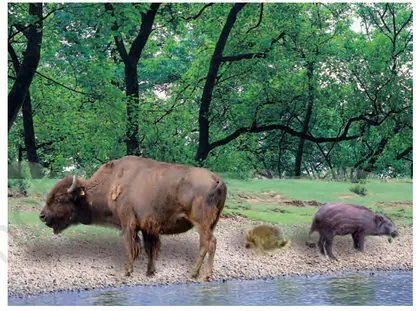
Introduction: This chapter introduces forests as large, complex ecosystems made up of trees, plants, animals, microorganisms and the non-living environment. Forests cover significant parts of Earth and form a lifeline for people, wildlife and the planet's climate. Importance: Forests produce oxygen, store carbon, regulate the water cycle, prevent soil erosion, maintain biodiversity, provide food, timber and medicines, and support the livelihoods and cultures of many communities. Key themes: structure and layers of forests (emergent, canopy, understory, forest floor), types of forests (tropical evergreen, deciduous, thorn, mangrove, mountain), interdependence of plants and animals (food chains and food webs), adaptations of forest plants and animals, effects of deforestation (soil erosion, floods, loss of biodiversity, climate change), and methods of conservation (afforestation, reforestation, protected areas, sustainable use and community involvement). What the student will learn: students will learn to describe forest components and layers, identify common forest types and their features, explain how forests help regulate climate and water, draw simple food chains/webs from…
Learning Objectives
- Define forest, biome, biodiversity and deforestation in simple terms.
- Describe the structural components of a forest (canopy, understory, forest floor) and common plant and animal adaptations.
- Classify major types of forests (tropical evergreen, deciduous, thorny, mangrove, coniferous) with key characteristics and locations in India.
- Identify important forest products (timber and non-timber) and state their uses.
- Illustrate a simple forest food chain and food web and explain the direction of energy flow.
- Explain the role of decomposers in nutrient cycling and soil formation in forests.
- Analyze the main causes of deforestation and assess its environmental consequences (soil erosion, loss of biodiversity, climate effects).
- Compare natural forests and plantations with respect to biodiversity, ecological stability and ecosystem services.
Topics in this chapter
13 topics · tap a topic title to jump straight to it.
Introduction to Forests
What is a Forest?
A forest is a large area covered chiefly with trees and other vegetation, together with the animals, soil, water and micro-organisms that live there. Forests are complex communities where plants, animals and non-living components interact to form a stable ecosystem.
Components of a Forest
- Flora: trees, shrubs, herbs, climbers and grasses.
- Fauna: animals, birds, insects and microorganisms.
- Abiotic: soil, water, sunlight, air and climate.
Types of Forests (basic categories)
- Tropical evergreen (rainforests): dense, multi-layered, receive high rainfall year-round.
- Tropical deciduous (monsoon or moist deciduous): trees shed leaves seasonally.
- Thorn and scrub forests: found in dry regions with sparse vegetation.
- Montane or temperate forests: at higher altitudes; include conifers.
Why Forests are Important
- Produce oxygen through photosynthesis and store carbon, helping regulate the global climate.
- Provide habitat and food for thousands of species — high biodiversity.
- Maintain the water cycle: intercept rainfall, recharge groundwater, and release water vapour by transpiration.
- Protect soil from erosion and landslides by stabilizing soil with roots and leaf cover.
- Supply resources: timber, fuelwood, medicines, fruits, gum, and non-timber forest products.
- Support human livelihoods (tribal communities, forest-dependent populations) and recreational needs.
Basic Processes to Know
Photosynthesis (in leaves) makes food for the plant and releases oxygen: this is the primary source of organic matter and oxygen in forests. Transpiration from leaves adds moisture to the atmosphere and helps form clouds and rainfall. Forests also cycle nutrients: fallen leaves and dead organisms decompose and return minerals to the soil.
Threats and Conservation
Major threats: deforestation (clearing for agriculture, urbanisation, logging), forest fires, habitat fragmentation and invasive species. Conservation measures: protected areas (national parks, wildlife sanctuaries), afforestation and reforestation, sustainable forest management, community forestry and laws to control illegal logging.
Summary
Forests are vital ecosystems that sustain life on Earth by providing oxygen and food, conserving water and soil, supporting biodiversity and regulating climate. Protecting forests is essential for environmental health and human well‑being.
- Amazon Rainforest (South America) — largest tropical rainforest; very high biodiversity and important global carbon sink.
- Sundarbans (India/Bangladesh) — largest mangrove forest in the world; protects the coastline and is home to the Bengal tiger.
- Western Ghats (India) — biodiversity hotspot with many endemic species; important for monsoon rainfall patterns.
- Himalayan forests — range from subtropical to alpine; help regulate river flows that supply water to plains.
- Local example: A community planting native trees on a degraded hillside to prevent soil erosion and restore groundwater.
- Photosynthesis (word and chemical equation): Carbon dioxide + Water + sunlight → Glucose + Oxygen. Chemical: 6CO2 + 6H2O → C6H12O6 + 6O2
- Respiration (organisms use oxygen to release energy): Glucose + Oxygen → Carbon dioxide + Water + Energy. Chemical (simplified): C6H12O6 + 6O2 → 6CO2 + 6H2O + energy
- Percent forest cover: (Area of forest / Total area) × 100
- Rate of change of forest area (deforestation rate per year): (Forest area at start − Forest area at end) / Number of years
- Approximate carbon in biomass: Carbon stock ≈ Biomass × 0.5 (about half of dry biomass is carbon). To convert carbon to CO2 equivalent: CO2 eq = Carbon × (44/12) ≈ Carbon × 3.67
Types of Forests
Forests are large areas dominated by trees and other vegetation. Different types of forests develop depending on climate (mainly rainfall and temperature), altitude, and soil. In India and worldwide the main types are: tropical evergreen, tropical deciduous (moist and dry), thorn and scrub, montane (temperate and coniferous), and littoral & swamp (mangroves). Each type has distinct rainfall patterns, dominant tree species, animal life and human uses.
Tropical evergreen forests (Rainforests)
Climate: Very high rainfall (>200 cm/year), high temperature all year, no distinct dry season. Vegetation: Dense, multi-layered canopy, many tall evergreen trees, climbers and epiphytes. Animals: Rich biodiversity (primates, birds, reptiles, insects). Uses: Timber, medicinal plants, regulate climate and rainfall.
Tropical deciduous forests (Monsoon forests)
Climate: Moderate to high rainfall (100–200 cm/year) with a pronounced dry season. Vegetation: Trees shed leaves in dry season. Subtypes: moist deciduous (more rainfall) and dry deciduous (less rainfall). Common trees: Teak, Sal, Neem, Pipal. Uses: Timber, fuelwood, agriculture on cleared land.
Thorn and scrub forests
Climate: Low rainfall (<50–70 cm/year), high temperature, arid or semi-arid. Vegetation: Low trees, thorny bushes, xerophytic (drought-resistant) plants. Examples: Desert fringes, dry plains. Uses: Grazing, fuelwood, withstands desertification.
Montane forests (Hill and mountain forests)
Climate: Temperature falls with altitude; rainfall varies. Vegetation changes with elevation: tropical forests at low hills, temperate broadleaf & mixed forests at mid-elevations, coniferous forests at higher elevations, and alpine vegetation near the tree line. Trees: Oaks, maples, deodar, pine, fir. Uses: Water catchment, timber, hill agriculture and tourism.
Littoral and swamp forests (Mangroves and tidal forests)
Climate/Location: Coastal tidal areas and river deltas where salt and fresh water mix. Vegetation: Salt-tolerant trees with special roots (prop roots, pneumatophores). Example: Sundarbans (mangrove forest). Uses: Protect coasts from storms and erosion, nursery for fish, biodiversity hotspots.
Why these types matter
Different forest types support different ecosystems, provide varied resources (timber, medicine, fodder), regulate water and climate, and protect soil. Human activities like deforestation, overgrazing and conversion to agriculture threaten all types. Conservation strategies include protected areas, sustainable harvesting, afforestation and community management.
- Tropical evergreen forest — Western Ghats and Andaman & Nicobar Islands: species include rosewood, ebony, banyan; animals include lion-tailed macaque, hornbills.
- Tropical moist deciduous forest — Central India (e.g., Kanha, Bandhavgarh): trees like sal and teak; home to tigers, deer and many birds.
- Tropical dry deciduous forest — Parts of Odisha, Chhattisgarh and Maharashtra: teak, acacia and shrubs adapted to longer dry season.
- Thorn and scrub forest — Rajasthan and parts of Gujarat: drought-resistant species like khejri, cactus; used for grazing.
- Montane (temperate & coniferous) forests — Himalayan foothills: oaks, chestnut, pine, deodar; animals include Himalayan black bear and snow leopard at higher altitudes.
- Mangrove (littoral) forest — Sundarbans: mangrove species like Sundari; protects coastlines and supports fisheries.
- Percentage of forest cover = (Forest area / Total land area) × 100
- Tree density = Number of trees in sample area / Area of sample (trees per hectare)
- Rate of deforestation (%) per year = (Area lost during period / Initial forest area) × (100 / Number of years)
- Canopy cover (%) = (Area under tree canopies / Total ground area surveyed) × 100
Vegetation Structure and Plant Types
What is vegetation structure? Vegetation structure describes how plants are arranged in a habitat both vertically (layers from ground to sky) and horizontally (distribution and density across the area). In forests the vertical structure is very important for light capture, microclimate and habitat diversity.
Vertical layers of a forest
- Emergent layer: Tall trees rising above the main canopy; exposed to sunlight and wind (e.g., some tall tropical trees).
- Canopy (upper story): Dense layer of mature tree crowns that intercept most sunlight (e.g., sal, teak, mango in Indian forests).
- Understory (lower story): Smaller trees and young palms that grow beneath the canopy receiving filtered light.
- Shrub layer: Woody shrubs and bushes that grow under the understory.
- Herb/ground layer (forest floor): Herbs, grasses, flowering plants, seedlings, fungi and leaf litter; important for nutrient recycling and seedling establishment.
Horizontal structure describes how plant species are distributed across an area — continuous, patchy, clustered or random — and includes species composition, density and cover.
Main plant types (forms) with features)
- Trees: Tall, single woody stem (trunk), long-lived (e.g., teak, sal, banyan). Provide canopy, timber, habitat.
- Shrubs: Multiple woody stems, shorter than trees (e.g., rose, lantana).
- Herbs: Soft-stemmed, usually short-lived (annuals or perennials) (e.g., spinach, coriander, many forest herbs).
- Grasses: Narrow leaves, fibrous roots, important for soil binding and fodder (e.g., elephant grass, buffalo grass).
- Climbers: Use other plants for support to reach light (e.g., grapevine, betel vine).
- Creepers: Grow along the ground (e.g., pumpkin vine).
- Epiphytes: Grow on other plants but do not harm them; get moisture from air (e.g., orchids, some ferns, banyan seedlings on trees).
- Parasites: Depend on host plants for food (e.g., Cuscuta—dodder).
- Xerophytes: Adapted to dry conditions with features like thick cuticle, reduced leaves, deep roots (e.g., cactus, some acacias).
- Hydrophytes: Aquatic plants adapted to water, often with air spaces and flexible stems (e.g., lotus, water hyacinth).
- Mesophytes: Plants of moderate moisture; most common agricultural and forest species (e.g., many temperate trees and crops).
Adaptations and ecological roles
- Leaf and root modifications suit plants to their environment: thick cuticle and spines in xerophytes; large air spaces (aerenchyma) in hydrophytes.
- Vegetation prevents soil erosion, stores carbon, provides oxygen, food, fuel, shelter and maintains biodiversity.
How ecologists describe vegetation — common measurements: density (how many individuals per area), frequency (how often a species appears in sample plots), and percent cover (what fraction of ground area a species covers). Sampling methods such as quadrats are used to estimate these.
Tip for students: When you visit a forest or school garden, try to identify layers (canopy vs understory), spot examples of climbers and epiphytes on trees, and notice how ground cover and grasses protect soil.
- Sal and teak form the canopy in many Indian deciduous forests; they are tall trees that provide timber and shade.
- Banyan (Ficus benghalensis) is a tree with aerial roots; many orchids growing on its branches act as epiphytes.
- Cactus is a xerophyte adapted to dry conditions — thick stems, reduced leaves and deep roots.
- Lotus and water hyacinth are hydrophytes that live in ponds and show adaptations like air-filled tissues.
- Climbers such as betel vine use trees for support to reach sunlight without investing in a thick trunk.
- Grasses like vetiver (khus) bind soil and prevent erosion on slopes and riverbanks.
- Density = Number of individuals of a species / Area sampled (e.g., plants per m²)
- Frequency (%) = (Number of sampling units where species occurs / Total number of sampling units) × 100
- Percentage cover = (Area covered by species / Total surveyed area) × 100
- Relative density (%) = (Density of species / Total density of all species) × 100
- Basal area of a tree (cross-sectional area at breast height) = π × (DBH²) / 4, where DBH = diameter at breast height (commonly measured at 1.3 m above ground)
Animals of the Forest
Overview
Forests are complex ecosystems that host a wide variety of animals — mammals, birds, reptiles, amphibians, insects and others. These animals are adapted to live in different parts of the forest and interact with plants and other organisms through feeding relationships, competition and cooperation. Together they maintain ecological balance and help processes such as pollination, seed dispersal and decomposition.
Forest Layers and Typical Animals
- Emergent layer / Canopy: Tall trees form the roof of the forest. Animals: birds (e.g., hornbills, eagles), some monkeys, butterflies, many insects and arboreal mammals. These animals are often good climbers or flyers.
- Understory / Sub-canopy: Smaller trees and shrubs. Animals: monkeys, leopards, tree squirrels, certain birds and reptiles that move between branches and trunks.
- Forest floor: Dark, moist area with leaf litter. Animals: deer, wild boar, tigers, elephants (in some forests), rodents, ground birds, insects and many decomposers like earthworms and fungi.
- Rivers, ponds and wetlands inside forests: Semi-aquatic animals: frogs, crocodiles (where present), fish and many insect larvae.
Adaptations of Forest Animals
- Camouflage: Color patterns help animals hide (e.g., deer, chital, some frogs).
- Climbing and gliding: Strong limbs, prehensile tails, or membranes for gliding (e.g., monkeys, squirrels, flying lizards).
- Nocturnal habits: Active at night to avoid predators and daytime heat (e.g., owls, many small mammals and insects).
- Feeding specializations: Long beaks or tongues for nectar (some birds, bats), sharp teeth and claws for predators (tigers, leopards).
- Behavioral adaptations: Hoarding food (squirrels), migration (some birds), hibernation or aestivation in seasonal forests.
Feeding Relationships: Food Chains and Food Webs
Animals form food chains that start with producers (green plants) and move through herbivores (primary consumers) to carnivores (secondary and tertiary consumers). In a real forest, many interconnected chains form a food web. Decomposers such as fungi and bacteria break down dead matter and return nutrients to the soil.
Roles and Importance
- Herbivores (deer, rabbits) control plant growth and spread seeds.
- Predators (tigers, eagles) control herbivore populations and maintain balance.
- Pollinators (bees, butterflies, some birds and bats) help plant reproduction.
- Decomposers recycle nutrients and keep the soil fertile.
Threats and Conservation
Deforestation, poaching, habitat fragmentation and pollution threaten forest animals. Conservation measures include protected areas (national parks), wildlife corridors, reforestation, anti-poaching laws and community-based conservation. Conserving entire habitats is key because many forest animals depend on specific forest layers and connected territories.
Takeaway
Animals of the forest show a wide range of adaptations and form intricate feeding and survival relationships. Protecting forests protects these animals and the ecological services they provide to humans and the planet.
- Tiger (predator) — hunts herbivores like deer; needs large territories and dense cover for stalking.
- Indian elephant (herbivore) — feeds on leaves and bark, disperses seeds and creates clearings that help other species.
- Hornbill (bird) — eats fruits and disperses seeds high in the canopy; some species nest in tree cavities.
- Flying squirrel (arboreal mammal) — glides between trees; active at night (nocturnal).
- Earthworms and fungi (decomposers) — break down fallen leaves and dead animals, returning nutrients to soil.
- Monkeys — forage in canopy and understory, often disperse seeds and pollinate flowers while moving.
- Population density = Number of individuals / Area occupied (e.g., animals per km²)
- Approximate energy transfer between trophic levels: Energy_n ≈ 0.10 × Energy_(n-1) (the ~10% rule)
- Net Primary Productivity (NPP) = Gross Primary Productivity (GPP) − Respiration (shows plant biomass available to consumers)
Forest as an Ecosystem
What is a Forest Ecosystem?
A forest ecosystem is a community of living organisms (plants, animals, microorganisms) interacting with each other and with the non-living components (soil, water, air, sunlight) in a forest area. These interactions form a system in which energy flows and nutrients cycle, maintaining ecological balance.
Components
- Biotic components: Producers (trees, shrubs, grasses), consumers (herbivores, carnivores, omnivores), and decomposers (bacteria, fungi, detritivores).
- Abiotic components: Sunlight, temperature, rainfall, soil type, water, minerals, and air.
Producers, Consumers and Decomposers
Producers make food by photosynthesis and supply energy to the rest of the ecosystem. Consumers obtain energy by eating other organisms: primary consumers (herbivores), secondary consumers (carnivores that eat herbivores), and tertiary consumers (top predators). Decomposers break down dead organic matter and return nutrients to the soil.
Food Chains and Food Webs
A food chain shows a single pathway of energy flow (for example: grass → deer → tiger). In a real forest, many food chains connect to form a food web, showing interdependence among species.
Energy Flow and Trophic Levels
Energy flows from the sun to producers and then through trophic levels. Only a fraction of energy passes to the next level (see formulas). As energy moves up, less is available, which limits the number of trophic levels. Pyramids of energy, biomass, and numbers illustrate this pattern.
Nutrient Cycling
Elements like carbon, nitrogen, oxygen and water cycle through the forest ecosystem. Photosynthesis, respiration, decomposition and fixation maintain these cycles so plants can grow and consumers can be supported.
Interdependence and Balance
Species depend on one another. For example, some trees depend on animals for seed dispersal; predators control herbivore populations to prevent overgrazing. Disturbance or removal of species can upset balance and reduce ecosystem services like clean air, water regulation and soil fertility.
Human Impact and Conservation
Deforestation, pollution, unsustainable grazing and poaching damage forest ecosystems. Conservation measures include protecting forests, sustainable harvesting, reforestation, and creating protected areas.
Key Points
- Forests are complex ecosystems with energy flow and nutrient cycling.
- Producers, consumers and decomposers are essential for ecosystem functioning.
- Food webs and ecological pyramids help visualize relationships and energy loss.
- Human activities can harm forests; conservation maintains ecosystem services.
- Tropical rainforest like the Amazon: very high biodiversity, multiple canopy layers, many interlinked food webs.
- Sundarbans mangrove forest: trees adapted to saline water, supports unique species like the Bengal tiger and many fish adapted to tidal conditions.
- Temperate deciduous forest: trees shed leaves seasonally; clear seasonal cycles affect producers and consumers.
- Pine forests in higher altitudes: needle leaves reduce water loss; fungi and insects play important decomposer roles.
- Photosynthesis: 6CO2 + 6H2O → C6H12O6 + 6O2
- Cellular respiration (simplified): C6H12O6 + 6O2 → 6CO2 + 6H2O + energy
- Net Primary Productivity: NPP = GPP - R (where GPP is Gross Primary Productivity and R is plant respiration)
- Approximate energy transfer between trophic levels (10% rule): E(n) ≈ 0.10 × E(n-1). Example: if producers get 10,000 J, primary consumers get ≈1,000 J, secondary consumers ≈100 J
Food Chains and Food Webs
Food chain — A food chain is a simple, linear sequence that shows how energy and nutrients flow from one organism to another in an ecosystem. Each step in a food chain is called a trophic level. A typical forest food chain: plants (producers) → herbivores (primary consumers) → carnivores (secondary/tertiary consumers) → decomposers.
Components:
- Producers: Green plants and algae that make food by photosynthesis (e.g., trees, grasses).
- Consumers: Animals that eat other organisms. Primary consumers eat producers (herbivores), secondary consumers eat herbivores (carnivores), and so on. Omnivores eat both plants and animals.
- Decomposers: Bacteria and fungi that break down dead organisms and return nutrients to the soil.
Energy flow and trophic levels: Energy enters the chain when producers capture sunlight. Energy moves from one trophic level to the next but decreases at each step because organisms use much of the energy for life processes and lose energy as heat. This makes higher trophic levels support fewer organisms.
Food web — A food web is a network of many interconnected food chains in an ecosystem. It shows how most organisms eat several kinds of food and are eaten by several predators. Food webs give a more realistic picture of feeding relationships and stability in forests.
Importance: Food chains and food webs explain interdependence among organisms, nutrient recycling by decomposers, how population sizes affect others, and why removal or decline of one species (for example, trees or top predators) can affect the whole ecosystem.
Human impacts: Deforestation, hunting, pollution and introduction of invasive species disrupt food chains/webs. Protecting producers and decomposers and maintaining species diversity keeps food webs stable.
- Simple forest chain: Leaves (producers) → Caterpillar (primary consumer) → Bird (secondary consumer) → Hawk (tertiary consumer) → Fungi/Bacteria (decomposers).
- Grassland/forest edge: Grass → Grasshopper → Frog → Snake → Eagle. Decomposers recycle dead matter back to soil.
- Food web (forest): Trees feed insects and deer; insects feed birds and bats; deer feed tigers; many dead plants and animals are decomposed by fungi and bacteria — all links form a web rather than a single chain.
- Human example: Fruits/vegetables (producers) → Human (omnivore). Humans also act as predators and can alter food webs by agriculture, hunting and introducing new species.
- Net Primary Productivity (NPP) = Gross Primary Productivity (GPP) − Respiration (R).
- Ecological efficiency (%) = (Energy at higher trophic level / Energy at lower trophic level) × 100.
- \[Approximate energy transfer (10% rule): E_{n+1} ≈ 0.10 × E_n (energy available to the next trophic level ≈ 10% of the previous level).\]
- Energy at trophic level n: E_n = E_0 × (efficiency)^n (where efficiency ≈ 0.10 as a rough estimate).
Interdependence and Balance in Nature
Interdependence means that all living organisms (plants, animals, microorganisms) and non‑living components (soil, water, air, sunlight) depend on one another for survival. Plants produce food and oxygen, herbivores eat plants, carnivores eat herbivores, and decomposers break down dead matter to return nutrients to the soil. These relationships form food chains and interconnected food webs.
Balance in nature (ecological balance) is the dynamic equilibrium in ecosystems where populations, resources and environmental conditions remain relatively stable through feedbacks and natural checks (predation, competition, disease, resource limits). Balance allows ecosystems to sustain life and recover from small disturbances.
How interdependence maintains balance:
- Producers (green plants) convert solar energy into food by photosynthesis, supplying energy to all other levels.
- Consumers (herbivores, carnivores, omnivores) transfer energy and control population sizes of other species.
- Decomposers (bacteria, fungi) recycle nutrients back into the soil for plant growth.
- Abiotic factors (water, sunlight, soil minerals) interact with biotic components to regulate growth and survival.
Natural checks and feedbacks such as predator‑prey relationships, competition for resources, and disease prevent any one species from becoming too numerous. When one part of the system is disturbed (for example, removal of a predator or large‑scale deforestation), it can cause a chain reaction—called a trophic cascade—that changes the structure and function of the whole ecosystem.
Human impacts: Activities like deforestation, pollution, overfishing, introduction of invasive species and climate change can break interdependent links, reduce biodiversity and push ecosystems out of balance. Conservation, sustainable use and restoration help reestablish interdependence and ecological balance.
Key ideas for students:
- Food chains and food webs show who eats whom and how energy flows.
- Trophic levels (producers → primary consumers → secondary consumers → tertiary consumers → decomposers) are connected; change at one level affects others.
- Decomposers are essential for nutrient recycling.
- Maintaining forests and biodiversity preserves the interdependent links that keep nature in balance.
- Pollination: Bees collect nectar from flowers (food) and transfer pollen, helping plants reproduce. Loss of bees reduces fruit and seed production.
- Seed dispersal: Fruit‑eating birds and mammals carry seeds to new places; without them many plants cannot spread.
- Predator‑prey balance: Tigers control deer populations; if tigers decline, deer may overgraze and damage forests.
- Decomposers recycling nutrients: Fungi and bacteria break down dead leaves and animals, returning minerals to soil for plants.
- Trophic cascade (Yellowstone example): Reintroduction of wolves reduced elk numbers, allowing vegetation to recover and improving riverbanks and bird habitats.
- Deforestation effect: Removing trees leads to soil erosion, reduced rainfall infiltration, loss of habitat and declines in local climate stability.
- Photosynthesis (chemical equation): 6 CO2 + 6 H2O + light energy → C6H12O6 + 6 O2
- Cellular respiration (chemical equation): C6H12O6 + 6 O2 → 6 CO2 + 6 H2O + energy (ATP)
- 10% energy transfer rule (approximate): Energy at trophic level (n+1) ≈ 0.1 × Energy at trophic level n
- Energy flow (general): Energy_in_producers = Solar_energy_captured × Efficiency_of_photosynthesis
Role of Forests in Environment
Role of Forests in the Environment
What are forests? Forests are large areas dominated by trees and other plants that form complex ecosystems. They are vital components of the Earth’s biosphere and provide many services that sustain life.
Major environmental roles
- Oxygen production and carbon dioxide removal: Through photosynthesis, trees take in carbon dioxide (CO2) and release oxygen (O2). Forests act as carbon sinks that reduce greenhouse gases in the atmosphere and help slow climate change.
- Climate and temperature regulation: Forests influence local and global climate by controlling temperature (shade and evapotranspiration) and by affecting rainfall patterns through moisture recycling.
- Water cycle and watershed protection: Forests intercept rain, increase water infiltration into soil, reduce surface runoff, maintain base flow in rivers and recharge groundwater. They moderate floods and droughts.
- Soil conservation: Tree roots bind soil, leaf litter forms humus and protects soil from erosion, and forest cover reduces landslides and nutrient loss from topsoil.
- Biodiversity and habitat: Forests provide homes for a huge variety of plants, animals, fungi and microorganisms. They maintain ecological balance and genetic diversity.
- Resources and livelihoods: Forests supply food, fuelwood, timber, fibers, resins, and medicinal plants. Many communities depend on forests for their daily needs and cultural practices.
- Pollution control: Forests filter air pollutants and trap particulate matter; wetlands and riparian forests filter water pollutants.
Threats to these roles
- Deforestation for agriculture, urbanisation, logging and infrastructure
- Forest fires, invasive species, and climate-change-driven stresses
- Fragmentation that isolates wildlife and reduces ecosystem resilience
Conservation and sustainable use
Protecting forests, practising sustainable forestry, reforestation and afforestation, community-based forest management, protected areas, and reducing demand for forest products help maintain the environmental roles of forests.
Link to Class 7 ideas: Students should understand forests as lifesupport systems that provide oxygen, clean water and soil protection, and as habitats for wildlife. Simple actions like planting native trees, reducing waste and supporting sustainable wood use help protect forests.
- Sundarbans mangrove forest: reduces cyclone damage and protects coastal villages by acting as a natural buffer.
- Western Ghats forests: help maintain local rainfall patterns and are hotspots of biodiversity with many endemic species.
- Himalayan forest cover: stabilises slopes, reduces landslides and protects river catchments supplying water to plains.
- Urban street trees and parks (e.g., Delhi parks): lower local temperatures (reduce urban heat island effect) and improve air quality.
- Community forestry / Joint Forest Management in India: villages managing nearby forests sustainably for fuelwood and fodder while conserving biodiversity.
- Medicinal plants (neem, tulsi, turmeric): forests are sources of traditional and modern medicines.
- Photosynthesis (net simplified): 6 CO2 + 6 H2O → C6H12O6 + 6 O2 (plants convert CO2 and water into glucose and oxygen using sunlight)
- Respiration (plants and animals): C6H12O6 + 6 O2 → 6 CO2 + 6 H2O + energy
- Water balance (catchment scale): Precipitation = Evapotranspiration + Runoff + Change in Storage
- Net Primary Productivity (NPP): NPP = GPP − R (GPP = Gross Primary Productivity; R = Autotrophic respiration)
- Approximate carbon in biomass: Carbon ≈ Biomass × 0.5 (about half the dry biomass of woody plants is carbon; used to estimate carbon storage)
Forest Products and Economic Importance
Forests provide many useful materials and services that are important for people's daily lives and for the economy. Forest products are goods obtained directly from forests and can be grouped into timber (wood for construction and furniture), fuelwood, and non-timber forest products (NTFPs) such as fruits, nuts, leaves, resins, gums, medicinal plants, bamboo, honey, lac and latex.
Types of forest products
- Timber: Logs and processed wood used in building, furniture, paper and plywood industries.
- Fuelwood and charcoal: Major source of household energy in many rural areas.
- Non-timber forest products (NTFPs): Fruits, nuts, seeds, leaves, medicinal herbs, gums, resins, honey, bamboo, rattan and more — often collected by local communities.
- Medicinal plants: Many plants from forests are used to make traditional and modern medicines.
- Services from forests: Watershed protection, soil conservation, climate regulation (carbon storage), habitat for wildlife and ecotourism—these are ecosystem services that have economic value.
Economic importance
- Livelihoods: Millions of people (forest dwellers, tribal communities, forest workers) depend on harvesting and processing forest products for income and subsistence.
- Raw material for industries: Timber and NTFPs supply paper, furniture, construction, pharmaceutical, perfumery, textile and handicraft industries.
- Foreign exchange and trade: Export of timber, spices, medicinal plants, bamboo products and other forest goods brings foreign exchange to countries.
- Employment generation: Forestry, logging, wood-processing, collection and sale of NTFPs and ecotourism create many jobs.
- Supporting agriculture and fisheries: Forests protect water sources and soils, helping agriculture downstream and maintaining fish habitats.
- Climate regulation and carbon value: Forests absorb CO2; valuing carbon sequestration leads to payment schemes (carbon credits) and climate-related income streams.
- Sustainable use and conservation: When managed sustainably (community forest management, agroforestry, controlled harvesting), forests can provide continuous income while conserving biodiversity.
Important points for students
- Not all forest value is directly sold — many services (water regulation, soil protection) have indirect but vital economic benefits.
- Over-exploitation (illegal logging, unsustainable fuelwood collection) harms long-term economic benefits and can lead to soil erosion, reduced water availability and loss of livelihoods.
- Sustainable alternatives (plantation forestry, fuel-efficient stoves, cultivation of NTFP crops, eco-tourism) help balance use and conservation.
- Bamboo in the North-East of India: used for housing, furniture, crafts and sold as a valuable local industry.
- Honey and wax collection by forest communities: small-scale apiculture provides cash income and food.
- Teak and sandalwood plantations: timber and fragrant wood used in furniture and carved goods, sold domestically and exported.
- Medicinal plants like ashwagandha or amla collected from wild or cultivated for traditional medicine and for sale to pharmaceutical companies.
- Lac production from lac insects on trees: processed into shellac and used in varnishes and polish industries.
- Revenue = Price × Quantity (useful for calculating income from selling a forest product)
- Profit = Revenue − Cost (to find net earning from collection or processing)
- Percentage forest cover = (Forest area / Total area) × 100
- Total biomass = Area × Biomass density (for example, tonnes per hectare × hectares = tonnes biomass)
- Carbon in biomass ≈ 0.5 × Biomass (tonnes of carbon ≈ 50% of dry biomass); CO2 equivalent ≈ Carbon × 44/12 ≈ Carbon × 3.667
Biodiversity and Endangered Species
What is biodiversity? Biodiversity (biological diversity) means the variety of all living things — plants, animals, fungi and microorganisms — and the ecosystems they form. It includes diversity within species, between species and of ecosystems.
Why is biodiversity important?
- Provides food, medicines, fuel and raw materials.
- Makes ecosystems stable and resilient (pollination, nutrient cycling, soil formation).
- Maintains balance in food chains and supports human well‑being.
What are endangered species? Endangered species are plants or animals whose population has fallen so low that they are at risk of becoming extinct if no protective measures are taken. Categories include vulnerable, endangered and critically endangered.
Major causes of species becoming endangered
- Habitat loss and fragmentation (deforestation, conversion of forests to farms or cities).
- Overexploitation (hunting, poaching, overfishing).
- Pollution (water, soil and air contamination).
- Invasive alien species that outcompete native ones.
- Climate change altering habitats and food supply.
Consequences of losing biodiversity
- Disruption of food chains and ecosystem services (e.g., fewer pollinators → lower crop yields).
- Loss of potential medicines and genetic resources.
- Reduced ecosystem resilience to disasters and diseases.
How to protect biodiversity and endangered species
- Protected areas: national parks, wildlife sanctuaries and biosphere reserves conserve habitats.
- Legal protection: laws and international agreements (e.g., Wildlife Protection Act, CITES) regulate hunting and trade.
- Habitat restoration and reforestation to reconnect fragments.
- Captive breeding and reintroduction for very rare species.
- Sustainable use: community forestry, regulated fishing and agriculture.
- Awareness and community involvement: local people acting as stewards.
Role of students and communities — Reduce, reuse and recycle; avoid buying products made from endangered species; plant native trees; support conservation organizations; learn and spread awareness.
Note: Scientific monitoring of species (surveys, population counts) helps identify endangered species early so conservation measures can begin.
- Bengal tiger (Panthera tigris tigris) — threatened by poaching and habitat loss; protected in India through reserves such as Jim Corbett and Project Tiger.
- Asian elephant (Elephas maximus) — faces habitat fragmentation and human–elephant conflict; corridors and protected areas help conserve populations.
- One‑horned rhinoceros (Rhinoceros unicornis) — numbers increased in India and Nepal because of strict protection and anti‑poaching measures (e.g., Kaziranga National Park).
- Olive ridley sea turtle — endangered due to egg collection, bycatch in fishing nets and coastal development; community protection programs and turtle excluder devices reduce mortality.
- Indian pangolin — poached for scales and meat; habitat protection and stricter law enforcement are required.
- Sandalwood (Santalum album) — overharvesting for timber and oil has made it scarce; regulated harvesting and cultivation reduce pressure.
- Species richness (simple count): S = total number of different species observed in an area.
- Percentage change in population: % change = ((Initial − Final) / Initial) × 100. Use this to measure decline over time.
- Relative abundance (proportion of species i): p_i = n_i / N, where n_i = number of individuals of species i and N = total individuals of all species.
- Advanced biodiversity index (optional): Shannon index H = −Σ (p_i × ln p_i). Higher H means greater diversity (introduced here for advanced interest).
Threats to Forests
Threats to Forests
Forests are threatened by a range of human activities and natural events that reduce forest cover, fragment habitats and damage ecosystem functions. The main threats are direct removal or degradation of trees, conversion of forest land for other uses, disturbances (fires, storms), biological invasions and long‑term changes such as climate change. These threats reduce biodiversity, disrupt water and nutrient cycles, increase soil erosion and weaken forests’ ability to store carbon.
Major threats — short explanations
- Deforestation (clearing for agriculture and cattle): Large areas are cut and converted to farms, plantations (e.g., oil palm, soy) or pasture. This removes habitat and fragments populations.
- Logging (legal and illegal): Selective or clear‑cut logging removes canopy trees, opens the forest to further damage, and degrades habitat quality.
- Urbanization and infrastructure: Roads, towns, mines and dams lead to permanent loss of forest and create edges that isolate wildlife.
- Fires: Wildfires or human‑set fires (sometimes used to clear land) can destroy large areas; peatland fires release large amounts of smoke and carbon.
- Shifting cultivation & overgrazing: When fallow periods are shortened or grazing pressure is high, forest cannot regenerate and is converted to degraded land.
- Invasive species and pests: Non‑native plants, insects or diseases can outcompete native species or kill trees (example: invasive vines, bark beetles).
- Pollution: Air pollution (acid rain), chemical runoff and mining wastes weaken trees and soil health.
- Climate change: Alters rainfall patterns and increases droughts, pest outbreaks and fire risk, stressing forest ecosystems over time.
- Habitat fragmentation: Breaking continuous forest into small patches isolates populations, reduces genetic diversity and increases edge effects (drier, hotter edges).
Consequences
- Loss of biodiversity — species decline and extinctions when habitat disappears.
- Soil erosion, landslides and reduced water quality and groundwater recharge.
- Disruption of local and global climate — reduced evapotranspiration affects rainfall; forests store carbon, so loss increases atmospheric CO2.
- Impaired livelihoods — indigenous and local communities lose resources (fuel, food, medicine) and ecosystem services.
How threats are measured and monitored
- Satellite imagery and forest area statistics (yearly change in forest cover).
- Field surveys for species, biomass and soil quality.
- Remote sensing for fires, fragmentation and hotspots of change.
Prevention & mitigation (brief)
- Protected areas, sustainable forest management, reduced‑impact logging and enforcement against illegal cutting.
- Afforestation/reforestation, agroforestry and restoring degraded lands.
- Community‑based management and alternative livelihoods to reduce pressure.
- Fire management, control of invasive species, and climate mitigation to reduce long‑term risk.
Understanding and acting on these threats helps protect forests as habitats, sources of livelihood and regulators of climate and water.
- Amazon Basin: Large‑scale clearing for cattle ranching and soya cultivation has driven habitat loss, threatened indigenous peoples and reduced biodiversity.
- Borneo and Sumatra (Indonesia): Tropical forests cleared for palm oil plantations and peatland drained and burned, causing massive greenhouse gas emissions and smoke pollution.
- Australia (2019–2020 bushfires): Very large wildfires destroyed millions of hectares of forest, killing wildlife and damaging ecosystems.
- Uttarakhand, India (2013 floods and landslides): Hill‑side development and deforestation increased soil erosion and amplified flood impacts.
- Sundarbans mangroves: Conversion to aquaculture, human pressure and sea‑level rise have reduced mangrove area and weakened coastal protection.
- Local pressures: Illegal logging, firewood collection and shortening of fallow periods in shifting cultivation lead to gradual forest degradation in many regions.
- Deforestation rate (area per year) = (Area_lost) / (Number_of_years). Example: if 1000 ha lost in 5 years → 1000/5 = 200 ha/year.
- Percentage loss = (Area_lost / Original_area) × 100. Example: 200 ha lost from 2000 ha → (200/2000)×100 = 10%.
- Annual change in forest area (%) = [(Area_year2 - Area_year1) / Area_year1] × 100 / (year2 - year1).
- Rough biomass → carbon conversion: Carbon ≈ Biomass × 0.5 (about half of dry biomass is carbon).
- Carbon → CO2 equivalent: CO2_eq = Carbon × (44/12) (molecular weight ratio to convert C to CO2).
Conservation and Management of Forests
Forests are large areas covered with trees and other plants and are home to many animals. They provide oxygen, maintain soil and water cycles, store carbon, and supply wood, fruits, medicines and livelihoods. Conservation and management of forests means protecting them from damage and using them in ways that meet our needs without destroying them for future generations.
Why forests must be conserved
- Protect biodiversity: Forests are habitats for many plants and animals.
- Prevent soil erosion and floods: Tree roots hold soil and reduce runoff.
- Maintain water cycle: Forests help in cloud formation and steady river flow.
- Climate regulation: Trees absorb carbon dioxide and release oxygen.
- Provide resources: fuel, timber, fodder, medicines and non-timber forest products.
Main threats to forests
- Deforestation for agriculture, roads, towns and mining.
- Illegal and excessive logging.
- Forest fires and overgrazing.
- Introduction of non-native species and diseases.
Methods of conservation
- Protected areas: Establishing national parks, wildlife sanctuaries and biosphere reserves to preserve ecosystems.
- Afforestation and reforestation: Planting trees on land that had few or no trees (afforestation) or replanting trees in deforested areas (reforestation).
- Sustainable harvesting: Cutting trees in a planned way so forest can regrow (selective felling rather than clear-cutting).
- Social forestry and community participation: Involving local people in protecting and managing nearby forests (e.g., Joint Forest Management).
- Controlled grazing and fire management: Limiting grazing areas and preventing/controlling forest fires.
- Legal protection and policies: Laws, rules and awareness campaigns to reduce illegal felling and promote conservation.
Forest management practices (simple methods)
- Plant native species so ecosystems remain balanced and wildlife have suitable habitat.
- Contour planting and buffer strips to prevent soil erosion near rivers and hills.
- Coppicing and pollarding: Traditional techniques where trees are cut so they regrow from stumps, providing sustainable wood.
- Creating wildlife corridors to connect fragmented forest patches so animals can move safely.
How students and communities can help
- Participate in tree planting drives like Van Mahotsav and school-based sapling care programs.
- Reduce, reuse and recycle paper; use alternatives to forest products when possible.
- Support and follow rules in protected areas and avoid buying products made from illegally cut wood.
- Spread awareness about conservation and report forest fires or illegal activities to authorities.
Summary
Conservation and management of forests balance human needs with nature’s ability to renew itself. By protecting existing forests, replanting trees, using resources carefully and involving communities, we secure forests for present and future generations.
- Chipko Movement (1973 onwards): Villagers, especially women in Uttarakhand, hugged trees to prevent them from being cut, raising national awareness about forest conservation.
- Silent Valley Movement (1970s): A successful campaign in Kerala stopped a hydroelectric project that would have destroyed a rich tropical evergreen forest.
- Joint Forest Management (JFM) in India: Local communities and forest departments work together to protect and manage forests, sharing benefits like fuelwood and minor forest products.
- Van Mahotsav (Tree Festival): An annual tree-planting drive in India promoting afforestation and public participation.
- Urban afforestation and school sapling programs: Planting and caring for trees in cities and around schools to improve green cover and teach conservation.
- Forest cover percentage = (Forest area / Total geographical area) × 100 — shows what fraction of land is forested.
- Rate of deforestation (per year) = (Forest area at start year − Forest area at end year) / Number of years — gives average annual loss of forest area.
- Net annual forest change = Area afforested or reforested − Area deforested — positive value means net gain in forest area.
- Simple carbon estimate: Carbon stored ≈ Biomass × 0.5 — roughly half of dry biomass is carbon (useful for basic understanding of carbon storage by trees).
Steps Individuals Can Take
Individuals play a vital role in protecting forests. Small, regular actions at home, school and in the community help reduce pressure on forests, conserve biodiversity and maintain the services forests provide (clean air, water regulation, soil protection). Below are practical steps you can take, with short reasons and how to do them.
- Plant and care for native trees: Plant species that naturally occur in your area. Young trees need watering, protection from grazing and occasional weeding until they establish. Native trees support local wildlife better than exotic species.
- Protect seedlings and existing trees: Avoid cutting saplings, and if you see illegal felling or harmful activities, inform local forest authorities or community groups. Put protective guards around street and school saplings.
- Reduce, reuse and recycle (especially paper): Using both sides of paper, reusing notebooks and recycling paper reduces demand for timber. Encourage digital homework submission where possible.
- Use alternatives to forest wood for fuel and construction: Use LPG, biogas, briquettes, or improved cookstoves that consume less wood. Choose sustainable timber products (FSC-certified) and avoid products linked to deforestation.
- Practice water conservation and rainwater harvesting: Collect rooftop rainwater in tanks or recharge pits. Conserving water reduces pressure to divert forested catchments and helps seedlings survive dry seasons.
- Compost kitchen and garden waste: Composting reduces organic waste sent to landfills and produces soil nutrients for home gardens, reducing the need for forest-clearance agriculture.
- Grow kitchen gardens and practice agroforestry: Plant fruit trees, shrubs and vegetables at home. Agroforestry (mixing trees with crops) provides food, shade and income while conserving soil and biodiversity.
- Prevent forest fires: Do not light fires near forest edges, properly extinguish campfires, and avoid burning trash. Report fires early to minimise damage.
- Educate and involve others: Teach friends and family about forest-friendly choices, organise school tree-planting drives, and participate in local conservation groups.
- Support sustainable products and policies: Buy recycled paper and sustainably-sourced wood products. Support community forest management and government afforestation programs.
How to measure your impact (simple methods): Keep small records: number of trees planted and surviving after 1 year, amount of rainwater collected (litres), number of paper sheets saved per month by double-sided use, or amount of kitchen waste composted. These numbers let you estimate benefits using simple formulas (see below).
Safety and local rules: Always plant native species and check with local authorities before planting in public or protected areas. Follow safety rules when handling tools, and never attempt to fight large forest fires yourself—call local emergency services.
- Tree planting with a simple calculation: If you assume an average young-to-maturing tree absorbs about 20 kg CO2 per year (approximate figure, varies by species and age), then planting 5 trees could remove about 5 × 20 = 100 kg CO2 per year once trees mature. Keep track of how many survive after one year.
- Rainwater harvesting: A house with a 50 m² roof in an area with 800 mm annual rainfall can collect roughly 50 × 0.8 = 40 m³ = 40,000 litres of rain in a year (before losses). If runoff efficiency is 0.8, useful collected water ≈ 40,000 × 0.8 = 32,000 litres—useful for watering trees in dry months.
- Paper saving: If a student uses both sides of paper, paper consumption can be halved. For example, if a student uses 200 sheets/month single-sided, switching to double-sided reduces this to ~100 sheets/month—saving 100 sheets monthly.
- Composting benefit: A family that composts 10 kg of kitchen waste per week converts organic waste into nutrient-rich compost for gardens, reducing garbage and cutting need for chemical fertilisers.
- Switching fuel: Replacing an open wood fire with an improved cookstove or LPG can reduce household wood consumption by 50% or more, decreasing pressure on local forests for fuelwood (actual savings depend on device and fuel patterns).
- CO2_absorbed_per_year (kg) = number_of_trees × average_CO2_absorption_per_tree_per_year (kg/tree/year). Example: 5 trees × 20 kg/tree/year = 100 kg CO2/year (approx.).
- Rainwater_harvest_volume (m³) = roof_area (m²) × annual_rainfall_depth (m) × runoff_coefficient (0–1). Example: 50 m² × 0.8 m × 0.8 = 32 m³ = 32,000 L.
- Percent_green_cover (%) = (green_area_covered_by_trees_and_plants (m²) / total_area (m²)) × 100.
- Waste_reduction (%) = ((initial_waste - final_waste) / initial_waste) × 100. Example: If initial household organic waste = 20 kg/week and composted = 12 kg/week, final_waste = 8 kg/week, reduction = ((20-8)/20)×100 = 60%.
- Paper_saved_per_month (sheets) = sheets_used_single_sided - sheets_used_double_sided (typically ≈ half when switching to double-sided).
Key Concepts
- Forest
- A large area dominated by trees and other plants that forms a complex community with animals, microorganisms and soil.
- Ecosystem
- A community of living organisms interacting with each other and with their physical environment.
- Biodiversity
- The variety of living organisms (plants, animals, microbes) in an area and their genetic differences.
- Flora
- The plant life of a particular region or habitat.
- Fauna
- The animal life of a particular region or habitat.
- Emergent layer
- The tallest layer of a forest made up of trees that extend above the main canopy.
- Canopy
- The dense layer formed by the crowns of trees that shades the lower layers of a forest.
- Understorey
- The layer of vegetation beneath the canopy consisting of smaller trees and shrubs.
- Forest floor
- The bottom layer of a forest covered with decomposing leaves, twigs and humus.
- Litter
- Dead plant material such as leaves, twigs and bark that fall on the forest floor.
- Decomposer
- Organisms (like fungi and bacteria) that break down dead plants and animals into nutrients.
- Food chain
- A linear sequence showing how each organism gets its food, starting from producers to top consumers.
- Food web
- A network of interconnected food chains showing multiple feeding relationships in an ecosystem.
- Habitat
- The natural environment where a plant or animal lives and obtains its needs.
- Deforestation
- The removal or clearing of forests for agriculture, urbanization or logging.
- Afforestation
- Planting trees on land that has not been recently forested to create a new forest.
- Reforestation
- Replanting trees in areas where forests have been cut down or destroyed.
- Non-timber forest products (NTFPs)
- Forest-derived goods other than timber, used by people for food, medicine and livelihood.
- Soil erosion
- The removal of topsoil by wind, water or human activity, often increased when forests are removed.
- Watershed
- An area of land that drains rainwater and streams into a common outlet, protected and regulated by forests.
End-of-Chapter Trial Paper & Test Questions
Topic-wise questions to test your understanding of every concept in this chapter.
-
Which layer of a forest receives the most sunlight and is home to birds such as hornbills and eagles? / वन की कौन सी परत को सबसे अधिक सूर्यप्रकाश मिलता है और वहाँ हॉर्नबिल और चील जैसे पक्षी रहते हैं? (a) Forest floor / वन तल (b) Shrub layer / झाड़ी परत (c) Emergent / canopy layer / उभरती/वितान परत (d) Understory layer / मध्यवर्ती परत
Show answer
(c) Emergent / canopy layer / उभरती/वितान परत — The emergent or canopy layer rises above all others and receives direct sunlight; it hosts canopy birds and animals. / उभरती या वितान परत सभी परतों से ऊँची होती है और सीधा सूर्यप्रकाश पाती है; इसमें वितान पक्षी और जानवर रहते हैं।
-
In the 10% energy transfer rule for a food chain: if producers capture 10,000 J, how much energy do secondary consumers receive? / खाद्य श्रृंखला के 10% ऊर्जा स्थानांतरण नियम में: यदि उत्पादक 10,000 J ऊर्जा ग्रहण करते हैं, तो द्वितीयक उपभोक्ताओं को कितनी ऊर्जा मिलती है? (a) 1000 J / 1000 J (b) 100 J / 100 J (c) 10 J / 10 J (d) 5000 J / 5000 J
Show answer
(b) 100 J / 100 J — Producers: 10,000 J → Primary consumers: 1,000 J → Secondary consumers: 100 J (each level gets ~10% of the previous). / उत्पादक: 10,000 J → प्राथमिक उपभोक्ता: 1,000 J → द्वितीयक उपभोक्ता: 100 J (प्रत्येक स्तर को पिछले का ~10% मिलता है)।
-
Which of the following is the world's largest mangrove forest? / निम्नलिखित में से कौन सा विश्व का सबसे बड़ा मैंग्रोव वन है? (a) Western Ghats / पश्चिमी घाट (b) Amazon Rainforest / अमेज़न वर्षावन (c) Sundarbans / सुंदरवन (d) Himalayan forests / हिमालयी वन
Show answer
(c) Sundarbans / सुंदरवन — The Sundarbans in India and Bangladesh is the largest mangrove forest in the world; it is home to the Bengal tiger. / भारत और बांग्लादेश का सुंदरवन विश्व का सबसे बड़ा मैंग्रोव वन है; यह बंगाल टाइगर का निवास है।
-
Organisms that break down dead plants and animals and return nutrients to the soil are called ________. / मृत पौधों और जानवरों को तोड़कर पोषक तत्व मिट्टी में लौटाने वाले जीवों को ________ कहते हैं।
Show answer
Decomposers / अपघटक — Decomposers such as bacteria and fungi break down dead organic matter and recycle nutrients, maintaining soil fertility. / बैक्टीरिया और कवक जैसे अपघटक मृत कार्बनिक पदार्थ को तोड़ते हैं और पोषक तत्वों का पुनर्चक्रण करते हैं, जिससे मिट्टी की उर्वरता बनी रहती है।
-
The chemical equation for photosynthesis in forest trees is: 6CO₂ + 6H₂O + sunlight → ________ + 6O₂. / वन वृक्षों में प्रकाशसंश्लेषण का रासायनिक समीकरण है: 6CO₂ + 6H₂O + सूर्यप्रकाश → ________ + 6O₂।
Show answer
C₆H₁₂O₆ (Glucose / ग्लूकोज) — Photosynthesis converts carbon dioxide and water into glucose and oxygen using sunlight; forests are major sources of oxygen for the Earth. / प्रकाशसंश्लेषण सूर्यप्रकाश का उपयोग करके कार्बन डाइऑक्साइड और जल को ग्लूकोज और ऑक्सीजन में बदलता है; वन पृथ्वी के लिए ऑक्सीजन के प्रमुख स्रोत हैं।
-
True or False: Deforestation increases the risk of soil erosion, floods and loss of biodiversity. / सत्य या असत्य: वनों की कटाई से मृदा अपरदन, बाढ़ और जैव विविधता की हानि का खतरा बढ़ जाता है।
Show answer
True / सत्य — Tree roots bind soil and canopy slows rain; deforestation removes these protections, increasing runoff (floods), erosion and habitat loss. / पेड़ों की जड़ें मिट्टी को बाँधती हैं और वितान वर्षा को धीमा करती है; वनों की कटाई इन सुरक्षाओं को हटा देती है, जिससे अपवाह (बाढ़), अपरदन और आवास हानि बढ़ती है।
-
Distinguish between a food chain and a food web with one example of each. / एक खाद्य श्रृंखला और एक खाद्य जाल में अंतर बताइए और प्रत्येक का एक उदाहरण दीजिए।
Show answer
A food chain is a single linear pathway of energy flow (e.g., Leaves → Caterpillar → Bird → Hawk). A food web is a network of many interconnected food chains in an ecosystem (e.g., trees feed deer AND insects; deer are eaten by tigers; insects are eaten by birds and bats — all connected). / खाद्य श्रृंखला ऊर्जा प्रवाह का एक रैखिक मार्ग है (उदा.: पत्तियाँ → कैटरपिलर → पक्षी → बाज़)। खाद्य जाल एक पारिस्थितिकी तंत्र में अनेक परस्पर जुड़ी खाद्य श्रृंखलाओं का जाल है (उदा.: पेड़ हिरण और कीड़ों को खिलाते हैं; हिरण को बाघ खाते हैं; कीड़ों को पक्षी और चमगादड़ खाते हैं — सभी जुड़े हुए हैं)।
-
Name two conservation methods used to protect forests and explain why protected areas are important. / वनों की रक्षा के लिए उपयोग की जाने वाली दो संरक्षण विधियाँ बताइए और समझाइए कि संरक्षित क्षेत्र क्यों महत्वपूर्ण हैं।
Show answer
1. Afforestation / reforestation — planting trees in deforested or degraded areas. 2. Community-based forest management — local communities manage and protect nearby forests sustainably. Protected areas (national parks, wildlife sanctuaries) are important because they provide safe undisturbed habitats for wildlife, maintain biodiversity and allow ecosystems to function naturally. / 1. वनीकरण/पुनर्वनीकरण — कटे हुए या क्षतिग्रस्त क्षेत्रों में पेड़ लगाना। 2. समुदाय-आधारित वन प्रबंधन — स्थानीय समुदाय पास के वनों का टिकाऊ प्रबंधन करते हैं। संरक्षित क्षेत्र (राष्ट्रीय उद्यान, वन्यजीव अभयारण्य) महत्वपूर्ण हैं क्योंकि वे वन्यजीवों को सुरक्षित और अबाधित आवास प्रदान करते हैं, जैव विविधता बनाए रखते हैं और पारितंत्र को स्वाभाविक रूप से काम करने देते हैं।
Related Laws & Principles
Explore allFoundational laws & principles behind this chapter. Each one opens a full page — what it says, why it matters, five practice questions and the mistakes to avoid.