Overview
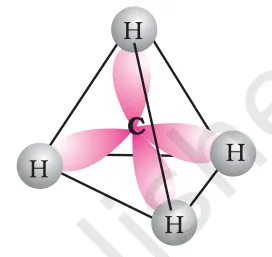
This chapter introduces hydrocarbons — organic compounds made of carbon and hydrogen — and develops the foundational ideas needed for understanding organic chemistry. It explains classification into saturated (alkanes) and unsaturated (alkenes, alkynes) hydrocarbons and introduces aromatic compounds (benzene and its derivatives). The chapter emphasises structure and bonding (sp3, sp2, sp hybridisation), isomerism, physical properties, important reactions and basic reaction mechanisms (free‑radical substitution, electrophilic addition, electrophilic substitution in aromatics). Practical importance (fuels, polymers, solvents, raw materials for industry), environmental and safety considerations are discussed. By the end, students will be able to name and draw common hydrocarbons, predict and write products of typical reactions, explain reaction pathways at a basic mechanistic level, and appreciate the special stability and chemistry of aromatic systems.
Learning Objectives
- Define hydrocarbons and classify them into alkanes, alkenes, alkynes and aromatic hydrocarbons with examples
- State IUPAC rules for naming open-chain and simple cyclic hydrocarbons and apply them to name given structures
- Describe electronic structure and hybridisation (sp3, sp2, sp) of carbon in alkanes, alkenes and alkynes and relate to bond angles and bond lengths
- Explain structural, positional and functional isomerism in hydrocarbons and illustrate with examples; draw possible isomers for a given molecular formula
- Explain free radical substitution mechanism in alkanes and write balanced equations for halogenation reactions including initiation, propagation and termination steps
- Explain electrophilic addition reactions of alkenes and alkynes, apply Markovnikov's rule and anti-Markovnikov hydroboration–oxidation to predict major products
- Apply concepts of carbocation stability and resonance to predict regiochemistry and intermediates in electrophilic addition and substitution reactions
- Describe aromaticity using Hückel's rule, explain resonance in benzene and carry out electrophilic aromatic substitution reactions (nitration, sulfonation, halogenation, Friedel–Crafts) with mechanisms
Topics in this chapter
15 topics · tap a topic title to jump straight to it.
Introduction and Classification
What are hydrocarbons? Hydrocarbons are organic compounds that contain only carbon (C) and hydrogen (H) atoms. They are the simplest organic compounds and form the backbone of organic chemistry and fuels.
Why important? Hydrocarbons are major constituents of fossil fuels (natural gas, petroleum, coal), feedstocks for plastics and chemicals, and are central to combustion and energy production.
Classification (broadly)
- Saturated hydrocarbons (Alkanes)
- Only single C–C bonds (sp3 hybridized).
- General formula: CnH2n+2.
- Undergo substitution (e.g., free-radical halogenation) and combustion.
- Example behaviour: fairly unreactive, non-polar, soluble in organic solvents.
- Unsaturated hydrocarbons
- Alkenes: contain at least one C=C double bond (sp2); general formula CnH2n. React by addition (hydrogenation, halogenation) and polymerization.
- Alkynes: contain at least one C≡C triple bond (sp); general formula CnH2n-2. Also show addition reactions and acidity at the terminal C–H (in terminal alkynes).
- Aromatic hydrocarbons (Arenes)
- Contain conjugated cyclic π systems (e.g., benzene C6H6) with special stability (aromaticity).
- Undergo electrophilic substitution (nitration, sulfonation, halogenation) rather than addition.
- Typical formula for simple monocyclic arenes: approximate CnH2n-6 (e.g., benzene C6H6).
Other important concepts
- Homologous series: A series of compounds differing by –CH2– units. Members have similar chemical properties and predictable trends in physical properties (boiling point, melting point).
- Isomerism: Structural (constitutional) isomers increase with carbon number (alkanes show chain isomerism; alkenes show positional and geometric cis–trans isomerism when applicable).
- Physical trends: Boiling point increases with molar mass and decreases branching. Small hydrocarbons (C1–C4) are gases, medium (C5–C17) are liquids, higher are waxy solids.
- Chemical reactivity hierarchy (typical): Alkanes (least reactive) < alkenes < alkynes (more reactive in many addition reactions), while arenes are special: relatively less reactive toward addition but reactive in electrophilic substitution.
Simple preparation/occurrence: Many hydrocarbons are obtained from petroleum refining (fractional distillation) and natural gas. Laboratory methods include dehydration of alcohols (to give alkenes), Wurtz reaction, and cracking.
Summary: Hydrocarbons are classified into saturated (alkanes), unsaturated (alkenes, alkynes) and aromatic (arenes). Each class has characteristic bonding, general formula, physical properties and typical reactions that are foundational for further study in organic chemistry.
- Methane (CH4) — main component of natural gas; used for heating and electricity.
- Ethane (C2H6) — component of natural gas and feedstock for ethene production.
- Propane (C3H8) and Butane (C4H10) — LPG used as domestic/industrial fuel.
- Ethene (C2H4) — monomer for polyethylene; plant hormone that causes fruit ripening.
- Acetylene (C2H2) — used as a fuel in oxy-acetylene welding.
- Benzene (C6H6) — industrial solvent and precursor for many chemicals (toxic; carcinogenic).
- Alkanes: general formula CnH2n+2 (e.g., methane CH4, ethane C2H6)
- Alkenes: general formula CnH2n (e.g., ethene C2H4)
- Alkynes: general formula CnH2n-2 (e.g., ethyne C2H2)
- Simple monocyclic arenes (example): benzene C6H6 (approx. formula CnH2n-6 for small monocyclic arenes)
- Complete combustion (general): CxHy + (x + y/4) O2 → x CO2 + (y/2) H2O
- Alkane halogenation (radical): RH + X2 → RX + HX (requires hv or heat)
Nomenclature
What is nomenclature?
Nomenclature is the set of rules used to give unique names to organic molecules. For hydrocarbons (compounds containing only C and H) IUPAC rules give systematic names that convey structure: the length of the parent chain, the type and position of multiple bonds, and the identity and position of substituents.
Basic steps to name a hydrocarbon (concise IUPAC procedure):
- Find the longest continuous carbon chain — this becomes the parent and decides the root name (meth-, eth-, prop-, but-, pent-, hex-, ...).
- If two chains are equal length choose the one with the greater number of substituents (more branched).
- Identify the principal functional feature: for hydrocarbons it is the type of bond(s): single (alkane), double (alkene), triple (alkyne). Use the appropriate suffix: -ane, -ene, -yne. For multiple double/triple bonds use prefixes in the suffix: -diene, -triyne, etc.
- Number the parent chain so that the multiple bond(s) and substituents receive the lowest possible locants. When both double and triple bonds are present, select the chain with the maximum number of multiple bonds and then number to give the lowest set of locants; double bond locants are cited before triple when writing the suffix if necessary with locants.
- Name and number substituents (alkyl groups such as methyl, ethyl, propyl, isopropyl, etc.). Use prefixes di-, tri-, tetra- for multiples (these prefixes are not considered in alphabetization). List substituents in alphabetical order (ignore multiplying prefixes for alphabetizing).
- Assemble the name: numbers separated by commas, hyphen before substituent names, substituents arranged alphabetically, then parent (e.g., 4-ethyl-2-methylhexane). Use locants for multiple bonds: e.g., hex-2-ene, but-1-yne.
Other important points:
- General formulas: alkanes CnH2n+2, alkenes CnH2n, alkynes CnH2n-2; cycloalkanes CnH2n (one degree of unsaturation per ring or double bond).
- When naming cycloalkenes, the double-bond carbons are C-1 and C-2; numbering proceeds to give substituents the lowest possible numbers.
- For multiple identical substituents use locant lists and multiplying prefixes: 2,3-dimethylbutane. In writing the final name include all locants and hyphens/commas correctly: numbers,commas; number-word hyphen.
- Stereochemistry (E/Z or cis/trans) is taught later; raw hydrocarbon naming focuses on connectivity and locants.
Practical tips for students:
- Draw the molecule as a zig-zag (line-angle) structure to spot the longest chain and multiple bonds quickly.
- When in doubt about numbering, compare the two possible direction numberings and choose the one giving the lowest set of locants (compare as a sequence from the first difference).
- Remember alphabetical order ignores prefixes like di-, tri- but does include prefixes such as iso- and cyclo- when deciding order (e.g., isobutyl counted under 'i').
- CH3–CH2–CH3 → propane (longest chain 3 C → prop- ; only single bonds → -ane).
- CH3–CH(CH3)–CH3 → 2-methylpropane (longest chain = 3 C; methyl at C-2).
- CH2=CH–CH3 → propene (chain 3 C; double bond starts at C-1 → prop-1-ene is often written as propene).
- CH≡C–CH3 → propyne (triple bond; parent = 3 C → propyne or prop-1-yne).
- CH3–CH2–CH(CH2CH3)–CH2–CH3 → 4-ethylpentane (longest chain 5 C → pentane; ethyl substituent at C-4).
- CH3–CH(CH3)–CH(CH3)–CH3 → 2,3-dimethylbutane (parent = butane; methyls at C-2 and C-3).
- Alkane: CnH2n+2
- Alkene: CnH2n
- Alkyne: CnH2n-2
- Cycloalkane: CnH2n
- Degree of Unsaturation (Double bond equivalents): DU = (2C + 2 - H) / 2 (for CxHy, ignore heteroatoms; O ignored, N adds 1 to C count effect).
Isomerism in Hydrocarbons
Overview
Isomerism is the phenomenon in which two or more compounds have the same molecular formula but different structures or spatial arrangements. In hydrocarbons (compounds containing only C and H) isomerism explains the diversity of compounds with identical formulas.
Main types
- Structural (constitutional) isomerism: Same molecular formula, different connectivity of atoms. Types relevant to hydrocarbons:
- Chain (skeletal) isomerism — different carbon skeletons (e.g., n-butane vs isobutane).
- Position isomerism — functional groups or multiple bonds located at different positions along the chain (e.g., 1-butene vs 2-butene).
- Functional group isomerism — different functional groups with same formula. In hydrocarbons an example is between an alkene and a cycloalkane (both CnH2n): e.g., cyclohexane vs hex-1-ene isomeric formula type).
- Stereoisomerism: Same connectivity, different spatial arrangement.
- Geometric (cis/trans, E/Z) isomerism — occurs when rotation is restricted (commonly about C=C). If two identical groups lie on same side = cis (or Z by CIP), opposite sides = trans (or E).
- Optical isomerism — enantiomers: non-superimposable mirror images around a chiral centre (a carbon bonded to four different groups). Hydrocarbons can be chiral if a carbon carries four different alkyl substituents (e.g., 3-methylhexane has enantiomers).
- Conformational isomerism — different spatial arrangements by rotation about single bonds (no bond breaking). Examples: staggered and eclipsed ethane conformations, anti and gauche forms of butane.
Key points and examples
- Alkanes (saturated): general formula CnH2n+2. Even simple alkanes show chain isomerism: C4H10 has 2 isomers, C5H12 has 3, C8H18 has 18.
- Alkenes (unsaturated, one double bond): general formula CnH2n (acyclic). Position and geometric isomerism are important: 2-butene exists as cis-2-butene and trans-2-butene (different physical properties and reactivity).
- Alkynes: general formula CnH2n-2; position isomerism possible (1-butyne vs 2-butyne).
- Conformational analysis: plotting potential energy vs dihedral angle explains stability of conformers (staggered lower, eclipsed higher; in butane anti is lowest energy and gauche is local minimum).
Why isomerism matters in real life
- Fuel properties: branched alkanes (e.g., iso-octane) burn smoother and give higher octane ratings than straight-chain isomers (e.g., n-heptane), so branching affects engine performance.
- Biological effects: cis and trans isomers of fatty acids have very different health effects; trans fats (partly hydrogenated oils) are associated with cardiovascular risk.
- Sensory properties: stereoisomers can smell/taste different (even if not strictly a hydrocarbon example, the principle applies when carbon frameworks are chiral).
How to decide E/Z (brief)
1. Assign priorities to substituents on each doubly bonded carbon using CIP rules (higher atomic number = higher priority). 2. If the two highest-priority groups are on the same side → Z (zusammen); opposite sides → E (entgegen).
- n-Butane (C4H10) and isobutane (2-methylpropane) — chain (skeletal) isomers.
- 1-Butene (CH2=CH–CH2–CH3) vs 2-Butene (CH3–CH=CH–CH3) — position isomerism; 2-butene exists as cis-2-butene and trans-2-butene (geometric isomers).
- Cyclohexane (C6H12) vs hex-1-ene (C6H12) — functional-group isomerism (cycloalkane vs alkene, same formula CnH2n).
- Conformational isomers of butane: anti (lowest energy) and gauche (higher energy but stable) due to rotation about C–C bond.
- 3-Methylhexane (a hydrocarbon) has a stereocenter at C-3 and therefore exists as a pair of enantiomers (optical isomerism).
- Real-life: iso-octane (2,2,4-trimethylpentane) used as the 100 reference for octane rating; n-heptane represents zero.
- Alkanes: CnH2n+2
- Alkenes (acyclic, one double bond): CnH2n
- Alkynes (acyclic, one triple bond): CnH2n-2
- Cycloalkanes: CnH2n
- Degree of unsaturation (DBE) for hydrocarbons: DBE = C - H/2 + 1 (gives number of rings + π bonds)
- Examples of isomer counts: C4H10 → 2 constitutional isomers; C5H12 → 3; C8H18 → 18
Alkanes — Structure and Physical Properties
Definition and general formula
Alkanes are saturated acyclic hydrocarbons containing only single C–C and C–H bonds. They form a homologous series with general formula CnH2n+2 (n = 1, 2, 3, ...). Being saturated means they contain the maximum number of hydrogen atoms for a given number of carbons (no rings or multiple bonds).
Electronic structure and bonding
Each carbon in an alkane is sp3 hybridized. The sp3 hybridization produces four equivalent tetrahedral orbitals that form sigma (σ) bonds with other carbons or hydrogens. Ideal bond angle around each carbon is 109.5°. Typical bond lengths and bond energies (approximate):
- C–C bond length ≈ 154 pm (1.54 Å), bond dissociation energy ≈ 348 kJ mol−1.
- C–H bond length ≈ 109 pm (1.09 Å), bond dissociation energy ≈ 413 kJ mol−1.
Conformations and stereochemistry (basic)
Single C–C bonds allow free rotation, giving different conformations. For a C–C bond the staggered conformation is lower in energy than the eclipsed conformation. Newman projections are used to visualize these conformers. For simple alkanes (no stereogenic centers) conformational isomerism affects physical properties and reactivity.
Isomerism
Alkanes show structural (constitutional) isomerism: as carbon number increases, several chain isomers are possible (straight chain vs branched). For example C4H10 has two isomers (n-butane and isobutane). Branching affects many physical properties.
Physical properties
- States at room temperature: C1–C4 are gases, C5–C17 are liquids (depending on conditions), higher alkanes are waxy solids. (Approximate ranges)
- Boiling and melting points: Increase with increasing molar mass (carbon number) because van der Waals (dispersion) forces become stronger. Branching lowers boiling point because it reduces surface area and intermolecular contact.
- Density: Alkanes are less dense than water (typical densities 0.6–0.9 g cm−3) and float on water.
- Polarity and solubility: Alkanes are nonpolar, insoluble in water, but soluble in nonpolar organic solvents (hexane, benzene, ether).
- Volatility and vapor pressure: For a homologous series vapor pressure decreases with chain length; shorter alkanes are more volatile.
- Viscosity: Increases with chain length and with branching pattern; long-chain alkanes (oils, waxes) are viscous or solid.
- Combustion: Alkanes burn in excess oxygen to give CO2 and H2O; heat of combustion per CH2 unit is relatively constant (useful for estimating energies).
Trends and important influences
Key patterns to remember:
- Boiling point: increases roughly linearly with carbon number for straight-chain alkanes; branching lowers it.
- Melting point: increases with carbon number but shows an odd-even alternation (odd-numbered straight chains pack less well than even-numbered).
- Reactivity: Chemically quite unreactive (inert) under many conditions, but undergoes free-radical halogenation, combustion and cracking under suitable conditions.
Practical notes
Alkanes are major components of natural gas and petroleum. Their physical properties determine uses: gases for fuel (methane, propane), volatile liquids for fuels and solvents (hexane, gasoline-range alkanes), high-molar-mass alkanes for lubricants and waxes.
- Methane (CH4) — main component of natural gas; used for domestic cooking and heating.
- Ethane (C2H6) and propane (C3H8) — used as petrochemical feedstocks and LPG (propane used for cooking, heating, and as fuel).
- Butane (C4H10) — lighter fuel (cigarette lighters) and LPG blends.
- Hexane (C6H14) — common organic solvent for extraction and chromatography.
- Octane (C8H18) — component of gasoline; octane rating relates to tendency to knock (branched isomers like iso-octane have high octane ratings).
- Paraffin wax (long-chain alkanes, C20+) — used in candles, coatings and polishes.
- General formula: CnH2n+2
- Degree of unsaturation (for alkanes): 0 (no rings/double bonds)
- Approximate bond lengths: C–C ≈ 1.54 Å, C–H ≈ 1.09 Å
- Approximate bond energies: C–C ≈ 348 kJ mol−1, C–H ≈ 413 kJ mol−1
- Heat of complete combustion (approx per CH2 unit): ≈ −657 kJ mol−1 (useful as an estimate)
Alkanes — Preparation and Reactions
Definition and structure
Alkanes are saturated acyclic hydrocarbons with the general formula CnH2n+2. Carbon atoms are sp3-hybridised, tetrahedral (bond angle ≈ 109.5°). They contain only single C–C and C–H bonds and therefore undergo predominantly substitution reactions, not addition.
Physical properties (brief)
- Non-polar, insoluble in water, soluble in organic solvents.
- Boiling/melting points increase with molecular mass (more surface area → stronger London forces). Branching lowers boiling point compared to straight-chain isomers.
- Relatively unreactive due to strong C–C and C–H σ-bonds; activation required for many reactions.
Important methods of preparation
- From petroleum (industrial): Fractional distillation and catalytic cracking of crude oil give a mixture of alkanes used as fuels, lubricants and feedstock.
- Hydrogenation of unsaturated hydrocarbons: Alkenes/alkynes hydrogenated over catalysts (H2 / Ni, Pt, Pd) to give alkanes.
RCH=CHR + H2 —(Ni)—> RCH2–CH2R - Wurtz reaction (laboratory): Coupling of alkyl halides with sodium metal to give symmetrical alkanes (works best for primary halides).
2 R–X + 2 Na → R–R + 2 NaX - Kolbe electrolysis: Electrolysis of sodium (or potassium) salts of carboxylic acids produces alkyl radicals which couple to give alkanes with evolution of CO2. (Example: sodium acetate → ethane + CO2)
Anode step:RCOO− → R· + CO2 + e−
Coupling:2 R· → R–R - Thermal decarboxylation (soda lime): Heating sodium salts of carboxylic acids with NaOH/CaO gives alkanes (removal of CO2).
RCOONa + NaOH (heat) → RH + Na2CO3 - Reduction of alkyl halides: Primary/secondary alkyl halides can be reduced to alkanes using strong reducing agents (e.g., H2 / Pd or Zn/HCl in some cases, or hydride donors under suitable conditions).
Major reactions of alkanes
- Combustion: Alkanes burn in excess oxygen to give CO2 and H2O; incomplete combustion yields CO or C (soot) and is less efficient.
General (complete):CnH2n+2 + (3n+1)/2 O2 → n CO2 + (n+1) H2O
Example:CH4 + 2 O2 → CO2 + 2 H2O - Free-radical halogenation (typical reaction): Reaction with Cl2 or Br2 in presence of light/heat gives alkyl halides by substitution. Occurs by a radical chain mechanism (initiation, propagation, termination).
General:RH + X2 —(hv)—> RX + HX
Example (chlorination of methane):
Initiation:Cl2 —(hv)—> 2 Cl·
Propagation:Cl· + CH4 → HCl + CH3·CH3· + Cl2 → CH3Cl + Cl·
Termination:CH3· + CH3· → C2H6etc.
Note: Bromination is more selective (favors more stable radicals). - Cracking: Thermal or catalytic cracking breaks long-chain alkanes into smaller alkanes and alkenes — important in petrochemical industry to produce fuels and feedstocks.
- Isomerisation: Straight-chain alkanes can be converted to branched isomers (catalytically) to improve fuel octane number.
- Dehydrogenation: Removal of H2 at high temperature or over catalysts to give alkenes (e.g., dehydrogenation of ethane → ethene).
Mechanistic and energetic notes
Radical halogenation proceeds by formation of radicals and has distinct steps with different activation energies: initiation requires bond homolysis (often high energy), propagation steps determine product distribution (stability of intermediate radicals), and termination removes radicals. Bond dissociation energies influence reactivity and selectivity.
Practical/real-life importance
Alkanes are major fuels (natural gas, LPG, petrol fractions). They are feedstocks for petrochemicals, used as solvents, lubricants, and in waxes and paraffin (candles). Understanding their reactivity is essential for combustion, fuel design, pollutant control and industrial synthesis.
- Methane (CH4): major component of natural gas and biogas — used for cooking and heating.
- Propane and butane (C3–C4): liquefied petroleum gas (LPG) used as household and portable fuel.
- Octane (C8): component of gasoline; branching (iso-octane) improves octane rating and engine performance.
- Paraffin wax (long-chain alkanes): used in candles, coatings and polishes.
- Kerosene and diesel (C10–C20 range): fuels for aviation and diesel engines produced by fractional distillation of crude oil.
- General formula of alkanes: CnH2n+2
- Complete combustion: CnH2n+2 + (3n+1)/2 O2 → n CO2 + (n+1) H2O
- Wurtz reaction: 2 R–X + 2 Na → R–R + 2 NaX
- Kolbe electrolysis (conceptual anode step): RCOO− → R· + CO2 + e−; overall example: 2 CH3COONa + 2 H2O → C2H6 + 2 CO2 + H2 + 2 NaOH
- Decarboxylation (soda lime): RCOONa + NaOH (heat) → RH + Na2CO3
- General radical halogenation: RH + X2 —(hv)→ RX + HX (X = Cl, Br)
Alkenes — Structure and Physical Properties
Definition & general formula: Alkenes are hydrocarbons that contain at least one carbon–carbon double bond. The general formula for a simple acyclic (open-chain) mono-unsaturated alkene is CnH2n.
Bonding and hybridisation: Each carbon of a C=C double bond is sp2-hybridised. That gives a trigonal planar geometry (approximately 120°) around each sp2 carbon. The double bond consists of one sigma (σ) bond formed by overlap of sp2 orbitals and one pi (π) bond formed by side-by-side overlap of unhybridised p orbitals. Typical bond lengths and strengths (approximate): C–C single ≈ 1.54 Å, C=C ≈ 1.34 Å; C=C bond energy ≈ 600–620 kJ mol−1 (sigma + pi components).
Restricted rotation and stereoisomerism: Rotation about the C=C bond is restricted because rotation would break the π overlap. This gives rise to geometric (cis–trans or E–Z) isomerism when each C of the double bond has two different substituents. Cis isomers have substituents on the same side and often show a net dipole; trans isomers are generally more symmetrical and often nonpolar.
Electronic effects — stability and reactivity: The π bond is electron-rich and accessible to electrophiles, making alkenes reactive in electrophilic addition reactions. Hyperconjugation and inductive effects from alkyl groups stabilise the double bond; therefore, more substituted alkenes (tri- and tetrasubstituted) are generally more stable than less substituted ones. Conjugation (alternating double and single bonds) delocalises π electrons, lowers overall π-bond energy, increases stability and alters physical properties (e.g., UV absorption shifts to longer wavelength).
Physical properties — general trends:
- State at room temperature: C1–C3 are gases (ethylene, propene), C4–C17 are liquids, higher homologues are solids/waxes depending on chain length.
- Boiling point: Increases with molecular mass and surface area; branching lowers boiling point by reducing surface contact. For isomer pairs, cis isomers usually have higher boiling points than trans isomers because cis isomers are more polar and have stronger dipole–dipole attractions.
- Melting point: Trans isomers often have higher melting points than cis isomers because the more symmetric trans molecules pack better in the solid state.
- Polarity & dipole moment: Simple non‑symmetrical alkenes can be slightly polar; symmetrical alkenes or trans isomers are often nearly nonpolar. Conjugation and substituents affect polarity.
- Solubility & density: Alkenes are nonpolar, insoluble in water, and soluble in nonpolar organic solvents. Densities are less than water (≈0.6–0.8 g cm−3 for many low to medium alkenes).
Practical/real‑life roles: Ethylene (ethene) is a plant hormone used to ripen fruits and is the feedstock for polyethylene. Propene (propylene) is the monomer for polypropylene. Butenes and isobutene are used in manufacture of fuels, lubricants and elastomers. Conjugated alkenes (e.g., 1,3‑butadiene) are important monomers for synthetic rubbers.
Summary of structure → property connections: sp2 hybridisation → planar geometry and restricted rotation; π bond → higher reactivity toward electrophiles, shorter bond length; substitution and conjugation → greater stability and altered physical properties; molecular size and shape → major influence on boiling/melting points and solubility.
- Ethene (ethylene) — C2H4: gas, plant hormone, polymer feedstock (polyethylene).
- Propene (propylene) — C3H6: gas/liquid, used to make polypropylene and other chemicals.
- 1-Butene and 2-Butene (cis/trans) — show cis–trans isomerism; used in alkylation and polymer chemistry.
- Isobutylene (2-methylpropene) — used in fuel additives and as a monomer for butyl rubber.
- 1,3-Butadiene — a conjugated diene used to make synthetic rubber.
- General molecular formula (acyclic monosubstituted): CnH2n
- Index of hydrogen deficiency (IHD) / Degree of unsaturation: IHD = (2C + 2 + N - H - X) / 2 (for a molecule with C, H, N, halogens X)
- Typical bond lengths and energies (approx.): C=C ≈ 1.34 Å; C–C ≈ 1.54 Å; C=C bond energy ≈ 600–620 kJ mol−1
- Relationship: more alkyl substitution → greater hyperconjugative stabilization of the double bond (qualitative, not a single numeric formula)
Alkenes — Preparation and Reactions
What are alkenes? Alkenes (olefins) are unsaturated hydrocarbons containing at least one carbon-carbon double bond. General formula for a simple acyclic monoene is CnH2n. The C=C bond consists of one sigma and one pi bond; the pi bond restricts rotation and gives trigonal planar geometry (approx. 120°) around each doubly bonded carbon. Geometric (cis/trans or E/Z) isomerism is possible when the two carbons of the double bond carry different substituents.
Stability and bonding: Alkene stability increases with alkyl substitution (tertiary > secondary > primary) because of hyperconjugation and inductive effects. Heat of hydrogenation decreases as stability increases. The pi bond is the reactive site: electrophiles attack the electron-rich pi bond, giving electrophilic addition reactions.
Main laboratory and industrial methods of preparation (with typical reagents and conditions):
- Dehydrohalogenation of alkyl halides (elimination): A haloalkane treated with a strong base (e.g., alcoholic KOH or NaOH, or t-BuOK) gives an alkene. Example: RCH2CH2Br + KOH(alc) → RCH=CH2 + KBr + H2O. Mechanisms: E2 (concerted, bimolecular) is common with strong bases; E1 may occur with tertiary substrates and weak bases.
- Dehydration of alcohols (acid-catalysed elimination): Alcohols heated with concentrated H2SO4 or H3PO4 give alkenes (Zaitsev rule: the more substituted alkene predominates). Example: CH3CH2CH2OH + H2SO4(heat) → CH3CH=CH2 + H2O.
- Steam cracking / thermal cracking (industrial): High-temperature cracking of hydrocarbons or naphtha to produce ethene, propene etc.
- Dehydrogenation of alkanes (catalytic, high temperature): e.g., C2H6 → C2H4 + H2 over catalysts like Cr2O3/Al2O3.
- Wittig and related carbonyl-to-alkene methods (advanced): Useful in organic synthesis to convert carbonyl compounds to alkenes (typically covered later but important industrially).
Mechanisms: E2 vs E1 in eliminations: E2: single-step, base removes beta-hydrogen while leaving group departs; rate = k[alkyl halide][base]; stereochemistry often anti-periplanar. E1: two-step, first loss of leaving group to give carbocation, then deprotonation; rate = k[alkyl halide]; follows carbocation stability (rearrangements possible).
Characteristic reactions of alkenes (most are electrophilic additions at the C=C):
- Hydrogenation: H2 with Pd, Pt, or Ni catalyst converts C=C to C–C (syn addition). Industrially used to hydrogenate vegetable oils to make margarine.
- Halogenation: Addition of Br2 or Cl2 across C=C to give vicinal dihalides (anti addition; bromine test for unsaturation gives decolourisation of bromine solution).
- Hydrohalogenation: Addition of HBr/HCl; follows Markovnikov's rule (H adds to carbon with more hydrogens; the halide attaches to the more substituted carbon) due to carbocation intermediate. Peroxides give anti-Markovnikov addition for HBr (radical chain mechanism).
- Hydration: Addition of water in presence of acids (H3O+ or H2SO4 then hydrolysis) gives alcohols (Markovnikov product). Oxymercuration-demercuration gives hydration without rearrangement; hydroboration-oxidation gives anti-Markovnikov alcohols (syn addition).
- Polymerization: Alkenes undergo addition polymerization (free radical or coordination) to give polymers such as polyethylene (from ethene) and polypropylene (from propene).
- Oxidation: Cold dilute KMnO4 hydroxylates the double bond to give vicinal diols (syn). Hot, concentrated KMnO4 cleaves the C=C to carbonyl fragments (aldehydes → acids; ketones remain ketones), sometimes further oxidation to CO2 for terminal double bonds. Ozonolysis (O3 then Zn or Me2S) cleaves to give carbonyl compounds without strong overoxidation.
- Electrophilic addition features: Many additions show regiochemistry (Markovnikov/anti-Markovnikov) and stereochemistry (syn vs anti). The nature of mechanism (carbocation vs concerted vs radical) determines outcome and rearrangements.
Important practical points: Alkenes are more reactive than alkanes. They are flammable and used as feedstock in the petrochemical industry. Ethene acts as a plant hormone (fruit ripening) and is a major precursor for polyethylene and ethylene oxide.
Short summary: Alkenes are C=C containing hydrocarbons with trigonal planar geometry at the double bond. They are prepared mainly by elimination (dehydrohalogenation, dehydration), cracking, or dehydrogenation. Their chemistry is dominated by electrophilic addition reactions, polymerization and oxidation/cleavage reactions. Regio- and stereochemistry (Markovnikov rule, syn/anti addition, E/Z isomerism) are key concepts.
- Industrial production of ethene: Steam cracking of naphtha or ethane cracking at high temperature gives ethene used for polyethylene manufacture.
- Dehydration of ethanol: CH3CH2OH (conc. H2SO4, heat) → CH2=CH2 + H2O — a laboratory method to prepare ethene.
- Dehydrohalogenation: 2-bromopropane + KOH(alc) → propene + KBr + H2O (E2 elimination; Zaitsev product predominates for secondary/tertiary substrates).
- Hydrogenation: CH2=CH2 + H2 (Pd/C) → CH3CH3 — used industrially to hydrogenate vegetable oils.
- Halogenation test: Addition of Br2 in CCl4 to an alkene causes decolourisation; e.g., cyclohexene + Br2 → 1,2-dibromocyclohexane (anti addition).
- Hydroboration-oxidation (anti-Markovnikov hydration): CH3CH=CH2 + BH3 then H2O2/OH- → CH3CH2CH2OH (gives 1-propanol from propene).
- General formula for acyclic monoene: CnH2n
- Degree of unsaturation (double bond counts as one): DU = C - H/2 - X/2 + N/2 + 1 (C=carbons, H=hydrogens, X=halogens, N=nitrogens)
- E2 rate law (bimolecular elimination): rate = k[alkyl halide][base]
- E1 rate law (unimolecular elimination): rate = k[alkyl halide]
- Markovnikov rule (text form): On addition of HX to an unsymmetric alkene, H attaches to the carbon with more H atoms already, X to the more substituted carbon (more stable carbocation intermediate).
- Heat of hydrogenation trend: lower heat of hydrogenation → greater alkene stability (more substituted alkenes are more stable).
Alkynes — Structure and Physical Properties
Definition and general formula
Alkynes are acyclic hydrocarbons that contain at least one carbon–carbon triple bond. The general formula for a simple (non-cyclic) alkyne is CnH2n-2.
Bonding and electronic structure
- Each carbon of the C≡C triple bond is sp-hybridised: one s and one p orbital mix to form two sp orbitals; the remaining two p orbitals remain unhybridised.
- Geometry: sp hybridisation gives a linear arrangement around each triple-bond carbon with bond angle 180°.
- Bond composition: a triple bond = one sigma (σ) bond formed by overlap of sp orbitals + two pi (π) bonds formed by side-on overlap of the two unhybridised p orbitals.
Bond lengths and strengths (approximate)
- C–C single: ≈ 1.54 Å (bond energy ≈ 348 kJ/mol)
- C=C double: ≈ 1.34 Å (bond energy ≈ 614 kJ/mol)
- C≡C triple: ≈ 1.20 Å (bond energy ≈ 839 kJ/mol)
- C–H in sp carbon is shorter and stronger than in sp2 or sp3 carbons.
Isomerism
Alkynes show chain isomerism and position isomerism (e.g., 1-butyne vs 2-butyne). They do not show cis–trans isomerism about the triple bond because the linear geometry prevents two distinct orientations.
Acidity of terminal alkynes
Hydrogen attached to an sp carbon (terminal alkyne) is relatively acidic compared with alkane or alkene hydrogens because the sp orbital has greater s-character and stabilises the conjugate base (acetylide anion). Typical pKa values: alkane ≈ 50, alkene ≈ 44, alkyne ≈ 25 (acetylene).
Physical state and general physical properties
- Lower members (C2–C4) are gases at room temperature; higher homologues are liquids or solids as molecular mass increases.
- Boiling points increase with molar mass. Straight-chain alkynes have higher boiling points than their branched isomers due to greater surface area and stronger van der Waals forces.
- Alkynes are essentially non-polar hydrocarbons and are insoluble in water but soluble in organic solvents (ether, benzene, etc.).
- Density is less than water for most simple alkynes.
- Terminal alkynes have slightly polar C–H bonds and can be deprotonated by strong bases to form acetylide ions, an important chemical property used in synthesis.
Comparisons and trends
Compared with alkenes and alkanes of similar carbon number: boiling points generally increase with chain length in all three series. Triple bonds produce a linear, compact shape and stronger bonds (higher bond energy, shorter bond length) compared to double and single bonds.
Applications and significance
Alkynes are useful intermediates in organic synthesis and industrial chemistry. Terminal alkynes are widely used to form carbon–carbon bonds via acetylide chemistry. Acetylene (ethyne) is well known for oxy-acetylene welding and as an industrial feedstock.
- Ethyne (acetylene), C2H2: a colourless gas used in oxy-acetylene welding and as a starting material in organic synthesis. Produced by reacting calcium carbide with water (CaC2 + 2H2O → C2H2 + Ca(OH)2).
- Propyne (methylacetylene), C3H4: a small alkyne used as an intermediate in industry and organic synthesis.
- 1-Butyne and 2-butyne (C4H6): illustrate position isomerism (terminal versus internal triple bond); physical properties differ (boiling point, polarity).
- Natural polyacetylenes such as falcarinol (found in carrots) show that alkynes occur in natural products and contribute to biological activity.
- Terminal alkyne deprotonation: RC≡CH + NaNH2 → RC≡C− Na+ + NH3 (acetylide formation used to form new C–C bonds).
- General formula for acyclic alkynes: CnH2n-2
- Index/degree of hydrogen deficiency (IHD) for hydrocarbons: IHD = (2C + 2 - H) / 2
- Hybridisation of triple-bond carbons: sp; bond angle = 180°
- Typical bond lengths: C≡C ≈ 1.20 Å, C=C ≈ 1.34 Å, C–C ≈ 1.54 Å
- Approximate bond energies: C–C ≈ 348 kJ/mol, C=C ≈ 614 kJ/mol, C≡C ≈ 839 kJ/mol
- Acidity (approximate pKa): alkane ≈ 50, alkene ≈ 44, alkyne ≈ 25 (terminal alkyne, e.g., acetylene)
Alkynes — Preparation and Reactions
Definition
Alkynes are hydrocarbons that contain at least one carbon–carbon triple bond (C≡C). Acyclic alkynes have the general formula CnH2n-2. The simplest alkyne is ethyne (acetylene), C2H2.
Structure and Bonding
In a C≡C triple bond each carbon is sp-hybridized (linear geometry, bond angle 180°). The triple bond consists of one σ bond (end-to-end overlap of sp orbitals) and two π bonds (side-by-side overlap of unhybridized p orbitals). Typical bond lengths: C≡C ≈ 1.20 Å, C=C ≈ 1.34 Å, C–C ≈ 1.54 Å.
Important physical properties
- Nonpolar, insoluble in water but soluble in organic solvents.
- Terminal alkynes (R–C≡C–H) are weakly acidic (pKa ≈ 25) because the sp carbon bears greater s-character and stabilizes the conjugate base.
- Boiling points of alkynes lie between those of corresponding alkenes and alkanes of similar molar mass, generally increasing with chain length.
Preparation of Alkynes (major methods)
- 1) Double dehydrohalogenation of vicinal or geminal dihalides:
R–CHBr–CH2–Br (vicinal) or R–CBr2–CH2–R → (excess strong base, e.g. 2–3 equiv. NaNH2 in liquid NH3, then H2O) → R–C≡C–R' + 2 NaBr + NH3
Example: BrCH2–CH2Br + 2 NaNH2 → HC≡CH + 2 NaBr + 2 NH3 (formation of acetylene from 1,2-dibromoethane) - 2) From terminal alkynes by deprotonation followed by alkylation (chain extension):
RC≡CH + NaNH2 → RC≡C–Na+ + NH3; then RC≡C–Na+ + R'–X → RC≡C–R' + NaX (SN2 alkylation of acetylide ion) - 3) From calcium carbide (industrial/laboratory): CaC2 + 2 H2O → C2H2 (acetylene) + Ca(OH)2.
Chemical Reactions of Alkynes
A. Reactions based on acidity and nucleophilicity of acetylide ion
- Deprotonation of terminal alkynes: RC≡CH + NaNH2 → RC≡C–Na+ + NH3. The acetylide ion is a strong nucleophile used to form C–C bonds by SN2 alkylation with primary alkyl halides (good for carbon chain extension).
B. Addition reactions (triple bond behaves like a high-energy multiple bond)
- Hydrogenation (reduction):
RC≡CR' + 2 H2 (Pd/C) → R–CH2–CH2–R' (alkane).
Partial hydrogenation to cis-alkene: RC≡CR' + H2 (Lindlar catalyst) → R–CH=CH–R' (cis).
Partial hydrogenation to trans-alkene (dissolving metal): RC≡CR' + 2 Na, 2 NH3 (liq) → R–CH=CH–R' (trans). - Hydrohalogenation (addition of HX):
RC≡CH + HBr → vinyl bromide (R–CH=CHBr). With excess HBr the product is a geminal dihalide (R–C(Br)2–CH3 when R=H gives CH3–CBr2–H etc.). Markovnikov orientation is observed in electrophilic additions. - Halogenation (addition of X2):
RC≡CR' + X2 (1 equiv.) → dihaloalkene (cis or trans depending on mechanism); with excess X2 → tetrahalide (R–C(X)2–C(X)2–R'). - Hydration (acid-catalyzed, keto–enol tautomerism):
Terminal alkyne R–C≡CH + H2O (H2SO4 / HgSO4) → R–CO–CH3 (methyl ketone; Markovnikov addition followed by enol → ketone tautomerization). Example: CH≡CH + H2O (HgSO4/H2SO4) → CH3–CHO (acetaldehyde) for acetylene.
Hydroboration–oxidation (anti-Markovnikov): R–C≡CH + (Sia)2BH then H2O2/OH– → R–CHO (aldehyde) after tautomerization.
C. Oxidation and cleavage
- Oxidative cleavage with KMnO4 (hot, conc.) or O3 gives carboxylic acids: R–C≡C–R' + [O] → R–COOH + R'–COOH. If one end is terminal (R' = H), the terminal carbon is oxidized to CO2 (e.g. RC≡CH → R–COOH + CO2).
D. Other characteristic reactions
- Formation of metal acetylides: Terminal alkynes react with Cu(I) salts to give copper(I) acetylides (sensitive/explosive) and with Ag+ to give silver acetylides.
- Alkynes undergo polymerization and cycloaddition reactions under appropriate conditions (used in specialty syntheses).
Reactivity summary
Alkynes are electrophilically reactive (additions across the triple bond), nucleophilic at the terminal C (after deprotonation) and can be oxidatively cleaved. Terminal alkynes are synthetically valuable for C–C bond formation (alkylation, coupling reactions, click chemistry).
Safety and real-life relevance
Acetylene is widely used in oxyacetylene welding and as a building block in organic synthesis (e.g. manufacture of vinyl chloride historically). Alkynes and their derivatives are present in pharmaceuticals, agrochemicals, dyes and in modern 'click' chemistry (terminal alkynes participate in Cu-catalyzed azide–alkyne cycloaddition).
Note to students: Learn key reagents and conditions (NaNH2/NH3 for double elimination; Lindlar for cis-hydrogenation; Na/NH3 for trans; HgSO4/H2SO4 for hydration to ketone; hydroboration–oxidation for anti-Markovnikov hydration to aldehyde) and be able to write representative equations and predict products including regiochemistry and stereochemistry.
- Preparation: 1,2-dibromoethane (BrCH2–CH2Br) + 2 NaNH2 (liq NH3) → C2H2 (acetylene) + 2 NaBr + 2 NH3.
- Alkylation (chain extension): HC≡CH + NaNH2 → NaC≡CH; NaC≡CH + CH3Br → CH3–C≡CH (propyne).
- Hydrogenation (selective): RC≡CR' + H2 (Lindlar catalyst) → RCH=CHR' (cis-alkene).
- Hydration (Markovnikov): RC≡CH + H2O (HgSO4/H2SO4) → R–CO–CH3 (methyl ketone).
- Oxidative cleavage: CH3–C≡CH + [O] (KMnO4) → CH3COOH + CO2.
- General formula (acyclic alkynes): CnH2n-2
- pKa (terminal alkyne, approximate): ≈ 25
- Bonding: C≡C consists of 1 σ + 2 π bonds; each C is sp-hybridized (linear, 180°).
- Bond lengths (typical): C≡C ≈ 1.20 Å; C=C ≈ 1.34 Å; C–C ≈ 1.54 Å
- Example reaction (deprotonation and alkylation): RC≡CH + NaNH2 → RC≡C–Na+; RC≡C–Na+ + R'–X → RC≡C–R' + NaX
Aromatic Hydrocarbons — Benzene Structure and Aromaticity
What are aromatic hydrocarbons?
Aromatic hydrocarbons (arenes) are cyclic, conjugated hydrocarbons with unusually high stability due to delocalized π-electrons. The simplest and most important example is benzene (C6H6).
Benzene: historical models and modern view
Kekulé proposed a cyclic six‑membered ring with alternating single and double bonds. Experimental facts (equal bond lengths, extra stability) could not be explained by a single Kekulé structure. Modern description: benzene is a resonance hybrid or a delocalized system where all six carbon atoms are sp2 hybridized, each contributing one p-orbital. The six p-orbitals overlap to form a continuous π-cloud above and below the plane of the ring; π-electrons are delocalized over the ring.
Criteria for aromaticity (Hückel's rule)
A planar cyclic conjugated system is aromatic if it contains (4n + 2) π-electrons (Hückel rule), where n = 0, 1, 2, ... Benzene has 6 π-electrons (n = 1) and is aromatic.
Molecular orbital (MO) explanation
Combining the six p-orbitals of benzene gives six π molecular orbitals: three bonding (lower energy), one nonbonding? (for benzene the middle level is doubly degenerate bonding) and three antibonding (higher energy). The six π-electrons fill the three bonding MOs, producing a closed‑shell, especially stable electronic configuration.
Experimental evidence for aromaticity
- Equal C–C bond lengths ≈ 1.39 Å (intermediate between C–C single 1.54 Å and C=C double 1.34 Å). This shows delocalization, not alternating single/double bonds.
- Heat of hydrogenation: hydrogenation of benzene (C6H6 + 3H2 → C6H12) is −208 kJ·mol−1, much less exothermic than expected for three independent double bonds (≈ −360 kJ·mol−1). The difference (≈ 152 kJ·mol−1) is the resonance (delocalization) energy, a measure of extra stability.
- Chemical behavior: benzene undergoes electrophilic aromatic substitution (EAS) reactions (e.g., nitration, sulfonation, Friedel–Crafts) rather than addition reactions that would destroy aromaticity. Addition is difficult because it would disrupt the aromatic π-system.
Common electrophilic aromatic substitution (EAS) reactions
General pattern: the aromatic ring reacts with an electrophile (E+), forming an arenium (σ) complex (a resonance-stabilized carbocation intermediate) and then loses a proton to restore aromaticity. Typical reactions:
- Nitration: C6H6 + HNO3 (H2SO4 catalyst) → C6H5NO2 + H2O
- Sulfonation: C6H6 + SO3 (H2SO4) ⇌ C6H5SO3H
- Friedel–Crafts alkylation: C6H6 + RCl (AlCl3) → C6H5R + HCl
- Friedel–Crafts acylation: C6H6 + RCOCl (AlCl3) → C6H5COR + HCl
Why benzene is more stable than expected
Delocalization lowers the overall π-electron energy. The filled bonding MOs and lack of partially filled antibonding orbitals make benzene electronically closed and unusually stable (aromatic stabilization).
Summary of aromaticity rules
- Structure must be cyclic and planar.
- Every atom in the ring must have a p-orbital (continuous conjugation).
- Total number of π-electrons must satisfy Hückel's rule: 4n + 2.
Practical significance
Aromatic rings are common in fuels (benzene, toluene), solvents, dyes, pharmaceuticals, polymers and biomolecules (heteroaromatics in DNA bases). Their chemical behavior (selective substitution) is exploited in industrial synthesis.
- Benzene (C6H6) — solvent, precursor to many chemicals.
- Toluene (C6H5CH3) — solvent, used to make benzene derivatives and in paint thinners.
- Nitrobenzene (C6H5NO2) — intermediate in synthesis of aniline (dyes, pharmaceuticals).
- Phenol derivatives — antiseptics, resins and polymers.
- Aromatic rings in drugs and dyes — provide rigidity, planarity and π-interactions important for activity and color.
- Hückel rule: number of π-electrons = 4n + 2 (n = 0, 1, 2, ...). For benzene n = 1 → 4(1)+2 = 6 π-electrons.
- Hydrogenation (experimental): C6H6 + 3 H2 → C6H12 (cyclohexane); ΔHhydrogenation ≈ −208 kJ·mol−1.
- Hypothetical 1,3,5-cyclohexatriene hydrogenation (sum of three isolated double bonds): ≈ −360 kJ·mol−1. Resonance energy ≈ 360 − 208 = 152 kJ·mol−1.
- Typical bond lengths: benzene C–C ≈ 1.39 Å; C–H ≈ 1.08 Å.
- Representative EAS reaction (nitration): C6H6 + HNO3 —(H2SO4)→ C6H5NO2 + H2O.
- Friedel–Crafts alkylation: C6H6 + RCl —(AlCl3)→ C6H5R + HCl.
Aromatic Reactions — Electrophilic Aromatic Substitution (EAS)
What is EAS?
Electrophilic Aromatic Substitution (EAS) is a class of reactions in which an electrophile (E+) replaces a hydrogen atom on an aromatic ring (usually benzene or a substituted benzene) while the aromaticity of the ring is restored by a subsequent step. EAS preserves aromaticity overall but proceeds through a non-aromatic intermediate.
General features
- Occurs on aromatic systems (e.g., benzene, toluene, nitrobenzene).
- Typical sequence: generation of a strong electrophile → electrophile attacks the ring forming a sigma (arenium) complex → deprotonation to restore aromaticity.
- Rate-determining step (RDS): formation of the arenium (sigma) complex because it temporarily destroys aromaticity and requires high activation energy.
Mechanism (two main steps)
- Electrophile generation: A strong electrophile E+ is produced (examples below for nitration, halogenation, Friedel–Crafts, sulfonation).
- Nucleophilic attack and loss of aromaticity: The aromatic π-electrons attack E+ to give a non-aromatic arenium (sigma) ion. This intermediate is resonance-stabilized but less stable than the aromatic starting material.
- Deprotonation and restoration of aromaticity: A base (B:) removes H+ from the carbon bearing E, restoring the aromatic π-system and giving the substituted aromatic product.
Why the pattern of substitution (orientation)?
Substituents already on the ring influence both the reactivity (activate or deactivate) and the position (ortho/para/meta) of incoming electrophiles:
- Ortho/para directing, activating groups: electron-donating groups (EDG) such as -OH, -OCH3, -NH2, alkyl (-CH3) increase electron density at ortho and para positions by resonance or hyperconjugation; they stabilize the arenium ion formed on attack at ortho/para positions → reaction is faster and gives mainly o/p products.
- Meta directing, deactivating groups: strongly electron-withdrawing groups (EWG) such as -NO2, -SO3H, -CF3, -CHO, -COR withdraw electron density (inductive or resonance), destabilize the intermediate for attack at ortho/para, but relatively less for meta → meta substitution favored and reaction is slower.
- Some groups (halogens) are deactivating by -I but ortho/para directing by resonance (they give o/p despite deactivation).
Resonance stabilization of the arenium ion
The positively charged arenium ion has multiple resonance structures where the positive charge is delocalized to carbon atoms ortho and para to the site of attack. The number and stability of these resonance forms determine which positions are favored.
Common EAS reactions and how the electrophile is generated
- Nitration: Electrophile is nitronium ion NO2+ generated by HNO3 + H2SO4 → NO2+ + HSO4- + H2O. Product: nitrobenzene (or substituted nitroarenes).
- Chlorination/Bromination: Halogen electrophile generated by X2 + FeX3 (or AlX3) → X+ ···FeX4-; example: Br2 + FeBr3 → Br+ + FeBr4-. Product: chlorobenzene, bromobenzene.
- Friedel–Crafts alkylation: RCl + AlCl3 → R+ (or complex) + AlCl4-; benzene + R+ → alkylbenzene. (Note: deactivated rings or strongly electron-withdrawing groups hinder this reaction; rearrangements of R+ can occur.)
- Friedel–Crafts acylation: RCOCl + AlCl3 → RCO+ (acyl cation) + AlCl4-; yields ketones (acylarenes) and avoids rearrangement.
- Sulfonation: Electrophile is SO3 or HSO3+ (from SO3/H2SO4); gives aryl sulfonic acids (–SO3H).
Energy profile & kinetics
Because forming the arenium ion disrupts aromaticity, the activation energy is large. The reaction coordinate typically shows a high-energy transition state for electrophilic attack (RDS) and a smaller barrier for deprotonation. For activated rings (with EDG) the activation energy is lower; for deactivated rings (with EWG) it is higher. The rate generally depends on both the aromatic substrate and the electrophile; when E+ concentration is involved, rate ≈ k[ArH][E+].
Practical considerations & limitations
- Strongly deactivated rings (e.g., nitrobenzene) are poor substrates for many EAS reactions.
- Friedel–Crafts reactions fail with rings having strongly electron-withdrawing groups or with amines (which complex with AlCl3).
- Rearrangements of carbocations can give unexpected alkylation products.
Summary
EAS is the central reaction type for functionalizing aromatic rings. Understanding electrophile generation, stability of the arenium ion (resonance), and the directing/activating effects of substituents allows prediction of reactivity and product distribution.
- Nitration of benzene: C6H6 + HNO3 (H2SO4 catalyst) → C6H5NO2 + H2O (used to make nitrobenzene, intermediate in dyes and pharmaceuticals; nitration of toluene gives o- and p-nitrotoluene).
- Chlorination of benzene: C6H6 + Cl2 (FeCl3) → C6H5Cl + HCl (chlorobenzene used as solvent and intermediate for manufacturing other chemicals).
- Friedel–Crafts alkylation: C6H6 + RCl (AlCl3) → C6H5R (e.g., isopropylation of benzene to give cumene, an intermediate in phenol production via the cumene process).
- Sulfonation: C6H6 + SO3 (in H2SO4) → C6H5SO3H (benzenesulfonic acid used to make detergents and sulfonamide drugs).
- TNT formation (applied nitration): Stepwise nitration of toluene yields 2,4,6-trinitrotoluene (TNT) — shows multiple EAS steps with directing effects from existing nitro groups.
- General EAS: Ar–H + E+ → Ar–E + H+ (followed by deprotonation to restore aromaticity)
- Nitration (electrophile formation): HNO3 + H2SO4 ⇌ NO2+ + HSO4- + H2O
- Halogenation (electrophile formation): Br2 + FeBr3 ⇌ Br+ + FeBr4-
- Friedel–Crafts alkylation: R–Cl + AlCl3 → R+ (or R–AlCl3 complex) + AlCl4- ; then Ar–H + R+ → Ar–R + H+
- Sulfonation: Ar–H + SO3 (or HSO3+) → Ar–SO3H
- Rate (typical): rate ≈ k[ArH][E+] when formation of sigma complex is RDS (bimolecular dependence on Ar and E+)
Orientation and Reactivity in Aromatic Substitution
Overview: Aromatic electrophilic substitution (EAS) is the common reaction of benzene and its derivatives where an electrophile (E+) replaces a hydrogen on the ring. The position (ortho, meta, para) where substitution occurs and the rate of reaction are controlled by substituents already on the ring. These effects arise from resonance (mesomeric) and inductive electronic effects and from steric hindrance.
Mechanism (brief):
- Step 1: Attack of the electrophile on the aromatic ring gives a non-aromatic resonance-stabilized sigma-complex (arenium ion / carbocation intermediate).
- Step 2: Loss of a proton from the sigma-complex restores aromaticity to give the substituted aromatic product.
Why substituents direct:
- Resonance (mesomeric) effects: substituents that can donate electron density by resonance (for example –OH, –OCH3, –NH2) stabilize positive charge in the sigma-complex when the electrophile is at ortho or para positions. Thus they are ortho/para directors and activating.
- Inductive effects: strongly electron-withdrawing groups (for example –NO2, –CF3, –C(=O)R) withdraw electron density by –I and often by –R, destabilizing the sigma-complex at ortho/para positions; these groups are usually meta directors and deactivating.
- Special case (halogens): halogens (–F, –Cl, –Br, –I) are electron-withdrawing by induction (–I) so they are deactivating, but they can donate by resonance (lone pair → ring) which stabilizes ortho/para sigma-complexes. Net effect: ortho/para directors but deactivating.
Resonance rationale (why meta for strong EWGs): For an ortho/para sigma-complex, one can draw resonance structures that place the positive charge next to the substituent. If the substituent can donate electrons by resonance, these structures are stabilized. If the substituent withdraws by resonance (e.g., –NO2), those resonance structures place positive charge next to an electron-poor substituent and are strongly destabilized. For the meta sigma-complexes, resonance forms do not place the positive charge directly on the substituent-bearing carbon, so resonance withdrawal has less destabilizing effect — hence meta directing by EWGs.
Activating vs deactivating — practical consequence: Activating groups increase the rate of EAS (lower activation energy); deactivating groups decrease the rate (raise activation energy). The position distribution (ortho/para/meta) depends on electronic effects and steric hindrance (bulky groups disfavor ortho, increasing para).
Common directing summary:
- Strong activating, ortho/para: –NH2, –NHR, –NR2, –OH, –OR (lone-pair donors).
- Moderately activating, ortho/para: –alkyl (hyperconjugation).
- Weakly deactivating but ortho/para directing: halogens (–F, –Cl, –Br, –I).
- Strongly deactivating, meta directing: –NO2, –SO3H, –C(=O)R, –CN, –COOH, –CHO.
Steric and multiple-substituent effects: When several substituents are present, the directing effects are combined: electronic effects determine the preferred sites; steric hindrance can suppress ortho substitution and favor para. Some substituents can be strongly deactivating so that electrophilic substitution becomes very slow or requires harsh conditions.
Key takeaways for students:
- Identify whether a substituent donates or withdraws electrons and whether it can donate by resonance.
- Predict ortho/para vs meta based on resonance patterns — ask: does resonance place positive charge next to the substituent? If yes and the substituent can donate, it stabilizes ortho/para.
- Remember halogens are the exception: they direct ortho/para but slow the reaction.
- Nitration of benzene: C6H6 + HNO3 (conc.) --(H2SO4)--> C6H5NO2 + H2O (electrophile: NO2+). Nitrobenzene is a precursor to aniline; nitration of aromatic rings is widely used in dyes and pharmaceuticals.
- Nitration of toluene (methyl group is ortho/para directing): nitration gives a mixture of ortho- and para-nitrotoluene (ortho:para roughly 2:1, with some meta), used in manufacture of explosives and intermediates.
- Bromination of chlorobenzene: although chlorine is deactivating, it directs new substitution to ortho/para positions due to resonance donation of lone pairs; reaction requires a Lewis acid catalyst (Br2/FeBr3).
- Friedel–Crafts alkylation of benzene to give tert-butylbenzene (alkyl group is activating, ortho/para directing). Industrially, alkylation (e.g., cumene synthesis) is important for producing phenol and acetone.
- General EAS: Ar–H + E+ → Ar–E + H+ (where Ar = aryl group, E+ = electrophile)
- Nitration (generation of electrophile): HNO3 + 2 H2SO4 → NO2+ + H3O+ + 2 HSO4−
- Overall nitration: C6H6 + NO2+ → C6H5–NO2 + H+
- Bromination (catalysed): C6H6 + Br2 --(FeBr3)--> C6H5Br + HBr
- Friedel–Crafts alkylation (example): C6H6 + (CH3)3C+ → C6H5–C(CH3)3
- Notation of electronic effects: +R (electron donation by resonance), −R (electron withdrawal by resonance), +I (electron donating inductive), −I (electron withdrawing inductive).
Tests and Identification of Hydrocarbons
Overview: Hydrocarbons (alkanes, alkenes, alkynes, aromatics) are identified by simple chemical tests based on their characteristic reactions: addition (unsaturation), oxidation, acidity of terminal acetylenic H, and combustion behavior. These tests are qualitative, quick, and commonly used in school labs.
Key qualitative tests and what they show
- Bromine water test (Br2 in CCl4 or aqueous): Unsaturated C=C or C≡C add bromine and decolourise orange/brown Br2. Saturated alkanes do not decolourise Br2 under normal conditions. This is the simplest test for unsaturation.
- Baeyer (cold KMnO4) test: Cold, dilute KMnO4 (purple) is decolourised and a brown MnO2 precipitate forms with alkenes and some alkynes (oxidation to diols). Aromatics resist this test under mild conditions. This confirms presence of oxidative-reactive unsaturation.
- Ozonolysis or oxidative cleavage (O3 or hot/H+ KMnO4): Breaks C=C or C≡C to give identifiable carbonyl products (aldehydes, ketones, carboxylic acids). Analysis of products helps locate double/triple bonds and distinguishes types of unsaturation.
- Test for terminal alkynes (ammoniacal AgNO3 or Cu2O test): Terminal alkynes (R–C≡C–H) are acidic enough to give precipitates of silver or copper acetylides (e.g., white precipitate with Ag+ in NH3). Internal alkynes do not give this precipitate. This is diagnostic for terminal ≡C–H.
- Combustion (flame) test: Observe flame characteristics. A sooty, luminous flame indicates a high carbon-to-hydrogen ratio — typical of unsaturated compounds and aromatics (e.g., benzene gives a luminous sooty flame). A clean, non-luminous blue flame indicates more complete combustion typical of small alkanes (e.g., methane).
- Electrophilic substitution resistance (aromatics vs. alkenes): Aromatic rings do not undergo simple addition (e.g., bromination without catalyst); they undergo substitution (e.g., nitration, bromination with a Lewis acid catalyst). If bromination occurs only in presence of a catalyst (FeBr3) and gives substituted product without decolourisation, suspect aromatic ring.
Practical workflow (simple decision tree): Start with bromine water — if decolourised, test with cold KMnO4 to confirm unsaturation. If unsaturation confirmed, test with ammoniacal AgNO3 for terminal alkyne. If bromine is not decolourised, but substitution with catalyst occurs (bromination with FeBr3 or nitration), identify aromatic. Use combustion characteristics as supplementary evidence.
Why these tests work (brief rationale): Alkenes/alkynes have π-bonds that react by electrophilic addition (to Br2) or are oxidised by KMnO4. Terminal alkynes have an acidic hydrogen due to sp-hybridisation and can form metal acetylides. Aromatics are stabilized by resonance and resist addition; they undergo electrophilic substitution instead. Combustion sootiness reflects molecular H:C ratio and tendency to form elemental carbon (soot).
Safety and practical notes: Bromine, concentrated KMnO4, ozone and nitrating mixtures are hazardous. Tests should be done in small amounts, in a fume hood and with proper PPE. Some precipitates (silver acetylide) are sensitive/explosive — perform under supervised lab conditions using recommended small-scale procedures.
- Detecting unsaturation in vegetable oil: Add bromine water to an oil sample. Rapid decolourisation indicates presence of C=C (unsaturated fatty acids). This principle underlies the iodine value test used in industry.
- Differentiating ethyne (acetylene) from 2-butyne: Treat sample with ammoniacal AgNO3. Ethyne (a terminal alkyne) gives a white precipitate of silver acetylide; 2-butyne (internal alkyne) does not.
- Identifying aromatic character: Attempt bromination without a catalyst. If no reaction occurs, but bromination proceeds with FeBr3 giving substituted product (no decolourisation of Br2), the compound is aromatic (e.g., benzene).
- Flame test to compare methane vs benzene: Methane burns with a blue non-luminous flame; benzene gives a luminous, sooty flame due to higher likelihood of forming tiny carbon particles.
- General combustion: CxHy + (x + y/4) O2 → x CO2 + (y/2) H2O (heat/light).
- Bromine addition (alkene): R–CH=CH–R' + Br2 → R–CH(Br)–CH(Br)–R' (decolourisation of Br2).
- Baeyer (cold KMnO4) oxidation (alkene → vicinal diol): R–CH=CH–R' + [O] → R–CHOH–CHOH–R' (KMnO4 purple → colourless + brown MnO2).
- Ozonolysis (example): R–CH=CH–R' + O3 → R–CHO + R'–CHO (then reductive workup → aldehydes/ketones).
- Terminal alkyne + Ag+: R–C≡C–H + Ag+ → R–C≡C–Ag (precipitate of silver acetylide in NH3).
- Aromatic substitution (bromination with catalyst): C6H6 + Br2 --(FeBr3)--> C6H5Br + HBr (no decolourisation of Br2 in neutral medium).
Mechanisms and Reactive Intermediates
Overview: A reaction mechanism is a step-by-step description of how reactants are converted into products. In hydrocarbons (alkanes, alkenes, alkynes, aromatics) mechanisms explain which bonds break and form and which short-lived species (reactive intermediates) are involved.
Main types of mechanisms in hydrocarbons
- Free-radical mechanisms – common in halogenation of alkanes and polymerization. Involve homolytic bond cleavage and radical chain steps: initiation, propagation, termination.
- Electrophilic addition – typical for alkenes/alkynes (e.g., HBr or Br2 add to C=C). An electrophile attacks the π bond to give a carbocation or bromonium intermediate, then a nucleophile attacks.
- Electrophilic aromatic substitution (EAS) – benzene and derivatives undergo substitution (nitration, sulfonation, halogenation) via formation of an arenium (σ) complex, then re-aromatization.
- Elimination (E1 and E2) – dehydrohalogenation or dehydration producing alkenes. E2 is concerted (base abstracts H as leaving group departs); E1 proceeds via a carbocation.
- Nucleophilic reactions – less common directly on simple hydrocarbons but relevant for substituted systems (e.g., nucleophilic attack at activated double bonds).
Reactive intermediates
- Carbocations (R–C+): electron-deficient, planar, sp2. Stability: 3° > 2° > 1° > methyl. Stabilized by hyperconjugation and resonance (allylic, benzylic).
- Carbanions (R–C−): electron-rich, sp3 or sp2 (if stabilized). Stability: methyl > 1° > 2° > 3° (opposite to carbocations); stabilized by electronegative substituents and resonance.
- Free radicals (R·): one unpaired electron, stability: 3° > 2° > 1° > methyl; resonance stabilizes allylic and benzylic radicals.
- Carbenes (:CR2): neutral species with divalent carbon; singlet or triplet states, very reactive and insert into bonds.
Typical mechanistic features and rules
- Markovnikov’s rule: In electrophilic addition to asymmetrical alkenes (H–X), H attaches to the carbon with more Hs; the more substituted carbocation intermediate forms preferentially.
- Saytzeff (Zaitsev) rule: In elimination, the more substituted (stable) alkene is usually the major product.
- Hammond postulate: The geometry/energy of a transition state resembles the nearest stable species (reactants for exergonic steps, products for endergonic steps). Useful for predicting whether transition state is early or late and for comparing activation energies.
Mechanistic example summaries
- Chlorination of methane: initiation (Cl–Cl homolysis → 2 Cl·), propagation (Cl· + CH4 → HCl + CH3·; CH3· + Cl2 → CH3Cl + Cl·), termination (radical recombination).
- Electrophilic addition of HBr to ethene: π bond attacks H+, forms ethyl carbocation, Br− attacks carbocation → bromoethane (Markovnikov product).
- Nitration of benzene (EAS): formation of electrophile NO2+ (from HNO3+H2SO4), benzene attacks NO2+ → σ-complex (arenium ion), deprotonation restores aromaticity giving nitrobenzene.
How to identify mechanism: look at reagent type (radical initiator, electrophile, base), conditions (UV/light → radical; strong acid → carbocation/EAS; strong base, polar aprotic → E2/SN2 in substituted systems), and product regiochemistry/stereochemistry.
Experimental evidence for intermediates: kinetic studies (rate laws), stereochemical outcomes, trapping experiments (spin traps for radicals), isotopic labeling (to detect rearrangements), effect of radical inhibitors (e.g., O2, TEMPO) stopping radical chains.
Real-life relevance: free-radical polymerization (plastics), halogenation for solvent/synthesis, combustion chemistry (radical chains), formation/degradation of atmospheric hydrocarbons, aromatic substitution in dye and drug synthesis.
- Free-radical chlorination: CH4 + Cl2 --(hv)--> CH3Cl + HCl. Steps: initiation (Cl2 --hv--> 2Cl·), propagation (Cl· + CH4 --> HCl + CH3·; CH3· + Cl2 --> CH3Cl + Cl·), termination (CH3· + Cl· --> CH3Cl).
- Electrophilic addition (ethene + HBr): CH2=CH2 + HBr --> CH3–CH2–Br. Mechanism: π bond attacks H+ → CH3–CH2+ (carbocation) → Br− attacks cation.
- Electrophilic aromatic substitution (nitration): C6H6 + NO2+ --> C6H5–NO2 + H+. Mechanism: formation of arenium ion (σ-complex) then deprotonation restores aromaticity.
- E2 elimination (dehydrohalogenation): CH3–CHBr–CH3 + base --> CH3–CH=CH2 + Br− + H–base. Concerted proton abstraction and C–Br bond breaking (anti-periplanar geometry).
- Allylic bromination (N-bromosuccinimide, NBS): radical substitution at allylic position due to resonance-stabilized allylic radical.
- Carbocation stability: 3° > 2° > 1° > methyl (stabilized by hyperconjugation and +R/resonance)
- Carbanion stability: methyl > 1° > 2° > 3° (electron-donating alkyl groups destabilize negative charge)
- Radical stability: 3° > 2° > 1° > methyl; resonance: allylic/benzylic > alkyl
- Markovnikov rule (qualitative): H adds to carbon with more Hs because more substituted carbocation intermediate is more stable
- Saytzeff rule (qualitative): elimination favors formation of the more substituted (thermodynamically stable) alkene
- Hammond postulate (qualitative): Transition state resembles species (reactants or products) to which it is closer in energy
Industrial Processes, Applications and Environmental Aspects
Overview
Hydrocarbons (alkanes, alkenes, alkynes, aromatics) are major components of crude oil and natural gas. Industrial processes convert crude mixtures into useful fractions (fuels, feedstocks, polymers) and modify molecular structure to improve properties (octane, volatility, reactivity).
Key industrial processes
- Fractional distillation of crude oil: Crude oil is heated and separated in a fractionating column into fractions (gases, petrol/gasoline, naphtha, kerosene, diesel, lubricating oil, heavy residues) according to boiling point ranges. This is the primary separation step.
- Cracking (thermal & catalytic): Large high-boiling hydrocarbons are broken into smaller molecules. Thermal cracking uses high temperature/pressure; catalytic cracking uses zeolites at lower temperatures to give higher yields of branched alkanes and alkenes (valuable for gasoline and petrochemical feedstocks).
- Steam cracking: Hydrocarbons (ethane, naphtha) are heated with steam to produce light alkenes (ethene, propene), key monomers for polymers.
- Reforming (catalytic reforming/isomerisation): Converts straight-chain alkanes and naphthenes into branched alkanes and aromatics to increase gasoline octane number (e.g., dehydrogenation of cyclohexane → benzene).
- Alkylation and polymerisation: Alkylation combines small olefins with isobutane to produce high-octane gasoline components. Polymerisation of alkenes (e.g., ethene → polyethylene) makes plastics.
- Hydrotreating / desulfurization: Removes sulfur (and other impurities) by hydrogenation over catalysts to meet fuel specifications and reduce SOx emissions on combustion.
Applications
Hydrocarbons are used as fuels (LPG, petrol, diesel, kerosene), solvents (hexane, toluene), feedstocks for petrochemicals (ethylene, propylene, benzene), feedstock for synthetic polymers (polyethylene, polypropylene, PVC, polystyrene), lubricants, asphalt, and raw materials for pharmaceuticals, detergents and dyes.
Environmental aspects
- Combustion emissions: Complete combustion produces CO2 and H2O; incomplete combustion yields CO, soot (particulate carbon), unburnt hydrocarbons. CO2 is a greenhouse gas; CO is toxic.
- Air pollution & photochemical smog: Volatile organic compounds (VOCs, unburnt hydrocarbons) plus NOx under sunlight form ground-level ozone and photochemical smog (respiratory hazards, crop damage).
- Acid rain: Sulfur-containing hydrocarbons produce SO2/ SO3 on combustion; NOx formation at high temperatures contributes to acid rain after forming H2SO4/HNO3 in atmosphere.
- Water & soil contamination: Oil spills and leaks contaminate soil and water, harming ecosystems and groundwater quality.
- Mitigation measures: catalytic converters, low-sulfur fuels, vapor recovery at filling stations, improved combustion (CNG, LPG, hybrids, EVs), flue-gas desulfurization, stricter emission standards, recycling and waste management for plastics.
Practical/industrial importance
Cracking and reforming increase fuels' usability and supply petrochemical feedstocks. Polymerisation of ethene/propene has enabled mass production of plastic materials that are central to modern life but require responsible disposal and recycling due to persistence in environment.
- Fractional distillation: separating gasoline (bp ~40–210 °C), kerosene (~150–300 °C), diesel (~200–350 °C) from crude oil.
- Steam cracking of ethane: C2H6 → C2H4 + H2; ethene used to make polyethylene (plastic bags, bottles).
- Catalytic cracking: Vacuum gas oil → gasoline-range branched alkanes + propene/ethylene (for polymer production).
- Catalytic reforming: n-heptane (low octane) → isomers/aromatics (higher octane) to improve petrol quality.
- Hydrotreating: removing sulfur from diesel to reduce SO2 emissions when fuel is burned.
- General formulas: Alkane CnH2n+2; Alkene CnH2n; Alkyne CnH2n-2.
- Complete combustion (alkane): CxHy + (x + y/4) O2 → x CO2 + (y/2) H2O (requires sufficient O2).
- Incomplete combustion (example): 2 C8H18 + 25 O2 → 16 CO + 18 H2O (if O2 limited).
- Steam cracking (example): C2H6 → C2H4 + H2.
- Polymerisation (polyethylene): n CH2=CH2 → –(CH2–CH2)–n.
Key Concepts
- Hydrocarbon
- Organic compound composed only of carbon and hydrogen atoms.
- Aliphatic hydrocarbon
- Open-chain (acyclic) or non-aromatic hydrocarbons; can be saturated or unsaturated.
- Aromatic hydrocarbon
- Cyclic, conjugated hydrocarbons with special stability due to delocalized π-electrons (aromaticity).
- Saturated hydrocarbon (Alkane)
- Hydrocarbon containing only single C–C bonds; general formula CnH2n+2 for acyclic alkanes.
- Unsaturated hydrocarbon
- Hydrocarbon containing one or more multiple bonds (C=C or C≡C) and capable of addition reactions.
- Alkene
- A hydrocarbon with at least one carbon–carbon double bond; general formula CnH2n (acyclic, one double bond).
- Alkyne
- A hydrocarbon with at least one carbon–carbon triple bond; general formula CnH2n−2 (acyclic, one triple bond).
- Homologous series
- A family of compounds with the same functional group and successive members differing by a CH2 unit.
- Structural isomerism
- Isomerism where compounds have the same molecular formula but different connectivity of atoms.
- Geometrical (cis–trans) isomerism
- Stereoisomerism arising from restricted rotation about a double bond giving different spatial arrangements.
- Conjugation
- Alternating single and multiple bonds that allow delocalization of π-electrons across adjacent p-orbitals.
- Resonance
- Representation of a molecule by two or more contributing structures to describe electron delocalization.
- Aromaticity (Hückel's rule)
- Criteria for enhanced stability: cyclic, planar, conjugated system with (4n+2) π-electrons (n = integer).
- Electrophilic addition
- Addition reaction in which an electrophile attacks an electron-rich multiple bond, common in alkenes.
- Free-radical substitution
- Reaction in which a hydrogen in an alkane is replaced by another atom via a radical chain mechanism (initiation, propagation, termination).
- Combustion
- Reaction of a hydrocarbon with oxygen producing carbon dioxide and water (complete combustion) and heat.
- Markovnikov's rule
- In addition to an unsymmetrical alkene, the hydrogen adds to the carbon bearing more hydrogens and the electrophile to the other carbon.
- Zaitsev's (Saytzeff's) rule
- In elimination reactions, the more substituted (stable) alkene is the major product.
- Polymerization (Addition polymerization)
- Process where unsaturated monomers add together to form long-chain polymers by successive addition across double bonds.
End-of-Chapter Trial Paper & Test Questions
Topic-wise questions to test your understanding of every concept in this chapter.
-
Classify hydrocarbons into their main types and give the general formula and hybridisation of carbon in each open-chain type. / हाइड्रोकार्बनों को उनके मुख्य प्रकारों में वर्गीकृत कीजिए और प्रत्येक मुक्त-श्रृंखला प्रकार में सामान्य सूत्र तथा कार्बन का संकरण दीजिए।
Show answer
Alkanes (CnH2n+2, sp3), alkenes (CnH2n, sp2), alkynes (CnH2n-2, sp), and aromatic hydrocarbons such as benzene (C6H6). / ऐल्केन (CnH2n+2, sp3), ऐल्कीन (CnH2n, sp2), ऐल्काइन (CnH2n-2, sp), तथा बेन्ज़ीन जैसे ऐरोमैटिक हाइड्रोकार्बन (C6H6)। Alkanes are saturated; alkenes and alkynes are unsaturated; arenes have special aromatic stability. / ऐल्केन संतृप्त हैं; ऐल्कीन तथा ऐल्काइन असंतृप्त हैं; ऐरीन में विशेष ऐरोमैटिक स्थायित्व होता है।
-
Write the mechanism (initiation, propagation, termination) for the monochlorination of methane. / मेथेन के एकल-क्लोरीनीकरण की क्रियाविधि (आरंभन, संचरण, समापन) लिखिए।
Show answer
Initiation: Cl2 →(hv) 2Cl•. Propagation: Cl• + CH4 → HCl + CH3•; CH3• + Cl2 → CH3Cl + Cl•. / आरंभन: Cl2 →(hv) 2Cl•। संचरण: Cl• + CH4 → HCl + CH3•; CH3• + Cl2 → CH3Cl + Cl•। Termination: CH3• + Cl• → CH3Cl, or CH3• + CH3• → C2H6 (radicals combine). / समापन: CH3• + Cl• → CH3Cl, या CH3• + CH3• → C2H6 (मूलक संयोजित होते हैं)।
-
State Markovnikov's rule and predict the major product when HBr adds to propene. / मार्कोनिकॉफ नियम बताइए और प्रोपीन में HBr के योग पर बनने वाले मुख्य उत्पाद की भविष्यवाणी कीजिए।
Show answer
Markovnikov's rule states that on addition of HX to an unsymmetrical alkene, the hydrogen attaches to the carbon already bearing more hydrogens, and X attaches to the more substituted carbon (forming the more stable carbocation). / मार्कोनिकॉफ नियम बताता है कि असममित ऐल्कीन में HX के योग पर, हाइड्रोजन उस कार्बन से जुड़ता है जिस पर पहले से अधिक हाइड्रोजन होते हैं, तथा X अधिक प्रतिस्थापित कार्बन से जुड़ता है (अधिक स्थायी कार्बोधनायन बनाते हुए)। For propene + HBr the major product is 2-bromopropane. / प्रोपीन + HBr के लिए मुख्य उत्पाद 2-ब्रोमोप्रोपेन है।
-
How does hydroboration–oxidation of propene differ in product from acid-catalysed hydration? / प्रोपीन का हाइड्रोबोरेशन–ऑक्सीकरण अम्ल-उत्प्रेरित जलयोजन से उत्पाद में किस प्रकार भिन्न होता है?
Show answer
Hydroboration–oxidation (BH3 then H2O2/OH-) gives the anti-Markovnikov product, propan-1-ol (1-propanol). / हाइड्रोबोरेशन–ऑक्सीकरण (BH3 फिर H2O2/OH-) प्रति-मार्कोनिकॉफ उत्पाद, प्रोपेन-1-ऑल (1-प्रोपेनॉल) देता है। Acid-catalysed hydration proceeds via a carbocation and gives the Markovnikov product, propan-2-ol (2-propanol). / अम्ल-उत्प्रेरित जलयोजन कार्बोधनायन के माध्यम से होता है और मार्कोनिकॉफ उत्पाद, प्रोपेन-2-ऑल (2-प्रोपेनॉल) देता है।
-
Why are terminal alkynes acidic while alkanes and alkenes are not? / टर्मिनल ऐल्काइन अम्लीय क्यों होते हैं जबकि ऐल्केन तथा ऐल्कीन नहीं होते?
Show answer
The C–H hydrogen of a terminal alkyne is attached to an sp carbon, which has higher s-character (50%) and holds the electron pair of the conjugate base (acetylide) closer to the nucleus, stabilising it. / टर्मिनल ऐल्काइन का C–H हाइड्रोजन एक sp कार्बन से जुड़ा होता है, जिसका s-गुण अधिक (50%) होता है और जो संयुग्मी क्षार (एसिटिलाइड) के इलेक्ट्रॉन युग्म को नाभिक के निकट रखकर इसे स्थायित्व देता है। This greater stabilisation makes terminal alkynes (pKa ≈ 25) much more acidic than alkenes (≈44) or alkanes (≈50). / यह अधिक स्थायीकरण टर्मिनल ऐल्काइन (pKa ≈ 25) को ऐल्कीन (≈44) या ऐल्केन (≈50) की तुलना में बहुत अधिक अम्लीय बनाता है।
-
Explain why branched alkanes have lower boiling points than their straight-chain isomers. / समझाइए कि शाखित ऐल्केनों का क्वथनांक उनके सीधी-श्रृंखला समावयवियों से कम क्यों होता है।
Show answer
Branching makes a molecule more compact and spherical, reducing its surface area available for intermolecular contact. / शाखन अणु को अधिक संहत तथा गोलाकार बनाता है, जिससे अंतराआणविक संपर्क के लिए उपलब्ध सतह क्षेत्रफल घटता है। This weakens van der Waals (London dispersion) forces, so less energy is needed to separate the molecules, lowering the boiling point. / यह वान डर वाल्स (लंदन परिक्षेपण) बलों को कमजोर करता है, अतः अणुओं को अलग करने के लिए कम ऊर्जा चाहिए, जिससे क्वथनांक घटता है।
-
How can ethyne (acetylene) be converted to cis-2-butene? Describe the partial hydrogenation needed (use 2-butyne as the relevant alkyne). / एथाइन को सिस-2-ब्यूटीन में कैसे बदला जा सकता है? आवश्यक आंशिक हाइड्रोजनीकरण का वर्णन कीजिए (संबंधित ऐल्काइन के रूप में 2-ब्यूटाइन का प्रयोग कीजिए)।
Show answer
An internal alkyne such as 2-butyne is partially hydrogenated using H2 with Lindlar's catalyst (Pd poisoned with quinoline). / 2-ब्यूटाइन जैसे आंतरिक ऐल्काइन को लिंडलर उत्प्रेरक (क्विनोलीन से विषाक्त Pd) के साथ H2 का उपयोग करके आंशिक रूप से हाइड्रोजनीकृत किया जाता है। This gives syn (cis) addition of hydrogen across the triple bond, producing cis-2-butene. / यह त्रिआबंध पर हाइड्रोजन का सिस (समपक्ष) योग देता है, जिससे सिस-2-ब्यूटीन बनता है।
-
State Hückel's rule and use it to explain why benzene is aromatic. / हकल नियम बताइए और इसका उपयोग करके समझाइए कि बेन्ज़ीन ऐरोमैटिक क्यों है।
Show answer
Hückel's rule states that a planar, cyclic, fully conjugated ring is aromatic if it contains (4n + 2) π electrons (n = 0, 1, 2...). / हकल नियम बताता है कि एक समतलीय, चक्रीय, पूर्ण संयुग्मित वलय ऐरोमैटिक होती है यदि उसमें (4n + 2) π इलेक्ट्रॉन हों (n = 0, 1, 2...)। Benzene is planar, cyclic, fully conjugated, and has 6 π electrons (n = 1), satisfying the rule, hence it is aromatic and unusually stable. / बेन्ज़ीन समतलीय, चक्रीय, पूर्ण संयुग्मित है तथा इसमें 6 π इलेक्ट्रॉन (n = 1) हैं, जो नियम को संतुष्ट करता है, अतः यह ऐरोमैटिक तथा असामान्य रूप से स्थायी है।
Related Laws & Principles
Explore allFoundational laws & principles behind this chapter. Each one opens a full page — what it says, why it matters, five practice questions and the mistakes to avoid.