Overview
Introduction: "How do Organisms Reproduce?" explains the ways living organisms produce new individuals to ensure continuity of life. The chapter covers both asexual and sexual modes of reproduction across plants, animals and humans, and links basic biological processes (gamete formation, fertilization, development) to practical applications such as agriculture and reproductive health. Importance: Reproduction is central to species survival, genetic variation and evolution. Understanding reproduction helps explain inheritance and adaptation, supports crop and animal improvement (vegetative propagation, tissue culture, hybridization), and informs responsible human behaviour regarding family planning and prevention of sexually transmitted diseases. Key themes: 1) Asexual reproduction: forms, mechanisms and examples (binary fission, budding, fragmentation, spore formation, vegetative propagation). 2) Sexual reproduction in plants: flower structure, pollination (self and cross), agents of pollination, double fertilization, seed and fruit formation, methods of vegetative propagation and its significance. 3) Sexual reproduction in animals: gametes, fertilization (external vs internal),…
Learning Objectives
- Define reproduction, asexual reproduction and sexual reproduction with suitable examples
- Explain the mechanisms and examples of asexual reproduction: binary fission, budding, fragmentation and spore formation
- Describe vegetative propagation in plants and give examples of methods used in agriculture and horticulture
- Explain the structure of a typical flower and outline the processes of pollination and double fertilization in angiosperms
- Sketch and label the life cycle of a frog or a butterfly and explain the stages of metamorphosis
- Explain the structure and functions of human male and female reproductive systems and name the primary reproductive cells
- Explain the processes of gametogenesis, fertilization, implantation and embryonic development in humans in brief
- Explain the menstrual cycle, its phases and the biological significance of menstruation
Topics in this chapter
13 topics · tap a topic title to jump straight to it.
Overview and Importance of Reproduction
Overview
Reproduction is the biological process by which organisms produce new individuals of the same species. It occurs in two broad modes: asexual reproduction (one parent, offspring genetically similar or identical to parent) and sexual reproduction (two parents, offspring genetically different due to recombination and fertilisation).
Key features and mechanisms
- Asexual reproduction: common methods include binary fission (bacteria), budding (yeast, Hydra), fragmentation (Planaria), spore formation (fungi, some algae), and vegetative propagation (potato tubers, runners in strawberry). It involves mitotic cell divisions and produces rapid increase in number but little genetic variation.
- Sexual reproduction: involves meiosis to produce haploid gametes (n) and fertilisation restoring the diploid (2n) state. Seen in most animals, plants and many protists. Sexual reproduction generates variation through independent assortment, crossing over and random fertilisation.
Importance
- Continuity of species: Reproduction ensures that organisms of a species continue to exist across generations.
- Genetic variation and evolution: Sexual reproduction creates genetic diversity that enables adaptation to changing environments and is the raw material for natural selection and evolution.
- Population maintenance and repair: Reproduction replaces dying individuals and, in multicellular organisms, mitotic divisions help growth and repair tissues.
- Dispersal and colonisation: Some reproductive methods (seeds, spores) enable dispersal to new habitats.
- Practical importance: Human uses include crop propagation (vegetative methods), animal breeding, conservation of endangered species and microbial production via rapid asexual growth.
Comparison — short: Asexual reproduction: fast, simple, no mate needed, low variation. Sexual reproduction: slower, needs mate or pollination, high variation and better long-term adaptability.
Note for students: Understand examples, the cell-division basis (mitosis versus meiosis), and why variation from sexual reproduction is crucial for survival of species in changing environments.
- Binary fission in bacteria (Escherichia coli) — an asexual method where one cell divides into two identical cells.
- Budding in yeast and Hydra — small outgrowths form and detach (yeast) or remain attached until growth (Hydra).
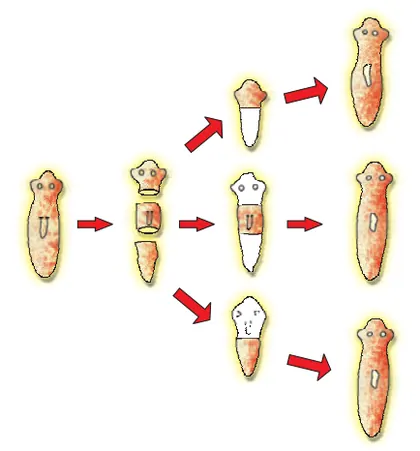
- Fragmentation and regeneration in Planaria — body fragments develop into whole individuals.
- Vegetative propagation in plants — potato tubers, onion bulbs, runners in strawberry produce new plants genetically identical to the parent.
- Spore formation in fungi and some algae — spores dispersed to form new individuals.
- Flowering plants (angiosperms) — sexual reproduction via pollination, fertilisation and seed formation (e.g., pea, mango).
- Mitosis (conceptual count): 1 diploid cell (2n) → 2 diploid cells (2n each)
- Meiosis (conceptual count): 1 diploid cell (2n) → 4 haploid cells (n each)
- Exponential growth for organisms reproducing by binary fission or similar asexual methods: N = N0 × 2^g, where N0 = initial number, g = number of generations
- Relation between time and generations: g = t / T, where t = total time and T = generation time (time per division)
- Instantaneous growth rate (continuous): r = (ln N − ln N0) / t (useful for modelling continuous exponential growth)
Modes of Reproduction
Overview: Reproduction is the biological process by which organisms produce new individuals of the same kind. Modes of reproduction are broadly classified into asexual and sexual reproduction.
Asexual reproduction: A single parent produces offspring without the fusion of gametes. Offspring are genetically nearly identical (clones) of the parent.
- Features: one parent, no gamete formation, fast, little genetic variation.
- Types and brief descriptions:
- Binary fission – parent cell divides into two equal daughters (e.g., Amoeba, many bacteria).
- Budding – a small outgrowth (bud) forms and detaches (e.g., Hydra, yeast).
- Fragmentation – body breaks into pieces each growing into a new individual (e.g., Planaria, some algae).
- Spore formation – resistant spores form and germinate (e.g., fungi like Rhizopus, ferns produce spores).
- Vegetative propagation – new plants develop from vegetative parts (e.g., potato tubers, stem cutting in rose, runners in strawberry).
- Parthenogenesis – development of an egg without fertilization (seen in some insects, e.g., certain bees and aphids).
Sexual reproduction: Involves fusion of male and female gametes (sperm and egg). It generally requires two parents (or a hermaphrodite exchanging gametes) and produces genetically variable offspring.
- Features: gamete formation by meiosis, fertilization (internal or external), genetic recombination and variation, usually slower than asexual methods.
- Typical steps: gametogenesis (meiosis) → fertilization (syngamy) → zygote → development → organism.
- Examples: most animals (humans, birds), flowering plants (pollination, seed formation), many algae and fungi with sexual phases (conjugation in Spirogyra).
Comparative advantages and disadvantages:
- Asexual: fast population increase, no mate required, good in stable environments but low variation — vulnerable to changing conditions/diseases.
- Sexual: generates variation (helpful for adaptation and evolution), but requires more time, energy and may need two parents or special reproductive structures.
Biological importance: Sexual reproduction introduces genetic variation via meiosis and recombination, which is crucial for evolution and survival in changing environments. Asexual reproduction is important for rapid colonization and for propagation of desirable crop varieties (vegetative propagation).
Practical applications (CBSE-relevant): Vegetative propagation methods (cutting, grafting, tissue culture) are used in agriculture and horticulture. Understanding microbial binary fission and exponential growth is important in biotechnology and medicine.
- Amoeba — binary fission (asexual)
- Bacteria (E. coli) — binary fission (asexual); rapid population doubling
- Hydra — budding (asexual)
- Yeast — budding or spore formation (asexual/sexual phases possible)
- Planaria — fragmentation (asexual)
- Rhizopus (bread mold) — spore formation (asexual) and sexual reproduction via zygospores
- Binary fission (discrete doubling): N = N0 × 2^n, where N0 = initial number of organisms, n = number of divisions (generations), N = final number.
- Exponential growth (continuous model): N(t) = N0 × e^(r t), where r = intrinsic growth rate, t = time, e = 2.718...; useful for microbial growth in ideal conditions.
- Doubling time for exponential growth: t_d = ln(2) / r, where ln is natural logarithm and r is growth rate.
Asexual Reproduction
Definition: Asexual reproduction is the process by which a single organism produces offspring without the fusion of gametes. Offspring are genetically almost identical to the parent (clones) because they arise by mitotic division.
Key characteristics:
- One parent only; no gamete fusion or meiosis in the main process.
- Offspring are genetically very similar to the parent (low genetic variation).
- Usually rapid and produces many offspring in a short time.
Main types with short descriptions:
- Binary fission: Parent cell divides into two equal daughter cells (e.g., Amoeba, many bacteria).
- Budding: A small bud grows on the parent, detaches when mature (e.g., Hydra, Yeast).
- Fragmentation: Body breaks into fragments that regenerate into complete organisms (e.g., Spirogyra, planaria).
- Spore formation: Spores produced by mitosis are dispersed and grow into new individuals (e.g., Rhizopus, many fungi, mosses).
- Vegetative propagation: New plants arise from roots, stems or leaves (e.g., potato tubers, runners in strawberry, Bryophyllum leaf buds).
- Regeneration: Recovery of whole organism from a part (e.g., starfish arms regenerating, planaria).
- Parthenogenesis: Development of an embryo from an unfertilised egg (e.g., some insects like aphids, certain reptiles).
Advantages: Fast population increase, no need to find a mate, useful in stable environments.
Disadvantages: Low genetic variation makes populations vulnerable to changing conditions and diseases.
Biological significance: Enables rapid colonisation, survival through dormant spores or buds, and easy propagation of desirable plant varieties (horticulture/agriculture).
- Amoeba — binary fission (one cell splits into two)
- Bacteria (E. coli) — binary fission producing exponential increase
- Yeast — budding (small outgrowth forms and separates)
- Hydra — budding (bud grows and detaches)
- Planaria — fragmentation and regeneration (body pieces form whole worms)
- Spirogyra — fragmentation (filaments break and grow)
- Discrete binary fission growth: N = N0 × 2^n, where N0 = initial number, n = number of generations (division cycles)
- Discrete generations: n = t / g, where t = total time and g = generation time (time per division)
- Continuous exponential growth: N(t) = N0 × e^(r t), where r = intrinsic growth rate (per unit time)
- Doubling time relation: t_d = ln(2) / r, where t_d is the time to double population at rate r
Vegetative Propagation (Asexual in Plants)
Definition: Vegetative propagation is a type of asexual reproduction in plants in which new plants develop from vegetative parts (root, stem, leaf) of the parent plant without formation of seeds. The offspring are genetically identical clones of the parent.
Why it occurs: Many plant parts contain meristematic (undifferentiated) cells that can form adventitious shoots or roots. Vegetative propagation uses this ability to regenerate whole plants.
Types
- Natural methods: stolons/runners (strawberry), rhizomes (ginger), tubers (potato), bulbs (onion, tulip), corms (crocus), suckers (banana), offsets (water hyacinth), leaf-bud (Bryophyllum produces plantlets on leaf margins).
- Artificial (horticultural) methods: cutting (rose, sugarcane), grafting/budding (fruit trees), layering (blackberry), division (herbaceous perennials), tissue culture/micropropagation (disease-free, mass production).
Mechanism
Vegetative propagation involves formation of adventitious buds or roots at sites on stems, leaves, or roots. Plant hormones (auxins for rooting, cytokinins for shoot formation) and environmental conditions (moisture, temperature, light) regulate the process. In artificial methods, practitioners often use rooting hormones and controlled environments to increase success.
Advantages
- Produces uniform plants with desirable traits preserved (true-to-type).
- Faster establishment and earlier harvesting compared to seed-grown plants.
- Useful for plants that do not produce viable seeds or have long juvenile periods.
- Enables propagation of sterile hybrids.
Disadvantages
- Lack of genetic variation — entire crop can be vulnerable to pests and diseases.
- Some methods require skill and care (grafting, tissue culture).
- Diseases can be transmitted to all progeny if parent is infected.
Economic and practical importance
Vegetative propagation is widely used in agriculture and horticulture: potatoes (tubers), sugarcane (stem cuttings), banana (suckers), grapes and roses (cuttings), apple and pear trees (grafting). Tissue culture produces large numbers of disease-free planting materials for commercial crops.
Key points to remember: Vegetative propagation produces clones (genetically identical offspring), uses vegetative organs, can be natural or artificial, and is controlled by meristems and plant hormones.
- Potato: new plants from tubers (eyes).
- Strawberry: runners (stolons) that give rise to daughter plants.
- Ginger: new shoots from rhizomes.
- Onion and Tulip: bulbs produce new plants.
- Bryophyllum: plantlets from leaf margins.
- Sugarcane: stem cuttings produce new crops.
- \[Exponential model of clonal increase (idealized): N(t) = N0 * e^{r t}\]\[where N0 = initial number of plants\]\[r = growth rate\]\[t = time.\]
- Discrete doubling model (if each plant produces 2 offshoots per cycle): N = N0 * 2^n, where n = number of propagation cycles.
- Doubling time: T_d = ln(2) / r (time required for population to double under exponential growth).
- Percent survival/establishment = (Number of successful propagules / Number attempted) * 100.
Sexual Reproduction in Flowering Plants
Overview
Sexual reproduction in flowering plants (angiosperms) involves formation of male and female gametes, their fusion (fertilisation) and development of seeds and fruits. The life cycle shows alternation of generations: a dominant diploid sporophyte (2n) produces haploid (n) gametophytes by meiosis and mitosis.
Flower structure (brief)
- Sepals (calyx) – protect bud.
- Petals (corolla) – attract pollinators.
- Stamen (male) – anther (pollen) + filament.
- Carpel/Pistil (female) – stigma + style + ovary (ovules inside).
Formation of male and female gametophytes
- Microsporogenesis (male): In the anther, microspore mother cells (microsporocytes, 2n) undergo meiosis to give four microspores (n). Each microspore develops into a pollen grain (male gametophyte) by mitotic divisions. Typical mature pollen grain has a vegetative (tube) cell and a generative cell that divides to form two male gametes (sperm cells).
- Megasporogenesis (female): In the ovule, a megaspore mother cell (megasporocyte, 2n) undergoes meiosis to produce four megaspores (n); usually three degenerate and one functional megaspore remains. The functional megaspore undergoes mitotic divisions to form the embryo sac (female gametophyte), typically with 8 nuclei and cells including the egg cell and two polar nuclei.
Pollination
Transfer of pollen from anther to stigma. Types:
- Self-pollination: same flower or same plant (pea).
- Cross-pollination: between different plants (most trees, crops).
Agents: wind (anemophily), insects (entomophily), water (hydrophily), birds, bats, etc.
Fertilisation and double fertilisation
After pollination, pollen grain hydrates on compatible stigma, germinates and produces pollen tube. The tube grows down the style, enters the ovule through the micropyle and releases two male gametes into the embryo sac. Double fertilisation (unique to angiosperms) occurs:
- One male gamete fuses with the egg cell → zygote (diploid, 2n) → embryo.
- The other male gamete fuses with two polar nuclei → primary endosperm nucleus (triploid, 3n) → endosperm (nutritive tissue for embryo).
Seed and fruit formation
The zygote develops into an embryo; ovule matures into a seed; ovary develops into a fruit that protects the seed and aids dispersal. Seeds contain embryo, stored food (endosperm or cotyledons), and seed coat.
Types of flowers and plants important for reproduction
Bisexual (hermaphrodite) flowers have both stamens and carpels (e.g., Hibiscus, pea). Unisexual flowers may be on same plant (monoecious; e.g., maize, cucumber) or on separate plants (dioecious; e.g., papaya).
Significance
- Generates genetic variation (especially via cross-pollination) — important for evolution and crop improvement.
- Seeds and fruits are sources of food, dispersal units and basis of agriculture.
Important terms to remember: microsporocyte, megasporocyte, pollen grain (male gametophyte), embryo sac (female gametophyte), pollination, fertilisation, double fertilisation, endosperm, zygote, seed, fruit.
- Pea (Pisum sativum) — largely self-pollinated; used by Mendel for inheritance studies.
- Maize (Zea mays) — wind-pollinated; male flowers (tassels) and female flowers (cobs) on same plant (monoecious).
- Hibiscus — showy, insect-pollinated bisexual flower.
- Coconut (Cocos nucifera) — often cross-pollinated; some varieties pollinated by wind and insects; fruit is a drupe used by humans.
- Papaya (Carica papaya) — dioecious (separate male and female plants); fruit development only on female plants (or hermaphrodite varieties).
- Microsporocyte (2n) --meiosis--> 4 microspores (n) --> pollen grain (male gametophyte, n)
- Megasporocyte (2n) --meiosis--> 4 megaspores (n) (usually 3 degenerate) --> functional megaspore (n) --> embryo sac (female gametophyte, n)
- Double fertilisation: sperm (n) + egg (n) --> zygote (2n); sperm (n) + 2 polar nuclei (n + n) --> primary endosperm nucleus (3n)
- Ploidy summary: sporophyte (2n) → gametophytes (n) → gametes (n) → zygote (2n)
Pollination
Definition: Pollination is the transfer of pollen grains from the anther (male part) of a flower to the stigma (female receptive surface) of a flower. Successful pollination is a prerequisite for fertilization and seed formation in seed plants, especially angiosperms.
Basic sequence:
- Pollen released from anther → lands on compatible stigma.
- Pollen grain hydrates and germinates, producing a pollen tube that grows through the style toward the ovule.
- The generative cell divides (if needed) to form two male gametes; one fuses with the egg to form a zygote (embryo) and the other fuses with the two polar nuclei to form the endosperm (double fertilization in angiosperms).
Types of pollination:
- Self-pollination — pollen from the anther of a flower lands on the stigma of the same flower (autogamy) or another flower on the same plant (geitonogamy). Advantage: reproductive assurance; Disadvantage: low genetic variation.
- Cross-pollination (xenogamy) — pollen is transferred from the anther of one plant to the stigma of a genetically different plant. Advantage: increases genetic variation and adaptability.
Mechanisms that promote or prevent self-pollination:
- Promoting: cleistogamy (flowers never open), close proximity of anthers and stigma.
- Preventing: self-incompatibility (biochemical), dichogamy (protandry/protogyny — temporal separation of maturity of male and female parts), herkogamy (spatial separation), unisexual flowers.
Pollination agents and floral adaptations:
- Biotic agents
- Insects (entomophily): bright colours, nectar, scent, landing platforms (e.g., rose, mustard, sunflower).
- Birds (ornithophily): tubular flowers, bright red/orange, copious dilute nectar (e.g., Butea, Erythrina).
- Bats (chiropterophily): nocturnal, large pale flowers, strong fruity/fermented smells (e.g., banana, some species of Bauhinia).
- Flies/Beetles: dull-coloured or foul-smelling flowers for carrion flies (e.g., Rafflesia attracts flies).
- Abiotic agents
- Wind (anemophily): inconspicuous flowers, no nectar, abundant light pollen, feathery stigmas (e.g., grasses — wheat, maize, rice).
- Water (hydrophily): pollen transported by water (e.g., Vallisneria).
Importance of pollination: Pollination leads to fertilization and seed/fruit formation. Cross-pollination increases genetic diversity, which enhances disease resistance and adaptability. Many crops and natural ecosystems depend on animal pollinators for yield and biodiversity.
Common terms: pollen grain, stigma, style, ovary, pollen tube, zygote, endosperm, double fertilization.
Practical notes: Conservation of pollinators (bees, butterflies, birds) and habitat is important for food security. Flower design often indicates its likely pollinator (pollination syndrome).
- Bee pollination: Mustard and sunflower — bees collect pollen/nectar and transfer pollen between flowers.
- Butterfly pollination: Gulmohar and Lantana — bright colours and landing sites attract butterflies.
- Wind pollination: Wheat, maize, grasses — produce large quantities of light pollen that the wind disperses.
- Bird pollination: Butea monosperma, Salvia — tubular red/orange flowers with nectar attract sunbirds and hummingbirds.
- Bat pollination: Banana and some nocturnal flowers that open at night and emit strong scents.
- Fly pollination: Rafflesia and some Arum species — emit foul odour attracting carrion flies.
- Pollination efficiency (%) = (Number of pollen grains reaching stigma / Number of pollen grains produced) × 100
- Seed set efficiency (%) = (Number of seeds formed per flower / Number of ovules per flower) × 100
- Symbolic sequence for double fertilization in angiosperms: pollen grain → pollen tube → 2 male gametes; 1 male gamete + egg → zygote (2n), other male gamete + 2 polar nuclei → primary endosperm nucleus (3n)
Fertilisation in Flowering Plants
Definition: Fertilisation in flowering plants is the fusion of male and female gametes resulting in the formation of a zygote that develops into an embryo. In angiosperms (flowering plants) fertilisation is typically double fertilisation.
Key structures involved:
- Stigma, style and ovary (pistil) — path for pollen.
- Pollen grain — male gametophyte producing two male gametes.
- Ovule containing the embryo sac (female gametophyte) — contains egg cell, two polar nuclei, synergids and antipodals.
- Pollen tube — grows from pollen through style to reach the ovule.
Stepwise sequence of events:
- Pollination: Transfer of pollen to a compatible stigma (self or cross).
- Pollen germination: On a receptive stigma the pollen grain germinates and produces a pollen tube; two male gametes move down the tube.
- Pollen-tube entry: The tube enters the ovule through the micropyle and discharges the two male gametes into the embryo sac.
- Double fertilisation:
- One male gamete fuses with the egg cell → zygote (diploid, 2n).
- The other male gamete fuses with the two polar nuclei → primary endosperm nucleus (triploid, 3n) which forms endosperm.
- Post-fertilisation changes: Zygote develops into an embryo; primary endosperm nucleus forms nutritive endosperm. Ovules develop into seeds; ovary develops into fruit.
Types and compatibility: Fertilisation can follow self-pollination (self-fertilisation) or cross-pollination (cross-fertilisation). Many plants have mechanisms to prevent self-fertilisation (herkogamy, dichogamy, self-incompatibility).
Significance of double fertilisation:
- Efficient use of resources: nutritive endosperm forms only if embryo is formed.
- Provides embryo with immediate food (endosperm) for germination.
Conditions necessary for successful fertilisation:
- Viable pollen and receptive stigma.
- Compatible pollen-stigma interaction (no incompatibility systems blocking fusion).
- Proper environmental conditions (temperature, humidity) for pollen tube growth.
Examples of outcomes: Fertilisation leads to seed and fruit formation (e.g., seed inside a mango, pea, or tomato). In some fruits parthenocarpy (fruit without fertilisation) gives seedless fruits (banana, seedless grapes).
- Pea plant (Pisum sativum): often self-fertilises — classical Mendelian studies used peas because of predictable fertilisation.
- Hibiscus: insect-pollinated, shows typical cross-fertilisation with pollen transferred by bees.
- Maize (corn): wind-pollinated; separate male (tassel) and female (silk) flowers on same plant — pollen tube grows down the silk to fertilise the ovule.
- Mango, apple, tomato: after fertilisation, ovary develops into fruit containing seeds.
- Banana and some grapes: seedless fruits produced by parthenocarpy (no fertilisation).
- egg (n) + sperm (n) → zygote (2n)
- polar nuclei (n + n) + sperm (n) → primary endosperm nucleus (3n)
- Mature embryo sac composition (typical): 8 nuclei in 7 cells (not a numeric formula but important structural count)
Seed and Fruit Formation; Seed Structure and Dispersal
Overview: In flowering plants (angiosperms) pollination is followed by fertilization, after which the ovule develops into a seed and the ovary develops into a fruit. Seeds contain the embryo and stored food; fruits protect seeds and aid their dispersal.
Steps: Pollination → Fertilization → Seed & Fruit Formation
- Pollination: Transfer of pollen (male gametophyte) to the stigma.
- Fertilization (double fertilization in angiosperms): One male gamete fuses with the egg cell to form a diploid zygote (embryo). The other male gamete fuses with two polar nuclei to form a triploid primary endosperm nucleus, which gives rise to endosperm (nutritive tissue).
- Seed formation: The zygote develops into an embryo (radicle, plumule, cotyledons). The integuments of the ovule become the seed coat (testa). Endosperm or cotyledons store food.
- Fruit formation: The ovary wall (and sometimes other floral parts) develops into the pericarp—exocarp, mesocarp, endocarp—forming the fruit that encloses seeds.
Seed structure (typical dicot):
- Seed coat (testa) — protection, formed from integuments.
- Embryo — includes radicle (future root), plumule (future shoot), and two cotyledons (seed leaves) in dicots.
- Endosperm — nutritive tissue (often reduced in many dicots as cotyledons store food). In monocots (e.g., cereals) endosperm is a major food reserve.
Monocot vs Dicot seeds: Monocots (e.g., wheat, maize, coconut) have a single cotyledon and large endosperm; dicots (e.g., pea, bean) have two cotyledons which often store food.
Types of fruits: Simple (develop from one ovary; e.g., mango, tomato), aggregate (from many ovaries of one flower; e.g., raspberry), multiple (from ovaries of many flowers in an inflorescence; e.g., pineapple), and accessory fruits (other floral parts contribute; e.g., apple).
Seed dispersal mechanisms: Dispersal (diaspore movement) reduces competition and helps colonization. Principal modes:
- Wind (anemochory): lightweight or winged seeds — e.g., dandelion (pappus), maple (samara).
- Water (hydrochory): buoyant seeds — e.g., coconut.
- Animals (zoochory): external (epizoochory — seeds with hooks, e.g., burrs) or internal (endozoochory — seeds eaten and later excreted, e.g., berries eaten by birds).
- Self (autochory): explosive dehiscence / mechanical ejection — e.g., balsam (touch-me-not), castor).
Importance: Seeds enable survival under unfavorable conditions (dormancy), dispersal to new habitats, and formation of the next generation. Fruits aid protection and targeted dispersal.
- Pea: A dicot seed with two cotyledons; pea pod is a simple fruit (legume).
- Wheat/rice: Monocot grains with large endosperm providing stored food (important cereal crops).
- Mango: Drupe (simple fleshy fruit) with single large seed; pericarp differentiated into exocarp, mesocarp, endocarp.
- Coconut: Fibrous drupe; seed adapted for water dispersal (hydrochory) with large endosperm and buoyant husk.
- Maple: Samara (winged seed) dispersed by wind (anemochory).
- Dandelion: Seeds with pappus (parachute-like hairs) for wind dispersal.
- Male gamete (n) + Egg cell (n) → Zygote (2n) (embryo)
- Male gamete (n) + Polar nuclei (n + n) → Primary endosperm nucleus (3n) → Endosperm (3n)
- Pollination → Fertilization → Ovule → Seed ; Ovary → Fruit
- Ploidy summary: egg = n, male gamete = n, zygote = 2n, primary endosperm nucleus = 3n
Human Reproductive System
Introduction: The human reproductive system produces gametes, facilitates fertilisation and supports development of the embryo into a baby. Reproduction in humans is sexual and involves the fusion of a male gamete (sperm) and a female gamete (ovum) to form a zygote.
Male Reproductive System (major parts & functions):
- Testes (in scrotum) — produce sperm and secrete testosterone. Sperm are produced in seminiferous tubules.
- Epididymis — stores and matures sperm.
- Vas deferens — conducts sperm from epididymis to ejaculatory ducts.
- Accessory glands (seminal vesicles, prostate, bulbourethral glands) — add seminal fluid to sperm to form semen (nourishment, medium for transport).
- Urethra and penis — conduct semen out of the body during ejaculation; also conduct urine at other times.
- Sperm structure — head (nucleus + acrosome), midpiece (mitochondria), tail (flagellum) for motility.
Female Reproductive System (major parts & functions):
- Ovaries — produce ova (eggs) and secrete female hormones (estrogen, progesterone). Each ovary contains follicles with developing oocytes.
- Fallopian tubes / Oviducts — site of fertilisation; transport the ovum to the uterus by ciliary action and muscular contraction.
- Uterus — muscular organ where the embryo implants and develops. Inner lining = endometrium.
- Cervix — narrow neck of uterus opening into the vagina; produces mucus that changes during cycle.
- Vagina — receives penis during intercourse and forms birth canal.
Gametogenesis:
- Spermatogenesis — continuous process in testes after puberty producing many sperm by meiosis; duration ≈ 64 days from spermatogonia to mature sperm.
- Oogenesis — production of ova. Primary oocytes form before birth and are arrested in prophase I. At puberty, each month hormonal signals resume development of one follicle; meiosis I completes to form a secondary oocyte (arrested in metaphase II) and a polar body. Meiosis II completes only after fertilisation, producing the ovum and another polar body.
Menstrual (Ovarian) Cycle and Hormonal Control (typical 28-day cycle):
- Phases: Menstrual (days 1–5, shedding of endometrium), Follicular / Proliferative (days 6–13, follicle growth & endometrium rebuilds), Ovulation (around day 14, release of secondary oocyte), Luteal / Secretory (days 15–28, corpus luteum formed and secretes progesterone).
- Key hormones: FSH (follicle growth), LH (triggers ovulation), Estrogen (endometrium buildup; prepares for ovulation), Progesterone (maintains endometrium after ovulation).
- LH surge triggers ovulation. If fertilisation does not occur, the corpus luteum degenerates (~14 days), progesterone falls, and menstruation begins.
Fertilisation, Pregnancy and Development:
- Fertilisation is internal, usually in the fallopian tube, where a sperm penetrates the secondary oocyte to form a zygote (restores diploid chromosome number).
- The zygote undergoes cleavage to form a blastocyst which implants into the uterine endometrium (implantation).
- The placenta forms to exchange nutrients, gases and wastes between mother and fetus and to secrete hormones (e.g., hCG initially, then progesterone support).
- Gestation period for humans ≈ 280 days (about 9 months) from the last menstrual period.
Birth and Lactation:
- Labour (parturition) involves rhythmic uterine contractions controlled by oxytocin and prostaglandins; cervix dilates and the baby is delivered through the birth canal.
- Lactation: prolactin stimulates milk production; oxytocin causes milk ejection (let-down reflex) during suckling.
Reproductive Health and Examples of Technologies:
- Contraception methods: barrier (condoms), hormonal (combined oral contraceptives, progesterone methods), intrauterine devices (IUDs), sterilisation (vasectomy/tubal ligation).
- Assisted reproductive technologies (ART): in vitro fertilisation (IVF) for infertility, intracytoplasmic sperm injection (ICSI), embryo transfer.
- Common causes of infertility include low sperm count/motility, blocked fallopian tubes, hormonal imbalances; many are treatable.
Summary Points:
- Humans reproduce sexually: specialized male and female organs produce gametes that fuse during fertilisation.
- Hormones tightly regulate gamete production, menstrual cycle and pregnancy.
- Understanding reproduction helps in family planning, addressing infertility, and maintaining reproductive health.
- Contraception: Using a condom prevents sperm from reaching the ovum and also reduces sexually transmitted infections — real-life method for family planning.
- IVF (In Vitro Fertilisation): Eggs are collected from ovaries and fertilised by sperm in a lab; the embryo is then implanted into the uterus — used when natural conception is difficult.
- Twin formation: Fraternal twins arise when two different eggs are fertilised by two different sperms (dizygotic), identical twins arise from splitting of a single zygote (monozygotic).
- Menstrual tracking: For a woman with a 30-day cycle, ovulation often occurs around day 30 - 14 = day 16. The fertile window is approximately days 14–18 (ovulation ±2 days).
- Gestation dating: Using Naegele's rule, if a woman’s last menstrual period (LMP) began on 1 January, estimated date of delivery (EDD) ≈ 1 October (LMP + 280 days).
- Day of ovulation ≈ (Length of menstrual cycle) − 14. Example: For a 28-day cycle, ovulation ≈ day 14.
- Estimated Date of Delivery (Naegele’s rule): EDD ≈ Date of LMP + 280 days (≈ 40 weeks).
- Fertile window approximation: Ovulation day ± 2 days. Example: If ovulation = day 14, fertile days ≈ day 12 to day 16.
Human Reproductive Cycle and Fertilisation
Overview
Human reproduction is sexual and involves production of male (sperm) and female (ovum) gametes by meiosis, followed by fertilisation to form a zygote that develops into an embryo and then fetus.
Male vs Female
Male: continuous production of sperm in testes (spermatogenesis). Female: cyclic events (menstrual cycle) that prepare an ovum and the uterus for possible pregnancy.
Female Reproductive (Menstrual) Cycle — typical 28-day pattern
- Phases (approximate days)
- Menstrual phase (days 1–5): shedding of the uterine lining (endometrium) if there is no pregnancy.
- Follicular (proliferative) phase (days 6–13): FSH stimulates growth of ovarian follicles; developing follicles secrete estrogen which rebuilds the endometrium.
- Ovulation (~day 14): a sudden LH surge (triggered by high estrogen) causes the dominant follicle to release the ovum (egg).
- Luteal (secretory) phase (days 15–28): the ruptured follicle becomes corpus luteum, secreting progesterone (and some estrogen) to make the endometrium receptive for implantation; if fertilisation does not occur the corpus luteum degenerates leading to menstruation.
- Key hormones: FSH (follicle growth), LH (ovulation & corpus luteum support), estrogen (endometrium proliferation), progesterone (endometrium maintenance). Hormone levels change through the cycle and coordinate ovarian and uterine events.
Fertilisation
Fertilisation normally occurs in the ampullary region of the fallopian tube within about 24 hours after ovulation. Key steps:
- Sperm transport and capacitation in the female tract (capacitated sperm can fertilise).
- Acrosome reaction: enzymes released to penetrate the zona pellucida (egg’s protective layer).
- Fusion of sperm and egg membranes; cortical reaction in the egg prevents entry of additional sperms (prevents polyspermy).
- Formation of male and female pronuclei which fuse to form the zygote (restores diploid chromosome number).
- Cleavage (cell divisions): zygote → morula → blastocyst; blastocyst implants in the uterine lining around days 6–7 post-fertilisation.
Timing and fertile window
Sperm can survive in the female reproductive tract up to about 3–5 days; the ovum is viable ~12–24 hours after ovulation. The fertile window is therefore roughly 5 days before ovulation to 1 day after ovulation, with highest probability on the day of and day before ovulation.
Outcomes
If fertilisation and implantation occur, the embryo produces hCG which maintains the corpus luteum and progesterone production to support early pregnancy. If fertilisation does not occur, falling progesterone causes the uterine lining to break down (menstruation) and the cycle restarts.
Clinical/Practical notes
Methods like hormonal contraceptives prevent ovulation or change the uterine environment. Assisted reproductive techniques (e.g., IVF) retrieve eggs and fertilise them outside the body. Ectopic (tubal) pregnancy is implantation outside the uterus and is a medical emergency.
- Tracking menstrual cycle to estimate ovulation: for a 30-day cycle ovulation is likely around day 30 − 14 = day 16; peak fertility is roughly day 13–17.
- In vitro fertilisation (IVF): eggs are collected, fertilised in laboratory, and resulting embryos are implanted in the uterus.
- Hormonal contraceptive pill: supplies estrogen and progesterone (or only progestin) to suppress the LH/FSH surge and prevent ovulation.
- Ectopic pregnancy example: fertilised egg implants in the fallopian tube causing abdominal pain and requires immediate medical attention.
- Chromosome relation in gametes and zygote: gamete (n = 23) + gamete (n = 23) → zygote (2n = 46).
- Meiosis summary: diploid (2n) → meiosis → haploid (n).
- Estimate ovulation day: Ovulation day ≈ (Length of cycle) − 14. (Example: 28-day cycle → ovulation ≈ day 14.)
- Fertile window ≈ ovulation day ± 3 days (because sperm may survive up to 3–5 days).
- Human gestation ≈ 280 days ≈ 40 weeks ≈ 9 months (from last menstrual period).
Reproductive Health, Contraception and Sexually Transmitted Diseases
Overview
Reproductive health means physical, mental and social well-being in all matters related to the reproductive system and its functions. It includes safe pregnancy and childbirth, access to correct information and services (family planning, safe contraception), prevention and treatment of sexually transmitted diseases (STDs), and respectful reproductive rights.
Key components of reproductive health
- Education: Age-appropriate sex education that explains human reproduction, consent and safe practices.
- Family planning and contraception: Methods for preventing unwanted pregnancy and planning the timing/number of children.
- Antenatal and postnatal care: Regular medical check-ups, nutrition, immunisations and safe delivery practices for mother and child.
- STD prevention and treatment: Early diagnosis, prompt treatment, partner notification and prevention (vaccination where available).
- Access to services: Clinics, counselling, skilled birth attendants and emergency care.
Contraception: types and how they work
- Natural methods – e.g., rhythm (calendar) method, abstinence, withdrawal. (Lower reliability; depend on correct use and cycle regularity.)
- Barrier methods – e.g., male and female condoms, diaphragms. They block sperm from reaching the egg. Condoms also reduce STDs transmission. (Typical-use effectiveness: condoms ≈ 85%.)
- Hormonal methods – e.g., combined oral contraceptive pills, progestin-only pills, contraceptive injections, implants. They prevent ovulation and/or thicken cervical mucus. (Pills typical-use ≈ 91%.)
- Intrauterine devices (IUDs) – copper or hormonal devices placed in uterus. They prevent fertilisation or implantation. (Effectiveness ≈ 99%.)
- Emergency contraception – pills taken after unprotected sex to reduce chance of pregnancy; should not be used as regular contraception.
- Sterilisation – tubectomy (female) or vasectomy (male). Permanent methods that prevent gamete transport. (Effectiveness >99%.)
Choice of method depends on health, convenience, future childbearing plans and protection needed against STDs (only condoms protect against most STDs).
Sexually Transmitted Diseases (STDs) — what to know
Common STDs: chlamydia, gonorrhea, syphilis, genital herpes, human papillomavirus (HPV), hepatitis B, and HIV/AIDS. Some are bacterial (treatable with antibiotics), some viral (managed with antivirals or prevented by vaccine), and some can cause long-term complications if untreated (infertility, cancers).
- Transmission: sexual contact (vaginal, anal, oral), sharing needles, mother-to-child during pregnancy/delivery or breastfeeding (for some infections), and rarely via blood transfusion if unscreened.
- Common symptoms: unusual discharge, genital sores or warts, burning during urination, lower abdominal pain, fever, or sometimes no symptoms (asymptomatic carriers are common).
- Prevention: consistent condom use, vaccination (HPV, hepatitis B), regular testing, mutual monogamy with an uninfected partner, avoiding sharing needles, and early treatment of infected persons and their partners.
- Treatment: Bacterial STDs (e.g., gonorrhea, chlamydia, syphilis) are treated with appropriate antibiotics. Viral STDs (e.g., HIV, herpes) are managed with antiviral drugs; HPV-related cancers can be prevented by vaccination and screening (e.g., cervical screening).
Public-health importance
Good reproductive health and contraception reduce maternal and infant mortality, control unintended pregnancies, slow unsustainable population growth and decrease STD spread. Education, easy access to services, and destigmatization increase uptake of safe practices.
When to seek medical help
- If you notice unusual discharge, sores, pelvic pain, fever, or bleeding.
- If you have had unprotected sex and are worried about pregnancy or STDs.
- For routine screening during adolescence and adulthood, and for vaccination (HPV, hepatitis B).
Note for students: Respect privacy, avoid myths, and rely on trusted medical sources and healthcare providers for accurate information.
- Condom use: A couple uses a male condom correctly every time; this both helps prevent pregnancy and greatly reduces risk of HIV and many other STDs.
- Oral contraceptive pill: A woman takes combined birth-control pills daily to prevent ovulation and avoid unintended pregnancy (does not protect against STDs).
- IUD: A woman gets a copper IUD inserted by a doctor; it provides long-term (several years) contraception with very high effectiveness.
- Sterilisation: After completing their family, a couple chooses vasectomy (male sterilisation) — a simple surgical procedure with permanent contraception.
- STD case: A sexually active person develops genital discharge and seeks testing; diagnosed with chlamydia and cured after a prescribed antibiotic course — illustrating importance of testing and treatment.
- Vaccination: Adolescent girls (and boys) receive the HPV vaccine to prevent infection by high-risk HPV strains that can cause cervical and other cancers.
- Prevalence (%) = (Total existing cases of disease at a time / Total population at that time) × 100
- Incidence rate (per 1,000 per year) = (New cases during period / Population at risk during period) × 1,000
- Population growth rate (approx.) = (Crude birth rate - Crude death rate) / 10 (gives % per year)
- Contraceptive effectiveness (%) ≈ (1 - failure rate) × 100 — or reported as 'typical-use' and 'perfect-use' effectiveness rates
Comparison: Sexual vs Asexual Reproduction and Role in Evolution
Overview
Reproduction produces new individuals. There are two main modes: asexual (one parent, offspring genetically similar or identical to parent) and sexual (two parents, offspring genetically different). Both ensure continuity of species but differ in mechanism, genetic outcome and evolutionary consequences.
Key differences (concise)
- Number of parents: Asexual — one; Sexual — two (or gametes from two individuals).
- Genetic variation: Asexual — very low (clones); Sexual — high (recombination + independent assortment + fertilization).
- Cell division: Asexual — usually mitosis; Sexual — meiosis to produce gametes, fertilization to form zygote.
- Rate of reproduction: Asexual — often rapid, large numbers quickly; Sexual — generally slower, requires finding mate or pollination.
- Adaptation & evolution: Asexual — good in stable environments; Sexual — favours adaptability and rapid evolution in changing environments.
Mechanisms that create genetic variation in sexual reproduction
- Independent assortment: During meiosis I, different combinations of maternal and paternal chromosomes segregate into gametes.
- Crossing over (recombination): Exchange of genetic material between homologous chromosomes in prophase I of meiosis.
- Fertilization: Random fusion of two genetically different gametes.
Why variation matters for evolution
Evolution by natural selection requires (1) variation in traits, (2) heritability, and (3) differential survival/reproduction. Sexual reproduction generates abundant heritable variation which natural selection can act on, allowing faster adaptation to changing environments (e.g., new diseases, climate changes). Asexual populations rely mainly on random mutations for new variants — slower but efficient when conditions are stable.
Trade-offs & ecological roles
- Asexual reproduction: energetically cheap, fast population growth, colonization advantage (e.g., bacteria, some plants, many invertebrates).
- Sexual reproduction: cost of finding/attracting mates and producing gametes, but produces diversity that helps long-term survival under variable conditions.
Summary sentence
Asexual reproduction yields rapid, uniform offspring ideal for stable environments; sexual reproduction produces diverse offspring that fuel evolution and adaptation in changing environments.
- Asexual: Binary fission in bacteria (Escherichia coli) — one bacterium divides into two identical cells.
- Asexual: Budding in Hydra — a new individual grows out of the parent and detaches.
- Asexual: Vegetative propagation in potato (tuber) and runner formation in strawberry — plant clones produced without seeds.
- Asexual: Fragmentation in Planaria — body fragments regenerate into whole worms.
- Sexual: Human reproduction — sperm and egg (gametes) form a zygote; offspring genetically different from parents.
- Sexual: Flowering plants (e.g., pea, mango) — pollination, fertilization and seed formation produce genetically varied progeny.
- Chromosomes in gamete = (chromosomes in somatic cell) / 2 (e.g., human somatic 46 → gamete 23).
- Number of possible combinations from independent assortment ≈ 2^n, where n = number of chromosome pairs (for humans n = 23 → about 2^23 combinations from independent assortment alone).
- Genetic variation source (qualitative expression): Variation_total ≈ Variation_independent_assortment + Variation_recombination + Variation_mutation + Variation_migration (no strict numerical formula at Class 10 level but these are the contributing processes).
Biotechnological Methods Related to Reproduction
Overview: Biotechnological methods related to reproduction are techniques that help produce, multiply or manipulate organisms (plants, animals, humans) using biological knowledge and laboratory procedures. These methods are used to improve agriculture, conserve species, treat infertility, and produce disease‑free or genetically superior organisms.
Major methods:
- Tissue culture / Micropropagation (plants)
Small pieces of plant tissue (explants) are aseptically placed on nutrient media with hormones to produce many plants. Stages: sterilization → callus formation → shoot induction → root induction → hardening and planting. Useful for rapid multiplication of elite, virus‑free plants and for rare species conservation.
- Artificial Insemination (AI)
Semen collected from a chosen male is processed and deposited into the female reproductive tract at the optimal time. Widely used in dairy cattle, horses and other livestock to spread desirable genes without moving animals.
- Embryo Transfer (ET)
Superovulation of a superior female → breeding/AI → collection of embryos → transfer of embryos into surrogate females. Allows one high‑value female to produce many offspring per year by using multiple surrogates.
- In Vitro Fertilization (IVF)
Oocytes are collected from an ovary and fertilized by sperm in the laboratory. Resulting embryos are cultured and one or more are transferred to the mother’s uterus. Used in human fertility treatment and animal breeding.
- Cloning (Somatic Cell Nuclear Transfer, SCNT)
Nucleus from a somatic (body) cell of the donor is transferred into an enucleated egg cell; the reconstructed egg is stimulated to divide and develop into an embryo which is then implanted into a surrogate. Produces a genetic copy (clone) of the donor.
Applications:
- Mass propagation of elite or endangered plants (micropropagation).
- Improve livestock genetics and productivity (AI, ET).
- Treat human infertility (IVF).
- Produce genetically identical animals for research, agriculture or conservation (cloning).
- Produce disease‑free planting material (tissue culture).
Advantages and limitations:
- Advantages: rapid multiplication, controlled breeding, preservation of desirable traits, prevention of disease spread, treatment of infertility.
- Limitations: cost, technical expertise required, ethical concerns (especially cloning, human IVF), variable success rates, possible loss of genetic diversity if overused.
Practical/ethical notes: Many methods (AI, ET, tissue culture) are routine in agriculture. Cloning and human reproductive technologies raise social and ethical questions (identity, animal welfare, long‑term effects) and are regulated differently across countries.
Summary: These biotechnological reproductive techniques—micropropagation, AI, ET, IVF and cloning—are powerful tools for increasing productivity, conserving species and treating infertility when used responsibly.
- Micropropagation of banana and orchids to produce large numbers of disease‑free plants in a short time.
- Artificial insemination in dairy cattle (e.g., Holstein cows) to introduce superior sires across farms without transporting bulls.
- Embryo transfer in cattle: superovulating a prize cow, collecting multiple embryos, and implanting them in surrogate cows to increase offspring number.
- In vitro fertilization: first human IVF baby (Louise Brown, 1978); routine IVF clinics helping couples with infertility.
- Cloning: Dolly the sheep (1996) — the first mammal cloned from an adult somatic cell using somatic cell nuclear transfer.
- Cell doubling model (idealized for tissue/cell cultures): N = N0 × 2^n, where N0 = initial cell number, n = number of doublings.
- Exponential growth (continuous): N(t) = N0 × e^(kt), where k = growth rate constant; doubling time td = ln(2)/k.
- Success rate (for IVF, AI, ET): Success (%) = (number of successful pregnancies / number of attempts) × 100.
- Production multiplier for embryo transfer: Offspring per donor per year ≈ (embryos collected per flushing × fraction viable × number of flushings per year). (Used for planning; actual values vary.)
Key Concepts
- Reproduction
- Biological process by which organisms produce new individuals of the same kind.
- Asexual reproduction
- Mode of reproduction involving a single parent without fusion of gametes; offspring are genetically identical to the parent.
- Sexual reproduction
- Reproduction involving fusion of male and female gametes producing genetically varied offspring.
- Binary fission
- A form of asexual reproduction where a single organism divides into two equal daughter organisms.
- Budding
- A new individual develops from an outgrowth (bud) on the parent and detaches when mature.
- Fragmentation
- Asexual reproduction where the parent body breaks into fragments, each of which can grow into a new organism.
- Spore formation
- Production of spores (usually single-celled reproductive units) that can germinate into new organisms.
- Vegetative propagation
- Asexual reproduction in plants using vegetative parts (stem, root, leaf) to form new plants.
- Cutting
- A vegetative propagation method where a piece of stem or leaf is cut and rooted to form a new plant.
- Grafting
- Joining a shoot (scion) of one plant to the rootstock of another so they grow as one plant, combining desirable traits.
- Micropropagation (Tissue culture)
- Technique of producing many identical plants from small tissue pieces in sterile, nutrient media.
- Pollination
- Transfer of pollen grains from the anther to the stigma of a flower, enabling fertilization.
- Fertilization
- Fusion of male and female gametes to form a zygote, marking the start of a new organism.
- Double fertilization
- A unique process in angiosperms where one sperm fuses with the egg (forming zygote) and the other fuses with two polar nuclei to form endosperm.
- Gamete
- A haploid sex cell (male or female) that fuses with another gamete during sexual reproduction.
- Pollen
- Microscopic grains produced by the anther that contain the male gametes of seed plants.
- Zygote
- The diploid cell formed immediately after the fusion of male and female gametes; develops into an embryo.
- Seed
- Matured ovule of a flowering plant containing an embryo and stored food, enclosed in a protective coat.
- Embryo
- The young developing plant within a seed formed from the zygote.
- Meiosis
- Special type of cell division that reduces chromosome number by half to produce haploid gametes and introduces genetic variation.
End-of-Chapter Trial Paper & Test Questions
Topic-wise questions to test your understanding of every concept in this chapter.
-
Why is variation beneficial to a species, even though variants may not be useful to the individual at the time? / विविधता किसी जाति के लिए लाभदायक क्यों है, भले ही वह उस समय व्यष्टि के लिए उपयोगी न हो?
Show answer
Variation produced through sexual reproduction increases the chance that some individuals will survive when the environment changes. / लैंगिक जनन द्वारा उत्पन्न विविधता इस संभावना को बढ़ाती है कि पर्यावरण बदलने पर कुछ व्यष्टि जीवित रह सकें। This ensures the long-term survival and adaptation of the species and provides raw material for evolution. / यह जाति के दीर्घकालिक अस्तित्व व अनुकूलन को सुनिश्चित करती है तथा विकास के लिए कच्चा माल प्रदान करती है।
-
Distinguish between asexual and sexual reproduction on the basis of number of parents and genetic variation. / अलैंगिक व लैंगिक जनन में जनकों की संख्या व आनुवंशिक विविधता के आधार पर अंतर बताइए।
Show answer
Asexual reproduction involves a single parent and produces genetically identical offspring (clones) with little variation. / अलैंगिक जनन में एक ही जनक होता है और आनुवंशिक रूप से समान संतान (क्लोन) उत्पन्न होती है जिसमें बहुत कम विविधता होती है। Sexual reproduction involves two parents and fusion of gametes, producing genetically variable offspring. / लैंगिक जनन में दो जनक तथा युग्मकों का संलयन होता है, जिससे आनुवंशिक रूप से विविध संतान उत्पन्न होती है।
-
Explain double fertilisation in flowering plants and name the products formed. / पुष्पी पौधों में द्विनिषेचन को समझाइए तथा बनने वाले उत्पादों के नाम दीजिए।
Show answer
Two male gametes are released into the embryo sac; one fuses with the egg cell to form the diploid (2n) zygote. / दो नर युग्मक भ्रूणकोष में मुक्त होते हैं; एक अंड कोशिका से संयोजित होकर द्विगुणित (2n) युग्मनज बनाता है। The other fuses with the two polar nuclei to form the triploid (3n) primary endosperm nucleus, which forms the nutritive endosperm. / दूसरा दो ध्रुवीय केंद्रकों से संयोजित होकर त्रिगुणित (3n) प्राथमिक भ्रूणपोष केंद्रक बनाता है, जो पोषक भ्रूणपोष बनाता है।
-
Why is vegetative propagation widely used in agriculture and horticulture? Give two reasons. / कृषि व बागवानी में कायिक प्रवर्धन का व्यापक उपयोग क्यों होता है? दो कारण दीजिए।
Show answer
It produces plants genetically identical to the parent, preserving desirable traits (true-to-type), and allows faster growth and earlier flowering/fruiting than seeds. / यह जनक के समान आनुवंशिक रूप से पौधे उत्पन्न करता है, वांछित गुणों को बनाए रखता है, तथा बीजों की तुलना में तीव्र वृद्धि व शीघ्र पुष्पन/फलन देता है। It is also useful for plants that do not produce viable seeds, such as banana and seedless grapes. / यह उन पौधों के लिए भी उपयोगी है जो जीवनक्षम बीज नहीं बनाते, जैसे केला व बीजरहित अंगूर।
-
Differentiate between self-pollination and cross-pollination, stating one advantage of cross-pollination. / स्वपरागण व परपरागण में अंतर बताइए, परपरागण का एक लाभ लिखिए।
Show answer
In self-pollination pollen is transferred to the stigma of the same flower or plant, while in cross-pollination it is transferred to a different plant of the same species. / स्वपरागण में परागकण उसी पुष्प या पौधे के वर्तिकाग्र पर पहुँचते हैं, जबकि परपरागण में वे उसी जाति के भिन्न पौधे पर पहुँचते हैं। Cross-pollination increases genetic variation, improving adaptability and disease resistance. / परपरागण आनुवंशिक विविधता बढ़ाता है, जिससे अनुकूलन क्षमता व रोग प्रतिरोधकता बेहतर होती है।
-
Name the hormone that triggers ovulation and describe the fate of the corpus luteum if fertilisation does not occur. / अंडोत्सर्ग को प्रेरित करने वाले हार्मोन का नाम बताइए तथा निषेचन न होने पर पीत पिंड (कॉर्पस ल्यूटियम) की दशा बताइए।
Show answer
A surge of luteinising hormone (LH) triggers ovulation around day 14. / ल्यूटिनाइजिंग हार्मोन (LH) की वृद्धि लगभग 14वें दिन अंडोत्सर्ग को प्रेरित करती है। If fertilisation does not occur, the corpus luteum degenerates, progesterone falls, the endometrium breaks down and menstruation begins. / यदि निषेचन नहीं होता, तो पीत पिंड क्षीण हो जाता है, प्रोजेस्टेरॉन घटता है, गर्भाशय की भीतरी परत टूट जाती है और रजोधर्म आरंभ होता है।
-
A woman has a 30-day menstrual cycle. Estimate her day of ovulation and explain the basis of your calculation. / एक महिला का रजोचक्र 30 दिन का है। उसके अंडोत्सर्ग का दिन अनुमानित कीजिए तथा गणना का आधार समझाइए।
Show answer
Day of ovulation ≈ cycle length − 14 = 30 − 14 = day 16. / अंडोत्सर्ग का दिन ≈ चक्र की लंबाई − 14 = 30 − 14 = 16वाँ दिन। This is because the luteal phase (from ovulation to menstruation) is relatively fixed at about 14 days. / ऐसा इसलिए क्योंकि ल्यूटियल प्रावस्था (अंडोत्सर्ग से रजोधर्म तक) लगभग 14 दिन की अपेक्षाकृत स्थिर होती है।
-
Why is the use of condoms recommended over other contraceptive methods for preventing sexually transmitted diseases? / यौन संचारित रोगों की रोकथाम हेतु अन्य गर्भनिरोधक विधियों की तुलना में कंडोम के उपयोग की सिफारिश क्यों की जाती है?
Show answer
Condoms are a barrier method that physically blocks contact and the exchange of body fluids during intercourse. / कंडोम एक रोधक विधि है जो संभोग के दौरान संपर्क व शारीरिक तरलों के आदान-प्रदान को भौतिक रूप से रोकती है। Unlike hormonal pills, IUDs or sterilisation, condoms also prevent the transmission of most STDs including HIV. / हार्मोनी गोलियों, IUD या नसबंदी के विपरीत, कंडोम HIV सहित अधिकांश यौन संचारित रोगों के संचरण को भी रोकते हैं।
Related Laws & Principles
Explore allFoundational laws & principles behind this chapter. Each one opens a full page — what it says, why it matters, five practice questions and the mistakes to avoid.