Overview
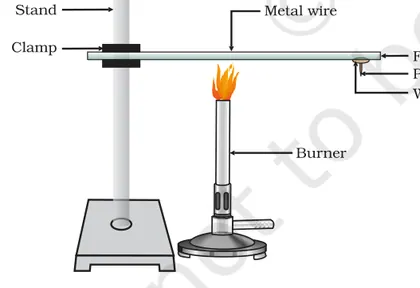
Introduction: The NCERT Class 10 chapter "Metals and Non-Metals" introduces the fundamental physical and chemical differences between metals and non-metals, explains their reactions, and links these ideas to everyday applications such as extraction of metals, prevention of corrosion and the use of alloys. The chapter develops observational and conceptual skills through simple experiments and balanced chemical equations. Importance: Understanding metals and non-metals is central to chemistry and technology: it explains why materials behave as they do, informs mining and metal-extraction processes, guides the design of corrosion-resistant materials and alloys, and underpins many industrial and household applications (wires, cookware, coins, containers, etc.). The chapter also prepares students to predict reaction outcomes using the reactivity series and to write/interpret chemical equations. Key themes: - Physical properties (lustre, malleability, ductility, conductivity, sonority, state, melting/boiling points) distinguishing metals and non-metals. - Chemical properties: reactions with oxygen, water and acids; displacement reactions; formation of oxides and salts. - Reactivity…
Learning Objectives
- Define metals and non-metals and give two examples of each.
- Describe physical properties of metals and non-metals, citing one example for each key property (luster, malleability, ductility, conductivity, brittle nature).
- Explain chemical properties of metals: reactions with oxygen, water and dilute acids, including one balanced equation for each type of reaction.
- Predict products and write balanced chemical equations for reactions between given metals and oxygen, water or dilute acids.
- Classify common elements into a reactivity series and justify the relative positions of metals using representative reactions.
- Explain formation of ionic compounds between metals and non-metals and write their chemical formulas and systematic names.
- Distinguish between ionic and covalent bonding by stating two characteristic differences and providing one example of each type of compound.
- Identify amphoteric oxides from a list and explain their reactions with acids and bases with balanced equations.
Topics in this chapter
16 topics · tap a topic title to jump straight to it.
Overview
What this topic covers
This overview introduces the basic physical and chemical differences between metals and non‑metals, how metals occur and are extracted, the reactivity series, and important processes such as corrosion and alloying.
Physical properties
- Metals: generally lustrous, good conductors of heat and electricity, malleable and ductile, usually solid at room temperature (except Hg), high melting and boiling points (many).
- Non‑metals: lack metallic luster, poor conductors (except graphite), brittle if solid, wide range of melting/boiling points, may be gases, liquids or solids.
Chemical behaviour
- Metals tend to lose electrons to form cations (e.g., M → M^{n+} + ne^-). Their oxides are usually basic; many react with oxygen, water and acids.
- Non‑metals tend to gain electrons to form anions or share electrons (covalent bonding). Non‑metal oxides are often acidic (e.g., CO2, SO2).
Occurrence and extraction
Metals are found as native metals (e.g., gold) or in ores — minerals from which metals are obtained. General steps in extraction: concentration of ore (removal of gangue), conversion to oxide (if needed), reduction of oxide to metal (by chemical reduction with carbon or by electrolytic reduction), and refining (e.g., electrolytic refining) to get pure metal.
Reactivity series (summary)
Metals are arranged by ease of losing electrons. Very reactive metals (K, Na, Ca, Mg, Al) react with water/air; moderately reactive (Zn, Fe) react with acids; less reactive (Cu, Ag, Au) do not react easily. Reactivity determines extraction method and displacement reactions.
Important applications and processes
Alloys (mixtures of metals and sometimes non‑metals) are made to improve properties (e.g., steel = Fe + C). Corrosion (e.g., rusting of iron) is the chemical deterioration of metals — prevented by painting, galvanizing, sacrificial protection. Amphoteric behaviour: some metal oxides/hydroxides (e.g., ZnO, Al2O3) react with both acids and bases.
How this helps you
Understanding these basics lets you predict reactions (metal + acid → salt + H2), choose extraction/refinement methods, and apply everyday concepts like why aluminium doesn’t rust easily or why iron objects need protection.
- Iron (Fe): lustrous, malleable, reacts with dilute HCl to give FeCl2 and H2 (used in construction, susceptible to rusting).
- Copper (Cu): good conductor, does not react with dilute HCl (used for electrical wiring), obtained from copper ores by reduction and refinement.
- Sodium (Na): very reactive metal, reacts vigorously with water to form NaOH and H2 (kept under oil).
- Sulfur (S): non‑metal, brittle yellow solid, forms acidic oxides (SO2) used in industry.
- Aluminium (Al): light metal with protective oxide layer (Al2O3) making it corrosion‑resistant; used in aircraft and packaging.
- Zinc (Zn): used for galvanizing iron to prevent rusting; its oxide is amphoteric.
- \[General metal oxidation: M → M^{n+} + ne^- (metals lose electrons to form cations).\]
- Metal + oxygen (combustion): 2Mg + O2 → 2MgO (basic oxide formed).
- Metal + water (reactive metals): 2Na + 2H2O → 2NaOH + H2↑.
- Metal + acid: Zn + H2SO4 → ZnSO4 + H2↑ (displacement of hydrogen).
- Displacement between metals: CuSO4 + Fe → FeSO4 + Cu (more reactive metal displaces less reactive metal from its salt).
- Rusting (simplified): 4Fe + 3O2 + 6H2O → 4Fe(OH)3 → Fe2O3·nH2O (hydrated iron(III) oxide, 'rust').
Physical properties of metals
Definition: Metals are elements that generally show a characteristic set of physical properties such as lustre, malleability, ductility, thermal and electrical conductivity, and high density. These properties arise from their metallic bonding in which positive metal ions are surrounded by a 'sea' of delocalised electrons.
Why metals show these properties (Electron-sea model): In a metallic lattice each metal atom donates one or more valence electrons to a shared pool of delocalised electrons. The positive metal ions are held together by electrostatic attraction to this sea of electrons. Mobile electrons allow metals to conduct electricity and heat; the non-directional bonding allows layers of atoms to slide past one another (giving malleability and ductility); and the free electrons reflect light (giving lustre).
- Lustre (Shiny appearance): Free electrons absorb and re-emit visible light, so freshly cut metal surfaces appear shiny. Example: gold, silver, aluminium foil.
- Malleability: Metals can be beaten into thin sheets because metal ions can slide over each other without breaking the metallic bond. Example: aluminium is made into foil; gold beaten into gold leaf.
- Ductility: Metals can be drawn into wires as atoms slip in layers under tensile stress. Example: copper and aluminium wires in electrical wiring.
- Electrical conductivity: Due to mobile (delocalised) electrons, metals conduct electric current. Conductivity is high in copper, silver and aluminium. (Mercury is a metal but liquid at room temperature.)
- Thermal conductivity: Free electrons transfer kinetic energy rapidly through the lattice, so metals are good conductors of heat. Example: cooking pans are made of copper or aluminium.
- Sonorous: Metals produce sound when struck because the regular lattice transmits vibrations well. Example: bells and musical cymbals.
- High density, melting and boiling points: Most metals have high densities and relatively high melting/boiling points due to strong metallic bonds (exceptions exist: sodium, potassium have low melting points; mercury is liquid).
- Crystalline and opaque: Most metals are crystalline solids at room temperature and are opaque (they do not transmit light).
Typical exceptions & remarks: Mercury (Hg) is a metal that is liquid at room temperature. Some metals (alkali metals) are soft and have low melting points. Alloys (e.g., brass, bronze, steel) modify physical properties — e.g., steel is harder and less ductile than pure iron.
Summary (cause → effect): Metallic bonding (delocalised electrons + positive ion lattice) → free electrons & flexible/non-directional bonds → electrical/thermal conductivity, lustre, malleability, ductility, sonorous nature, etc.
- Silver and gold jewellery — lustre and malleability (gold can be beaten into foil)
- Aluminium foil — malleability and low density
- Copper wires — excellent electrical conductivity and ductility
- Iron and steel beams — high density and tensile strength (construction)
- Copper and aluminium cookware — good thermal conductivity for even heating
- Bells and cymbals — sonorous nature (produce clear sound when struck)
- Density: ρ = m / V (mass divided by volume)
- Ohm's law (electrical circuits): V = I·R (voltage = current × resistance)
- Resistance of a uniform conductor: R = ρ·L / A (ρ = resistivity, L = length, A = cross‑sectional area)
- Conductivity (electrical): σ = 1 / ρ (σ is electrical conductivity, ρ is resistivity)
- Heat conduction (steady state, Fourier's law): Q / t = k·A·(ΔT / L) (Q/t = heat flow rate, k = thermal conductivity, A = area, ΔT = temperature difference, L = thickness)
Chemical properties of metals
Overview: Metals are elements that tend to lose electrons and form positive ions (cations). Their chemical properties are governed by this tendency to be oxidized. Metals react with oxygen, water, acids, salts and non-metals to form ionic compounds (oxides, hydroxides, salts) and show characteristic displacement and redox behaviour.
Chemical properties (with concise explanations)
- Reaction with oxygen: Most metals combine with oxygen to form metal oxides. These oxides are usually basic (basic oxides). Example general reaction: 2M + O2 → 2MO. Some metals (like Al, Zn) form oxides that are amphoteric.
- Reaction with water: Very reactive metals (alkali metals, some alkaline earth metals) react with cold water to give hydroxides and hydrogen. Less reactive metals react only with steam (hot water vapor) to form metal oxides and hydrogen.
- Cold water: M + H2O → M(OH)n + H2 (for reactive metals)
- Steam: M + H2O(g) → MO + H2 (for metals like Mg)
- Reaction with acids: Metals above hydrogen in the reactivity series displace hydrogen from dilute acids to give a salt and hydrogen gas.
- General: M + acid → M salt + H2 (e.g., Zn + H2SO4 → ZnSO4 + H2)
- Displacement (single displacement) reactions): A more reactive metal displaces a less reactive metal from its salt solution.
- General: M1 + M2X → M1X + M2 (e.g., Zn + CuSO4 → ZnSO4 + Cu)
- Reaction with non-metals (halogens): Metals react with halogens to form ionic halides (salts). Example: 2Na + Cl2 → 2NaCl.
- Corrosion and tarnishing: Metals like iron corrode (rust) in presence of moisture and oxygen to form hydrated iron(III) oxide (rust). Silver tarnishes by forming silver sulfide on exposure to H2S in air. Noble metals (gold, platinum) are very unreactive.
- Amphoteric behaviour: Some metal oxides/hydroxides (e.g., Al2O3, ZnO, PbO) react with both acids and bases to give salts and complex ions. This shows they are amphoteric.
- Redox view: Chemical reactions of metals are oxidation reactions (metal atoms lose electrons): M → M^{n+} + ne−. The electrons reduce another species (O2, H+, metal ion).
Importance (CBSE context)
These chemical properties explain reactivity trends (reactivity series), methods of metal extraction, storage/handling (prevent corrosion), and common laboratory tests (hydrogen evolution, displacement reactions) used in Class 10 experiments.
- Sodium reacts explosively with cold water: 2Na + 2H2O → 2NaOH + H2 (vigorous, flame possible).
- Magnesium reacts with steam to form magnesium oxide and hydrogen: Mg + H2O(g) → MgO + H2 (white powder MgO).
- Calcium reacts with cold water to give calcium hydroxide and hydrogen: Ca + 2H2O → Ca(OH)2 + H2 (forms milky solution).
- Zinc reacts with dilute hydrochloric acid to produce zinc chloride and hydrogen: Zn + 2HCl → ZnCl2 + H2 (bubbles of H2).
- Zinc displaces copper from copper sulfate solution: Zn + CuSO4 → ZnSO4 + Cu (blue solution becomes colorless, copper deposits).
- Iron rusts in moist air forming hydrated iron(III) oxide (rust): 4Fe + 3O2 + xH2O → 2Fe2O3·xH2O (flaky brown layer).
- \[General oxidation (metal loses electrons): M → M^{n+} + ne^-\]
- Reaction with oxygen (basic oxide): 2M + O2 → 2MO (e.g., 2Mg + O2 → 2MgO)
- Reaction with cold water (reactive metals): 2M + 2H2O → 2M(OH) + H2 (e.g., 2Na + 2H2O → 2NaOH + H2)
- Reaction with steam (less reactive metals): M + H2O(g) → MO + H2 (e.g., Mg + H2O(g) → MgO + H2)
- Reaction with dilute acids (hydrogen evolution): M + 2HCl → MCl2 + H2 (e.g., Zn + 2HCl → ZnCl2 + H2)
- Single displacement reaction: M1 + M2X → M1X + M2 (e.g., Zn + CuSO4 → ZnSO4 + Cu)
Physical properties of non-metals
Definition: Non-metals are elements that generally lack the typical physical properties of metals. They are found on the right side of the periodic table and occur in all three states: gases, liquids and solids.
General physical properties:
- States: Non-metals exist as solids (carbon, sulfur, iodine), liquids (bromine) and gases (oxygen, nitrogen, chlorine).
- Appearance and lustre: Most non-metals are dull (non-lustrous). Exceptions: iodine and graphite show metallic shine.
- Hardness: Wide range: diamond (a form of carbon) is extremely hard; many non-metal solids (sulfur, phosphorus) are soft and brittle.
- Malleability and ductility: Non-metals are generally not malleable or ductile; they are brittle and break or powder on hammering.
- Density: Usually lower densities than metals (many non-metals are light gases or low-density solids), though there are exceptions.
- Melting and boiling points: Generally low for molecular non-metals (e.g., O2, N2, Cl2), but covalent-network solids (diamond, graphite) have very high melting points.
- Electrical conductivity: Most non-metals are poor conductors of electricity. Important exception: graphite conducts electricity due to delocalised electrons in its layers.
- Thermal conductivity: Non-metals are generally poor conductors of heat (insulators).
- Magnetism and sonority: Non-metals are not magnetic and are not sonorous (do not produce sound when struck).
Why these properties occur (brief explanation): Non-metals have high ionisation energies and high electronegativities; they tend to gain electrons and form covalent bonds. Many exist as small molecules (weak intermolecular forces → low melting/boiling points) or as covalent networks (strong directional bonds → high hardness and high melting points). Graphite’s electrical conductivity arises from delocalised pi electrons within its layered structure.
Common comparisons with metals: Compared with metals, non-metals are poor conductors of heat/electricity, usually brittle (not malleable/ductile), often low-density and often found in gaseous form at room temperature.
Important exceptions to note (Class 10 level): Diamond (a non-metal) is extremely hard and has very high melting point; graphite (a non-metal) is lustrous, soft, slippery and conducts electricity.
- Carbon (diamond, graphite): diamond — extremely hard, high melting point, non-conductor; graphite — lustrous, slippery, conducts electricity; used in cutting and pencils/electrodes respectively.
- Sulfur: yellow, brittle solid; poor conductor; used in matches and fertilizers.
- Phosphorus (white/red): brittle solids; white phosphorus is waxy and glows in the dark (chemistry context), used in safety matches (compounds).
- Oxygen and Nitrogen: colourless gases at room temperature; essential for respiration and atmospheric composition.
- Chlorine: greenish-yellow gas, poisonous, used in water disinfection (in compounds like sodium hypochlorite).
- Bromine: reddish-brown liquid at room temperature; volatile and corrosive.
- Density: density = mass / volume (ρ = m / V)
- Electrical resistance: R = ρ * (L / A) where ρ = resistivity, L = length, A = cross-sectional area
- Conductivity and resistivity relation: electrical conductivity σ = 1 / ρ
Chemical properties of non-metals
Non-metals show characteristic chemical behaviour that is different from metals. Most non-metals have high ionization energies and high electronegativities, so they tend to gain or share electrons rather than lose them. Their common chemical properties include the formation of covalent hydrides, reaction with oxygen to form acidic oxides, reaction with metals to form ionic or polar compounds, displacement reactions among halogens, and reactions with water and dilute acids. Exceptions (e.g., graphite conducting electricity) arise from special structures.
1. Reaction with hydrogen
- Non-metals combine with hydrogen to form covalent hydrides (e.g., HCl, NH3, CH4). These hydrides can be acidic, basic or neutral depending on the element (HCl is acidic, NH3 is basic, CH4 is neutral).
2. Reaction with oxygen (combustion / oxidation)
- Non-metals burn in oxygen to form oxides which are generally acidic (acidic oxides). Examples: C + O2 → CO2, S + O2 → SO2. These oxides react with water to give acids (CO2 + H2O → H2CO3, SO2 + H2O → H2SO3).
3. Reaction with metals
- Non-metals react with metals to form ionic or polar compounds (metal halides, metal oxides, sulfides). Example: 2Na + Cl2 → 2NaCl. Non-metal atoms gain electrons and form anions in such reactions.
4. Reaction with water and dilute acids/bases
- Some non-metal oxides dissolve in water to form acids (acidic behaviour). Chlorine disproportionates in water: Cl2 + H2O → HCl + HClO. CO2 dissolves to form carbonic acid (H2CO3).
5. Displacement reactions (halogen reactivity)
- More reactive halogens displace less reactive halogens from their salts: Cl2 + 2KBr → 2KCl + Br2. A halogen reactivity order (typical): F2 > Cl2 > Br2 > I2.
6. Acidic character of oxides
- Non-metal oxides are generally acidic (react with bases to form salts). Example: SO2 + 2NaOH → Na2SO3 + H2O; CO2 + 2NaOH → Na2CO3 + H2O.
7. Electrical conductivity and bonding
- Most non-metals are poor conductors of electricity in solid state due to localized electrons and covalent bonding (exceptions: graphite conducts due to delocalized electrons in layers).
Why these behaviours occur (brief theory)
- High electronegativity and electron affinity: non-metals attract electrons, which leads to formation of anions or to sharing (covalent bonds).
- Small atomic size and high ionization enthalpy discourage formation of cations, so non-metals prefer to gain or share electrons.
- Oxides formed have acidic character because non-metal atoms bonded to oxygen stabilize higher oxidation states and yield oxyacids in water.
Points to remember (Class 10 focus)
- Non-metals form acidic oxides; metals form basic oxides.
- Non-metals form covalent compounds with other non-metals and ionic/polar compounds with metals.
- Halogen displacement tests are useful to determine relative reactivity.
- Real-life uses (bleaching, disinfecting, fertilizers, preservatives) arise from their chemical reactivity.
- Chlorine gas is used for bleaching and disinfection because it reacts with water and organic stains: Cl2 + H2O → HCl + HClO (HClO is the bleaching agent).
- Sulfur dioxide produced by burning sulphur is used as a preservative and disinfectant; it dissolves in water to form sulphurous acid: SO2 + H2O → H2SO3.
- Carbon dioxide formed in respiration and combustion dissolves in water to form carbonic acid: CO2 + H2O → H2CO3 (important in buffering blood and causing acid rain).
- Ammonia (NH3) is formed from nitrogen and hydrogen (industrial Haber process): N2 + 3H2 → 2NH3 (used to make fertilizers).
- Reaction of sodium with chlorine gives table salt used in daily life: 2Na + Cl2 → 2NaCl.
- H2 + Cl2 → 2HCl (formation of hydrogen chloride)
- N2 + 3H2 → 2NH3 (Haber process for ammonia)
- C + O2 → CO2 (combustion of carbon; acidic oxide)
- S + O2 → SO2 (oxidation of sulphur; acidic oxide)
- 2Na + Cl2 → 2NaCl (metal + non-metal → ionic salt)
- Cl2 + H2O ⇌ HCl + HClO (disproportionation of chlorine in water)
Reactivity series of metals
Definition: The reactivity series of metals is an arrangement of metals in order of decreasing chemical reactivity. The most reactive metals are placed at the top and the least reactive (noble) metals at the bottom. Hydrogen is included to compare metals with non-metal reactivity toward acids.
Common CBSE Class 10 series (high to low):
- K > Na > Ca > Mg > Al > Zn > Fe > Sn > Pb > H > Cu > Ag > Au > Pt
Key points and significance:
- Displacement reactions: A metal higher in the series can displace a metal lower from its salt solution. (Example: Zn displaces Cu2+ from CuSO4.)
- Reaction with water and acids: Very reactive metals (K, Na, Ca) react with cold water; moderately reactive (Mg, Al) react with steam or on heating; metals above H react with dilute acids to produce hydrogen gas.
- Extraction of metals: The position in the series helps decide the extraction method. Metals above carbon (C) are usually obtained by electrolysis of their molten compounds; metals below carbon can often be extracted by reduction with carbon (smelting).
- Corrosion and protection: More reactive metals corrode more readily. Some reactive metals (e.g., Al) form a protective oxide layer. Less reactive metals (Cu, Ag, Au) are used where corrosion resistance is needed.
- Practical uses: Metals low in the series (Cu, Ag, Au) are used for electrical wiring, jewellery and coins; very reactive metals are used where sacrificial protection or strong reducing behavior is needed (e.g., Mg anodes).
Rules and quick tests:
- If metal A is above metal B in the series, then A will displace B from a solution of B's salts: A + Bx+ <–> displacement.
- Metals above H react with dilute acids to give H2; metals below H do not.
- Choice of extraction: if metal > C (more reactive than carbon) → electrolysis; if metal < C → reduction by carbon possible.
Exceptions & notes: Aluminium is high in the series but its oxide layer prevents easy reaction unless oxide is removed; noble metals (Au, Pt) show very low chemical reactivity.
- Zinc displaces copper: Zn + CuSO4 → ZnSO4 + Cu (Zn is above Cu in the series).
- Magnesium reacts with dilute hydrochloric acid: Mg + 2HCl → MgCl2 + H2 (Mg is above hydrogen).
- Iron corrodes (rusts) in the presence of water and oxygen; rusting is faster for iron than for less reactive metals like copper.
- Galvanization: coating iron with zinc protects iron because zinc (more reactive) acts as a sacrificial anode and corrodes first.
- Extraction example (reduction by carbon): Fe2O3 + 3CO → 2Fe + 3CO2 (iron is below carbon so carbon reduction is used in a blast furnace).
- Highly reactive metals such as Na and K react violently with water producing hydroxides and hydrogen (2Na + 2H2O → 2NaOH + H2).
- General displacement: A + BC → AC + B (if A is more reactive than B)
- Metal + acid: Metal + Acid → Salt + H2 (for metals above hydrogen)
- Reaction with water (example): 2Na + 2H2O → 2NaOH + H2
- Oxide reduction by carbon: Metal oxide + C → Metal + CO / CO2 (e.g., CuO + C → Cu + CO2 on heating)
- Blast furnace reduction (iron): Fe2O3 + 3CO → 2Fe + 3CO2
- Electrolysis note (for very reactive metals): Metal extraction usually requires electrolysis of molten ore/compound (no single equation — process dependent).
Ores and minerals
Mineral: A naturally occurring inorganic substance with a definite chemical composition and crystalline structure (e.g., quartz, pyrite, bauxite).
Ore: A mineral or mixture of minerals from which a metal can be economically extracted. An ore contains the metal-bearing material plus impurities called gangue (e.g., hematite Fe2O3 and magnetite Fe3O4 are ores of iron).
Key terms
- Gangue: Non-metallic impurities (silica, sand, clay).
- Concentration (enrichment): Removal of gangue; methods depend on physical/chemical properties of the ore.
- Calcination: Heating carbonate ores in limited air to remove volatile impurities and CO2 (MCO3 → MO + CO2).
- Roasting: Heating sulphide ores in excess air to convert them to oxides and produce SO2 (2MS + O2 → 2M O + SO2).
- Flux and slag: Flux (e.g., CaCO3) combines with gangue (e.g., SiO2) to form slag (e.g., CaSiO3), which is removed.
Types of minerals/ores (common classes)
- Native elements: Metals found in elemental form (gold, silver, platinum).
- Oxides: Hematite (Fe2O3), magnetite (Fe3O4), rutile (TiO2).
- Sulphides: Galena (PbS), sphalerite (ZnS), chalcopyrite (CuFeS2).
- Carbonates: Calcite (CaCO3), malachite (CuCO3·Cu(OH)2).
- Hydroxides and ores like bauxite (Al2O3·2H2O) for aluminium.
Concentration methods (brief)
- Gravity (or hydraulic) separation: For dense minerals (gold, tin) using flowing water.
- Magnetic separation: For magnetic ores (magnetite).
- Froth flotation: For fine sulphide ores (copper, lead, zinc); collectors make ore particles hydrophobic so they attach to air bubbles and float.
- Leaching: Using chemical solvents to dissolve the metal (e.g., cyanide leaching for gold, ammonia for copper).
From concentrated ore to metal
- Roasting/calcination to convert ore to oxide or remove volatile impurities.
- Reduction: Less reactive metals are reduced using carbon (C) or carbon monoxide (CO) in furnaces (e.g., iron in blast furnace). Highly reactive metals require electrolysis (e.g., aluminium).
- Refining: Purification of extracted metal (electrorefining for copper).
Which extraction method is used? It depends on the metal's reactivity (reactivity series):
- Low reactivity metals (below carbon): reduction by carbon.
- Moderately reactive: chemical reduction/roasting then reduction.
- Highly reactive metals (above carbon): electrolytic reduction of molten compounds.
Environmental & practical notes
- Roasting of sulphide ores releases SO2 → acid rain; cleaning/processing of gases is required.
- Mining and ore processing create waste (tailings, slag) that must be managed.
Summary (class-10 focus): A mineral is a natural substance; an ore is a mineral containing a metal that can be profitably extracted. Concentration (gravity, magnetic, froth flotation) removes gangue. Calcination and roasting prepare ores for reduction. The method of extraction depends on the metal's reactivity; fluxes are used to form removable slag.
- Hematite (Fe2O3) and magnetite (Fe3O4) are iron ores — concentrated and reduced in a blast furnace to obtain iron.
- Bauxite (Al2O3·2H2O) is the ore of aluminium — concentrated (Bayer process) then electrolytically reduced (Hall–Héroult) to produce aluminium.
- Chalcopyrite (CuFeS2) is a common copper ore — concentrated by froth flotation, roasted to oxides, then reduced and refined (electrorefining).
- Galena (PbS) is the ore of lead — roasted to PbO, then reduced using carbon or in a blast furnace; slag formed with limestone removes silica.
- Sphalerite (ZnS) is the ore of zinc — roasted to ZnO, then reduced with carbon to give zinc vapour which is condensed.
- General carbonate calcination: MCO3 → MO + CO2 (e.g., CaCO3 → CaO + CO2)
- Roasting of a sulphide ore (example): 2ZnS + 3O2 → 2ZnO + 2SO2
- Reduction by carbon (example): ZnO + C → Zn + CO
- Reduction by CO (example): Fe2O3 + 3CO → 2Fe + 3CO2
- Slag formation (example): CaO + SiO2 → CaSiO3 (flux + gangue → slag)
Concentration of ores
Definition: Concentration (enrichment) of an ore is the process of removing impurities (gangue) from the ore to increase the percentage of the metal compound before further extraction.
Why it is needed: Raw ores contain valuable metal-bearing minerals mixed with unwanted materials (sand, clay, rock). Concentration reduces the amount of material to be processed, lowers cost, saves energy, and increases metal recovery.
Key terms:
- Ore: Rock that contains a useful metal compound in sufficient amounts to make extraction worthwhile.
- Gangue: Non-metallic impurities associated with the ore.
- Grade: Percentage of metal present in the ore.
Methods of concentration (CBSE Class 10 scope):
- Hand picking – Manual separation of large and visible impurities from the ore. Used when ore and gangue are distinguishable by sight or size. Example: coal, copper-tin ores in traditional mines.
- Winnowing – Uses wind (air current) to remove lighter impurities from powdered/heavy ore. Mostly used in agriculture and in few ore-processing cases where particles differ in density/size.
- Gravity separation (hydraulic washing / panning) – Uses flowing water to carry away lighter gangue; heavier ore particles settle. Used for alluvial gold, tin (cassiterite), and coal. Example: panning for gold in riverbeds.
- Magnetic separation – Magnetic ore (e.g., magnetite, Fe3O4) is separated from non-magnetic gangue by magnets. Widely used for iron ores containing magnetite.
- Froth flotation – Used for fine particles of sulphide ores (e.g., chalcopyrite CuFeS2, galena PbS, sphalerite ZnS). The powdered ore is mixed with water and reagents (collectors like xanthates, frothers like pine oil). Sulphide particles attach to air bubbles and rise as froth which is skimmed off. Non-sulphide gangue sinks.
- Leaching – Uses a solvent to dissolve the desired metal from the ore. The metal is later recovered from the solution. Common for low-grade or soluble ores (e.g., cyanide leaching of gold, heap leaching of copper). Example reaction for gold cyanidation: 4Au + 8NaCN + O2 + 2H2O → 4Na[Au(CN)2] + 4NaOH.
General steps in concentration: Crushing → Grinding → Size separation (sieves) → Method-specific treatment (gravity, magnetic, flotation) → Concentrate collection.
Practical considerations and limitations: Choice of method depends on ore type (oxide, sulphide), particle size, physical properties (density, magnetic susceptibility), and economics. Some methods require chemical reagents and generate waste (tailings) that must be managed.
Relationship to metal extraction: Concentration is the first step in metallurgy. After enrichment, the concentrated ore is subjected to chemical processes (roasting, reduction, electrolysis) to obtain the metal.
- Magnetite (Fe3O4) enriched by magnetic separation to obtain concentrated iron ore for the blast furnace.
- Chalcopyrite (CuFeS2) concentrated by froth flotation before copper extraction.
- Alluvial gold concentrated by panning/hydraulic washing in river beds.
- Cassiterite (SnO2) concentrated by gravity separation for tin extraction.
- Low-grade gold ores processed by cyanide leaching to dissolve gold, followed by recovery from solution.
- Percentage of metal in an ore (grade) = (mass of metal present / mass of ore) × 100
- Mass of metal obtained = (percentage purity / 100) × mass of ore
- Gold cyanidation (leaching) reaction: 4Au + 8NaCN + O2 + 2H2O → 4Na[Au(CN)2] + 4NaOH
- Aluminium dissolution in Bayer-like alkaline leaching (simplified): Al2O3 + 2NaOH + 3H2O → 2Na[Al(OH)4] (sodium aluminate)
Extraction of iron (blast furnace)
Overview
The extraction of iron in a blast furnace is a continuous high-temperature process in which iron is obtained from iron ores (mainly haematite, Fe2O3) using coke (carbon) as reducing agent and limestone (CaCO3) as a flux. Raw materials are charged at the top and a hot blast of air is blown in near the bottom; gases move up while solids move down (counter-current operation).
Raw materials
- Iron ore: chiefly haematite (Fe2O3) or magnetite (Fe3O4).
- Coke: acts as fuel and reducing agent (mainly carbon).
- Limestone (CaCO3): acts as flux to remove silica and other impurities as slag.
- Hot air blast: pre-heated air injected near the bottom to maintain high temperatures.
Furnace zones and temperatures
- Top (cooler) zone: rough temperature a few hundred °C; ore drying and pre-heating occur.
- Middle (reduction) zone: around 500–900 °C where gaseous reduction mainly occurs (Fe2O3 → FeO → Fe).
- Bottom (combustion/temperature) zone: up to ~1500 °C; coke combusts and molten iron & slag collect in the hearth.
Key steps and reactions
- 1. Combustion of coke to generate heat:
- C + O2 → CO2
- CO2 + C → 2CO (formation of carbon monoxide)
- 2. Reduction of iron oxides by CO (primary reducing agent):
- Fe2O3 + 3CO → 2Fe + 3CO2
- 3. Direct reduction by carbon at high temperature (minor):
- Fe2O3 + 3C → 2Fe + 3CO
- 4. Fluxing to remove silica impurities:
- CaCO3 → CaO + CO2 (decomposition of limestone)
- CaO + SiO2 → CaSiO3 (formation of molten slag)
Products
The molten heavier iron (pig iron) collects at the bottom and is tapped periodically. The lighter molten slag (calcium silicate) floats on top and is removed separately. Off-gases—rich in CO—are cleaned and often used as fuel elsewhere in the plant.
Important features & practical notes
- The process is continuous and operates at very high temperatures; efficiency depends on ore quality, coke quality, blast temperature and furnace design.
- Almost all commercial iron is first produced as pig iron in the blast furnace and then converted to steel (e.g., in a basic oxygen furnace or by electric methods).
- Environmental considerations: CO and CO2 emissions; modern plants recover waste gases and treat effluents.
- Integrated steel plants: blast furnaces produce pig iron which is then refined into steel for construction (beams, girders).
- Railway track production: pig iron/steel from blast-furnace output is processed into rails used in railways.
- Automobile industry: steel made from blast-furnace pig iron is used in car bodies and chassis after refining.
- C + O2 → CO2 (combustion of coke)
- CO2 + C → 2CO (formation of carbon monoxide, the main reducing agent)
- Fe2O3 + 3CO → 2Fe + 3CO2 (reduction of haematite by CO)
- Fe2O3 + 3C → 2Fe + 3CO (direct reduction by carbon at high T)
- CaCO3 → CaO + CO2 (decomposition of limestone)
- CaO + SiO2 → CaSiO3 (formation of slag to remove silica impurities)
Extraction of aluminium
Introduction: Aluminium is an abundant metal obtained commercially from the ore bauxite. Pure aluminium metal is produced by two main stages: (1) refining bauxite to give pure aluminium oxide (alumina) by the Bayer process, and (2) electrolytic reduction of alumina to aluminium metal by the Hall–Héroult process.
1. Occurrence and ore: Bauxite is the principal ore of aluminium and contains hydrates/oxides of aluminium such as gibbsite (Al(OH)3), boehmite (AlO(OH)) and diaspore, together with impurities (Fe2O3, SiO2, TiO2).
2. Bayer process (to obtain pure Al2O3):
- Crushing and grinding: Bauxite is crushed and ground to a fine powder.
- Digestion: Powdered bauxite is treated with concentrated NaOH at high temperature and pressure. Aluminium compounds dissolve as sodium aluminate.
- Clarification: Insoluble impurities (red mud) are removed by settling/filtration.
- Precipitation: Aluminium hydroxide is precipitated from sodium aluminate solution by seeding with Al(OH)3 crystals.
- Calcination: Precipitated Al(OH)3 is heated (900–1000°C) to remove water and give anhydrous alumina (Al2O3).
Why these steps? NaOH selectively dissolves aluminium compounds but not iron oxides; precipitation and calcination yield pure, dry Al2O3 suitable for electrolysis.
3. Hall–Héroult process (electrolytic reduction):
Pure Al2O3 has a very high melting point (~2072°C) and is not practical to melt alone. It is therefore dissolved in molten cryolite (Na3AlF6) which: lowers the working temperature to ~950°C, increases conductivity and reduces energy consumption.
- Electrolytic cell: The cell contains molten cryolite with dissolved alumina. Carbon (graphite) blocks serve as the anodes; the cathode is the carbon-lined cell. A strong current is passed through the molten mixture.
- Reactions: At the cathode Al3+ ions gain electrons and deposit as liquid aluminium. Oxygen ions migrate to the carbon anode where they react with carbon to form CO2, consuming the anode.
Key points: Electrolysis is energy-intensive (roughly 13–15 kWh per kg Al). Carbon anodes are consumed and emit CO2. Recycled aluminium requires only ~5% of the energy needed for primary extraction, so recycling is environmentally and economically important.
Environmental and economic aspects: Hall–Héroult emits CO2 from anode consumption; red mud disposal from Bayer process is an environmental challenge. Large-scale aluminium production therefore focuses on energy efficiency, anode alternatives and recycling.
- Household items: aluminium foil, beverage cans, cookware — made from primary and recycled aluminium.
- Transport: aircraft bodies, car parts — aluminium’s low density and corrosion resistance are valuable.
- Construction: window frames, door frames and curtain walls using extruded aluminium profiles.
- Electrical: overhead transmission lines — aluminium (often alloyed) is used for good conductivity and low weight.
- Recycling example: Recycling 1 tonne of aluminium saves ≈13–15 MWh of energy compared to producing 1 tonne from ore.
- Bayer digestion (generalised): Al2O3·xH2O + 2 NaOH → 2 NaAlO2 + (x+1) H2O
- Precipitation of alumina hydrate: NaAlO2 + 2 H2O → Al(OH)3 + NaOH
- Calcination: 2 Al(OH)3 → Al2O3 + 3 H2O
- Electrolytic reduction (cathode): Al3+ + 3 e– → Al
- Anode/overall (carbon anode): 2 Al2O3 + 3 C → 4 Al + 3 CO2 (oxygen from oxide reacts with carbon anodes)
- Flux used: cryolite = Na3AlF6 (dissolves Al2O3, lowers melting point)
Extraction of copper and other metals
Overview
Extraction of metals means obtaining a metal in pure form from its ore. Metals are extracted by different methods depending on their reactivity and the type of ore (oxide, carbonate or sulfide). Copper is an important example because it occurs both as sulfide and oxide ores and uses almost all classical steps: concentration, roasting, smelting and refining.
Occurrence and concentration
- Most metals are found as oxides, sulphides or carbonates. Copper common ores: chalcopyrite (CuFeS2), cuprite (Cu2O), malachite (CuCO3. Cu(OH)2).
- Concentration (removal of gangue): methods include gravity separation (for heavy minerals), magnetic separation (for magnetic impurities) and froth flotation (common for sulphide ores). Froth flotation: powdered ore + water + collector + frothing agent -> hydrophobic sulphide particles attach to air bubbles and float.
Extraction of copper from sulfide ores (typical industrial route)
- Concentration (froth flotation) to get enriched sulphide concentrate.
- Roasting: partial oxidation of sulphide to oxide and release of SO2. Example (for CuS): 2CuS + 3O2 → 2CuO + 2SO2. (Industrial roasting of chalcopyrite is more complex but gives oxides, sulphates and SO2.)
- Smelting: heated with flux (silica) to separate iron as slag. Iron oxides form silicate slag (FeO + SiO2 → FeSiO3) and a copper-containing matte (sulphides) is produced.
- Conversion (or reduction): Cu2S (matte) is oxidised to give impure copper (blister copper). Simplified: Cu2S + O2 → 2Cu + SO2.
- Refining (electrolytic refining): impure copper is made anode, pure copper deposited at cathode. Anode reaction: Cu (anode) → Cu2+ + 2e-. Cathode reaction: Cu2+ + 2e- → Cu (cathode). This gives high-purity copper.
Extraction of copper from oxide/carbonate ores (hydrometallurgy)
- Oxide ores (CuO, Cu2O) are leached with dilute sulphuric acid: CuO + H2SO4 → CuSO4 + H2O.
- The copper sulfate solution can be purified and subjected to electrolysis or extracted by solvent extraction and electrowinning (SX–EW).
- Displacement method (laboratory): CuSO4 + Fe → FeSO4 + Cu (iron displaces copper from solution).
Electrolytic refining details
In the electrolytic cell: impure copper anode, pure copper cathode, and copper sulphate solution as electrolyte. Impurities less reactive than Cu (like Ag, Au) fall off as anode mud and are recovered; more reactive impurities remain in solution.
Extraction of some other metals (brief)
- Iron: Extracted from haematite (Fe2O3) in a blast furnace. Reduction by CO: Fe2O3 + 3CO → 2Fe + 3CO2. Limestone (CaCO3) acts as flux to remove SiO2 as CaSiO3 slag.
- Aluminium: Bauxite (Al2O3·xH2O) is converted to pure Al2O3 (Bayer process), then reduced by electrolysis (Hall–Héroult) in molten cryolite. Cathode: Al3+ + 3e- → Al.
- Zinc: Roasting of ZnS to ZnO, then reduction (pyrometallurgy) or hydrometallurgy. Example: ZnO + C → Zn + CO.
Key points to remember
- Choice of extraction method depends on metal reactivity: highly reactive metals (Na, K, Al) are obtained by electrolysis; moderately reactive metals (Zn, Fe, Cu) by reduction; less reactive metals by displacement from solutions.
- Fluxes (like silica, limestone) help remove gangue as slag.
- Electrolytic refining gives very pure metal and recovers noble impurities.
- Pollution issues: roasting and smelting release SO2 which must be converted to H2SO4 or managed to prevent acid rain.
- Copper wiring and electrical cables: pure copper produced by electrolytic refining is used because of high conductivity.
- Bronze and brass alloys: copper combined with tin (bronze) or zinc (brass) to make durable items—bronze statues, brass musical instruments.
- Extraction of zinc by roasting ZnS to ZnO then reduction with carbon to obtain metallic zinc used for galvanisation.
- Aluminium production: bauxite -> alumina (Bayer) -> electrolytic reduction (Hall–Héroult) to make lightweight aluminium for aircraft and utensils.
- Iron extraction in blast furnaces: haematite reduced by CO to produce molten iron for steel production.
- Roasting (sulphide to oxide, example): 2CuS + 3O2 → 2CuO + 2SO2
- Reduction of oxide by carbon: CuO + C → Cu + CO (or CO2)
- Acid leaching (oxide): CuO + H2SO4 → CuSO4 + H2O
- Displacement (lab): CuSO4 + Fe → FeSO4 + Cu
- Electrolytic refining (half reactions): Anode: Cu → Cu2+ + 2e− ; Cathode: Cu2+ + 2e− → Cu
- Blast furnace iron reduction: Fe2O3 + 3CO → 2Fe + 3CO2
Refining of metals
What is refining? Refining (or purification) of metals is the process of removing impurities from crude or impure metal obtained after extraction, to obtain metal of required purity and properties. Impurities change physical and chemical properties (conductivity, malleability, colour, strength), so refining is essential before commercial use.
Main methods of refining (Class 10 level)
- Electrolytic refining
Principle: Electrolysis. An impure metal piece is used as the anode and a pure sheet of the same metal as the cathode. The electrolyte is a solution of a salt of that metal. On passing current the metal from anode goes into solution and gets deposited on the cathode as pure metal. Insoluble impurities fall off and collect as anode mud (often containing precious metals).
Example: Copper—used to produce 99.9% pure copper for electrical wires. Main reactions (copper):
At anode: Cu(s) → Cu2+(aq) + 2e−
At cathode: Cu2+(aq) + 2e− → Cu(s) - Distillation
Principle: Separation by differences in boiling points. Metals (or their vapours) with low boiling points are vaporized and condensed separately from less volatile impurities.
Examples: Mercury (from cinnabar historically) and zinc (in some processes) can be purified by distillation/condensation because they vaporize at relatively low temperatures.
- Liquation
Principle: Melting-point difference. Used when one component has a much lower melting point; the low-melting metal is melted off or runs away from higher-melting impurities.
Typical application: Separation of low-melting metals (like tin or lead) from alloys/impure mixtures in traditional metallurgy.
- Zone refining (brief advanced note)
Principle: A narrow molten zone is moved along a solid rod; impurities concentrate in the melt and are carried along, leaving behind an ultrapure solid. Widely used to obtain extremely pure silicon and germanium for semiconductors.
Why electrolytic refining is widely used: It gives very high purity, is controllable, and recovers valuable impurities (in anode mud). It is especially important for metals used in electrical and electronic applications (e.g., copper, silver).
Practical notes & safety: Distillation of mercury is hazardous (toxic vapour) and now restricted; modern industries follow strict environmental and safety norms and often use alternative processes.
Summary: Choose the refining method based on the nature of the metal and impurity (volatility, melting point, desired purity). Electrolytic refining for high purity solids (e.g., copper), distillation for volatile metals (mercury, zinc), liquation for low-melting components, and zone refining for semiconductor-grade purity.
- Electrolytic refining of copper to obtain high-purity copper used in electrical wiring; valuable impurities (gold, silver) collect as anode mud and are recovered.
- Distillation of mercury (historical) from cinnabar by heating and condensation to obtain metallic mercury.
- Distillation used during processing of zinc to separate it from less volatile impurities.
- Liquation to separate low-melting tin or lead from an impure alloy or ore fraction in traditional metallurgy.
- Zone refining to produce ultrapure silicon for semiconductor chips and solar cells.
- Electrolytic cell reactions for copper refining: Anode: Cu(s) → Cu2+(aq) + 2e− ; Cathode: Cu2+(aq) + 2e− → Cu(s).
- Faraday's law (mass of substance deposited by electrolysis): m = (I · t · M) / (z · F), where m = mass (kg or g), I = current (A), t = time (s), M = molar mass (kg/mol or g/mol), z = number of electrons exchanged per atom, F = Faraday constant (≈ 96500 C/mol).
- Distillation principle (no chemical change): separation based on boiling point differences—vaporization and condensation of the volatile metal.
Alloys
Alloys
Definition: An alloy is a homogeneous mixture (solid solution or a mixture of phases) of two or more elements, where at least one is a metal. Alloys are designed to combine desirable properties of their constituents.
Why alloys are made: To improve strength, hardness, toughness, corrosion resistance, wear resistance, melting point control, or to reduce cost and weight compared with pure metals.
How alloys are prepared
Alloys are generally prepared by melting the base metal, adding the alloying elements in required proportions, mixing thoroughly and allowing the mixture to solidify. Rapid cooling or controlled cooling can change the final structure (microstructure) and properties.
Types of alloys
- Substitutional alloys: Solute atoms replace host metal atoms in the crystal lattice (e.g., brass: Cu and Zn of similar atomic size).
- Interstitial alloys: Smaller atoms occupy interstitial spaces between host atoms (e.g., steel: C atoms in Fe lattice).
- Ferrous alloys: Based on iron (Fe) — steels and cast irons.
- Non-ferrous alloys: Based on other metals — brass, bronze, duralumin, etc.
Key features and effects
- Alloys are usually harder and stronger than their component pure metals because impurity or alloying atoms distort the lattice and hinder dislocation motion.
- Electrical and thermal conductivity usually decrease on alloying (compared to pure metals) because electron scattering increases.
- Melting behaviour: Alloys can have a range of melting temperatures (solidus to liquidus). Some mixtures have a eutectic composition with a sharp melting point lower than either pure component.
- Properties depend on composition and cooling history (microstructure: grains, phases, precipitates).
Design rules (qualitative)
Hume-Rothery rules guide the formation of substitutional solid solutions: similarity in atomic radii, crystal structure, electronegativity and valency favors extensive solubility of one metal in another.
Practical notes (Class 10 level)
- Steel is iron with controlled carbon and other alloying elements. Small % of carbon (0.02–2%) changes hardness and ductility markedly.
- Stainless steel contains chromium (≈11–20%) and often nickel; chromium forms a passive oxide layer that prevents corrosion.
- Brass (Cu + Zn) and bronze (Cu + Sn) are important copper alloys with different mechanical and corrosion properties.
- Brass — copper + zinc (various compositions, e.g., 60% Cu, 40% Zn). Uses: musical instruments, decorative items, fittings.
- Bronze — copper + tin (typically ~88% Cu, 12% Sn). Uses: statues, bearings, coins.
- Steel — iron + carbon (0.02–2% C); various alloying elements (Mn, Si, Cr). Uses: construction, tools, machinery.
- Stainless steel — iron + chromium (~11–20% Cr) ± nickel. Uses: cutlery, surgical instruments, kitchenware.
- Solder — tin + lead (traditional 60Sn/40Pb); lead-free solders use Sn–Ag–Cu. Uses: joining electrical components and metal parts.
- Nichrome — nickel + chromium (~80/20). Uses: heating elements in toasters and electric heaters.
- Percent by mass of component i = (mass_i / total mass) × 100
- Mass fraction (w_i) = mass_i / total mass (sum of w_i = 1)
- Mole fraction (x_i) = n_i / Σ n_i, where n_i = mass_i / molar mass_i
- Approximate density of an alloy (rule of mixtures, mass-normalized): ρ_alloy = 1 / Σ (w_i / ρ_i), where w_i are mass fractions and ρ_i are densities of components
Corrosion and rusting
Corrosion is the gradual destructive change in a metal caused by chemical or electrochemical reaction with its environment. It applies to many metals (e.g., copper, aluminium, iron). Rusting is a specific kind of corrosion that occurs only for iron and its alloys (steel) in presence of oxygen and moisture.
Why and how rusting occurs (electrochemical mechanism)
- On an iron surface small regions become anodic and others cathodic. At the anodic sites iron is oxidised: Fe → Fe2+ + 2e−.
- The released electrons travel through the metal to cathodic sites where oxygen is reduced in presence of water: O2 + 2H2O + 4e− → 4OH−.
- Fe2+ ions combine with OH− to form ferrous hydroxide: 2Fe2+ + 4OH− → 2Fe(OH)2. This is further oxidised to hydrated iron(III) oxide (Fe2O3·xH2O) — the flaky brown substance called rust.
- Overall (simplified) reaction: 4Fe + 3O2 + xH2O → 2Fe2O3·xH2O (rust).
Factors accelerating rusting
- Presence of moisture/water and dissolved ions (electrolytes) — e.g., salt (NaCl) increases conductivity and speeds rusting.
- Acidic conditions (low pH) increase corrosion rates.
- Temperature — higher temperature generally increases reaction rates.
- Mechanical stress, impurities and dissimilar metal contact (galvanic corrosion).
Differences: corrosion vs rusting
- Corrosion: general term for deterioration of metals by chemical/electrochemical reactions (affects copper, aluminium, zinc, etc.).
- Rusting: specific to iron/steel and produces hydrated iron(III) oxide (rust).
Methods to prevent corrosion and rusting
- Coatings: paint, enamel, varnish prevent contact with air and water.
- Oiling/greasing: forms a water-proof film (used for tools, machinery parts).
- Galvanization: coating iron with zinc. Zinc corrodes preferentially (sacrificial anode) protecting iron.
- Sacrificial protection: attaching a more reactive metal (e.g., magnesium or zinc) that corrodes instead.
- Cathodic protection: applying an external impressed current to make the metal the cathode.
- Alloying and passivation: stainless steel (Cr) forms an inert oxide layer; aluminium forms a protective Al2O3 layer.
- Electroplating: depositing a protective metal layer (e.g., chromium plating).
Practical importance
Rust weakens structures (bridges, buildings, vehicles), increases maintenance costs, causes leaks in pipelines, and can cause safety hazards. Controlling corrosion is essential in engineering, transport, and everyday life.
- Bicycle chain and frame developing rust when left in the rain.
- Car body panels corroding at scratches where paint has peeled.
- Rust on iron railings, gates and nails used in construction.
- Corrosion of ship hulls and marine structures due to salt water.
- Corrosion of underground pipelines and storage tanks (often accelerated by soil electrolytes).
- Formation of green patina on copper roofs/bronze statues (a different corrosion product, not rust).
- Anodic half-reaction: Fe → Fe2+ + 2e−
- Cathodic half-reaction (in neutral/basic water): O2 + 2H2O + 4e− → 4OH−
- Formation of ferrous hydroxide: 2Fe2+ + 4OH− → 2Fe(OH)2
- Overall simplified (formation of rust): 4Fe + 3O2 + xH2O → 2Fe2O3·xH2O
- General corrosion-rate relation: Corrosion rate = (K × W) / (ρ × A × t) where W = mass loss, ρ = metal density, A = exposed area, t = exposure time, K = unit-dependent constant (e.g., K = 87.6 for mm/year when W in mg, A in cm², t in hours, ρ in g/cm³).
Representative chemical reactions and equations
What the topic covers
Representative chemical reactions and equations describe typical ways in which metals and non‑metals react and how to write balanced chemical equations (including ionic and net ionic forms) that represent those reactions. The emphasis is on types of reactions (combination, decomposition, displacement, double displacement, redox), predicting products using the reactivity series, and showing electron transfer where relevant.
Key ideas
- Types of reactions: combination (synthesis), decomposition, single displacement, double displacement (metathesis), and redox reactions.
- Reactivity series: ranks metals by chemical reactivity and predicts whether a metal will displace another from a compound or react with water/acids.
- Balancing equations: atoms and charge must be conserved; show physical states (s, l, g, aq) and catalysts if present.
- Ionic and net ionic equations: useful for aqueous reactions — separate strong electrolytes into ions and cancel spectator ions to show the actual chemical change.
- Oxidation and reduction: oxidation = loss of electrons (increase in oxidation number), reduction = gain of electrons (decrease in oxidation number). Metal atoms commonly oxidize to form cations; non‑metals often reduce to form anions.
Representative reaction classes for metals & non‑metals
- Metal + oxygen → metal oxide (combination; often exothermic). Example: 2Mg(s) + O2(g) → 2MgO(s).
- Metal + water → metal hydroxide (or oxide) + H2 (reactivity depends on metal). Example: 2Na(s) + 2H2O(l) → 2NaOH(aq) + H2(g).
- Metal + acid → salt + H2 (single displacement/redox). Example: Mg(s) + 2HCl(aq) → MgCl2(aq) + H2(g).
- Metal displacement (single displacement): A + BC → AC + B when A is higher in reactivity than B. Example: Zn(s) + CuSO4(aq) → ZnSO4(aq) + Cu(s).
- Double displacement (precipitation): AB(aq) + CD(aq) → AD + CB, often forms an insoluble precipitate. Example: AgNO3(aq) + NaCl(aq) → AgCl(s) + NaNO3(aq).
- Non‑metal reactions (e.g., halogen displacement): Cl2(g) + 2NaBr(aq) → 2NaCl(aq) + Br2(l).
- Decomposition of carbonates and hydroxides on heating (thermal decomposition): MCO3(s) → MO(s) + CO2(g); 2Cu(OH)2(s) → CuO(s) + H2O(l) + 1/2 O2(g) (balanced appropriately).
Writing ionic and net ionic equations
- Write the full balanced molecular equation with states.
- For aqueous strong electrolytes, split into ions (complete ionic equation).
- Cancel spectator ions to obtain the net ionic equation, which shows the actual chemical change (e.g., Zn(s) + Cu2+(aq) → Zn2+(aq) + Cu(s)).
Practical points & safety
- Predicting products relies on the reactivity series: very reactive metals (like Na, K) react with water; moderate metals (Mg, Zn) react with acids; less reactive metals (Cu, Ag, Au) do not displace H+ from acids and often do not react with water.
- Many reactions release heat or may be violent (combustion of alkali metals in water), so perform demonstrations only with proper safety.
- 2Mg(s) + O2(g) → 2MgO(s) — burning of magnesium (combination, exothermic)
- 4Fe(s) + 3O2(g) + xH2O(l) → 2Fe2O3·xH2O(s) — rusting (oxidation of iron in presence of moisture)
- 2Na(s) + 2H2O(l) → 2NaOH(aq) + H2(g) — alkali metal reacting with water
- Ca(s) + 2H2O(l) → Ca(OH)2(aq) + H2(g) — alkaline earth metal reacting with water
- Mg(s) + 2HCl(aq) → MgCl2(aq) + H2(g) — metal + acid (single displacement/redox)
- Zn(s) + CuSO4(aq) → ZnSO4(aq) + Cu(s) — displacement; net ionic: Zn(s) + Cu2+(aq) → Zn2+(aq) + Cu(s)
- Metal + O2 → Metal oxide (general): 2M + O2 → 2MO
- Metal + H2O → Metal hydroxide + H2 (if reactive): 2M + 2H2O → 2M(OH) + H2
- Metal + Acid → Salt + H2: M + 2HCl → MCl2 + H2 (example for divalent M)
- Single displacement (metal): A + BC → AC + B (A must be more reactive than B)
- Double displacement: AB + CD → AD + CB (often forms precipitate or gas)
- Decomposition (carbonate): MCO3 → MO + CO2
Metals and non-metals in daily life — uses and environmental aspects
Introduction: Metals and non-metals are two broad classes of elements that we use every day. Metals (like iron, copper, aluminium) are typically lustrous, good conductors of heat and electricity, malleable and ductile. Non-metals (like oxygen, nitrogen, sulphur, chlorine) are usually poor conductors and show a wide variety of physical states and chemical behaviour.
Common properties (brief):
- Metals: high electrical and thermal conductivity, malleability, ductility, metallic lustre, usually solid at room temperature (except mercury).
- Non-metals: poor conductors (insulators), brittle if solid, varied states (gases like O2, solids like S, liquids like Br2), often gain electrons in reactions.
Uses in daily life: Metals and non-metals are chosen for uses based on their physical and chemical properties.
- Metals:
- Iron/Steel: construction (beams, reinforcement), automobiles, tools due to strength and toughness.
- Copper: electrical wiring and motors because of excellent electrical conductivity.
- Aluminium: cooking utensils, aircraft parts, foils — light weight and corrosion-resistant oxide layer.
- Gold/Silver/Platinum: jewellery, electronics (gold contacts) — corrosion resistance and conductivity.
- Alloys: brass (Cu + Zn) for musical instruments, bronze (Cu + Sn) for bearings, stainless steel (Fe + Cr + Ni) for cutlery.
- Non-metals:
- Oxygen: respiration, medical oxygen, oxidation reactions in industry.
- Nitrogen: inert atmosphere for food packaging, ammonia production for fertilisers.
- Carbon (graphite): electrodes, lubricants, pencil leads; carbon (diamond) in cutting tools.
- Chlorine: water disinfection (swimming pools), production of many compounds (PVC).
- Phosphorus and sulphur: fertilizers, matches, dyes, sulphuric acid — industrial chemicals.
Important chemical behaviours (why used):
- Good electrical conductors (metals like Cu, Al) are used in wiring and electronics.
- Reactive metals (Na, K) are used in chemical syntheses; less reactive metals (Au, Pt) are used where corrosion resistance is essential.
- Non-metals such as chlorine and oxygen participate in important disinfecting and oxidation processes.
Environmental aspects:
- Extraction impacts: Mining for metal ores disturbs land, causes habitat loss, soil erosion and generates large waste (tailings). Many ores require energy-intensive refining (e.g., aluminium from bauxite consumes large electricity).
- Air and water pollution: Smelting and ore processing release sulphur dioxide (SO2), particulate matter and heavy metals into air and water. Acid mine drainage (sulphide oxidation) lowers pH and releases toxic metals into waterways.
- Heavy metal toxicity: Lead, mercury, cadmium, and arsenic accumulate in organisms (bioaccumulation and biomagnification), causing neurological, renal and developmental damage.
- Corrosion and waste: Metal corrosion (e.g., rusting of iron) shortens lifespan of infrastructure; improper disposal of metal-containing products (batteries, electronics) leads to soil and water contamination.
- Non-metal pollution: Combustion of fossil fuels releases CO2, SO2, and NOx, causing climate change, acid rain and respiratory problems. Chlorinated organics and other non-metal compounds can be persistent pollutants.
- Energy footprint: Production of some metals (especially aluminium) is energy-intensive, contributing to greenhouse gas emissions unless low-carbon electricity is used.
Mitigation and sustainable practices:
- Recycling metals (steel, aluminium, copper) saves energy and reduces mining. Example: recycling aluminium uses ~95% less energy than producing from bauxite.
- Proper disposal and treatment of electronic waste to recover precious metals and prevent toxic leaks.
- Pollution control at smelters (filters, scrubbers) to capture SO2 and particulates; treatment of acid mine drainage (neutralisation, constructed wetlands).
- Substitution and green chemistry: using less toxic materials, designing products for reuse and easier recycling.
- Regulation and monitoring: emission standards, safe limits for heavy metals in water and soil, public awareness.
Summary: Metals and non-metals are indispensable in daily life due to complementary properties — metals for strength and conduction, non-metals for biological roles and chemical reactivity. However, their extraction, use and disposal present environmental challenges that can be reduced by recycling, cleaner production methods and responsible policy.
- Copper wiring in homes and appliances because of excellent electrical conductivity.
- Aluminium foil and cookware due to light weight and corrosion resistance.
- Steel in construction (beams, reinforcement bars) for high tensile strength.
- Iron cookware and cast-iron pans (heat retention) and stainless steel cutlery (corrosion resistance).
- Gold contacts in electronics — resists corrosion and conducts well.
- Chlorine used to disinfect drinking water and swimming pools.
- General displacement: Zn + CuSO4 → ZnSO4 + Cu (zinc displaces copper)
- Metal with acid: Zn + 2HCl → ZnCl2 + H2 (hydrogen gas released)
- Metal with oxygen: 4Al + 3O2 → 2Al2O3 (aluminium oxide formation)
- Alkali metal with water: 2Na + 2H2O → 2NaOH + H2 (vigorous reaction)
- Metal steam reaction: Mg + H2O (steam) → MgO + H2
- Rusting (simplified): 4Fe + 3O2 + xH2O → 2Fe2O3·xH2O (hydrated iron(III) oxide — rust)
Key Concepts
- Metal
- Elements that are generally lustrous, hard, malleable, ductile and good conductors of heat and electricity.
- Non-metal
- Elements that are usually dull, brittle (if solid), poor conductors of heat and electricity and often gain electrons in reactions.
- Alloy
- A homogeneous mixture of two or more elements, at least one of which is a metal, prepared to improve properties.
- Ore
- A rock that contains sufficient concentration of a metal compound to make its extraction economically feasible.
- Mineral
- A naturally occurring inorganic substance with a definite chemical composition and crystalline structure.
- Metallurgy
- The science and technology of extracting metals from ores and refining them for use.
- Froth flotation
- A concentration technique that separates hydrophobic (usually sulphide) minerals from gangue using reagents and air bubbles.
- Smelting
- Heating an ore with a reducing agent to convert the metal compound into the free metal.
- Calcination
- Thermal decomposition of carbonate ores in limited air to remove volatile impurities and convert them to oxides.
- Roasting
- Heating sulphide ores in excess air to convert them into oxides and remove sulphur as SO2.
- Reduction
- A chemical process involving gain of electrons or removal of oxygen to convert metal oxides into metals.
- Oxidation
- A chemical process involving loss of electrons or gain of oxygen by a substance.
- Electrolytic refining
- Purification method where impure metal is made the anode and pure metal is deposited at the cathode using an electric current.
- Reactivity series
- A list of metals arranged in order of decreasing reactivity used to predict displacement and extraction methods.
- Displacement reaction
- A reaction where a more reactive metal displaces a less reactive metal from its compound.
- Corrosion
- Gradual deterioration of metals by chemical reaction with their environment, forming oxides or other compounds.
- Rusting
- Specific corrosion of iron in presence of moisture and oxygen producing hydrated iron(III) oxide (rust).
- Galvanization
- Coating iron or steel with a layer of zinc to protect it from corrosion.
- Malleability
- The ability of a metal to be hammered or rolled into thin sheets without breaking.
- Ductility
- The ability of a metal to be drawn into thin wires under tensile stress.
End-of-Chapter Trial Paper & Test Questions
Topic-wise questions to test your understanding of every concept in this chapter.
-
Define metals and non-metals and give two examples of each. / धातु और अधातु को परिभाषित कीजिए और प्रत्येक के दो उदाहरण दीजिए।
Show answer
Metals are elements that lose electrons to form cations and are lustrous and conducting (e.g., iron, copper); non-metals gain or share electrons and are generally dull and poor conductors (e.g., sulphur, oxygen). / धातुएँ वे तत्व हैं जो इलेक्ट्रॉन त्यागकर धनायन बनाती हैं तथा चमकीली एवं चालक होती हैं (जैसे लोहा, ताँबा); अधातुएँ इलेक्ट्रॉन ग्रहण या साझा करती हैं और सामान्यतः अचमकीली एवं कुचालक होती हैं (जैसे सल्फर, ऑक्सीजन)।
-
Explain why metals are malleable and good conductors of electricity using the electron-sea model. / इलेक्ट्रॉन-सागर मॉडल का उपयोग करते हुए समझाइए कि धातुएँ आघातवर्ध्य और विद्युत की अच्छी चालक क्यों होती हैं।
Show answer
In metals, positive ions are surrounded by a sea of delocalised electrons; these mobile electrons conduct current, and the non-directional bonding lets layers of ions slide over one another, giving malleability. / धातुओं में धनायन विस्थानीकृत इलेक्ट्रॉनों के सागर से घिरे होते हैं; ये गतिशील इलेक्ट्रॉन धारा का चालन करते हैं, और दिशाहीन बंधन आयनों की परतों को एक-दूसरे पर फिसलने देता है, जिससे आघातवर्ध्यता आती है।
-
Write balanced equations for the reaction of sodium with water and magnesium with steam. / जल के साथ सोडियम तथा भाप के साथ मैग्नीशियम की अभिक्रिया के संतुलित समीकरण लिखिए।
Show answer
2Na + 2H2O → 2NaOH + H2↑ and Mg + H2O(g) → MgO + H2. / 2Na + 2H2O → 2NaOH + H2↑ तथा Mg + H2O(g) → MgO + H2।
-
What is an amphoteric oxide? Illustrate with the reactions of aluminium oxide / zinc oxide. / उभयधर्मी ऑक्साइड क्या है? एल्युमिनियम ऑक्साइड / जिंक ऑक्साइड की अभिक्रियाओं से उदाहरण दीजिए।
Show answer
An amphoteric oxide reacts with both acids and bases to form salt and water; e.g., ZnO reacts with HCl to give ZnCl2 and with NaOH to give sodium zincate (Na2ZnO2). / उभयधर्मी ऑक्साइड अम्ल और क्षार दोनों के साथ अभिक्रिया कर लवण और जल बनाता है; जैसे ZnO, HCl के साथ ZnCl2 और NaOH के साथ सोडियम जिंकेट (Na2ZnO2) देता है।
-
Using the reactivity series, explain why galvanisation protects iron from rusting. / क्रियाशीलता श्रेणी का उपयोग करते हुए समझाइए कि गैल्वनीकरण लोहे को जंग से क्यों बचाता है।
Show answer
Iron is coated with zinc, which is more reactive than iron, so zinc acts as a sacrificial anode and corrodes first, protecting the iron beneath. / लोहे पर जिंक की परत चढ़ाई जाती है, जो लोहे से अधिक क्रियाशील है, इसलिए जिंक बलिदानी एनोड के रूप में पहले संक्षारित होता है और नीचे के लोहे की रक्षा करता है।
-
Why are highly reactive metals like aluminium extracted by electrolysis rather than by reduction with carbon? / एल्युमिनियम जैसी अति-क्रियाशील धातुओं को कार्बन द्वारा अपचयन के बजाय विद्युत-अपघटन द्वारा क्यों निष्कर्षित किया जाता है?
Show answer
Metals above carbon in the reactivity series hold oxygen too strongly to be reduced by carbon, so their molten oxides/compounds are reduced electrolytically (e.g., alumina in molten cryolite by Hall–Héroult). / क्रियाशीलता श्रेणी में कार्बन से ऊपर की धातुएँ ऑक्सीजन को इतनी प्रबलता से पकड़ती हैं कि कार्बन से अपचयित नहीं हो सकतीं, इसलिए उनके गलित ऑक्साइड/यौगिक विद्युत-अपघटन द्वारा अपचयित किए जाते हैं (जैसे हॉल-हेरॉल्ट में गलित क्रायोलाइट में एल्युमिना)।
-
Distinguish between roasting and calcination with one example each. / भर्जन और निस्तापन में एक-एक उदाहरण सहित अंतर कीजिए।
Show answer
Roasting heats sulphide ores in excess air to oxides (2ZnS + 3O2 → 2ZnO + 2SO2), while calcination heats carbonate ores in limited air to oxides (CaCO3 → CaO + CO2). / भर्जन में सल्फाइड अयस्क को अधिक वायु में गर्म कर ऑक्साइड बनाया जाता है (2ZnS + 3O2 → 2ZnO + 2SO2), जबकि निस्तापन में कार्बोनेट अयस्क को सीमित वायु में गर्म कर ऑक्साइड बनाया जाता है (CaCO3 → CaO + CO2)।
-
In the blast furnace, name the main reducing agent and write the equation for the reduction of haematite. / वात्या भट्टी में मुख्य अपचायक का नाम बताइए और हेमेटाइट के अपचयन का समीकरण लिखिए।
Show answer
The main reducing agent is carbon monoxide (CO): Fe2O3 + 3CO → 2Fe + 3CO2. / मुख्य अपचायक कार्बन मोनोऑक्साइड (CO) है: Fe2O3 + 3CO → 2Fe + 3CO2।
Related Laws & Principles
Explore allFoundational laws & principles behind this chapter. Each one opens a full page — what it says, why it matters, five practice questions and the mistakes to avoid.