Overview
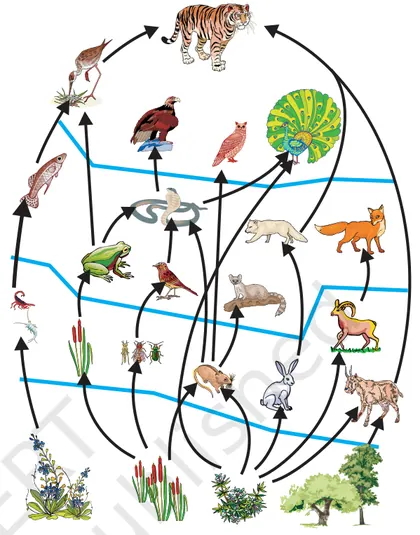
This chapter introduces natural resources — substances and components of the environment that support life and human activities — and explains why their careful management is vital for present and future generations. It covers types of resources (renewable and non‑renewable), how resources like water, soil, forests and minerals are used and misused, and the ecological consequences of depletion and pollution. The chapter emphasizes sustainable use, conservation strategies and practical measures (afforestation, soil and water conservation, rainwater harvesting, controlled grazing, recycling and efficient technologies) that reduce pressure on resources. It also discusses institutions and community roles in resource management, protected areas and the idea of balanced development that meets human needs without degrading ecosystems. Through examples and activities, students learn both scientific principles and responsible practices that contribute to environmental protection and resource security.
Learning Objectives
- Define natural resources and classify them as renewable and non-renewable with suitable examples
- Explain the meaning of sustainable development and justify its importance in managing natural resources
- Describe the interdependence between organisms and natural resources within an ecosystem
- Identify causes and consequences of deforestation and outline measures for forest conservation
- Explain methods of soil conservation (contour ploughing, terracing, crop rotation, afforestation) and their significance
- Discuss water-conservation techniques including rainwater harvesting, watershed management and artificial recharge
- Compare surface water and groundwater and analyze factors affecting their availability and quality
- Illustrate the role of community participation, local practices and government policies in sustainable resource management
Topics in this chapter
9 topics · tap a topic title to jump straight to it.
Overview of Natural Resources
What are natural resources? Natural resources are materials and components (such as water, air, soil, minerals, forests, plants and animals) found in nature that are useful to humans. They form the basis of life and economy and are used to satisfy human needs.
Classification
- By origin: Biotic (living or derived from living organisms — forests, animals, fossil fuels) and Abiotic (non-living — water, minerals, air, soil).
- By renewability: Renewable (can be replenished naturally over short time scales — solar energy, wind, water, forests if well-managed) and Non-renewable (finite, formed over geological time — coal, petroleum, minerals).
- By ownership/legal status: Public/community resources (common land, rivers), private resources, and state-owned resources.
Importance: Natural resources provide food, raw materials for industries, energy, and ecosystem services (pollination, climate regulation, water purification).
Major issues and threats
- Over-exploitation: Excessive extraction of groundwater, mining, deforestation leading to depletion.
- Pollution: Air, water and soil pollution reduce the usefulness of resources.
- Habitat loss and biodiversity decline: Deforestation, land conversion and pollution endanger species and ecosystem functions.
- Fragmentation and unequal access: Social and economic conflicts over resource use.
Principles of sustainable management
- Use resources at a rate ≤ natural regeneration rate (for renewables).
- Reduce waste: reduce–reuse–recycle.
- Conserve critical ecosystems (forests, wetlands) and protect biodiversity.
- Adopt alternative/clean energy (solar, wind, biomass) to reduce reliance on fossil fuels.
- Community-based resource management (e.g., watershed committees) and legal/ policy measures (protected areas, regulated extraction).
Practical measures/examples of management
- Water conservation: rainwater harvesting, check dams, recharge wells, drip irrigation.
- Soil conservation: contour ploughing, terracing, afforestation, cover crops to prevent erosion.
- Forest management: afforestation, controlled grazing, Joint Forest Management, social forestry.
- Mineral & energy management: recycling, efficient technologies, transition to renewables.
- Legislative and social measures: environmental impact assessments, public awareness, movements like Chipko.
Link to CBSE topics: This overview ties into chapters on ecology, environmental chemistry and resource use. Emphasis is on the balance between use and conservation to ensure resources remain available for future generations.
- Groundwater depletion in parts of North-West India due to intensive tube-well irrigation (demonstrates over-extraction of a renewable resource beyond recharge rate).
- Deforestation in the Amazon causing loss of biodiversity and affecting global carbon balance.
- Rainwater harvesting in Chennai (urban case) — rooftop collection and recharge to increase groundwater levels.
- Chipko movement (India) — community-led forest protection to prevent deforestation.
- Shift from coal to solar and wind farms to reduce dependence on non-renewable fossil fuels and lower air pollution.
- Resource per capita = Total resource available / Population
- Consumption rate = Amount of resource used / Time (e.g., m³/year for water)
- Sustainability condition (qualitative): Regeneration rate ≥ Consumption rate (for renewable resources)
- Percentage change = ((Final value − Initial value) / Initial value) × 100
- Water balance (simple): Change in storage = Inflow − Outflow (useful for watershed planning)
- Energy efficiency (%) = (Useful energy output / Total energy input) × 100
Types of Natural Resources
Overview: Natural resources are materials and energy sources provided by nature and used by humans. They are classified in several ways: by origin (biotic vs abiotic), by renewability (renewable vs non‑renewable) and by availability (inexhaustible vs exhaustible). Proper management is needed to use them sustainably.
1. By origin
- Biotic resources: Derived from living organisms — e.g., forests, animals, crops, fish. These depend on biological processes and can regenerate if managed well.
- Abiotic resources: Non‑living — e.g., air, water, soil, minerals, rocks, solar radiation. These originate from non‑living Earth systems.
2. By renewability
- Renewable resources: Can be replenished naturally within a human lifetime if not overexploited — e.g., forests (through replanting), freshwater (through the water cycle), solar and wind energy, biomass.
- Non‑renewable resources: Formed over geological time and cannot be replenished on human timescales — e.g., coal, petroleum, natural gas, metallic and non‑metallic minerals.
3. By availability
- Inexhaustible resources: Virtually unlimited on human timescales — e.g., solar energy, wind energy.
- Exhaustible resources: Limited and can be depleted — e.g., fossil fuels, groundwater in many regions, certain fish stocks.
Key concepts for management: Sustainable use means consumption ≤ natural replenishment (sustainable yield). Overexploitation (consumption > replenishment) leads to depletion and environmental harm (e.g., desertification, groundwater lowering, species extinction). Management tools include conservation, recycling, efficient technologies, substitution (renewables for fossil fuels), afforestation, watershed management and legal/regulatory measures.
Examples of problems: Groundwater decline from overpumping, deforestation reducing forest cover and biodiversity, rapid consumption of coal and oil reducing reserves, air and water pollution affecting abiotic resources.
- Biotic — Forests: timber, medicines, habitat; can regenerate with sustainable forestry practices.
- Biotic — Fish stocks: renewable if fishing ≤ reproduction rate; overfishing causes collapse.
- Abiotic — Surface water: lakes and rivers replenish via rainfall; vulnerable to pollution and overuse.
- Abiotic — Groundwater: replenished by percolation; many aquifers are being depleted faster than recharge.
- Non‑renewable — Coal, petroleum, natural gas: used for energy and industry; finite geological reserves.
- Inexhaustible — Solar and wind energy: effectively limitless on human timescales and clean when harnessed properly.
- Reserve life (years) = Total reserves / Annual consumption (units: years). Example: If oil reserves = 1,000 million tonnes and annual use = 50 million tonnes, life = 1000/50 = 20 years.
- Net change in a renewable resource = Replenishment rate − Consumption rate. If negative, the resource is being depleted.
- Per capita resource availability = Total resource / Population. Useful for comparing resource pressure between regions.
- Sustainable yield condition: Consumption rate ≤ Replenishment rate. If consumption exceeds replenishment, long‑term availability is lost.
Forest and Wildlife Management
What is Forest and Wildlife Management?
Forest and wildlife management means maintaining, protecting and using forests and wild species in ways that meet present needs without reducing their availability in the future. It combines ecological science, law, community participation and planning to conserve biodiversity, maintain ecosystem services (like soil and water conservation, climate regulation and carbon storage), and support people's livelihoods.
Why it matters
- Forests sustain biodiversity and provide timber, non-timber products, fuelwood, fodder and medicines.
- Wildlife maintains ecosystem balance (pollination, seed dispersal, pest control) and has cultural and economic value (ecotourism).
- Deforestation and habitat loss lead to species extinction, soil erosion, altered water cycles and increased greenhouse gases.
Major threats
- Deforestation for agriculture, infrastructure and fuelwood.
- Habitat fragmentation and loss of connectivity between populations.
- Poaching and illegal trade in wildlife.
- Invasive species, pollution and climate change.
Management approaches
Management uses two broad strategies:
- In situ conservation — protecting species in their natural habitats: national parks, wildlife sanctuaries, biosphere reserves, protected corridors and community-conserved areas.
- Ex situ conservation — protection outside natural habitats: zoos, seed banks, botanical gardens and captive breeding.
Key methods and practices
- Legal protection and policies: laws and programmes (for example, Wildlife Protection Acts, Forest Conservation Acts, protected area networks, Project Tiger, CAMPAs) that restrict harmful activities and fund conservation.
- Protected-area management: zoning (core, buffer), anti-poaching patrols, fire management, habitat restoration, and monitoring.
- Habitat restoration and tree planting: afforestation, reforestation, assisted natural regeneration and planting native species.
- Sustainable forest use: selective logging, reduced-impact timber harvesting, agroforestry, and managing non-timber forest products so local communities benefit without degrading forests.
- Community participation: Joint Forest Management, benefit-sharing, alternative livelihoods (biogas, LPG, pasture improvement) to reduce dependence on forests.
- Wildlife-specific actions: habitat corridors to reduce fragmentation, translocation and reintroduction (after assessment), captive breeding for endangered species, and community-based anti-poaching.
- Monitoring & technology: satellite imagery, GIS mapping, camera traps, population surveys and citizen science to track forest cover and wildlife trends.
Conservation categories (short)
- National Parks — strict protection, limited human activity.
- Wildlife Sanctuaries — protect species but may allow certain human uses.
- Biosphere Reserves — integrate conservation with sustainable use; include core, buffer and transition zones.
- Community & Conservation Reserves — managed with local participation.
Outcomes and indicators of success
- Stabilized or increasing wildlife populations, reduced poaching incidents.
- Slowed or reversed rate of forest loss; improved forest cover and biomass.
- Improved livelihoods and reduced human–wildlife conflicts through mitigation measures.
Practical tip for students: Understand links between human actions (like clearing land, fuelwood collection) and ecological responses (soil erosion, species decline), and learn how laws, community action and science combine to manage natural resources sustainably.
- Project Tiger (India, started 1973): Creation of tiger reserves (e.g., Ranthambore, Kanha) with habitat protection, anti-poaching and monitoring to conserve tiger populations.
- Chipko movement (1970s, Uttarakhand, India): Local women hugged trees to prevent felling; an example of grassroots forest conservation and community involvement.
- Joint Forest Management (JFM): Villages in several Indian states partnering with forest departments to restore degraded forests and share benefits (fuelwood, fodder).
- Gir National Park (Gujarat, India): Successful in-situ conservation of the endangered Asiatic lion through strict protection and habitat management.
- Panna Tiger Reserve (Madhya Pradesh, India): Tiger translocation and habitat restoration used to recover tiger populations after local extirpation.
- Kaziranga National Park (Assam, India): Intensive protection and anti-poaching measures helped conserve the Indian one-horned rhinoceros.
- Population density (D) = N / A, where N = number of individuals, A = area (e.g., animals per km²).
- Exponential population growth: N(t) = N0 × e^(r t), where N0 = initial population, r = intrinsic growth rate, t = time.
- Logistic (carrying capacity) model: dN/dt = rN(1 - N/K), where K = carrying capacity of the habitat.
- Percentage change per year in forest area = [(A_final - A_initial) / A_initial] × 100 / number_of_years.
- Approximate carbon in biomass: Carbon_stock ≈ Total_biomass × 0.5 (about half of dry biomass is carbon).
- Shannon diversity index (for species diversity): H' = -Σ (p_i × ln p_i), where p_i = proportion of individuals in species i.
Water Resources and Management
Overview
Water is a vital natural resource essential for life, agriculture, industry and ecosystems. Water resources include surface water (rivers, lakes), groundwater (aquifers), and precipitation (rain, snow). Management of water resources aims to ensure sustainable availability, equitable distribution and protection from pollution.
Distribution of Water
Only about 2.5–3% of Earth's water is fresh; much of it is locked in glaciers and ice. Usable freshwater is a small fraction, stored in surface water bodies and accessible groundwater.
Sources and Key Terms
- Surface water: Rivers, lakes and reservoirs — used for irrigation, drinking water and industry.
- Groundwater: Water stored in soil and rock pores beneath the surface; accessed by wells and tube wells. The upper level is the water table.
- Recharge: Process by which water soaks into the ground to replenish aquifers (natural or artificial).
- Runoff: Portion of precipitation that flows over land into streams and rivers.
Problems with Water Resources
- Over-extraction of groundwater: Excessive pumping lowers the water table, can cause land subsidence and saline intrusion especially near coasts.
- Pollution: Discharge of industrial effluents, untreated sewage and agricultural chemicals contaminate freshwater.
- Inefficient use: Large water losses in irrigation (flood irrigation), leakage in distribution systems and wasteful domestic use.
- Uneven distribution: Seasonal rainfall and geographic variation create water scarcity in many regions.
Principles of Water Management
Good water management balances demand and supply, reduces losses, protects quality and increases recharge. It combines technical, social and policy measures.
Management Techniques and Practices
- Rainwater harvesting: Collecting and storing rain from roofs or surface catchments into tanks or recharge structures to augment groundwater.
- Watershed management: Treating an area (watershed) to conserve soil and water — includes afforestation, contour bunding, check dams and percolation tanks to increase infiltration and reduce runoff.
- Efficient irrigation: Methods like drip and sprinkler irrigation which reduce evaporation and deep percolation losses; scheduling irrigation using crop water requirements.
- Recharge structures: Recharge pits, shafts, injection wells and percolation ponds to help replenish aquifers.
- Wastewater treatment and reuse: Treating sewage and industrial effluents for safe reuse in agriculture or industry.
- Demand management and awareness: Tariffs, metering, leak detection, water-saving fixtures and public education to reduce consumption.
- Policy and community approaches: Local institutions (water user associations), legal regulations (e.g., rainwater harvesting rules), and integrated planning (river basin management).
Outcomes of Good Management
Improved groundwater levels, sustained river flows, reduced flood risk, greater drought resilience, better water quality and reduced conflicts over water.
- Rooftop rainwater harvesting at a school: rain from roofs is collected via gutters into a storage tank and/or directed to a recharge pit to raise the local water table.
- Watershed development in Ralegaon Siddhi (Maharashtra): soil and water conservation measures, check dams and afforestation raised groundwater and revived agriculture.
- Drip irrigation for orchards and vegetables: delivers water directly to the root zone, reducing water use by up to 30–60% compared to flood irrigation.
- Chennai water crisis and household harvesting: frequent water shortages led to mandatory rooftop rainwater harvesting to augment groundwater.
- Percolation tanks and check dams in semi-arid regions: capture monsoon runoff, increase percolation and recharge aquifers — stabilising wells in downstream villages.
- Recycling treated wastewater in industry: treated effluent used for cooling or process water reduces freshwater withdrawal.
- Water balance (simple): P = Q + E + ΔS (Precipitation = Runoff + Evapotranspiration + Change in storage). Useful for basin-scale planning.
- Darcy's law (groundwater flow): Q = -K A (dh/dl) (Q = discharge, K = hydraulic conductivity, A = cross-sectional area, dh/dl = hydraulic gradient).
- Irrigation application efficiency: η = (Water beneficially used / Water delivered) × 100%. For example, drip systems have higher η than flood irrigation.
- Recharge rate (average): Recharge rate = (Recharge volume) / (Catchment area × Time). Helps estimate contribution to groundwater.
Soil Resources and Conservation
Soil Resources and Conservation
What is soil? Soil is the upper weathered layer of the Earth’s crust that supports plant life. It is a mixture of mineral particles (sand, silt, clay), organic matter (humus), water, air and living organisms (microbes, earthworms, roots).
How soil forms: Soil formation is a slow process by weathering of parent rock combined with biological activity. Main factors are climate (rain, temperature), organisms, parent rock type, topography, and time.
Soil composition and profile
- Components: Mineral fraction (sand, silt, clay), organic matter (humus), water and air.
- Soil horizons (profile):
- O: Organic litter (surface)
- A: Topsoil (rich in humus and nutrients)
- B: Subsoil (accumulation of minerals, less organic matter)
- C: Weathered parent material
- R: Bedrock
Types of soil (brief)
- Alluvial soil – fertile, found in river plains (Indo-Gangetic plains).
- Black/Regur soil – retains moisture, good for cotton (Deccan plateau).
- Red soil – rich in iron, common on the Deccan and parts of southern India.
- Laterite soil – leached, acidic, found in high-rainfall tropical areas.
- Sandy and desert soils – coarse texture, low water-holding capacity.
Soil fertility and nutrients
Essential plant nutrients commonly measured are nitrogen (N), phosphorus (P) and potassium (K). Organic matter (humus) improves soil structure, water retention and nutrient supply.
Soil erosion: causes and effects
- Causes: water run-off (heavy rains, inadequate vegetation cover), wind (especially on exposed dry soils), deforestation, overgrazing, unsustainable agriculture (excessive tillage), mining and construction.
- Effects: loss of fertile topsoil, reduced agricultural productivity, sedimentation of rivers and reservoirs, formation of gullies and ravines, reduced groundwater recharge, desertification in severe cases.
Conservation and management methods
Goal: reduce erosion, maintain or improve soil fertility, and ensure sustainable use.
- Agronomic practices
- Crop rotation and mixed cropping – reduce pests and nutrient depletion.
- Cover crops and green manuring – protect soil from erosion and add organic matter.
- Reduced or no-till farming – preserves soil structure and organic matter.
- Mulching – reduces evaporation and erosion, keeps soil temperature stable.
- Mechanical/structural methods
- Contour ploughing and contour bunding – ploughing along slope contours to reduce runoff.
- Terracing – converting steep slopes into stepped fields (very effective in hilly areas).
- Check dams, percolation tanks and gully plugging – slow down water flow and enhance groundwater recharge.
- Shelterbelts/windbreaks – rows of trees or shrubs to reduce wind speed and protect soil.
- Biological and land-use methods
- Afforestation/reforestation – stabilizes soil and reduces runoff.
- Agroforestry and alley cropping – combining trees with crops to conserve soil and improve fertility.
- Controlled grazing – prevents overgrazing and maintains plant cover.
- Soil fertility management
- Use of compost, farm-yard manure and biofertilisers to restore organic matter and nutrients.
- Balanced use of chemical fertilisers based on soil tests to avoid depletion or toxicity.
- Improving drainage and reclamation for saline or alkaline soils (e.g., gypsum application and leaching under good drainage).
- Watershed management – integrated approach combining several conservation measures across a catchment to control runoff, recharge groundwater and reduce erosion.
Why conservation matters
Soil is essentially a non-renewable resource on human time scales. Conserving it ensures long-term food security, protects water resources and preserves ecosystems.
- Terrace farming in the Himalayan foothills and in Nepal reduces soil erosion and allows cultivation on slopes.
- Contour bunding in rainfed areas (e.g., parts of Maharashtra) reduces runoff and improves soil moisture for crops.
- Afforestation and sand-fixing vegetation in the Thar Desert help stabilize dunes and prevent wind erosion.
- Check dams and percolation tanks in Karnataka and other regions slow runoff, reduce erosion and recharge groundwater.
- Use of green manure and crop rotation in small farms to restore soil fertility and reduce dependence on chemical fertilisers.
- Bulk density (ρb) = mass of oven-dry soil / total volume of soil (g cm⁻³). Useful for assessing compaction.
- Porosity (n) ≈ (1 - ρb / ρs) × 100%, where ρs is particle density (≈ 2.65 g cm⁻³ for mineral soils). Gives pore space percentage.
- Water available to plants (available water capacity) = Field capacity − Permanent wilting point (both in % or cm³/cm³).
- Darcy's law (infiltration/flow context): Q = K × A × (dh/dl), where Q is flow, K is hydraulic conductivity, A is cross-sectional area and dh/dl is hydraulic gradient.
- Universal Soil Loss Equation (empirical): A = R × K × L × S × C × P, where A is average annual soil loss, R = rainfall erosivity, K = soil erodibility, L = slope length factor, S = slope steepness factor, C = crop/cover management factor, P = conservation practice factor.
Fossil Fuels and Energy Alternatives
Overview
Fossil fuels are energy resources formed from the remains of plants and animals over millions of years. Major fossil fuels are coal, petroleum (crude oil), and natural gas. They are the dominant source of energy for transport, electricity generation and industry, but are non‑renewable and cause environmental problems. Energy alternatives are renewable or low‑carbon sources (solar, wind, hydro, biomass, geothermal, nuclear, hydrogen and biofuels) that can substitute for or reduce use of fossil fuels.
Fossil fuels: formation, uses and problems
- Formation: Organic matter buried under sediments → heat & pressure over millions of years → coal (terrestrial plants) or petroleum & natural gas (marine organisms).
- Main uses: Coal for thermal power plants and industry (steel, cement); petroleum for petrol, diesel, kerosene, LPG and petrochemicals; natural gas for heating, electricity and as feedstock.
- Advantages: High energy density, well‑developed extraction and distribution systems, reliable base‑load power.
- Disadvantages: Finite reserves (non‑renewable), air pollution (SOx, NOx, particulates), greenhouse gas emissions (CO2 → global warming), oil spills, health impacts, habitat destruction from mining/drilling.
Energy alternatives (classification and features)
- Solar energy: Photovoltaic (PV) panels convert sunlight to electricity; solar thermal concentrates heat for water/heating or power. Clean, scalable; intermittent (day/night, weather).
- Wind energy: Wind turbines convert kinetic energy of air to electricity. Low operating cost; site dependent and intermittent.
- Hydroelectric power: Uses potential energy of stored or flowing water (dams, run‑of‑river). Reliable and dispatchable but large reservoirs can displace people and ecosystems.
- Biomass and biofuels: Organic matter (wood, crop residues, dung, biogas, ethanol, biodiesel) burned or converted to gas/liquid fuels. Renewable when sustainably managed; may produce emissions and compete with food crops.
- Geothermal: Heat from Earth used for power or heating. Low emissions and reliable where resources exist.
- Nuclear (fission): High energy density, low CO2 during operation, provides steady base‑load power. Concerns: radioactive waste, safety, high capital cost.
- Hydrogen: Energy carrier produced from electrolysis (green hydrogen when renewable electricity used) or from fossil fuels with CO2 capture. Useful for transport, industry, and long‑term storage.
Transition strategies and conservation
- Improve energy efficiency (efficient appliances, motors, insulation) to reduce demand.
- Increase share of renewables and distributed generation (rooftop solar, mini‑grids).
- Electrify transport (EVs) and use cleaner fuels (CNG, biofuels) to cut oil dependence.
- Adopt policy measures: subsidies for renewables, carbon pricing, stricter emission norms, afforestation and conservation.
Environmental and social considerations
Switching from fossil fuels reduces air pollution and greenhouse gas emissions, but alternatives have trade‑offs: land use (solar farms, bioenergy), impact on wildlife (wind turbines), reservoir impacts (large hydro), resource availability (rare earths for turbines and PV). Balanced planning and sustainable management are essential.
- Coal-fired thermal power plant supplying electricity to cities (e.g., many Indian thermal plants using coal from Jharia and Korba regions).
- Petrol and diesel used in cars, buses and trucks; LPG cylinders for household cooking.
- Rooftop solar PV systems on homes and schools generating electricity and reducing bills.
- Muppandal Wind Farm (Tamil Nadu, India) as a large wind-power installation supplying regional electricity.
- Tehri and Bhakra dams (India) producing hydroelectric power and irrigation benefits.
- Biogas plants at homes or community level converting cow dung/organic waste into methane for cooking and lighting.
- Efficiency (%) = (Useful energy output / Total energy input) × 100
- Power = Energy / Time (P = E / t)
- Wind power through rotor area: P = 0.5 × ρ × A × v^3 × Cp (ρ = air density, A = swept area, v = wind speed, Cp = power coefficient ≤ Betz limit ≈ 0.59)
- Hydro potential energy (useful power): P = ρ × Q × g × h × η (ρ = water density, Q = volumetric flow rate, g = 9.8 m/s^2, h = head, η = efficiency)
- Solar PV energy estimate: E = A × r × H × PR (A = panel area, r = module efficiency, H = solar irradiance on panel over time, PR = performance ratio)
- Thermal efficiency of a power plant (%) = (Electrical energy output / Heat energy input from fuel) × 100
Sustainable Management and Conservation Strategies
What is sustainability in natural resource management? Sustainable management means using natural resources so that their availability, quality and ecosystem functions are maintained for present and future generations. It balances human needs with ecosystem health.
Core principles
- Use within regenerative capacity: For renewable resources (forests, fisheries, groundwater) extraction should not exceed natural renewal rates.
- Precaution and equity: Avoid irreversible damage and ensure fair access to resources for current and future people.
- Reduce–Reuse–Recycle (3Rs): Minimise resource demand and waste.
- Adaptive management and monitoring: Regularly measure resource status and adjust actions accordingly.
- Community participation and legal protection: Involve local people; use laws, protected areas and incentives.
Practical conservation and management strategies
- Protected areas & restoration: Establish national parks, sanctuaries and wildlife corridors; carry out afforestation and reforestation to restore degraded land.
- Sustainable agriculture & soil conservation: Crop rotation, contour ploughing, terracing, organic farming and use of green manure to maintain soil fertility and reduce erosion.
- Water management: Rainwater harvesting, check dams, watershed management, drip irrigation and recharge of groundwater to sustain supply and reduce runoff.
- Sustainable fisheries & wildlife management: Regulate harvests (seasons, gear, quotas), create no-take zones and protect breeding grounds to maintain populations.
- Energy transition & efficiency: Replace fossil fuels with renewable energy (solar, wind, biogas), improve appliance and industrial efficiency to lower resource pressure.
- Waste minimisation and recycling: Segregation at source, recycling, composting and sanitary landfills reduce demand for virgin materials and pollution.
- Economic and policy tools: Taxes/subsidies, tradable permits, payments for ecosystem services and community-based management encourage sustainable choices.
- Education & capacity building: Public awareness, training and scientific research improve compliance and the quality of management decisions.
Expected outcomes Include stable or recovering populations of plants and animals, sustained agricultural yields, reliable water supply, reduced pollution, and long-term economic benefits from continued ecosystem services (clean water, pollination, climate regulation).
How students can relate it to everyday life — practise the 3Rs, save water (shorter showers, fix leaks), plant trees, support local conservation initiatives, and learn about local protected areas and their rules.
- Chipko movement (Himalayan tree protection by local communities) — community-led forest conservation.
- Rainwater harvesting systems in homes and schools in Chennai and other Indian cities to recharge groundwater and reduce dependence on external supply.
- Check dams and watershed projects in Rajasthan and Maharashtra (e.g., Ralegan Siddhi) that restore groundwater and prevent soil erosion.
- Drip irrigation in Gujarat and parts of Maharashtra — reduces water use and improves crop yields.
- Project Tiger and protected-area networks — legal protection and management for tiger populations and their habitats.
- Fishing regulations and no-take zones in marine areas to allow fish stocks to recover (seasonal bans, gear restrictions).
- Energy efficiency (%) = (useful energy output / total energy input) × 100
- Water balance (basic): Change in storage = Rainfall − Evapotranspiration − Runoff (used to plan recharge and supply)
- Logistic growth model for renewable resources: dN/dt = rN(1 − N/K), where N = population (resource stock), r = intrinsic growth rate, K = carrying capacity. This model helps estimate sustainable harvest rates.
- Maximum Sustainable Yield (MSY) from logistic model: MSY = rK/4. MSY occurs approximately at population N = K/2 (useful when setting harvest limits).
Policies, Laws and Community Participation
Overview
Management of natural resources requires not only scientific knowledge but also clear policies, enforceable laws and active involvement of local communities. Policies set goals and priorities; laws provide legal tools and penalties; community participation ensures on‑ground implementation, local ownership and sustainability.
Policies
A policy is a government statement of intent that guides decision making. Important features: clear objectives (e.g., conserve forests, protect water bodies), instruments (subsidies, regulations, awareness campaigns), and institutional arrangements (agencies, funds). Examples include forest policies that prioritise sustainable use and village participation and national water policies that promote equitable use.
Laws and legal mechanisms
Laws give powers to restrict harmful activities and create penalties. Typical laws relevant to natural resources: protection of forests and wildlife, pollution control (air, water), biodiversity protection and environmental impact assessment (EIA) rules. Legal tools include:
- Prohibitions (e.g., ban on felling certain trees, protected area limits)
- Permits and clearances (EIA for projects that may affect environment)
- Economic measures (fines, user fees, compensatory afforestation funds)
- Judicial and quasi‑judicial bodies (environment courts, National Green Tribunal)
Community participation
Communities living near natural resources often depend on them for livelihoods and have traditional knowledge. When communities take part in planning and management, outcomes improve because they have incentives to conserve. Forms of participation include co‑management, joint forest management, watershed committees, community protected areas and local bye‑laws.
How policies, laws and communities work together
- Policy defines objectives (e.g., increase forest cover by X%).
- Laws provide the tools to implement policy (e.g., restrictions, funds, institutions).
- Communities implement and maintain actions on the ground (planting trees, managing grazing, monitoring illegal activities).
Key implementation steps
- Legal recognition of community rights (so communities benefit from conservation).
- Capacity building: training in sustainable techniques (afforestation, rainwater harvesting).
- Benefit sharing: link conservation to livelihoods (non‑timber forest products, ecotourism).
- Monitoring and enforcement: community monitoring plus state support.
Success factors and challenges
- Success: clear legal backing, fair benefit sharing, sustained funding, local leadership and scientific inputs.
- Challenges: weak enforcement, corruption, conflicting policies, lack of awareness, population pressure and short‑term economic demands.
Outcome indicators
Measures used to evaluate success include change in forest cover, groundwater levels, biodiversity indices, reduced pollution loads and improved community incomes.
Summary
Sustainable management of natural resources is most effective when national and local policies and laws create an enabling framework and when local communities are empowered to take responsibility and share benefits. This integrated approach combines legal force with local knowledge and long‑term stewardship.
- Chipko Movement (1970s, Himalayan region) — villagers (especially women) hugged trees to stop felling; influenced forest policy and raised awareness about community protection of forests.
- Joint Forest Management (JFM, India) — state forest departments partner with village committees to jointly manage forests; has improved regeneration in many areas (e.g., West Bengal).
- Sukhomajri watershed project (Haryana) — community water harvesting, soil conservation and grazing management led to increased groundwater and crop yields.
- Silent Valley movement (Kerala) — public protests and scientific inputs prevented a dam project, protecting a biodiversity‑rich rainforest.
- Bishnoi and Amrita Devi incidents — community resistance to tree felling led to legal recognition and stronger local conservation ethics.
- Plastic bans (state level, e.g., Sikkim) and Plastic Waste Management Rules (India) — laws restricting single‑use plastics combined with local awareness campaigns reduce plastic pollution.
- Per capita resource availability = Total available resource / Population
- Percentage change = ((New value - Old value) / Old value) × 100
- Annual deforestation rate (%) = ((Forest_area_start - Forest_area_end) / Forest_area_start) × (100 / Number_of_years)
- Sustainable use condition: Annual consumption ≤ Annual natural replenishment (e.g., groundwater_extraction ≤ groundwater_recharge)
- Carrying capacity (simple estimate) = Total sustainable resource supply / Per capita requirement
Practical Measures, Case Studies and Classroom Activities
Overview
This topic explains practical measures to conserve and manage natural resources (water, soil, forests, wildlife), illustrates these measures with short case studies, and lists classroom activities that help students understand resource management through hands-on learning.
Practical measures
- Rainwater harvesting: Collect and store rainwater from roofs or surface runoff to recharge groundwater and provide non-potable water. Design uses roof area, local rainfall and a runoff coefficient.
- Watershed management and check dams: Small structures and contour bunding slow runoff, increase infiltration, reduce soil erosion and raise water table.
- Afforestation and soil conservation: Plant native trees, maintain vegetation cover, use contour farming, terracing and mulching to reduce erosion and retain soil moisture.
- Sustainable agriculture: Crop rotation, mixed cropping, organic farming and micro-irrigation (drip/sprinkler) to increase water-use efficiency and soil health.
- Protected areas and wildlife conservation: Establish and manage protected areas, maintain corridors, and regulate grazing and land use to preserve biodiversity.
- Reuse, recycling and waste management: Reduce consumption, recycle materials (paper, plastics, glass), compost organic waste to return nutrients to soil.
- Community participation and policy: Local management (Panchayats, user groups), education, and legal frameworks (forest and wildlife protection acts) are essential for long-term success.
Case studies (short and instructive)
- Chipko movement (Uttarakhand/Himachal Pradesh): Local communities, led by women, protected trees from commercial felling by embracing them. Lesson: community action and sustainable use can stop deforestation and preserve livelihoods.
- Silent Valley (Kerala): Protests and scientific studies halted a hydroelectric project to protect a unique evergreen forest ecosystem. Lesson: environmental impact assessment and public involvement can prevent biodiversity loss.
- Traditional water harvesting in Rajasthan (Johads and stepwells): Small earthen check dams and stepwells recharge groundwater and support agriculture in arid regions. Lesson: local traditional practices can be highly effective and sustainable.
- Watershed development programmes (e.g., Ralegan Siddhi, Maharashtra): Soil and water conservation measures, tree planting and community rules transformed degraded land into productive agricultural land. Lesson: integrated approaches yield social and ecological benefits.
Classroom activities (hands-on, reproducible)
- Make a simple rain gauge and record rainfall: Measure and plot local monthly rainfall; discuss implications for water supply and planning.
- Roof-top rainwater harvesting calculation and model: Measure roof area, use local rainfall to calculate potential captured volume and build a small collection model with storage jar and filter.
- Percolation/soak-pit experiment: Compare infiltration rates of bare soil, vegetated soil and compacted soil to demonstrate effects of vegetation and compaction on groundwater recharge.
- Soil erosion demonstration: Use trays with different vegetation/mulch covers, pour simulated rain and measure sediment loss to show protective role of plant cover.
- Water audit at home/school: Log daily water uses, estimate per capita use, and propose measures to reduce consumption (fix leaks, use buckets for bathing, install aerators).
- Role play / debate and poster making: Simulate a local meeting deciding on a development project; research stakeholders and present sustainable alternatives.
- Field visit: Visit a local watershed, water treatment plant, protected area or community-managed forest and prepare a short report.
Learning outcomes
Students will be able to describe practical conservation methods, analyze simple quantitative problems (e.g., rainfall capture), connect local examples to larger policy issues, and design low-cost solutions for their community.
- Rainwater harvesting on a school roof: With a 200 m² roof and annual rainfall of 800 mm, a runoff coefficient of 0.85 gives an annual captured volume ~200 × 0.8 × 0.85 = 136 m³ (see formulas). Stored water can be used for gardening and flushing toilets.
- Chipko movement: Villagers stopped commercial tree felling by hugging trees; the movement led to stricter forest protection and demonstrated community-based conservation.
- Ralegan Siddhi watershed project: Contour trenches, afforestation and community rules turned degraded land productive, improved water availability and raised incomes.
- Percolation test in class: Compare infiltration time for 1 L of water on trays with bare soil vs vegetated soil; vegetated tray shows slower runoff and higher infiltration, illustrating how plants aid groundwater recharge.
- Runoff / rainwater harvested (volume) V = A × R × C - A = catchment area (m²), R = rainfall depth (m), C = runoff coefficient (dimensionless). Note: if R is in mm, convert to m by R(m) = R(mm)/1000. Example: 200 m² roof, 800 mm rainfall, C = 0.85 → V = 200 × 0.8 × 0.85 = 136 m³.
- Simple domestic water requirement (estimate) W = P × w - P = population (number of people), w = per capita water use (L/day). Example: for 50 students and w = 135 L/person/day → W = 50 × 135 = 6750 L/day.
- Basic agricultural water need (conceptual) Crop water requirement ETc = ETo × Kc - ETo = reference evapotranspiration, Kc = crop coefficient. (Useful when comparing irrigation methods; detailed calculations usually require local climate data.)
- Universal Soil Loss Equation (advanced reference) A = R × K × LS × C × P - A = estimated average annual soil loss; factors represent rainfall erosivity (R), soil erodibility (K), slope length/steepness (LS), cover-management (C), and conservation practices (P).
Key Concepts
- Natural resources
- Materials and components found in nature that are useful to humans, such as air, water, soil, minerals and forests.
- Renewable resources
- Resources that can be replenished naturally within a human lifetime if used sustainably.
- Non-renewable resources
- Resources that form over geological timescales and cannot be replaced once exhausted.
- Sustainable development
- Development that meets present needs without compromising the ability of future generations to meet theirs.
- Conservation
- Careful management and protection of natural resources to prevent waste, degradation or extinction.
- Afforestation
- Planting trees on land that has not been forested for a long time to create a new forest cover.
- Deforestation
- Clearing or removal of forest cover for agriculture, urbanization or logging, often causing environmental harm.
- Reforestation
- Replanting trees in an area where forest cover has been removed or degraded.
- Watershed
- A land area that channels rainfall and surface runoff to a common outlet such as a river or reservoir.
- Rainwater harvesting
- Collecting and storing rainwater for reuse, reducing dependence on groundwater and surface water.
- Soil erosion
- Removal of topsoil by wind, water or human activity, reducing soil fertility and causing sedimentation.
- Desertification
- Process by which fertile land becomes desert due to drought, deforestation or unsuitable agriculture.
- Biodiversity
- The variety of living organisms in an area, including species diversity, genetic diversity and ecosystems.
- Endangered species
- Species at serious risk of extinction in the near future due to habitat loss, hunting or other threats.
- Wildlife sanctuary
- A protected area where wildlife is safeguarded and human activities are regulated to conserve species.
- National park
- A highly protected area established to conserve ecosystems and biodiversity, often restricting human use.
- Biosphere reserve
- A large area designated to conserve ecosystems and promote sustainable development through zoned management.
- Overexploitation
- Excessive use of a resource faster than it can replenish, leading to depletion or collapse.
- Groundwater recharge
- Process by which water percolates through soil to replenish underground aquifers.
- Pollution
- Introduction of harmful substances or energy into the environment, degrading air, water or soil quality.
End-of-Chapter Trial Paper & Test Questions
Topic-wise questions to test your understanding of every concept in this chapter.
-
Define 'sustainable development' and explain why it is important for managing natural resources. / 'सतत विकास' को परिभाषित कीजिए और प्राकृतिक संसाधनों के प्रबंधन के लिए इसका महत्व समझाइए।
Show answer
Sustainable development is development that meets present needs without compromising the ability of future generations to meet their own needs; it is important because it balances human use with ecosystem health so that renewable resources are used within their regeneration capacity and remain available in the long term. / सतत विकास वह विकास है जो भावी पीढ़ियों की आवश्यकताओं को पूरा करने की क्षमता से समझौता किए बिना वर्तमान आवश्यकताओं को पूरा करता है; यह महत्वपूर्ण है क्योंकि यह मानव उपयोग और पारिस्थितिकी तंत्र के स्वास्थ्य में संतुलन बनाता है ताकि नवीकरणीय संसाधन उनकी पुनर्जनन क्षमता के भीतर उपयोग हों और दीर्घकाल तक उपलब्ध रहें।
-
Distinguish between renewable and non-renewable resources, giving two examples of each. / नवीकरणीय और अनवीकरणीय संसाधनों में अंतर बताइए, प्रत्येक के दो उदाहरण दीजिए।
Show answer
Renewable resources can be replenished naturally within a human lifetime if used sustainably (e.g., solar energy, forests), whereas non-renewable resources form over geological timescales and cannot be replaced once exhausted (e.g., coal, petroleum). / नवीकरणीय संसाधन यदि सतत रूप से उपयोग किए जाएँ तो मानव जीवनकाल में प्राकृतिक रूप से पुनः भरे जा सकते हैं (जैसे सौर ऊर्जा, वन), जबकि अनवीकरणीय संसाधन भूगर्भीय समय में बनते हैं और एक बार समाप्त होने पर पुनः नहीं बनाए जा सकते (जैसे कोयला, पेट्रोलियम)।
-
A region has coal reserves of 1000 million tonnes and an annual consumption of 50 million tonnes. Calculate the reserve life. / किसी क्षेत्र में कोयले का भंडार 1000 मिलियन टन है और वार्षिक खपत 50 मिलियन टन है। भंडार की आयु ज्ञात कीजिए।
Show answer
Reserve life = Total reserves / Annual consumption = 1000 / 50 = 20 years. / भंडार आयु = कुल भंडार / वार्षिक खपत = 1000 / 50 = 20 वर्ष।
-
Why is the Chipko movement considered a model of community-based forest conservation? / चिपको आंदोलन को समुदाय-आधारित वन संरक्षण का आदर्श क्यों माना जाता है?
Show answer
In the Chipko movement local villagers, especially women, hugged trees to physically prevent commercial felling, showing how grassroots community action can stop deforestation and protect local livelihoods, which influenced forest policy. / चिपको आंदोलन में स्थानीय ग्रामीणों, विशेषकर महिलाओं ने पेड़ों से चिपककर व्यावसायिक कटाई रोकी, जिससे यह सिद्ध हुआ कि जमीनी स्तर की सामुदायिक कार्रवाई वनोन्मूलन रोक सकती है और स्थानीय आजीविका की रक्षा कर सकती है, जिसने वन नीति को प्रभावित किया।
-
Differentiate between in-situ and ex-situ conservation with one example each. / स्व-स्थाने (in-situ) और बाह्य-स्थाने (ex-situ) संरक्षण में अंतर बताइए तथा प्रत्येक का एक उदाहरण दीजिए।
Show answer
In-situ conservation protects species in their natural habitat (e.g., national parks, wildlife sanctuaries like Gir National Park), while ex-situ conservation protects species outside their natural habitat (e.g., zoos, seed banks, botanical gardens). / स्व-स्थाने संरक्षण प्रजातियों को उनके प्राकृतिक आवास में सुरक्षित रखता है (जैसे राष्ट्रीय उद्यान, गिर राष्ट्रीय उद्यान जैसे वन्यजीव अभयारण्य), जबकि बाह्य-स्थाने संरक्षण प्रजातियों को उनके प्राकृतिक आवास के बाहर सुरक्षित रखता है (जैसे चिड़ियाघर, बीज बैंक, वनस्पति उद्यान)।
-
How does rooftop rainwater harvesting help in groundwater management? Illustrate with the Chennai example. / छत पर वर्षा जल संचयन भूजल प्रबंधन में कैसे सहायक है? चेन्नई के उदाहरण से स्पष्ट कीजिए।
Show answer
Rooftop rainwater harvesting collects rain through gutters into storage tanks or recharge pits, augmenting the local water table and reducing dependence on external supply; in Chennai, repeated water shortages led to mandatory rooftop harvesting to recharge groundwater. / छत पर वर्षा जल संचयन में वर्षा जल को नालियों के माध्यम से भंडारण टंकियों या पुनर्भरण गड्ढों में एकत्र किया जाता है, जिससे स्थानीय जलस्तर बढ़ता है और बाहरी आपूर्ति पर निर्भरता घटती है; चेन्नई में बार-बार जल संकट के कारण भूजल पुनर्भरण हेतु छत संचयन अनिवार्य किया गया।
-
A 200 m² school roof receives 800 mm of annual rainfall with a runoff coefficient of 0.85. Calculate the annual harvestable water volume. / एक 200 वर्ग मीटर स्कूल की छत पर वार्षिक 800 मिमी वर्षा होती है और अपवाह गुणांक 0.85 है। वार्षिक संचयनीय जल आयतन ज्ञात कीजिए।
Show answer
V = A × R × C; convert R = 800 mm = 0.8 m; V = 200 × 0.8 × 0.85 = 136 m³ of harvestable water per year. / V = A × R × C; R = 800 मिमी = 0.8 मीटर; V = 200 × 0.8 × 0.85 = 136 घन मीटर प्रति वर्ष संचयनीय जल।
-
List any four soil-conservation methods and explain how contour ploughing reduces erosion. / मृदा संरक्षण की कोई चार विधियाँ बताइए और समझाइए कि समोच्च जुताई अपरदन को कैसे कम करती है।
Show answer
Four methods are contour ploughing, terracing, afforestation/cover crops, and check dams/gully plugging; contour ploughing means ploughing along the slope contours so that the ridges slow down runoff water, reduce its speed and allow more infiltration, thereby preventing topsoil from being washed away. / चार विधियाँ हैं समोच्च जुताई, सीढ़ीदार खेती, वनरोपण/आच्छादन फसलें, और चेक डैम/गली प्लगिंग; समोच्च जुताई में ढलान की समोच्च रेखाओं के अनुदिश जुताई की जाती है जिससे मेड़ें अपवाह जल की गति धीमी करती हैं और अधिक अंतःस्यंदन होने देती हैं, जिससे ऊपरी उपजाऊ मृदा बहने से बचती है।
Related Laws & Principles
Explore allFoundational laws & principles behind this chapter. Each one opens a full page — what it says, why it matters, five practice questions and the mistakes to avoid.