Overview
Introduction: Biotechnology harnesses cellular and biomolecular processes to develop technologies and products that help improve human life and the health of the planet. Class 12 NCERT Chapter "Biotechnology: Principles and Processes" introduces the basic principles, core tools and common techniques used in modern molecular biotechnology, and shows how these are applied in medicine, agriculture, industry and environment. Importance: This chapter builds foundational knowledge for understanding genetic engineering, recombinant DNA technology, molecular diagnostics and biotechnological applications such as production of therapeutic proteins, transgenic crops, and bioremediation. It also highlights biosafety, ethical and socio-economic issues important for responsible use of these technologies. Key themes: - Fundamental tools of biotechnology: enzymes (restriction enzymes, ligases), vectors (plasmids, bacteriophages, Ti plasmid), host cells and methods for DNA manipulation. - Core techniques: gene cloning, PCR, gel electrophoresis, blotting techniques, DNA sequencing and recombinant DNA construction. - Cell and tissue culture methods: micropropagation, protoplast fusion and animal…
Learning Objectives
- Define recombinant DNA technology and identify its key goals and components
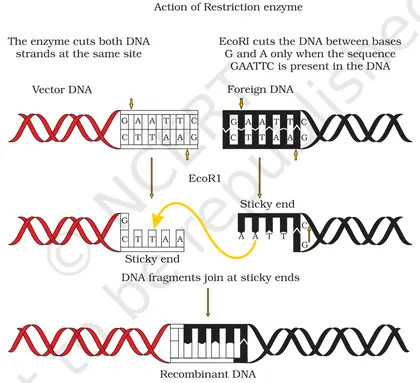
- Explain the role and mechanism of restriction endonucleases and DNA ligase in gene cloning
- Describe the properties of an ideal cloning vector and compare plasmids, bacteriophages and cosmids as vectors
- Outline the sequential steps involved in isolation of DNA, insertion into vectors and creation of recombinant clones
- Illustrate the principle and procedure of polymerase chain reaction (PCR) and state its major applications
- Explain the principles and applications of agarose gel electrophoresis and Southern blotting for DNA analysis
- Apply restriction mapping and gel electrophoresis data to deduce fragment sizes and arrangement
- Demonstrate understanding of gene transfer methods (transformation, transduction, electroporation, microinjection) and choose appropriate methods for given examples
Topics in this chapter
11 topics · tap a topic title to jump straight to it.
Introduction to Biotechnology
What is Biotechnology?
Biotechnology is the use of living organisms, cells or biological systems to develop products, processes or technologies that improve human life and the environment. It integrates biology with tools from chemistry, physics, engineering and information technology.
Scope & Branches
- Red biotechnology: medical and health applications (drugs, vaccines, diagnostics).
- Green biotechnology: agricultural improvements (GM crops, biofertilisers).
- White/industrial biotechnology: industrial processes (fermentation, enzymes).
- Environmental biotechnology: bioremediation, waste treatment.
Historical milestones (brief)
Traditional biotechnology (fermentation) → discovery of microbes → discovery of DNA structure (1953) → recombinant DNA technology (mid-1970s) → PCR (1983) → genome sequencing → CRISPR gene editing (2012 onward).
Key tools and techniques
- Restriction enzymes and DNA ligase: cut-and-paste DNA (create recombinant DNA).
- Vectors: plasmids, bacteriophages and Ti plasmid used to deliver DNA into host cells.
- Transformation/transfection: methods to introduce DNA into cells (chemical, electroporation, Agrobacterium).
- Polymerase Chain Reaction (PCR): amplify specific DNA sequences.
- Gel electrophoresis: separate DNA fragments by size.
- DNA sequencing: reading nucleotide order (Sanger, next-gen methods).
- Cell/tissue culture: growing cells under sterile, controlled conditions.
- CRISPR-Cas: precise genome editing tool.
General workflow of a genetic-engineering experiment
- Identify and isolate target gene → insert into a suitable vector → introduce recombinant vector into host → select and screen transformants → confirm expression and activity → scale up for application.
Applications (high-level)
- Medicine: recombinant human insulin, growth hormones, monoclonal antibodies, vaccines, gene therapy.
- Agriculture: pest-resistant crops (Bt), herbicide-tolerant crops, biofortified crops (e.g., Golden Rice).
- Industry: enzyme-based detergents, biofuels, fermentation-based production (ethanol, antibiotics).
- Environment: microbes for bioremediation of oil spills, wastewater treatment.
Biosafety, ethics & regulation
Biotechnology raises biosafety and ethical issues: risk assessment of GM organisms, containment practices (BSL levels), ethical concerns about genetic modification, equitable access and environmental impact. Regulatory frameworks and guidelines (national and international) govern research and release of biotech products.
Why study this in Class 12?
The chapter introduces core concepts and laboratory techniques that underpin modern biology and exposes students to real-world uses and societal implications of manipulating biological systems.
- Recombinant insulin: Human insulin gene inserted into E. coli plasmid; bacteria produce insulin used to treat diabetes.
- Bt cotton: Cotton plants engineered to express Bacillus thuringiensis toxin gene to resist insect pests, reducing pesticide use.
- PCR in diagnostics: PCR amplifies pathogen DNA/RNA to detect infections (e.g., COVID-19 diagnostic tests).
- Bioremediation: Pseudomonas and other bacteria degrade oil or pollutants at contaminated sites.
- Golden Rice: Rice engineered to produce beta-carotene (provitamin A) to reduce vitamin A deficiency.
- Dilution / Concentration: C1 × V1 = C2 × V2 (for preparing solutions)
- PCR amplification (ideal doubling each cycle): N = N0 × 2^n (N0 = initial copies, n = number of cycles)
- Specific growth rate (microbial growth): µ = (ln X2 − ln X1) / (t2 − t1)
- Doubling (generation) time: td = ln 2 / µ
- Transformation efficiency: (Number of colonies × dilution factor) / amount of DNA plated (µg)
Basic Principles of Recombinant DNA Technology
Definition: Recombinant DNA (rDNA) technology is the set of techniques used to join DNA fragments from two or more sources and introduce the resulting recombinant molecule into a host organism so that it is replicated and, if required, expressed.
Core principles
- 1) Cutting DNA precisely — Restriction endonucleases (restriction enzymes) recognise specific short palindromic sequences and cleave DNA. Types: Type II enzymes are most commonly used because they cut at defined positions. Cuts may create sticky (cohesive) ends or blunt ends; sticky ends facilitate directional joining by complementary base pairing.
- 2) Joining DNA fragments — DNA ligase (usually T4 DNA ligase) forms phosphodiester bonds between adjacent 3'-OH and 5'-phosphate groups, sealing nicks and covalently joining insert and vector DNA after base pairing of compatible ends.
- 3) Use of vectors — Vectors (plasmids, bacteriophages, cosmids, BACs, YACs) carry the foreign DNA into a host and allow replication. Key vector features: origin of replication (ori), selectable marker (e.g., antibiotic resistance), multiple cloning site (MCS) with restriction sites, and expression signals (promoter, ribosome binding site) when protein expression is desired.
- 4) Host systems — Common hosts: Escherichia coli for cloning and protein expression, Saccharomyces cerevisiae for eukaryotic processing, and mammalian cell lines for complex proteins requiring post-translational modifications. Host choice depends on the need for correct folding, glycosylation and yield.
- 5) Selection and screening — After introduction of recombinant DNA (transformation, transfection), cells are grown under selective conditions (antibiotic) so only those containing the vector survive. Screening (blue–white screening, colony PCR, restriction mapping, sequencing) distinguishes recombinants with insert from empty vectors.
- 6) Expression and regulation — For protein production, the cloned gene must be placed under a suitable promoter and regulatory elements. Inducible promoters (e.g., lac, T7) allow control of expression to reduce toxicity or increase yield. Codon optimization and signal peptides may be used to improve expression and secretion.
Workflow (typical stepwise summary)
- Isolate donor DNA and vector DNA.
- Cut donor and vector with compatible restriction enzymes.
- Ligate insert into vector using DNA ligase.
- Introduce recombinant vector into host cells (transformation/transfection).
- Select transformants on selective medium and screen for correct recombinants.
- Amplify, characterize (restriction mapping/sequencing) and, if required, express the recombinant gene and purify the product.
Important molecular concepts used
- Complementary base pairing guides annealing of compatible sticky ends.
- Replication origin in the vector ensures propagation of rDNA in host.
- Selective markers allow enrichment of cells carrying the recombinant molecule.
- Expression signals (promoters, ribosome binding site, terminator) control transcription and translation of the cloned gene.
Safety, ethics and regulation: Recombinant DNA work follows biosafety levels and institutional regulations. Ethical considerations apply to human gene manipulation, GM crops and release of modified organisms.
- Human insulin produced in Escherichia coli: the human insulin gene is cloned into a plasmid vector and expressed in bacteria, replacing animal-sourced insulin.
- Bt cotton: a gene from Bacillus thuringiensis encoding an insecticidal protein is introduced into cotton, providing insect resistance.
- Hepatitis B vaccine (recombinant): Hep B surface antigen gene expressed in yeast produces antigen used in the vaccine.
- Golden Rice: genes for beta-carotene biosynthesis were introduced into rice to increase provitamin A content.
- Production of recombinant human growth hormone (hGH) using microbial expression systems.
- Beer–Lambert law for absorbance: A = ε × c × l (where A is absorbance, ε is molar extinction coefficient, c is concentration, and l is path length).
- Estimate dsDNA concentration from spectrophotometer: concentration (µg/mL) ≈ A260 × 50 for double-stranded DNA. (Thus ng/µL ≈ A260 × 50.)
- Convert ng DNA to pmol of double-stranded DNA: pmol = (ng × 1000) / (bp × 660), where bp = number of base pairs.
- To calculate ng of insert required for a target molar ratio in ligation: ng_insert = (pmol_needed) × (bp_insert × 660) / 1000. Commonly used insert:vector molar ratio is 3:1 (insert:vector).
- Transformation efficiency: TE = (number of colonies obtained) / (µg of plasmid DNA plated).
Tools of Genetic Engineering
Overview
"Tools of Genetic Engineering" are the molecular biological reagents, host systems and laboratory techniques used to isolate, cut, join, copy, transfer and express genes. These tools enable cloning, analysis and modification of DNA for research, medicine, agriculture and industry.
Major molecular tools (enzymes)
- Restriction endonucleases – sequence-specific DNA-cutting enzymes (type II most used). Produce sticky (overhang) or blunt ends used to open vectors and prepare inserts.
- DNA ligase – joins DNA ends by forming phosphodiester bonds; T4 DNA ligase commonly used to seal sticky or blunt ends.
- DNA polymerases – replicate DNA. Taq polymerase (thermostable) for PCR; high-fidelity polymerases (Pfu, Phusion) for cloning and sequencing.
- Reverse transcriptase – makes cDNA from RNA; used to clone eukaryotic genes and prepare templates for RT-PCR.
- Topoisomerases & ligases – relieve or introduce supercoils; topoisomerase-based cloning (TOPO) enables rapid ligation.
- Alkaline phosphatase – removes 5′ phosphates to prevent vector self-ligation.
- Terminal transferase – adds nucleotides to 3′ ends (used in tailing and labeling).
Vectors & carriers
- Plasmids – circular, autonomously replicating DNA; have origin of replication, multiple cloning site (MCS), selectable marker (antibiotic resistance).
- Bacteriophages, cosmids, BACs, YACs – for larger inserts (cosmids ~40 kb, BACs ~100–300 kb, YACs for megabase-range).
- Expression vectors – contain promoter, ribosome binding site, tags and selection markers to express recombinant protein in prokaryotic or eukaryotic hosts.
- Viral vectors (adenovirus, lentivirus) – for gene delivery into mammalian cells or in vivo.
Host systems
- Prokaryotes – E. coli is the workhorse for cloning and protein expression. Advantages: fast growth and well-known genetics.
- Eukaryotic systems – yeast, insect cells, mammalian cell lines for proper folding and post-translational modifications.
Supporting techniques & reagents
- PCR (Polymerase Chain Reaction) – amplifies specific DNA segments using primers, template, dNTPs and thermostable polymerase.
- Gel electrophoresis – separates DNA by size; visualizes and purifies fragments from agarose gels.
- Nucleic acid hybridization – probes used in Southern/Northern blotting and microarrays to detect sequences.
- Sequencing – Sanger and next-generation sequencing for base-level verification of constructs.
- Transformation/transfection methods – chemical (CaCl2/heat-shock), electroporation, lipofection for introducing DNA into cells.
- Selectable markers & reporters – antibiotic resistance (ampR, kanR), reporter genes (lacZ for blue/white screening, GFP) used to identify successful clones.
- Competent cells – cells made able to take up DNA; high-quality competent cells increase transformation efficiency.
Screening & analysis
- Colony PCR, restriction mapping and sequencing are used to confirm correct clones.
- Expression analysis – SDS-PAGE, Western blotting and activity assays confirm protein production and function.
Modern genome editing
CRISPR–Cas systems are sequence-specific nucleases guided by RNA; they enable precise gene knockout, knock-in or base editing and have rapidly become a central tool in genetic engineering.
Practical considerations
Choice of enzyme (fidelity, processivity), compatible restriction sites, vector copy number, host strain, selection strategy and biosafety/regulatory compliance are all critical for successful genetic engineering.
- Production of human insulin (Humulin) by recombinant E. coli expressing the human insulin gene.
- Bt cotton: plants engineered with Bacillus thuringiensis toxin genes for insect resistance.
- Golden Rice: rice engineered to express carotenoid biosynthesis genes (β-carotene) in endosperm.
- Hepatitis B vaccine produced by recombinant yeast expressing HBsAg (surface antigen).
- PCR-based diagnosis (e.g., SARS-CoV-2 RT-PCR tests) for pathogen detection.
- CRISPR-based therapeutic editing: ex vivo editing of hematopoietic stem cells to treat sickle cell disease (clinical trials).
- Molarity (M) = moles of solute / liters of solution. (Used for preparing buffers and dNTP solutions.)
- Dilution factor = (final volume) / (aliquot volume).
- Transformation efficiency (CFU/µg) = (number of colonies × dilution factor) / amount of DNA plated (µg).
- Approximate DNA copy number from mass: copies = (mass in g / (bp × 660 g·mol⁻¹)) × Avogadro's number (6.022×10²³). Example: copies = (mass_ng × 1e-9) / (bp × 660) × 6.022e23.
- Primer melting temperature (simple estimate): Tm ≈ 2°C × (A+T) + 4°C × (G+C). (Used to set PCR annealing temperature ≈ Tm − 3–5°C.)
Processes and Techniques of Genetic Manipulation
Overview
Genetic manipulation (recombinant DNA technology) is the set of laboratory processes used to isolate, modify and introduce specific genes into organisms to study or change their traits. Core goals are to clone genes, express proteins, create genetically modified organisms and perform precise genome edits.
General workflow (step-by-step)
- 1. Gene isolation: Obtain target DNA from genomic DNA or cDNA. Use restriction enzymes or PCR to excise/amplify the desired sequence.
- 2. Vector selection: Choose a suitable cloning or expression vector (plasmid, bacteriophage, cosmid, BAC) that contains an origin of replication and selectable marker.
- 3. DNA joining (recombinant DNA formation): Use restriction enzymes to create compatible ends or use seamless cloning/TA cloning/gibson assembly; ligate insert into vector using DNA ligase.
- 4. Introduction into host (transformation/transfection): Deliver recombinant DNA into host cells by chemical transformation, electroporation, microinjection, Agrobacterium-mediated transfer (plants), or biolistic particle delivery (gene gun).
- 5. Selection and screening: Grow transformants on selective media (antibiotic resistance markers, nutritional markers) and screen for correct clones by colony PCR, restriction mapping, or sequencing.
- 6. Expression and analysis: Induce and assay protein expression (SDS-PAGE, Western blot, activity assays). Confirm sequence by DNA sequencing and study phenotypic effects.
Key techniques
- Restriction enzymes: Endonucleases that cut DNA at specific recognition sequences. Produces blunt or sticky ends used for ligation.
- DNA ligase: Enzyme that covalently joins DNA strands to form recombinant molecules.
- Polymerase Chain Reaction (PCR): Amplifies specific DNA fragments exponentially using primers and thermostable DNA polymerase.
- Gel electrophoresis: Separates DNA fragments by size for analysis and purification.
- Cloning vectors: Plasmids, bacteriophages, cosmids, BACs, YACs—chosen by insert size and host system.
- Transformation/transfection methods: Chemical competence, electroporation, lipofection, Agrobacterium-mediated transformation, microinjection, and biolistics.
- Gene editing: CRISPR-Cas9 and other targeted nucleases (TALENs, ZFNs) for precise genome modification using guide RNAs and repair templates.
- Sequencing and screening: Sanger and next-generation sequencing to verify constructs and edits; Southern/Northern/Western blots for DNA/RNA/protein detection.
Practical considerations
- Design of expression constructs includes promoter choice, ribosome binding site (prokaryotes) or Kozak sequence (eukaryotes), codon optimization, and proper signal peptides for secretion.
- Selectable markers (antibiotic resistance, reporter genes like GFP) and reporter assays simplify identification of successful transformants.
- Containment, biosafety levels and ethical/regulatory compliance are essential in laboratory and field applications.
Applications (brief)
Production of therapeutic proteins (insulin), creation of transgenic crops (Bt cotton, Golden Rice), gene therapy approaches, functional genomics and model organism creation, synthetic biology.
- Recombinant human insulin: The human insulin gene is cloned into plasmids and expressed in Escherichia coli to produce insulin at scale.
- Bt cotton: Bacillus thuringiensis cry genes introduced into cotton provide insect resistance and reduce pesticide use.
- Golden Rice: Genes for beta-carotene biosynthesis are inserted into rice to increase provitamin A content.
- CRISPR-based sickle cell therapy: Ex vivo CRISPR editing of hematopoietic stem cells to reactivate fetal hemoglobin or correct the sickle mutation (clinical trials showing promise).
- Hepatitis B vaccine (recombinant): Surface antigen produced by yeast transformed with the viral gene is used as a safe vaccine antigen.
- PCR amplification (theoretical): N = N0 × 2^n ; where N0 is initial copies, n is number of cycles.
- Dilution equation: C1 × V1 = C2 × V2 ; for preparing working solutions and dilutions.
- DNA concentration from absorbance: dsDNA (µg/ml) = A260 × 50. Purity ratio A260/A280 ~1.8 indicates pure DNA.
- ng to pmol conversion for DNA oligonucleotides: pmol = (ng × 1000) / (bp × 650) ; where bp = number of base pairs and 650 g/mol ≈ average mass per base pair.
- Melting temperature (Wallace rule, approximate for short primers): Tm (°C) = 2 × (A+T) + 4 × (G+C).
Host Systems and Gene Transfer Methods
Overview
Host systems are living cells or organisms used to express introduced genes (transgenes). Gene transfer methods are the physical, chemical or biological techniques used to deliver DNA/RNA into those hosts. Choosing a host and method depends on the product (enzyme, vaccine, therapeutic protein), required post‑translational modifications (PTMs), speed, cost, biosafety and regulatory requirements.
Major host systems (what they offer and limitations)
- Prokaryotes (e.g., Escherichia coli): Very fast growth, high yield, simple culture, low cost. Good for non‑glycosylated proteins (insulin, enzymes). Limitation: limited PTMs, problems with folding/solubility for complex proteins.
- Yeasts (Saccharomyces, Pichia): Eukaryotic folding and some glycosylation, secrete proteins efficiently, used for vaccines and enzymes (Hepatitis B surface antigen produced in yeast). Less complex glycosylation than mammalian cells.
- Insect cells (baculovirus expression): Good for large/complex proteins, better PTMs than yeast, used for research and some vaccines.
- Mammalian cells (CHO, HEK293): Authentic mammalian PTMs and folding, essential for therapeutic antibodies and many biologics. Slower growth and higher cost, complex culture requirements.
- Plant systems: Whole plants or cultured cells can produce edible vaccines, industrial enzymes and transgenic crops (e.g., Bt cotton). Advantages: low cost for large scale; limitations: different glycosylation patterns and longer development time.
- Animals/transgenic animals and cell lines: Used for complex biologics or models; can produce proteins in milk, eggs, etc. Regulatory and ethical constraints apply.
- Cell‑free systems: In vitro transcription/translation for rapid prototyping and synthesis of toxic proteins without living cells.
Categories of gene transfer methods
Methods are grouped as physical, chemical and biological. Below are principles, typical uses and important pros/cons (conceptual, not procedural details).
- Physical methods
- Transformation (bacteria): Uptake of naked DNA by competent cells (used for plasmid cloning). Simple and widely used for prokaryotes.
- Electroporation: Short electrical pulses transiently permeabilize membranes to allow DNA/RNA entry. Works for bacteria, yeast, plant protoplasts and mammalian cells; high efficiency but requires specialized equipment.
- Microinjection: Direct injection of DNA/RNA into single cells or nuclei (used for oocytes, embryos, and some cultured cells). Very precise but low throughput.
- Particle bombardment (biolistics): DNA coated onto microprojectiles is shot into cells/tissues; used for plants and cells resistant to Agrobacterium or for chloroplast transformation.
- Protoplast fusion: Fusion of cell wall‑less cells with polyethylene glycol (PEG) or electrical methods to combine genomes (used in plant breeding and hybrid cell lines).
- Chemical methods
- Lipofection / liposomes: DNA or RNA is packaged in lipid vesicles that fuse with cell membranes (widely used in mammalian cell culture and gene therapy research).
- Calcium phosphate and other precipitates: Facilitate DNA uptake into cultured cells (older, simpler methods used in labs).
- Biological (vector‑based) methods
- Plasmid vectors: Circular DNA used in bacteria and yeast for cloning and protein expression. Contain origin of replication, selectable markers and cloning sites.
- Bacteriophages: Phage vectors for bacterial infection and high‑efficiency DNA delivery in prokaryotes.
- Agrobacterium‑mediated transformation: Uses Ti plasmid to transfer T‑DNA into plant genomes; common for stable genetic transformation of dicot plants and many crops.
- Viral vectors (adenovirus, AAV, lentivirus, retrovirus): Engineered viruses deliver genes into animal and human cells. Choice depends on whether integration (long‑term expression) or episomal expression (transient) is desired; used in gene therapy and ex vivo cell engineering (e.g., CAR‑T cells).
Key practical considerations when choosing host + method
- Need for correct PTMs (glycosylation, folding) → mammalian or insect systems.
- Speed, yield and cost → bacteria/yeast preferred for simple proteins.
- Regulatory and safety profile (e.g., endotoxins in bacteria).
- Stable genome integration vs transient expression → viral integrating vectors or genomic transformation vs transient transfection/electroporation.
- Scale-up feasibility and downstream purification requirements.
Summary
Selecting the optimal host system and gene transfer method is a trade‑off among expression quality (PTMs), efficiency, cost and biosafety. Understanding the biology of host cells and the mechanism of delivery methods allows rational design of biotechnological processes from lab research to commercial production.
- Recombinant human insulin produced in E. coli — example of using a prokaryotic host for a small, non‑glycosylated therapeutic protein.
- Hepatitis B surface antigen produced in yeast (S. cerevisiae) — yeast expression used for a vaccine antigen.
- Bt cotton — insect‑resistant crop produced by Agrobacterium‑mediated transfer of a bacterial toxin gene (Cry) into plants.
- Golden Rice — engineered to produce provitamin A in rice endosperm using plant transformation methods (Agrobacterium or particle bombardment used in different development stages).
- Monoclonal antibodies (e.g., therapeutic mAbs) produced in CHO cells — mammalian host required for proper glycosylation and function.
- CAR‑T cell therapy — patient T cells modified ex vivo with viral vectors (lentivirus/retrovirus) to express chimeric antigen receptors, then reinfused.
- Transformation efficiency (TE) = (number of transformant colonies × dilution factor) / (micrograms of DNA plated). Units: transformants/µg DNA.
- Percent transformation = (number of transformants / total number of viable cells plated) × 100.
- Multiplicity of infection (MOI) = (number of infectious viral particles added) / (number of target cells). Used to plan viral transduction experiments; higher MOI increases probability a cell receives at least one particle (stochastic distribution).
- Probability a cell receives zero viral particles ≈ e^(−MOI) (Poisson distribution). Thus, fraction transduced ≈ 1 − e^(−MOI).
Cell and Tissue Culture Techniques
Definition and scope
Cell and tissue culture techniques are methods to grow cells, tissues or organs in artificial sterile nutrient media under controlled environmental conditions outside the parent organism. They are widely used in research, medicine, agriculture and industry (vaccine and antibody production, micropropagation, genetic engineering).
Basic principles
- Asepsis: prevent contamination by microbes (sterile technique, laminar flow hood).
- Nutrition: culture media supply salts, carbon (glucose), amino acids, vitamins, growth factors and energy.
- Environment control: temperature, pH, osmolarity and gas composition (CO2) must be maintained.
- Cell attachment and support: some cells grow as monolayers (anchorage-dependent) on surfaces; others grow in suspension.
- Totipotency (plants): many plant cells can regenerate a whole plant under suitable conditions (basis of micropropagation and callus culture).
Types of culture
- Primary culture: cells directly taken from tissues and maintained in vitro; finite life span.
- Cell lines / continuous cultures: immortalized or transformed cells (e.g., HeLa, CHO) that can be propagated indefinitely.
- Organ culture: small pieces of organs maintained to preserve tissue architecture and function.
- Explant culture: pieces of plant tissue placed on medium to produce callus or shoots.
- Cell suspension culture: dispersed single cells in liquid medium (common for plant cell mass propagation and secondary metabolite production).
- Protoplast culture and fusion: plant cells with cell wall removed; used for somatic hybridization and genetic manipulation.
- Micropropagation (plant tissue culture): stages from explant to rootable plantlet used for rapid clonal propagation.
Culture media and components
- Basal salts (macro- and micro-elements), carbon source (glucose / sucrose in plants), amino acids, vitamins.
- Serum (FBS) for animal cells: provides hormones, attachment factors and growth factors (used with care due to variability).
- Plant media examples: MS (Murashige & Skoog) medium; differs by mineral and vitamin composition.
- pH: typically 7.2–7.4 for animal cells, ~5.8 for many plant media.
Equipment and sterilization
- Laminar flow hood, CO2 incubator (5% CO2, 37°C for many mammalian cells), shaking incubator for suspension cultures.
- Sterilization: autoclave (121°C, 15 psi, 15–20 min) for media and glassware; membrane filtration (0.22 μm) for heat-sensitive solutions; ethanol and flame for small instruments.
General workflow (typical steps)
- Select and surface-sterilize explant or isolate cells.
- Prepare sterile medium and inoculate explant/cells under aseptic conditions.
- Incubate under appropriate temperature, light (for plants) and gas conditions.
- Monitor growth; subculture (passage) to fresh medium before overcrowding or nutrient depletion.
- Characterize and, if required, scale up (bioreactors) or regenerate whole organisms (plantlets) from callus/embryoids.
Cell growth kinetics and monitoring
- Typical batch culture growth curve: lag phase → exponential (log) phase → stationary phase → decline/death phase.
- Cell counting: hemocytometer (Neubauer) with Trypan blue staining to distinguish viable vs non-viable cells.
- Cryopreservation: cells are frozen with cryoprotectant (e.g., 10% DMSO) and stored in liquid nitrogen (-196°C) for long-term storage.
Applications (selected)
micropropagation of disease-free plants (banana, sugarcane, orchids); production of monoclonal antibodies (hybridoma technology); vaccine production in cell cultures (cell-based influenza vaccines); production of therapeutic proteins in mammalian cell lines; plant breeding via protoplast fusion; secondary metabolite production (plant cell suspension cultures).
Safety and ethical considerations
prevent contamination and cross-contamination; responsible use of animal cell lines and human-derived materials; proper disposal of biohazardous waste; regulatory compliance for therapeutic products.
- Micropropagation of banana: meristem explants cultured on MS medium produce disease-free plantlets for large-scale planting.
- Hybridoma technology: mouse spleen B cells fused with myeloma cells are cultured to produce monoclonal antibodies used in diagnostics and therapy.
- CHO (Chinese Hamster Ovary) cell culture: production of therapeutic recombinant proteins (e.g., many monoclonal antibodies) at industrial scale.
- Protoplast fusion in plants: fusion of protoplasts from different species to create somatic hybrids with desirable traits (used experimentally for breeding).
- Cell-based vaccine production: certain influenza and other vaccines are produced using mammalian cell lines (MDCK, Vero) as alternatives to egg-based methods.
- Hemocytometer cell concentration (cells/ml) = (average cell count per large square) × dilution factor × 10^4
- Viability (%) = (number of viable cells / total number of cells) × 100
- Exponential growth: Nt = N0 × e^(μt) where Nt = cell number at time t, N0 = initial cell number, μ = specific growth rate (per unit time)
- Specific growth rate: μ = (ln Nt - ln N0) / t
- Doubling time (td) = ln(2) / μ = t × ln(2) / ln(Nt / N0)
- Plating efficiency (%) = (number of colonies formed / number of cells plated) × 100
Bioprocess Engineering: Bioreactors and Downstream Processing
What is Bioprocess Engineering?
Bioprocess engineering is the application of engineering principles to biological systems to produce useful products (foods, medicines, enzymes, biofuels). It covers design and operation of bioreactors (upstream) and the recovery and purification of products (downstream processing).
Bioreactors — purpose and types
A bioreactor (fermentor) is a vessel in which biological reactions are carried out under controlled conditions (temperature, pH, aeration, agitation, sterility). Main types used in industry and teaching:
- Stirred-tank reactor (most common): mechanical impellers for mixing and sparger for aeration.
- Air-lift reactor: uses gas lift for mixing; gentler on shear-sensitive cells.
- Packed-bed and fixed-bed reactors: for immobilized cells/enzymes.
- Continuous stirred-tank reactor (chemostat), batch and fed-batch reactors: differ by feeding strategy and productivity.
Modes of operation
- Batch: all nutrients added at start; culture grows through phases (lag, exponential, stationary, death).
- Fed-batch: nutrients are added during cultivation to prolong production or control substrate levels (common for recombinant proteins, biomass build-up).
- Continuous (chemostat): fresh medium added and culture removed at constant rate; steady state can be maintained.
Important process parameters
- Temperature and pH — maintained by sensors and control systems.
- Aeration and agitation — supply oxygen and mix nutrients; key for aerobic cultures.
- kLa (volumetric mass transfer coefficient) — indicates oxygen transfer capacity.
- Sterility and aseptic sampling — to avoid contamination.
- Scale-up factors — mixing time, oxygen transfer and heat removal change with scale and must be considered.
Growth and production kinetics
Microbial growth often follows phases: lag → exponential (µ constant) → stationary → death. Important relationships describe cell and product changes with time and substrate:
- Exponential growth: X = X0·e^(µt), where X is biomass and µ is the specific growth rate.
- Monod equation relates µ to substrate concentration S: µ = µmax·S/(Ks + S) (similar to Michaelis–Menten kinetics).
- Yield coefficient YX/S = (biomass formed)/(substrate consumed).
Oxygen transfer
For aerobic processes oxygen transfer often limits growth/product formation. The oxygen transfer rate (OTR) is given by:
OTR = kLa · (C* − CL)
where C* is saturation concentration of O2 in medium and CL is dissolved O2 concentration.
Downstream processing (DSP)
DSP is the sequence of steps to recover and purify the product after fermentation. Main stages (generalized):
- Primary recovery / biomass removal: centrifugation, microfiltration, or sedimentation to separate cells/solid from broth.
- Cell disruption (if product is intracellular): mechanical (homogenizer, bead mill), chemical, enzymatic methods.
- Product concentration and initial purification: precipitation, ultrafiltration, solvent extraction.
- Polishing and high-resolution purification: chromatography (ion exchange, affinity, size exclusion), electrophoresis.
- Formulation and finishing: sterile filtration, stabilization (buffers, lyophilization), packaging.
Types of products and process links
Primary metabolites (e.g., ethanol, lactic acid) are growth-associated and often best produced in batch/fed-batch; secondary metabolites (e.g., antibiotics like penicillin) may peak in stationary phase; recombinant proteins (e.g., insulin, monoclonal antibodies) require tight control of expression, induction and often complex downstream purification (e.g., Protein A affinity chromatography for antibodies).
Design considerations and safety
Scaling up requires maintaining similar mixing, oxygen transfer and shear conditions; containment and aseptic design are critical for biotech and pharmaceutical processes; regulatory standards apply for therapeutic products (purity, sterility, potency).
Summary: Bioprocess engineering integrates biology and engineering to run controlled bioreactions in bioreactors and then recover and purify products using a sequence of downstream operations. Understanding kinetics (growth, substrate use, product formation) and mass transfer (oxygen) is essential for efficient design and scale-up.
- Production of ethanol by yeast in large fermenters for beverages and biofuel (upstream: batch/fed-batch fermentation; downstream: distillation and purification).
- Penicillin production by Penicillium in submerged fermentation; downstream concentration and purification to isolate the antibiotic.
- Insulin produced by recombinant E. coli—upstream: controlled fermenter growth and induction; downstream: cell lysis, inclusion body solubilization/refolding or secretion-based purification, chromatography (e.g., HPLC) and formulation.
- Monoclonal antibody manufacture in mammalian cell bioreactors (CHO cells): large-scale bioreactors (fed-batch/continuous) followed by downstream Protein A affinity chromatography, polishing steps and sterile filtration.
- Yogurt and probiotic cultures produced in stirred tanks (food industry) — simpler downstream (cooling, packaging) compared to pharmaceuticals.
- Industrial enzyme production (e.g., amylase) by Bacillus species with fermentation followed by filtration and enzyme concentration.
- Exponential growth: X = X0 · e^(µt) (X: biomass concentration; X0: initial biomass; µ: specific growth rate; t: time)
- Differential growth rate: dX/dt = µ · X
- Monod equation: µ = µmax · S / (Ks + S) (S: limiting substrate concentration; µmax: maximum specific growth rate; Ks: half-saturation constant)
- \[Yield coefficient: Y_{X/S} = ΔX / ΔS (biomass produced per substrate consumed)\]
- Dilution rate (continuous systems): D = F / V (F: feed/flow rate; V: reactor volume); residence time τ = 1 / D
- Chemostat steady-state: at steady-state µ = D (if biomass is constant); biomass balance: dX/dt = µX − D X
Applications of Biotechnology
Introduction
Biotechnology uses living systems and organisms to develop or make useful products. In Class 12 context, applications span medicine, agriculture, industry and environment — transforming diagnostics, therapeutics, crop improvement, fermentation and waste management.
Major application areas
- Medical and healthcare: Production of recombinant proteins (e.g., human insulin), vaccines, monoclonal antibodies, gene therapy, stem-cell therapy and molecular diagnostics (PCR, ELISA). These have improved disease treatment, prevention and early detection.
- Agriculture: Genetic modification for pest resistance (Bt crops), herbicide tolerance, improved nutritional quality (Golden Rice), and molecular markers for plant breeding (marker-assisted selection).
- Industrial biotechnology: Fermentation for foods and beverages (yeast in baking, brewing), industrial enzymes (amylases, proteases), biofuels (ethanol, biodiesel), and bioplastics (PHA) for sustainable manufacturing.
- Environmental biotechnology: Bioremediation (microbes degrading oil spills, heavy metal removal), wastewater treatment using microbial consortia, and biodegradation of pollutants.
- Forensics and research tools: DNA profiling for identification and paternity testing, genomic sequencing, CRISPR-based gene editing for research and potential therapies, biosensors for rapid detection.
How biotechnology delivers products
Key processes: recombinant DNA technology (cloning genes into vectors, expressing them in host cells), fermentation/bioprocessing (controlled growth to produce biomass or metabolites), cell culture (mammalian cell lines for complex proteins), and molecular diagnostics (amplification and detection of nucleic acids).
Impact and considerations
Biotechnology increased crop yields, provided safer and purer drugs, and enabled rapid diagnostics (for example, PCR tests during viral outbreaks). However, biosafety, ethical concerns (GMO regulation, gene therapy risks), and socioeconomic effects (accessibility, patents) must be managed through regulation and public dialogue.
Summary
Applications of biotechnology are interdisciplinary and have practical outputs across health, agriculture, industry and environment. Understanding the underlying principles (gene manipulation, microbial growth, enzyme action and analytical detection) helps in appreciating these real-life applications.
- Recombinant human insulin produced in Escherichia coli for diabetes treatment
- PCR-based testing for detection of SARS-CoV-2 (COVID-19) infection
- Bt cotton engineered to express Bacillus thuringiensis toxin for insect resistance
- Golden Rice fortified with β-carotene to reduce vitamin A deficiency
- Bioremediation of oil spills by hydrocarbon-degrading Pseudomonas species
- Production of ethanol from sugarcane or starch using Saccharomyces cerevisiae (biofuel)
- PCR amplification (ideal doubling per cycle): N = N0 × 2^n (N0 = initial copies, n = number of cycles)
- \[Exponential microbial growth: N = N0 × e^{μt} (μ = specific growth rate\]\[t = time)\]
- Binary fission doubling formula: N = N0 × 2^n (n = number of generations)
- Specific growth rate: μ = (ln N2 − ln N1) / (t2 − t1)
- Michaelis–Menten enzyme kinetics: v = (Vmax × [S]) / (Km + [S]) (v = reaction rate, [S] = substrate concentration)
- Lineweaver–Burk (double reciprocal) for Km and Vmax: 1/v = (Km/Vmax)(1/[S]) + 1/Vmax
DNA Fingerprinting and Forensic Applications
What is DNA fingerprinting? DNA fingerprinting (DNA profiling) is a molecular technique that generates a pattern of DNA fragments that is highly likely to be unique for an individual (except identical twins). It uses variation in specific regions of the genome — mainly microsatellites or short tandem repeats (STRs) and variable number tandem repeats (VNTRs) — to distinguish one DNA profile from another.
Principle
Individuals differ in the number of repeat units at certain loci. By detecting the number (or length) of repeats at several independent loci, a multi-locus profile is produced. Because loci assort independently, the combined chance of two unrelated people sharing the same profile is extremely small.
Key steps in DNA fingerprinting
- Sample collection and chain of custody — body fluids, hair with root, bone, teeth; strict documentation to avoid contamination.
- DNA extraction and purification — obtain high-quality template DNA from the sample (blood, semen, tissue, bone, etc.).
- Quantification — measure DNA amount to set PCR conditions.
- Amplification — PCR amplifies STR loci (modern standard). Older RFLP methods used restriction enzymes and Southern blotting.
- Separation and detection — electrophoresis (agarose or polyacrylamide gel or capillary electrophoresis) separates fragments by size; detection via fluorescent labels or autoradiography.
- Profile generation — determine alleles (repeat numbers) at each locus and compile the multilocus profile.
- Statistical interpretation — calculate match probability using population allele frequencies (product rule).
Common techniques
- RFLP + Southern blot (older): genomic DNA cut with restriction enzymes, fragments separated and hybridized with labelled VNTR probes.
- PCR-based STR analysis (current): co-amplify multiple STR loci; STRs are short repeats (2–6 bp) with high polymorphism. Faster and works with degraded/low-quantity DNA.
- Capillary electrophoresis and fluorescent-labeled primers produce electropherograms — software calls allele peaks.
Data interpretation and statistics
Each STR locus has alleles with known population frequencies. Using allele frequencies, the probability that a random unrelated individual has the same genotype (match probability) is calculated. For independent loci, the combined probability is the product of locus-specific probabilities (product rule). Courts use these probabilities to express the weight of evidence (e.g., 1 in 10 million).
Forensic applications
- Crime scene investigation: match suspect DNA to biological evidence (blood, semen, saliva).
- Paternity and kinship testing: determine parent-child relationships by comparing allele inheritance.
- Identification of human remains: disaster victim identification, mass disasters, war victim identification.
- Exoneration of wrongly convicted persons: retesting old evidence with modern DNA methods.
- Wildlife and conservation forensics: species/individual identification in poaching and trafficking.
- Missing persons and family reunification.
Limitations and precautions
- Mixtures of DNA from multiple individuals complicate interpretation.
- Degraded DNA can produce partial profiles.
- Contamination and poor chain of custody can invalidate results.
- Statistical calculations depend on correct population allele frequency databases.
- Ethical and privacy issues: DNA databases and consent.
Summary: DNA fingerprinting is an extremely powerful, reliable tool in forensics when proper laboratory procedures, statistics, and legal/ethical safeguards are followed. Modern PCR-STR methods allow rapid, sensitive profiling from minute or partially degraded samples.
- Colin Pitchfork case (UK, 1988): the first criminal case in which DNA fingerprinting led to conviction by matching crime-scene DNA to a suspect.
- Exoneration by DNA (multiple Innocence Project cases): reanalysis of old evidence using modern DNA profiling has freed persons wrongly convicted.
- Disaster victim identification (e.g., tsunami/air-crash victims): DNA profiles from remains matched to family references to identify victims.
- Paternity testing in family law: STR profiles compared between child and alleged parents to establish biological relationships.
- Wildlife forensics: identifying ivory or animal parts to link illegal poaching to specific animals or populations.
- PCR exponential amplification: N = N0 * 2^n (N0 = initial number of target DNA copies, n = number of cycles).
- Rf value in electrophoresis: Rf = (distance moved by fragment) / (distance moved by dye front).
- Hardy-Weinberg genotype expectations: for two alleles A and a with frequencies p and q (p+q=1): P(AA)=p^2, P(Aa)=2pq, P(aa)=q^2.
- Product rule for combined match probability: P(total match) = ∏ P(locus_i) across independent loci (multiply locus-specific genotype probabilities calculated from allele frequencies).
Biosafety, Bioethics and Regulations
Biosafety
Biosafety means safe handling, containment and practices that minimise risk of accidental exposure to or release of biological agents (micro‑organisms, recombinant DNA, toxins). It protects laboratory workers, the public and environment.
- Biosafety levels (BSL) — graded containment based on agent risk and transmission:
- BSL‑1: Work with well‑characterised agents not known to cause disease in healthy adults (basic microbiology, personal protective equipment (PPE), bench work).
- BSL‑2: Moderate risk agents (eg. Staphylococcus aureus, some vaccinia strains). Access control, biological safety cabinet (BSC) for aerosol‑generating procedures, training.
- BSL‑3: Agents causing serious or potentially lethal disease via inhalation (eg. Mycobacterium tuberculosis). Controlled access, directional airflow, respiratory protection.
- BSL‑4: High risk, often life‑threatening agents with no treatment/vaccine (eg. Ebola, Marburg). Full suit, isolated facility, strict entry/exit procedures.
Key biosafety practices: risk assessment, use of appropriate containment (BSCs, PPE, facility design), waste decontamination (autoclaving, chemical disinfection), incident reporting, training, and institutional oversight (IBSC).
Bioethics
Bioethics applies moral principles to life science research, biotechnology and medicine. Core principles include:
- Autonomy — respect for individuals' decisions (eg. informed consent for participation in clinical trials).
- Beneficence — act to benefit others (promote well‑being).
- Non‑maleficence — avoid causing harm.
- Justice — fair distribution of benefits and burdens (eg. access to new therapies).
Common ethical issues in biotechnology: genetic modification (GM crops, gene therapy), human embryo research, cloning, human germline editing (heritable genome edits), dual‑use research (research that can be used for benevolent or harmful purposes), privacy of genetic information.
Regulations and Oversight
National and international frameworks govern safe and ethical use of biotechnology:
- International: Cartagena Protocol on Biosafety (transboundary movement of living modified organisms), Biological Weapons Convention (prohibits development and use of biological weapons).
- Indian context (examples relevant to CBSE students):
- Department of Biotechnology (DBT) guidelines and the Rules for Manufacture, Use, Import, Export & Storage of Hazardous Microorganisms, Genetically Engineered Organisms or Cells (1989 amended).
- Genetic Engineering Approval Committee (GEAC) — environment regulation for GMO release.
- Review Committees: Institutional Biosafety Committee (IBSC), Review Committee on Genetic Manipulation (RCGM), Institutional Ethics Committee (IEC) for human research.
- ICMR (Indian Council of Medical Research) ethical guidelines for biomedical research on human participants.
Risk Assessment and Management
Risk assessment evaluates the likelihood and impact of harm from a biological activity. It guides choice of containment and procedures. Risk management applies controls (engineering controls, administrative controls, PPE) to reduce risk to acceptable levels.
Examples of Application
- Bt cotton: genetically modified to express Bacillus thuringiensis toxin — increased pest resistance but raised debates about ecological impact, farmer seed practices and regulation.
- CRISPR human germline editing controversy (He Jiankui) — ethical breach: lack of proper oversight, consent, and unknown long‑term effects on future generations.
- COVID‑19 vaccine development: accelerated trials with ethical oversight, emergency use authorisations and safety monitoring (pharmacovigilance).
Takeaway
Biosafety, bioethics and regulations form an integrated system: scientific development must be done safely (biosafety), ethically (bioethics) and under proper legal oversight (regulations) to protect people and the environment while allowing beneficial advances.
- Bt cotton in India: increased yields and reduced pesticide use, alongside debates on regulation, farmer dependence on seed companies and environmental impact.
- CRISPR babies (He Jiankui, 2018): germline editing led to international condemnation for ethical breaches and inadequate oversight.
- COVID‑19 vaccine trials: expedited development but ethical safeguards (informed consent, staged clinical phases, safety monitoring) and regulatory emergency approvals.
- Laboratory‑acquired infections (historical SARS incidents in 2003–2004): highlighted need for strict biosafety practices and facility design.
- Golden Rice debate: GMO to prevent vitamin A deficiency vs. concerns about ecological effects, corporate control and regulatory approval processes.
- Risk = Hazard × Exposure (qualitative/quantitative framework: reduce either hazard or exposure to lower risk)
- CFU per ml (for plate counts) = (Number of colonies × Dilution factor) / Volume plated (ml)
- Log reduction = log10 (N0 / N) where N0 = initial viable count, N = viable count after treatment (used to express disinfection effectiveness)
Emerging Areas and Computational Tools
Overview: Emerging areas in modern biotechnology integrate high-throughput experimental methods with computational analysis to solve biological problems. These include genomics, proteomics, metagenomics, systems and synthetic biology, nanobiotechnology and gene editing. Computational tools (bioinformatics) process, analyse and visualise huge biological datasets produced by techniques such as next-generation sequencing (NGS), microarrays and mass spectrometry.
Key subfields and what they do:
- Genomics: Study of whole genomes (DNA sequences). Computational genomics assembles reads, annotates genes and identifies variants.
- Transcriptomics & Gene expression: Measure mRNA levels (RNA‑seq, microarrays). Bioinformatics quantifies expression, finds differentially expressed genes and clusters patterns.
- Proteomics: Study of proteins (identity, abundance, modifications). Computational proteomics analyses mass-spectrometry data and predicts structure/function relationships.
- Metagenomics: Sequence mixtures of organisms (microbiome). Tools classify species and predict community function without culturing.
- Structural bioinformatics: Predict and model 3D structures of proteins and nucleic acids (e.g., AlphaFold, molecular docking).
- Systems biology: Integrates omics data to model networks and pathways (gene regulatory networks, metabolic pathways).
- Synthetic biology: Designs and models genetic circuits; computational design speeds up construction and testing of biological parts.
- Genome editing & CRISPR analytics: Computational design of guide RNAs, off-target prediction and outcome analysis.
Common computational tasks and representative tools:
- Sequence search & similarity: BLAST, FASTA
- Sequence assembly: SPAdes, Velvet (for NGS reads)
- Alignment & variant calling: BWA, Bowtie, GATK
- Gene expression analysis: HISAT/StringTie, DESeq2, edgeR
- Genome browsers & annotation: Ensembl, UCSC Genome Browser
- Phylogenetics: MEGA, PhyML (build evolutionary trees)
- Protein structure prediction & docking: AlphaFold, AutoDock
- Metagenomic classification: Kraken, MetaPhlAn
- Visualization & networks: Cytoscape, heatmaps, pathway maps (KEGG)
Why it matters (applications): Rapid pathogen genome sequencing for outbreak tracking (e.g., SARS‑CoV‑2 surveillance), personalized medicine through cancer genomics, design of novel enzymes and biologics, microbiome-based diagnostics, and rational drug discovery via in silico screening.
Challenges & considerations: Data quality and noise, computational resources, storage and transfer of large datasets, reproducibility, and ethical/privacy issues for human genomic data.
- Genome sequencing of SARS‑CoV‑2 to monitor variants using NGS + computational pipelines (assembly, variant calling, phylogenetics).
- Using BLAST to identify an unknown bacterial DNA sequence by finding close matches in sequence databases.
- AlphaFold predicting the 3D structure of a protein to guide drug design and mutation effect analysis.
- Metagenomic analysis of gut microbiome to associate microbial species with health or disease.
- Designing CRISPR guide RNAs with computational off‑target prediction before gene editing experiments.
- RNA‑seq analysis to find genes upregulated in cancer versus normal tissue using alignment and differential expression tools.
- PCR amplification (idealized): N = N0 × 2^n — N0 = starting template copies, n = number of cycles, N = copies after n cycles.
- Sequencing coverage (depth): C = (N_reads × L_read) / G — N_reads = number of reads, L_read = average read length, G = genome length.
- Approximate primer melting temperature (short oligos): Tm ≈ 2°C × (A+T) + 4°C × (G+C).
- qPCR relative expression (ΔΔCt method): Fold change = 2^(−ΔΔCt) — ΔΔCt = (Ct_target − Ct_reference)_sample − (Ct_target − Ct_reference)_control.
- DNA concentration from absorbance: [dsDNA] (µg/mL) ≈ A260 × 50 — where A260 is absorbance at 260 nm.
Key Concepts
- Biotechnology
- Use of living systems, organisms or their derivatives to make products, improve plants/animals or develop microorganisms for specific uses.
- Genetic engineering
- Direct manipulation of an organism's genome using biotechnology to alter its characteristics.
- Recombinant DNA
- DNA molecule formed by joining genetic material from two or more different sources.
- Restriction enzyme
- Bacterial endonucleases that cut DNA at specific recognition sequences, producing blunt or sticky ends.
- DNA ligase
- Enzyme that joins DNA fragments by forming phosphodiester bonds, sealing nicks in the backbone.
- Vector
- DNA molecule used to carry foreign genetic material into a host cell; serves as a vehicle for gene cloning or expression.
- Plasmid
- Small, circular, double-stranded extrachromosomal DNA found in bacteria used as cloning vectors.
- Transformation
- Uptake and incorporation of foreign DNA by a cell (commonly in bacteria) leading to genetic change.
- Transgenic organism
- Organism that contains and expresses a gene or genes introduced from another species.
- Molecular cloning
- Process of creating identical copies of a DNA fragment by inserting it into a vector and amplifying in a host.
- Polymerase Chain Reaction (PCR)
- Technique to amplify a specific DNA segment exponentially using repeated cycles of denaturation, annealing and extension.
- Gel electrophoresis
- Method to separate DNA, RNA or proteins based on size/charge by applying an electric field through a gel matrix.
- Southern blotting
- Technique to detect specific DNA sequences in DNA samples by transfer to a membrane and hybridization with a labeled probe.
- cDNA (complementary DNA)
- DNA synthesized from an mRNA template using reverse transcriptase; represents expressed genes without introns.
- Genomic library
- Collection of DNA clones that together represent the entire genome of an organism, stored in vectors.
- Expression vector
- Specialized vector containing regulatory sequences that allow transcription and translation of an inserted gene in a host.
- Nucleic acid hybridization
- Process where single-stranded DNA or RNA molecules form duplexes with complementary sequences; used in detection assays.
- DNA fingerprinting
- Identification of individuals based on unique patterns of DNA variation (e.g., STRs, VNTRs).
- Agrobacterium tumefaciens
- Soil bacterium that transfers part of its Ti plasmid (T-DNA) into plant genomes; used as a tool for plant genetic engineering.
- Micropropagation
- Rapid clonal multiplication of plants through tissue culture techniques to produce large numbers of identical, disease-free plants.
End-of-Chapter Trial Paper & Test Questions
Topic-wise questions to test your understanding of every concept in this chapter.
-
Define recombinant DNA technology and name the two key enzymes used to cut and join DNA. / पुनर्योगज DNA प्रौद्योगिकी को परिभाषित करें और DNA को काटने व जोड़ने में प्रयुक्त दो प्रमुख एंजाइमों के नाम बताएं।
Show answer
Recombinant DNA technology is the set of techniques to join DNA fragments from different sources and introduce them into a host for replication/expression; restriction endonucleases cut DNA and DNA ligase joins the fragments. / पुनर्योगज DNA प्रौद्योगिकी विभिन्न स्रोतों के DNA खंडों को जोड़ने और प्रतिकृति/अभिव्यक्ति हेतु मेजबान में प्रविष्ट करने की तकनीकों का समूह है; प्रतिबंधन एंडोन्यूक्लिएज DNA काटते हैं और DNA लाइगेज खंडों को जोड़ता है।
-
Why are sticky (cohesive) ends produced by restriction enzymes advantageous in gene cloning compared to blunt ends? / जीन क्लोनिंग में प्रतिबंधन एंजाइमों द्वारा उत्पन्न चिपचिपे (cohesive) सिरे कुंठित (blunt) सिरों की तुलना में क्यों लाभकारी हैं?
Show answer
Sticky ends have single-stranded overhangs that base-pair with complementary ends, allowing directional and efficient joining of insert and vector before ligase seals them. / चिपचिपे सिरों में एकल-रज्जुक उभार होते हैं जो पूरक सिरों से क्षारक-युग्मन करते हैं, जिससे लाइगेज द्वारा सीलिंग से पहले निवेश और संवाहक का दिशात्मक एवं कुशल जुड़ाव संभव होता है।
-
List any three features that an ideal cloning vector must possess. / आदर्श क्लोनिंग संवाहक में होने वाली कोई तीन विशेषताएं बताएं।
Show answer
An ideal vector must have an origin of replication (ori), a selectable marker (e.g., antibiotic resistance), and a multiple cloning site (MCS) with restriction sites. / आदर्श संवाहक में प्रतिकृति उद्गम (ori), एक चयनयोग्य चिन्हक (जैसे प्रतिजैविक प्रतिरोध), और प्रतिबंधन स्थलों वाला बहु-क्लोनिंग स्थल (MCS) होना चाहिए।
-
In a PCR reaction starting with 100 copies of target DNA, calculate the number of copies after 10 ideal cycles. / 100 लक्ष्य DNA प्रतियों से शुरू होने वाली PCR अभिक्रिया में, 10 आदर्श चक्रों के बाद प्रतियों की संख्या की गणना करें।
Show answer
N = N0 × 2ⁿ = 100 × 2¹⁰ = 100 × 1024 = 1,02,400 copies. / N = N0 × 2ⁿ = 100 × 2¹⁰ = 100 × 1024 = 1,02,400 प्रतियां।
-
Explain the principle of agarose gel electrophoresis for separating DNA fragments and state the direction in which DNA migrates. / DNA खंडों को अलग करने के लिए एगारोज जेल वैद्युतकणसंचलन का सिद्धांत समझाएं और बताएं कि DNA किस दिशा में गति करता है।
Show answer
DNA fragments, being negatively charged, migrate through the porous gel toward the anode (+) under an electric field, with smaller fragments moving faster and farther than larger ones. / DNA खंड ऋणावेशित होने के कारण विद्युत क्षेत्र में सरंध्र जेल से होकर एनोड (+) की ओर गति करते हैं, जिसमें छोटे खंड बड़े खंडों की तुलना में तेज और दूर जाते हैं।
-
Why is E. coli preferred as a host for producing recombinant human insulin, and what is one limitation of bacterial hosts for complex proteins? / पुनर्योगज मानव इंसुलिन उत्पादन हेतु E. coli को मेजबान के रूप में क्यों प्राथमिकता दी जाती है, और जटिल प्रोटीनों के लिए जीवाणु मेजबानों की एक सीमा क्या है?
Show answer
E. coli grows fast, gives high yield, is cheap and well-characterised, which suits non-glycosylated proteins like insulin; a limitation is that bacteria lack post-translational modifications (e.g., glycosylation) needed for many complex proteins. / E. coli तेजी से बढ़ता है, उच्च उपज देता है, सस्ता व सुपरिचित है, जो इंसुलिन जैसे अग्लाइकोसिलित प्रोटीनों के लिए उपयुक्त है; एक सीमा यह है कि जीवाणुओं में कई जटिल प्रोटीनों हेतु आवश्यक अनुवादोत्तर रूपांतरण (जैसे ग्लाइकोसिलीकरण) नहीं होता।
-
Describe how Agrobacterium tumefaciens is used to introduce a gene into plant cells. / पादप कोशिकाओं में जीन प्रविष्ट करने के लिए Agrobacterium tumefaciens का उपयोग कैसे किया जाता है, इसका वर्णन करें।
Show answer
The gene of interest is inserted into the T-DNA region of the Ti plasmid of Agrobacterium, which then transfers the T-DNA into the plant cell where it integrates into the plant genome. / रुचि का जीन Agrobacterium के Ti प्लाज्मिड के T-DNA क्षेत्र में प्रविष्ट किया जाता है, जो फिर T-DNA को पादप कोशिका में स्थानांतरित करता है जहां यह पादप जीनोम में समाकलित हो जाता है।
-
Define multiplicity of infection (MOI) and write the expression for the fraction of cells transduced according to the Poisson distribution. / संक्रमण की बहुलता (MOI) को परिभाषित करें और प्वासों वितरण के अनुसार पारगमित (transduced) कोशिकाओं के अंश का व्यंजक लिखें।
Show answer
MOI is the ratio of infectious viral particles added to the number of target cells; the fraction of cells transduced ≈ 1 − e^(−MOI). / MOI जोड़े गए संक्रामक विषाणु कणों का लक्ष्य कोशिकाओं की संख्या से अनुपात है; पारगमित कोशिकाओं का अंश ≈ 1 − e^(−MOI)।
Related Laws & Principles
Explore allFoundational laws & principles behind this chapter. Each one opens a full page — what it says, why it matters, five practice questions and the mistakes to avoid.