Overview
Introduction: The Plant Kingdom chapter of NCERT Class 11 Biology introduces the diversity, structure, reproduction and evolutionary relationships of organisms traditionally treated as plants, from simple algae and fungi to complex flowering plants. Importance: This chapter builds foundational understanding of plant diversity and classification, explains major adaptations that allowed plants to colonize land, and highlights ecological and economic roles of different plant groups. Key themes: criteria for classifying plants; major groups and their salient features (algae, bryophytes, pteridophytes, gymnosperms, angiosperms, plus fungi, lichens, viruses and bacteria where relevant); alternation of generations and life cycles; evolutionary trends and adaptive innovations (vascular tissue, seeds, flowers, fruits); basic taxonomic principles and historical vs modern approaches to classification. What you will learn: how plants are grouped and why; diagnostic characters and representative examples of each major group; how life cycles (haploid/diploid phases) operate in plants and examples showing alternation of generations; distinguishing features such as vascularisation, seed…
Learning Objectives
- Define the major plant groups (algae, bryophytes, pteridophytes, gymnosperms, angiosperms) and state their diagnostic features
- Explain the criteria used for classification of plants (level of organization, presence of vascular tissue, seeds, and flowers)
- Classify plants into major divisions based on vascular tissue, seed-bearing ability and presence of flowers, giving one representative example for each
- Describe the structural and reproductive features of representative members of each division (e.g., Marchantia, Pteris, Pinus, Hibiscus)
- Distinguish between homospory and heterospory and provide examples from different plant groups
- Illustrate the alternation of generations in bryophytes, pteridophytes, gymnosperms and angiosperms with labelled stages
- Compare monocot and dicot angiosperms with respect to root, stem, leaf, flower structure and vascular bundles
- Identify morphological and reproductive adaptations in xerophytes, hydrophytes and epiphytes with suitable examples
Topics in this chapter
14 topics · tap a topic title to jump straight to it.
Introduction & General Characters
Overview: The Plant Kingdom (Plantae) comprises primarily autotrophic, eukaryotic organisms that produce their food by photosynthesis and usually have cell walls made of cellulose. Plants range from unicellular algae to large multicellular flowering trees. In CBSE Class 11, plants are grouped broadly into Thallophyta (algae), Bryophyta (mosses), Pteridophyta (ferns), Gymnosperms (cone-bearing plants) and Angiosperms (flowering plants).
General characters:
- Cellular organisation: Mostly multicellular; some groups (many algae) are unicellular/colonial.
- Cell structure: Eukaryotic cells with a cellulose cell wall and plastids (chloroplasts containing chlorophyll).
- Nutrition: Mainly autotrophic (photosynthesis). Some are parasitic or saprophytic (exceptions).
- Reserve food: Stored as starch (amylose/amylopectin) in plastids.
- Growth: Indeterminate growth in many plants (apical meristems) vs determinate in some organs.
- Reproduction: Both sexual and asexual modes occur. Sexual reproduction shows alternation of generations (haploid gametophyte ↔ diploid sporophyte).
- Vascular tissue: Presence/absence of xylem and phloem distinguishes major groups (absent in bryophytes; present in pteridophytes and seed plants).
- Special structures: True roots, stems and leaves appear in vascular plants; seeds occur in gymnosperms and angiosperms; flowers and fruits are angiosperm features.
- Adaptations for terrestrial life: Cuticle, stomata, vascular tissue, seeds (protect embryo), and life-cycle shifts.
Alternation of generations (brief): A life cycle alternating between a haploid gametophyte (produces gametes by mitosis) and a diploid sporophyte (produces spores by meiosis). The dominant phase differs by group: bryophytes (gametophyte-dominant), pteridophytes/gymnosperms/angiosperms (sporophyte-dominant).
Major groups—key points:
- Thallophyta (Algae): Simple thallus; photosynthetic; aquatic; may be unicellular (Chlamydomonas), filamentous (Spirogyra) or multicellular (Ulva, seaweeds).
- Bryophyta (Mosses, Liverworts): Terrestrial, small, non-vascular; require water for fertilisation; dominant gametophyte (e.g., Funaria, Marchantia).
- Pteridophyta (Ferns): Vascular, seedless; sporophyte-dominant; reproduce by spores (e.g., Pteris, Dryopteris).
- Gymnosperms: Vascular, seed-producing; seeds naked (not enclosed in ovary); examples include Pinus, Cycas.
- Angiosperms: Vascular, flowering plants; seeds enclosed in the ovary (fruit); show double fertilisation; most diverse group (e.g., mango, wheat, rose).
Exceptions and notes: Fungi and some algae were historically grouped with plants but are now placed in separate kingdoms (Fungi, Protista, Chromista) because they lack chlorophyll and have different cell wall composition and life processes.
Economic and ecological importance (summary): Plants produce oxygen and biomass, form the base of food chains (food crops: wheat, rice; fibers: cotton; timber: teak; medicines: digitalis, quinine), stabilise soils and influence climate.
- Thallophyta: Chlamydomonas (unicellular), Spirogyra (filamentous), Ulva (sheet-like seaweed)
- Bryophyta: Funaria (moss), Marchantia (liverwort)
- Pteridophyta: Pteris (fern), Equisetum (horsetail)
- Gymnosperms: Pinus (pine), Cycas (cycad)
- Angiosperms: Triticum (wheat), Mangifera (mango), Rosa (rose)
- Economic examples: Oryza sativa (rice) — staple food; Gossypium (cotton) — fiber; Teak (Tectona) — timber; Digitalis — cardiac drug
- Photosynthesis (general): 6CO2 + 6H2O + light energy → C6H12O6 + 6O2
- Cellular respiration (aerobic): C6H12O6 + 6O2 → 6CO2 + 6H2O + energy (ATP)
- Cellulose repeat unit (polymer): (C6H10O5)n (glucose units linked by β-1,4 bonds)
- Water potential (plant water relations): Ψ = Ψs + Ψp (solute potential + pressure potential)
Classification of Plant Kingdom
Classification of Plant Kingdom
The plant kingdom is classified into major groups according to body organization, presence or absence of vascular tissue, seed production, and dominance of gametophyte or sporophyte in the life cycle. For CBSE Class 11, plants are commonly divided into five major groups: Algae, Bryophytes, Pteridophytes, Gymnosperms and Angiosperms. Below is a concise description of each group with their key characters and biological significance.
1. Algae
- Simple, mostly aquatic, photosynthetic thallus; unicellular, colonial or multicellular.
- Lack true roots, stems and leaves; reproduction by spores, gametes, or fragmentation.
- Both gametophytic and sporophytic phases may be prominent depending on group.
- Examples: Chlamydomonas, Spirogyra, Ulothrix, Volvox, Sargassum.
2. Bryophytes
- Non-vascular land plants (no xylem/phloem); small and usually grow in moist habitats.
- Dominant gametophyte (n); sporophyte (2n) is dependent on gametophyte.
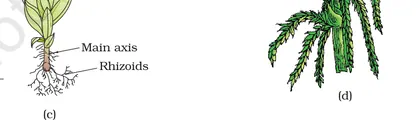
- Have rhizoids instead of roots; reproduce by spores.
- Examples: Marchantia (liverwort), Funaria (moss), Anthoceros (hornwort).
3. Pteridophytes
- Vascular seedless plants with well-developed xylem and phloem.
- Sporophyte (2n) is dominant and independent; reproduce by spores produced in sporangia.
- Have true roots, stems and leaves (often fronds); show alternation of generations.
- Examples: Lycopodium, Equisetum, Pteris, Marsilea.
4. Gymnosperms
- Vascular seed plants with naked seeds (not enclosed in ovary).
- Sporophyte is dominant; seeds develop on cones or surface of sporophylls.
- Usually woody; xylem contains tracheids but not vessel elements (in most groups).
- Examples: Cycas, Pinus, Ginkgo, Cedrus.
5. Angiosperms (Flowering plants)
- Vascular seed plants producing flowers and seeds enclosed in fruits (ovary develops into fruit).
- Most advanced and diverse group; double fertilization and formation of endosperm are characteristic.
- Divided into Monocotyledons (monocots) and Dicotyledons (dicots/eudicots) based on embryo, leaf venation, floral parts, root system and vascular bundle arrangement.
- Examples: Monocots - Oryza, Zea, Triticum; Dicots - Pisum, Hibiscus, Mangifera.
Key contrasting characters (summary)
- Body plan: thallus (algae) vs differentiated plant body (pteridophytes onwards).
- Vascular tissue: absent in algae and bryophytes; present in pteridophytes, gymnosperms and angiosperms.
- Dominant phase: gametophyte in bryophytes; sporophyte dominant in pteridophytes, gymnosperms and angiosperms.
- Seed: absent in algae, bryophytes and pteridophytes; present in gymnosperms (naked) and angiosperms (enclosed).
Modern notes
Modern classifications use phylogenetic data (DNA) and often place plants in major clades within Viridiplantae. For practical CBSE purposes, the five-group scheme above and the monocot/dicot distinction in angiosperms remain essential.
Importance
Understanding classification helps in identifying ecological roles (primary producers, habitat formers), economic uses (food, timber, medicine), and evolutionary relationships among plant groups.
- Algae: Spirogyra (freshwater filamentous), Ulva (sea lettuce), Sargassum (brown seaweed used as fertilizer and food in some regions).
- Bryophytes: Marchantia (liverwort - used in studies of alternation of generations), Funaria (common moss).
- Pteridophytes: Pteris (common fern), Equisetum (horsetail), Marsilea (aquatic fern).
- Gymnosperms: Pinus (pine - timber, resin), Cycas (sago palm-like gymnosperm), Ginkgo biloba (medicinal leaf extract).
- Angiosperms (Monocots): Oryza sativa (rice), Zea mays (maize), Lilium (flowering bulb).
- Angiosperms (Dicots): Pisum sativum (pea), Hibiscus rosa-sinensis (ornamental), Mangifera indica (mango - fruit crop).
- Alternation of generations (ploidy flow): 2n (sporophyte) --meiosis--> n (spores) --mitosis--> n (gametophyte) --gamete production--> n (gametes) --fertilization--> 2n (zygote) --> sporophyte
- Ploidy notation: n = haploid (gametophyte, spores, gametes), 2n = diploid (sporophyte, zygote, seeds/embryo).
- Relative dominance concept (qualitative): Bryophytes: gametophyte-dominant; Pteridophytes/Gymnosperms/Angiosperms: sporophyte-dominant.
Algae (Thallophyta / Phycophyta)
Definition: Algae (Thallophyta/Phycophyta) are a diverse group of primarily photosynthetic, thalloid (non‑vascular) organisms ranging from unicellular forms to large multicellular seaweeds. Historically placed in the plant kingdom, modern classification distributes them among several phyla based on pigments, reserve products and cell wall composition.
General characteristics:
- Mostly aquatic (freshwater and marine); some terrestrial or symbiotic.
- Body not differentiated into root, stem and leaf (thallus organization).
- May be unicellular, colonial, filamentous, or parenchymatous (seaweeds).
- Photosynthetic pigments vary: chlorophylls (a, b, c), carotenoids, phycobilins — pigment composition used in classification.
- Reserve food: starch (green algae), oils or laminarin (brown algae), floridean starch (red algae), cyanophycean starch or glycogen in cyanobacteria.
- Cell wall: cellulose (green algae), algin/pectin (brown), agar/cellulose (red), mucilaginous sheaths in blue‑greens (cyanobacteria).
- Reproduction: vegetative, asexual (zoospores, aplanospores), and sexual (isogamy, anisogamy, oogamy).
Major groups (practical CBSE grouping):
- Cyanophyta (Blue‑green algae / cyanobacteria) — prokaryotic; pigments: chlorophyll a + phycobilins; reserve: cyanophycean starch; examples: Nostoc, Anabaena, Oscillatoria. Some fix atmospheric N2.
- Chlorophyta (Green algae) — pigments: chlorophyll a and b, carotenoids; reserve: starch; cell wall: cellulose; examples: Chlamydomonas, Volvox, Spirogyra, Ulva. Closest to land plants.
- Phaeophyta (Brown algae) — mostly marine seaweeds; pigments: chlorophyll a, c + fucoxanthin (brown); reserve: laminarin; examples: Laminaria, Sargassum, Fucus. Produce alginates.
- Rhodophyta (Red algae) — mostly marine; pigments: chlorophyll a + phycobilins (phycoerythrin); reserve: floridean starch; examples: Porphyra, Gelidium, Gracilaria. Source of agar and carrageenan.
- Euglenophyta (sometimes included) — unicellular, with flagellum; mixotrophic (photosynthetic and heterotrophic); example: Euglena.
Morphological forms:
- Unicellular (e.g., Chlamydomonas).
- Colonial (e.g., Volvox).
- Filamentous (e.g., Spirogyra, Oscillatoria).
- Parenchymatous / foliose / thallus (e.g., Ulva, Laminaria, Porphyra).
Reproduction:
- Vegetative: fragmentation, cell division, hormogonia (cyanobacteria).
- Asexual: formation of non‑motile spores (aplanospores) or motile zoospores with flagella.
- Sexual: fusion of gametes — isogamy (similar gametes, e.g., some green algae), anisogamy (different sized motile gametes), oogamy (large non‑motile egg + small motile sperm, e.g., Chlamydomonas → some Ulvophyceae and higher forms).
- Many algae show alternation of generations (haploid gametophyte and diploid sporophyte), especially in brown and red algae.
Ecological and economic importance:
- Primary producers in aquatic ecosystems — produce oxygen and form the base of food webs.
- Nitrogen fixation by cyanobacteria (e.g., Anabaena) enriches soils and is important in paddy fields and in symbiosis with Azolla.
- Food: edible seaweeds — nori (Porphyra), wakame/kelp (Laminaria), sea lettuce (Ulva).
- Commercial products: agar (from Gelidium, Gracilaria), carrageenan (from some red algae), alginates (from brown algae) — used in food, microbiology, pharmaceuticals and cosmetics.
- Biofuel potential: some algae yield high lipid content for biodiesel production.
- Water quality indicator and environmental impact: algal blooms (including harmful algal blooms/red tides) result from eutrophication and can produce toxins affecting fisheries and human health.
Note on classification: The traditional term Thallophyta is historical and groups diverse lineages; modern phylogeny places algae in several distinct clades across Bacteria, Archaeplastida and other eukaryotic supergroups.
Summary: Algae are a polyphyletic assemblage of photosynthetic, thalloid organisms with varied pigments, life cycles and ecological roles. They are crucial to aquatic ecosystems, human industry (food, hydrocolloids, biofertilizers) and emerging technologies (biofuels).
- Chlamydomonas — unicellular green alga used to study flagella and basic genetics
- Spirogyra — filamentous green alga showing conjugation (sexual reproduction)
- Volvox — colonial green alga illustrating cellular differentiation
- Ulva (sea lettuce) — edible green seaweed; simple thallus
- Sargassum and Laminaria (kelp) — brown algae; source of alginates
- Porphyra (nori) — red alga used as food (sushi wrap)
- General photosynthesis: 6 CO2 + 6 H2O → C6H12O6 + 6 O2
- Cellular respiration (aerobic): C6H12O6 + 6 O2 → 6 CO2 + 6 H2O + energy (ATP)
- Exponential growth (population): N(t) = N0 * e^(r t) (where N0 = initial population, r = growth rate, t = time)
Bryophytes (Bryophyta)
Definition: Bryophytes (division Bryophyta sensu lato) are non-vascular, terrestrial plants that are small, simple, and lack true roots, stems and leaves. They show an alternation of generations with a dominant, photosynthetic gametophyte (haploid, n) and a dependent sporophyte (diploid, 2n).
Key characteristics
- Gametophyte is dominant, green and photosynthetic; sporophyte is usually attached to and dependent on gametophyte.
- Non-vascular: no xylem or phloem; water and solute movement by diffusion and capillarity.
- Rhizoids instead of roots (unicellular in most mosses, multicellular in some liverworts).
- Require water for sexual reproduction because sperm are flagellated.
- Spore-bearing: sporophyte produces haploid spores by meiosis inside a capsule (sporangium).
- Simple forms of asexual reproduction: fragmentation, gemmae (in liverworts).
Major groups (common classification for school level)
- Mosses (Bryopsida) – leafy gametophyte; many species like Funaria, Polytrichum, Sphagnum.
- Liverworts (Marchantiophyta / Marchantiopsida) – thalloid or leafy; examples: Marchantia, Riccia.
- Hornworts (Anthocerotophyta) – thalloid gametophyte with horn-like sporophyte; example: Anthoceros.
Structure (typical moss example)
- Gametophyte parts: rhizoids (anchorage), stem-like axis, leaf-like structures (one cell layer thick often), sex organs (antheridia = male; archegonia = female).
- Sporophyte parts: foot (absorbs nutrients from gametophyte), seta (stalk), capsule/sporangium (produces spores). Many moss capsules have an operculum and peristome teeth for spore release.
Life cycle (alternation of generations)
Sequence in words: a spore (n) germinates by mitosis to form a protonema and then gametophyte (n). The mature gametophyte bears antheridia and archegonia that produce gametes (n). Sperm swim to archegonium in a film of water and fertilize the egg (n + n → zygote, 2n). Zygote develops into the sporophyte (2n) attached to the gametophyte. In the capsule meiosis occurs to produce haploid spores (n), which are released to start a new gametophyte.
Reproduction
- Sexual: via flagellated sperm and archegonial eggs — requires external water.
- Asexual/vegetative: fragmentation of gametophyte; gemmae in Marchantia produced in gemma cups.
Ecological and economic importance
- Soil formation and stabilization: colonize bare rocks and help humus formation.
- Water retention: peat moss (Sphagnum) holds large amounts of water—important in bog ecosystems.
- Peat formation: Sphagnum peat is used as fuel and a horticultural substrate (soil conditioner, seed beds).
- Indicator species: some bryophytes indicate air pollution and habitat quality.
- Symbiosis: hornworts often host nitrogen-fixing cyanobacteria (e.g., Anthoceros with Nostoc), improving soil fertility.
Distinguishing from other plant groups
- Unlike pteridophytes and seed plants, bryophytes lack true vascular tissue and do not have a dominant sporophyte.
- Require moist habitats for sexual reproduction (flagellated sperm).
Summary points for Class 11: Bryophytes are simple, non-vascular plants with a dominant haploid gametophyte; they reproduce via spores and flagellated sperm, and include mosses, liverworts and hornworts. They are ecologically significant for soil formation, moisture retention and peat formation.
- Funaria hygrometrica (common moss used as an example for moss anatomy)
- Sphagnum spp. (peat moss; forms peat bogs; used in horticulture and fuel)
- Polytrichum commune (hair-cap moss; relatively tall moss with distinct leaves)
- Marchantia polymorpha (a common thalloid liverwort showing gemma cups for asexual reproduction)
- Riccia spp. (thalloid liverworts; simple structure)
- Anthoceros spp. (hornwort; long horn-like sporophyte; often associated with Nostoc cyanobacteria)
- Life-cycle flow (ploidy shown): spore (n) → (mitosis) → gametophyte (n) → gametangia → gametes (n) → (fertilization) → zygote (2n) → (mitosis) → sporophyte (2n; foot + seta + capsule) → (meiosis in capsule) → spores (n)
- Alternation of generations: gametophyte (n, dominant) ↔ sporophyte (2n, dependent)
- Fertilization requirement: flagellated sperm + water → successful fertilization (emphasizes ecological dependence on moisture)
Pteridophytes (Pteridophyta)
Definition: Pteridophytes are vascular, seedless plants that reproduce by spores and show an alternation of generations with a dominant sporophytic phase. They are placed in Division Pteridophyta.
General characters:
- Well-developed vascular tissues (xylem and phloem) — true roots, stems and leaves.
- Sporophyte is the dominant, independent and photosynthetic phase.
- Reproduction by spores (not seeds); gametophyte is usually small, green and free-living (prothallus).
- Flagellated antherozoids (sperm) require water for fertilization.
- Show homospory (one type of spore) or heterospory (microspores and megaspores).
Morphology:
- Stem: often rhizome (creeping or underground). E.g., rhizome in Pteris and Adiantum.
- Leaves: fronds in ferns; microphylls (simple leaves) in Lycopodium; megaphylls (complex leaves) in true ferns.
- Roots: adventitious roots arise from rhizome or stem.
- Sporangia: borne on sporophylls; sori on undersurface of fronds in many ferns; annulus (specialized cell row) aids spore discharge in leptosporangiate ferns.
Life cycle (overview):
- Sporophyte (2n) produces spores by meiosis in sporangia.
- Spores (n) germinate to form free-living gametophyte (prothallus, n).
- Gametophyte bears antheridia (male) and archegonia (female); antherozoids swim to egg requiring water.
- Fertilization gives zygote (2n) which grows into the new sporophyte.
Classification (major groups/examples):
- Lycopsida (club mosses) — Lycopodium, Selaginella (Selaginella is heterosporous).
- Sphenopsida (horsetails) — Equisetum.
- Pteropsida or Filicopsida (true ferns) — Pteris, Adiantum, Marsilea, Azolla.
Economic and ecological importance:
- Soil binding and preventing erosion (many ferns and lycophytes).
- Azolla used as green manure and biofertilizer in rice cultivation (symbiosis with nitrogen-fixing Anabaena).
- Ornamentals (many ferns), fodder in some cases, and some medicinal uses.
- Ancient pteridophytes (lycopsids) contributed to coal formation in the Carboniferous period.
Distinguishing from bryophytes and seed plants:
- Compared to bryophytes: pteridophytes have vascular tissues and true roots; sporophyte is independent and dominant.
- Compared to seed plants: pteridophytes do not form seeds or pollen; gametophyte is free-living and fertilization needs water.
Key special features: presence of sori and indusia in many ferns, annulus mechanism for spore release in leptosporangiate ferns, occurrence of both homospory and heterospory in the group.
- Lycopodium clavatum (club moss)
- Selaginella (spikemoss) — heterosporous genus
- Equisetum arvense (horsetail)
- Pteris vittata (brake fern)
- Adiantum capillus-veneris (maidenhair fern)
- Marsilea quadrifolia (water fern)
- Life-cycle notation: Sporophyte (2n) --meiosis--> Spores (n) --germination/mitosis--> Gametophyte (n) --gametes (n)--> Fertilization --> Zygote (2n) --> Sporophyte (2n).
- Leptosporangium spore-count: typically 64 spores (2^6) per sporangium in many leptosporangiate ferns (result of about 6 mitotic divisions).
- Heterospory notation: Sporophyte (2n) --meiosis--> Microspores (n) -> Male gametophyte (n); Megaspores (n) -> Female gametophyte (n).
- Taxonomic hierarchy (example): Division Pteridophyta -> Classes: Lycopsida, Sphenopsida, Psilopsida (where recognized), Pteropsida.
Gymnosperms
Definition: Gymnosperms are vascular seed plants in which the ovules and seeds are not enclosed within an ovary (hence called "naked seeds"). They are heterosporous and exhibit a dominant sporophytic (2n) generation with highly reduced, dependent gametophytes (n).
Key characteristics
- Seeds are exposed on the surface of megasporophylls or cones (no true fruit).
- Heterospory: microspores (male) and megaspores (female) produced in separate sporangia.
- Male gametophyte = pollen grain (no need for free water for pollen transport); pollination is mainly anemophilous (wind).
- Female gametophyte develops within the ovule and provides nourishment to the embryo.
- Xylem mainly composed of tracheids (vessels absent in most gymnosperms).
- Secondary growth present — most have a well-developed cambium (woody trees/shrubs).
- Reproductive structures often aggregated as cones (strobili) — separate male and female cones in many species.
- Life cycle shows alternation of generations with a dominant sporophyte and retained/dependent gametophytes.
Major groups (representative)
- Cycadales (cycads) — e.g., Cycas: palm-like, dioecious, motile sperm in some.
- Ginkgoales — Ginkgo biloba (living fossil), fan-shaped leaves, dioecious.
- Coniferales (conifers) — pines, cedars, firs, Araucaria, Sequoia; most economically important.
- Gnetales — Ephedra, Gnetum, Welwitschia; some angiosperm-like features.
Representative morphology and life cycle (Pinus as example)
- Sporophyte (2n) produces two kinds of cones: microsporangiate (male) and ovulate (female) cones.
- In microsporangia, microspore mother cells (2n) undergo meiosis → microspores (n) → develop into pollen grains (male gametophyte).
- In ovules on megasporophylls, megaspore mother cell (2n) undergoes meiosis → usually one functional megaspore (n) → develops into the female gametophyte (n) which bears archegonia/egg.
- Pollen reaches the ovule by wind (pollination); pollen germinates and forms a pollen tube; fertilization may be delayed (months in Pinus).
- Fertilization produces a zygote (2n) → embryo develops within the seed. Seed has embryo (2n), nutritive tissue = female gametophyte (n), and seed coat derived from integuments (2n).
- Germination of seed gives a new sporophyte (2n) and the cycle repeats.
Differences from angiosperms (brief)
- Gymnosperms: seeds exposed; Angiosperms: seeds enclosed in ovary (fruit).
- Gymnosperms: no true flowers, often wind-pollinated; Angiosperms: flowers, insect/wind/animal pollination.
- Gymnosperms: usually tracheids only; Angiosperms: vessel elements common.
- Gymnosperm female gametophyte is simpler and retained on sporophyte; angiosperms have highly reduced female gametophyte (embryo sac).
Economic and ecological importance
- Timber and construction (pines, cedars, firs, sequoias).
- Resins, turpentine, paper (wood pulp) and adhesives.
- Food: pine nuts (seeds) and some edible cycad seeds after detoxification in traditional use.
- Ornamentals and shelterbelts; habitat and carbon sequestration (large conifer forests).
- Some species (e.g., Ginkgo) have medicinal/ornamental use.
Conservation
Many gymnosperms are vulnerable or endangered due to habitat loss, logging and slow reproductive rates. Conservation includes seed banks, protected areas and controlled propagation.
- Pinus (pines) — e.g., Pinus roxburghii, Pinus longifolia — timber, resin, pine nuts
- Cycas revoluta (sago palm) — ornamental, cycads showing primitive features
- Ginkgo biloba — living fossil, medicinal uses (leaf extracts)
- Cedrus deodara (Deodar) — timber and ornamental tree
- Sequoia sempervirens (redwood) — very tall trees, ecological carbon sinks
- Ephedra (Ma Huang) — source of ephedrine, xerophytic shrubs
- Alternation of generations (sequence): 2n (sporophyte) → meiosis → n (spores) → development → n (gametophyte) → n (gametes) → fertilization → 2n (zygote) → sporophyte.
- Seed composition (generalized): Seed = embryo (2n) + female gametophyte (n; nutritive tissue) + seed coat/testa (2n; from integument).
- Microsporogenesis: microspore mother cell (2n) --meiosis--> 4 microspores (n) → pollen grains (male gametophyte).
- Megasporogenesis (typical): megaspore mother cell (2n) --meiosis--> 4 megaspores (n) → usually 1 functional megaspore → female gametophyte (n).
Angiosperms (Flowering Plants)
Definition
Angiosperms are seed-bearing plants in which seeds develop enclosed within an ovary (which matures into a fruit). They are the largest and most diverse group of land plants and are collectively called flowering plants.
Key Features
- Flower: Reproductive structure with one or more whorls (calyx, corolla, androecium, gynoecium).
- Double fertilization: Unique process producing a diploid zygote and a typically triploid endosperm.
- Enclosed ovules: Ovules are enclosed within an ovary at the time of pollination.
- Seed and fruit: Seeds are enclosed in fruits derived from the ovary; fruit aids dispersal.
- Vascular tissue: Well-developed xylem and phloem with vessels in many taxa.
- Dominant sporophyte: The multicellular diploid phase is dominant; gametophytes are reduced.
Major Divisions (practical CBSE view)
Angiosperms are commonly divided into two groups:
- Monocotyledons (monocots): One cotyledon, parallel venation, vascular bundles scattered, fibrous root system, floral parts usually in threes. Examples: grasses, lilies, orchids.
- Dicotyledons (dicots): Two cotyledons, reticulate venation, vascular bundles in a ring, tap root system, floral parts usually in fours or fives. Examples: rose, pea, mango.
Flower Structure (whorls)
- Calyx: Sepals (protect bud).
- Corolla: Petals (attract pollinators).
- Androecium: Stamens (filament + anther producing pollen).
- Gynoecium: One or more carpels; each carpel has an ovary (with ovules), style and stigma.
Types & Variation
- Symmetry: Actinomorphic (radial) or zygomorphic (bilateral).
- Completeness: Complete (all 4 whorls present) vs incomplete.
- Fusion: Connation (fusion within a whorl) and adnation (fusion between whorls).
- Placentation: Marginal, parietal, axile, basal, free central — position of ovules in ovary.
Inflorescence & Flower Types
Inflorescence describes the arrangement of flowers on a plant (raceme, spike, cyme, panicle, capitulum). Flowers can be bisexual (perfect) or unisexual (imperfect); plants can be monoecious or dioecious.
Fruit Types
Fruits develop from fertilized ovaries. Main categories: simple (from one ovary, e.g., mango), aggregate (from many carpels of one flower, e.g., strawberry), multiple (from fused flowers of an inflorescence, e.g., fig), and accessory (involve other floral parts, e.g., apple).
Reproductive Cycle (concise)
- Microsporogenesis and megasporogenesis produce microspores (pollen) and megaspores (embryo sac precursors).
- Pollen (male gametophyte) and embryo sac (female gametophyte) form.
- Pollination delivers pollen to stigma; pollen germinates and pollen tube grows to ovule.
- Double fertilization: one sperm + egg → zygote (2n); other sperm + central cell (two polar nuclei) → endosperm (3n in most angiosperms).
- Zygote develops into embryo inside seed; ovary develops into fruit for seed protection and dispersal.
Economic Importance
- Food crops: cereals (rice, wheat), pulses, fruits, vegetables.
- Timber and fodder: many dicots supply wood and animal feed.
- Medicinal plants, dyes, fibers (cotton), oils (soybean, groundnut), ornamentals (rose, jasmine).
Adaptations & Modifications
- Modified roots: taproot storage (carrot), adventitious roots (maize prop roots).
- Modified stems: tubers (potato), stolons (strawberry runners), tendrils.
- Modified leaves: tendrils, spines (cactus), floral bracts (bougainvillea).
Summary Notes
Angiosperms are characterized by flowers, fruits, and double fertilization, show great diversity in form and ecology, and are the most economically important plant group for humans.
- Oryza sativa (Rice) - monocot cereal, important staple food
- Triticum aestivum (Wheat) - monocot cereal
- Zea mays (Maize) - monocot cereal, monoecious inflorescence
- Pisum sativum (Pea) - dicot, papilionaceous flower
- Hibiscus rosa-sinensis (Hibiscus) - dicot, typical actinomorphic flower
- Rosa spp. (Rose) - dicot ornamental
- Double fertilization (ploidy summary): egg (n) + sperm (n) → zygote (2n); central cell (n + n) + sperm (n) → endosperm (3n).
- Flower formula (notation examples): Hibiscus rosa-sinensis: K5 C5 A∞ G(5) (superior ovary, actinomorphic).
- Flower formula: Pisum sativum (Pea): K5 C5 A(9)+1 G(1) (zygomorphic; diadelphous androecium).
- Grass floret (e.g., Zea mays) simplified: K0 C0 A3 G(2) (inferior ovary; unisexual flowers on same plant in maize).
Alternation of Generations
Alternation of generations (haplodiplontic life cycle) is the regular alternation between two multicellular phases in plants and some algae: a haploid gametophyte (n) that produces gametes and a diploid sporophyte (2n) that produces spores. The life cycle involves mitosis in both phases and meiosis during spore formation.
Basic sequence (steps):
- 1) Sporophyte (2n) undergoes meiosis in sporangia → produces haploid spores (n).
- 2) Each spore (n) divides by mitosis → develops into a multicellular gametophyte (n).
- 3) Gametophyte produces gametes (n) by mitosis in gametangia (antheridia: male; archegonia: female) or by differentiation (pollen/embryo sac in seed plants).
- 4) Two gametes fuse (fertilization) → zygote (2n) which divides by mitosis → develops into the multicellular sporophyte (2n).
Chromosome/ploidy relationships (concise): sporophyte = 2n → meiosis → spores = n → mitosis → gametophyte = n → gametes = n → fertilization → zygote = 2n → mitosis → sporophyte = 2n.
Types of alternation:
- Isomorphic alternation: gametophyte and sporophyte are morphologically similar (e.g., some green algae such as Ulva).
- Heteromorphic alternation: gametophyte and sporophyte differ in form and size (most land plants). Degree of dominance shifts in evolution.
Evolutionary trend across plant groups: In evolution there is a trend from gametophyte-dominant to sporophyte-dominant life cycles:
- Bryophytes (mosses, liverworts): gametophyte dominant; sporophyte dependent on gametophyte (physically attached).
- Pteridophytes (ferns): sporophyte dominant and independent; gametophyte (prothallus) free-living but short-lived.
- Gymnosperms & angiosperms (seed plants): strongly sporophyte-dominant; gametophytes highly reduced and dependent, retained on the sporophyte (pollen = male gametophyte; embryo sac = female gametophyte).
Special cases: Heterospory — production of two different spore sizes/types: microspores (→ male gametophytes) and megaspores (→ female gametophytes). Seen in some pteridophytes (e.g., Selaginella) and all seed plants.
Significance: Alternation of generations separates meiosis (spore formation) from fertilization, allows multicellular development in both ploidy states, and permits evolutionary diversification (reduction/protection of gametophyte in land plants).
- Bryophyte: Funaria (moss) — dominant gametophyte; sporophyte dependent and attached to gametophyte.
- Liverwort: Marchantia — gametophyte dominant; obvious archegoniophores/antheridiophores.
- Pteridophyte: Fern (Pteris/Adiantum) — dominant sporophyte (fronds); gametophyte is a small free-living prothallus.
- Heterosporous pteridophyte: Selaginella — produces microspores and megaspores.
- Gymnosperm: Pinus — dominant sporophyte; male gametophyte = pollen grain, female gametophyte = ovule tissue that forms inside the cone.
- Angiosperm: Hibiscus or Triticum (wheat) — sporophyte dominant; pollen (male gametophyte) and embryo sac (female gametophyte) are highly reduced.
- Sporophyte (2n) --meiosis--> Spores (n)
- Spore (n) --mitosis--> Gametophyte (n)
- Gametophyte (n) --mitosis--> Gametes (n)
- Gamete (n) + Gamete (n) --fertilization--> Zygote (2n) --mitosis--> Sporophyte (2n)
- Summary: 2n --meiosis--> n --mitosis--> n --fusion--> 2n
Reproductive Structures and Processes
Overview: Plant reproduction occurs by vegetative (asexual) and sexual means. Vegetative reproduction produces genetically identical offspring using vegetative parts. Sexual reproduction involves formation of spores/gametes, fertilization and formation of seeds/fruits (in seed plants). A key concept across plants is alternation of generations — an alternation between a multicellular diploid sporophyte (2n) and a multicellular haploid gametophyte (n).
1. Alternation of Generations (Generalized)
- Sporophyte (2n) undergoes meiosis to produce haploid spores (n).
- Spore (n) divides mitotically to form the gametophyte (n).
- Gametophyte (n) produces gametes (n) by mitosis in gametangia (antheridia and archegonia in lower plants).
- Fertilization of gametes → zygote (2n) → grows into sporophyte (2n).
2. Reproductive structures and processes by plant group
- Bryophytes (mosses, liverworts): Dominant gametophyte (green plant). Gametangia: antheridia (male) produce biflagellate sperm; archegonia (female) produce egg. Water required for sperm motility. Sporophyte is attached and dependent on gametophyte and produces spores in a capsule (sporangium).
- Pteridophytes (ferns, horsetails): Dominant sporophyte; independent but small gametophyte (prothallus) bears antheridia and archegonia; spores produced in sporangia (sori on fern fronds). Water required for sperm.
- Gymnosperms: Seed plants with naked ovules. Heterospory: microspores → pollen (male gametophyte), megaspores → female gametophyte within ovule. Pollination often by wind. Fertilization by non-motile sperm delivered by pollen tube. Seed formation without fruiting wall.
- Angiosperms (flowering plants): Flowers are the reproductive organs. Key structures: sepals, petals, stamens (anther + filament) producing pollen, carpels (ovary, style, stigma) containing ovules. Double fertilization is characteristic: one sperm fuses with egg → zygote (embryo); the other fuses with two polar nuclei → primary endosperm nucleus (nutritive tissue). Ovary matures into fruit enclosing seed(s).
3. Sexual reproduction in angiosperms (stepwise)
- Microsporogenesis: Microspore mother cells (2n) in anthers undergo meiosis → microspores (n) → develop into pollen grains (male gametophyte).
- Megasporogenesis: Megaspore mother cell (2n) in ovule undergoes meiosis → usually one functional megaspore (n) → undergoes mitoses → embryo sac (female gametophyte; typically 7 cells, 8 nuclei).
- Pollination: Transfer of pollen to stigma. Agents: wind, insects, water, birds, bats, mammals, self vs cross-pollination.
- Fertilization: Pollen germinates on stigma → pollen tube grows through style → delivers two sperm to embryo sac → double fertilization (zygote and primary endosperm nucleus formed).
- Seed & Fruit development: Zygote → embryo; endosperm (3n) nourishes embryo; integuments → seed coat; ovary → fruit. Mechanisms of seed dispersal follow.
4. Vegetative (Asexual) reproduction and related phenomena
- Natural vegetative: runners (strawberry), tubers (potato), bulbs (onion), rhizomes (ginger), suckers.
- Artificial vegetative propagation: cuttings, grafting, layering, tissue culture (micropropagation).
- Apomixis: Asexual seed formation without fertilization (found in some grasses and a few angiosperms) → progeny genetically identical to parent.
- Polyembryony: More than one embryo in a seed (common in citrus and some mango varieties) — nucellar embryony is a common cause.
- Self-incompatibility: Genetic mechanisms preventing self-fertilization to promote outcrossing (widely present in many families).
5. Importance
Reproductive adaptations determine species survival, genetic variability, crop breeding strategies (hybridisation, clonal propagation), and conservation. Understanding pollination, fertilization and seed biology is central to agriculture, horticulture and forestry.
- Wheat (Triticum spp.) — predominantly self-pollinated (autogamy).
- Maize (Zea mays) — monoecious and primarily wind-pollinated (anemophily) leading to cross-pollination.
- Pea (Pisum sativum) — self-pollination; Mendel’s experiments used this trait.
- Sunflower (Helianthus) — insect-pollinated (entomophily).
- Vallisneria — hydrophily (water pollination) with distinct pollination mechanisms for different species.
- Coconut (Cocos nucifera) — seeds dispersed by water (hydrochory); flowers pollinated by wind/insects.
- Alternation of generations (symbolic): sporophyte (2n) --meiosis--> spores (n) --mitosis--> gametophyte (n) --gametes (n)--> fertilization --> zygote (2n) --> sporophyte (2n).
- Double fertilization (angiosperms): sperm1 (n) + egg (n) → zygote (2n); sperm2 (n) + two polar nuclei (n + n) → primary endosperm nucleus (3n).
- Ploidies: haploid = n; diploid = 2n; triploid = 3n (e.g., endosperm in many angiosperms is 3n).
- Embryo sac (typical angiosperm): 7 cells, 8 nuclei (structure often summarized rather than as algebraic formula).
- Heterospory: microspore (n) → male gametophyte (pollen); megaspore (n) → female gametophyte (embryo sac).
Homospory and Heterospory
Definition
Homospory: Production of one kind of spore (morphologically and size-wise similar). Heterospory: Production of two distinct kinds of spores — microspores (small, male) and megaspores (large, female).
Occurrence
Homospory is common in most bryophytes and many pteridophytes (e.g., most ferns, Lycopodium, Equisetum). Heterospory occurs in some pteridophytes (Selaginella, Isoetes, Salvinia, Marsilea, Azolla) and in all seed plants (gymnosperms and angiosperms).
Developmental pathway (generalised)
Sporophyte (2n) —meiosis→ spores (n) —mitosis→ gametophytes (n) —gametes→ fertilization → zygote (2n) → new sporophyte. The key difference is whether produced spores are one type (homospory) or two distinct types (heterospory).
Homospory — details
• One morphological spore type.
• Gametophyte usually bisexual (monoecious), bearing both antheridia and archegonia (e.g., many ferns).
• Gametophyte often free-living and independent.
Heterospory — details
• Two distinct spore types: microspores → male gametophytes (often pollen in seed plants); megaspores → female gametophytes (enclosed or retained).
• Microspores are small and numerous; megaspores are larger and fewer.
• Gametophytes are usually unisexual and often reduced (endosporic development — gametophyte develops within the spore wall).
• In heterospory there is frequently retention of the megaspore on the parent sporophyte, a step toward seed habit.
Evolutionary significance
• Heterospory is considered a key evolutionary step leading to the seed habit: protection and nourishment of the female gametophyte and embryo.
• Encourages reduction and specialization of gametophytes, promotes outcrossing and reduces self-fertilization.
• Endospory (gametophyte develops within spore) protects the gametophyte against desiccation and damage.
Key morphological/functional contrasts (summary)
- Spore types: Homospory — one type; Heterospory — two types (micro- and megaspore).
- Gametophyte sex: Homospory — often bisexual; Heterospory — unisexual (separate male and female gametophytes).
- Gametophyte independence: Homospory — usually free-living; Heterospory — usually endosporic and reduced.
- Relation to seeds: Homospory — no direct progression to seed; Heterospory — a pre-adaptation/step toward seed evolution.
Typical life-cycle notes
• In heterosporous plants the megasporangium often undergoes meiosis to produce four megaspores, of which typically only one is functional; microsporangium meiosis produces many microspores (often in tetrads that separate). In seed plants, microspores → pollen grains, megaspore → embryo sac.
- Homospory: Lycopodium (club moss), Pteris (fern), Equisetum (horsetail), Funaria (moss), Marchantia (liverwort).
- Heterospory: Selaginella (spikemoss), Isoetes (quillwort), Salvinia, Marsilea (water ferns), Azolla; all gymnosperms (e.g., Pinus) and angiosperms (flowering plants).
- General life-cycle (both): 2n (sporophyte) --meiosis--> n (spores) --mitosis--> n (gametophyte) --gametes--> fertilization --> 2n (zygote).
- Homospory: 2n (sporophyte) --meiosis--> many identical n (homospores) --mitosis--> bisexual or monoecious gametophyte (n).
- Heterospory: 2n (sporophyte) --meiosis--> microspores (n) + megaspores (n). Microspore (n) --mitosis--> male gametophyte (pollen in seed plants); Megaspore (n) --mitosis--> female gametophyte (embryo sac in angiosperms).
- Megasporogenesis (typical): 2n (MMC) --meiosis--> 4 × n megaspores (often 3 degenerate) → 1 functional megaspore → female gametophyte (n).
- Microsporogenesis (typical): 2n (MiMC) --meiosis--> 4 × n microspores → male gametophytes (n).
Structural Adaptations and Morphology
Definition and scope
Structural adaptations and morphology in plants study how shape, form and tissue organization (roots, stems, leaves, reproductive organs) are modified to suit particular habitats and life-forms. These modifications increase survival by improving water relations, gas exchange, support, reproduction and nutrient capture.
Levels of adaptation
- Organ-level — modifications of roots, stems, leaves, flowers and seeds (e.g., storage roots, tendrils, succulents).
- Tissue/anatomical — changes in epidermis, cuticle, mesophyll, vascular bundles, mechanical tissues (e.g., thick cuticle, aerenchyma, sclerenchyma).
- Whole-plant form — growth habit and life-form such as annuals, perennials, climbers, epiphytes, hydrophytes or xerophytes.
Common structural adaptations with explanations
- Roots: Storage roots (beet, carrot) store carbs/water; prop/brace roots (maize, banyan) give mechanical support; pneumatophores (mangroves) are upward-growing roots for aeration in waterlogged soils; adventitious roots (ivy) help climbing or anchoring.
- Stems: Rhizomes, stolons, tubers, corms (ginger, strawberry, potato, crocus) for vegetative propagation and storage; cladodes or phylloclades (Opuntia, Asparagus) are photosynthetic stems replacing leaves; thorns (Bougainvillea) for protection.
- Leaves: modifications for water conservation or capture — reduced or needle-like leaves (pines) and thick cuticle in xerophytes; succulent leaves (Aloe) store water; floating leaves with large air spaces and stomata on upper surface (Nymphaea); tendrils (Citrullus) for climbing; pitcher, sticky or trap leaves (Nepenthes, Drosera) for carnivory in nutrient-poor soils.
- Leaf anatomy: xerophytes show thick cuticle, sunken stomata, multiple epidermal layers, compact palisade; hydrophytes show thin/no cuticle, large aerenchyma (air spaces), reduced mechanical tissue and stomata mainly on upper surface.
- Reproductive structures: modifications for dispersal — wings or hairs on seeds (maple, cotton), fleshy fruits for animal dispersal, buoyant seeds for water dispersal.
Adaptive trade-offs and principles
- Surface area : volume (SA:V) — small SA:V reduces water loss; thin structures (high SA:V) favor gas exchange but increase desiccation risk.
- Diffusion constraints — thicker tissues or thicker cuticles reduce diffusion rates (affecting CO2 uptake) unless other adaptations (stomatal modifications, C4/CAM physiology) compensate.
- Mechanical vs physiological roles — tissues like sclerenchyma increase support but add metabolic cost.
Ecological examples of whole-plant forms: xerophytes (deserts) conserve water by morphology; hydrophytes (aquatic) promote buoyancy and gas exchange; halophytes (saline soils) excrete salts or sequester them in vacuoles; epiphytes grow on other plants and develop water-storage tissues and aerial roots.
Summary
Structural adaptations are morphological and anatomical changes shaped by natural selection that allow plants to occupy diverse habitats. Understanding form-function links (e.g., how leaf shape, cuticle, stomata and internal tissues interact) explains plant distribution and ecology.
- Cactus (Carnegiea/Opuntia) — succulent stem stores water; leaves reduced to spines; thick cuticle; CAM photosynthesis.
- Water lily (Nymphaea) — floating leaves with large air spaces (aerenchyma), stomata on upper surface, broad lamina for light capture.
- Mangrove (Avicennia, Rhizophora) — pneumatophores for aeration, salt-excreting glands or vivipary in some species.
- Maize (Zea mays) — prop roots provide mechanical support in shallow soils.
- Pea (Pisum sativum) — leaflets modified into tendrils for climbing.
- Potato (Solanum tuberosum) — stem tubers for carbohydrate storage and vegetative propagation.
- Surface area : Volume (SA:V) = Surface area / Volume — important for heat/water exchange; decreasing SA:V reduces relative water loss.
- Water potential (Ψ) = Ψs + Ψp — Ψ: total water potential; Ψs: osmotic (solute) potential; Ψp: pressure potential; fundamental to water uptake and storage.
- Fick's law (diffusion approximation): J = -D (ΔC / Δx) — J: flux, D: diffusion coefficient, ΔC: concentration difference, Δx: thickness; explains how tissue thickness and stomatal/lamina area influence gas exchange.
- Transpiration (simplified relation): E ≈ g_s × (e_leaf - e_air) — E: transpiration rate, g_s: stomatal conductance, e: vapour pressures; links stomatal structure/density to water loss.
Evolutionary Trends in Plant Kingdom
Overview
Evolutionary trends in the plant kingdom describe progressive changes in structure, life cycle and function that allowed plants to move from water to land, increase ecological success, and diversify. The main sequence is: Algae → Bryophytes → Pteridophytes → Gymnosperms → Angiosperms.
- 1. Multicellularity and tissue differentiation
Early algae show simple multicellularity. Land plants evolved specialized tissues (dermal, ground, vascular) for protection, transport and support. Example: simple thallus of Chara vs. well-differentiated stem/leaf/root in angiosperms. - 2. Development of vascular tissues (xylem & phloem)
Xylem (tracheids, later vessels) and phloem enable long-distance transport of water, minerals and photosynthates, allowing larger body size and upright growth. Pteridophytes are the first with well-developed vascular tissue; angiosperms have highly efficient vessels. - 3. Reduction and protection of the gametophyte; shift to sporophyte dominance
Bryophytes: gametophyte-dominant (photosynthetic, free-living). In pteridophytes and later groups the diploid sporophyte becomes larger and independent; in seed plants the gametophyte is reduced and retained on the sporophyte (protected, nourished). This reduces dependency on external factors for fertilization and increases survival of next generation. - 4. Protection from desiccation and regulated gas exchange
Cuticle (waxy layer) and stomata control water loss and gas exchange—essential adaptations for terrestrial life. Mosses have minimal cuticle; higher plants have more effective cuticles and stomatal control. - 5. Evolution of true roots, leaves and secondary growth
Roots anchor plants and absorb water/nutrients. Leaves increase photosynthetic area (microphylls in lycophytes, megaphylls in pteridophytes/seed plants). Secondary growth (wood) evolved in some gymnosperms and many angiosperms enabling thickening and large size (trees). - 6. Heterospory and seed habit
Heterospory (production of microspores and megaspores) appears in some pteridophytes and becomes fixed in seed plants. Seeds (integumented, nourished embryo + protective coat) replaced naked spores: increased protection, dormancy and dispersal. Gymnosperms have naked seeds; angiosperms have seeds enclosed in ovary (fruit). - 7. Pollen, pollination and evolution of flowers
Pollen is a desiccation-resistant male gametophyte allowing fertilization without free water. Angiosperms added flowers and specialized pollination syndromes (insect, bird, wind) and fruit for seed dispersal—key to their rapid diversification. - 8. Increasing reproductive efficiency and life-history strategies
Trends include internal fertilization (via pollen tubes), provision of nutritive tissue for the embryo (endosperm in many angiosperms), mechanisms for dormancy and dispersal (seeds, fruits), and diverse life cycles and growth forms adapted to many habitats.
Functional/ecological consequences: These trends permitted (a) successful colonization of terrestrial habitats, (b) larger body size and canopy formation, (c) diversification into multiple ecological niches, and (d) co-evolution with animals (pollinators, seed dispersers).
Summary table (conceptual)
Algae: aquatic, simple → Bryophytes: land-tolerant but gametophyte-dominant, non-vascular → Pteridophytes: vascular, sporophyte-dominant, free spores → Gymnosperms: seed (naked), pollen, woody → Angiosperms: flowers, fruits, sealed ovules, diverse life forms.
- Algae: Chara (freshwater green algae) – shows plant-like traits but aquatic and simple.
- Bryophytes: Marchantia (liverwort), Funaria (moss) – dominant gametophyte and dependent sporophyte.
- Pteridophytes: Pteris (fern), Equisetum (horsetail) – true vascular tissue and conspicuous sporophyte.
- Gymnosperms: Pinus (pine), Cycas – seeds (naked), pollen, secondary growth in woody forms.
- Angiosperms: Hibiscus, Zea mays (maize), Oryza sativa (rice) – flowers, fruits, endosperm, highly efficient vascular systems.
- Adaptation examples: Pine needles (reduced surface, thick cuticle) reduce transpiration; flowers of orchids show specialised pollinator relationships.
- Alternation of generations (life-cycle schematic): Sporophyte (2n) --meiosis--> spores (n) --mitosis--> gametophyte (n) --gametes (n) --fusion--> zygote (2n) --mitosis--> sporophyte (2n).
- Heterospory concept: Microsporangium → microspores → male gametophyte (pollen); Megasporangium → megaspore → female gametophyte (retained in ovule).
- Seed (conceptual): Seed = Embryo + stored food + protective seed coat (enables dormancy, dispersal and protection).
- Pollen = desiccation-resistant male gametophyte (no free-water requirement for sperm transfer).
Economic and Ecological Importance of Plants
Overview
Plants form the foundation of terrestrial and many aquatic ecosystems. They are primary producers that convert solar energy into chemical energy, support food webs, provide raw materials and services for humans, and regulate global cycles (carbon, water, oxygen).
Economic importance
- Food and nutrition: Major staples (rice, wheat, maize), fruits, vegetables, pulses, oilseeds and spices provide calories, proteins, fats, vitamins and minerals.
- Raw materials and industry: Timber, bamboo, cork, rubber, cotton, jute and fibres for construction, paper, textiles and manufacturing.
- Fuels and energy: Wood, charcoal, biofuels (biodiesel, bioethanol), and plant biomass for heating and electricity in many regions.
- Medicines and chemicals: Many pharmaceuticals and traditional remedies are plant-derived (e.g., morphine, quinine, digitalis, artemisinin). Plants are sources of dyes, essential oils and industrial chemicals.
- Agriculture and livelihoods: Farming, horticulture, forestry and agroforestry provide employment and economic stability to millions worldwide.
Ecological importance
- Primary production: Through photosynthesis plants fix CO2 and produce organic matter (biomass) that fuels food chains.
- Oxygen production: Photosynthetic activity of plants and phytoplankton maintains atmospheric O2 levels.
- Carbon sequestration and climate regulation: Plants store carbon in biomass and soils, reducing atmospheric CO2 and mitigating climate change.
- Soil formation and fertility: Plant roots and litter contribute to humus formation, bind soil particles, and recycle nutrients via decomposition.
- Water cycle and regulation: Transpiration influences local and regional rainfall; forests regulate streamflow and groundwater recharge.
- Habitat and biodiversity: Plants create habitats and niches for animals, fungi and microbes—higher plant diversity generally supports higher faunal diversity.
- Erosion control and protection: Vegetation (e.g., mangroves, grasses, trees) stabilises shorelines and slopes and reduces soil loss.
- Pollination and ecosystem services: Plants support pollinators and provide cultural, recreational and aesthetic services.
Link to human well‑being and conservation
Sustainable use and conservation of plant diversity are essential to maintain food security, medicinal resources and ecosystem services. Loss of plant species or large-scale deforestation reduces NPP, carbon storage and biodiversity, with direct socio-economic impacts.
Class 11 relevance (summary)
Understand plants as primary producers, their role in ecological processes (photosynthesis, energy flow, nutrient cycling), and how their economic uses depend on preserving ecosystems. Practical examples include agroforestry, reforestation, mangrove protection and medicinal plant cultivation.
- Wheat, rice and maize — staple crops supplying global calories and carbohydrates.
- Mango, apple, banana — fruit crops with nutritional and commercial value.
- Neem and Aloe vera — plants with medicinal and antiseptic properties used in traditional and modern medicine.
- Bamboo — fast-growing construction material, paper, and scaffolding; helps soil stabilization.
- Cotton — fibrous plant used in textile industry.
- Rubber tree (Hevea) — latex source for rubber industry.
- Photosynthesis (overall): 6 CO2 + 6 H2O + light → C6H12O6 + 6 O2
- Gross Primary Productivity (GPP) = Net Primary Productivity (NPP) + Respiration (R)
- Net Primary Productivity (NPP) = GPP − R (units often g C m⁻² yr⁻¹)
- Approximate carbon in biomass = dry biomass × carbon fraction (~0.45–0.55); commonly use 0.5: Carbon ≈ 0.5 × dry biomass
- Ecological (trophic) transfer efficiency ≈ 10% rule: Energy at trophic level n+1 ≈ 0.1 × energy at level n (approximate)
- Plant water-use efficiency (physiological concept) = Carbon gained (A) / Water lost (E) — measured as A/E
Key Examples and Life Cycles Emphasized
Overview: In the Plant Kingdom (Class 11), emphasis is placed on representative examples from major groups (algae, bryophytes, pteridophytes, gymnosperms and angiosperms) to illustrate different types of life cycles and evolutionary trends — especially the pattern called alternation of generations. The key teaching goal is to understand which generation (gametophyte or sporophyte) is dominant, how spores and gametes are produced, and special features such as heterospory, retention of the female gametophyte, and double fertilization.
Life-cycle types and definitions:
- Haplontic (zygotic meiosis): The haploid (n) vegetative phase (gametophyte) is dominant; the zygote is the only diploid stage and undergoes meiosis to restore n. Typical in many algae (example: Chlamydomonas).
- Diplontic (gametic meiosis): The diploid (2n) sporophyte is dominant and meiosis produces gametes directly (typical of most animals; rare in plants).
- Haplo-diplontic (sporic meiosis / alternation of generations): Both multicellular haploid (gametophyte, n) and multicellular diploid (sporophyte, 2n) stages occur. Plants from bryophytes to angiosperms show variants of this pattern — the relative dominance and independence of the two generations varies.
Key evolutionary trends emphasized:
- Increase in dominance and independence of the sporophyte from bryophytes → pteridophytes → seed plants.
- Reduction and protection of the female gametophyte (endosporic development) in seed plants.
- Transition from isospory (one spore type) to heterospory (microspores and megaspores) in some pteridophytes and all seed plants.
- Origin of seeds and pollen (male gametophyte protection and dispersal) in gymnosperms and angiosperms; double fertilization in angiosperms producing a nutritive endosperm.
Representative life-cycle highlights by group:
- Algae (Spirogyra, Chlamydomonas, Volvox): Often haplontic; sexual reproduction via gamete fusion producing a zygote/zygospore which undergoes meiosis to give haploid cells. Some multicellular algae show complex alternation of generations.
- Bryophytes (Marchantia, Funaria): Gametophyte-dominant haplo-diplontic life cycle. The leafy/ thalloid gametophyte is independent; the sporophyte is conspicuous but nutritionally dependent on gametophyte and produces spores by meiosis.
- Pteridophytes (Pteris, Ferns, Selaginella): Sporophyte-dominant haplo-diplontic cycle. Fern sporophyte is large and independent; the gametophyte (prothallus) is small and free-living. Selaginella shows heterospory and endosporic gametophytes.
- Gymnosperms (Pinus): Seed plants with a dominant sporophyte; female gametophyte develops within the ovule (retained and nourished), pollen = male gametophyte dispersal unit; fertilization produces a seed containing embryo (2n).
- Angiosperms (Monocots e.g., Zea mays; Dicots e.g., Pisum sativum): Dominant sporophyte, flowers as reproductive structure. Male gametophyte = pollen grain (usually 2–3-celled); female gametophyte = embryo sac (usually 7 cells, 8 nuclei). Double fertilization: one sperm fertilizes egg → zygote (2n); the other fuses with two polar nuclei → triploid (3n) endosperm.
Teaching emphasis: For each example students should be able to (1) trace the sequence: sporophyte (2n) → meiosis → spores (n) → gametophyte (n) → gametes (n) → fertilization → zygote (2n) → sporophyte; (2) identify which phase is dominant/independent; (3) note special features (heterospory, seed, pollen, double fertilization).
- Chlamydomonas — haplontic life cycle (zygote undergoes meiosis), useful to illustrate zygotic meiosis.
- Spirogyra — conjugation, zygospore formation and zygotic meiosis; shows simple filamentous algae reproduction.
- Volvox — colonial green algae illustrating specialized reproductive cells (oogamy) and variation in algal life cycles.
- Marchantia (a liverwort) — gametophyte-dominant haplo-diplontic life cycle; sporophyte dependent on gametophyte; archegoniophore/antheridiophore structures.
- Funaria (a moss) — typical bryophyte life cycle with a dominant leafy gametophyte and capsule-bearing sporophyte.
- Pteris/Aspidium (ferns) — sporophyte-dominant; prothallus (free-living gametophyte) bearing antheridia and archegonia; shows independent gametophyte.
- Basic alternation sequence: sporophyte (2n) --meiosis--> spores (n) --mitosis--> gametophyte (n) --gametogenesis--> gametes (n) + gametes (n) --fertilization--> zygote (2n) --mitosis--> sporophyte (2n).
- Ploidy shorthand: n + n → 2n (gamete fusion → zygote); 2n → meiosis → n (spore formation).
- Double fertilization (angiosperms): sperm (n) + egg (n) → zygote (2n); sperm (n) + 2 polar nuclei (n + n = 2n) → endosperm (3n).
- Heterospory summary: microspore (n) → male gametophyte (n, often retained in pollen); megaspore (n) → female gametophyte (n, often retained in ovule).
- Zygotic meiosis (haplontic): zygote (2n) --meiosis--> n (restores haploid generation).
- Sporic meiosis (haplo-diplontic): sporophyte (2n) --meiosis--> spores (n) (different from gametic meiosis).
Key Concepts
- Algae
- Photosynthetic, primarily aquatic, simple plant-like organisms lacking true roots, stems and leaves; may be unicellular or multicellular.
- Fungi
- Non-photosynthetic, absorptive organisms with cell walls of chitin; reproduce by spores and include saprophytes and parasites.
- Lichen
- Symbiotic association of a fungus (mycobiont) and a photosynthetic partner (photobiont—alga or cyanobacterium).
- Thallophytes
- Group of simple, thallus-bearing plants without true tissues (includes algae, fungi and lichens in traditional classification).
- Bryophytes
- Non-vascular, small terrestrial plants with dominant gametophyte and dependent short-lived sporophyte; require water for fertilization.
- Pteridophytes
- Vascular, seedless plants with well-developed sporophyte and free-living gametophyte; reproduce via spores.
- Gymnosperms
- Seed-bearing vascular plants with naked seeds not enclosed in an ovary; usually have cones.
- Angiosperms
- Flowering seed plants that produce seeds enclosed within fruits (ovaries); show double fertilization and diverse forms.
- Vascular tissue
- Specialized conducting tissues (xylem and phloem) that transport water, minerals and organic nutrients in higher plants.
- Xylem
- Vascular tissue that conducts water and dissolved minerals from roots to aerial parts; composed of tracheids, vessels, xylem parenchyma and fibres.
- Phloem
- Vascular tissue that transports organic solutes (mainly sugars) from source to sink; includes sieve elements, companion cells and fibres.
- Alternation of generations
- Life cycle in plants where a multicellular diploid sporophyte alternates with a multicellular haploid gametophyte generation.
- Sporophyte
- Diploid phase of the plant life cycle that produces haploid spores by meiosis in sporangia.
- Gametophyte
- Haploid phase that produces gametes (antherozoids and eggs) by mitosis; may be free-living or reduced.
- Sporangium
- Structure in which spores are formed and released; may be single-celled or multicellular.
- Antheridium
- Male sex organ in lower plants that produces motile or non-motile male gametes (sperm or antherozoids).
- Archegonium
- Female sex organ in bryophytes, pteridophytes and some gymnosperms that contains the egg cell.
- Heterospory
- Production of two distinct types of spores—microspores (male) and megaspores (female)—leading to separate male and female gametophytes.
- Seed
- Mature, fertilized ovule containing a dormant embryo, stored food and protective seed coat; dispersal unit of seed plants.
- Embryo
- Young multicellular sporophyte formed after fertilization inside the seed; develops into the mature plant.
End-of-Chapter Trial Paper & Test Questions
Topic-wise questions to test your understanding of every concept in this chapter.
-
Define alternation of generations and explain how the dominant phase differs between bryophytes and angiosperms. / पीढ़ी एकांतरण को परिभाषित करें और बताएं कि ब्रायोफाइट्स तथा एंजियोस्पर्म में प्रभावी प्रावस्था किस प्रकार भिन्न होती है।
Show answer
Alternation of generations is the life cycle in which a haploid gametophyte (n) producing gametes alternates with a diploid sporophyte (2n) producing spores by meiosis. In bryophytes the gametophyte is dominant and the sporophyte is dependent, whereas in angiosperms the sporophyte is dominant and the gametophytes are highly reduced. / पीढ़ी एकांतरण वह जीवन चक्र है जिसमें युग्मक उत्पन्न करने वाली अगुणित युग्मकोद्भिद (n) तथा अर्धसूत्री विभाजन द्वारा बीजाणु बनाने वाली द्विगुणित बीजाणुद्भिद (2n) एकांतर में आती हैं। ब्रायोफाइट्स में युग्मकोद्भिद प्रभावी होती है और बीजाणुद्भिद आश्रित रहती है, जबकि एंजियोस्पर्म में बीजाणुद्भिद प्रभावी होती है और युग्मकोद्भिद अत्यधिक ह्रासित होती हैं।
-
Why do bryophytes require water for sexual reproduction whereas gymnosperms do not? / ब्रायोफाइट्स को लैंगिक जनन के लिए जल की आवश्यकता क्यों होती है जबकि जिम्नोस्पर्म को नहीं?
Show answer
Bryophytes produce flagellated sperm that must swim through a film of water to reach the egg in the archegonium, so external water is essential. Gymnosperms transfer the male gametophyte as a wind-borne pollen grain and deliver non-motile sperm through a pollen tube, removing the need for free water. / ब्रायोफाइट्स कशाभयुक्त शुक्राणु बनाते हैं जिन्हें अंडे तक पहुँचने के लिए जल की पतली परत में तैरना पड़ता है, अतः बाह्य जल आवश्यक है। जिम्नोस्पर्म नर युग्मकोद्भिद को वायु-वाहित परागकण के रूप में स्थानांतरित करते हैं तथा परागनली द्वारा अचल शुक्राणु पहुँचाते हैं, जिससे मुक्त जल की आवश्यकता नहीं रहती।
-
Distinguish between homospory and heterospory, giving one example of a heterosporous plant. / समबीजाणुता और विषमबीजाणुता में अंतर बताएं तथा एक विषमबीजाणु पादप का उदाहरण दें।
Show answer
Homospory is the production of one type of spore (all similar), seen in many pteridophytes like Pteris, while heterospory is the production of two kinds of spores—microspores forming male gametophytes and megaspores forming female gametophytes. Selaginella is a heterosporous pteridophyte. / समबीजाणुता में एक ही प्रकार के (समान) बीजाणु बनते हैं, जैसे Pteris में, जबकि विषमबीजाणुता में दो प्रकार के बीजाणु बनते हैं—लघुबीजाणु नर युग्मकोद्भिद तथा गुरुबीजाणु मादा युग्मकोद्भिद बनाते हैं। Selaginella एक विषमबीजाणु टेरिडोफाइट है।
-
What feature most clearly distinguishes gymnosperms from angiosperms, and how does it relate to fruit formation? / कौन-सा लक्षण जिम्नोस्पर्म को एंजियोस्पर्म से सबसे स्पष्ट रूप से अलग करता है, और इसका फल निर्माण से क्या संबंध है?
Show answer
In gymnosperms the ovules and seeds are naked (not enclosed in an ovary), so no true fruit is formed, whereas in angiosperms seeds are enclosed within an ovary that matures into a fruit aiding dispersal. / जिम्नोस्पर्म में बीजांड तथा बीज नग्न होते हैं (अंडाशय में बंद नहीं), अतः सच्चा फल नहीं बनता, जबकि एंजियोस्पर्म में बीज अंडाशय में बंद होते हैं जो परिपक्व होकर फल बनता है और प्रकीर्णन में सहायक होता है।
-
Red algae can grow at greater ocean depths than green algae. Give a reason based on their pigments. / लाल शैवाल हरे शैवाल की तुलना में अधिक समुद्री गहराई पर उग सकते हैं। उनके वर्णकों के आधार पर एक कारण दीजिए।
Show answer
Red algae (Rhodophyta) contain phycobilins such as phycoerythrin in addition to chlorophyll a, which absorb the blue-green light that penetrates to greater depths, allowing photosynthesis where red light has been filtered out. / लाल शैवाल (Rhodophyta) में क्लोरोफिल a के अतिरिक्त फाइकोएरिथ्रिन जैसे फाइकोबिलिन होते हैं, जो अधिक गहराई तक पहुँचने वाले नीले-हरे प्रकाश को अवशोषित करते हैं, जिससे उस स्थान पर प्रकाश संश्लेषण संभव होता है जहाँ लाल प्रकाश छन चुका होता है।
-
Name the major adaptations that enabled plants to colonise land. / उन प्रमुख अनुकूलनों के नाम बताएं जिन्होंने पादपों को स्थलीय जीवन अपनाने में सक्षम बनाया।
Show answer
Key terrestrial adaptations include a waxy cuticle to reduce water loss, stomata for regulated gas exchange, vascular tissue (xylem and phloem) for transport and support, and seeds that protect the embryo. / प्रमुख स्थलीय अनुकूलनों में जल हानि कम करने हेतु मोमी उपत्वचा, नियंत्रित गैस विनिमय के लिए रंध्र, परिवहन व सहारे के लिए संवहन ऊतक (जाइलम तथा फ्लोएम), तथा भ्रूण की रक्षा करने वाले बीज सम्मिलित हैं।
-
How does Azolla, a pteridophyte, contribute to soil fertility in rice fields? / टेरिडोफाइट Azolla धान के खेतों में मृदा उर्वरता में किस प्रकार योगदान देता है?
Show answer
Azolla lives in symbiosis with the nitrogen-fixing cyanobacterium Anabaena, so it fixes atmospheric nitrogen and is used as a green manure and biofertilizer that enriches the soil in paddy cultivation. / Azolla नाइट्रोजन-स्थिरीकरण करने वाले सायनोबैक्टीरियम Anabaena के साथ सहजीवन में रहता है, अतः यह वायुमंडलीय नाइट्रोजन स्थिर करता है और धान की खेती में मृदा को समृद्ध करने वाली हरी खाद तथा जैव उर्वरक के रूप में प्रयोग होता है।
-
List two diagnostic features each used to place a plant in Bryophyta versus Pteridophyta. / किसी पादप को ब्रायोफाइटा बनाम टेरिडोफाइटा में रखने के लिए प्रयुक्त दो-दो नैदानिक लक्षण लिखिए।
Show answer
Bryophytes are non-vascular (no xylem/phloem) with a dominant dependent gametophyte and rhizoids instead of roots, e.g. Funaria. Pteridophytes are vascular (with xylem and phloem) with a dominant independent sporophyte bearing true roots, stems and leaves, e.g. Pteris. / ब्रायोफाइट्स असंवहनी (जाइलम/फ्लोएम रहित) होते हैं जिनमें प्रभावी आश्रित युग्मकोद्भिद तथा जड़ों के स्थान पर मूलाभास होते हैं, जैसे Funaria। टेरिडोफाइट्स संवहनी (जाइलम व फ्लोएम सहित) होते हैं जिनमें प्रभावी स्वतंत्र बीजाणुद्भिद होती है जिसमें सच्ची जड़, तना व पत्तियाँ होती हैं, जैसे Pteris।
Related Laws & Principles
Explore allFoundational laws & principles behind this chapter. Each one opens a full page — what it says, why it matters, five practice questions and the mistakes to avoid.