Overview
Introduction: This chapter introduces crop production and management — the set of practices used to grow crops efficiently and sustainably. It explains how farmers prepare soil, sow seeds, supply nutrients and water, protect crops from weeds and pests, harvest, and store produce. The chapter links traditional methods and modern agricultural tools to meet the needs of a growing population. Importance: Crop production is central to food security, rural livelihood and the national economy. Efficient management increases yield, conserves resources, reduces losses, and helps maintain soil health and environmental balance. Key themes: The chapter covers (a) stages in crop production (preparation of soil, sowing, adding manure and fertilisers, irrigation, protection from weeds, harvesting and storage), (b) cropping patterns and seasons (Kharif and Rabi), (c) methods of improving yield (mixed cropping, crop rotation, use of improved seeds, modern tools like ploughs, seed drill and harvesters), (d) soil fertility management (organic manures, chemical fertilisers and biofertilisers including biological nitrogen fixation in legumes), (e) irrigation methods (flooding, drip, sprinkler) and…
Learning Objectives
- Define agriculture, crop production and related terms such as sowing, harvesting, yield and fallow land.
- Explain the difference between Kharif and Rabi crops and the importance of sowing time on crop yield.
- Describe the main steps in crop production and management: preparation of soil, sowing, adding manure and fertilisers, irrigation, protection from weeds and pests, harvesting and storage.
- Outline the methods of irrigation (flood, sprinkler, drip) and state the advantages and limitations of each.
- Differentiate between manure and chemical fertilisers and explain the roles of nitrogen, phosphorus and potassium in plant growth.
- Explain mixed cropping, intercropping and crop rotation with examples and list their benefits for soil health and yield.
- Apply knowledge of soil, climate and crop requirements to suggest appropriate farm practices (sowing time, irrigation schedule, fertiliser use) for a given crop.
- Describe common methods of weed control (manual, mechanical, chemical) and explain why timely weeding is necessary.
Topics in this chapter
13 topics · tap a topic title to jump straight to it.
Introduction and Importance of Crop Production
Introduction to Crop Production
Crop production is the process of growing plants (crops) for human use — mainly for food, fodder, fibre and industrial raw materials. It includes all activities from preparing the soil to sowing, caring for plants during growth, harvesting and storing the produce. Crop production together with crop management (methods used to increase and protect yield) forms the basis of agriculture.
Main steps in crop production and management
- Preparation of soil — ploughing, loosening, leveling to create a good seedbed.
- Selection of seeds — using high-quality, disease-free and suitable varieties.
- Sowing/planting — correct time, spacing and depth for seeds or seedlings.
- Addition of manure and fertilizers — to supply nutrients (N, P, K and others).
- Irrigation — supplying water at appropriate times using suitable methods (flooding, drip, sprinkler).
- Weed control — removing unwanted plants that compete for nutrients, light and water.
- Protection from pests and diseases — using pesticides, biological control and cultural measures.
- Harvesting, storage and marketing — collecting the crop, preventing post-harvest losses and selling.
Basic principles behind good crop production
- Provide the right variety of crop for local climate and soil.
- Maintain soil fertility with appropriate use of organic manure and chemical fertilizers.
- Efficient and timely irrigation to meet crop water needs.
- Prevent and manage weeds, pests and diseases to reduce losses.
- Use proper harvesting and storage methods to preserve quality.
Importance of Crop Production
Crop production is vital for individuals, communities and the nation. Its importance includes:
- Food security: Crops provide staples (rice, wheat, maize) and vegetables that feed the population.
- Raw materials for industry: Cotton for textiles, sugarcane for sugar, oilseeds for edible oils.
- Fodder for animals: Many crops and crop residues are feed for livestock, supporting milk, meat and hides.
- Employment and livelihood: Farming provides jobs and income in rural areas.
- Foreign exchange: Export of crops and processed products earns money for the country.
- Ecological benefits: Proper cropping systems (crop rotation, cover crops) improve soil health and reduce erosion.
- Social and cultural roles: Many festivals and traditions are linked with crop cycles.
How improved crop production helps
Adopting improved seed varieties, better irrigation, balanced fertilization and pest management can greatly increase yields — providing more food from the same land, reducing hunger, improving farmer incomes and supporting industry.
Summary: Crop production is the planned cultivation of crops using knowledge and methods that maximise yield and quality while conserving soil and water resources. It is essential for food, economy and environment.
- Green Revolution: Introduction of high-yielding wheat and rice varieties (with irrigation and fertilizers) drastically increased food grain production in India from the 1960s onwards.
- Drip irrigation in a vineyard or banana plantation in Maharashtra: supplies water directly to the roots, saving water and increasing yield.
- Crop rotation with legumes: growing a legume (e.g. pigeon pea) after cereals helps restore soil nitrogen and reduces fertilizer need.
- Mixed cropping/multiple cropping: Farmers growing maize and beans together to get both food and improved soil cover to prevent erosion.
- Integrated Pest Management (IPM) in cotton: combining resistant varieties, biological predators and limited pesticide use to reduce pest damage and costs.
- Use of organic manure in vegetable farming: improves soil structure and increases vegetable quality and yield.
- Yield per hectare (kg/ha) = Total produce (kg) ÷ Area (ha)
- Percent increase in yield (%) = ((New yield − Old yield) ÷ Old yield) × 100
- Fertilizer dose for a field (kg) = Recommended dose (kg/ha) × Area (ha)
- Water volume required (litres) = Field area (m²) × Depth of water applied (mm) (Note: 1 mm on 1 m² = 1 litre)
Steps in Crop Production and Management
Overview: Crop production and management is a sequence of planned operations performed to raise crops successfully — from preparing the soil to harvesting and storing produce. The main objective is to get healthy plants and higher yields with optimum use of resources.
- 1. Preparation of Soil
Remove weeds, stubbles and loosen the soil. Operations include ploughing/tilling (to aerate soil and bury crop residues), harrowing (to break clods), and leveling (for uniform irrigation). Good tilth improves root penetration and water retention.
- 2. Selection of Seeds
Use high-quality, disease-free seeds of suitable varieties (local climate and soil). Certified hybrid or improved varieties often give higher yield.
- 3. Sowing/Planting
Methods: broadcasting (scattering seeds), dibbling (making small holes), transplanting (raising seedlings in nursery and moving to field), and seed drills (uniform sowing). Proper sowing depth, seed rate and spacing are crucial for good germination and growth.
- 4. Adding Manures and Fertilizers
Apply organic manures (compost, farmyard manure) to improve soil structure and provide slow nutrients. Use chemical fertilizers (N, P, K) to meet specific nutrient needs. Use recommended doses and timings to avoid wastage and pollution.
- 5. Irrigation (Water Management)
Provide water according to crop stage — frequent in germination and flowering. Methods include flood/furrow, sprinkler and drip irrigation. Efficient systems (drip, sprinkler) save water and improve yields.
- 6. Weeding
Remove unwanted plants (weeds) that compete for nutrients, light and water. Methods: hand weeding, mechanical hoeing, mulching or controlled use of herbicides.
- 7. Protection from Pests and Diseases
Monitor regularly. Control methods: cultural practices (crop rotation, resistant varieties), biological control (predators, biopesticides), and chemical pesticides when necessary (use recommended doses and safety measures).
- 8. Harvesting
Collect mature produce at the right time to avoid losses. Methods: cutting (reaping), pulling (for root/tuber crops), or picking (fruits). Timely harvesting preserves quality and yield.
- 9. Threshing, Winnowing and Cleaning
Separate grains from stalks (threshing), then remove chaff and dust (winnowing or mechanical cleaners) to get clean produce.
- 10. Storage and Marketing
Dry the produce adequately to reduce moisture, control pests (use airtight containers, fumigation or natural repellents), and store in cool, dry conditions. Good storage reduces post-harvest losses and maintains quality for sale.
- Sustainable Practices and Crop Management Techniques
Include crop rotation, intercropping/mixed cropping, fallowing, use of green manure, and precision farming (soil testing, targeted fertilizer application). These preserve soil fertility and improve long-term productivity.
Key points to remember: timing (sowing and harvesting), maintaining soil health, water use efficiency, pest management and post-harvest care are equally important for successful crop production.
- Paddy (rice): Field is puddled and leveled, seedlings are raised in a nursery and then transplanted into flooded fields; controlled irrigation and proper spacing are essential.
- Wheat: Often sown using a seed drill for uniform depth and spacing; requires timely application of nitrogen fertilizers and harvesting when grains are hard.
- Sugarcane: Planted by setts (cane pieces) in furrows; requires heavy manuring and regular irrigation.
- Potato: Seed tubers are planted in ridges; hilling increases tuber yield and prevents greening.
- Drip irrigation in orchards/tomato fields: Delivers water directly to the root zone, saving water and increasing fruit quality.
- Intercropping maize with legumes: Legumes fix atmospheric nitrogen, improving soil fertility and giving an additional crop.
- Yield per hectare = Total produce (kg) / Area (ha). Example: if 5,000 kg from 0.5 ha, yield = 5000 / 0.5 = 10,000 kg/ha.
- Amount of nutrient applied = Quantity of fertilizer × (percent nutrient / 100). Example: applying 100 kg of fertilizer that contains 20% N supplies 100 × 20/100 = 20 kg N.
- Concentration of spray (%) = (Mass of pesticide or solute / Volume of spray solution) × 100. (Use recommended concentration from label — do not exceed.)
- Seed rate (approx.) can be calculated by: Seed rate (kg/ha) = (Number of seeds required per m² × 10,000 × weight of 1 seed in kg). (Practical seed rates are given in crop recommendations.)
Preparation of Soil
Preparation of Soil
Preparation of soil is the set of operations carried out before sowing to make the seedbed favourable for germination and plant growth. The aims are to loosen and aerate the soil, mix in organic matter and fertilisers, destroy weeds and pests, break soil clods to form a fine tilth, and ensure uniform moisture and level surface for irrigation.
Main operations
- Ploughing (Tilling): Primary tillage that turns and loosens the top layers of soil. It buries weeds and crop residues, brings nutrients from lower layers to the surface, improves aeration and water infiltration. Traditional ploughs (oxen or wooden) and modern tractor-mounted mouldboard or disc ploughs are used. For paddy fields, puddling (repeated turning with standing water) is done to make a soft, level puddled layer that reduces water percolation.
- Harrowing: Secondary tillage to break large clods created by ploughing into smaller particles and to level the field slightly. Harrows produce a finer seedbed (tilth) suitable for sowing.
- Levelling: Final smoothing of the field to ensure even distribution of water and seed. Important in irrigated crops (e.g., rice, wheat) to prevent waterlogging or dry patches.
- Manuring and Fertilisation: Incorporation of organic manure (farmyard manure, compost) or chemical fertilisers to supply nutrients. Manure improves soil structure, increases water-holding capacity and microbial activity; fertilisers provide specific nutrients (N, P, K).
- Removal of Stones and Debris: Clearing stones, roots and trash that interfere with sowing and root growth.
- Bed Preparation and Seedbed Finishing: Making raised beds or rows, ensuring correct seed depth and spacing. A fine, firm seedbed helps uniform germination.
- Weed Control and Seed Treatment: Before sowing, weeds may be removed mechanically or chemically; seeds may be treated to protect against pests and diseases.
Important considerations
- Soil moisture: Soil should not be too wet or too dry at the time of tillage. Slight moisture helps obtain a fine tilth. In dry soils a pre-irrigation (light watering) may be given.
- Soil texture: Sandy soils need more organic matter to improve water-holding capacity; clayey soils may need careful tillage (avoid working when too wet) and sometimes addition of gypsum or organic matter to improve structure.
- Soil testing: Testing pH and nutrient levels guides correct type and amount of fertiliser and soil amendments (e.g., lime for acidic soils).
- Conservation practices: Reduced tillage or zero-tillage may be used to conserve moisture and reduce soil erosion; crop rotation and cover crops help maintain soil health.
Outcome: Proper soil preparation results in a fine, well-aerated, nutrient-rich seedbed with adequate moisture and level surface — conditions that favour rapid and uniform seed germination, healthy root growth and higher crop yields.
- Wheat field: Farmer ploughs the field 2–4 times with a tractor plough, then harrows and levels it, and mixes farmyard manure before sowing.
- Rice paddy: Fields are puddled (repeated ploughing with standing water) to make a soft, even puddled layer that reduces percolation and facilitates transplanting.
- Kitchen garden: Compost is mixed into topsoil and beds are dug and levelled by hand to create a fine seedbed for vegetables.
- Zero-till wheat after rice: Instead of deep ploughing, residues are left and seeds are sown directly with a drill to save moisture and time (conservation tillage).
- Bulk density (ρb) = mass of dry soil (g) / total soil volume (cm³)
- Porosity (%) = (1 - ρb / ρs) × 100, where ρs is particle density (typically ≈ 2.65 g/cm³)
- Water holding capacity (%) = (mass of water retained / mass of dry soil) × 100
- Sowing depth ≈ 2 to 3 × seed diameter (rule of thumb for good germination)
- C:N ratio of compost = mass of carbon / mass of nitrogen (ideal compost C:N ≈ 20–30:1)
Sowing (Seed Selection and Methods)
What is sowing?
Sowing is the process of placing seeds in soil at the right time, depth and distance so that they germinate and produce healthy seedlings. Correct sowing ensures good plant population, uniform growth and higher crop yield.
Seed selection – key criteria
- Purity: Seed lot should be free from other seeds, inert matter and broken seeds.
- Germination percentage: High germination means more plants from a given quantity of seed.
- Vigour: Seeds should produce strong, healthy seedlings that can withstand stress.
- Disease- and pest-free: Avoid seeds with visible infections; use certified seeds where possible.
- Uniform size and maturity: Helps in even sowing depth and germination time.
- Varietal purity: Choose the variety suited to soil and climate and that has desired traits (disease resistance, yield).
- Seed treatment: Treat with approved fungicides/insecticides or bio-agents to protect against seed- and soil-borne pests before sowing.
Guideline for sowing depth
A simple rule: sow seed at a depth about 2–3 times the diameter (size) of the seed. Small seeds need shallow sowing; large seeds can be placed deeper.
Sowing methods
- Broadcasting: Seeds are scattered by hand or machine over the soil surface and then mixed with soil by light ploughing or hoeing. Fast and simple; suitable for many pulses and small-grain crops. Drawbacks: uneven plant distribution and lower seed-to-soil contact.
- Line sowing / Drilling: Seeds are sown in straight rows using a seed drill or by marking rows and sowing by hand. Advantages: uniform spacing, ease of intercultural operations (weeding), better fertilizer placement and higher yields. Common for wheat and other cereals.
- Dibbling / Single-planting: Individual seeds or setts are placed at fixed points and depths (using a dibbler or by hand). Used for crops that require individual plants at fixed spacing (maize, millets, some vegetables).
- Transplanting: Seedlings are raised in a nursery and later transplanted to the main field (typical for rice, vegetables). This is labour intensive but saves seed, gives better plant establishment and allows easier control of early weeds.
- Planting setts/tillers (e.g., sugarcane): Pieces of stem with buds are planted at specified spacing in furrows rather than sowing seeds.
Choice of method
Choice depends on crop type, seed availability, labour, machinery and soil-water conditions. For large-scale cereal cultivation, seed drills/line sowing give best results. For low-input or rough fields, broadcasting may be used. For rice in flooded conditions, transplanting is common.
Seed rate and plant population
Seed rate is the quantity of seed required to sow a unit area. It depends on seed size, germination percentage and desired plant population. Proper seed rate ensures optimum number of plants per unit area and minimises wastage.
Practical tips
- Always use certified seeds if available.
- Carry out seed treatment to prevent early diseases.
- Follow recommended sowing time for each crop and local climate.
- Maintain recommended spacing to avoid overcrowding and to facilitate weeding and nutrient application.
- Record germination tests (small sample) if unsure about seed quality before large-scale sowing.
- Wheat: Use certified seeds, carry out line sowing with a seed drill at recommended row-to-row spacing (about 20 cm). This ensures even plant population and easier weeding.
- Rice: Either broadcast paddy seeds in puddled fields (traditional) or raise seedlings in a nursery and transplant 20–25 days old seedlings in rows for better yield and weed control.
- Maize: Use dibbling/row sowing with one seed per hill at recommended spacing (e.g., 60 cm × 20–25 cm) to get uniform strong plants.
- Pulses (e.g., gram): Often broadcast in small farms but perform better with line sowing to improve germination and allow intercultural operations.
- Sugarcane: Plant healthy setts (stem cuttings with buds) in furrows at specified spacing—this is not a seed but a vegetative sowing method.
- Germination percentage (%) = (Number of seeds germinated / Total number of seeds sown for test) × 100
- Seed required (kg) = Area (ha) × Recommended seed rate (kg/ha)
- Plants per hectare = 10000 / (Row spacing in m × Plant spacing in m) — gives number of planting points per hectare
- Effective seeds to sow (to achieve desired plants) = Desired number of plants / (Germination % / 100 × Expected survival %)
Manures and Fertilisers
Definition: Manures are organic materials (animal wastes, plant residues, compost) added to soil to improve its physical condition and supply nutrients slowly. Fertilisers are manufactured chemical or natural substances that supply one or more essential plant nutrients in concentrated form.
Types of manures:
- Farmyard manure (FYM): Mixture of cattle dung, urine and litter. Improves soil structure, water retention and microbial activity.
- Compost: Decomposed organic kitchen/field waste. Good source of humus and micronutrients.
- Vermicompost: Decomposed organic matter processed by earthworms — rich in nutrients and beneficial microbes.
- Green manure: Plants (e.g., dhaincha, sunhemp) grown and ploughed into soil to add nutrients and organic matter.
Types of fertilisers:
- Nitrogenous: e.g., urea (46% N), ammonium sulphate. Promote leaf growth.
- Phosphatic: e.g., Single Super Phosphate (SSP), Di-Ammonium Phosphate (DAP). Support root and flower development.
- Potassic: e.g., muriate of potash (KCl). Important for fruit quality and water regulation.
- Complex / NPK mixtures: Balanced combinations labeled by percentage like 20-10-10 (N-P2O5-K2O).
How they differ:
- Manures improve soil structure, water-holding capacity and microbial life; nutrient release is slow and long-lasting.
- Fertilisers supply nutrients in concentrated, readily available forms; act fast but do not improve soil structure.
Functions of key nutrients (N, P, K):
- Nitrogen (N): Promotes vegetative (leaf) growth and green colour.
- Phosphorus (P): Helps root development, flowering and seed formation.
- Potassium (K): Improves fruit quality, disease resistance and water-use efficiency.
Application methods: Basal application (at sowing), top dressing (during growth), foliar spray (small doses), placement near root zone. Timing and rate depend on crop and soil test results.
Advantages and disadvantages:
- Manures: Advantages — increase organic matter, better soil health, slow nutrient release. Disadvantages — bulky, slower to act, nutrient content variable.
- Fertilisers: Advantages — concentrated, predictable nutrient content, quick effect. Disadvantages — can cause soil acidification/salinity and water pollution if overused; do not improve soil structure.
Integrated nutrient management (INM): Best practice combines organic manures with chemical fertilisers to supply nutrients while maintaining soil health and reducing environmental harm.
Environmental considerations: Excess fertiliser can leach into water bodies causing eutrophication. Overuse can reduce soil microbial activity and increase salinity. Proper dose, timing and use of manures reduce risks.
Practical tips for students / farmers:
- Prefer soil testing to decide exact nutrients required.
- Use FYM/compost/vermicompost yearly to maintain soil organic matter.
- Follow recommended doses and apply fertilisers close to root zone and at proper growth stages.
- Store fertilisers safely and avoid applying before heavy rains.
Short calculation example (in HTML):
Suppose crop needs 60 kg N per hectare and you have urea (46% N). Required urea = 100 × required N (%) / percent N in fertiliser = 100 × 60 / 46 ≈ 130.4 kg urea per hectare.
Note on fertilizer labels: A grade like 20-10-10 is given as N - P2O5 - K2O percentages. Phosphorus and potassium are often reported as oxides (P2O5, K2O).
- Farmyard manure: Cow dung and straw left to decompose and used in vegetable fields to improve soil and provide slow-release nutrients.
- Vermicompost: Kitchen waste processed by earthworms; commonly used in kitchen gardens and organic farms.
- Green manure: Planting and ploughing back dhaincha or sunnhemp before sowing the main crop to increase soil nitrogen and organic matter.
- Urea application: Farmers apply urea (46% N) as top dressing on wheat to promote tillering and leaf growth.
- DAP (Di-Ammonium Phosphate): Used as a basal fertilizer supplying both N and P at sowing of many crops.
- Misuse example: Excessive application of fertilisers near ponds causing algal bloom and fish kill (eutrophication).
- Percent nutrient = (mass of nutrient / mass of fertiliser) × 100
- Fertiliser required (kg) = (Required nutrient amount (kg) × 100) / (% nutrient in fertiliser)
- Interpretation of grade: 20-10-10 means 20% N, 10% P2O5, 10% K2O by weight
- Conversion (useful if you need elemental P or K): P = P2O5 × 0.4364 ; K = K2O × 0.8302
- Simple example: To supply 60 kg N/ha using urea (46% N): required urea ≈ (60 × 100) / 46 ≈ 130.4 kg/ha
Irrigation
What is irrigation?
Irrigation is the artificial application of water to soil or land to help plant growth when rainfall is insufficient. It supplements natural precipitation so crops get the water they need through different growth stages.
Why is irrigation needed?
- Uneven or insufficient rainfall — to grow crops during dry periods.
- To increase crop yield and allow multiple cropping seasons per year.
- To supply water for crops with high water demand (e.g., paddy rice).
- To maintain soil moisture for healthy root growth and nutrient uptake.
Main methods of irrigation
- Surface irrigation (flooding, basin, furrow): Water flows over the soil surface to wet the root zone. Common for paddy fields (flooding) and furrow irrigation for row crops.
- Sprinkler irrigation: Water is sprayed like rain using pipes and nozzles — suitable for wheat, vegetables, orchards on undulating land.
- Drip (micro) irrigation: Water delivered drop-by-drop at the root zone through emitters — highly efficient, used for orchards, vegetables, vineyards.
- Subsurface irrigation: Water applied below the surface (less common at small scale) to reduce evaporation losses.
- Traditional sources: Canals (surface water), tube wells/wells (groundwater), tanks and ponds, check dams and rainwater harvesting systems used to store and supply water.
Advantages and disadvantages (short)
- Surface methods: simple and cheap, but may waste water by evaporation and runoff.
- Sprinklers: uniform application and suitable for many crops, but require pressure systems and higher cost.
- Drip: highest water use efficiency, reduces weed growth and evaporation losses, but higher initial cost and maintenance.
Basic principles of good irrigation management
- Supply water when soil moisture falls to a critical level for the crop (irrigation scheduling).
- Aim for uniform application so all plants receive adequate water.
- Use efficient methods (drip/sprinkler) where water is scarce.
- Conserve water: mulching, contour bunding, and rainwater harvesting reduce losses.
Class 8 focus: Know why irrigation is necessary, recognise common methods (surface, sprinkler, drip) with examples, and understand that efficient irrigation saves water and increases crop production.
- Paddy fields are flooded (surface irrigation) during the growing season to provide standing water required by rice.
- Drip irrigation used in a vineyard: pipes with emitters deliver water slowly to each vine’s root zone, saving water and improving fruit quality.
- Sprinkler irrigation on a wheat field: water is sprayed over the crop during dry spells to maintain soil moisture.
- Canal irrigation in many parts of India: water from rivers distributed through canals to irrigate large agricultural areas.
- Tube wells in Punjab and Haryana: groundwater pumped through wells to irrigate crops during dry months.
- Irrigation efficiency (%) = (Water beneficially used by the crop ÷ Total water supplied) × 100
- Irrigation intensity (%) = (Gross irrigated area ÷ Net sown area) × 100
- Simplified crop water requirement (conceptual) = Crop evapotranspiration (ETc) − Effective rainfall (used to plan irrigation amounts)
Weeding
What is weeding?
Weeding is the process of removing unwanted plants (weeds) that grow among crops. Weeds compete with crop plants for sunlight, water, nutrients and space, and may reduce crop yield and quality or harbour pests and diseases.
Why is weeding important?
- Reduces competition for nutrients, water and light — improving crop growth and yield.
- Decreases pest and disease incidence by removing alternate hosts.
- Improves fertilizer and water use efficiency.
- Makes harvesting easier and improves produce quality.
When to weed?
Weeding is most effective when done early — before weeds become large and set seeds. Timely weeding during the critical growth stages of the crop prevents yield loss.
How is weeding done? (Methods)
- Manual methods: hand plucking and uprooting — common in kitchen gardens and small farms; simple and selective.
- Mechanical methods: hoeing, ploughing, rotavators and mechanical weeders — used on larger fields to uproot or bury weeds.
- Chemical methods (weedicides/herbicides): selective weedicides (kill certain types of weeds, e.g., broadleaf weeds) and non-selective weedicides (kill most plants). They can be contact (act on parts they touch) or systemic (absorbed and translocated within the plant).
- Cultural methods: mulching, crop rotation, timely sowing, proper spacing and intercropping to suppress weeds growth.
Precautions and environmental aspects
Use herbicides according to label instructions — correct dose, timing and personal protective equipment. Prefer integrated weed management (combining methods) to reduce chemical dependence and protect soil, water and biodiversity.
Benefits of regular weeding
Higher yields, better crop quality, reduced pests/diseases and more efficient use of inputs.
- A farmer uses a hand hoe to remove young weeds from a wheat field two weeks after sowing — this reduces competition and improves tiller formation.
- In a vegetable kitchen garden, family members pluck weeds by hand every 7–10 days to keep beds clean and prevent pests.
- Mulching an orchard with straw suppresses weed germination, retains soil moisture and reduces the need for frequent weeding.
- A fallow field is sprayed with a non-selective herbicide (applied carefully) before sowing the next crop to clear persistent weeds — followed by ploughing and sowing.
- Percentage increase in yield due to weeding = ((Yield_after_weeding - Yield_before_weeding) / Yield_before_weeding) × 100
- Weed control efficiency (based on weed biomass) = ((Weed_biomass_in_control - Weed_biomass_in_treatment) / Weed_biomass_in_control) × 100
Crop Protection (Pests and Diseases)
What are pests and diseases? Pests are organisms (insects, rodents, birds, nematodes, weeds) that damage crops by feeding on plants or reducing crop quality. Diseases are injuries caused by pathogens (fungi, bacteria, viruses, nematodes) that disturb normal growth and reduce yield.
Common types and symptoms
- Insect pests: caterpillars, borers, aphids, locusts. Symptoms: holes in leaves, defoliation, wilting.
- Weeds: compete for water, light and nutrients. Symptoms: stunted growth, reduced yield.
- Fungal diseases: rusts, blights, wilts (e.g., powdery mildew, late blight). Symptoms: spots, powdery growth, rotting.
- Bacterial diseases: soft rots, blights. Symptoms: water-soaked lesions, ooze.
- Viral diseases: mosaic patterns, stunting. Often spread by insect vectors (aphids).
Crop protection methods
- Cultural methods: Crop rotation, timely sowing/harvesting, field sanitation (removing infected plants), proper irrigation, and mixed/intercropping to reduce pest build-up.
- Mechanical/physical methods: Handpicking pests, traps (light/pheromone), bird perches, barriers and mulches.
- Biological control: Using natural enemies (predators, parasitoids, pathogens). Examples: Trichogramma wasps against lepidopteran eggs, Bacillus thuringiensis (Bt) for caterpillars.
- Chemical control: Use of insecticides, fungicides, herbicides. These must be used carefully—correct dose, timing, protective equipment, and following label instructions to reduce harm to people and environment.
- Resistant varieties and seed treatment: Growing disease-resistant cultivars and treating seeds to reduce early infection.
Integrated Pest Management (IPM)
IPM is a wise combination of methods to manage pests with minimal environmental impact. Key steps: monitor fields, identify pest and damage levels, set action thresholds, use cultural and biological controls first, apply selective chemicals only when necessary, and keep records.
Why crop protection matters
Pests and diseases can cause large yield losses and affect food security. Proper protection increases yield, improves quality and reduces post-harvest losses. But overuse of chemicals can cause resistance, kill beneficial organisms, contaminate water and cause health hazards—hence the importance of safe practices and IPM.
Precautions when using chemicals
- Always read label and use recommended dose (do not overdose).
- Wear protective clothing (gloves, masks) and avoid spraying during windy weather.
- Follow pre-harvest intervals and proper storage/disposal of containers.
- Prefer selective and low-toxicity options; consider biopesticides and botanicals (e.g., neem).
- Bollworm in cotton: caterpillars bore into bolls and reduce yield; biological control with Trichogramma and use of Bt cotton varieties.
- Potato late blight (Phytophthora infestans): causes leaf and tuber rot; controlled by removal of infected plants, crop rotation and fungicide sprays.
- Rice stem borer: larvae bore into rice stems causing 'dead hearts' and 'whiteheads'; managed by light traps, timely transplanting, and using resistant varieties.
- Locust swarms: large-scale defoliation of crops; managed by early warning, aerial spraying and community monitoring.
- Aphids on mustard: suck sap and transmit viruses; controlled by natural predators (ladybirds), neem-based sprays or selective insecticides.
- Percentage loss = (Loss in yield / Expected yield) × 100. Example: if expected yield is 1000 kg and harvested 800 kg, loss% = (200/1000)×100 = 20%.
- Percent concentration (% w/v) of a pesticide solution = (mass of pesticide (g) / volume of solution (ml)) × 100. (Convert units as needed.)
- Dilution formula: C1 × V1 = C2 × V2. Use to prepare required concentration from a stock solution. Example: to make 1 L of 0.1% from 1% stock, V1 = (C2×V2)/C1 = (0.1×1000)/1 = 100 ml stock + 900 ml water.
- Dosage per area: Required amount = Dose rate (e.g., g/ha) × Area (ha).
Harvesting, Threshing and Winnowing
Overview: Harvesting, threshing and winnowing are successive post-maturity operations in crop production that together recover clean, dry grain from the standing crop. They reduce losses, prepare produce for storage and market, and affect final yield and quality.
1. Harvesting
- Definition: Cutting and gathering the mature crop from the field when grains/fruits are ripe.
- When to harvest: When grains have attained full size and proper dry stage (colour change, straw turns yellow) to minimise shattering and quality loss.
- Methods:
- Manual: Sickle, scythe — common for small farms and uneven fields.
- Mechanical: Reaper, combine harvester — faster, reduces labour and field losses.
- Animal assisted: Using animals to help pull simple implements.
- Important points: Timely harvesting prevents losses due to lodging, pests and weather; combine harvesters can cut, thresh and winnow in one pass.
2. Threshing
- Definition: The process of loosening and separating edible grains/seeds from the stalks, husks or pods.
- Purpose: To separate grains from the ear/panicle/pod so they can be cleaned and stored.
- Methods:
- Manual/Traditional: Beating on a hard surface (threshing floor) with sticks; trampling by bullocks/animals.
- Mechanical: Threshers and combine harvesters — higher speed and efficiency, less broken grains.
- Care: Gentle threshing reduces broken grains; keep grains dry to avoid mould.
3. Winnowing
- Definition: Separating lighter chaff, dust and husk fragments from heavier grains using airflow (wind or fan).
- Principle: Uses difference in weight and aerodynamic properties — lighter particles are carried away by wind while heavier grains fall straight.
- Methods:
- Traditional: Tossing the mixture on a winnowing tray/flat surface in front of wind or dropping from a height.
- Mechanical: Winnowing machines and aspirators that blow air to separate lighter material.
- Care: Perform winnowing after adequate drying; avoid dusty conditions that can reduce grain quality.
Sequence & modern practice: The typical sequence is harvest → thresh → winnow. Modern combined harvesters perform cutting, threshing and winnowing in one operation, greatly reducing time and losses.
Why these steps matter: Proper harvesting, threshing and winnowing reduce post-harvest losses, maintain grain quality, improve market price and reduce storage problems (pests, molding).
Safety & storage tips: Dry grains to safe moisture levels before storage; clean grain containers; protect harvested produce from rain, rodents and pests.
- Harvesting rice in many villages: bundles of cut paddy are left to dry for a few days, then threshed by beating against a threshing floor or by bullocks.
- Wheat combine harvester in Punjab: cuts mature wheat, threshes the grain and separates chaff immediately, collecting clean grain into a tank.
- Small farmers using a motorized thresher: faster than manual beating, reduces grain breakage and labour cost.
- Traditional winnowing: farmers toss the threshed grain into the air on a windy day so the lighter chaff blows away while grains fall back onto a mat.
- Mechanical winnower in a grain mill: uses a blower and sieves to separate chaff, dust and broken bits from whole grains for better market grade.
- Yield per hectare = Total produce (kg) / Area (ha)
- Moisture content (%) = (Wet weight − Dry weight) / Wet weight × 100
- Threshing efficiency (%) = (Quantity of clean grain recovered / Total grain in harvested material) × 100
- Post-harvest loss (%) = (Quantity lost during harvesting, threshing, winnowing and storage / Total produced) × 100
Storage and Marketing of Crops
Why storage is needed: After harvest crops must be kept safe until they are consumed or sold. Storage ensures continuous supply throughout the year, prevents price crashes at harvest time, preserves seeds for next season, and protects food security.
Problems faced during storage: Moisture, insects, rodents, microbial attack, mechanical damage and temperature changes cause quantitative (weight loss) and qualitative (loss of nutritive value) losses.
Principles of good storage
- Keep crops dry: reduce moisture to safe level before storage to prevent fungal growth and sprouting.
- Protect from pests and rodents: use physical barriers, sanitation and approved pesticides/fumigants.
- Control temperature and humidity: cold or well-ventilated stores slow deterioration; avoid direct sunlight.
- Clean and grade before storage: remove broken, diseased or immature grains; store only sound produce.
- Use proper containers: airtight for small-seed storage (to prevent insect entry), ventilated bins or godowns for cereals; cold storage for perishables.
Common storage methods
- Traditional: storage in earthen pots, underground pits, thatched granaries, gunny bags, bamboo bins—still used in villages.
- Modern: metal/ concrete silos and bins, warehouses (godowns), cold storage (for fruits, potatoes, milk), controlled-atmosphere storage.
- On-farm vs. commercial: small farmers use household stores or village cooperatives; commercial farmers use large silos and cold-chains.
Protective measures and treatments: Sun-drying to required moisture, application of ash or neem leaves (traditional), airtight storage, use of approved fumigants (e.g., aluminium phosphide) and insecticides, cleaning premises and sealing entry points to keep rodents out.
Marketing of crops — steps and concepts
- Post-harvest processing: threshing, winnowing, cleaning and grading improve market value.
- Packaging and labeling: correct packing (sacks, boxes) protects goods during transport and attracts buyers.
- Transport and storage till sale: produce moves from farm to assembly points, markets (mandis), processors or retailers; cold chain maintains quality for perishables.
- Market intermediaries: agents, commission agents, wholesalers, retailers and transporters play roles—farmers may get lower prices if forced to sell immediately.
- Price support and policies: Minimum Support Price (MSP), procurement by government, cooperatives and farmer producer organisations (FPOs) help farmers get fair prices.
- Modern platforms: e-NAM (electronic National Agriculture Market) and direct marketing reduce exploitation by intermediaries and increase transparency.
Simple strategies farmers use: Staggered sale (store some produce to sell later when prices rise), value addition (cleaning, grading, packaging), joining cooperatives or FPOs for collective bargaining, and using cold storage for perishables to extend shelf life.
Key takeaways: Effective storage reduces losses and helps farmers time sales to get better prices. Proper drying, cleaning, pest control and the right storage structure (granary, godown, cold storage, silo) are essential. Good marketing involves grading, packaging, access to transparent markets and price support mechanisms.
- Wheat: After harvesting, farmers sun-dry grains to reduce moisture to about 12–14% before storing in gunny bags in a ventilated godown to prevent mold and insect attack.
- Paddy (unmilled rice): Often stored in raised granaries or sealed godowns to avoid moisture pickup; processed at mill when market price is favourable.
- Potatoes: Kept in cool, dark, well-ventilated cold storage to prevent sprouting and rotting; stored potatoes are sold over months as demand rises.
- Apples and mangoes: Commercial orchards use cold storage and controlled-atmosphere storage to extend shelf life and export fruit during off-season.
- Use of neem leaves or ash by small farmers: Placing neem leaves or a layer of ash in grain sacks to reduce insect damage (traditional, low-cost method).
- Moisture content (%) = (Weight of water in sample / Total weight of sample) × 100
- Weight loss during storage (%) = ((Initial weight − Weight after storage) / Initial weight) × 100
- Price change (%) = ((Price_after − Price_before) / Price_before) × 100
- Profit (absolute) = Selling price − Cost of production and storage
- Profit margin (%) = (Profit / Cost) × 100
Types of Cropping Patterns
Introduction: Cropping pattern means the arrangement and sequence in which crops are grown on a piece of land. Different patterns are used to get better yield, maintain soil fertility and reduce risk.
Main types:
- Sole (mono) cropping: Growing only one crop on a field at a time (e.g., wheat field, sugarcane plantation). Simple management but riskier if that crop fails.
- Mixed cropping: Two or more crops are grown together on the same piece of land without any distinct row pattern (e.g., bajra + moong, maize + groundnut mixed randomly). It reduces risk and improves use of space but can make management and harvesting difficult.
- Intercropping: Two or more crops are grown simultaneously in a planned spatial arrangement (rows or bands) so they complement each other (e.g., maize + cowpea, sorghum + pigeon pea). Advantages: better resource use, pest control, higher combined yield and easier harvesting than mixed cropping.
- Relay cropping: A second crop is sown before the first crop is harvested (overlap in growing period). Helps increase land use efficiency when seasons are short, but crops compete during overlap (example: sowing mustard before the harvest of rice in some regions).
- Multiple (sequential) cropping: More than one crop grown on the same field in sequence within a year — double cropping (two crops), triple cropping (three crops), etc. Example: rice followed by wheat in the Indo-Gangetic plains; potato followed by wheat.
- Crop rotation: Growing different crops in a planned sequence on the same land across seasons/years (e.g., cereal → legume → oilseed). It helps control pests and diseases and maintains soil fertility.
How to choose a pattern: Choice depends on climate (Kharif/Rabi), soil type, water availability, market demand, labour and equipment, and goal (maximize yield, improve soil, reduce risk).
Simple practical benefits:
- Legumes in rotation or intercropping fix nitrogen and improve soil fertility.
- Intercropping often increases total production per unit area compared to sole cropping.
- Crop rotation and diversity reduce pest/disease build-up.
Short numeric examples (explained in formulas): Cropping intensity and Land Equivalent Ratio (LER) are used to evaluate cropping patterns quantitatively.
- Sole cropping: large wheat fields grown alone during Rabi season.
- Mixed cropping: bajra (pearl millet) mixed with moong (green gram) in the same field.
- Intercropping: maize rows with cowpea or beans planted between rows.
- Relay cropping: sowing mustard in a rice field shortly before rice harvest.
- Multiple (sequential) cropping: rice (Kharif) followed by wheat (Rabi) on the same land in a year.
- Crop rotation: wheat → mustard → chickpea over successive seasons to maintain soil health.
- Cropping intensity (%) = (Gross cropped area / Net sown area) × 100. Example: If net sown area = 100 ha and gross cropped area (sum of areas under all crops, counting multiple crops on same land) = 150 ha, Cropping intensity = (150/100) × 100 = 150%.
- Land Equivalent Ratio (LER) for intercropping = Σ (Yield of crop i in intercropping / Yield of crop i in sole cropping). Example: Maize sole = 4 t/ha, Bean sole = 1 t/ha; in intercrop maize = 3.2 t/ha, bean = 0.6 t/ha → LER = (3.2/4) + (0.6/1) = 0.8 + 0.6 = 1.4 (>1 means intercropping is advantageous).
Modern and Sustainable Farming Practices
Overview
Modern and sustainable farming practices aim to increase crop production and farm income while conserving soil, water and biodiversity and reducing harmful chemical inputs. They combine technological advances (mechanisation, improved seeds, precision tools) with ecological approaches (crop rotation, organic inputs, integrated pest management) to make agriculture productive and environmentally friendly.
Key modern practices
- High-yielding varieties (HYV) and hybrids: Improved seed varieties give higher yields and sometimes resist disease or drought. Use with balanced nutrients and water for best results.
- Mechanisation: Use of tractors, seed drills, threshers and small machines to reduce labour and increase timeliness of operations.
- Efficient irrigation: Drip and sprinkler systems deliver water directly to roots or uniformly over the field, improving water use efficiency and reducing evaporation compared with flood irrigation.
- Fertigation and precision nutrient management: Applying nutrients through irrigation and using soil testing to apply the right dose at the right time (balanced fertilisation, integrated nutrient management).
- Integrated Pest Management (IPM): Combining cultural, biological and chemical methods—crop rotation, beneficial insects, pheromone traps and targeted pesticide use—to control pests with minimal environmental harm.
- Organic farming and biofertilisers: Use of compost, vermicompost, green manures and microbial biofertilisers (e.g., Rhizobium, Azotobacter) to maintain soil fertility and reduce chemical fertiliser use.
- Crop rotation, intercropping and mixed cropping: Rotating crops and growing complementary crops together reduces disease build-up, improves soil fertility and spreads risk.
- Conservation agriculture: Minimum tillage, maintaining soil cover (mulch, cover crops) and crop rotation to protect soil structure and reduce erosion.
- Agroforestry and buffer strips: Integrating trees with crops or livestock to improve soil, provide shade, timber and fodder and increase biodiversity.
- Protected cultivation & hydroponics: Greenhouses, polyhouses and soilless systems (hydroponics) allow higher yields per unit area, year-round production and reduced pesticide use for high-value crops.
- Precision farming and sensors: Use of GPS, soil moisture sensors, remote sensing, and drones to monitor crop health, apply inputs precisely and reduce waste.
- Watershed management and rainwater harvesting: Techniques to conserve rainwater, recharge groundwater and maintain irrigation supply sustainably.
Benefits
- Higher and more stable yields, improved farmer income
- Reduced water and fertiliser use per unit crop (improved resource efficiency)
- Improved soil health and biodiversity, lower pollution
- Greater resilience to climate variability
Practical recommendations for farmers (classroom takeaways)
- Test soil and apply nutrients based on recommendations (avoid blanket overuse of fertilisers).
- Adopt drip irrigation for orchards and cash crops; use sprinkler where suitable.
- Rotate crops and include legumes to fix nitrogen naturally.
- Use organic matter (compost/vermicompost) regularly to maintain soil structure and microbial life.
- Monitor pests and use IPM—encourage natural enemies before spraying chemicals.
- Consider small-scale protected cultivation or hydroponics for vegetables in limited space.
Challenges
Adoption cost, need for farmer training, access to credit and markets, and careful management to avoid overuse of some technologies (e.g., excessive fertiliser) are challenges that must be addressed for sustainable adoption.
- System of Rice Intensification (SRI): Uses younger seedlings, wider spacing, intermittent irrigation and organic inputs to increase rice yields while using less water.
- Drip irrigation in Indian horticulture (e.g., Maharashtra): Saves water and increases fruit yield and quality in orchards and vineyards.
- Organic farming in Sikkim: Entire state converted to organic agriculture, reducing chemical fertiliser and pesticide use and promoting local markets.
- Vermicomposting on small farms: Farmers produce nutrient-rich compost from farm waste using earthworms, improving soil organic matter and reducing chemical fertiliser needs.
- Integrated Pest Management (IPM) in cotton: Use of pheromone traps, natural predators and selective pesticides reduced pesticide use and maintained productivity.
- Hydroponic rooftop vegetable farming in cities: Soilless systems grow leafy vegetables with high water-use efficiency and minimal land footprint.
- Crop yield per unit area: Yield = Total produce (kg) / Area harvested (ha or m²). Example: tonnes per hectare (t/ha).
- Fertiliser needed for field area: Required_kg = (Recommended_rate_kg_per_ha × Area_m²) / 10000. (1 ha = 10000 m²)
- Plant population from spacing: Number_of_plants = Field_area_m² / (Row_spacing_m × Plant_spacing_m).
- Irrigation volume: Volume (L) = Flow_rate (L/min) × Irrigation_time (min). Useful for sizing tanks and pumps.
- Water Use Efficiency (WUE): WUE = Crop yield (kg) / Water used (m³). Higher WUE = more crop per water unit.
Farm Implements and Role of Animals
Introduction
Farm implements are tools and machines used to carry out field operations — ploughing, sowing, weeding, irrigating, harvesting and threshing. Animals (bullocks, horses, camels, mules) have traditionally supplied traction and other services on farms, especially where mechanisation is limited.
Major farm implements (what they are and their role)
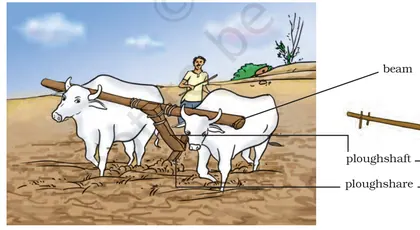
- Plough – cuts, lifts and turns the soil to prepare a seedbed. Types: country (wooden) plough and mould-board/iron plough. Used for primary tillage and weed control.
- Harrow – breaks large clods and smooths the soil after ploughing to give a fine tilth for sowing.
- Cultivator – used for secondary tillage and weed control between rows after sowing; can mix fertilisers into soil.
- Seed drill – sows seeds at uniform depth and spacing, leading to better germination and higher yields than broadcasting.
- Dibbler/Planter – places larger seeds or seedlings at required depth and spacing (used for paddy, sugarcane setts, etc.).
- Leveling board – levels the field (important for uniform irrigation in paddy fields).
- Sickle – hand tool for cutting (reaping) cereals and grasses.
- Reaper – machine to cut standing crops faster and more uniformly than sickles.
- Threshers and Combined Harvesters – threshers separate grains from stalks; combine machines cut, thresh and clean in one pass.
- Winnowing fan (or winnower) – separates lighter chaff from heavier grains using air flow.
Sequence of field operations (where implements are used)
Ploughing → harrowing → leveling → sowing/planting (seed drill/planter) → irrigation → weeding (cultivator/manual) → harvesting (sickle/reaper) → threshing (thresher/trampling) → cleaning/winnowing.
Role of animals on the farm
- Traction and transport: Bullocks, horses, camels pull ploughs, harrows, carts and simple seeders on small to medium farms.
- Threshing: Animals are sometimes used for treading harvested produce on a threshing floor to separate grains from stalks.
- Manure and fertility: Animal dung is a key source of organic manure, improving soil structure and fertility.
- Draft power suitability: Animals are adaptable to rough terrain and small fields where tractors cannot operate economically.
- Other roles: Milk, wool, hides and transport of inputs/produce to local markets.
Advantages and limitations
- Advantages of modern implements: faster work, uniform sowing, higher yields, reduced labour and time.
- Advantages of animals: low initial cost, renewable energy source, appropriate for small holdings and steep/soft soils.
- Limitations of animals: slower, limited working hours and draft power; require feed, care, veterinary attention.
- Limitations of mechanisation: higher cost, fuel and maintenance, not always suited for small fragmented landholdings.
Care of animals used on farms
Provide balanced feed, fresh water, shelter, rest, regular hoof and dental care, and timely veterinary attention. Proper harnessing and matching the animal to the load reduce injury and increase efficiency.
Practical tips for farmers
- Use seed drills or improved planters to increase germination and reduce seed wastage.
- Combine animal power and simple mechanisation where possible (animal-drawn seeders, small threshers) to suit farm size and budget.
- Maintain implements (sharpen blades, grease moving parts) to prolong life and improve performance.
Summary: Farm implements speed up and improve the quality of agricultural operations. Animals continue to play a vital role in traction, transport and nutrient cycling, especially for small and marginal farms.
- A small farmer uses two bullocks with a country plough to prepare the field for sowing during the rainy season; this is cost-effective for a 1–2 hectare farm where a tractor is not affordable.
- Using a seed drill instead of broadcasting for wheat reduces seed requirement and gives even plant spacing, increasing productivity — e.g., sowing 100 kg seed/ha by drill versus 125 kg/ha by broadcasting.
- Threshing: A family collects harvested paddy and uses a small diesel thresher to separate grain from stalks, reducing time from a day of manual beating to under an hour for the same quantity.
- Hybrid approach: A farmer ploughs and harrows with a tractor for speed, but uses bullock-drawn cart to move harvested bundles from field to yard where terrain is rough.
- Seed rate (kg/ha) = Quantity of seeds sown (kg) / Area sown (ha)
- Yield (kg/ha) = Total produce harvested (kg) / Area under crop (ha)
- Area covered by a seeder (ha) = (Working width in m × Speed in m/s × Time in s) / 10,000
- Work done (J) = Force (N) × Distance (m) — useful to estimate animal traction workload
- Power (W) = Work done (J) / Time (s) — to compare how fast a machine or animal performs a task
Key Concepts
- Agriculture
- The science and practice of cultivating soil, growing crops and rearing animals for food, fibre and other products.
- Crop
- A cultivated plant that is grown and harvested for food, fodder or other uses.
- Tillage
- The preparation of soil for sowing seeds by turning, loosening and breaking it.
- Soil
- The upper layer of earth in which plants grow, composed of minerals, organic matter, air and water.
- Ploughing
- Turning over the top layer of soil to bury weeds and crop residues and to aerate the soil.
- Harrowing
- Breaking large clods of soil into finer particles and leveling the field after ploughing.
- Leveling
- Making the surface of the field even so that water spreads uniformly during irrigation.
- Sowing
- Planting seeds in the soil at proper depth and spacing to grow crops.
- Transplanting
- Growing seedlings in a nursery and later planting them in the main field.
- Irrigation
- Supplying water to crops by artificial methods to help their growth when rainfall is insufficient.
- Drip irrigation
- A water-saving irrigation method where water is delivered drop by drop to the root zone of plants.
- Manure
- Natural organic matter, often decomposed animal dung and plant waste, added to soil to improve fertility.
- Fertilizer
- Chemical or natural substances added to soil to supply essential nutrients for plant growth.
- Compost
- Decomposed organic matter made from kitchen and garden waste used to enrich soil.
- Green manure
- Green plants or their residues grown and then ploughed into the soil to add nutrients and organic matter.
- Weeding
- Removal of unwanted plants (weeds) that compete with crops for nutrients, water and light.
- Crop rotation
- Alternating different crops on the same piece of land across seasons or years to maintain soil fertility and reduce pests.
- Mixed cropping
- Growing two or more crops simultaneously on the same field to maximize space and reduce risk.
- Harvesting
- Cutting and gathering mature crops from the fields when they are ready for use or sale.
- Threshing
- Separating the edible grain or seeds from the chaff and stalks after harvesting.
- Winnowing
- Separating lighter chaff from heavier grains using wind or airflow.
- Storage (Post-harvest storage)
- Keeping harvested crops in safe, dry conditions to prevent damage by pests, moisture and spoilage.
End-of-Chapter Trial Paper & Test Questions
Topic-wise questions to test your understanding of every concept in this chapter.
-
Which of the following is a Kharif crop? / निम्न में से कौन-सी खरीफ फसल है? (a) Wheat / गेहूँ (b) Rice / चावल (c) Gram / चना (d) Mustard / सरसों
Show answer
(b) Rice / चावल। Kharif crops are sown in summer (June–July) and harvested after the monsoon (September–October). Rice requires standing water, making it a typical kharif crop.
-
The process of separating grain from the stalks after harvesting is called: / फसल की कटाई के बाद अनाज को डंठल से अलग करने की प्रक्रिया कहलाती है: (a) Winnowing / ओसाई (b) Threshing / मड़ाई (c) Sowing / बुआई (d) Ploughing / जुताई
Show answer
(b) Threshing / मड़ाई। Threshing loosens and separates edible grains from stalks or pods. Winnowing is the next step that separates lighter chaff from heavier grains using airflow.
-
Drip irrigation is most suitable for: / ड्रिप सिंचाई सबसे उपयुक्त है: (a) Rice fields / धान के खेत (b) Orchards and vegetable crops / बाग और सब्जी फसलें (c) Wheat fields / गेहूँ के खेत (d) Flooded plains / बाढ़ग्रस्त मैदान
Show answer
(b) Orchards and vegetable crops / बाग और सब्जी फसलें। Drip irrigation delivers water drop-by-drop to the root zone, saving water and preventing weed growth — most efficient for orchards and vegetables.
-
Manures improve soil structure by adding ____, while chemical fertilizers supply nutrients in ____ form. / खाद मिट्टी में ____ जोड़कर उसकी संरचना सुधारती है, जबकि रासायनिक उर्वरक पोषक तत्वों को ____ रूप में देते हैं।
Show answer
Organic matter (humus) / कार्बनिक पदार्थ (ह्यूमस); readily available (concentrated) / तत्काल उपलब्ध (सांद्रित) रूप में। Manures release nutrients slowly and improve water-holding capacity; fertilizers act quickly but do not improve soil structure.
-
Crop rotation helps in: (a) maintaining soil fertility and reducing pests OR (b) increasing soil erosion? / फसल चक्र से (a) मृदा उर्वरता बनाए रखने और कीटों को कम करने में सहायता मिलती है या (b) मृदा अपरदन बढ़ता है?
Show answer
(a) Maintaining soil fertility and reducing pests / मृदा उर्वरता बनाए रखने और कीटों को कम करने में। Growing legumes in rotation replenishes soil nitrogen; changing crops breaks pest and disease cycles.
-
True or False: Sowing seeds at the correct depth and spacing increases crop yield. / सत्य या असत्य: सही गहराई और दूरी पर बीज बोने से फसल की उपज बढ़ती है।
Show answer
True / सत्य। Proper sowing depth ensures good germination; correct spacing prevents overcrowding, ensures adequate sunlight, nutrients and water for each plant, and allows easy weeding.
-
What is the difference between manure and fertilizer? Give one example of each. / खाद और उर्वरक में क्या अंतर है? प्रत्येक का एक उदाहरण दीजिए।
Show answer
Manure is a natural organic material (e.g., farmyard manure/compost) that slowly releases nutrients and improves soil structure. Fertilizer is a chemical substance (e.g., urea) that supplies specific nutrients quickly but does not improve soil structure. / खाद एक प्राकृतिक कार्बनिक पदार्थ है (जैसे गोबर की खाद/कम्पोस्ट) जो पोषक तत्व धीरे-धीरे देती है। उर्वरक एक रासायनिक पदार्थ है (जैसे यूरिया) जो शीघ्र पोषण देता है।
-
Describe two methods of weed control used by farmers. / किसानों द्वारा खरपतवार नियंत्रण की दो विधियाँ बताइए।
Show answer
1. Manual/mechanical: hand weeding or hoeing removes weeds physically, effective and safe. 2. Chemical (herbicides/weedicides): selective herbicides kill specific weeds; must be used at recommended doses with safety precautions. / 1. हाथ से निराई या कुदाल से खरपतवार हटाना — सुरक्षित और प्रभावी। 2. शाकनाशी (वीडीसाइड) का उपयोग — चयनात्मक शाकनाशी विशेष खरपतवारों को नष्ट करते हैं; अनुशंसित मात्रा में उपयोग करें।
Related Laws & Principles
Explore allFoundational laws & principles behind this chapter. Each one opens a full page — what it says, why it matters, five practice questions and the mistakes to avoid.