Overview
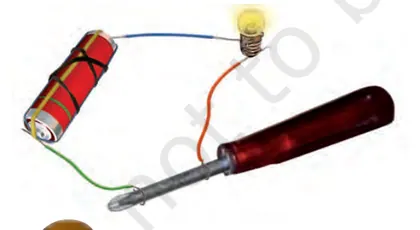
Introduction: This chapter explores the chemical effects of electric current — how electric current can cause chemical changes in substances it passes through. Using simple electrolytic experiments (for example, passing current through a copper sulfate solution or acidified water), you will see metals dissolve, new metal deposits form on electrodes, and gases evolve. The chapter introduces basic terms such as electrolyte, electrodes, anode, cathode, electrolysis and electroplating. Importance: Understanding chemical effects of electric current links electricity with chemical change and explains many practical technologies: electroplating for protection and decoration, extraction and purification of metals (electrorefining), electrolysis in industry, and applications in everyday devices. The chapter also develops experimental skills and the ability to write balanced electrode reactions and interpret observations. Key themes: 1) Difference between conductors of electricity by electron flow (metals) and by ion flow (electrolytes). 2) Electrolysis — what happens when current passes through an electrolyte: movement of ions, oxidation at the anode and reduction at the cathode, and…
Learning Objectives
- Define electrolysis, electrolyte and non-electrolyte.
- Explain how electric current produces chemical changes in an electrolyte by ion migration and discharge at electrodes.
- Describe the roles and polarities of anode and cathode and state the processes occurring at each during electrolysis.
- Draw and label the experimental setup for electrolysis of aqueous copper sulfate with copper electrodes and state the observations.
- Predict the products of electrolysis for given aqueous solutions (e.g., copper sulfate, sodium chloride, dilute sulphuric acid) using ion discharge rules.
- Apply the principles of electrolysis to design a simple electroplating experiment and justify choice of electrodes and electrolyte.
- Explain the formation and identification of gases (H2 and O2) during electrolysis of water and factors affecting their evolution.
- Distinguish between electrolytic conduction (ion movement) and metallic conduction (electron flow) with examples.
Topics in this chapter
10 topics · tap a topic title to jump straight to it.
Overview
Chemical effects of electric current refers to the chemical changes that occur when an electric current passes through a conducting solution (electrolyte) or molten ionic compound. When current flows through such a medium, ions move toward the electrodes and undergo oxidation or reduction, producing new substances — this process is called electrolysis.
How it works (basic steps)
- Electric current is supplied to two electrodes immersed in an electrolyte. Electrodes are connected to a cell or battery: the positive electrode is the anode and the negative electrode is the cathode.
- Electrolytes contain positive ions (cations) and negative ions (anions). Under the electric field, cations move toward the cathode and anions move toward the anode.
- At the electrodes, ions gain or lose electrons. Reduction (gain of electrons) occurs at the cathode; oxidation (loss of electrons) occurs at the anode. These electrode reactions produce chemical changes such as gas evolution, deposition of metals, or formation of new ionic species.
Difference between conductors and electrolytes
- Metallic conductors (e.g., copper wire) carry current by the flow of electrons.
- Electrolytes (e.g., salt solution, acid, molten ionic compounds) conduct by movement of ions, and this ionic motion causes chemical reactions when current flows.
Typical observations in electrolysis
- Bubbles of gas forming at one or both electrodes (e.g., H2 and O2 in water electrolysis).
- Deposition of a metal on an electrode (e.g., copper plating on the cathode).
- Change of color of the solution due to formation or removal of ions.
Representative electrode reactions
- Electrolysis of aqueous copper(II) sulfate using copper electrodes:
- Cathode (reduction): Cu2+ + 2 e- → Cu (solid deposited)
- Anode (oxidation): Cu (solid) → Cu2+ + 2 e- (copper dissolves from anode)
- Electrolysis of water (acidified): overall 2 H2O(l) → 2 H2(g) + O2(g)
- Cathode: 2 H2O + 2 e- → H2(g) + 2 OH-
- Anode: 2 H2O → O2(g) + 4 H+ + 4 e-
Applications (brief): electroplating (prevent corrosion and decoration), electrorefining of metals (purifying copper), extraction of reactive metals (e.g., aluminium via Hall–Héroult process), manufacture of chlorine and sodium hydroxide (electrolysis of brine), and production of hydrogen by water electrolysis.
Key idea to remember: The amount of chemical change (for example, mass of metal deposited or volume of gas produced) depends on the amount of electric charge passed through the electrolyte. In practice, this means more current for longer time causes more deposition or gas evolution.
- Electroplating silver or chromium onto jewellery and cutlery to improve appearance and prevent corrosion.
- Electrorefining of copper: impure copper is made the anode and pure copper plates out on the cathode.
- Electrolysis of water (with a small amount of acid added) to produce hydrogen gas at the cathode and oxygen at the anode.
- Extraction of aluminium from molten alumina (aluminium oxide) by electrolysis (Hall–Héroult process).
- Electrolysis of brine (concentrated NaCl) to produce chlorine gas, hydrogen gas and sodium hydroxide (important industrial process).
- Q = I × t (Charge Q in coulombs = current I in amperes × time t in seconds)
- m ∝ Q (Mass of substance deposited or liberated is directly proportional to the charge passed)
- m = Z × Q (m = mass deposited, Z = electrochemical equivalent of the substance, Q = total charge)
- m = (M × Q) / (z × F) (M = molar mass of substance, z = number of electrons exchanged per ion, F = Faraday constant ≈ 96500 C·mol⁻¹)
Conductors, Insulators and Electrolytes
Overview: Materials are classified by how well they allow electric charge to move. Conductors allow easy flow of charge, insulators resist flow, and electrolytes conduct electricity when ions are free to move (usually in solution or molten state).
Conductors: Conductors (e.g., metals like copper, aluminum, and graphite) have large numbers of free charge carriers — electrons — that move under an electric field. Because electrons move easily, conductors show low resistance and are used where we want current to pass (wires, circuit connections).
Insulators: Insulators (e.g., rubber, glass, dry wood, plastic, mica) have very few free charge carriers, so they do not allow current to flow under normal conditions. They are used to prevent unwanted flow of current (wire insulation, handles, coatings).
Electrolytes: Electrolytes are substances that produce ions when dissolved in water (or when molten). Ions (positive and negative) move in the liquid under an electric field and carry charge, so the solution conducts electricity. Common electrolytes: acids (HCl), bases (NaOH), and salts (NaCl). Pure water is a very poor conductor, but water with dissolved salts conducts well because the salt dissociates into ions.
How to test: A simple test uses a battery, bulb (or LED), and two electrodes dipped into the test substance. If the bulb glows, the substance conducts. Example results: a copper wire will light the bulb (conductor); rubber will not (insulator); salt solution will light the bulb (electrolyte); distilled water will not (poor conductor).
Why they behave differently:
- Metals: atoms form a 'sea of electrons' — electrons move freely → electrical conduction.
- Insulators: electrons are tightly bound to atoms → no free carriers → no conduction.
- Electrolytes: ionic compounds dissociate into ions in solution/melt; ions migrate to electrodes and transfer charge (ionic conduction). In molten ionic compounds (like molten NaCl) ions also move and conduct.
Applications & real-life importance: Conductors are used for electrical wiring and contacts; insulators for safety (cable sheaths, appliance handles); electrolytes are central in batteries, electroplating, electrolysis for metal extraction, and in biological systems (nerve conduction, body fluids).
Note on safety: Many liquids and the human body conduct electricity; always treat electrical circuits and wet environments with caution.
- Conductors: Copper wires in household wiring, aluminum power lines, graphite in pencil leads, metal cookware handles (if uninsulated).
- Insulators: Rubber or plastic coating on electrical cables, glass in windows and labware, ceramic insulators on high-voltage poles, wooden handle of a dry screwdriver.
- Electrolytes: Salt water (NaCl solution) conducts and is used in simple conductivity tests; acid solutions like dilute HCl conduct and are used in laboratory electrolysis; car battery acid (H2SO4) is an electrolyte inside lead–acid batteries.
- Real-life processes: Electroplating (coating an object with metal using an electrolyte bath), electrolysis of water (to produce H2 and O2 from an electrolyte), human body conduction (muscle and nerve signals through ionic fluids).
- Ohm's law: V = I × R (Voltage = Current × Resistance)
- Resistance of a uniform conductor: R = ρ × (L / A) (ρ = resistivity, L = length, A = cross-sectional area)
- Conductance: G = 1 / R (siemens, S)
- Conductivity (k) relation: k = 1 / ρ (Siemens per meter, S/m)
- Charge passed: Q = I × t (Q in coulombs, I in amperes, t in seconds) — useful in electrolysis calculations
Ions and Ion Movement
What is an ion? An ion is an atom or molecule that has gained or lost one or more electrons and therefore carries an electric charge. A positively charged ion is a cation (e.g., Na+), and a negatively charged ion is an anion (e.g., Cl-).
Formation of ions in solution: Many ionic compounds (like common salt, NaCl) dissociate into ions when dissolved in water: NaCl → Na+ + Cl-. The free ions make the solution capable of conducting electric current.
Why ions move: When an external electric field (voltage) is applied across an electrolyte, the field exerts a force on charged particles. Positive ions (cations) are attracted toward the negative electrode (cathode) and negative ions (anions) are attracted toward the positive electrode (anode). This net movement of charged ions constitutes ionic current in the liquid.
Electrochemical changes at electrodes: On reaching electrodes, ions may gain or lose electrons (redox reactions). For example, in electrolysis of molten or aqueous salts, cations are reduced at the cathode (gain electrons) and anions are oxidized at the anode (lose electrons). These electrode reactions are responsible for deposition (e.g., electroplating), gas formation (e.g., H2 and O2 from water electrolysis), or other chemical changes.
Key points:
- Ions are the charge carriers in electrolytes (liquid or molten ionic conductors).
- Cations move to the cathode; anions move to the anode.
- The amount of chemical change at an electrode is proportional to the total charge passed through the electrolyte.
- Conductivity depends on ion concentration, ion charge, and mobility; strong electrolytes give higher conductivity than weak electrolytes at similar concentrations.
Simple mechanistic idea (optional): The electric force on an ion is F = qE (q = ion charge, E = electric field). This causes a drift velocity of ions against friction in the liquid; the product of number density, charge and drift velocity gives the ionic current density.
- Electroplating: Copper plating a utensil — Cu2+ ions move to the cathode and are reduced to deposit copper metal.
- Electrolysis of water: H+ (or H3O+) move to the cathode to form H2 gas; OH- move to the anode to form O2 (and/or oxidize water).
- Salt solution conducts electricity: Dissolved NaCl provides Na+ and Cl- ions that carry current between electrodes.
- Batteries: During discharge, ions move through the electrolyte from one electrode to the other, enabling flow of electric current in the external circuit.
- Biological nerve signals: Movement of Na+ and K+ ions across cell membranes generates electric impulses (action potentials).
- Molten ionic compounds: Molten NaCl conducts because Na+ and Cl- are free to move and carry current.
- Charge passed: Q = I × t (Q in coulombs, I in amperes, t in seconds).
- Current as rate of charge flow: I = Q / t.
- Electrochemical mass (Faraday-type relation, advanced): m = (M × I × t) / (z × F) where m = mass deposited, M = molar mass, z = number of electrons exchanged per ion (valency), F ≈ 96500 C·mol⁻¹ (Faraday constant).
- Force on an ion in an electric field: F = q × E (q = charge on ion, E = electric field).
- Ionic current density (conceptual): J = n × q × v_d where n = number density of ions, q = ion charge, v_d = drift velocity.
Electrodes and Electrode Reactions
What is an electrode?
An electrode is a conductor (usually metal or carbon) through which electric current enters or leaves an electrolyte. In an electrolytic cell there are two electrodes immersed in an ionic solution (electrolyte).
Anode and Cathode — names and reactions
- Cathode: the electrode where reduction (gain of electrons) takes place. In electrolysis the cathode is connected to the negative terminal of the power source (negative electrode).
- Anode: the electrode where oxidation (loss of electrons) takes place. In electrolysis the anode is connected to the positive terminal of the power source (positive electrode).
How electrode reactions occur
When current passes, electrons flow through the external circuit and ions move inside the electrolyte. At the cathode, cations accept electrons and are reduced (for example, metal ions become metal atoms). At the anode, anions give up electrons and are oxidised (for example, halide ions form halogen gas), or the electrode material itself may oxidise (dissolve) into the solution.
Common electrode reactions (simple examples)
- Electrolysis of molten sodium chloride (NaCl):
Cathode: 2Na+ + 2e− → 2Na (metal produced)
Anode: 2Cl− → Cl2(g) + 2e− - Electrolysis of water (acidic or with electrolyte):
Cathode: 2H2O + 2e− → H2(g) + 2OH− (or 2H+ + 2e− → H2)
Anode: 2H2O → O2(g) + 4H+ + 4e− - Electrolysis of aqueous copper sulfate with copper electrodes (electrorefining style):
Cathode: Cu2+ + 2e− → Cu (copper deposits)
Anode: Cu → Cu2+ + 2e− (copper dissolves from anode)
Observations and signs of electrode reactions
During electrolysis you may see gas bubbles at electrodes (H2, O2, Cl2), deposition of metal on the cathode, or the anode slowly dissolving. The solution’s colour may change if metal ions are removed/added.
Why this is useful
Electrode reactions are the basis for electroplating (coating objects with a metal), electrorefining (purifying metals), production of gases (like hydrogen and chlorine), and many industrial processes. They are also the reverse processes in batteries (galvanic cells), where chemical reactions produce electricity.
- Electroplating: Silver or chrome is deposited on objects. Example half-reaction at cathode: Ag+ + e− → Ag(s).
- Electrolysis of water: Produces hydrogen at the cathode and oxygen at the anode (used in labs to produce H2 and O2).
- Extraction of metals: Molten salts are electrolysed to obtain reactive metals (e.g., molten NaCl → Na + Cl2).
- Electrorefining of copper: Impure copper anode dissolves and pure copper plates on cathode (Cu → Cu2+ + 2e−; Cu2+ + 2e− → Cu).
- Electrolytic production of chlorine and sodium hydroxide from brine (important industrial process).
- Half-reaction (reduction) at cathode example: Cu2+ + 2e− → Cu(s)
- Half-reaction (oxidation) at anode example: 2Cl− → Cl2(g) + 2e−
- Overall water electrolysis: 2H2O(l) → 2H2(g) + O2(g)
- Charge passed: Q = I × t (Q in coulombs, I in amperes, t in seconds)
- Mass of substance deposited (Faraday relation): m = (M × Q) / (n × F) where M = molar mass, n = electrons transferred per ion, F ≈ 96500 C·mol−1 (Faraday constant)
Electrolysis of Copper Sulfate Solution
What is electrolysis? Electrolysis is the chemical change produced when an electric current is passed through a liquid (electrolyte) that contains ions.
Setup for copper sulfate electrolysis: A solution of copper sulfate (CuSO4) in water is taken in a beaker. Two electrodes are dipped into the solution and connected to a DC source (battery). The electrode connected to the negative terminal is the cathode; the one connected to the positive terminal is the anode. Electrodes may be copper or inert (graphite).
Ions present: CuSO4 dissociates into Cu2+ (aq) and SO4 2- (aq). Water also contributes H+ and OH- ions.
What happens at the electrodes?
- If copper electrodes are used: At the cathode (negative): Cu2+ ions gain electrons and deposit as copper metal: Cu2+ + 2e- -> Cu(s). At the anode (positive): copper metal from the anode loses electrons and goes into solution as Cu2+: Cu(s) -> Cu2+ + 2e-. Result: copper is transferred from the anode to the cathode, the blue color of the solution remains nearly unchanged, the anode becomes thinner and a copper layer appears on the cathode.
- If inert electrodes (graphite) are used: At the cathode: Cu2+ + 2e- -> Cu(s) (copper deposits). At the anode: water or OH- is oxidized to produce oxygen gas: 4OH- -> O2(g) + 2H2O + 4e- (or 2H2O -> O2 + 4H+ + 4e-), so oxygen bubbles form and the concentration of Cu2+ decreases (blue color fades).
Observations: Copper metal coats the cathode. If copper anode is used, it dissolves and the solution stays blue. If inert anode is used, oxygen gas evolves at the anode and the blue color fades.
Why this happens: Positive Cu2+ ions are attracted to the negative cathode where they gain electrons (reduction). At the anode, metal atoms or water lose electrons (oxidation). The flow of electrons through the external circuit balances the ionic movements in solution.
Safety and practical notes: Use low voltage, avoid touching electrodes or solution during electrolysis, and perform under supervision in a school lab.
- Electroplating copper onto objects (to give a copper coating).
- Electrorefining (purification) of copper: impure copper anode dissolves and pure copper plates out on the cathode.
- Manufacture of printed circuit boards where copper deposition is used to form conductive tracks.
- Demonstration experiments in school labs to show metal deposition and gas evolution during electrolysis.
- CuSO4 (aq) -> Cu2+ (aq) + SO4 2- (aq)
- Cathode (reduction): Cu2+ + 2e- -> Cu(s)
- Anode (copper electrode, oxidation): Cu(s) -> Cu2+ + 2e-
- Anode (inert electrode, oxidation of water): 4OH- -> O2(g) + 2H2O + 4e-
- Relation from Faraday's laws (mass deposited): m = (M * I * t) / (z * F), where m = mass deposited, M = molar mass, I = current, t = time, z = number of electrons exchanged (2 for Cu2+), F = Faraday constant (~96500 C/mol)
Electrolysis of Water (Acidulated Water)
What is electrolysis of water?
Electrolysis of water is the chemical decomposition of water into hydrogen and oxygen gases by passing an electric current through it. Since pure water conducts electricity poorly, a small amount of an electrolyte (like dilute sulphuric acid or hydrochloric acid) is added — this is called acidulated water.
Apparatus: a beaker, acidulated water, two inert electrodes (graphite/platinum), a DC source (battery), wires and two inverted gas-collecting test tubes or gas syringes.
Procedure (simple)
- Fill the beaker with acidulated water and place the two electrodes connected to the battery into the liquid, keeping the electrodes apart.
- Invert two test tubes filled with water over the electrodes to collect gas produced at each electrode.
- Switch on the current. Bubbles form at both electrodes and collect in the tubes.
Observations: More gas is collected at the cathode (negative electrode) than at the anode (positive electrode). The volume ratio of hydrogen to oxygen collected is 2 : 1. If a burning splint is brought near the tube with hydrogen, a 'pop' is heard; a glowing splint placed near the oxygen relights.
Why acidulated water? Pure water has very few ions and so is a poor conductor. Adding a small amount of acid increases the concentration of ions (H+ and corresponding anions), making the solution conduct electricity and allowing electrolysis to proceed easily.
Chemical changes (half-reactions)
At the cathode (reduction): 4H2O(l) + 4e- → 2H2(g) + 4OH-(aq)
At the anode (oxidation): 4OH-(aq) → O2(g) + 2H2O(l) + 4e-
Overall reaction: 2H2O(l) → 2H2(g) + O2(g). This explains the 2 : 1 volume ratio of H2 : O2.
Ion movement and current: Positive ions (H+ or H3O+) move towards the cathode to gain electrons (reduction) forming hydrogen. Negative ions (OH-) move towards the anode where they lose electrons (oxidation) forming oxygen. Electrons flow through the external circuit from anode to cathode; ions carry charge inside the solution.
Important points:
- Use inert electrodes (graphite/platinum). If reactive electrodes (e.g., copper) are used, they may dissolve or give other products.
- Hydrogen is highly flammable — carry out the experiment with care, small quantities and good ventilation.
- The rate of gas production depends on current: higher current produces gas faster.
Relation to real life and technology: Electrolysis of water is the basic principle behind industrial hydrogen production in electrolyzers, hydrogen fuel generation for fuel cells, laboratory gas production, and water splitting research for clean energy.
- Laboratory demonstration: Collecting H2 and O2 from acidulated water to show 2:1 volume ratio and perform 'pop' test for hydrogen.
- Electrolyzers for hydrogen production: Industrial water electrolysis (using stronger electrolytes and better electrodes) produces hydrogen for fuel cells and chemical industries.
- Oxy-hydrogen welding (historical/industrial): Produced H2 and O2 can be used to produce a high-temperature flame (oxy-hydrogen torch).
- Water-splitting research for renewable energy: Using electrical energy (often from solar/wind) to split water into H2 (fuel) and O2 (byproduct).
- Overall: 2H2O(l) → 2H2(g) + O2(g)
- Cathode (reduction): 4H2O + 4e- → 2H2 + 4OH-
- Anode (oxidation): 4OH- → O2 + 2H2O + 4e-
- Gas volume relation: Volume(H2) = 2 × Volume(O2)
- Practical note: Rate of gas production ∝ electric current (at constant conditions)
Electroplating
What is electroplating?
Electroplating is a process that uses electric current to coat the surface of a metal object with a thin layer of another metal. It improves appearance, prevents corrosion, increases hardness, reduces friction, or enhances electrical conductivity.
Basic setup and how it works
An electroplating cell has three main parts: a power source, two electrodes (anode and cathode), and an electrolyte solution containing ions of the plating metal. The object to be plated is connected to the negative terminal and acts as the cathode. The metal to be deposited (or an inert anode) is connected to the positive terminal as the anode. When current flows, metal ions in the electrolyte gain electrons at the cathode and deposit as a thin metal layer on the object. If the anode is made of the plating metal, it dissolves and replenishes metal ions in the solution.
Electrochemical reactions (qualitative)
At the cathode (reduction): metal ion + electrons → metal (deposited).
At the anode (oxidation, if metal anode used): metal → metal ion + electrons.
Factors affecting electroplating
Current (amount and density), plating time, concentration of metal ions in the electrolyte, temperature, and cleanliness of the object all affect the thickness, uniformity, and quality of the plated layer. Higher current or longer time increases the thickness; dirty surfaces produce poor adhesion.
Why electroplating is used
Common reasons include aesthetics (gold/silver plating), corrosion protection (zinc or nickel plating), wear resistance (chromium plating), and improved electrical contact (copper plating on connectors).
Simple safety and quality notes
Handle chemicals and electrical equipment carefully. Proper rinsing and polishing improve the final finish. Industrial setups control current density and bath composition to get even, durable coatings.
- Silver plating of cutlery and trays to improve appearance and prevent tarnish.
- Gold plating of jewellery and electronic connectors to improve appearance and ensure good electrical contact.
- Chrome plating of car bumpers and motorcycle parts for wear resistance and shiny finish.
- Copper plating of printed circuit board tracks during PCB manufacture to improve conductivity.
- Nickel or zinc electroplating of machine parts to protect against corrosion (electro-galvanizing).
- Charge passed: Q = I × t, where Q is charge in coulombs (C), I is current in amperes (A), and t is time in seconds (s).
- Mass deposited is proportional to charge: m ∝ Q (qualitative for Class 8).
- Faraday's quantitative relation (advanced): m = (M × I × t) / (z × F), where m = mass deposited (g), M = molar mass of the metal (g/mol), z = valency (number of electrons exchanged per metal ion), and F ≈ 96500 C/mol (Faraday constant).
Applications of Chemical Effects of Current
What are chemical effects of electric current?
When an electric current passes through a conducting solution (electrolyte) or a molten ionic compound, it causes chemical changes — ions move to electrodes and undergo reduction or oxidation. These chemical effects are used in many practical processes.
How it works (basic mechanism)
- Ions in the electrolyte: positive ions (cations) move to the negative electrode (cathode) and gain electrons (reduction). Negative ions (anions) move to the positive electrode (anode) and lose electrons (oxidation).
- At the cathode: reduction (example) Cu^{2+} + 2e^{-} → Cu (metal deposited).
- At the anode: oxidation (example with a copper anode) Cu → Cu^{2+} + 2e^{-} (anode dissolves, supplying Cu^{2+}).
Main applications
- Electroplating: Deposition of a thin layer of metal (e.g., silver, gold, chromium, nickel) on objects (jewellery, cutlery, car parts) to improve appearance, reduce corrosion, or increase hardness.
- Electrorefining (purification of metals): Impure metal is made the anode and a pure metal is obtained at the cathode (commonly used for copper and silver) to get high-purity metal.
- Electrolysis for chemical manufacture: Industrial production of substances by electrolysis, e.g., chlor-alkali process (electrolysis of brine) produces chlorine gas, sodium hydroxide (NaOH), and hydrogen gas.
- Extraction of metals: Metals like aluminium are obtained commercially from their oxides by electrolysis (Hall–Héroult process).
- Electrolytic cleaning and surface finishing: Cleaning, brightening and coating of metals (electropolishing and electro-coloring).
- Production of gases: Electrolysis of water produces hydrogen and oxygen (useful in labs and industry for hydrogen generation).
- Recovery and recycling: Recovery of metals from scrap or wastewater using electrolytic methods.
Factors affecting deposition and efficiency
- Current magnitude (higher current deposits more mass per unit time, up to limits).
- Time for which current flows (longer time → more deposition).
- Concentration and nature of electrolyte (available ions) and temperature.
- Nature and area of electrodes and the cell design.
Safety and environmental notes
- Electroplating and industrial electrolysis can produce toxic gases (e.g., chlorine) and hazardous wastes — proper ventilation and waste treatment are essential.
- Care with electrical connections and currents to avoid shocks and short circuits.
- Electroplating: Silver or gold plating of jewellery to improve appearance and prevent corrosion.
- Electrorefining of copper: Impure copper anode dissolves and pure copper metal plates onto the cathode.
- Chlor-alkali industry: Electrolysis of brine (NaCl solution) produces chlorine gas, NaOH, and hydrogen.
- Extraction of aluminium: Hall–Héroult process uses electrolysis of molten aluminium oxide (Al2O3) to obtain aluminium metal.
- Electrolysis of water: Producing hydrogen and oxygen gases in the lab or for hydrogen fuel.
- Electrolytic recovery: Recovering metals like nickel or chromium from industrial wastewater streams.
- Charge passed: Q = I × t (Q in coulombs, I in amperes, t in seconds).
- Mass deposited (proportional relation): m ∝ Q (mass of substance deposited ∝ total charge passed).
- Quantitative (Faraday's law): m = (M × I × t) / (n × F) where M = molar mass of substance (g/mol), n = number of electrons exchanged per ion, F = Faraday constant ≈ 96500 C/mol, I = current (A), t = time (s).
- Alternate useful form: m = Z × Q where Z (electrochemical equivalent) = M / (n × F).
Safety Precautions and Practical Considerations
Overview
In experiments and applications that show the chemical effects of electric current (electrolysis, electroplating, heating, etc.), safety and correct practical technique are essential. Unsafe practice can cause electric shock, burns, fire, chemical spills or incorrect experimental results.
Personal and electrical safety rules
- Always switch off the power supply before making or changing connections. Do not change live wiring.
- Keep hands and bench dry. Do not handle electrical apparatus with wet hands or while standing on wet floors.
- Use insulated wires and properly insulated tools. Never use frayed or bare wires.
- Use a fuse or MCB in mains circuits; use a residual-current device (RCD)/earth leakage circuit breaker where available to reduce risk of electrocution.
- Earthing: metal cases of mains-powered equipment must be earthed to prevent a live case becoming dangerous.
- Wear safety goggles and protective gloves when working with electrolytes and during electroplating/electrolysis to avoid chemical splashes and burns.
- Keep electrodes and chemicals labelled and stored correctly. Do not taste or touch chemicals.
Practical considerations for experiments
- Use a low-voltage DC source (batteries or a low-voltage regulated power supply) for classroom electrolysis and electroplating — avoid mains voltages.
- Set or limit the current: many chemical effects depend on current. Use a suitable resistor or current-limited power supply to avoid excessive current that causes rapid heating or unwanted side reactions.
- Check polarity: in electroplating and electrolysis the roles of anode and cathode matter. Mark and connect electrodes correctly.
- Electrode material and electrolyte concentration affect results. Use clean electrodes and the recommended electrolyte concentration for reproducible deposition or decomposition.
- Control time: amount of deposit (or amount of gas produced) depends on how long current flows. Record time accurately (use a stopwatch).
- Measure responsibly: connect ammeter in series and voltmeter in parallel. Ensure instruments are rated for the expected current and voltage.
- Ventilation: some electrolysis reactions release gases (e.g., hydrogen, chlorine). Work in a well-ventilated area and avoid open flames near hydrogen.
- After the experiment switch off power, disconnect electrodes, neutralise or dispose of electrolytes as instructed, and clean apparatus.
Why these precautions matter (brief physics/chemistry)
Current causes heating (can burn or cause fires), decomposition of substances (may produce hazardous gases or corrosive products), and metal deposition (sharp edges, brittle coatings). Controlling voltage, current, time and materials ensures safe operation and accurate, reproducible results.
- Electroplating cutlery: use low-voltage DC, correct anode/cathode, control current and time; use gloves and goggles to avoid electrolyte contact.
- School electrolysis of water: use a 6–12 V DC supply, perform in a ventilated area, collect gases carefully; switch off supply before changing connections.
- Household safety: fuses/MCBs protect wiring from overheating when too much current flows (overload or short circuit).
- Battery charging: use the correct charger and polarity, avoid overcharging (which can release gases and cause heating); charge in a ventilated area.
- Copper plating in a small workshop: clean substrate, use proper electrolyte and a current-limited supply; avoid splashes and ensure waste electrolyte is disposed of according to rules.
- Avoiding electrocution: never touch a person who is in contact with a live conductor without switching off the supply or using insulated rescue equipment.
- Ohm's law: V = I R (Voltage = Current × Resistance)
- Charge passed: Q = I t (Charge Q in coulombs = current I in amperes × time t in seconds)
- Mass deposited (proportional form used in school): m ∝ Q (mass deposited m increases with total charge Q passed)
- Faraday's quantitative relation (advanced): m = (M × I × t) / (z × F), where M = molar mass of substance, z = electrons transferred per ion, F = Faraday constant (~96500 C mol⁻¹)
- Joule heating (energy dissipated as heat): H = I² R t (energy in joules)
Key Terms and Summary
Overview
This chapter explains how an electric current causes chemical changes in conducting solutions or molten ionic compounds — a process called electrolysis. During electrolysis ions move to electrodes where they gain or lose electrons (reduction and oxidation), producing new substances.
Key terms (brief definitions)
- Electrolyte: A substance (solution or molten salt) that conducts electricity through the movement of ions.
- Electrodes: Conducting rods in the electrolyte. The anode is the positive electrode (oxidation happens here); the cathode is the negative electrode (reduction happens here).
- Ions: Charged particles. Cations are positively charged and move to the cathode; anions are negatively charged and move to the anode.
- Electrolysis: Chemical decomposition produced by passing electric current through an electrolyte.
- Electrodeposition: Deposition of a metal on an electrode (used in electroplating and metal purification).
- Oxidation and Reduction: Oxidation = loss of electrons (occurs at anode). Reduction = gain of electrons (occurs at cathode).
- Faraday (qualitative): The amount of substance deposited is proportional to the quantity of electricity passed.
How it works — summary of steps
- Apply a voltage across two electrodes immersed in an electrolyte.
- Ions in the electrolyte move: cations toward the cathode and anions toward the anode.
- At the cathode, cations gain electrons (reduction) and may deposit as atoms or form new molecules.
- At the anode, anions lose electrons (oxidation) and release atoms or molecules (e.g., O2, Cl2) or dissolve if an active metal electrode is used.
Important examples and reactions
- Electrolysis of water (acidified): 2H2O(l) → 2H2(g) + O2(g). Hydrogen evolves at cathode, oxygen at anode.
- Electrolysis of molten sodium chloride: Na+ → Na at cathode, Cl- → Cl2 at anode.
- Copper sulfate with copper electrodes (used in purification): At anode Cu(s) → Cu2+ + 2e-; at cathode Cu2+ + 2e- → Cu(s). Copper dissolves from anode and deposits on cathode.
Applications (summary)
- Electroplating (silver, chromium, nickel) to prevent corrosion and for decoration.
- Purification of metals (electrorefining of copper).
- Industrial production of chemicals (e.g., chlorine and sodium hydroxide from brine).
- Electrolytic extraction of reactive metals (e.g., aluminium from alumina).
Safety and practical points
- The substances produced (like Cl2 or H2) can be hazardous—work in a ventilated area and avoid short circuits.
- The nature of products depends on electrode material and electrolyte composition.
Concise summary
Electric current through ionic conductors causes movement of ions and electron transfer at electrodes. This changes chemical composition and is used in many practical applications such as electroplating and metal purification. The amount of substance formed depends on the total charge passed (Q = I·t).
- Electroplating: Silver-plating of spoons or jewellery to give a shiny, corrosion-resistant coating.
- Purification of copper: Impure copper used as anode dissolves and pure copper plates onto the cathode.
- Electrolysis of brine (concentrated NaCl): Produces chlorine gas, hydrogen gas and sodium hydroxide (important industrial process).
- Water electrolysis: Splitting water into hydrogen (fuel) and oxygen using an electric current.
- Galvanization: Coating iron/steel with zinc by electroplating to prevent rusting.
- Q = I × t (Charge Q in coulombs when current I in amperes flows for time t in seconds)
- m ∝ Q (Mass m of substance deposited is proportional to total charge Q passed)
- m = (M × Q) / (z × F) (More complete: m = mass deposited; M = molar mass; z = number of electrons exchanged per ion; F ≈ 96500 C·mol⁻¹, Faraday constant)
- Example electrode half-reactions: Cu(s) → Cu²⁺ + 2e⁻ (anode, oxidation); Cu²⁺ + 2e⁻ → Cu(s) (cathode, reduction)
Key Concepts
- Electrolysis
- Chemical decomposition of a substance by passing an electric current through its molten form or aqueous solution.
- Electrolyte
- A substance that conducts electricity when molten or dissolved in water because it produces ions.
- Electrode
- A conductor through which electric current enters or leaves an electrolyte during electrolysis.
- Anode
- The electrode where oxidation (loss of electrons) occurs; it is positive in an electrolytic cell.
- Cathode
- The electrode where reduction (gain of electrons) occurs; it is negative in an electrolytic cell.
- Cation
- A positively charged ion that moves toward the cathode during electrolysis.
- Anion
- A negatively charged ion that moves toward the anode during electrolysis.
- Ionic Conductor
- A material that allows electric current by movement of ions (not electrons), e.g., molten salts or aqueous solutions.
- Electroplating
- Deposition of a metal coating on an object by passing current through a solution containing metal ions.
- Electrorefining
- Purification of a metal by making the impure metal the anode and plating pure metal onto the cathode.
- Electrolytic Cell
- A device in which electrical energy is used to drive a non-spontaneous chemical reaction (electrolysis).
- Conductivity (of solution)
- A measure of a solution's ability to conduct electric current due to presence of free ions.
- Molten Ionic Compound
- An ionic solid melted into liquid form so ions are free to move and conduct electricity.
- Deposition
- The process where ions gain electrons at the cathode and form a neutral element that collects on the electrode.
- Decomposition
- Breaking down of a compound into simpler substances during electrolysis.
- Faraday's Laws of Electrolysis
- Laws stating that mass of substance deposited or liberated at an electrode is proportional to the quantity of electricity passed and depends on the substance's equivalent weight.
- Inert Electrode
- An electrode made of a material that does not react chemically during electrolysis (e.g., platinum, graphite).
- Electrochemical Reaction
- A chemical change produced by or producing an electric current; involves oxidation at one electrode and reduction at the other.
- Corrosion
- Gradual destruction of metals by chemical or electrochemical reaction with their environment (often involving electric currents and electrolytes).
- Electrolytic Dissociation
- The process by which an ionic compound separates into its constituent ions when dissolved in water.
End-of-Chapter Trial Paper & Test Questions
Topic-wise questions to test your understanding of every concept in this chapter.
-
In electrolysis, reduction (gain of electrons) occurs at which electrode? (a) Anode (b) Cathode (c) Both anode and cathode (d) Neither electrode वैद्युत अपघटन में अपचयन (इलेक्ट्रॉनों का ग्रहण) किस इलेक्ट्रोड पर होता है? (a) एनोड (b) कैथोड (c) दोनों (d) न कोई भी
Show answer
(b) Cathode / कैथोड — At the cathode (negative electrode), cations gain electrons and are reduced (e.g., Cu²⁺ + 2e⁻ → Cu). Oxidation occurs at the anode. / कैथोड (ऋण इलेक्ट्रोड) पर धनायन इलेक्ट्रॉन ग्रहण करते हैं और अपचयित होते हैं (जैसे Cu²⁺ + 2e⁻ → Cu)। एनोड पर ऑक्सीकरण होता है।
-
When copper sulfate solution is electrolysed with copper electrodes, what do you observe at the cathode? (a) Oxygen gas is evolved (b) Copper metal deposits on the cathode (c) Hydrogen gas is evolved (d) Copper dissolves from the cathode जब कॉपर इलेक्ट्रोड के साथ कॉपर सल्फेट विलयन का वैद्युत अपघटन होता है, तो कैथोड पर क्या देखा जाता है? (a) ऑक्सीजन गैस निकलती है (b) कैथोड पर ताँबे की परत जमती है (c) हाइड्रोजन गैस निकलती है (d) कैथोड से ताँबा घुलता है
Show answer
(b) Copper metal deposits on the cathode / कैथोड पर ताँबे की परत जमती है — Cu²⁺ ions from the solution move to the cathode and are reduced: Cu²⁺ + 2e⁻ → Cu (s). Simultaneously, copper from the anode dissolves to replenish Cu²⁺. / विलयन से Cu²⁺ आयन कैथोड पर जाते हैं और अपचयित होते हैं: Cu²⁺ + 2e⁻ → Cu (s)। साथ ही एनोड से ताँबा घुलकर Cu²⁺ की पूर्ति करता है।
-
Substances that produce ions when dissolved in water and thus conduct electricity are called ________. / वे पदार्थ जो जल में घुलने पर आयन उत्पन्न करते हैं और इस प्रकार विद्युत का संचालन करते हैं, ________ कहलाते हैं।
Show answer
Electrolytes / विद्युत अपघट्य — Examples include acids (HCl), bases (NaOH) and salts (NaCl). Their ions carry charge through the solution. / उदाहरणों में अम्ल (HCl), क्षार (NaOH) और लवण (NaCl) शामिल हैं। उनके आयन विलयन में आवेश ले जाते हैं।
-
In the electrolysis of acidulated water, the volume of hydrogen collected at the cathode is ________ times the volume of oxygen collected at the anode. / अम्लीकृत जल के वैद्युत अपघटन में, कैथोड पर एकत्रित हाइड्रोजन का आयतन एनोड पर एकत्रित ऑक्सीजन के आयतन का ________ गुना होता है।
Show answer
Two (2) / दो (2) — The overall reaction 2H₂O → 2H₂ + O₂ shows that hydrogen and oxygen are produced in a 2:1 volume ratio. / समग्र अभिक्रिया 2H₂O → 2H₂ + O₂ दर्शाती है कि हाइड्रोजन और ऑक्सीजन 2:1 आयतन अनुपात में उत्पन्न होते हैं।
-
True or False: Pure distilled water is a good conductor of electricity. / सत्य या असत्य: शुद्ध आसुत जल विद्युत का अच्छा चालक है।
Show answer
False / असत्य — Pure distilled water has very few ions and is a very poor conductor. Adding an electrolyte (like a small amount of dilute sulphuric acid) greatly increases its conductivity by providing ions. / शुद्ध आसुत जल में बहुत कम आयन होते हैं और यह बहुत खराब चालक है। एक वैद्युत अपघट्य (जैसे थोड़ा तनु सल्फ्यूरिक अम्ल) मिलाने से आयन मिलने के कारण इसकी चालकता बहुत बढ़ जाती है।
-
True or False: The mass of metal deposited during electrolysis is independent of the amount of electric charge passed. / सत्य या असत्य: वैद्युत अपघटन के दौरान जमा धातु का द्रव्यमान प्रवाहित विद्युत आवेश की मात्रा से स्वतंत्र होता है।
Show answer
False / असत्य — According to Faraday's law of electrolysis, the mass of substance deposited is directly proportional to the quantity of charge passed (Q = I × t): more charge means more deposition. / फैराडे के वैद्युत अपघटन के नियम के अनुसार, जमा पदार्थ का द्रव्यमान प्रवाहित आवेश की मात्रा (Q = I × t) के सीधे समानुपाती होता है: अधिक आवेश मतलब अधिक निक्षेप।
-
What is electroplating? State one practical use of it. / विद्युत लेपन क्या है? इसका एक व्यावहारिक उपयोग बताइए।
Show answer
Electroplating is the process of depositing a thin layer of one metal (e.g., silver, gold, chromium) on the surface of another object using electrolysis. The object to be plated is made the cathode; the plating metal (or inert electrode) is the anode; the electrolyte contains ions of the plating metal. Practical use: Chrome plating of car bumpers and motorcycle parts to improve appearance and protect against corrosion and wear. / विद्युत लेपन वह प्रक्रिया है जिसमें वैद्युत अपघटन द्वारा किसी वस्तु की सतह पर एक धातु (जैसे चाँदी, सोना, क्रोमियम) की पतली परत चढ़ाई जाती है। जिस वस्तु पर लेप करना हो उसे कैथोड बनाते हैं; लेपन धातु (या अक्रिय इलेक्ट्रोड) एनोड होता है; वैद्युत अपघट्य में लेपन धातु के आयन होते हैं। व्यावहारिक उपयोग: कार के बम्पर और मोटरसाइकिल के पुर्जों पर क्रोम प्लेटिंग से दिखावट बेहतर होती है और जंग व घिसाव से सुरक्षा मिलती है।
-
Write the electrode reactions that occur during the electrolysis of dilute sulphuric acid (acidulated water) using inert electrodes. / अक्रिय इलेक्ट्रोड के साथ तनु सल्फ्यूरिक अम्ल (अम्लीकृत जल) के वैद्युत अपघटन के दौरान होने वाली इलेक्ट्रोड अभिक्रियाएँ लिखिए।
Show answer
Cathode (reduction): 4H₂O + 4e⁻ → 2H₂(g) + 4OH⁻ (or: 4H⁺ + 4e⁻ → 2H₂(g)). Hydrogen gas is evolved. Anode (oxidation): 4OH⁻ → O₂(g) + 2H₂O + 4e⁻ (or: 2H₂O → O₂(g) + 4H⁺ + 4e⁻). Oxygen gas is evolved. Overall: 2H₂O(l) → 2H₂(g) + O₂(g). / कैथोड (अपचयन): 4H₂O + 4e⁻ → 2H₂(g) + 4OH⁻ (या: 4H⁺ + 4e⁻ → 2H₂(g))। हाइड्रोजन गैस निकलती है। एनोड (ऑक्सीकरण): 4OH⁻ → O₂(g) + 2H₂O + 4e⁻ (या: 2H₂O → O₂(g) + 4H⁺ + 4e⁻)। ऑक्सीजन गैस निकलती है। समग्र: 2H₂O(l) → 2H₂(g) + O₂(g)।
Related Laws & Principles
Explore allFoundational laws & principles behind this chapter. Each one opens a full page — what it says, why it matters, five practice questions and the mistakes to avoid.