Overview
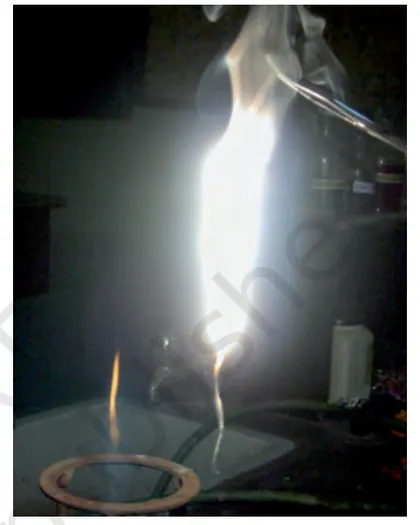
This chapter explains combustion — a chemical process in which a substance reacts with oxygen, releasing heat and light — and explores the nature and structure of a flame. It introduces types of combustion (rapid, spontaneous, slow), requirements for burning (fuel, oxygen, ignition temperature), and contrasts complete and incomplete combustion with their products and hazards. Students learn the three zones of a flame (inner, luminous, outer), how flame colour and temperature relate to combustion, and simple tests and experiments (e.g., burning a candle, limewater test for CO2, test for oxygen) used to study burning. The chapter emphasises practical importance: fuels and their efficient use, safety measures to prevent fires, methods to extinguish flames, environmental and health effects of incomplete combustion (carbon monoxide, soot), and preventive measures. By the end, learners will understand conceptual and everyday applications of combustion, be able to write simple chemical equations for combustion reactions, and follow laboratory and home safety related to fires and fuels.
Learning Objectives
- Define combustion and state the three essential conditions required for combustion (fuel, oxygen, ignition source).
- Explain the difference between rapid combustion, slow combustion and spontaneous combustion with examples.
- Identify and distinguish between complete and incomplete combustion and list typical products of each.
- Write chemical equations for the complete and incomplete combustion of a hydrocarbon (example: methane) and name the products formed.
- Describe the structure of a flame (inner, middle and outer zones), their colors and relative temperatures.
- Explain the causes and health/environmental hazards of products of incomplete combustion such as carbon monoxide and soot.
- State safety precautions to be followed while handling fire at home and in the laboratory and explain their importance.
- Apply the concept of combustion to explain why sufficient air (oxygen) supply improves fuel efficiency and reduces soot formation.
Topics in this chapter
16 topics · tap a topic title to jump straight to it.
Combustion — definition and nature
Definition: Combustion is a chemical process in which a substance (fuel) reacts rapidly with oxygen to give off heat and usually light. It is an exothermic oxidation reaction.
Essential conditions for combustion (Combustion Triangle):
- Fuel — any combustible material (solid, liquid or gas).
- Oxygen — usually from the air.
- Ignition temperature (heat) — enough initial energy to start the reaction.
Nature of combustion:
- Combustion is a chemical change: new substances (like carbon dioxide and water) are formed.
- It is an exothermic process: heat is released (ΔH < 0).
- Flame appears when gaseous products of the fuel burn; the flame has zones with different temperatures and appearances.
- Types of combustion:
- Rapid combustion — produces heat and flame (e.g., burning of a candle).
- Slow combustion — releases small amounts of heat without flame (e.g., rusting, respiration).
- Spontaneous combustion — occurs without an external spark when materials self-heat and ignite.
- Explosive combustion — very rapid reaction giving a shock wave (e.g., TNT detonation).
- Complete vs incomplete combustion:
- Complete combustion (sufficient oxygen) of hydrocarbons produces carbon dioxide and water and gives maximum heat.
- Incomplete combustion (limited oxygen) gives carbon monoxide and/or soot (carbon) and less heat — dangerous because CO is poisonous.
Indicators and effects: flame, heat, light, change in mass of fuel, formation of new gases (CO2, CO).
Practical notes: Combustion is used for cooking, heating, transport (engines) and power generation. Proper ventilation and adequate oxygen supply are important for safe, complete combustion to reduce pollution and hazardous gases.
- Burning of a candle (wax vapor burns producing a visible flame and heat).
- Combustion of methane in a gas stove: CH4 + 2O2 → CO2 + 2H2O + heat (complete combustion).
- Burning of a wooden log in a campfire (mixture of complete and incomplete combustion; produces smoke and ash).
- Rusting of iron (very slow combustion / oxidation without visible flame).
- Vehicle engines burning petrol/diesel — controlled rapid combustion in cylinders to produce motion.
- General hydrocarbon combustion: CxHy + (x + y/4) O2 → x CO2 + (y/2) H2O + heat (for complete combustion)
- Methane (example): CH4 + 2 O2 → CO2 + 2 H2O + heat
- Carbon combustion (complete): C + O2 → CO2 + heat
- Incomplete combustion (example producing CO): 2 C + O2 → 2 CO + heat (or for hydrocarbon: 2CH4 + 3O2 → 2CO + 4H2O + heat)
- Exothermic nature: ΔH (combustion) < 0 (heat is released)
Conditions required for combustion
Combustion is a chemical process in which a substance (fuel) reacts rapidly with oxygen to release heat and often light. For combustion to start and continue three basic conditions must be met — these are commonly shown as the fire triangle:
- Fuel: A combustible material (solid, liquid or gas) that can oxidize (e.g., wood, paper, petrol, methane).
- Oxygen (or another oxidizer): Air (about 21% oxygen) is the most common oxidizer; without sufficient oxygen the combustion is weak or incomplete.
- Heat (ignition temperature): Sufficient thermal energy must be supplied to raise the fuel to its ignition temperature so that the chemical reaction begins.
For many real fires a fourth element is important: the chemical chain reaction that sustains the combustion by continuously producing reactive species (free radicals). Including this element gives the fire tetrahedron. If any one of these elements is removed, the fire will be extinguished.
Key points:
- Ignition temperature: Each fuel has a characteristic ignition temperature (the minimum temperature at which it will combust in air). Heating below this temperature will not start combustion.
- Oxygen dependence: Flame intensity and completeness of combustion depend strongly on oxygen concentration — low oxygen produces incomplete combustion (soot, CO).
- Extinguishing methods: Remove heat (cooling with water), remove oxygen (smothering with a blanket or CO2), remove fuel (shutting off gas supply), or interrupt the chain reaction (some fire extinguishers use chemical inhibitors).
Understanding these conditions explains many everyday observations (why a wet match won’t light, why blowing on embers can rekindle a fire, why some fuels require a spark or high temperature to ignite) and underlies safe handling of flammable materials.
Safety note: Always keep flammable materials away from heat sources, provide good ventilation, and follow fire-safety instructions.
- Candle: wax (fuel) vaporizes, air supplies oxygen, the heated wick / flame provides ignition energy and sustains combustion.
- Matchstick: friction supplies heat to ignite chemicals on the match head; oxygen in air supports the flame.
- Kerosene stove / LPG burner: fuel (liquid or gas), air supply, and a spark/flame to provide ignition; turning the valve off removes the fuel.
- Forest fire: dry vegetation (fuel), wind provides oxygen supply and spreads heat—remove vegetation or water to extinguish.
- Internal combustion engine: petrol/air mixture is ignited by a spark; combustion occurs only if fuel, air, and spark (heat) are present at the right time.
- Fire extinguishing examples: smothering (removes oxygen), water spray (cools below ignition temperature), and dry chemical extinguishers (interrupt chain reaction).
- C + O2 → CO2 (combustion of carbon)
- CH4 + 2 O2 → CO2 + 2 H2O (complete combustion of methane)
- 2 H2 + O2 → 2 H2O (combustion of hydrogen)
- General hydrocarbon: CxHy + (x + y/4) O2 → x CO2 + (y/2) H2O
- Thermochemical notation: ΔH_combustion < 0 (combustion is exothermic; heat is released)
- Conceptual: Ignition occurs when supplied thermal energy ≥ Activation energy (Ea) for the combustion reaction
Ignition temperature and spontaneous combustion
Ignition temperature (kindling point) is the lowest temperature at which a substance catches fire and continues to burn without any external flame or spark. At this temperature, the vapour (or surface) produced by the substance reacts with oxygen rapidly enough to sustain combustion.
Key points about ignition temperature:
- It is a fixed property for a given material under specified conditions (pressure, oxygen availability).
- A material will not ignite by itself below its ignition temperature even if heated—an external source is still needed to raise its temperature to the ignition point.
- Ignition temperature is different from flash point. Flash point is the lowest temperature at which vapour above a liquid can form an ignitable mixture with air; it may flash but not sustain burning. Ignition temperature is higher and if reached will sustain combustion.
Spontaneous combustion (self‑heating and ignition) occurs when a material gradually heats up because of internal exothermic (heat-producing) processes—such as oxidation or microbial activity—and the heat cannot escape fast enough. If the internal temperature rises to the material's ignition temperature, it can catch fire without any external spark or flame.
Common causes of spontaneous heating:
- Slow oxidation of oily substances (e.g., linseed oil on rags).
- Microbial decomposition in organic piles (e.g., hay, compost, silage) that produces heat.
- Chemical reactions in coal or large piles of organic material.
How spontaneous combustion develops (simple heat balance idea):
- Heat is produced inside the material (Q_generated).
- Heat is lost to the environment (Q_lost) by conduction, convection and radiation.
- If Q_generated > Q_lost for a sustained period, internal temperature rises. When the internal temperature reaches the ignition temperature (T_ign), spontaneous ignition can occur.
Prevention and safety:
- Store oily rags loosely in metal containers with lids or lay them flat to dry outdoors.
- Turn and ventilate hay, compost and grain to release heat and moisture.
- Avoid large piles of combustible material without temperature monitoring; reduce pile size and keep dry.
- Keep combustible materials away from heat sources and direct sunlight.
Summary: Ignition temperature is the minimum temperature needed for a substance to ignite and burn without an external spark. Spontaneous combustion happens when internal heat production raises a material’s temperature to its ignition temperature because heat loss is insufficient.
- Haystack: Microbial activity and moisture can produce heat inside a compact haystack. If the heat cannot escape, internal temperature may rise and cause the hay to ignite.
- Oily rags: Linseed oil or other drying oils oxidize slowly when rags are crumpled; this can produce enough heat for the rags to self‑ignite.
- Coal pile: Spontaneous heating and oxidation in a large coal pile can raise temperatures and lead to ignition.
- Compost or silage heaps: Decomposition by microbes produces heat; poor ventilation and large piles may lead to high internal temperatures.
- Stored seeds/grains: Moisture and microbial activity in damp grain stores can cause self‑heating and, in severe cases, spontaneous ignition.
- Ignition condition (qualitative): Q_generated > Q_lost → temperature rises → if T_internal ≥ T_ign → ignition may occur
- Simple heat‑rate relation (conceptual): dT/dt = (Q_generated − Q_lost) / (m · C_p), where dT/dt = rate of temperature rise, m = mass, C_p = specific heat capacity
- Notation: T_ign denotes ignition temperature (kindling point) of a material
Types of combustion
Combustion is a chemical reaction in which a substance (fuel) reacts with oxygen to give heat and often light. Combustion can be classified in two common ways used in Class 8: (A) by speed of reaction and (B) by completeness of burning.
A. By speed of reaction — three types:
- Rapid combustion: A fast reaction with flame, large amount of heat and light. Ignition occurs quickly and the temperature rises steeply. Examples include burning paper, wood, petrol in engines, magnesium ribbon in air. Rapid combustion usually needs a spark or flame to start.
- Slow combustion: A very slow reaction that releases small amounts of heat without flames. It occurs continuously over long time periods. Examples: rusting of iron, respiration in living beings (biochemical oxidation), slow oxidation of glucose in cells. No visible flame; temperature change is small.
- Spontaneous combustion: When a substance catches fire on its own because heat produced by slow chemical changes accumulates and reaches ignition temperature. Examples: haystacks, coal piles or oily rags that heat up internally and then ignite. No external spark is needed.
B. By completeness of burning — two types:
- Complete combustion: Fuel burns in plenty of oxygen to give carbon dioxide and water and a large amount of heat (and usually a clean blue flame for hydrocarbons). Example reaction: methane burns as CH4 + 2O2 → CO2 + 2H2O + energy.
- Incomplete combustion: Fuel burns when oxygen is limited and produces carbon monoxide, soot (carbon) and less heat. It is dangerous because CO is toxic. Example (incomplete burning of carbon): 2C + O2 → 2CO.
Important points for students: Rapid, slow and spontaneous combustion differ mainly in how fast heat is produced and whether a flame appears. Complete vs incomplete combustion depends on oxygen supply and affects products and heat released. Always ensure proper ventilation and safety to avoid incomplete combustion and accidental spontaneous fires.
- Rapid combustion: Burning of paper, wood or petrol, magnesium ribbon burning in air.
- Slow combustion: Rusting of iron (formation of iron oxide), respiration in humans (C6H12O6 + 6O2 → 6CO2 + 6H2O + energy).
- Spontaneous combustion: A damp haystack or oily rags heating up and catching fire; coal-pile fires.
- General complete combustion of a hydrocarbon: CxHy + (x + y/4) O2 → x CO2 + (y/2) H2O + energy
- Methane (complete): CH4 + 2 O2 → CO2 + 2 H2O + energy
- Incomplete combustion (example producing CO): 2 C + O2 → 2 CO
- Rusting (slow oxidation of iron): 4 Fe + 3 O2 → 2 Fe2O3
- Respiration (biological oxidation of glucose): C6H12O6 + 6 O2 → 6 CO2 + 6 H2O + energy
Complete and incomplete combustion
Combustion is a chemical reaction of a fuel with oxygen that produces heat and often light. Combustion can be of two types: complete and incomplete.
Complete combustion:
- Occurs when a hydrocarbon fuel burns with plenty of oxygen (ample supply, good mixing).
- Main products are carbon dioxide (CO2) and water (H2O).
- Flame is usually hot and non-luminous (blue). Little or no smoke is produced.
- Releases maximum possible heat for that fuel (more efficient).
- Typical observation: blue flame of a properly adjusted Bunsen burner or a well-tuned gas stove.
Incomplete combustion:
- Happens when oxygen supply is limited or mixing is poor.
- Products include carbon monoxide (CO), soot or carbon (C), unburnt hydrocarbons and water; some CO2 is often formed too.
- Flame is cooler, luminous and yellow (glowing soot particles), and smoky.
- Less heat released per amount of fuel; produces toxic CO and causes air pollution (soot, hydrocarbons, particulates).
- Typical observation: yellow smoky flame of a clogged burner, smouldering wood, or poorly maintained vehicle engine.
Why the difference? The key factor is amount of oxygen and how well the fuel mixes with air. When oxygen is sufficient, carbon atoms are fully oxidised to CO2. When oxygen is insufficient, partial oxidation produces CO and elemental carbon (soot).
Importance and hazards: Complete combustion is desired for efficiency and lower pollution. Incomplete combustion produces CO (a poisonous gas), particulate soot (respiratory hazard), and higher pollutant emissions (contributes to smog).
How to achieve complete combustion: provide sufficient air (correct air–fuel ratio), ensure good mixing, maintain burners and engines, use proper combustion chamber design.
- Bunsen burner: with air hole open → blue (complete); air hole closed → yellow smoky (incomplete).
- Domestic gas stove: blue flame (complete) when jets are clean; yellow smoky flame (incomplete) when blocked or low air supply.
- Candle: inner part may show a small blue region (more complete) while outer luminous yellow region forms soot (incomplete regions).
- Wood or coal smouldering (low oxygen) produces smoke, soot and CO — incomplete combustion.
- Petrol/diesel engine under poor conditions produces CO and unburnt hydrocarbons (incomplete), causing air pollution.
- Hydrogen gas burns completely producing only water: 2H2 + O2 → 2H2O (no soot).
- General complete combustion of hydrocarbon CxHy: CxHy + (x + y/4) O2 → x CO2 + (y/2) H2O
- Stoichiometric O2 required (moles) for CxHy: O2_required = x + y/4
- Complete combustion (methane example): CH4 + 2 O2 → CO2 + 2 H2O (ΔH°comb ≈ −890 kJ/mol)
- Incomplete combustion (methane → carbon monoxide): 2 CH4 + 3 O2 → 2 CO + 4 H2O
- Incomplete combustion producing soot (carbon): CxHy + O2 → x C (soot) + (y/2) H2O + ...
- Carbon oxidation (complete): C + O2 → CO2 ; (incomplete) 2 C + O2 → 2 CO
Fuels — types and characteristics
What is a fuel? A fuel is any substance that releases energy (mainly heat) when it undergoes combustion (reacts with oxygen). Fuels provide energy for cooking, heating, transport and industry.
Types of fuels
- By physical state
- Solid fuels: wood, coal, charcoal.
- Liquid fuels: petrol (gasoline), diesel, kerosene, ethanol.
- Gaseous fuels: natural gas (methane), LPG (propane/butane mix), biogas.
- By source
- Non-renewable (fossil fuels): coal, petroleum, natural gas — formed over millions of years.
- Renewable / biofuels: wood, dung cakes, biogas, ethanol — can be replenished in a short time.
Chemical nature: Most common fuels contain carbon and hydrogen (sometimes sulphur). On burning they form CO2 and H2O (and sometimes SO2 if sulphur is present) and release heat.
Important characteristics of a good fuel
- High calorific value (energy content): Amount of heat released per unit mass (or volume) — higher is better (e.g., petrol, diesel, LPG have high calorific values).
- Easy to ignite and burn controllably: Should catch fire at usable temperatures and allow control of the rate of combustion.
- Low smokiness: Produces little soot or smoke (smokeless fuels are preferred for clean combustion).
- Cheap and readily available: Cost-effective and accessible for the intended use.
- Safe to store and transport: Non-explosive under normal conditions and minimal health risk.
- Low pollution: Produces less harmful gases and particulates (low sulphur and low unburnt hydrocarbons).
- Renewability: Renewable fuels (biomass, biogas, ethanol, hydrogen from renewable sources) are preferred for sustainability.
- Other technical properties: Flash point (for liquids), ignition temperature, volatility, and density influence handling and use.
Effects of impurities: Sulphur in fuel produces sulphur dioxide (SO2) on burning which causes air pollution and acid rain. Impurities can reduce calorific value or increase smoke.
Examples of combustion reactions (simple)
- Carbon: C + O2 → CO2 + heat
- Methane (natural gas): CH4 + 2O2 → CO2 + 2H2O + heat
- Ethanol: C2H5OH + 3O2 → 2CO2 + 3H2O + heat
- Hydrogen: 2H2 + O2 → 2H2O + heat (clean fuel: only water as product)
Summary: A good fuel gives large amount of heat per unit mass or volume, is easy and safe to store and use, produces little smoke and pollution, and is economical and available. Choice of fuel depends on the application (cooking, transport, industry) and priorities (cost, convenience, environment).
- LPG (liquefied petroleum gas) used for domestic cooking — gaseous fuel, high calorific value, clean burning.
- Petrol and diesel used in vehicles — liquid fossil fuels with high energy per kg.
- Coal used in industries and power plants — solid fossil fuel, high smoke and ash content.
- Wood and dung cakes used for cooking in rural areas — renewable but smoky and low calorific value compared to petrol.
- Biogas (from cow dung or sewage) used for cooking or lighting — renewable gaseous fuel, produces less smoke.
- Ethanol (bioethanol) used as fuel or petrol additive — renewable liquid fuel, cleaner than petrol.
- Energy released (heat) = mass × calorific value (Q = m × CV). Units: Q in kJ, m in kg, CV in kJ/kg.
- Conversion: 1 kcal = 4.184 kJ (so 1 kJ = 0.239 kcal).
- Combustion reactions (examples): C + O2 → CO2 + heat CH4 + 2O2 → CO2 + 2H2O + heat C2H5OH + 3O2 → 2CO2 + 3H2O + heat 2H2 + O2 → 2H2O + heat
- Typical calorific values (approx.): - Wood ≈ 15–18 MJ/kg - Coal (bituminous) ≈ 20–30 MJ/kg - Charcoal ≈ 29 MJ/kg - Petrol ≈ 44 MJ/kg - Diesel ≈ 42–46 MJ/kg - LPG ≈ 45–50 MJ/kg - Methane (natural gas) ≈ 50–55 MJ/kg - Ethanol ≈ 27–30 MJ/kg (Values are approximate; gases often expressed per m³, e.g., biogas ≈ 20–25 MJ/m³.)
Sources of fuels and cleaner alternatives
Introduction: A fuel is any material that releases energy on burning (combustion). Fuels are used for cooking, heating, electricity generation, and transport. Sources of fuels are broadly classified as non-renewable (fossil fuels) and renewable (biomass, solar-driven fuels, etc.). Cleaner alternatives reduce harmful emissions, conserve resources and help control air pollution and climate change.
Major sources of fuels
- Fossil fuels: Coal, petroleum (petrol, diesel), and natural gas (mainly methane). These are formed from ancient plant and animal remains and are non-renewable. Advantages: high energy density, established infrastructure. Disadvantages: produce CO2, SO2, NOx, particulate matter and cause global warming and air pollution.
- Biomass: Wood, crop residues, animal dung. Traditional, renewable but burning can be smoky and cause indoor pollution if not cleanly used.
- Biofuels: Biogas (methane produced by anaerobic digestion), bioethanol (from fermenting sugars), biodiesel (from vegetable oils). Cleaner than raw biomass and some fossil fuels when produced sustainably.
- Gaseous fuels: LPG (liquefied petroleum gas), CNG (compressed natural gas), PNG (piped natural gas). They burn cleaner (less soot) and give fewer gaseous pollutants compared to coal/wood.
- Hydrogen: Burns to give only water if burnt in oxygen or used in fuel cells. It is an energy carrier; cleanliness depends on how hydrogen is produced.
- Electricity and renewables: Electricity generated from solar, wind, hydro or nuclear can replace direct burning of fuels (e.g., electric stoves, electric vehicles) and be very low-polluting at the point of use.
Clean and cleaner alternatives: why they matter
- Cleaner alternatives reduce emissions of carbon dioxide (CO2) and harmful gases like carbon monoxide (CO), sulphur dioxide (SO2) and nitrogen oxides (NOx) and reduce particulate pollution.
- They improve indoor and outdoor air quality, reduce respiratory diseases and slow climate change when renewable.
Examples of cleaner alternatives and their benefits
- LPG/CNG instead of wood or coal: Less smoke, higher efficiency, lower particulate and CO emissions.
- Biogas: Produced from organic waste; burns cleanly producing methane that gives CO2 and water on complete combustion but recycles waste and reduces indoor smoke.
- Bioethanol and biodiesel: Renewable liquid fuels that can partly replace petrol/diesel; lower sulphur and particulate emissions.
- Electric vehicles (EVs): No tailpipe emissions; overall cleanliness depends on electricity source (cleaner if renewable electricity is used).
- Hydrogen fuel: In fuel cells it produces electricity with water as the only direct product; production route (electrolysis with renewable electricity vs fossil-derived hydrogen) determines environmental impact.
- Solar cookers, improved cookstoves: Reduce fuelwood use and indoor pollution in rural/household contexts.
Pollutants formed during combustion (simple chemistry)
- Complete combustion of hydrocarbons gives carbon dioxide and water: a hydrocarbon + oxygen -> CO2 + H2O + energy.
- Incomplete combustion (lack of oxygen) produces carbon monoxide (CO), soot (carbon particles) and less energy.
- Sulphur in fuels gives SO2 (S + O2 -> SO2), contributing to acid rain. High-temperature combustion can form NOx (N2 + O2 -> 2NO, then NO -> NO2).
Practical considerations: Switching to cleaner alternatives may need new technologies, infrastructure (CNG stations, electric charging), and sustainable production (eg. crop choices for biofuels). Energy efficiency (use less energy for same task) is as important as changing fuel types.
Simple ways students can apply this knowledge
- Use improved cookstoves or LPG instead of open wood fires where possible.
- Encourage tree planting and waste-to-biogas projects in communities.
- Support energy-saving practices—LED bulbs, efficient appliances, proper vehicle maintenance to reduce fuel use and emissions.
- Cooking: Traditional wood stove vs LPG cylinder. LPG burns with a blue flame, gives almost no smoke, and is cleaner for indoor air.
- Transport: Petrol/diesel cars vs CNG or electric vehicles. CNG reduces particulate and SO2 emissions; EVs have zero tailpipe emissions.
- Rural energy: Cow dung or kitchen waste used to produce biogas for cooking and lighting, replacing smoky wood fires.
- Power production: Coal-fired thermal power plant vs solar photovoltaic panels. Solar produces electricity without combustion emissions at the point of use.
- General complete combustion of a hydrocarbon: CxHy + (x + y/4) O2 -> x CO2 + (y/2) H2O + energy
- Example (methane): CH4 + 2 O2 -> CO2 + 2 H2O
- Incomplete combustion producing carbon monoxide: 2 C + O2 -> 2 CO
- Sulphur combustion: S + O2 -> SO2 (causes acid rain)
- Heat released (energy) approximate relation: Q = m × CV (Q = heat released, m = mass of fuel, CV = calorific value of the fuel)
Flame — formation and observation
What is a flame? A flame is the visible, gaseous part of a combustion reaction. It appears when a fuel reacts with oxygen rapidly enough to produce heat, light and gaseous products.
How a flame is formed (stepwise)
- Heating and vaporisation: A solid or liquid fuel (wax, wood, petrol) must first be heated to produce vapours or gaseous molecules. For example, candle wax melts and vapourises near the wick.
- Mixing with oxygen: Vapour molecules mix with atmospheric oxygen. The correct contact and concentration of oxygen are needed for burning.
- Ignition: A spark or sufficient heat raises the vapour–oxygen mixture to its ignition temperature. Once ignited, the reaction becomes self-sustaining because the heat produced vaporises more fuel.
Zones of a typical flame (for example a candle or Bunsen burner)
- Inner zone (dark/innermost): Contains unburnt vapour and air. It is relatively cooler and appears dark or slightly translucent.
- Middle (luminous) zone: Here partial combustion occurs and tiny carbon particles (soot) get heated and glow yellow. This zone is luminous and cooler than the outer zone.
- Outer (non-luminous) zone: This is where complete combustion occurs due to good supply of oxygen. It is hottest and often appears blue in a gas flame.
Observations and characteristics
- Colour: Blue outer zone indicates complete combustion and higher temperature; yellow luminous zone indicates incandescent soot particles from incomplete combustion.
- Temperature: Outer zone is hottest, middle zone cooler, inner zone coolest. Exact temperatures depend on fuel and air supply.
- Sound and stability: A well-mixed flame (e.g., with enough air) burns steadily and quietly. A yellow, sooty flame means incomplete combustion and poorer efficiency.
- Products: Complete combustion produces carbon dioxide and water; incomplete combustion produces carbon monoxide, soot (carbon) and less energy.
Importance and safety
Observing flame colour and shape helps judge fuel efficiency and safety. A yellow sooty flame can produce poisonous carbon monoxide and deposit soot; a blue flame is cleaner and hotter. Ensure good ventilation and proper burner adjustment in kitchens and laboratories.
- Candle flame: wax vaporises at the wick; inner, middle (yellow) and outer (blue) zones are visible.
- LPG stove: with sufficient air the burner gives a blue, non-luminous flame (hot and efficient).
- Bunsen burner in a lab: adjusting the air inlet changes the flame from yellow (safety flame) to blue (hot, roaring flame).
- Matchstick: solid wood/sulphur vaporises near the tip; initial glow then steady flame as vapours burn.
- Incense stick: slow vaporisation and smouldering produce a small luminous flame or glowing ember with smoke.
- Forest fire/wood burning: visible yellow-orange flames with lots of smoke indicate incomplete combustion and many soot particles.
- General complete combustion of a hydrocarbon: CxHy + (x + y/4) O2 → x CO2 + (y/2) H2O
- Methane (CH4) complete combustion: CH4 + 2 O2 → CO2 + 2 H2O
- Carbon (solid) complete combustion: C + O2 → CO2
- Example of incomplete combustion (carbon monoxide formation): 2 C + O2 → 2 CO (or CH4 + 1.5 O2 → CO + 2 H2O for hydrocarbons)
- Energy note (qualitative): heat released ∝ amount of fuel reacted. For fuels, Q (heat) ≈ mass × calorific value (used in fuel comparisons).
Structure of a candle flame
A candle flame has a characteristic layered structure produced by the way wax (a hydrocarbon) melts, vaporizes and burns. The main parts are the wick, molten wax pool, and three concentric flame zones. The flame forms because heat from the burning wick melts nearby wax. Liquid wax is drawn up the wick by capillary action, vaporizes (pyrolysis) and the vapour reacts with oxygen to produce heat, light, CO2 and H2O.
Three zones of the flame (from centre outwards):
- Inner (dark) zone: a small, dark region around the wick. It contains unburnt wax vapour and hot gases. Little or no combustion occurs here. Temperature: lowest of the three (≈ 500–700 °C).
- Luminous (yellow) zone: the bright yellow cone. Incomplete combustion of hydrocarbon vapours produces tiny solid carbon (soot) particles that become incandescent (glow) and give the yellow light. This zone is cooler than the outer blue zone but hotter than the inner core (≈ 1000–1200 °C). It is where most visible light comes from.
- Outer (non‑luminous) blue zone: a thin blue region around the yellow cone where there is good mixing with oxygen and combustion is more complete. This is the hottest part of a candle flame (≈ 1200–1400 °C). The blue colour arises from excited molecular/atomic species (e.g., CH radicals) and more complete oxidation.
Stepwise process:
- Heat from initial ignition melts solid wax near the wick.
- Liquid wax rises in the wick by capillary action.
- Wax vapour forms (pyrolysis) as it approaches the hot region.
- Vapour mixes with oxygen and burns in the outer and luminous zones; incomplete combustion in the luminous zone produces soot particles that glow.
- Hot gases rise by convection, feeding fresh air to the flame and carrying combustion products away.
Important points:
- The visible yellow light is from glowing soot, not from the hottest region.
- Extinguishing a candle removes heat or oxygen so vapour production and combustion stop.
- Soot and smoke form during incomplete combustion and can deposit on walls or chimneys.
- A candle placed near a cold wall: soot from incomplete combustion can leave black marks on the wall.
- Using a candle to demonstrate flame zones in class—hold a cold metal wire at different zones to observe temperature differences (do safely).
- Bunsen burner flames: when air is allowed in, the flame turns blue and becomes non-luminous, similar to the outer zone of a candle flame.
- Blowing out a candle: removing heat prevents wax from vaporizing, so the flame goes out; sometimes a small glowing wick remains until it cools.
- General balanced combustion of a hydrocarbon: CxHy + (x + y/4) O2 → x CO2 + (y/2) H2O
- Example for a paraffin-like molecule (approx. C25H52): C25H52 + 38 O2 → 25 CO2 + 26 H2O
- Example for propane (simple hydrocarbon): C3H8 + 5 O2 → 3 CO2 + 4 H2O
- Heat released (thermal energy): Q = m × ΔHc, where m = mass of fuel burned and ΔHc = heat of combustion per unit mass
Luminous and non-luminous flames
What is a flame? A flame is the visible, gaseous part of a fire produced during combustion. Flames form when a combustible material reacts with oxygen and releases heat, light and combustion products.
Luminous flame: A luminous flame appears yellow or orange and gives out bright light. It is produced when combustion is incomplete and tiny carbon (soot) particles formed in the reaction get heated and glow (incandescence). Luminous flames are relatively cooler and often sooty.
Non-luminous flame: A non-luminous flame appears blue and gives out little visible light (but is usually hotter). It is produced when the fuel mixes well with oxygen and combustion is nearly complete, so less or no soot is formed. Non-luminous flames are cleaner and hotter.
Zones of a typical flame (for e.g. a candle or Bunsen burner):
- Inner (dark) zone: near the fuel source; contains unburnt gas/vapour and is relatively cool.
- Middle (luminous) zone: where partial combustion occurs and glowing soot particles produce a yellow/orange light.
- Outer (non-luminous) zone: where complete combustion occurs with sufficient oxygen; this is the hottest part and appears blue.
Why colours differ: The yellow colour of a luminous flame comes from incandescent soot particles that radiate broad-spectrum (yellow) light. The blue colour of a non-luminous flame comes from molecular and radical emissions (for example CH and C2) and from hotter, more complete combustion.
Practical consequences: Luminous flames deposit soot and are less efficient for heating or cooking. Non-luminous flames give higher temperature and are preferred for efficient heating, cooking and laboratory work.
Simple demonstration: On a Bunsen burner, closing the air hole (poor oxygen mix) gives a luminous yellow flame; opening the air hole (better oxygen mix) produces a blue non-luminous flame.
- Candle flame — luminous (yellow/orange), produces soot around the wick.
- Domestic LPG or natural gas stove with well-mixed gas and air — non-luminous (blue), hotter and cleaner.
- Bunsen burner: air hole closed → luminous flame; air hole open → non-luminous (blue) flame.
- Kerosene/lamps or incomplete combustion of wood — often produce luminous, smoky flames.
- Blowtorch / welding flame (with good oxygen supply) — non-luminous, very hot.
- General complete combustion of a hydrocarbon: CxHy + (x + y/4) O2 → x CO2 + (y/2) H2O
- Complete combustion of methane: CH4 + 2 O2 → CO2 + 2 H2O
- Incomplete combustion (producing carbon monoxide): 2 CH4 + 3 O2 → 2 CO + 4 H2O
- Incomplete combustion (soot formation): CH4 + O2 → C (soot) + 2 H2O (simplified representation)
Tests for oxygen and combustion in oxygen
What is oxygen's role in combustion?
Oxygen (O2) is an oxidising gas that supports combustion. It does not burn itself but reacts with a fuel (substance that burns) to give oxides and release heat and light. Combustion requires three things: fuel, oxygen and an ignition source (heat).
Common laboratory test for oxygen
- Prepare oxygen by a standard method — for example, by decomposing hydrogen peroxide using manganese(IV) oxide as a catalyst:
2 H2O2 (aq) --MnO2--> 2 H2O (l) + O2 (g) - Collect the gas in a test tube or jar by upward delivery or water displacement (oxygen is only slightly soluble in water).
- Light a splint, blow it out so it is glowing (not a flame), and quickly insert the glowing splint into the jar of collected gas.
- Observation: The glowing splint reignites or bursts into flame. This shows the gas is oxygen because oxygen supports combustion.
Why does the glowing splint test work?
Glowing wood has a surface that can be rekindled with a small increase in oxidiser concentration. Pure or oxygen-rich atmosphere supplies more O2 molecules to the hot spot, increasing the oxidation rate so the glow turns back into a flame.
Combustion in oxygen — what changes?
- Combustion in pure oxygen or oxygen-enriched air is much more vigorous than in normal air (air ≈ 21% O2). Flames are hotter, brighter and often larger.
- Some examples: a candle placed in an oxygen atmosphere burns with a larger, hotter flame; metals such as magnesium burn more intensely in oxygen to give white metal oxides.
- Because reactions proceed faster, substances that do not burn in air easily (or burn slowly) may burn well in oxygen. This is why welding torches use oxygen (oxyacetylene) — it increases flame temperature and reactivity.
Examples of combustion reactions in oxygen (word form)
- Carbon (fuel) + Oxygen → Carbon dioxide + Heat
- Magnesium + Oxygen → Magnesium oxide + Heat (bright white flame)
- Sulfur + Oxygen → Sulfur dioxide + Heat
- Hydrogen + Oxygen → Water + Heat (explosive if confined)
Safety notes
- Do not perform experiments with concentrated oxygen at home. Oxygen-enriched environments make ordinary materials ignite more easily and burn more fiercely.
- Keep flammable materials and oils away from oxygen cylinders and avoid sparks.
Short summary
The glowing splint test is the standard test for oxygen: a glowing splint relights in oxygen. Combustion in oxygen is more vigorous than in air; many reactions (e.g., burning of carbon, magnesium, sulfur, hydrogen) give oxides and heat when oxygen is available.
- Glowing-splint test: A glowing wooden splint inserted into a jar of oxygen bursts into flame (lab test to identify O2).
- Candle in oxygen-rich air: A candle flame becomes larger and hotter when oxygen concentration is increased.
- Oxyacetylene welding: Oxygen mixed with acetylene produces a very hot flame used to weld and cut metals.
- Magnesium ribbon in oxygen: Burns with a bright white flame to form magnesium oxide (2Mg + O2 → 2MgO).
- Rusting (slow combustion): Iron reacts with oxygen slowly to form iron oxides (Fe + O2 → Fe oxide) — a slow form of oxidation.
- 2 H2O2 (aq) --MnO2 (cat)--> 2 H2O (l) + O2 (g) (preparation of oxygen in lab)
- C + O2 -> CO2 (carbon burns to form carbon dioxide)
- 2 Mg + O2 -> 2 MgO (magnesium burns brightly in oxygen)
- S + O2 -> SO2 (sulfur burns to form sulfur dioxide)
- 2 H2 + O2 -> 2 H2O (hydrogen combustion — very exothermic)
Applications of combustion
What is combustion? Combustion is a chemical process in which a fuel reacts with oxygen to give out heat and often light. It is also called burning. Complete combustion of a hydrocarbon fuel produces carbon dioxide and water and releases large amount of heat.
Why is combustion important? Combustion converts chemical energy stored in fuels into useful forms such as heat, light and mechanical energy. This makes it central to many everyday activities and industrial processes.
Main applications
- Domestic uses: Cooking (LPG, kerosene, wood), room-heating and water heating using stoves, heaters and boilers.
- Lighting: Historically candles and oil lamps; today electric lighting often uses combustion-produced electricity.
- Transportation: Internal combustion engines in cars, motorcycles and buses burn petrol or diesel to produce mechanical motion; jet engines and rocket engines use combustion of special fuels to produce thrust.
- Electricity generation: Thermal power plants burn coal, oil or natural gas to heat water into steam; the steam drives turbines that generate electricity.
- Industrial processes: Metallurgy (smelting of ores to extract metals), manufacturing (glass, cement and brick kilns), industrial boilers and furnaces for heat-treatment and drying.
- Waste disposal and hygiene: Incineration of solid waste and controlled burning of bio-waste to reduce volume and destroy pathogens.
- Agriculture and land management: Controlled burning of crop residue and brush clearing (done carefully to prevent wildfires).
- Fireworks and pyrotechnics: Controlled combustion of chemical mixtures to produce light, sound and colours in celebrations.
Practical points and safety: Combustion must have fuel, oxygen and ignition (heat). Incomplete combustion (insufficient oxygen) produces carbon monoxide (CO) and soot, which are dangerous and reduce efficiency. Proper ventilation, correct fuel–air mix and regular maintenance of burners/engines reduce risks.
- Cooking food on an LPG stove — household use of combustion for heat.
- A petrol/diesel car — fuel combustion in the engine produces mechanical energy to move the vehicle.
- Thermal power plant — burning coal or natural gas to produce steam for electricity generation.
- Steel-making in a blast furnace — combustion provides the high temperatures needed to extract and refine iron.
- Incineration of medical waste — burning reduces hazardous waste volume and destroys pathogens.
- Rocket launch — combustion of rocket propellants produces high-speed gases that provide thrust.
- General (complete) combustion of a hydrocarbon: CxHy + (x + y/4) O2 → x CO2 + (y/2) H2O + heat
- Example (methane): CH4 + 2 O2 → CO2 + 2 H2O + heat
- Incomplete combustion (example producing carbon monoxide): 2 C + O2 → 2 CO (or CxHy + limited O2 → CO + C + H2O + heat)
- Heat energy released (approximation): Q = m × CV (Q = heat released, m = mass of fuel, CV = calorific value of the fuel; units: J or kJ)
- Air (oxygen) requirement (for hydrocarbons): required O2 (moles) = x + y/4 for CxHy
Hazards of combustion and prevention
What is combustion and why hazards occur
Combustion is a chemical reaction in which a fuel reacts with oxygen to release heat and usually light. When combustion is uncontrolled or incomplete it creates hazards — fires, explosions, harmful gases and smoke — that can cause injury, loss of life, property damage and environmental harm.
Main hazards of combustion
- Burns and fire injuries: Direct contact with flames or hot objects causes first-, second- or third-degree burns.
- Smoke inhalation and suffocation: Smoke contains toxic gases and particulates that reduce oxygen intake and damage lungs.
- Carbon monoxide (CO) poisoning: Incomplete combustion produces CO, a colourless, odourless gas that binds strongly to haemoglobin and blocks oxygen transport, causing headache, dizziness, unconsciousness and death.
- Air pollution and respiratory diseases: Soot, particulates and NOx/CO2 from burning contribute to asthma, bronchitis and long-term lung problems and to global warming.
- Explosions: Accumulation of flammable vapours (petrol, LNG) or gas in confined spaces can ignite and cause explosions with shock waves and flying debris.
- Property and economic loss: Fires damage buildings, stock and infrastructure; rebuilding and business interruption cause economic losses.
How these hazards arise (simple science)
Combustion needs three things (the fire triangle): fuel, oxygen and heat (ignition source). Remove any one of these and the fire is extinguished. Incomplete combustion (insufficient oxygen or low temperature) produces CO and soot instead of only CO2 and H2O, increasing health risks.
Prevention — general principles
- Eliminate ignition sources: Avoid open flames near flammable liquids, do not leave cooking unattended, do not overload electrical sockets, and use spark-free tools where required.
- Control fuel and vapour: Store petrol, kerosene and other fuels in proper containers away from living areas. Keep oily rags and waste in closed metal bins.
- Limit oxygen and heat transfer: Use fire-resistant doors and materials, keep chimneys and exhaust ducts clean, and install flame guards on stoves.
- Proper installation and maintenance: Have gas and electrical appliances installed and serviced regularly. Fix gas leaks and frayed wires immediately.
- Detection and warning: Install smoke alarms and (where possible) CO detectors; test them regularly and replace batteries.
- Safe response and extinguishing: Know which extinguishing method to use (water, sand, extinguisher types) and never pour water on an oil or electrical fire.
- Preparedness and training: Keep a fire extinguisher accessible, have clear escape routes and practice evacuation drills at home and school.
What to do in common situations (simple rules)
- Kitchen oil fire: Turn off the heat if safe, cover the pan with a lid or use a fire blanket; do NOT pour water (causes flash fire).
- Electrical fire: Switch off power if safe and use a CO2 or dry powder extinguisher or sand; do NOT use water on live electrical circuits.
- Clothing on fire: Stop, drop and roll; smother flames with a blanket.
- Gas leak or strong smell of fuel: Do not switch on/off electrical devices or lights, ventilate the area, move to safety and call emergency services.
- Smoke-filled room: Stay low to the ground and move to an exit quickly; cover nose and mouth with wet cloth if possible.
First aid basics for burns
Cool the burn with running cold water for 10–15 minutes, remove tight clothing/jewellery (if not stuck), cover with a clean dressing, do not apply ointments or burst blisters, and seek medical help for serious burns.
Summary
Understanding the fire triangle, recognising sources of incomplete combustion (which produce toxic gases), practising safe storage and use of fuels, installing detectors and having the right extinguishing methods are the key steps to prevent combustion hazards at home, school and outdoors.
- Kitchen oil fire: pouring water on a flaming pan causes oil to splatter and a larger fire — cover with lid or use a fire blanket instead.
- Carbon monoxide danger: a running car in a closed garage can cause fatal CO poisoning — always ventilate or avoid running engines in closed spaces.
- House fire from electrical short circuit: overloaded sockets or frayed wiring can start a fire — regular maintenance and avoiding overloading prevents this.
- Forest fire started by discarded match/cigarette: dry leaves ignite easily — practice careful disposal and controlled burns under supervision.
- Petrol station spark/explosion: ignition of petrol vapour by a spark can cause an explosion — no mobile phones or smoking near fuel pumps; proper grounding and bonding.
- General combustion (hydrocarbon): CxHy + (x + y/4) O2 → x CO2 + (y/2) H2O (complete combustion)
- Complete combustion example (methane): CH4 + 2 O2 → CO2 + 2 H2O + energy
- Incomplete combustion example (producing carbon monoxide): 2 CH4 + 3 O2 → 2 CO + 4 H2O + less energy
- Elemental carbon oxidation (soot → CO): 2 C + O2 → 2 CO
- Heat change notation: ΔH < 0 for exothermic combustion reactions (energy released)
Methods of extinguishing fire and fire-fighting agents
Introduction: Fire needs three things to burn: fuel, heat and oxygen (the "fire triangle"). To extinguish a fire you must remove or reduce at least one of these three elements. Common methods are cooling (remove heat), smothering (remove oxygen), removing/isolating fuel, and interrupting the chemical chain reaction. Different fire-fighting agents work by one or more of these methods.
1. Methods of extinguishing fire
- Cooling: Lowering the temperature of the burning material below its ignition point stops combustion. Water is the most common cooling agent because it has a high specific heat and high heat of vaporization. Example: spraying water on a wood fire reduces its temperature and extinguishes it.
- Smothering (removing oxygen): Covering the fire or using inert gases prevents oxygen from reaching the fuel. Examples: using a heavy blanket on a small grease or clothing fire; carbon dioxide (CO2) extinguishers displace oxygen around the flame.
- Starving the fire (removing fuel): Cutting off the fuel supply so combustion cannot continue. Examples: shutting the valve of a leaking gas cylinder, removing flammable material around a wildfire by creating a firebreak.
- Chemical inhibition (interrupting chain reaction): Some extinguishing agents stop the free-radical chain reaction that sustains flame. Dry chemical powders and certain halogenated agents act this way. Example: ABC dry powder extinguishers used on many types of fires.
2. Common fire-fighting agents and their uses
- Water: Best for Class A fires (wood, paper, cloth). It cools and soaks fuel. Not to be used on electrical fires, flammable liquid (oil) fires, or where water reacts dangerously with burning material.
- Foam: Forms a blanket over flammable liquid fires (Class B), preventing oxygen contact and cooling the surface. Used for petrol, oil, and fuel-storage fires.
- Carbon dioxide (CO2): Displaces oxygen and cools slightly. Safe for electrical equipment and petrol fires in confined areas. Leaves no residue.
- Dry chemical powder (BC, ABC powders): Multipurpose powders interrupt chemical reactions and smother flames. ABC powder is effective on Class A, B and C (electrical) fires.
- Sand and soil: Useful for small oil/gas fires and campfires; smother the flames by cutting off oxygen. Common in rural or outdoor situations.
- Specialty agents (e.g., clean agents, halons): Interrupt chain reactions and leave little/no residue; used in sensitive electrical or server rooms. Many halons are now restricted because they harm the ozone layer.
3. Fire classes (simple guide): Matching agent to fire type is essential:
- Class A: Solids like wood, paper — use water, foam, or ABC powder.
- Class B: Flammable liquids like petrol, oils — use foam, dry powder, CO2.
- Class C: Gases — isolate fuel if possible; use dry powder or CO2 by trained personnel.
- Electrical fires: Use CO2 or dry powder; do NOT use water.
4. Safety and practical rules:
- Always choose the correct extinguisher for the fire class.
- Keep a safe distance and approach from the upwind side if outdoors.
- For clothing fires, stop, drop and roll or smother with a heavy cloth—do not run.
- Cut off fuel source where possible (turn off gas/electric mains) before applying extinguishers.
Summary: Extinguishing fire means removing heat, oxygen or fuel, or stopping the chain reaction. Different agents (water, foam, CO2, dry powder, sand) work by these principles and must be selected based on the fire type for effective and safe firefighting.
- Kitchen oil fire: Do NOT pour water. Smother small pan fires with a lid or use a Class B extinguisher (foam or dry powder).
- Clothing catches fire: Stop, drop and roll or wrap victim with a blanket to smother flames (removes oxygen).
- Electrical panel fire: Use CO2 or dry powder extinguisher to avoid water conduction; first isolate electrical supply if safe.
- Forest/grass fire: Create a firebreak (remove fuel) or use controlled back-burning; large fires often require water/foam drops from aircraft.
- Gas cylinder leak/fire: Turn off gas valve if safe (removing fuel) and cool nearby cylinders with water to prevent explosion.
- General combustion (stoichiometric form): Fuel + O2 → CO2 + H2O + heat (products depend on fuel and completeness of combustion).
- Heat removed by water (cooling calculation): Q = m * c * ΔT, where Q is heat removed, m is mass of water, c is specific heat (≈4.18 J/g°C), ΔT is temperature change.
- Energy needed to vaporize water: Qv = m * Lv, where Lv is latent heat of vaporization (≈2260 J/g at 100°C). (Useful to estimate water's cooling effect.)
Pollution from combustion and health/environmental effects
What is produced when combustion occurs?
Combustion (burning) of carbon‑containing fuels — such as wood, coal, petrol, diesel, kerosene, LPG and natural gas — produces gases and particles. When combustion is complete and there is enough oxygen, the main products are carbon dioxide (CO2) and water vapour (H2O). When oxygen is limited or combustion is poor, incomplete products such as carbon monoxide (CO), elemental carbon (soot/particulate matter), unburnt hydrocarbons and other toxic gases form. Combustion of fuels that contain nitrogen or sulfur also produces nitrogen oxides (NOx) and sulfur dioxide (SO2), especially at high temperatures.
Major pollutants from combustion
- Carbon dioxide (CO2) — a greenhouse gas that contributes to global warming and climate change.
- Carbon monoxide (CO) — a colourless, odourless gas that is toxic because it binds to haemoglobin and reduces oxygen transport in the blood.
- Particulate matter (PM2.5 and PM10, soot) — tiny solid or liquid particles that penetrate the lungs and bloodstream.
- Nitrogen oxides (NO and NO2, collectively NOx) — contribute to respiratory problems and form ground‑level ozone (photochemical smog) under sunlight.
- Sulfur dioxide (SO2) — irritates the respiratory tract and can form acid rain after conversion to sulfates.
- Unburnt hydrocarbons and volatile organic compounds (VOCs) — contribute to smog and some are carcinogenic.
How these pollutants affect health
- CO (carbon monoxide): Causes headache, dizziness, nausea and in high concentrations can cause unconsciousness or death because CO forms carboxyhaemoglobin (HbCO) and prevents oxygen transport.
- Particulates (PM2.5/PM10): Penetrate deep into lungs causing coughing, asthma, bronchitis, reduced lung function, heart disease and increased mortality.
- NO2 and SO2: Irritate eyes and airways, worsen asthma and other lung diseases and increase susceptibility to respiratory infections.
- Long‑term effects: Chronic exposure can lead to cardiovascular disease, lung cancer, developmental problems in children and reduced life expectancy.
Environmental effects
- Global warming: CO2 and other greenhouse gases trap heat and change climate patterns (rising temperatures, changing rainfall, sea level rise).
- Acid rain: SO2 and NOx react with water in the atmosphere to form acids (sulfuric and nitric acids) that fall as acid rain, damaging crops, forests, soils and buildings and acidifying lakes.
- Smog and ground‑level ozone: NOx and VOCs in sunlight form ozone, which reduces crop yields and harms human health.
- Visibility and ecosystem damage: Soot and aerosols reduce visibility and settle on leaves and water bodies, affecting photosynthesis and aquatic life.
Simple prevention and control measures (school level)
- Use cleaner fuels (LPG, CNG, electricity) and improved cookstoves to reduce indoor air pollution.
- Maintain vehicles and use catalytic converters to lower CO, NOx and hydrocarbons.
- Plant trees and create green buffers near roads and industries to trap dust and absorb some pollutants.
- Switch to renewable energy (solar, wind) and reduce fossil fuel use to cut CO2 emissions.
- Vehicle exhausts: Cars and trucks burn petrol or diesel; incomplete combustion and high‑temperature conditions produce CO, NOx, particulates and CO2 — a major source of urban air pollution.
- Household cooking with wood or coal: Indoor burning in poorly ventilated kitchens releases CO, soot (PM2.5), and VOCs, causing respiratory illness — especially in children and women.
- Coal‑fired power plants and industries: Burning coal releases large amounts of CO2, SO2, NOx and fly ash (particulates), contributing to acid rain, smog and global warming.
- Forest and agricultural fires: Produce large quantities of CO2, CO and particulate matter over wide areas, worsening air quality regionally for weeks.
- Kerosene lamps and candles indoors: Produce soot and small amounts of CO; prolonged exposure can worsen indoor air quality and respiratory health.
- General complete combustion of a hydrocarbon CxHy: CxHy + (x + y/4) O2 → x CO2 + (y/2) H2O
- Example (methane, complete): CH4 + 2 O2 → CO2 + 2 H2O
- Example (methane, incomplete producing CO): 2 CH4 + 3 O2 → 2 CO + 4 H2O
- Soot formation (elemental carbon produced when oxygen is limited): CxHy + O2 → C (soot) + H2O (simplified representation)
- Sulfur oxidation: S + O2 → SO2 (then SO2 + oxidants → sulfates → acid rain)
- Nitrogen oxidation at high temperature: N2 + O2 → 2 NO (then 2 NO + O2 → 2 NO2)
Safety demonstrations and experiments
Overview
Safety demonstrations and experiments in the topic of Combustion and Flame teach how combustion works, how to observe flame behavior safely, and how to prevent and handle fires. Emphasis is on safe handling of heat sources, correct observation of flame zones, understanding the roles of oxygen and fuel, and practising safe extinguishing methods.
Key safety rules (must follow in every demo)
- Always perform demonstrations under teacher supervision.
- Wear safety goggles, lab apron, and tie back long hair. Remove loose clothing and dangling jewelry.
- Work in a well-ventilated area; avoid inhaling smoke and fumes.
- Keep a bucket of sand, a fire blanket and an appropriate fire extinguisher (CO2 or dry powder) nearby. Use water only for ordinary combustible materials — never for oil/grease or electrical fires.
- Use tongs or forceps to hold small burning items; don’t hold near face or clothing.
- Have a clear evacuation plan and first-aid supplies for burns.
Safe, teacher-led demonstrations
1. Candle flame and zones (observation)
Materials: small candle, match or lighter, clear glass jar, tongs, thermometer (optional). Procedure: light the candle, observe the flame shape and color. Move a cold metal rod or a thermometer through flame (carefully) to feel/measure temperature change by zone. Identify: inner dark zone (unburnt vapour), luminous zone (incomplete combustion; soot), outer blue zone (complete combustion; hottest). Safety: keep hair and clothes away, use tongs for inserting instruments, do not blow violently near flame.
2. Extinguishing by smothering (oxygen removal)
Materials: candle, clear glass jar. Procedure: light candle and cover it with an inverted jar. Observation: flame goes out as oxygen is consumed. Explanation: combustion needs oxygen; removing O2 stops the reaction. Safety: allow jar to cool before removing.
3. Glowing splint test for oxygen
Materials: burning splint, test tube with gas (or oxygen source). Procedure: light splint, blow out to produce a glowing ember, introduce into oxygen — it reignites. Explanation: oxygen supports combustion. Safety: do not introduce an open flame to unknown gases; do under supervision and use small amounts.
4. Demonstration of incomplete combustion and soot formation
Materials: Bunsen burner or spirit lamp, adjustable air hole or partially closed nozzle. Procedure: compare flame with full air (blue, non-sooty) and restricted air (yellow, luminous, produces soot). Observation: reduced oxygen results in incomplete combustion and black soot. Safety: control gas flow, keep distance, ventilate to avoid inhaling soot.
5. Safe extinguishing methods — demonstration and discussion
Show and explain appropriate actions for different fires: ordinary combustible (use water, sand, or blanket), oil/grease fires (smother with lid or use fire blanket/extinguisher; never use water), electrical fires (switch off power and use CO2/dry powder extinguisher; never use water). Emphasize calling emergency services for large fires.
First-aid basics
- For small burns: cool under running water (10–20 minutes), cover with sterile dressing; do not apply ice, butter, or ointments.
- For clothing fires: stop, drop and roll; smother flames with blanket.
Learning outcomes
- Recognize flame zones and relate color to combustion completeness and temperature.
- Understand oxygen’s role in supporting combustion (glowing splint and smothering demonstrations).
- Know safe lab conduct, correct extinguishing methods for different types of fire, and basic first-aid for burns.
- Kitchen safety: If an oil pan catches fire, turn off the heat (if safe) and smother the fire with a metal lid or fire blanket; do NOT pour water on it — water causes oil to splash and spreads the fire.
- Candle use at home: Use a snuffer or cover the candle with a jar to extinguish; place candle on a stable non-flammable surface away from curtains and children.
- Car exhaust/garage: Never run a petrol engine in an enclosed unventilated space — incomplete combustion can produce carbon monoxide (CO), a colourless, odourless and deadly gas.
- Camping fire safety: Keep campfires small, maintain a clear area free from dry leaves, have water/sand nearby, and fully extinguish the fire (pour water and stir) before leaving.
- Gas leak response: If you smell gas, do not light matches or switch electrical appliances; ventilate the area and call the gas emergency number from a safe distance.
- General complete combustion (hydrocarbon): Fuel + O2 → CO2 + H2O + energy
- Complete combustion of methane: CH4 + 2 O2 → CO2 + 2 H2O + energy
- Incomplete combustion (example forming carbon monoxide and soot): 2 CH4 + 3 O2 → 2 CO + 4 H2O (produces CO) or CxHy + limited O2 → C (soot) + CO + H2O
- Carbon monoxide hazard reminder: CO is produced when carbon-containing fuels burn with limited oxygen; CO binds to haemoglobin and prevents oxygen transport.
Key Concepts
- Combustion
- A chemical reaction between a substance (fuel) and an oxidiser that produces heat and often light.
- Flame
- Visible, gaseous part of a burning substance where combustion reactions occur.
- Ignition temperature
- Minimum temperature at which a substance catches fire and continues to burn on its own.
- Fuel
- Any material that can burn in oxygen to release energy as heat and light.
- Oxidiser
- A substance (commonly oxygen) that supplies oxygen for combustion and helps the fuel burn.
- Oxidation
- A chemical process in which a substance combines with oxygen, often releasing energy.
- Fire triangle
- A model showing three requirements for fire: fuel, oxygen (oxidiser), and heat (ignition source).
- Ignition source
- A source of heat or spark that raises the fuel to its ignition temperature.
- Rapid combustion
- Fast oxidation with a rapid release of heat and light, typically observed as flames or explosions.
- Slow combustion
- Slow oxidation that releases small amounts of heat without visible flames.
- Spontaneous combustion
- Ignition that occurs without an external spark or flame, usually from internal heat build-up.
- Complete combustion
- Combustion in which fuel burns fully in sufficient oxygen to produce carbon dioxide and water only.
- Incomplete combustion
- Combustion with limited oxygen that produces carbon monoxide, soot (carbon), and less heat.
- Carbon monoxide (CO)
- A colorless, odorless, poisonous gas produced during incomplete combustion.
- Soot
- Black carbon particles formed when carbon in fuel is not fully burned during incomplete combustion.
- Luminous flame
- A bright, glowing flame (usually yellow) formed when combustion is incomplete and hot carbon particles radiate light.
- Non-luminous flame
- A blue, hotter flame produced during complete combustion with little or no soot.
- Flammable
- A material that catches fire easily and burns rapidly when exposed to a heat source.
- Non-flammable
- A material that does not catch fire easily under normal conditions.
- Extinguishing agent
- A substance or method used to put out fires by removing heat, fuel, or oxygen.
End-of-Chapter Trial Paper & Test Questions
Topic-wise questions to test your understanding of every concept in this chapter.
-
Which of the following is NOT a condition required for combustion? / निम्न में से कौन-सी दहन के लिए आवश्यक शर्त नहीं है? (a) Fuel / ईंधन (b) Oxygen / ऑक्सीजन (c) Ignition temperature / प्रज्वलन ताप (d) Carbon dioxide / कार्बन डाइऑक्साइड
Show answer
(d) Carbon dioxide / कार्बन डाइऑक्साइड। Combustion requires a fuel, oxygen, and heat (ignition source) — the fire triangle. CO₂ is actually a product of complete combustion, and it is used to extinguish fires (removes oxygen from the combustion zone).
-
The hottest zone of a candle flame is the: / मोमबत्ती की लौ का सबसे गर्म क्षेत्र है: (a) Inner dark zone / भीतरी अंधेरा क्षेत्र (b) Middle luminous (yellow) zone / मध्य दीप्तिमान (पीला) क्षेत्र (c) Outer non-luminous (blue) zone / बाहरी अदीप्तिमान (नीला) क्षेत्र (d) All zones are equally hot / सभी क्षेत्र समान रूप से गर्म हैं
Show answer
(c) Outer non-luminous (blue) zone / बाहरी अदीप्तिमान (नीला) क्षेत्र। The outer zone has the best oxygen supply, enabling complete combustion and highest temperatures (~1200–1400°C). Goldsmiths use this zone for heating metals.
-
Incomplete combustion of a fuel produces: / ईंधन के अपूर्ण दहन से उत्पन्न होता है: (a) Only CO₂ and water / केवल CO₂ और पानी (b) Carbon monoxide and soot / कार्बन मोनोऑक्साइड और कालिख (c) Nitrogen and water / नाइट्रोजन और पानी (d) Sulphur dioxide only / केवल सल्फर डाइऑक्साइड
Show answer
(b) Carbon monoxide and soot / कार्बन मोनोऑक्साइड और कालिख। When oxygen supply is limited: 2C + O₂ → 2CO (incomplete). CO is colourless, odourless and highly poisonous. Soot is tiny carbon particles that cause respiratory illness and deposit on surfaces.
-
Spontaneous combustion occurs when a material self-heats to its ____ without any external spark. / सहज दहन तब होता है जब कोई सामग्री किसी बाहरी चिंगारी के बिना अपने ____ तक स्वयं गर्म हो जाती है।
Show answer
Ignition temperature / प्रज्वलन ताप। In spontaneous combustion, heat generated by internal chemical reactions (slow oxidation, microbial activity) accumulates faster than it is lost, raising internal temperature to the ignition point. Example: oily rags, haystacks.
-
The calorific value of a fuel is the amount of ____ released per unit ____ of fuel completely burned. / किसी ईंधन का ऊष्मीय मान, ईंधन की प्रति इकाई ____ के पूर्ण दहन पर मुक्त ____ की मात्रा है।
Show answer
Heat energy / ऊष्मा ऊर्जा; mass / द्रव्यमान। Calorific value is measured in kJ/kg or MJ/kg. Higher calorific value = more energy per kg. LPG (~46 MJ/kg) > diesel (~44 MJ/kg) > coal (~24 MJ/kg) > wood (~16 MJ/kg).
-
True or False: A blue flame from a gas stove indicates complete combustion and is hotter than a yellow flame. / सत्य या असत्य: गैस चूल्हे की नीली लौ पूर्ण दहन दर्शाती है और पीली लौ से अधिक गर्म होती है।
Show answer
True / सत्य। A blue (non-luminous) flame has good air-fuel mixing, allowing complete combustion and higher temperatures. A yellow (luminous) flame has insufficient oxygen, causing incomplete combustion and formation of glowing soot particles that emit yellow light.
-
Explain why carbon monoxide (CO) produced during incomplete combustion is dangerous. / अपूर्ण दहन से उत्पन्न कार्बन मोनोऑक्साइड (CO) खतरनाक क्यों है?
Show answer
CO is a colourless, odourless, highly toxic gas. It binds to haemoglobin in red blood cells ~200 times more strongly than oxygen, forming carboxyhaemoglobin, which cannot carry oxygen. This leads to suffocation, loss of consciousness and can be fatal. Proper ventilation in kitchens and vehicles prevents CO buildup. / CO एक रंगहीन, गंधहीन, अत्यंत विषैली गैस है। यह हीमोग्लोबिन से ऑक्सीजन से ~200 गुना अधिक मजबूती से बंधती है, जिससे ऑक्सीजन का वहन रुक जाता है। रसोई में उचित वायु-संचार आवश्यक है।
-
Write the balanced equation for the complete combustion of methane and state two products formed. / मीथेन के पूर्ण दहन का संतुलित समीकरण लिखिए और बनने वाले दो उत्पाद बताइए।
Show answer
CH₄ + 2O₂ → CO₂ + 2H₂O + heat. Products: carbon dioxide (CO₂) and water (H₂O). / CH₄ + 2O₂ → CO₂ + 2H₂O + ऊष्मा। उत्पाद: कार्बन डाइऑक्साइड (CO₂) और जल (H₂O)। This is complete combustion because sufficient oxygen is available. If oxygen is limited, CO and soot would form instead.
Related Laws & Principles
Explore allFoundational laws & principles behind this chapter. Each one opens a full page — what it says, why it matters, five practice questions and the mistakes to avoid.