Overview
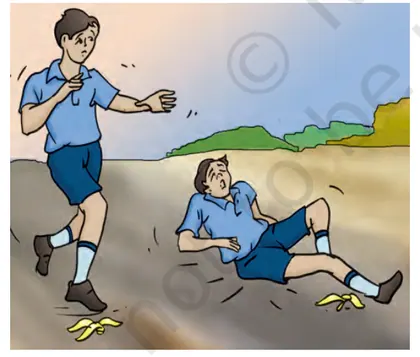
This chapter introduces friction — the force that opposes relative motion between two surfaces in contact. It explains types of friction (static, sliding/kinetic, rolling and fluid), how friction depends on the nature of surfaces and the normal force, and the concept of limiting friction and coefficient of friction (μ). The chapter discusses both useful and harmful effects of friction with everyday examples (walking, writing, braking versus wear and heat loss), and presents simple experiments to observe and measure frictional forces. Key practical themes include methods to reduce friction (lubrication, polishing, ball bearings, streamlining) and methods to increase friction where needed (textured soles, treads). Students learn the basic relations F = μN for static and kinetic friction, distinction that μs > μk, and how to apply these ideas to solve numerical problems and explain real-life situations. The chapter builds skills in observation, measurement using a spring balance, drawing conclusions from experiments, and applying scientific reasoning to design safer and more efficient systems.
Learning Objectives
- Define friction and state its direction relative to motion or impending motion.
- Explain the microscopic causes of friction between two surfaces.
- Identify and describe the main types of friction: static, sliding (kinetic), rolling and fluid.
- Distinguish between static and kinetic friction with suitable examples.
- State the laws of friction and apply them to simple qualitative situations.
- Calculate frictional force using F = μN for given coefficient of friction and normal force.
- Determine the coefficient of friction experimentally using a block-and-incline or block-and-spring-balance method.
- Predict how surface roughness, normal force and lubrication affect the magnitude of friction.
Topics in this chapter
16 topics · tap a topic title to jump straight to it.
Introduction to Friction
Friction is the force that opposes relative motion (or the tendency of motion) between two surfaces in contact. It acts along the surface and always in a direction opposite to motion or impending motion.
Why friction occurs: At a microscopic level, even apparently smooth surfaces have irregularities (peaks and valleys). When two surfaces are pressed together, these irregularities interlock. Molecular attractions between the surfaces also contribute. These effects resist motion — this resistance is called friction.
Types of friction:
- Static friction — acts when surfaces are not moving relative to each other; it adjusts up to a maximum value to prevent motion.
- Limiting (maximum static) friction — the largest static frictional force just before motion begins.
- Kinetic (sliding) friction — acts when two surfaces slide over each other; typically smaller than the limiting static friction.
- Rolling friction — acts when an object rolls over a surface (much smaller than sliding friction).
Key features:
- Friction acts opposite to motion or tendency of motion.
- Friction depends mainly on the nature of the surfaces and the normal force pressing them together.
- Rougher surfaces or stronger contact (larger normal force) usually give larger friction.
- Contact area has little effect on friction for rigid bodies in many cases — friction is approximately independent of contact area.
Advantages and disadvantages:
- Advantages: friction allows walking, writing, braking, and holding objects.
- Disadvantages: friction causes wear, energy loss as heat, and makes machines less efficient.
Simple classroom demonstration: Place a block on a flat surface and pull with increasing force. At first the block does not move (static friction). When pulling force reaches the limiting value, the block starts moving and the required force usually drops slightly (kinetic friction).
- Walking: friction between shoes and ground prevents slipping and lets us push off and move.
- Writing with a pencil: friction between the pencil tip and paper leaves marks.
- Car brakes: friction between brake pads and wheel surfaces slows or stops a vehicle.
- Starting a heavy box moving: you must overcome static friction; once it moves, less force (kinetic friction) is needed to keep it sliding.
- Ball bearings in wheels: rolling friction is much smaller than sliding friction, so bearings reduce energy loss and make rotation easier.
- Using a matchstick: friction between the match head and the matchbox produces heat to ignite it.
- F_friction = μ N (frictional force equals coefficient of friction times the normal force)
- f_s ≤ μ_s N (static friction f_s can have any value up to its maximum μ_s N)
- f_s,max = μ_s N (limiting/static friction — maximum static value)
- f_k = μ_k N (kinetic or sliding friction; μ_k is usually less than μ_s)
- Direction: friction acts opposite to tendency or direction of relative motion
Nature and Direction of Frictional Force
Frictional force is a contact force that acts tangent to the surfaces in contact. It always opposes the relative motion or the tendency of relative motion between two surfaces. Friction arises because real surfaces are not perfectly smooth — they have microscopic irregularities that interlock, and there are also interatomic forces at the contact points.
Key aspects of the nature of friction:
- Contact and tangential: Friction acts only when surfaces touch and it acts along the surface (tangentially), not perpendicular to it.
- Opposes motion or impending motion: If a body tends to move in one direction, friction acts in the opposite direction.
- Depends mainly on the nature of surfaces and the normal reaction: Rougher surfaces and larger normal force generally increase friction. It is nearly independent of the actual contact area for rigid bodies.
- Two main types: static friction and kinetic (sliding) friction. Static friction acts when relative motion is about to start and adjusts up to a maximum value. Kinetic friction acts when surfaces are sliding relative to each other and is usually less than the maximum static friction.
- Non-conservative and dissipative: Friction converts mechanical energy into heat and sometimes sound.
- Reciprocal action: The two contacting bodies exert equal and opposite frictional forces on each other (Newton's third law).
Direction of frictional force:
- On a body that is moving, friction acts opposite to the direction of motion of that body relative to the surface.
- On a body that is at rest but has a tendency to move, static friction acts opposite to the direction of the impending motion.
- Graphical illustration (conceptual): If a block is pulled to the right, friction on the block acts to the left. The ground or the other surface feels an equal and opposite frictional force to the right.
Important practical notes: lubrication reduces friction by separating surfaces, making motion easier. Brakes use friction to stop vehicles by converting kinetic energy to heat. For many problems we approximate frictional force using coefficients of friction that quantify surface interaction.
- Walking: friction between shoe sole and ground prevents slipping; it acts opposite to the foot’s tendency to slip backward.
- Pushing a heavy box: static friction resists initial motion; once it starts sliding, kinetic friction opposes the motion.
- Brakes of a bicycle: brake pads press on the wheel rim; friction acts opposite to wheel rotation and slows the bicycle.
- Writing with a pencil: friction between pencil tip and paper allows graphite to be deposited; friction opposes sliding of the pencil.
- Matchstick rubbing: friction produces heat to ignite the match head.
- Car tyres on road: static friction provides traction for acceleration and turning; on a wet surface the available friction reduces.
- Limiting static friction: f_s(max) = μ_s * N
- Kinetic (sliding) friction: f_k = μ_k * N
- Inequality for static friction: f_s ≤ μ_s * N (static friction adjusts up to its limit)
- Coefficient of friction definition: μ = f / N (approximate relation; μ depends on the pair of surfaces)
- Relation: μ_k < μ_s (coefficient of kinetic friction is usually less than coefficient of static friction)
Types of Friction — Overview
What is friction? Friction is a force that opposes relative motion (or attempted motion) between two surfaces in contact. It acts tangentially to the surfaces and always in the direction opposite to motion or the applied force trying to produce motion.
Main types of friction
- Static friction: Acts when two surfaces are at rest relative to each other. It prevents motion up to a maximum value called the limiting (or maximum static) friction. Static friction adjusts its value to match the applied force (up to its limit).
- Sliding (kinetic) friction: Acts when two surfaces slide over each other. Its magnitude is usually constant for given surfaces and is less than the limiting static friction for the same pair of surfaces.
- Rolling friction: Acts when a round object (wheel, ball, cylinder) rolls on a surface. Rolling friction is much smaller than sliding friction because deformation and contact area are different.
- Fluid friction (drag): Resistance experienced by objects moving through a fluid (liquid or gas). This includes air resistance. Fluid friction depends on speed, shape, fluid density and viscosity.
Factors affecting friction
- Nature of the surfaces in contact (roughness, material).
- Normal force (the perpendicular force pressing the surfaces together). Frictional force is generally proportional to the normal force.
- Type of motion: static, sliding, rolling or motion through fluid.
Key ideas to remember
- Direction: friction always acts opposite to motion (or the tendency to move).
- Coefficients of friction: μs (static) > μk (kinetic). These are dimensionless and depend on the pair of materials.
- Surface area of contact does not significantly affect friction (for rigid bodies), but surface roughness and contact pressure do.
- Friction converts mechanical energy into heat and sometimes sound.
Examples in daily life include walking (static friction between shoe and ground), moving furniture (overcoming static then sliding friction), using wheels to reduce friction (rolling), a parachute experiencing air resistance (fluid friction), and oiling machine parts to reduce friction (lubrication reduces contact forces and changes frictional behaviour).
- Static friction: A heavy cupboard does not move when you push gently; the static friction balances your push until it reaches the limiting value.
- Sliding friction: Pushing a book across a table requires continuous force to overcome sliding friction between book and table.
- Rolling friction: A bicycle wheel rolls easily on a road because rolling friction is much smaller than sliding friction.
- Fluid friction (air resistance): A parachute slows down a skydiver because air resistance (drag) acts opposite to motion through the air.
- Everyday walking: Static friction between the sole of your shoe and the ground prevents slipping and allows you to push off.
- Normal force: N = mg (on a horizontal surface) or N = mg cosθ (on an incline of angle θ).
- Limiting static friction: f_max (static) = μs · N. (Static friction f satisfies f ≤ μs N.)
- Kinetic (sliding) friction: f_k = μk · N, where μk is the coefficient of kinetic friction.
- Rolling friction (simplified): f_r ≈ μr · N (μr is much smaller than μk for same materials).
- Stokes' drag (small spheres, low speed): F_drag = 6π η r v (η: fluid viscosity, r: sphere radius, v: speed).
- Quadratic drag (higher speeds): F_drag ≈ 1/2 · C_d · ρ · A · v^2 (C_d: drag coefficient, ρ: fluid density, A: cross-sectional area).
Static (Limiting) Friction
Definition: Static friction is the force that acts between two surfaces in contact when there is a tendency for relative motion but the surfaces remain at rest. The limiting (maximum) static friction is the largest value that static friction can reach; beyond this value the object starts to move and kinetic friction takes over.
How it behaves:
- Static friction adjusts its magnitude to oppose the applied force up to a maximum value. If the applied force is small, static friction equals the applied force (so net motion is zero).
- When the applied force becomes equal to the limiting static friction, any further increase causes motion to start.
- Limiting static friction depends on the nature of the two surfaces and on the normal reaction between them; it does not depend strongly on the apparent contact area.
- Usually the limiting static friction is greater than the kinetic (sliding) friction for the same pair of surfaces.
Microscopic reason (simple): Even apparently smooth surfaces have microscopic bumps and valleys which interlock and sometimes adhere. Static friction arises because these microscopic contacts resist the start of motion; greater normal force presses more contact points together, increasing the maximum static friction.
Typical classroom experiment: Pull a block on a horizontal table with a spring balance. As you slowly increase the pull, the balance reading increases but the block stays at rest — static friction matches the pull. At a certain reading the block just starts to move; that reading is the limiting static friction. After motion begins, the reading usually drops to a lower value (kinetic friction).
Key points to remember:
- Static friction acts only when there is a tendency to move (but no motion).
- It has a maximum value: limiting static friction = μ_s N.
- Direction of static friction is opposite to the direction of impending motion.
- Pushing a heavy box: you apply increasing horizontal force; the box remains at rest until the applied force exceeds the limiting static friction.
- A book on an inclined plane: if the slope is gentle, static friction prevents sliding; when the tilt angle becomes large enough (critical angle), the book starts to slide.
- A parked car on a slope: static friction between tyres and road prevents the car from rolling down.
- Walking: static friction between shoes and ground provides the grip needed to push off without slipping.
- A ladder leaning against a wall: static friction at the wall and ground keeps the ladder from slipping.
- Starting a bicycle: the tyre must overcome limiting static friction at the contact patch to begin rolling/slipping (traction).
- f_s ≤ μ_s N (static friction force is less than or equal to limiting value)
- f_limiting (maximum static friction) = μ_s N
- On horizontal surface: N = mg → f_limiting = μ_s mg
- On an incline of angle θ (just about to slide): μ_s = tan θ_c where θ_c is the critical angle
- Units: f_s and N are in newtons (N); μ_s is dimensionless
Kinetic (Sliding) Friction
What is kinetic (sliding) friction?
Kinetic friction (also called sliding friction) is the resistive force that acts between two surfaces that are sliding past each other. It always acts opposite to the direction of relative motion of the surfaces and tries to oppose the sliding.
Key points
- Kinetic friction occurs only when there is relative motion (sliding) between the surfaces.
- Its magnitude depends mainly on the nature of the two surfaces in contact and the normal force pressing them together.
- For most common situations, kinetic friction is approximately constant for a given pair of surfaces and does not depend strongly on the contact area or the sliding speed (for moderate speeds).
- The coefficient of kinetic friction (μk) for a pair of materials is usually less than the coefficient of static friction (μs), so less force is needed to keep an object sliding than to start its motion.
How to calculate
If an object of mass m slides on a horizontal surface, the normal force N = mg (where g is the acceleration due to gravity). The kinetic frictional force Fk is given by the empirical relation:
Fk = μk N
So for a horizontal surface: Fk = μk m g. On an inclined plane of angle θ, the normal force is N = m g cos θ, so Fk = μk m g cos θ.
Practical note: Kinetic friction converts kinetic energy into heat and sometimes sound. It is useful (e.g., braking) and harmful (e.g., wear and energy loss).
- A book sliding across a table: the book slows down because kinetic friction between the book and table opposes its motion.
- A sled sliding on snow: kinetic friction between the sled runners and snow resists motion (coefficient depends on snow condition).
- Pushing a heavy box across the floor: once the box is moving, the force needed to keep it moving is the kinetic frictional force.
- Car tires skidding on a road: when tires slide rather than roll, kinetic friction (usually lower than static friction) acts and affects stopping distance.
- A hockey puck sliding on ice: low coefficient of kinetic friction allows it to glide far before stopping.
- F_k = μ_k N (kinetic frictional force equals coefficient of kinetic friction times normal force)
- On horizontal surface: F_k = μ_k m g
- On inclined plane (angle θ): F_k = μ_k m g cosθ
- Typical relation: μ_k < μ_s (coefficient of kinetic friction is less than coefficient of static friction)
Rolling Friction
Definition: Rolling friction (also called rolling resistance) is the resistive force that acts on a rolling object when it rolls over a surface. It opposes the motion and is usually much smaller than sliding friction for the same materials.
Cause: Rolling friction arises mainly because of tiny deformations at the contact region between the rolling object (wheel, ball, cylinder) and the surface. As the body rolls, material of the wheel and/or surface compresses and then recovers; some energy is lost in these repeated deformations, producing a resistive force. Adhesion and surface roughness can also contribute.
Key characteristics:
- Smaller than sliding friction for rigid wheels and hard surfaces, which is why wheels make transport easier.
- Depends on the nature of the surfaces, the radius (or size) of the rolling object, the normal force, and the material properties (elasticity, hysteresis).
- For slow speeds, rolling friction is approximately independent of speed; at higher speeds it may increase.
- When rolling without slipping, the point of contact is instantaneously at rest relative to the surface.
Simple model and intuition: In a simple engineering model we represent rolling friction as a small horizontal force Fr acting opposite to motion. A useful approximate relation at class-8 level is:
Fr = μr × N
where N is the normal reaction (usually = weight if surface is horizontal) and μr is the coefficient of rolling friction (much smaller than the coefficient of sliding friction).
Energy and torque: Rolling resistance causes energy loss. The torque (moment) resisting rotation can be represented as M = Fr × r, where r is the radius of the wheel or rolling object. The power lost due to rolling friction at speed v is P = Fr × v.
Practical note: Balloon tires, larger wheels, harder surfaces, and bearings all reduce rolling friction. Soft tires and rough surfaces increase it. Ball bearings reduce friction by converting sliding contact to rolling contact between many small balls.
- Bicycle and motorcycle wheels rolling on road — wheels reduce effort compared with sliding.
- Car tyres rolling on pavement — rolling resistance affects fuel efficiency.
- A ball rolling on the ground slows down and stops due to rolling friction and air resistance.
- Trolleys and suitcases with wheels use rolling to make carrying loads easier.
- Ball bearings in machines replace sliding parts with rolling elements to reduce friction and wear.
- Rolling frictional force: F_r = μ_r × N, where μ_r is coefficient of rolling friction and N is the normal force.
- Rolling resistance torque: M = F_r × r, where r is the radius of the wheel or rolling object.
- Work done (energy lost) when rolling through distance d: W = F_r × d.
- Power lost due to rolling friction at speed v: P = F_r × v.
Fluid Friction (Viscous Drag)
What is fluid friction? Fluid friction (viscous drag) is the resistive force that a fluid (liquid or gas) exerts on an object moving through it, or that layers of the fluid exert on each other when they move at different speeds. It converts some kinetic energy into heat and slows moving objects.
Why it happens: In a fluid, molecules stick slightly to surfaces and to each other. When an object moves, adjacent fluid layers are dragged with different speeds, producing internal friction (viscosity). The resulting force opposing motion is called viscous drag.
Factors affecting viscous drag:
- Viscosity (η): A measure of how "thick" or resistant a fluid is. Higher viscosity → larger drag (honey has higher viscosity than water).
- Speed (v): Drag increases with increasing speed. For slow, smooth (laminar) motion drag is approximately proportional to v; for faster, turbulent motion drag often varies roughly as v².
- Size and shape (area A, radius r): Bigger cross-section or larger radius increases drag. Streamlined shapes reduce drag.
- Fluid density (ρ): For high-speed (inertial) drag, denser fluids (water vs air) give larger drag.
Types of flow:
- Laminar flow: Smooth layers, occurs at low speeds or with small objects; viscous forces dominate. Drag often ∝ v.
- Turbulent flow: Chaotic eddies, occurs at higher speeds or larger objects; inertial effects dominate. Drag often ∝ v².
Terminal velocity: When a body falls through a fluid it accelerates until the upward drag equals the downward weight; then net force is zero and the body falls at constant terminal velocity v_t.
Simple examples in everyday life: stirring honey vs water, a swimmer feeling resistance in pool, a falling raindrop reaching constant speed, a parachute producing large drag to slow a skydiver, car shapes made streamlined to reduce fuel loss.
Important notes for Class 8: You do not need to memorize advanced derivations. Remember: viscous drag depends on viscosity, speed, and size/shape. For slow motion of small spheres in viscous fluids there is a simple formula (Stokes' law); for fast motion aerodynamic drag is often treated proportional to v² with a drag coefficient that depends on shape.
- A spoon stirring honey feels much greater resistance than stirring water — honey has higher viscosity.
- A small sphere (like a bead) falling slowly through oil reaches a steady (terminal) speed when viscous drag balances its weight.
- A skydiver before opening the parachute accelerates but reaches a terminal velocity; opening the parachute increases drag and reduces terminal speed.
- Streamlined cars, bicycles and fish shapes reduce viscous/air drag so they move faster with less effort.
- Rain drops fall faster in thin air than through denser air; very small droplets fall slowly because viscous drag is large compared to their weight.
- Stokes' law (small sphere in laminar flow): F_drag = 6 π η r v (η = dynamic viscosity, r = sphere radius, v = speed).
- Quadratic (high-speed/inertial) drag: F_drag = (1/2) C_d ρ A v^2 (C_d = drag coefficient, ρ = fluid density, A = cross-sectional area).
- Terminal velocity (balance of forces): mg = F_drag → solve for v_t (for Stokes' law: v_t = (2/9) (r^2 (ρ_sphere − ρ_fluid) g / η) for a solid sphere).
- Dimensional units: F in newtons (N), η in pascal·second (Pa·s), ρ in kg/m^3, v in m/s, r and A in meters.
Factors Affecting Friction
What is friction? Friction is the resistive force that acts at the surface of contact between two bodies and opposes their relative motion or tendency to move. It acts tangentially to the surfaces in contact.
Main factors that affect friction
- Nature (kind) of surfaces: Rough surfaces generally offer more friction than smooth surfaces because microscopic peaks (asperities) interlock and resist motion. Different material pairs (rubber-on-concrete, wood-on-wood, metal-on-metal) have different frictional behaviour; this difference is captured by the coefficient of friction.
- Normal force (load): Frictional force is proportional to the normal reaction (the force pressing the surfaces together). If the normal force increases (for example, by adding weight), friction increases roughly in direct proportion.
- Type of friction — static vs kinetic: Static friction (fs) acts when the surfaces are not sliding relative to each other and can take values up to a maximum fs(max). Kinetic (sliding) friction (fk) acts when surfaces move relative to each other and is usually smaller than the maximum static friction.
- Presence of lubrication/contaminants: Oil, grease, water, dust or other contaminants change the effective contact and often reduce friction (lubrication). In some cases, contaminants can increase friction (sticky substances).
- Apparent area of contact: For rigid bodies, the frictional force does not depend on the apparent contact area — it depends on the normal force and surface characteristics. (Note: for soft or deformable materials the true contact area and adhesion can make area important.)
- Speed of motion: For many common solid contacts, kinetic friction is approximately independent of speed at low speeds. At very high speeds or for certain materials, friction can change with speed.
- Temperature and environment: Heating can change material properties and lubrication films, altering friction (e.g., brakes behave differently when hot; ice reduces friction dramatically).
Why area often doesn't matter (simple explanation): Even a surface that looks smooth actually has microscopic roughness. The true contact between two rigid surfaces occurs at tiny spots. Increasing the apparent contact area usually reduces pressure per unit spot but does not change the total sum of microscopic contacts for rigid bodies, so total friction remains approximately proportional to the normal force, not the area.
Simple classroom experiments to observe these factors:
- Pull a block with a spring balance across different surfaces (wood, sandpaper, glass) to compare friction.
- Add known weights to the block and plot frictional force vs weight to see proportionality.
- Place oil or talcum powder between surfaces and observe reduction in reading on the spring balance.
- Use two identical blocks with different contact areas but same weight to show friction nearly unchanged.
Summary: Friction depends mainly on the nature of the surfaces and the normal force, and is modified by lubrication, temperature, speed and whether the bodies are rigid or deformable. Static friction has a maximum value larger than kinetic friction.
- Walking: friction between shoe soles and ground prevents slipping. Wet floors reduce this friction, increasing slipping risk.
- Brakes of a bicycle/car: friction between brake pads and wheel/rotor slows down the vehicle. Brake effectiveness changes when pads are worn or hot.
- Writing with a pencil: friction between the pencil tip and paper allows the graphite to be deposited; smoother paper gives less resistance.
- Pushing a heavy box: adding more weight (increasing normal force) makes it harder to push because friction increases.
- Lubrication in machines: oil reduces friction between moving machine parts to prevent wear and save energy.
- Ice skating: very low friction on ice allows smooth gliding, while rougher ice or edges of skates increase grip.
- Maximum static friction: F_s(max) = μ_s × N (where μ_s is the coefficient of static friction and N is the normal force)
- Kinetic (sliding) friction: F_k = μ_k × N (where μ_k is the coefficient of kinetic friction; typically μ_k < μ_s)
- Coefficient of friction: μ = F_f / N (dimensionless; F_f is frictional force)
- Work done against friction when moving through distance d: W = F_f × d
- Power required to overcome friction at speed v: P = F_f × v
Laws/Properties of Friction
Definition: Friction is a contact force that opposes the relative motion or tendency of motion between two surfaces in contact. It acts tangentially to the surfaces.
Key properties / laws of friction
- Direction: Friction always acts along the surface and opposite to the direction of relative motion (or impending motion).
- Origin: Friction arises from microscopic roughness and interactions (adhesion) between the contacting surfaces.
- Static friction adjusts up to a limit: If a small force is applied, static friction matches it exactly (preventing motion) up to a maximum value called limiting static friction.
- Limiting static friction: The maximum static frictional force is proportional to the normal reaction between surfaces: f_s(max) = μ_s N. Beyond this, motion begins.
- Kinetic (sliding) friction: Once surfaces slide, the frictional force is usually constant (for a wide range of speeds) and equal to f_k = μ_k N. Typically μ_k < μ_s.
- Depends on normal reaction: Frictional force is directly proportional to the normal force (contact force perpendicular to surfaces).
- Independent of apparent contact area: For dry solid surfaces, friction is (to a good approximation) independent of the apparent area of contact.
- Surface nature matters: Friction depends strongly on the materials and roughness of the surfaces and on lubrication. Rougher or stickier surfaces have larger coefficients of friction.
- Rolling friction is much smaller: Rolling friction (for wheels, balls) is usually far less than sliding friction because deformation and contact mechanics differ.
Transition behavior (static to kinetic): As an applied horizontal force increases, static friction increases to oppose it until it reaches f_s(max)=μ_s N. When applied force slightly exceeds this, motion begins and friction drops to the kinetic value f_k (usually lower) and remains roughly constant with further increase in applied force.
Effect of lubrication and temperature: Lubricants reduce contact adhesion and surface asperity interaction, reducing both μ_s and μ_k. Temperature and surface wear can also change coefficients.
Typical classroom example of normal reaction: On a horizontal surface for an object of mass m, N = mg, so friction f = μN = μmg. On an inclined plane at angle θ, N = mg cos θ, so f = μ mg cos θ (direction opposing slipping).
- Walking: static friction between shoes and ground prevents slipping and allows you to push and move forward.
- Pushing a heavy box: small pushes are resisted by static friction; when you push hard enough it starts sliding and kinetic friction acts.
- Car tyres on road: static friction provides traction for acceleration and cornering; braking converts static to kinetic if wheels lock (skidding).
- Writing with a pencil: friction between pencil tip and paper allows the graphite to leave marks.
- Rubbing a matchstick: friction heats the head enough to ignite it.
- Sliding a book across a table: kinetic friction opposes the sliding motion and slows the book.
- Limiting static friction: f_s(max) = μ_s N
- Static friction (instantaneous, adjustable): f_s ≤ μ_s N
- Kinetic (sliding) friction: f_k = μ_k N
- Usually: μ_s > μ_k
- Normal reaction on horizontal surface: N = mg (so f = μ mg)
- Normal reaction on incline at angle θ: N = mg cosθ (so f = μ mg cosθ)
Measurement and Simple Experiments
What this topic covers
Measurement and simple experiments in the Chapter on Friction explain how to measure frictional force, and how friction depends on factors such as the normal force (weight), surface roughness, contact area and the inclination of a surface. Simple laboratory methods (using a spring balance and an inclined plane) let you quantify static and kinetic friction and draw useful graphs.
Common experimental methods
- Spring-balance pull test (horizontal surface): A block is attached to a spring balance and pulled horizontally. The reading at the instant the block just begins to move gives the maximum static friction; the steady reading while the block moves at constant speed gives kinetic friction.
- Mass-variation test: Repeat the pull test after placing known weights on the block (increasing normal force). Record frictional force vs total weight to study dependence on normal force.
- Contact-area test: Use the same block with different base faces in contact (keeping mass same) to check whether contact area affects friction.
- Surface-roughness test: Repeat pull tests on different surfaces (glass, wood, sandpaper) to see how roughness affects friction.
- Inclined-plane (angle-of-repose) test: Put the block on a plane and slowly increase the angle until it just begins to slide. The angle at which sliding starts is used to calculate the coefficient of static friction.
How to take measurements (practical tips)
Calibrate/zero the spring balance before use; pull slowly and steadily to distinguish static and kinetic readings; repeat trials and take averages; keep surfaces clean and dry; record units (force in newtons, mass in kilograms, angle in degrees).
Interpreting results
Typical observations: (1) Frictional force increases roughly linearly with the normal force (weight). (2) Friction depends strongly on surface material/roughness. (3) For most common materials, friction is largely independent of contact area. (4) Static friction is usually larger than kinetic friction.
Sources of error
Friction in the balance hook and string, uneven pulling, dust/oil on surfaces, inaccurate angle measurement, non-uniform surfaces. Repeat measurements and use average values.
- Using a spring balance to pull a wooden block on a table: read the balance just before the block moves (maximum static friction) and when it slides at constant speed (kinetic friction).
- Adding a 500 g mass on top of the same block and repeating the pull test to see how friction increases with weight.
- Placing the block on glass, wood and sandpaper and comparing the pull forces to see the effect of surface roughness.
- Placing the block on an inclined plane and slowly raising the angle until it slides — the angle of first motion (angle of repose) is used to compute the coefficient of static friction.
- F_f ≤ μ_s N (static friction: actual static friction adjusts up to a maximum value)
- F_k = μ_k N (kinetic friction: approximately constant during sliding)
- N = mg (normal force on a horizontal surface, where m is mass and g ≈ 9.8 m/s²)
- N = mg cosθ (normal force on an incline of angle θ)
- Maximum static friction: F_s(max) = μ_s N
- From angle of repose: μ_s = tan(θ_r) (θ_r is the angle at which the block just starts to slide)
Advantages of Friction
Friction is the resistive force that acts when two surfaces try to move (or tend to move) relative to each other. Although friction opposes motion, it is extremely useful in everyday life. The main advantages of friction are that it enables walking, holding and gripping objects, starting and stopping motion, converting motion to heat, and transmitting force in machines. Friction depends on the nature of surfaces and the normal force between them.
- Enables locomotion: When you walk, your shoes push backward on the ground; friction between the shoe and ground pushes you forward. Without friction you would slip and be unable to walk or run.
- Allows objects to be held and carried: Friction between your fingers and an object prevents it from sliding out of your hand. This is why rougher grips are used on tool handles.
- Permits writing and drawing: Friction between a pen/pencil and paper allows the tip to leave marks; without it the pen would simply slide over the surface without making a trace.
- Helps braking and stopping: Friction between brake pads and wheels (or between tyres and road) converts kinetic energy to heat and slows vehicles. Proper friction is essential for safe braking and control.
- Enables machinery and power transmission: Friction in belts, pulleys and clutches transmits motion and force from one part to another (designs ensure enough friction for transmission but limit wear).
- Useful in everyday fastening and construction: Friction holds nails, screws and bolts in place; it keeps books on shelves and furniture from sliding.
- Generates heat when needed: Rubbing hands together produces heat because of friction — a simple practical use in cold weather and in ignition mechanisms (e.g., striking matches).
In summary, friction is essential for control, safety and many practical functions, even though excessive friction causes wear and energy loss. Engineering often seeks the right balance: enough friction where grip is needed and reduced friction where smooth motion is desired (using lubrication or bearings).
- Walking and running: friction between shoes and ground prevents slipping and allows forward motion.
- Holding objects: friction between fingers and an object stops it from sliding out of your hand.
- Writing: friction between pencil/pen tip and paper produces marks.
- Braking a bicycle or car: friction between brake pads and wheel rims or discs slows the vehicle.
- Using a ladder: friction between ladder feet and the ground prevents slipping.
- Driving a vehicle: friction between tyres and road provides grip for acceleration, steering and braking.
- F_friction ≤ μ_s N (static friction: up to a maximum or limiting value; equality at impending motion)
- F_friction = μ_k N (kinetic/limiting friction for bodies in relative motion)
- μ = F_friction / N (coefficient of friction; μ_s for static, μ_k for kinetic)
- N = mg cosθ (normal force on an inclined plane, used when calculating friction on slopes)
Disadvantages of Friction
Friction is the resistive force that acts when two surfaces are in contact and move or tend to move relative to each other. Although friction is useful in many situations (walking, holding objects), it also has several important disadvantages. Key disadvantages include:
- Energy loss as heat: Friction converts useful mechanical energy into heat, reducing the efficiency of machines and vehicles. This wasted energy increases fuel or electrical consumption.
- Wear and tear: Continuous rubbing wears away material from surfaces (e.g., gears, bearings, tyres), shortening component life and increasing maintenance and replacement costs.
- Reduced efficiency and higher operating costs: Extra force is required to overcome friction, so engines and motors must do more work, consuming more fuel or electricity.
- Difficulty in starting motion: High static friction can make it hard to start moving heavy objects, requiring larger starting forces.
- Heating and possible damage: Excessive frictional heating can cause parts to deform, melt, seize, or produce sparks that may ignite flammable materials.
- Noise and vibration: Friction between parts often produces undesirable noise and vibrations (e.g., squealing brakes).
- Reduced speed and performance: In moving systems (vehicles, turbines), friction limits achievable speeds and responsiveness.
Because of these disadvantages, engineers often use methods to reduce friction where it is harmful: lubrication, smooth finishing, bearings or rollers, streamlining to reduce fluid friction, and choosing materials with lower coefficients of friction.
- Automobiles: friction in the engine, transmission and tyres converts fuel energy to heat, increasing fuel consumption and wearing tyres.
- Machine parts: gears and sliding surfaces wear out due to friction, requiring frequent maintenance or replacement.
- Moving heavy furniture: static friction makes it hard to start moving a heavy piece; more force is needed initially.
- Electrical appliances: friction in motors (brushes, bearings) reduces efficiency and shortens motor life.
- Brake overheating: although brakes use friction intentionally, excessive or prolonged braking generates heat that can damage brake components or cause brake fade.
- Noise from rubbing parts: squeaky hinges, creaky doors, and noisy machinery are caused by friction between components.
- Maximum static friction: F_s,max = μ_s * N (where μ_s is coefficient of static friction, N is normal force)
- Kinetic (sliding) friction: F_k = μ_k * N (μ_k is coefficient of kinetic friction; typically μ_k < μ_s)
- Inequality for static friction: F_f ≤ μ_s * N (static friction adjusts up to its maximum)
- Work done by friction (energy dissipated as heat): W = F_f * d (force opposite displacement; energy lost = frictional force × distance)
- Power lost to friction: P = F_f * v (v is relative velocity between surfaces)
Ways to Reduce Friction
Friction is the resistive force that opposes relative motion between surfaces in contact. While friction is useful in many situations (walking, braking), it often wastes energy in machines and causes wear. There are several practical ways to reduce friction; each method works by either changing surface properties, changing the type of motion, or reducing the interaction with the surrounding medium.
- Use of lubricants: Applying liquids (oil, grease) or solids (graphite, MoS2, Teflon) between two surfaces forms a thin film that separates the surfaces so they slide more easily. Lubricants reduce direct contact and microscopic interlocking of surface asperities, lowering the coefficient of friction.
- Smoothening or polishing surfaces: Making surfaces smoother reduces the number and height of microscopic bumps (asperities) that catch on each other. Polished metal surfaces or well-finished machine parts slide with less friction and wear.
- Use rollers or wheels (convert sliding to rolling): Rolling friction is much smaller than sliding friction. Wheels, ball bearings and rollers allow objects to move with far less resistance than dragging them across a surface.
- Ball bearings and roller bearings: These are assemblies of rolling elements placed between moving parts; they replace sliding contact with rolling contact, dramatically reducing friction in rotating shafts and wheels.
- Reduce normal force where practical: Frictional force (for dry contact) is proportional to the normal force. Reducing the load on a surface reduces friction (e.g., lighten a vehicle where possible). This must be used only when safe and practical.
- Use of streamlining to reduce air resistance: For objects moving through a fluid (air or water), aerodynamic drag (a type of friction) can be reduced by designing streamlined shapes (cars, airplanes) that let the fluid flow smoothly and reduce pressure drag. This is especially important at high speeds where drag increases sharply with speed.
- Use of air or magnetic cushions: Air hockey tables, hovercrafts and magnetic levitation (maglev) trains remove or greatly reduce contact with the surface, so friction is nearly zero.
- Choose low-friction materials/coatings: Using materials with low coefficients of friction (e.g., PTFE/Teflon coatings) at contact surfaces reduces resistance and wear.
In practice these methods are combined: e.g., a bicycle uses smooth tires, bearings, and lubrication. Engineers choose the suitable method depending on required durability, cost, speed, and safety.
- Oiling a door hinge or bicycle chain (lubricant reduces rubbing and squeak).
- Using wheels on suitcases and trolleys instead of dragging them (rolling instead of sliding).
- Ball bearings in a bicycle wheel hub reduce friction between axle and wheel.
- Applying graphite to a stiff lock to make the key turn more easily (solid lubricant).
- Polished machine parts in engines and industrial machines to reduce wear and heat.
- Streamlined shape of cars and airplanes to reduce air resistance and improve fuel efficiency.
- Maximum static friction: F_s(max) = μ_s * N
- Kinetic (sliding) friction: F_k = μ_k * N
- Coefficient of friction: μ = F_f / N (where F_f is frictional force, N is normal force)
- Work done against friction: W = F_f * d (force times distance along the direction of motion)
- Power required to overcome friction at speed v: P = F_f * v
- Aerodynamic drag (fluid friction, useful for streamlining): F_d = (1/2) * C_d * ρ * A * v^2 (C_d = drag coefficient, ρ = fluid density, A = cross-sectional area, v = speed)
Ways to Increase Friction
What is friction? Friction is a force that opposes the relative motion (or tendency to move) between two surfaces in contact. It acts along the surfaces and opposite to the direction of motion.
Principles for increasing friction — Frictional force between two surfaces depends mainly on (a) the normal force pressing the surfaces together and (b) the nature of the surfaces (how rough or sticky they are). To increase friction you must either increase the normal force or increase the coefficient of friction between the surfaces (make surfaces rougher or more interlocking/adhesive).
- 1. Increase the normal force (N): Frictional force is directly proportional to the normal force. Adding weight or pressing the surfaces together increases N and so increases friction. Example: a heavier box is harder to slide than a lighter one.
- 2. Use materials with a higher coefficient of friction (μ): Replace smooth or slippery materials with rougher or stickier ones (e.g., rubber soles instead of smooth plastic). The greater the coefficient of friction, the greater the frictional force for the same normal force.
- 3. Roughen the surfaces: Rough surfaces interlock more than smooth ones, increasing the resistance to motion. Examples: sandpaper, textured road surfaces, treads on tyres.
- 4. Add treads, grooves or studs: Patterns on tyres or shoe soles increase grip and prevent slipping, especially on wet or uneven surfaces (tyre treads, cleats on athletic shoes).
- 5. Use adhesives or sticky layers: Applying glue, rubber mats, or sticky tapes increases surface adhesion and friction (e.g., non-slip mats, anti-skid tape on stairs).
- 6. Use foreign material to increase grip on slippery surfaces: Spreading sand, grit or salt on icy or muddy roads increases traction by increasing surface roughness and interlocking.
- 7. Increase contact area for soft/deformable materials: For many rigid bodies friction is nearly independent of apparent contact area; however, for soft or deformable materials the real contact area matters. Increasing the area of a soft pad can increase friction (e.g., wide rubber sole gives better grip).
- 8. Reduce lubrication: Removing oil, water or grease from surfaces increases friction because lubricants lower the coefficient of friction.
Important classroom note: For simple rigid blocks on rigid surfaces (idealised case taught in Class 8), frictional force F depends mainly on normal force and the coefficient of friction: F = μN. In everyday situations, surface roughness, material properties and small deformations also matter.
Simple demonstrations/experiments: place a block on an inclined plane and increase the weight (put coins) to see angle of sliding change; compare sliding a block on glass, wood and sandpaper; put sand on an icy tray to show increased grip.
- Car tyres with deep treads: treads channel water away and increase grip, preventing skidding in wet conditions.
- Shoe soles with patterns (rubber soles): provide better grip on floors and reduce slipping.
- Spreading sand or grit on icy roads and walkways: increases roughness and prevents slipping.
- Using brake pads on bicycle or car: friction between brake pad and wheel increases to stop the vehicle.
- Studded tyres or chains on tyres (for snow): studs bite into snow/ice and greatly increase traction.
- Anti-slip tape or rubber mats on stairs and ramps: increase adhesion and reduce accidents.
- F_friction = μ N (frictional force equals coefficient of friction times normal force)
- F_static,max = μ_s N (maximum static friction before motion begins; μ_s is static coefficient)
- F_kinetic = μ_k N (kinetic friction when objects are sliding; μ_k is kinetic coefficient; usually μ_s > μ_k)
- Units: F in newtons (N), N (normal force) in newtons, μ is dimensionless
Applications and Real-life Examples
Friction is the resistive force that acts when two surfaces try to move (or tend to move) relative to each other. It can be useful (helps us walk, hold objects, stop vehicles) or harmful (causes wear, wastes energy as heat). In everyday life we use friction intentionally (rubber soles, brake pads, sandpaper) and reduce it where it is unwanted (lubrication, ball bearings, wheels).
Key ideas in applications:
- Static friction prevents motion up to a maximum value and adjusts to match applied forces (so objects stay at rest).
- Kinetic (sliding) friction acts when surfaces slide past each other and is usually somewhat less than maximum static friction.
- Friction depends on the nature of surfaces and the normal force between them; it usually does not depend strongly on contact area.
- Engineering applications either increase friction (to give grip) or decrease it (to reduce energy loss and wear).
Knowing how friction behaves lets us design safer shoes, effective brakes, smoother machines, and efficient transport systems.
- Walking: Friction between shoe soles and ground provides the backward push needed to move forward without slipping.
- Brakes of vehicles: Brake pads create friction with wheels or discs to convert kinetic energy into heat and slow the vehicle.
- Writing with a pencil: Friction between pencil lead and paper leaves marks; sandpaper uses friction to smooth surfaces.
- Nails and screws: Friction between threads and wood/metal holds parts together.
- Car tires on road: Good tread and friction prevent skidding; wet/icy roads reduce friction and increase stopping distance.
- Lubrication in engines: Oil reduces friction between moving parts, lowering wear and energy loss.
- Maximum static friction: F_s(max) = μ_s × N
- Kinetic (sliding) friction: F_k = μ_k × N
- Normal force on horizontal surface: N = m × g (where m = mass, g ≈ 9.8 m/s²)
- Normal force on an incline: N = m × g × cosθ (θ = angle of incline)
- Component of weight along an incline: F_parallel = m × g × sinθ (used to compare with F_s(max) to decide motion)
- Typical relation: μ_s ≥ μ_k (static coefficient usually ≥ kinetic coefficient)
Safety, Conservation and Practical Tips
Overview: Friction is the force that resists relative motion between two surfaces in contact. It is both useful (walking, writing, braking) and wasteful (wear, heat, energy loss). Safety and conservation mean using friction where needed, reducing it where harmful, and maintaining systems so friction does not cause accidents or undue energy loss.
Safety considerations:
- Use adequate friction for grip: shoes with good treads, textured handles, non-slip mats prevent slips and falls.
- Avoid excessive friction in moving machinery: overheating from friction can cause fires, parts failure, or injury. Use guards, proper lubrication, and cooling where needed.
- Braking systems: regular inspection ensures sufficient friction (brake pads, tyre treads). Overheated brakes lose efficiency (brake fade) — allow cooling and avoid continuous heavy braking.
- Laboratory and workshop safety: clamp objects before filing or sanding, wear gloves and eye protection when friction produces sparks or debris, keep hands clear of moving parts (belts, gears).
Conservation (reduce waste from friction):
- Reduce energy loss: unwanted friction converts useful mechanical energy into heat. Use lubricants, bearings, rollers, and streamlining to cut friction in engines and machinery to save fuel and electricity.
- Extend life of parts: regular lubrication and maintenance reduce wear and tear, saving resources and costs (e.g., oiling bicycle chain, greasing machine bearings).
- Environmentally responsible choices: choose biodegradable lubricants and recycle worn components where possible.
Practical tips (when to increase or decrease friction):
- To increase friction: use rough or rubberized surfaces, add treads (tyres), use sand or grit on icy paths, apply textured adhesives or pads.
- To reduce friction: polish/smooth surfaces, apply appropriate lubricants (oil, grease), use ball/roller bearings, add wheels or rollers, streamline shapes in fluids.
- Maintenance tips: check and replace worn brake pads and tyres, keep moving parts clean, maintain correct lubrication schedule, ensure correct tyre pressure (underinflation increases rolling resistance/friction).
Energy and heat: Frictional force does work against motion. That work appears as heat (or sound). In systems where friction is undesirable, reducing it conserves energy; where friction is useful (brakes), it is converted into heat to slow motion.
Quick rules of thumb:
- Static friction prevents start of motion up to a maximum; kinetic (sliding) friction is usually smaller and roughly constant while sliding.
- Friction depends mainly on the nature of surfaces and the normal force, not strongly on contact area for dry friction.
- Walking: rough shoe soles increase friction with ground so you don’t slip. On icy surfaces, grit or sand is spread to increase friction.
- Bicycle: oiling the chain and using ball bearings in hubs reduces friction, making pedalling easier and conserving energy.
- Car brakes: brake pads press on discs to create friction and convert a vehicle’s kinetic energy into heat to stop the car — regular checks prevent brake failure.
- Matchstick: rubbing against the striker produces enough frictional heat to ignite the match head.
- Machinery maintenance: greasing bearings reduces wear and prevents machines from overheating and failing.
- Maximum static friction: F_s(max) = μ_s * N (μ_s = coefficient of static friction, N = normal reaction)
- Kinetic (sliding) friction: F_k = μ_k * N (μ_k = coefficient of kinetic friction)
- Work done by friction (energy dissipated as heat): W = F_f * d (F_f opposite to displacement d)
- Power dissipated by friction: P = F_f * v (v = speed relative motion)
- Inequality for static friction during impending motion: F_applied ≤ F_s(max) = μ_s * N
Key Concepts
- Friction
- The force that opposes the relative motion or tendency to motion between two surfaces in contact.
- Frictional force
- The actual force exerted by surfaces that resists sliding or impending motion, acting parallel to the contact surface.
- Static friction
- Friction that acts on objects at rest relative to each other and prevents the start of motion.
- Limiting friction
- The maximum value of static friction just before motion begins between two surfaces.
- Kinetic friction (Sliding friction)
- Friction that acts between surfaces in relative motion (sliding) and is usually less than limiting friction.
- Rolling friction
- The resistance experienced by an object when it rolls over a surface; much smaller than sliding friction for same conditions.
- Fluid friction
- Resistance experienced by objects moving through a fluid (liquid or gas), also called drag.
- Coefficient of friction
- A number that indicates how rough or slippery two surfaces are; defined as the ratio of frictional force to the normal reaction (usually limiting friction/normal force).
- Normal reaction (Normal force)
- The perpendicular contact force exerted by a surface on an object in contact with it.
- Roughness of surface
- Microscopic unevenness of a surface that affects the magnitude of friction between contacting surfaces.
- Lubrication
- The use of a substance (oil, grease) or device to reduce friction between surfaces in contact.
- Wear
- Gradual removal or deformation of material from surfaces due to frictional contact over time.
- Frictional heating
- Heat produced when surfaces rub against each other because mechanical energy is converted to thermal energy.
- Ways to reduce friction
- Methods such as lubrication, polishing, using rollers or ball bearings, and streamlining to lower frictional forces.
- Ways to increase friction
- Methods like roughening surfaces, adding treads, or increasing the normal force to raise friction when needed.
- Traction
- The effective frictional grip between wheels (or feet) and the surface that allows motion without slipping.
- Ball bearings
- Small hardened balls placed between moving parts to convert sliding friction into rolling friction and reduce resistance.
- Tread
- Patterned surface on tyres or shoes designed to increase friction and channel away water or debris.
- Angle of repose
- The steepest angle at which loose material (sand, gravel) remains stable without sliding, determined by friction between particles.
- Apparent area of contact
- The visible area where two surfaces touch; for many solids, friction is largely independent of this apparent contact area.
End-of-Chapter Trial Paper & Test Questions
Topic-wise questions to test your understanding of every concept in this chapter.
-
Which type of friction acts when two surfaces are sliding against each other (i.e., motion is already occurring)? (a) Static friction (b) Limiting friction (c) Kinetic friction (d) Rolling friction किस प्रकार का घर्षण तब कार्य करता है जब दो सतहें एक-दूसरे पर फिसल रही हों (अर्थात् गति पहले से हो रही हो)? (a) स्थैतिक घर्षण (b) सीमित घर्षण (c) गतिज घर्षण (d) लोटनिक घर्षण
Show answer
(c) Kinetic friction / गतिज घर्षण — Kinetic (sliding) friction acts when surfaces are already moving relative to each other. It is usually less than limiting static friction for the same surfaces. / गतिज (फिसलन) घर्षण तब कार्य करता है जब सतहें एक-दूसरे के सापेक्ष पहले से चल रही हों। यह समान सतहों के लिए सीमित स्थैतिक घर्षण से आमतौर पर कम होता है।
-
A block of mass 5 kg rests on a horizontal floor. If the coefficient of static friction μₛ = 0.4 and g = 10 m/s², what is the limiting (maximum) static friction? (a) 20 N (b) 5 N (c) 50 N (d) 2 N 5 kg का एक ब्लॉक क्षैतिज फर्श पर रखा है। यदि स्थैतिक घर्षण गुणांक μₛ = 0.4 और g = 10 m/s² है, तो अधिकतम स्थैतिक घर्षण कितना होगा? (a) 20 N (b) 5 N (c) 50 N (d) 2 N
Show answer
(a) 20 N — N = mg = 5 × 10 = 50 N; f_max = μₛ × N = 0.4 × 50 = 20 N. / N = mg = 5 × 10 = 50 N; f_max = μₛ × N = 0.4 × 50 = 20 N।
-
Friction between two surfaces depends mainly on the nature of the surfaces and the ________ force between them. / दो सतहों के बीच घर्षण मुख्य रूप से सतहों की प्रकृति और उनके बीच ________ बल पर निर्भर करता है।
Show answer
Normal / अभिलंब — Frictional force is approximately proportional to the normal (contact) force pressing the surfaces together: f = μN. / घर्षण बल लगभग अभिलंब (संपर्क) बल के समानुपाती होता है जो सतहों को एक साथ दबाता है: f = μN।
-
Rolling friction is much ________ than sliding friction for the same surfaces, which is why using wheels makes moving objects easier. / समान सतहों के लिए लोटनिक घर्षण फिसलन घर्षण से बहुत ________ होता है, इसलिए पहियों का उपयोग वस्तुओं को चलाना आसान बनाता है।
Show answer
Smaller / कम — Rolling friction involves deformation at the contact point rather than surface interlocking, so it is far less than sliding friction. / लोटनिक घर्षण में सतह की आपसी उलझन की बजाय संपर्क बिंदु पर विरूपण होता है, इसलिए यह फिसलन घर्षण से बहुत कम होता है।
-
True or False: Friction always acts in the same direction as the applied force or motion. / सत्य या असत्य: घर्षण हमेशा लगाए गए बल या गति की दिशा में कार्य करता है।
Show answer
False / असत्य — Friction always acts opposite to the direction of motion or the tendency of motion (impending motion), not in the same direction as the applied force. / घर्षण हमेशा गति की दिशा या गति की प्रवृत्ति (आसन्न गति) के विपरीत कार्य करता है, न कि लगाए गए बल की दिशा में।
-
True or False: Lubricants like oil increase friction between moving machine parts. / सत्य या असत्य: तेल जैसे स्नेहक गतिमान मशीन भागों के बीच घर्षण बढ़ाते हैं।
Show answer
False / असत्य — Lubricants form a thin film between surfaces, reducing direct contact and lowering the coefficient of friction. They decrease friction, thereby reducing wear and energy loss. / स्नेहक सतहों के बीच एक पतली परत बनाते हैं, सीधे संपर्क को कम करते हैं और घर्षण गुणांक घटाते हैं। वे घर्षण को कम करते हैं, जिससे घिसाव और ऊर्जा हानि कम होती है।
-
Give two everyday examples where friction is useful and explain why. / दो रोज़मर्रा के उदाहरण दीजिए जहाँ घर्षण उपयोगी है और कारण बताइए।
Show answer
1. Walking: Friction between shoe soles and ground prevents slipping and allows us to push forward. Without friction we would not be able to walk. 2. Vehicle brakes: Friction between brake pads and wheel discs/rims slows and stops the vehicle by converting kinetic energy to heat. / 1. चलना: जूते के तले और जमीन के बीच घर्षण फिसलने से रोकता है और आगे धकेलने में मदद करता है। घर्षण के बिना हम चल नहीं सकते। 2. वाहन के ब्रेक: ब्रेक पैड और पहिये की डिस्क/रिम के बीच घर्षण गतिज ऊर्जा को ऊष्मा में बदलकर वाहन को धीमा और बंद करता है।
-
What is fluid friction? How does streamlining help to reduce it? / द्रव घर्षण क्या है? सुव्यवस्थित आकार इसे कम करने में कैसे मदद करता है?
Show answer
Fluid friction (drag) is the resistive force that a fluid (liquid or gas) exerts on an object moving through it. It depends on the object's speed, size and shape, and the fluid's viscosity and density. Streamlining means giving objects a smooth, tapered shape so fluid flows smoothly around them (laminar flow) instead of creating turbulence. This reduces the surface area facing the fluid and minimises pressure drag, lowering the overall resistance. Examples: cars, aircraft and fish bodies are streamlined. / द्रव घर्षण (ड्रैग) वह प्रतिरोधी बल है जो एक तरल (द्रव या गैस) उसमें से गुजरती वस्तु पर डालता है। यह वस्तु की गति, आकार और द्रव की श्यानता तथा घनत्व पर निर्भर करता है। सुव्यवस्थित आकार देने से वस्तुएँ चिकनी और पतली होती हैं जिससे तरल उनके चारों ओर सहजता से बहता है (लामिनार प्रवाह) और अशांति कम होती है। इससे सतह का सामना करने वाला क्षेत्रफल घटता है और दाब ड्रैग कम होता है। उदाहरण: कारें, विमान और मछलियों का शरीर सुव्यवस्थित होता है।
Related Laws & Principles
Explore allFoundational laws & principles behind this chapter. Each one opens a full page — what it says, why it matters, five practice questions and the mistakes to avoid.